
Our readers keep the lights on and the weekend projects moving. As an Amazon Associate, I earn from qualifying purchases.
You are smoothing body filler before paint, and you reach for a sander. The right 6-inch random orbital sander cuts your time in half and leaves a swirl-free finish that needs almost no hand-sanding after. Match the sander’s weight, CFM air consumption, and speed control to your compressor and the job — that is what stops you from fighting vibration or running out of air mid-panel.
I’m Rikta — the co-founder and writer behind FitlyFast. This guide is built by comparing the manufacturers’ published specifications and the patterns across verified customer reviews, so you get each pick’s real strengths and trade-offs instead of marketing spin.
Below are the top contenders in the 6 inch random orbital sander category, from budget palm models to pro-grade units that give you a shake-free, smooth sanding experience without the premium price.
How To Choose The Best 6 Inch Random Orbital Sander
Pick the right pneumatic sander by understanding three specs that tell you if it works smoothly with your compressor or leaves you frustrated. Here is what matters.
Air Consumption (CFM) and Compressor Size
The most overlooked spec is how much air the sander gulps. Look for average air consumption measured in CFM (cubic feet per minute — the volume of air it uses). A sander that uses 4.5 CFM typically needs a 2 HP (horsepower) compressor, while one that pulls 5 CFM demands a bigger tank. Buyers report that a sander with high air consumption can drain a 20-gallon tank in under a minute, so you want a machine whose thirst matches your compressor’s output.
Orbit Diameter and Speed
The orbit diameter (often 3/16-inch) determines how aggressively the sander removes material — a larger orbit cuts faster but leaves a slightly coarser finish. The free speed, measured in RPM (revolutions per minute — how many times the pad spins in a minute), tells you how fast the pad spins. Typical speeds range from 10,000 to 12,000 RPM. A built-in speed regulator lets you dial it down for wet sanding or delicate finish work.
Weight and Vibration Control
You hold this tool for extended sanding sessions, so weight matters a lot. Look for a sander under 2 pounds (1.9 lbs or less) to reduce fatigue. Low-vibration designs with cushioned grips and balanced motors make the difference between finishing a panel comfortably and needing to shake out your hand after five minutes.
Quick Comparison
On smaller screens, swipe sideways to see the full table.
| Model | Category | Best For | Key Spec | Amazon |
|---|---|---|---|---|
| KUIMIT Professional 6″ | Best Overall | Speed-control versatility | 12,000 RPM max / 1.9 lbs | Amazon |
| Ingersoll Rand 300G | Premium Pick | Pro-grade durability | 0.2 HP motor / under 2 lbs | Amazon |
| Chicago Pneumatic CP870 | Shop Favorite | Heavy daily use | 5 CFM / 10,000 RPM | Amazon |
| TCP Global Professional | Best Value | Dual pad system | 1.89 lbs / 4.5 CFM | Amazon |
| POWER AERO NOVIA Commercial | Budget Champion | Entry-level price | 10,000 RPM / 3/16″ orbit | Amazon |
In‑Depth Reviews
1. KUIMIT Professional 6″ Dual Action Random Orbit Air Sander
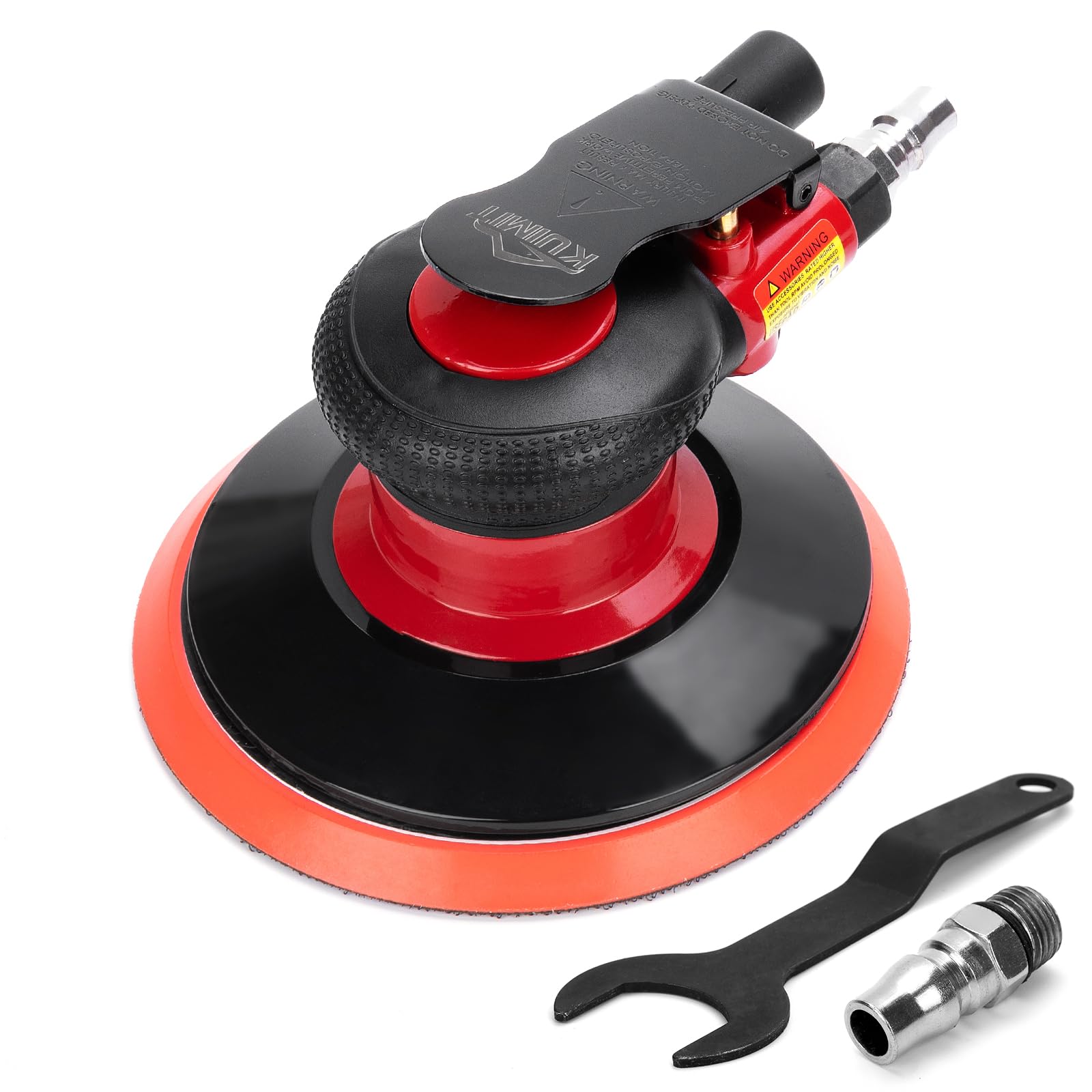
12,000 RPM — 2,000 RPM faster than most rivals at 10,000 RPM — makes the KUIMIT Professional the top pick for anyone who needs one tool for heavy stock removal and wet sanding in a single session.
You get a built-in speed regulator that adjusts from 2,500 to 12,000 RPM on the fly — no stopping to swap tools. At 1.9 pounds with a cushioned grip, owners mention it is comfortable for long wood sanding sessions and easy to control one-handed. Customers note the speed control is “valuable for wet sanding,” letting you dial down the pad to avoid slinging water.
The honest limit is that this sander is an “air hog” — reviewers point out it demands frequent oiling for longevity and requires a stout compressor. But for its price, it gives you speed-control flexibility that the Ingersoll Rand 300G lacks, making it the pick for versatility without the brand-name markup.
Why it’s great
- Highest max RPM (12,000) for faster sanding
- Adjustable speed regulator works mid-task
- Lightweight 1.9-lb palm design reduces fatigue
Good to know
- High air consumption needs a capable compressor
- Requires routine oiling for reliable operation
2. Ingersoll Rand 300G Random Orbital Air Sander

The Ingersoll Rand 300G packs a 0.2 HP motor that shoppers say rivals the Snap-on version costing nearly three times as much — but unlike the top pick, it lacks any built-in speed adjustment, so you must add an inline regulator to control pad speed.
Its composite body weighs under 2 pounds (1.2 kg), so you can sand all day without your wrist complaining. Buyers report it “looks and works just as good as the Snap-on brand” but without the price tag. The diffused rear exhaust keeps dust and air from blowing back onto your workpiece, which matters when you are finishing a clear coat.
The catch: this model has no built-in speed adjustment, so you must add an inline regulator to control the pad speed — a limitation the KUIMIT solves out of the box. It also requires high air volume. Buyers warn that home compressors may struggle to keep it running continuously. Choose this over the top pick if you want Ingersoll Rand reliability and already own a pro-level compressor setup.
Where it shines
- Powerful 0.2 HP motor matches expensive pro brands
- Lightweight composite body cuts fatigue
- Rear exhaust keeps debris off the work surface
Worth noting
- No built-in speed adjustment
- High air volume demand; small compressors may lag
3. Chicago Pneumatic CP870 6 Inch Air Random/Rotary Sander

Imagine running a commercial sign shop where you sand aluminum and awning frames for hours every day — that is the exact scenario the Chicago Pneumatic CP870 was built for. It is the sander you grab for metal prep, filler blending, and paint stripping without breaking down.
Owners mention it replaced an industrial sander in a commercial sign shop and “lasted over a year,” leading them to buy three more units. The power regulator gives you precise control, and the rotary/orbital switch adds versatility for different tasks.
One detail: customers note occasional moisture from the exhaust, suggesting a water/oil separator may be needed in humid climates. But with a 10,000 RPM free speed and a 3/16-inch orbit, this is the one.
What stands out
- Proven durability in commercial settings
- Switchable rotary or random orbital action
- Insulated grip with lock-off safety throttle
The trade-offs
- Higher air consumption (5 CFM) needs a bigger compressor
- Moisture may appear from exhaust in humid conditions
4. TCP Global Professional Heavy Duty 6″ Dual-Action Random Orbit Air Palm Sander

The number that matters most in a budget sander is air consumption, and the TCP Global sips only 4.5 CFM — meaning a 2 HP compressor can run it without constantly cycling. It is the sander for home garage use, delivering pro features without demanding a pro-sized air tank.
The downside: at 10,000 RPM, it is 2,000 RPM slower than the KUIMIT, and reviewers point out that a 20-gallon compressor runs out in under a minute at full throttle. That said, it comes with both a PSA (pressure-sensitive adhesive — a sticky-back disc) backing pad and a hook-and-loop (Velcro-style disc) pad, so you can use either type without buying adapters. Reviewers call it “great value” and praise its low vibration for a tool under .
For the price, you get a comfortable rubber grip, heat-treated steel components, and a lightweight 1.89-pound body. If your compressor is modest and you need one sander that does it all, start here — it is a better fit for home users than the air-hungry KUIMIT.
The upsides
- Low air consumption (4.5 CFM) works with 2 HP compressors
- Includes both PSA and hook-and-loop backing pads
- Lightweight 1.89-lb design with comfortable grip
Keep in mind
- Still struggles with small tanks (20-gal runs out fast)
- Slower max speed than premium alternatives
5. POWER AERO NOVIA Commercial Pneumatic Random Orbit Sander
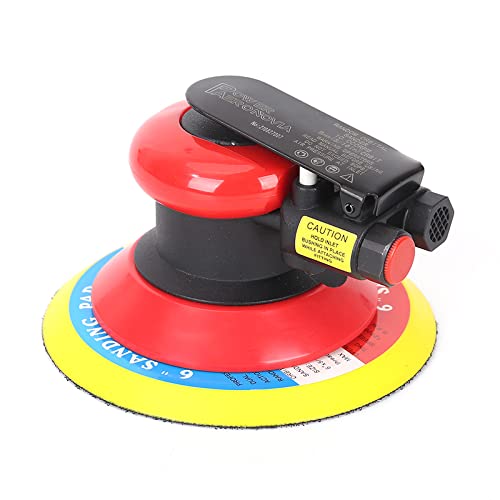
At entry-level pricing, you get a 3/16-inch orbit and 10,000 RPM in a durable alloy housing with a nodular cast iron cylinder designed for wear resistance, plus a rear exhaust that directs air away from your workpiece and a hook-and-loop pad for quick disc swaps.
What you give up is cutting power on harder materials — shoppers say it “doesn’t cut harder composites well” like fiberglass, though it works fine on body fillers and paint prep. The vibration is slightly higher than expensive units, but one buyer called it “the best DA at this price point” and said it stands up in auto collision classes against high-dollar models.
This sander suits beginners or occasional users who need a functional DA sander without spending for features they will not use, and it also works as a backup tool for pros who want a cheap unit for rough work — making it perfect for the budget buyer whose expectations are realistic and just needs the job done.
Why we’d pick it
- Very low entry price for a functional 6″ DA sander
- Durable alloy housing with cast iron cylinder
- Rear exhaust keeps debris off the workpiece
A few caveats
- Struggles with hard composites and fiberglass
- More vibration than premium options
Understanding the Specs
Air Consumption (CFM)
CFM stands for cubic feet per minute — it is a measure of how much air the sander drinks while running. A lower CFM (like 4.5) means your home compressor can keep up; a higher CFM (like 5 or more) demands a larger tank and a bigger compressor motor. If your compressor is small, always check this number first — it saves you the frustration of a sander that stalls mid-panel.
Orbit Diameter (3/16-inch)
The orbit diameter tells you how wide the sanding pad moves in its circular pattern. A 3/16-inch orbit (the standard for most 6-inch sanders) removes material quickly, making it ideal for paint stripping, filler smoothing, and coarse sanding. Smaller orbits (like 3/32-inch) are for finer finish work but take longer to remove material.
FAQ
What size air compressor do I need for a 6-inch random orbital sander?
Can I use a 6-inch DA sander for wet sanding?
What is the difference between PSA and hook-and-loop backing pads?
Final Thoughts: The Verdict
For the majority of shoppers, the 6 inch random orbital sander winner is the KUIMIT Professional 6″ — its 12,000 RPM max speed and built-in speed regulator give you unmatched versatility for both aggressive sanding and delicate finish work. If you want pro-level build quality with a brand name that lasts, grab the Ingersoll Rand 300G. And for a budget option that still handles the basics, the TCP Global Professional stands out for its dual pad system and low 4.5 CFM air consumption — a real advantage if your compressor is modest.