
Our readers keep the lights on and the weekend projects moving. As an Amazon Associate, I earn from qualifying purchases.
A 60-liter backpack represents the sweet spot for multi-day adventures—big enough for a week of gear yet compact enough to stay maneuverable on technical trails. The problem is that a poorly designed 60L pack with an inadequate frame or weak hip belt turns every mile into a lesson in pain tolerance, turning what should be an epic trip into a miserable trudge.
I’m Rikta — the founder and writer behind FitlyFast. I’ve spent years analyzing load-transfer systems, fabric denier ratings, and torso adjustment mechanisms so that my readers can identify the one pack that actually fits their frame and their mission.
This guide breaks down the seven strongest contenders on the market right now, giving you the concrete specs and real-world trade-offs that define the best 60l backpack for your specific body type, load weight, and travel style.
How To Choose The Best 60L Backpack
Settling on a 60-liter pack means you are committing to carrying somewhere between 30 and 50 pounds over varied terrain. The margin between a good trip and a wrecked back lives in three specific decisions: fit, suspension design, and compartment layout. Ignore any of these and you will be shopping for a replacement before your third overnight.
Fit Your Torso, Not Your Height
Most beginners buy a pack based on their height, but the critical measurement is torso length—from the C7 vertebra (the bony bump at the base of your neck) down to your iliac crest (the top of your hip bone). A pack that is too long will ride on your shoulders instead of your hips; a pack that is too short will leave the hip belt sitting too high. Look for models with an adjustable torso system like Kelty’s Fit-Pro or Osprey’s AirSpeed suspension so you can dial in the fit for your exact frame.
Load Transfer Starts at the Hip Belt
On a properly fitted 60L backpack, roughly 80 percent of the weight should transfer from the frame to the hip belt, not your shoulders. That means the hip belt needs dense foam padding and a wrap-around shape that hugs your iliac crest without digging in. Thin, flimsy belts cause chafing under heavy loads and force your trapezius muscles to do a job they were never designed for. If a pack’s hip belt feels like a stiff strap rather than a cushioned cradle, cross it off your list.
Suspension and Ventilation Dictate Comfort
The frame—whether a traditional perimeter wire, a lightweight aluminum stay, or a full internal frame—determines how rigidly the pack transfers weight to your hips. A stiffer frame handles heavier loads better but adds weight. A tensioned mesh back panel (like Osprey’s AirSpeed) creates a gap between your back and the pack, dramatically reducing sweat accumulation on hot days. If you hike in humid conditions, prioritizing ventilation over an extra four ounces of frame weight is a trade worth making.
Compartment Layout Matches Your Trip Style
60-liter packs generally fall into two camps: panel-loading travel packs with a suitcase-style opening, and top-loading expedition packs with a drawstring closure and a separate sleeping bag compartment. Travel-oriented buyers who need frequent access to electronics or toiletries will prefer a panel-loader like the Thule Landmark. Backpackers who want simplicity and water resistance tend to favor the top-loader design with a floating divider. Also check for external mesh pockets and daisy chains—these add quick-access storage without eating into the main 60-liter capacity.
Quick Comparison
On smaller screens, swipe sideways to see the full table.
| Model | Category | Best For | Key Spec | Amazon |
|---|---|---|---|---|
| Osprey Rook 65L | Internal Frame | Ventilated multi-day hiking | AirSpeed tensioned mesh back panel | Amazon |
| Kelty Asher 65L | Internal Frame | Custom torso fit on the trail | Fit-Pro adjustable torso & Amp Flow back panel | Amazon |
| Thule Landmark 60L | Travel Backpack | Multi-month travel with anti-theft features | Removable 20L daypack & hidden CashStash pocket | Amazon |
| Granite Gear Blaze 60L | Ultralight Frame | Lightweight backpacking with heavy loads | Adjustable hip belt & detachable summit top | Amazon |
| High Sierra Pathway 2.0 60L | Hydration Pack | Short trips with daily hydration | Internal hydration sleeve & EVA back panel | Amazon |
| Mardingtop 60L Military | Tactical Frame | Budget rucking and modular customization | MOLLE webbing & expandable to 75L | Amazon |
| YETI Crossroads 60L Duffel | Duffel Bag | Car travel and gear organization | Structured foam walls & two divider panels | Amazon |
In‑Depth Reviews
1. Osprey Rook 65L Backpacking Backpack

The Osprey Rook 65L sets the standard for ventilated load carriage in the 60-liter class. Its AirSpeed suspension uses a tensioned mesh back panel that creates a pronounced gap between the pack and your spine, which dramatically reduces sweat buildup on hot, humid climbs. The LightWire perimeter frame transfers weight efficiently to the hip belt, and those shoulder straps are well padded without feeling bulky—a balance many packs miss.
At 3.7 pounds, the Rook is not the lightest option here, but every ounce earns its keep through smart features: an integrated rain cover that stows in its own pocket, a zippered sleeping bag compartment with a floating divider, and angled water bottle pockets you can reach without taking the pack off. Multiple users report carrying 30 to 35 pounds comfortably over 20-mile days, and the build quality—YKK zippers, robust nylon fabric—holds up after hundreds of trail miles.
The main trade-off is the absence of a large external mesh pocket for stashing wet layers or quick-access snacks. The side pockets are functional but tight for large Nalgene bottles once the pack is fully loaded. If you prioritize ventilation and a reliable frame over extra external storage, the Osprey Rook remains the most balanced all-rounder in the category.
Why it’s great
- Tensioned mesh back panel provides category-leading ventilation
- Integrated rain cover is stowable and always with you
- Floating divider lets you separate sleeping gear from the main compartment
- Adjustable torso length accommodates a wide range of body types
Good to know
- No large external mesh pocket for wet or quick-access gear
- Angled water bottle pockets can be hard to reach with the pack fully loaded
- At 3.7 lbs, heavier than some minimalist alternatives
2. Kelty Asher 65L Internal Frame Backpack
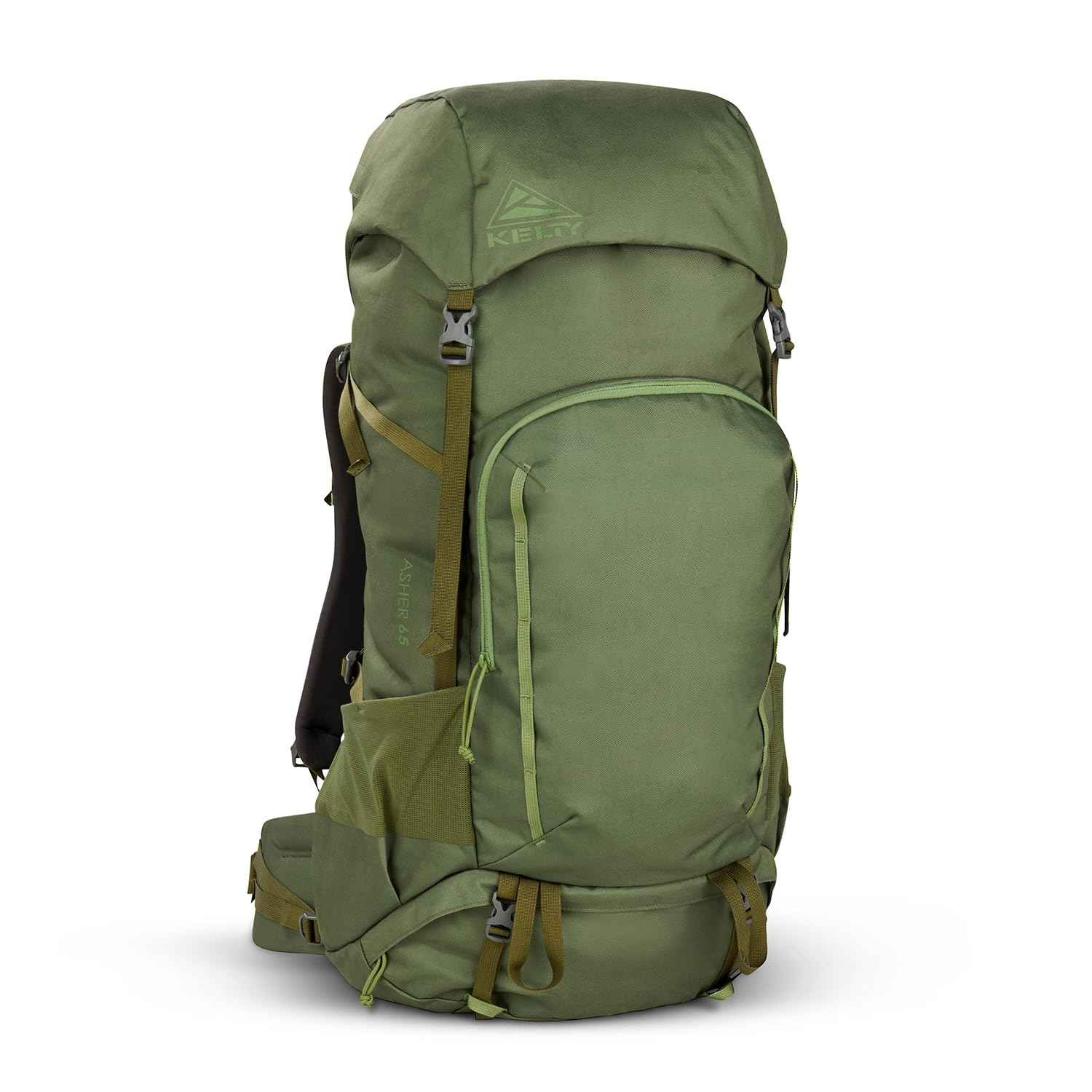
The Kelty Asher 65L packs features you would expect from a mid-range workhorse into a surprisingly lightweight 3-pound 5-ounce frame. The standout is the Fit-Pro suspension system, which lets you micro-adjust the torso length while on the trail—a huge advantage when you shed layers or hand the pack to a different-sized buddy. The Amp Flow ventilated back panel uses a foam ridge design that keeps air moving, though it does not create as much open space as Osprey’s mesh system.
The perimeter frame includes a removable aluminum stay that gives the pack excellent stability even when loaded to the 50-pound recommended maximum. Users consistently praise the thick shoulder strap padding and the dedicated sleeping bag compartment with a floating divider. After two to three years of regular multi-day use, owners report zero stitching failures or strap delamination, which speaks to the build quality given the accessible price point.
One common frustration is the Velcro-based shoulder strap adjustment system—it works but feels less premium than ladder-lock webbing. A few hikers also note that the bottom of the pack lacks extra abrasion-resistant material, so placing it on rough granite or sharp scree may accelerate fabric wear. If you want a sub-three-and-a-half-pound pack with a fully adjustable torso and a pedigree that punches above its weight, the Kelty Asher deserves a close look.
Why it’s great
- Fit-Pro suspension allows on-the-trail torso adjustment
- Extremely light at 3lb 5oz without sacrificing frame rigidity
- Extra-thick shoulder padding for heavy loads up to 50 lbs
- High-quality materials hold up after years of use
Good to know
- Velcro shoulder strap adjustment feels less secure than webbing
- Bottom fabric may need a ground sheet for rough terrain
- Side pocket strap placement can be awkward for water bottles
3. Thule Landmark 60L Backpack
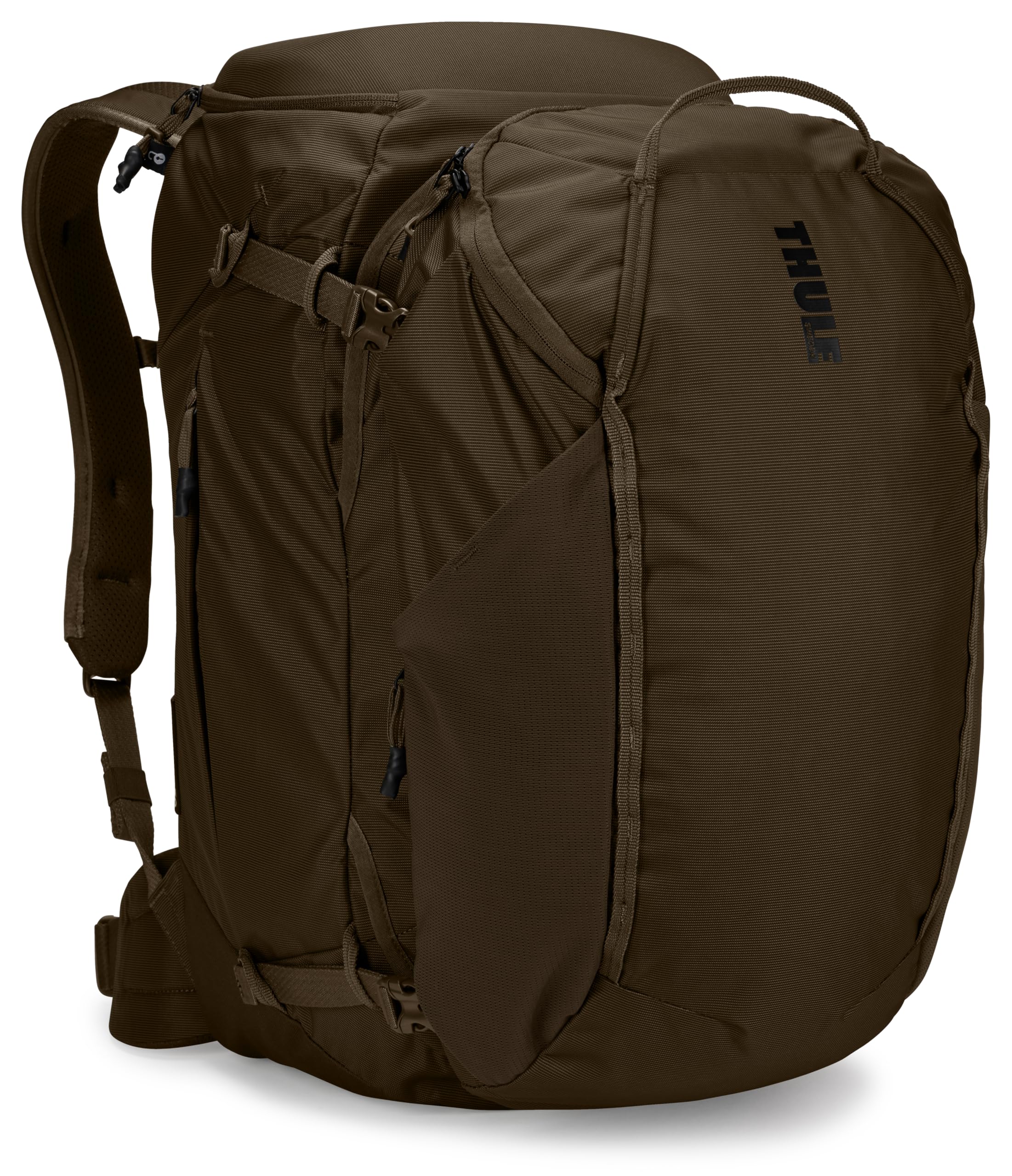
The Thule Landmark 60L redefines what a travel-focused backpack can do by splitting into two separate bags: a 40-liter main pack and a removable 20-liter daypack with a padded 15-inch laptop sleeve. This modular design solves the classic travel dilemma of needing a secure base camp at the hostel and a lightweight day pack for city exploration. The main pack opens panel-style like a suitcase, giving you full access to your gear without digging through a top-loading tube.
Security is the Landmark’s headline feature. A hidden CashStash pocket under the SafeZone panel keeps your passport and emergency cash out of reach from pickpockets, while the innovative LoopLocks let you secure zipper pulls to the bag with a small lock. The 420D dobby polyester fabric carries a bluesign approval, and the lightweight build—just over 3 pounds for the main unit—makes it easy to carry through airports and train stations without feeling like you are hauling a climbing pack.
The downsides are centered on the daypack’s longevity and the main pack’s weather resistance. Some users report that the 20-liter detachable unit wears faster than the main bag, particularly the side pockets and water resistance. The main pack is not fully waterproof—light rain is handled fine, but a heavy downpour calls for a separate dry bag or rain cover. If your travel style involves jumping between planes, trains, and hostels for months at a time, the Thule Landmark’s split-pack concept is unmatched.
Why it’s great
- Removable 20L daypack with padded laptop sleeve adds massive versatility
- Panel-loading suitcase-style opening for easy access on the go
- Hidden CashStash pocket and LoopLocks provide real anti-theft security
- Lightweight 420D bluesign-approved fabric is durable yet carry-on friendly
Good to know
- Daypack side pockets and water resistance wear faster than the main unit
- Main pack lacks a dedicated outer pocket for quick-access items
- Stowable shoulder straps are fiddly and hard to deploy quickly
4. Granite Gear Blaze 60L Backpack

The Granite Gear Blaze 60L is a lightweight framed pack that refuses to compromise on load-carrying ability. It manages to stay under three pounds while still offering a functional internal frame and a highly padded hip belt that wraps around your iliac crest without digging in. The hip belt is adjustable for different torso lengths and can even be converted into a fanny pack for summit scrambles—a clever trick that adds genuine utility.
Users consistently report carrying 45 pounds comfortably over four months of training and multi-day trips. The detachable top lid transforms the pack into a lightweight summit pack, saving weight when you want to move fast without the full 60-liter volume. The large mesh back pocket is big enough for a wet shell or a bear canister, and the hip belt pockets fit a large smartphone without bouncing. The overall construction feels rugged enough for backcountry abuse, with robust stitching and durable fabric.
On the fussy side, the Blaze has a lot of straps—around ten different clasps and adjustment points—which some users find overcomplicated for a pack in this weight class. The water bottle pockets are also tight; sliding a Nalgene back in while wearing the pack requires contortion, and the side pocket strap does not hold a larger bottle securely. If you want a sub-three-pound pack that still handles heavy loads and offers summit-pack versatility, the Blaze is a strong contender, but be prepared to practice the adjustment sequence before hitting the trail.
Why it’s great
- Sub-three-pound weight with a functional internal frame for heavy loads
- Detachable top lid doubles as a lightweight summit pack
- Padded hip belt wraps comfortably for loads up to 45 pounds
- Large mesh back pocket fits a bear canister or wet layers easily
Good to know
- Over ten straps and adjustment points feel fussy compared to simpler designs
- Water bottle pockets are tight and difficult to access while wearing the pack
- No bottom sleeping pad straps for external gear attachment
5. High Sierra Pathway 2.0 60L Backpack

The High Sierra Pathway 2.0 is a well-rounded 60-liter pack that prioritizes everyday usability and hydration integration over heavy-duty backcountry toughness. It includes an internal hydration sleeve with a Velcro hanger and a hose pass-through port, making it a natural fit for day hikes, bike tours, and casual overnight trips where you want to sip water without stopping. The EVA-molded and Airmesh back panel provides a decent balance of comfort and breathability for moderate loads.
The pocket layout is thoughtfully organized: a front stuff pocket, a top-zip pocket with a key leash, two exterior zippered pockets, and two stretch mesh water bottle pockets that fit a 32-ounce Hydro Flask. The internal storage sleeve can also double as a laptop compartment for a 15.6-inch machine, giving the pack crossover appeal for travel. Multiple buyers have bought several of these packs for youth group trips, praising the build quality and capacity at the accessible price level.
The main limitation is the fit for smaller torsos. Several female hikers report that the shoulder straps sit too wide for a 5-foot-2 frame, causing armpit chafing even with moderate 20-pound loads. The hip belt, while functional, does not have the dense foam padding required for extended carries above 30 pounds. If your trips are short-to-medium duration and you want a reliable hydration-ready pack that also works as a campus hauler, the Pathway 2.0 delivers solid value.
Why it’s great
- Internal hydration sleeve with Velcro hanger and hose port for on-the-go drinking
- Dual stretch mesh water bottle pockets fit large 32-ounce bottles
- Laptop sleeve fits up to 15.6-inch machines, adding travel versatility
- Multiple exterior pockets provide easy organization for daily essentials
Good to know
- Shoulder straps sit too wide for smaller frames, causing armpit chafing
- Hip belt padding is too thin for loads over 30 pounds over long distances
- Not designed for heavy backcountry abuse; better suited for lighter trips
6. Mardingtop 60L Military Internal Frame Backpack
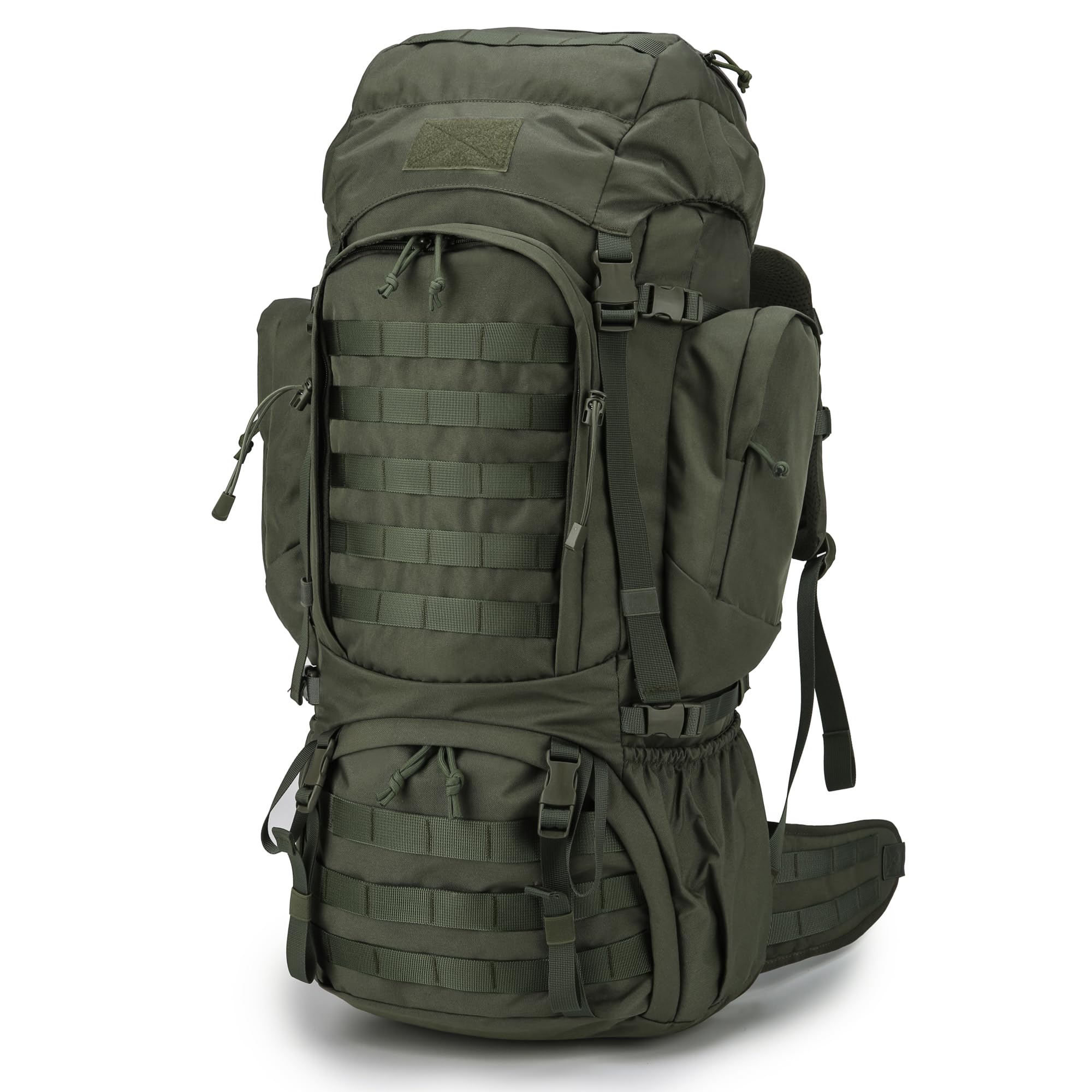
The Mardingtop 60L Military backpack aims straight at the budget-conscious hiker and the tactical enthusiast who wants modular expandability. It comes standard with MOLLE webbing across the front and sides, allowing you to attach pouches, carabiners, or a sleeping pad externally. With the extension collar unzipped, the pack expands to roughly 75 liters, giving you extra room for bulkier gear without needing a separate bag.
Ykk zippers, decent stitching, and a thoughtful pocket layout—including a separate sleeping bag compartment—make this feel like a more expensive pack than the price suggests. Several users report using it for ruck training with loads up to 90 pounds over short distances, which speaks to the frame’s general sturdiness. The included rain cover has functional tie-downs, even if the elastic band is not the most robust.
The weak point is the hip belt, which lacks sufficient padding for extended carries. Marine veterans and serious hikers note chafing after just a few miles with loads above 50 pounds, and the cinch straps tend to loosen under heavy weight. The shoulder straps are also on the narrow side, which concentrates pressure on a smaller area of your shoulders. For weekend trips with moderate loads or as a customization platform for tactical gear, the Mardingtop offers exceptional value—just do not expect it to replace a premium pack for multi-day backcountry treks.
Why it’s great
- MOLLE webbing allows extensive modular customization for gear attachment
- Expandable to 75L, providing extra capacity without a separate bag
- YKK zippers and solid stitching surprise for the price point
- Included rain cover with tie-downs adds weather protection out of the box
Good to know
- Hip belt padding is inadequate for heavy loads over long distances
- Narrow shoulder straps concentrate pressure rather than spreading it
- Cinches loosen under heavy rucking loads, requiring frequent readjustment
7. YETI Crossroads 60L Duffel Bag
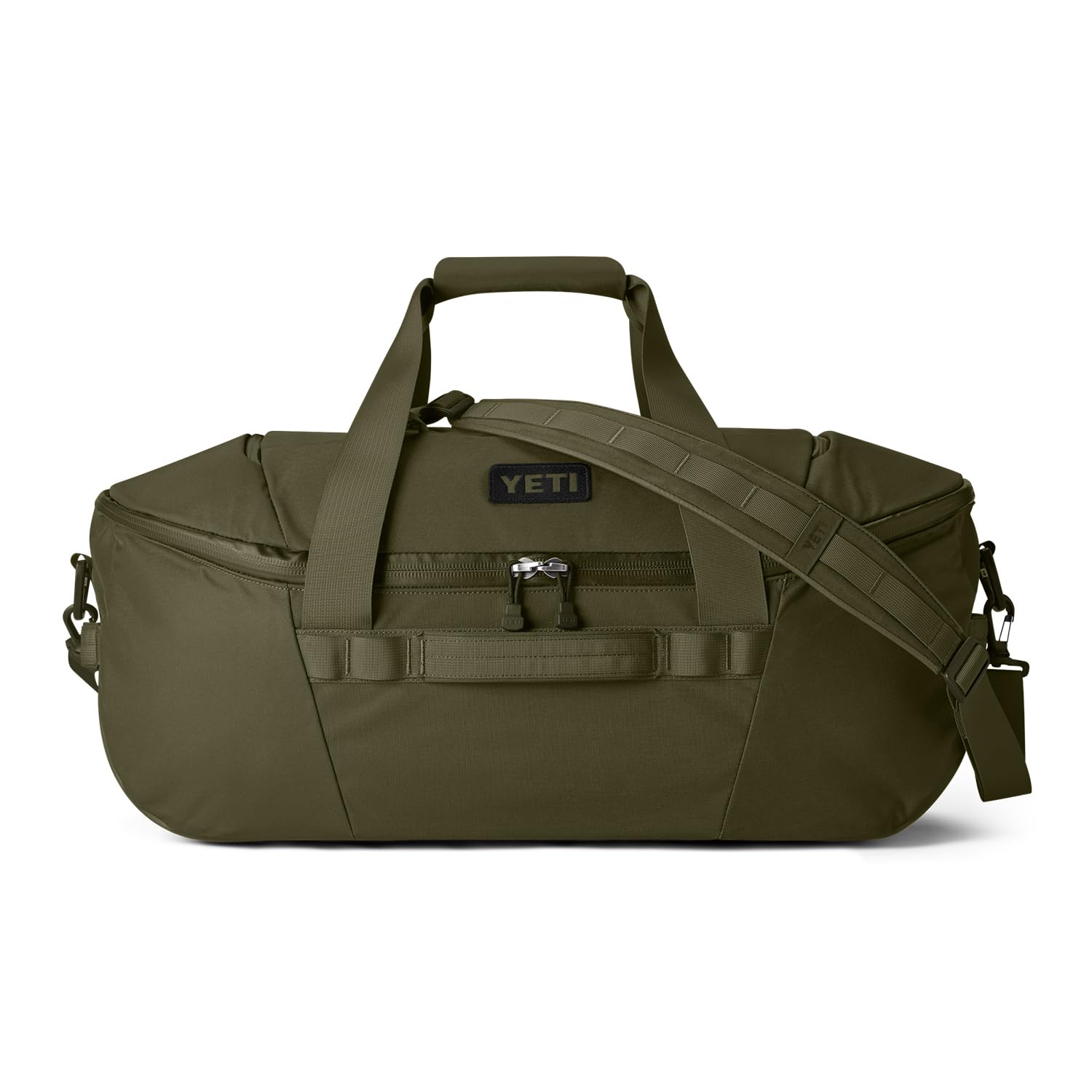
The YETI Crossroads 60L Duffel is a different beast from the hiking-focused packs on this list—it is a rugged, car-friendly duffel built for road trips, gear hauling, and checked baggage scenarios. The defining feature is the structured foam walls, which prevent the bag from collapsing in on itself like a typical soft duffel. This makes packing and unpacking far more organized, especially when you are living out of the bag for a week or more.
Two internal divider panels let you separate the main compartment into three sections, so dirty boots do not touch clean shirts and your toiletries stay isolated. The 60-liter capacity is true to spec and swallows four to five days of clothing plus a pair of shoes without effort. YETI’s nylon fabric and oversized zippers feel indestructible, and the multiple grab handles—including a padded top handle and web carrying handles on both ends—make it easy to hoist into an overhead bin or a truck bed.
The trade-off is that this is not a backpacking backpack. There is no internal frame, no hip belt, and no suspension system, so carrying it for extended distances on foot is not realistic. The duffel shape can also look a bit odd when partially packed, though it firms up once full. If your adventures involve car camping, road trips, or checked luggage scenarios where you want bombproof organization, the YETI Crossroads delivers legendary durability, but it is a duffel, not a trekking pack.
Why it’s great
- Structured foam walls prevent the bag from collapsing, making packing easier
- Two internal divider panels create three separate compartments for organization
- YETI-grade nylon and oversized zippers feel nearly indestructible
- Multiple grab handles make lifting into overhead bins or truck beds effortless
Good to know
- No internal frame or suspension system; not suitable for carrying on foot
- Duffel shape looks odd when not fully packed, sagging in the middle
- Not designed for backpacking or hiking use whatsoever
FAQ
Is a 60-liter backpack too big for a weekend trip?
Should I get an internal frame or an external frame for a 60L pack?
How much weight should I expect to carry in a 60L backpack?
Can I use a 60L backpack as a carry-on for flights?
Final Thoughts: The Verdict
For most users, the best 60l backpack winner is the Osprey Rook 65L because its AirSpeed ventilated suspension, integrated rain cover, and proven build quality cover the widest range of hiking scenarios without breaking the bank. If you want a fully adjustable torso fit in a lightweight package, grab the Kelty Asher 65L. And for multi-month travel where you need a detachable daypack and anti-theft security, nothing beats the Thule Landmark 60L.