
Our readers keep the lights on and the weekend projects moving. As an Amazon Associate, I earn from qualifying purchases.
The solution lies in feeding your gut microbiome with the specific type of soluble fiber that fuels beneficial bacteria without triggering the gas and discomfort that cheap fillers cause.
I’m Rikta — the founder and writer behind FitlyFast. My research focuses on analyzing supplement formulations, third-party testing data, and clinical studies to separate marketing claims from measurable digestive benefits.
This guide breaks down the top contenders for filling your fiber gap with targeted prebiotic blends. After reviewing dozens of formulas, I’ve built this list of the best bioactive fiber supplements specifically designed to support regularity, feed good gut bacteria, and minimize digestive distress.
How To Choose The Best Bioactive Fiber
Not all fiber supplements feed your gut the same way. The term “bioactive” implies the fiber actively interacts with your microbiome rather than just adding bulk. To pick the right one, focus on three criteria: the specific fiber source, the presence of added probiotics (synbiotic effect), and the fermentation rate that determines gas production.
Fiber Source and Fermentation Speed
Inulin from chicory root ferments quickly and can cause significant gas in newcomers. Wheat dextrin (as used in Sunfiber) ferments slowly, making it the gentler choice for sensitive systems. Oligofructose-enriched inulin (OEI) targets the entire colon but requires a gradual introduction period. Choose based on your current tolerance level.
Synbiotic Blends vs. Standalone Fiber
Some products pair prebiotic fiber with live probiotic strains and digestive enzymes. These synbiotic blends offer a two-pronged approach — the fiber feeds your existing bacteria while the probiotics introduce new beneficial strains. Standalone fiber works well if your microbiome is already balanced and you simply need more soluble grams daily.
Dosing and Serving Practicality
Powders allow flexible dosing (start with half a serving) but require mixing. Caplets and capsules offer convenience but may be hard to swallow and lock you into a fixed dose per pill. Check the serving size against your daily fiber gap — most adults need 25-38g total fiber daily, and a supplement should reliably provide 3-5g per serving without unpleasant texture or taste.
Quick Comparison
On smaller screens, swipe sideways to see the full table.
| Model | Category | Best For | Key Spec | Amazon |
|---|---|---|---|---|
| Benefiber Prebiotic GLP-1 Fiber Caplets | Caplet | Convenient daily fiber on the go | 2x fiber per capsule vs. leading brand | Amazon |
| Physician’s Choice Probiotics 60B | Synbiotic Capsule | Comprehensive gut health with probiotics | 60B CFU, 10 strains, organic prebiotics | Amazon |
| BulkSupplements Organic Inulin Powder | Powder | Budget-friendly bulk soluble fiber | 2.5g organic inulin per serving, 500g | Amazon |
| LEADER Prebiotic Fiber (Wheat Dextrin) | Powder | Clear, tasteless mixing for sensitive stomachs | Soluble wheat dextrin, 186 servings | Amazon |
| Tomorrow’s Nutrition Sunfiber GI | Synbiotic Powder | Gentle low-FODMAP fiber with probiotics | 5g fiber + 8B probiotics per serving | Amazon |
| Feel Goods Digestion+ | Flavored Stick Pack | On-the-go bloating relief with enzymes | 4g organic fiber, 4B CFU, enzymes, ginger | Amazon |
| Prebiotin Prebiotic Fiber | Powder | Full-colon prebiotic support with OEI | Oligofructose-enriched inulin formula | Amazon |
In‑Depth Reviews
1. Tomorrow’s Nutrition Sunfiber GI
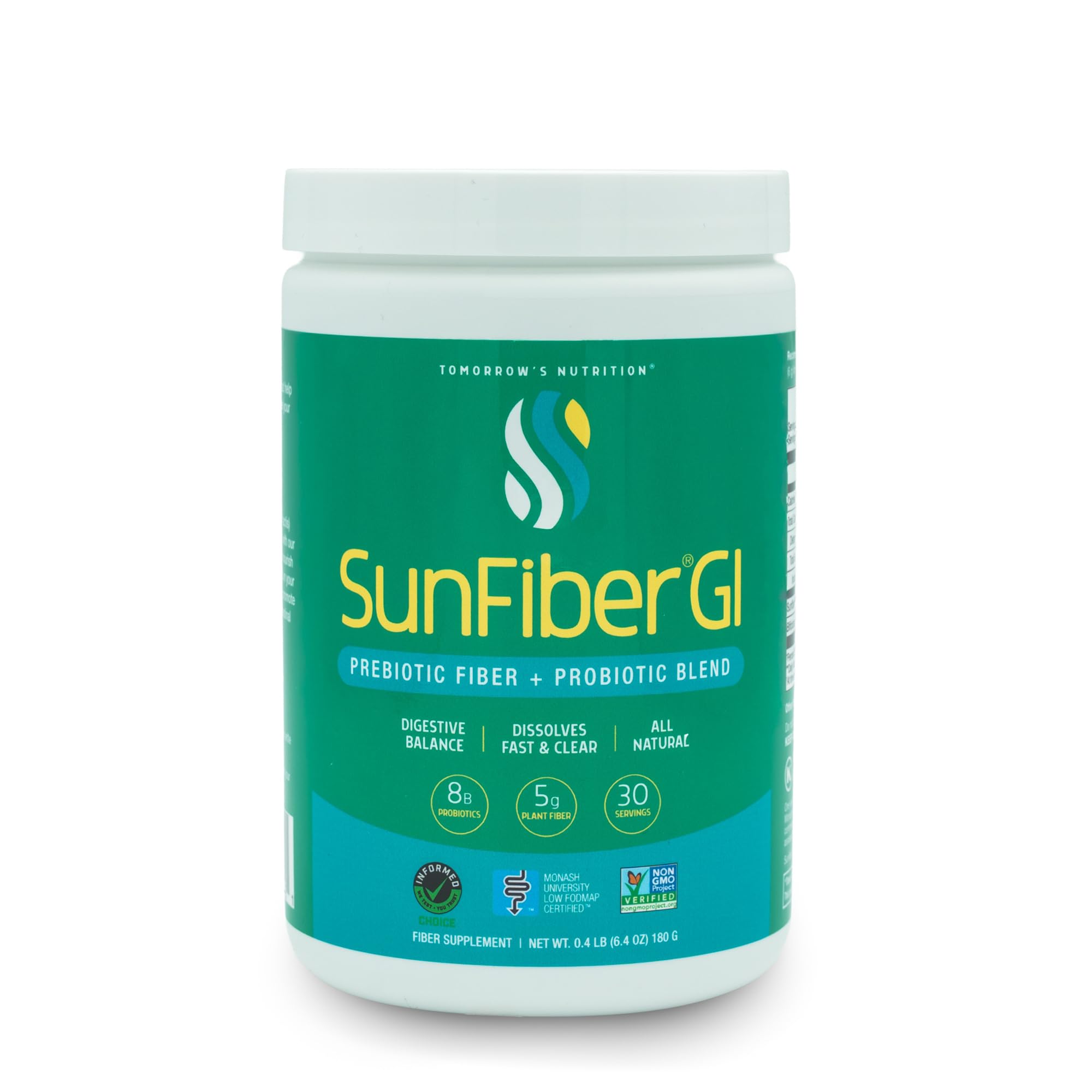
The Sunfiber GI offers the most well-rounded bioactive fiber formula on this list, combining 5 grams of soluble wheat dextrin fiber with 8 billion CFUs of Bifidobacterium lactis in a single scoop. The wheat dextrin base is low FODMAP certified and ferments slowly in the gut, which significantly reduces the risk of bloating and gas that faster-fermenting fibers like standard inulin often cause. Users with sensitive stomachs or IBS tendencies will appreciate this gentle action.
The powder dissolves clear and tasteless in water, coffee, or juice, leaving no grit or thickening effect — a major practical advantage over psyllium-based options that turn into a gel. The synbiotic pairing (prebiotic plus probiotic) supports both the nourishment of existing beneficial bacteria and the introduction of a targeted strain for improved bowel regularity. Many reviewers noted relief from occasional constipation and diarrhea within two weeks of daily use.
One serving also provides a full third of the recommended daily fiber gap for most adults, making it efficient for those who struggle to eat enough vegetables or whole grains. The non-refrigerated formula holds up well in pantry storage, though some users reported inconsistent delivery timing through subscription services. For a gentle, effective, and scientifically-backed bioactive fiber, this is the standout choice.
Why it’s great
- Low FODMAP certification ensures minimal gas for sensitive guts
- Dissolves completely clear with no flavor, texture, or thickening
- Synbiotic blend feeds existing bacteria while adding 8B probiotics
Good to know
- Auto-ship delivery timing can be inconsistent
- Powder may clump slightly if not stirred thoroughly
2. Feel Goods Digestion+
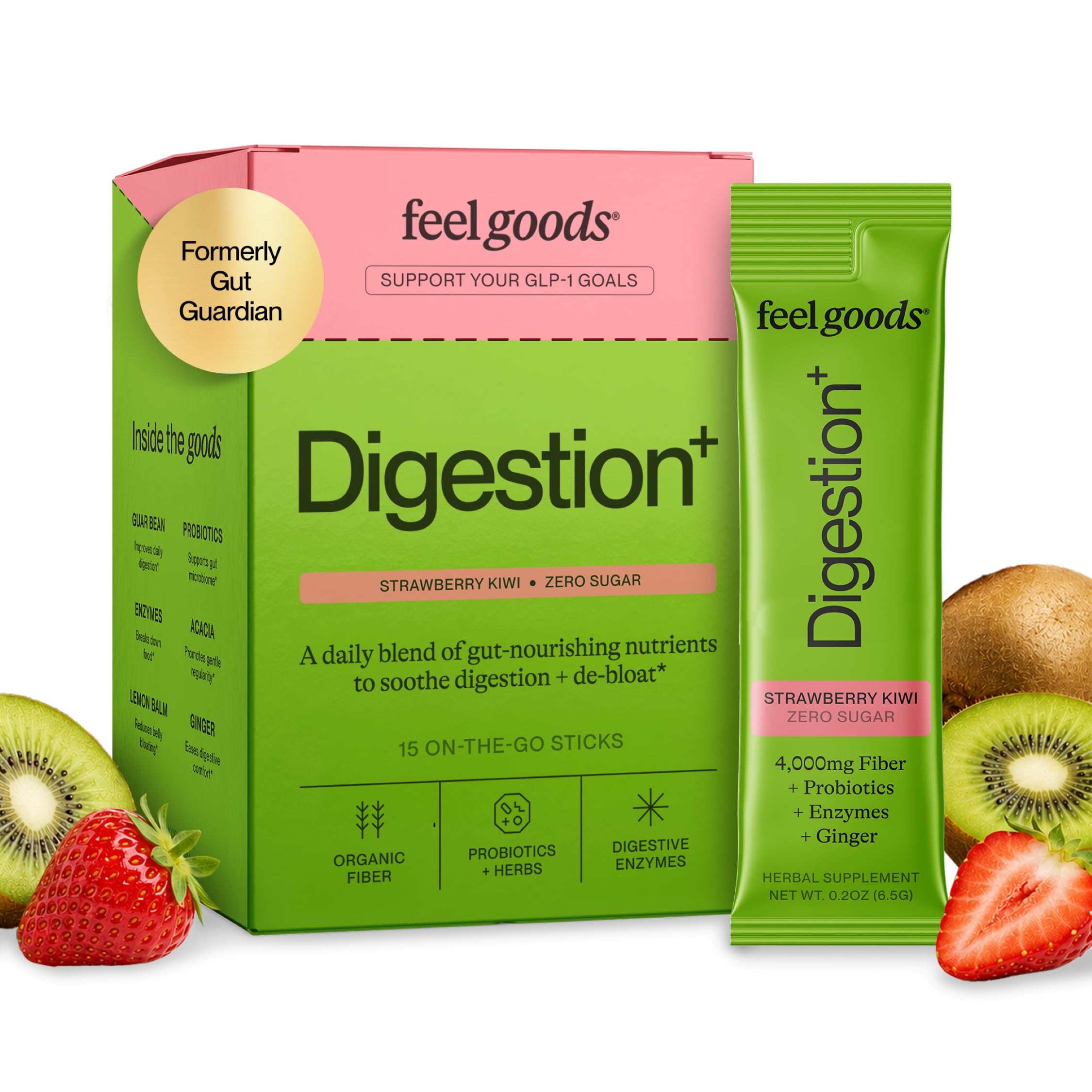
The Digestion+ formula from Feel Goods (formerly Gut Guardian) stands out for its multi-pronged approach to digestive comfort. Each single-serving stick pack delivers 4,000 mg of organic soluble fiber alongside 4 billion CFUs of probiotics, a digestive enzyme complex, and herbal aids including organic ginger, lemon balm, and apple cider vinegar. This is not just a fiber supplement — it is a comprehensive bloating relief system designed for post-meal comfort.
The Strawberry Kiwi flavor is mild and pleasant, mixing cleanly in water without a fake-sugar aftertaste. The inclusion of digestive enzymes helps break down proteins, fats, and carbohydrates more efficiently, which may reduce the undigested food that feeds gas-producing bacteria in the colon. Multiple reviewers reported feeling “lighter” and less heavy after meals, with noticeable reductions in bloating within the first week of use. The zero-sugar, keto-friendly, and vegan formulation aligns with restrictive diets.
Each box contains 15 stick packs, which translates to roughly a half-month supply at one serving per day — this makes the per-serving cost slightly higher than bulk powder options. Some users will need to start with one serving daily and work up to two or three, as the initial increase in fiber can cause temporary bloating. For those who prioritize convenience, great taste, and multi-ingredient digestive support over pure fiber volume, this is an outstanding daily companion.
Why it’s great
- Digestive enzymes and ginger actively reduce post-meal bloating
- Pleasant fruit flavor with zero sugar and no artificial aftertaste
- Single-serve stick packs are ideal for travel or office use
Good to know
- Only 15 servings per box — less economical than bulk powders
- May require gradual increase to avoid initial bloating
3. Prebiotin Prebiotic Fiber

Prebiotin uses a proprietary Oligofructose-Enriched Inulin (OEI) formula that is designed to reach and nourish beneficial bacteria throughout the entire colon — not just the upper tract where standard inulin is consumed. This full-spectrum approach may offer more comprehensive microbiome support, and the brand backs its formulation with published research and educational content on its website. The powder mixes clear in water or beverages and has no added flavor, making it easy to incorporate into coffee or tea without altering taste.
Long-term users report dramatic improvements in digestive health, with some noting that Prebiotin helped them resolve chronic constipation and even wean off gastroenterologist visits after antibiotic damage to their gut flora. The satiety-promoting effect of the fiber also supports weight management goals by reducing hunger between meals. Users who tolerated the product well described it as “life-changing” for regular bowel movements and overall gut comfort.
However, the OEI formula is potent, and new users frequently experience severe bloating, gas, dizziness, or even anxiety if they start with a full serving. The manufacturer recommends beginning with a very small dose (a quarter scoop or less) and increasing slowly over several weeks. This adjustment period can be frustrating, and some sensitive individuals may find the side effects intolerable. For those who can acclimate, the long-term digestive rewards are significant.
Why it’s great
- OEI formula feeds bacteria across the entire colon for deeper microbiome support
- Strong track record of resolving chronic constipation in long-term users
- Mixes clear and tasteless in any beverage without thickening
Good to know
- Potent formula requires a very slow, gradual dose increase to avoid gas and bloating
- Some users experienced strong side effects including dizziness and anxiety
4. Physician’s Choice Probiotics 60 Billion

While technically a probiotic-first product, Physician’s Choice 60 Billion CFU formula includes organic prebiotics (chicory root inulin) within the capsule, creating a synbiotic effect that directly supports your existing gut bacteria alongside the 10 introduced probiotic strains. The high CFU count — 60 billion per capsule — ensures a substantial portion survives the acidic stomach environment, with acid-resistant capsules and shelf-stable packaging that requires no refrigeration. This is a powerful option for those who want to both supplement fiber intake and repopulate beneficial bacteria.
Users consistently report improved digestion, reduced bloating within a week, and relief from occasional constipation and diarrhea. The strain diversity covers Lactobacillus and Bifidobacterium species, which are the most researched for digestive and immune support. The product is third-party tested for purity and potency, manufactured in the USA under strict quality controls, and the capsule size is manageable for most individuals.
The prebiotic fiber content is not listed as a standalone gram amount on the label — it serves a secondary role to fuel the probiotics rather than as a primary fiber source. If your main goal is to add 5-10 grams of soluble fiber to your daily diet, this will not replace a standalone fiber supplement. It also costs more per serving than plain fiber powders. But for comprehensive gut health support that addresses both the microbial inhabitants and their food supply, this is a top-tier synbiotic.
Why it’s great
- High 60B CFU count with 10 diverse strains for robust gut colonization
- Acid-resistant capsules and shelf-stable bottle ensure potency
- Rapid bloating reduction reported by many users within the first week
Good to know
- Prebiotic fiber gram amount is not disclosed separately
- Higher per-serving cost compared to plain fiber supplements
5. BulkSupplements Organic Inulin Powder
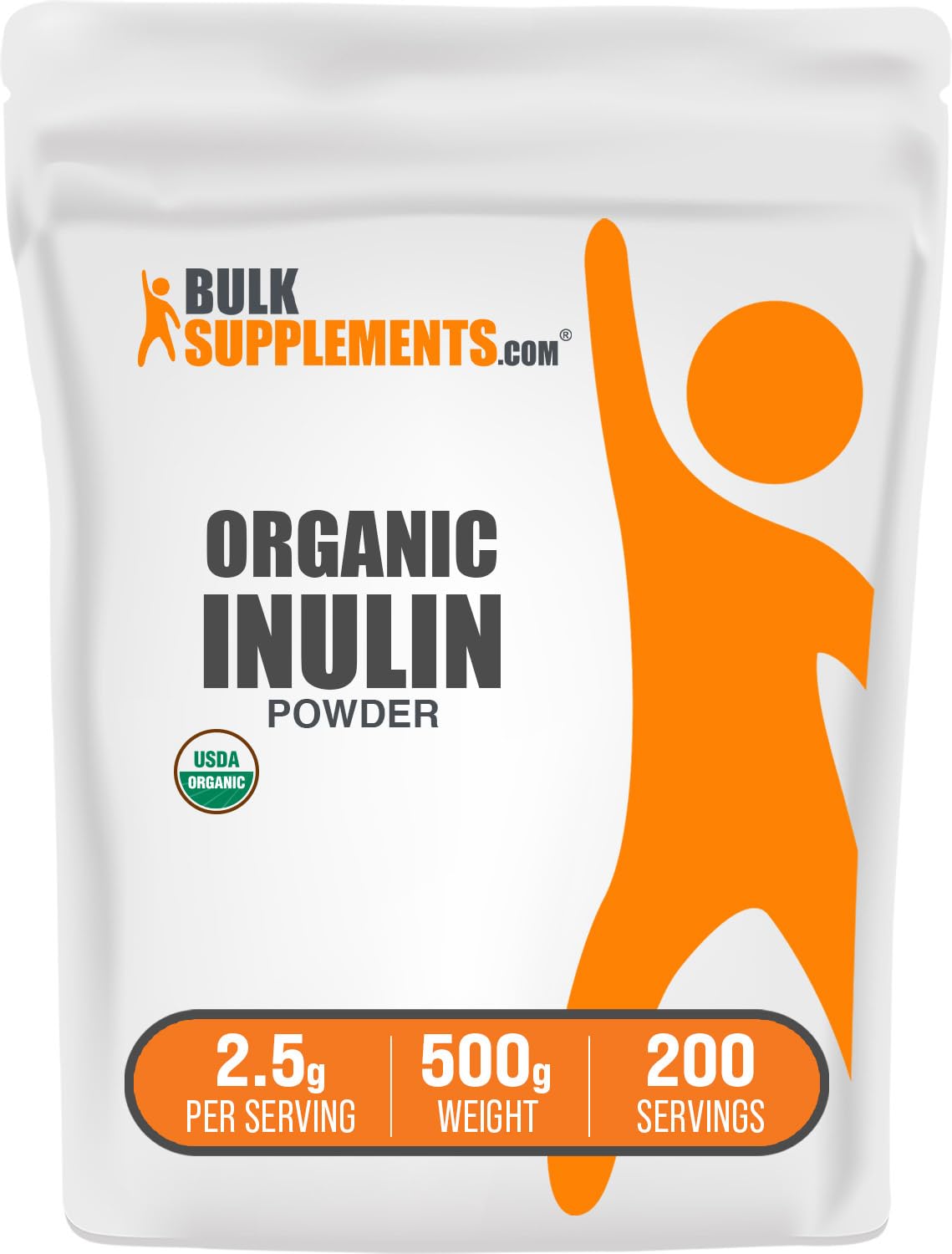
For those who know inulin works for them and want the most fiber per dollar, BulkSupplements Organic Inulin Powder delivers 500 grams (1.1 pounds) of organic chicory root inulin at a price that undercuts most branded competitors by a wide margin. Each 2.5-gram serving provides a gentle prebiotic boost, though many users find they need two scoops (5 grams) to notice a meaningful digestive effect. The powder is white, fine, and nearly tasteless with a faint natural sweetness.
Organic certification ensures the chicory root is grown without synthetic pesticides, which matters for a product taken daily. The powder mixes reasonably well in coffee, yogurt, or smoothies, though it can clump if added to cold liquids without vigorous stirring. Some users reported that the resealable zip strip on the bag fails to seal properly due to the fine powder, so transferring the contents to an airtight jar is recommended for long-term storage. The bulk format makes it ideal for households or individuals who consistently consume 3-5 grams of fiber daily.
Standard inulin from chicory root ferments relatively quickly in the gut, and new users often experience significant gas and bloating during the first week of use. This is a well-known adaptation phase as the microbiome adjusts, but it can be uncomfortable and discouraging. Starting with a quarter teaspoon and slowly increasing the dose over two weeks can mitigate this. For budget-conscious buyers with an established tolerance to inulin, this is the hands-down best value in bioactive fiber.
Why it’s great
- Unmatched cost per gram of organic prebiotic fiber
- Clean, tasteless profile works in hot and cold beverages
- Versatile for cooking, baking, or mixing into yogurt and smoothies
Good to know
- Standard inulin can cause substantial gas and bloating during the adaptation phase
- Bag seal is unreliable; best stored in a separate airtight container
6. LEADER Prebiotic Fiber (Wheat Dextrin)
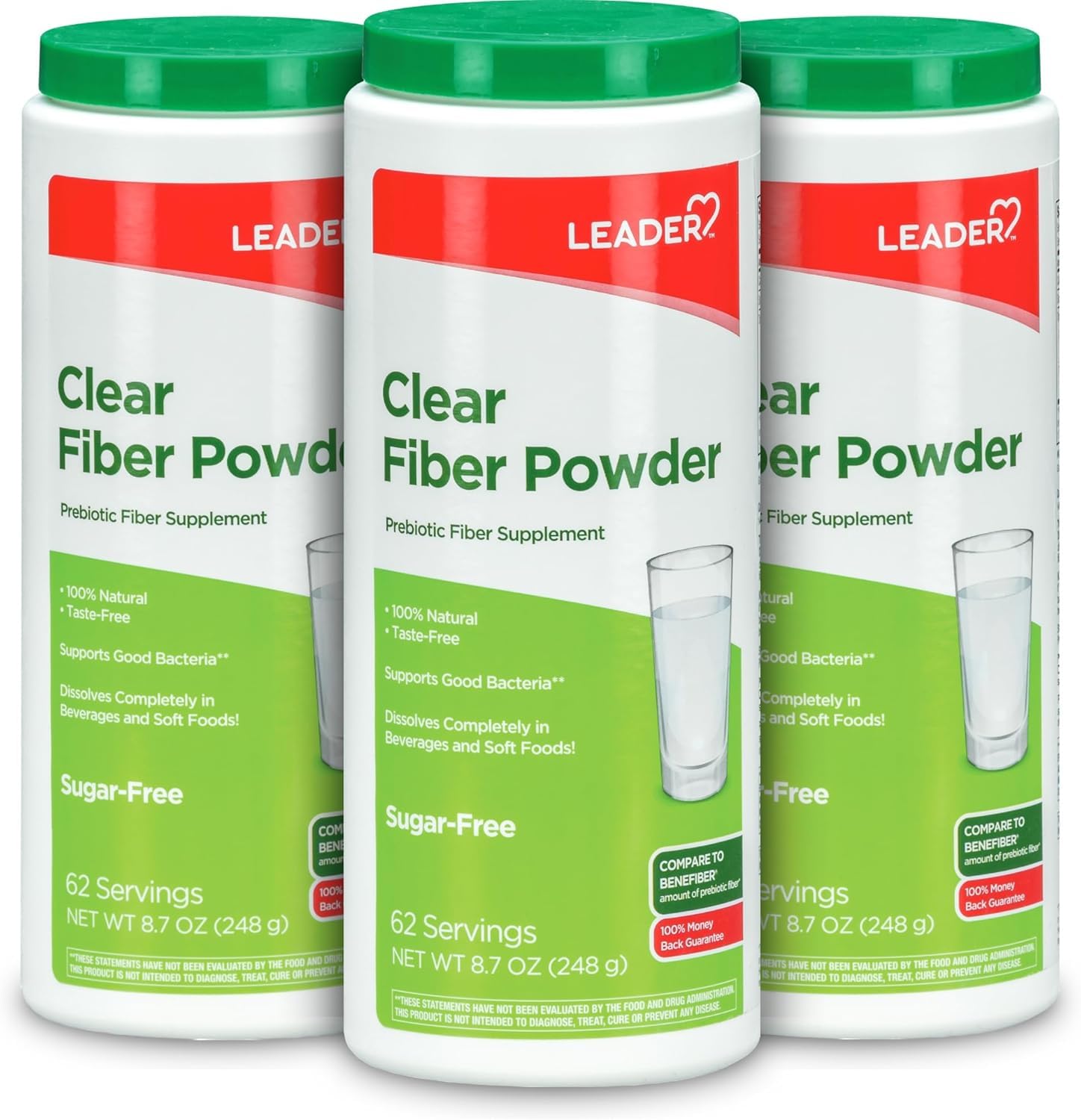
LEADER Prebiotic Fiber uses soluble wheat dextrin as its fiber source — the same base as the well-known Sunfiber and Optifiber brands — but at a lower cost per ounce. This 3-pack delivers a total of 186 servings, making it one of the most economical choices for long-term daily use, especially for households with multiple users. The powder dissolves completely clear and remains tasteless, with no grit or thickening, which allows it to be mixed into water, coffee, juice, or even clear broths without any sensory change.
Wheat dextrin ferments slowly in the colon, which translates to minimal gas production compared to inulin or psyllium. Many reviewers switched from Metamucil (psyllium) to this wheat dextrin specifically because it was gentler on their digestive tract and did not cause the cramping or bloating they experienced with bulk-forming laxative fibers. The non-thickening formula also means it won’t turn your drink into a gel, a common complaint with psyllium-based powders. Users pair it with probiotics for enhanced gut health.
The product is gluten-free and sugar-free, though wheat dextrin is derived from wheat starch — those with celiac disease should confirm the gluten-free certification meets their tolerance level. Some users found the resealable container lids effective but noted that the powder can settle during shipping, causing some dustiness on opening. The value proposition is strong: for those who already know wheat dextrin works for them, the LEADER 3-pack offers the best price per serving among all wheat dextrin options on this list.
Why it’s great
- Exceptional value with 186 total servings across three containers
- Slow-fermenting wheat dextrin minimizes gas and bloating
- Completely clear, tasteless, and non-thickening for versatile mixing
Good to know
- Derived from wheat starch — verify gluten-free status for celiac needs
- Powder may settle and create dust on initial opening
7. Benefiber Prebiotic GLP-1 Friendly Caplets
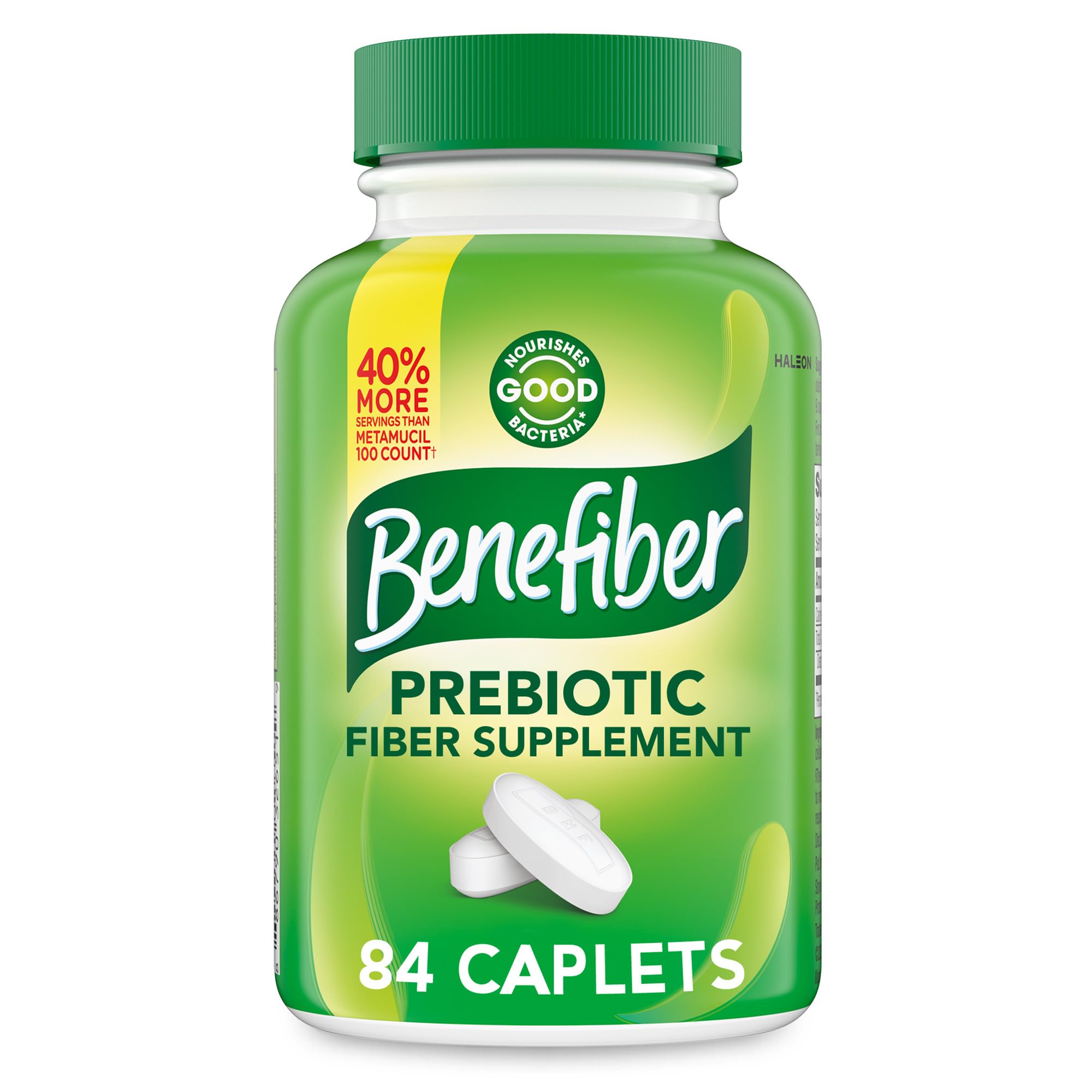
Benefiber brings its trusted prebiotic fiber into a caplet form specifically marketed as “GLP-1 friendly,” aimed at individuals using GLP-1 receptor agonists for weight management or blood sugar control. Each serving of three caplets provides a meaningful fiber dose without the need to mix powders or measure servings — just swallow with water. The caplets contain twice the fiber per pill compared to the leading fiber capsule brand, making the dose more efficient for the pill count.
Users who have undergone gastric bypass surgery or have sensitive digestive systems report that these caplets are gentle and do not cause bloating. The product is covered by HSA/FSA accounts and Medicare Advantage OTC benefits, which can offset the cost for eligible users. The small bottle size (84 caplets = 28 servings) is portable and fits easily into a bag or desk drawer, making it a practical option for travel or on-the-go supplementation.
The primary drawback is the caplet size — multiple reviews describe the pills as “huge” with sharp corners that can stick in the throat or be difficult to swallow, especially for those with dysphagia or a narrow esophagus. The fixed dose of three caplets per serving also limits flexibility; you cannot easily start with a half-serving to test tolerance. For users who struggle with swallowing large pills, a powder form of prebiotic fiber will be a more practical choice. For everyone else, the convenience and brand reliability are strong selling points.
Why it’s great
- No mixing, measuring, or taste — just swallow three caplets
- Gentle on sensitive and post-surgery digestive systems
- HSA/FSA and Medicare OTC eligible for cost savings
Good to know
- Caplets are large with sharp edges — difficult to swallow for some users
- Fixed 3-pill dose limits the ability to titrate upward gradually
FAQ
How much bioactive fiber should I take per day?
Can bioactive fiber help with weight loss?
Is wheat dextrin safe for gluten sensitivity?
What does the term GLP-1 friendly mean on a fiber supplement?
Final Thoughts: The Verdict
For most users, the best bioactive fiber winner is the Tomorrow’s Nutrition Sunfiber GI because it combines slow-fermenting wheat dextrin with 8 billion probiotics in a low-FODMAP, tasteless formula that works for sensitive stomachs without sacrificing fiber dose. If you want an all-in-one bloating relief solution with digestive enzymes and great flavor, grab the Feel Goods Digestion+. And for the best value on bulk organic inulin for seasoned fiber users, nothing beats the BulkSupplements Organic Inulin Powder.