
Our readers keep the lights on and the weekend projects moving. As an Amazon Associate, I earn from qualifying purchases.
The 65-inch TV market under four figures is now a warzone of QLED Mini-LED backlights, native 144Hz panels, and AI processors that were exclusive to flagship models just two years ago. You no longer have to accept washed-out blacks in a bright living room or motion stutter during a fast break — the current generation delivers genuine cinema-level contrast and gaming-grade fluidity without crossing the thousand-dollar line.
I’m Rikta — the co-founder and writer behind FitlyFast. For this guide, I’ve analyzed customer experiences, verified technical datasheets, and cross-referenced real-world brightness measurements and local dimming zone counts across eleven 65-inch models to separate the genuinely capable panels from the marketing hype.
After hundreds of hours of research and spec-level comparison, you’ll find the definitive ranking of the best 65 inch tv under $1000, built for buyers who want premium performance without crossing into luxury pricing.
How To Choose The Best 65 Inch TV Under $1000
The sub-$1000 65-inch category has become incredibly competitive. Three years ago, you paid this much for a 60Hz edge-lit 4K panel. Today, you can get Mini-LED backlights with hundreds of local dimming zones and native 144Hz refresh rates. The challenge is not finding a good TV — it’s identifying which specific specifications actually translate to better performance in your room.
Backlight Technology: Edge-Lit vs Direct-Lit vs Mini-LED
This is the single most important hardware distinction. Edge-lit TVs (rare in this tier now) use LEDs around the frame and cannot produce uniform blacks — you’ll see cloudy gray patches in dark scenes. Direct-lit panels have LEDs behind the entire screen, offering better uniformity but limited brightness control. Mini-LED backlights shrink the LEDs so you can pack hundreds or thousands of them into an array, creating precise local dimming zones that switch off independently. The result: OLED-like black levels and bright highlights without the burn-in risk. In the sub-$1000 group, Mini-LED models like the Hisense U7SG and TCL QM7K are the clear contrast kings.
Refresh Rate: 60Hz, 120Hz, and 144Hz Explained
Standard 60Hz panels handle movies and most TV shows fine, but fast camera pans in sports and quick-scope movements in shooters will show judder and blur. Native 120Hz (or 144Hz) panels display 120 unique frames per second, which cuts motion blur in half and makes the image stutter-free. For gaming, a 120Hz panel with Variable Refresh Rate (VRR) is the baseline for smooth PlayStation 5 and Xbox Series X gameplay. The iFFALCON F75 and the Hisense U7SG offer native 144Hz — ideal if competitive gaming is a regular activity. If you only watch movies and network TV, a good 60Hz Mini-LED is still a strong option.
Local Dimming Zones: The Number That Defines Contrast
More zones means the TV can dim small sections of the screen independently. An edge-lit panel has zero real zones; it can only darken the whole screen at once. A Mini-LED model with 500 zones can turn off a small cluster of LEDs behind a star in a night sky, keeping the rest of the sky black. The TCL QM7K offers up to 2500 zones in its higher-tier variants, while the Hisense U7SG claims up to 3000. That level of precision eliminates the “halo” or “blooming” effect around bright objects on dark backgrounds — the hallmark of a premium picture.
Smart Platform: Roku vs Google TV vs Fire TV vs Samsung Tizen
Your daily interaction with the TV is through its operating system. Roku is the gold standard for simplicity — a clean grid of apps with no algorithm-driven homepage clutter. Google TV (found on Sony, TCL, Hisense, and iFFALCON) is more feature-rich with Google Cast, voice search, and deep integration with Android apps, but it can feel slower on budget hardware. Fire TV (Panasonic, Amazon Ember) is fast and Alexa-native but pushes Amazon content aggressively on the home screen. Samsung Tizen is responsive but has a smaller app library. Choose based on which ads you’re willing to tolerate and which voice assistant you already use.
Quick Comparison
On smaller screens, swipe sideways to see the full table.
| Model | Category | Best For | Key Spec | Amazon |
|---|---|---|---|---|
| Hisense 65U7SG | Mini-LED | Bright rooms & gaming | Native 165Hz / 3000 zones | Amazon |
| TCL QM7K | Mini-LED | High contrast & sports | Up to 2500 dimming zones | Amazon |
| Amazon Ember Mini-LED | Mini-LED QLED | Fire TV integration | 512 zones / 1400 nits | Amazon |
| Samsung M80H | Mini-LED | AI processing & color | NQ4 AI Gen2 / 120Hz | Amazon |
| iFFALCON F75 | QLED | Wall-mount & legacy devices | 1.1″ profile / 144Hz | Amazon |
| Sony BRAVIA 2 II | LED | PS5 & color accuracy | 4K Processor X1 / PS5 features | Amazon |
| Amazon Ember QLED | QLED | Voice control & speed | Wi-Fi 6 / Alexa+ | Amazon |
| Samsung M70H | Mini-LED | Entry-level Mini-LED | Mini LED HDR / 60Hz | Amazon |
| Roku Plus Series (Mini-LED) | Mini-LED QLED | Roku OS & sound | Dolby Vision / built-in subwoofer | Amazon |
| Panasonic W70 | LED | Brand reliability on a budget | HDR10+ / HDMI 2.1 | Amazon |
| Roku Select Series (QLED) | QLED | Budget QLED & simplicity | 4K QLED / HDR10 | Amazon |
In‑Depth Reviews
1. Hisense 65U7SG (2026)
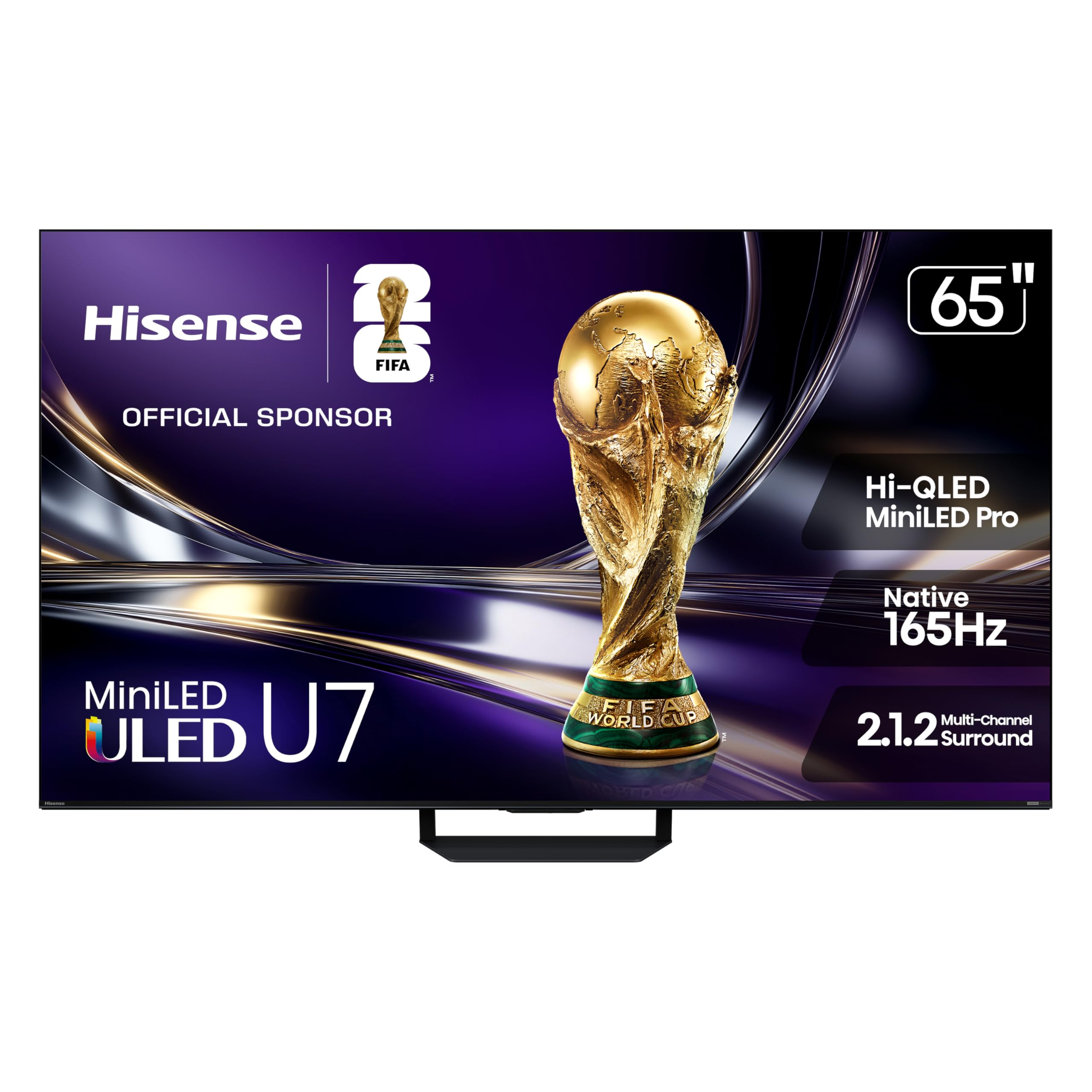
The Hisense U7SG sits at the top of the sub-$1000 hierarchy because it delivers Mini-LED performance with specifications that genuinely rival sets costing twice as much. The Hi-QLED MiniLED Pro backlight with up to 3000 local dimming zones produces black levels that are almost OLED-deep, while the panel’s native 165Hz refresh rate eliminates motion blur entirely — not just for 60fps content but for high-frame-rate PC gaming and 120fps console titles. The anti-reflection and glare-free layer makes this the strongest choice for bright living rooms with large windows.
The Hi-View AI Engine Pro processor analyzes every scene in real time, adjusting color volume and contrast dynamically. Dolby Vision IQ and HDR10+ Adaptive mean the TV reads your room’s ambient lighting and optimizes the picture automatically. The 2.1.2-channel audio system delivers enough presence for casual viewing, though a dedicated soundbar will unlock the full Dolby Atmos experience. Filmmaker Mode preserves the director’s intended color grading without motion smoothing — a rare inclusion at this price.
Google TV integration is smooth and responsive, and the inclusion of Bluetooth 5.4 ensures low-latency headphone pairing. The combination of high native refresh rate, dense dimming array, and effective anti-glare treatment makes the U7SG the most versatile performer across gaming, sports, and daytime movie watching. If you want one TV that does everything well, this is the benchmark.
Why it’s great
- Up to 3000 local dimming zones for exceptional contrast
- Native 165Hz panel with VRR up to 330Hz for tear-free gaming
- Anti-reflection coating handles bright rooms effectively
Good to know
- Built-in sound is decent but benefits from an external audio system for full Atmos immersion
- Google TV interface can feel sluggish on initial boot
2. TCL QM7K (2025)
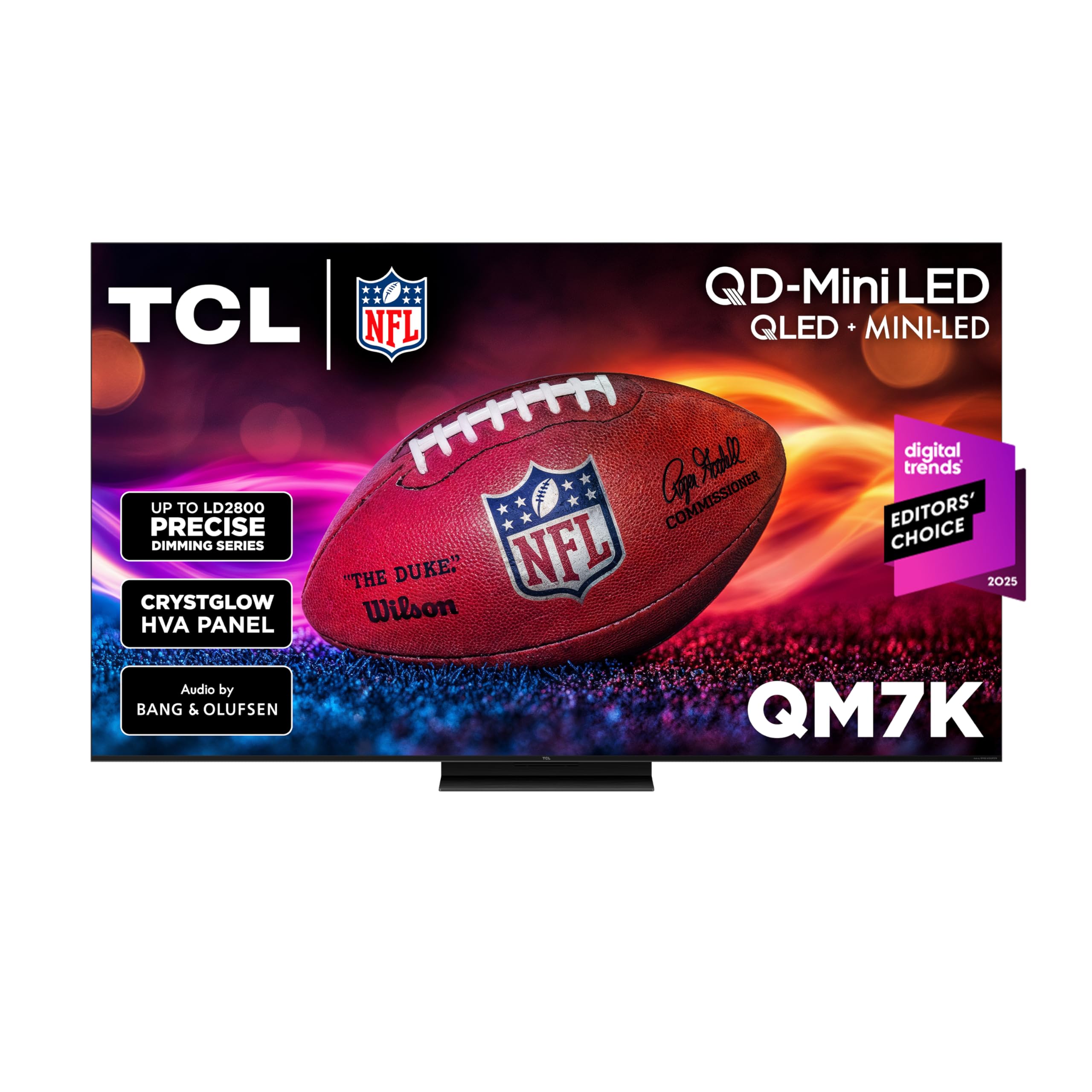
The TCL QM7K brings QD-Mini LED technology — a hybrid that combines Quantum Dot color volume with Mini-LED precision backlighting — to a price point that undercuts many of its competitors. The Halo Control System uses a super high energy LED microchip and condensed micro lens to reduce blooming around bright objects, while the CrystGlow HVA Panel blocks reflections effectively. With up to 2500 local dimming zones available in this chassis, the QM7K produces deep blacks and punchy highlights that rival the Hisense U7SG in real-world viewing.
The native refresh rate supports up to 144Hz with a 288Hz Variable Gaming Refresh Rate, making it an excellent partner for both PC and console gaming. The Onkyo 2.1-channel audio system offers more bass presence than typical TV speakers, though purists will still want a soundbar for cinematic content. Dolby Vision IQ and HDR10+ are both supported, and Google TV handles streaming app organization cleanly.
Build quality is solid with metal stand legs, and the panel’s low reflectivity makes it a strong option for rooms with controlled to moderate ambient light. The bundled remote feels basic for the price tier, but the picture performance — particularly the near-halo-free dimming — more than compensates. For buyers who want premium Mini-LED contrast without the premium price, the QM7K is the value sweet spot.
Why it’s great
- QD-Mini LED delivers rich color volume with minimal blooming
- Up to 2500 dimming zones create excellent contrast
- Anti-reflective CrystGlow HVA panel works well in bright conditions
Good to know
- Included remote feels cheap and lacks backlight
- Onboard audio is decent but not immersive; soundbar recommended
3. Amazon Ember Mini-LED Series (2026)
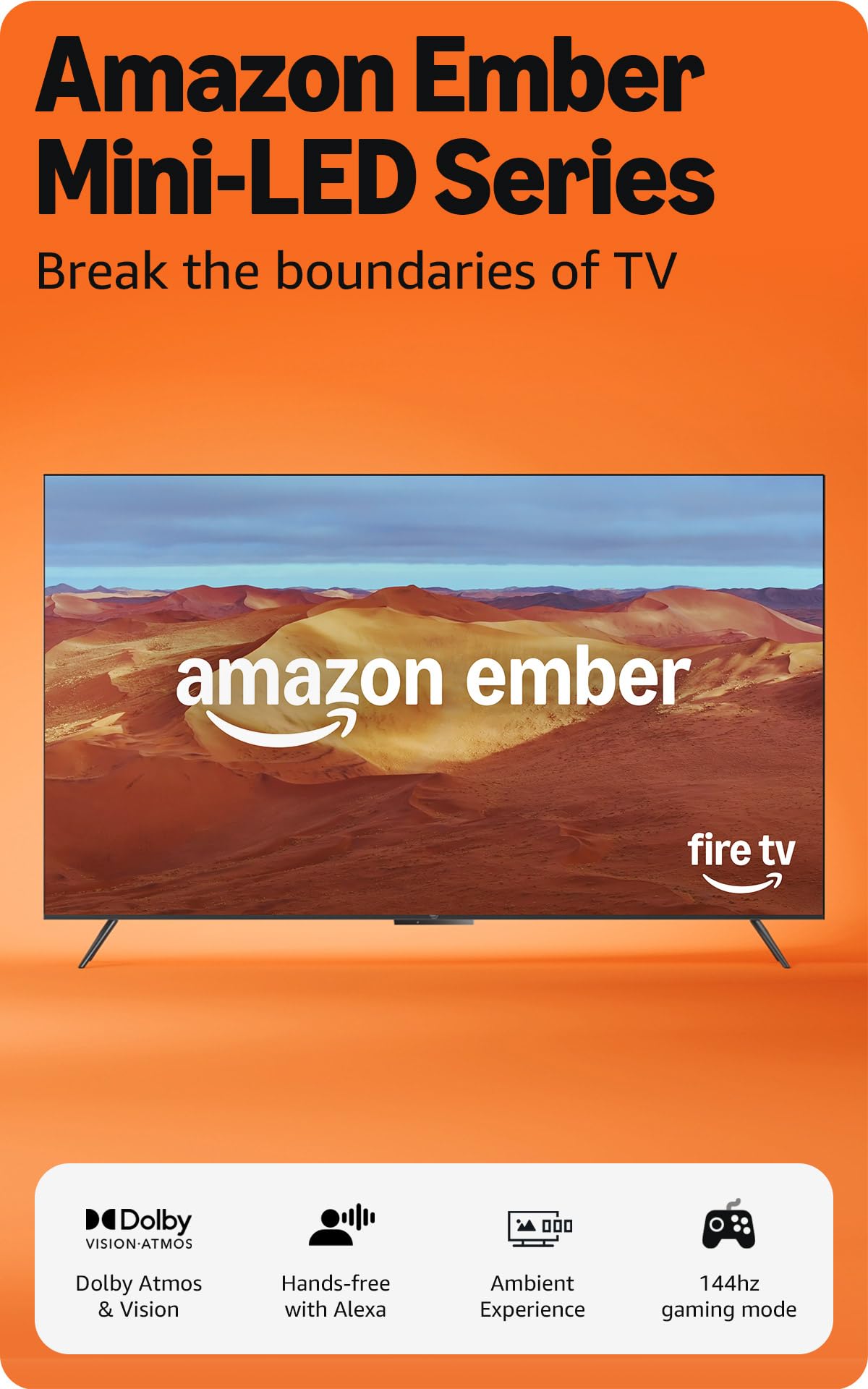
Amazon’s Ember Mini-LED Series is the company’s most ambitious television yet, and it earns its place as a top-tier Mini-LED contender thanks to 512 local dimming zones and a peak brightness of approximately 1400 nits. Dolby Vision IQ and HDR10+ Adaptive work together to tune the picture based on your room’s lighting, and the Fire TV Intelligent Picture processor fine-tunes scenes automatically. The result is a high-contrast image that handles HDR highlights with authority — explosions, sunlight, and specular reflections pop without washing out the surrounding dark areas.
Gamers will appreciate the native 144Hz panel with AMD FreeSync Premium Pro certification, which ensures tear-free motion even during fast-paced PC or console sessions. The 2.1 Dolby Atmos audio system includes a dedicated subwoofer, giving the TV more bass extension than most built-in speaker setups. The new Fire TV experience (2026) is faster than previous generations, though some users still report occasional menu stutter and advertising-heavy home screens — the trade-off for deep Alexa+ integration.
The Omnisense sensor wakes the TV when you enter the room, and the Ambient Experience shows artwork when the screen is idle, reducing the visual footprint of a large black rectangle on your wall. If you are already invested in the Alexa ecosystem and want a Mini-LED panel that competes directly with TCL and Hisense, the Ember Mini-LED is a compelling choice — just be prepared to manage the Fire TV home screen clutter.
Why it’s great
- 512 local dimming zones with 1400-nit peak brightness create strong HDR impact
- 144Hz panel with FreeSync Premium Pro for smooth gaming
- Built-in subwoofer provides better bass than typical TV speakers
Good to know
- Fire TV home screen is advertisement-heavy
- Some users report occasional menu lag and software glitches
4. Samsung M80H (2026)
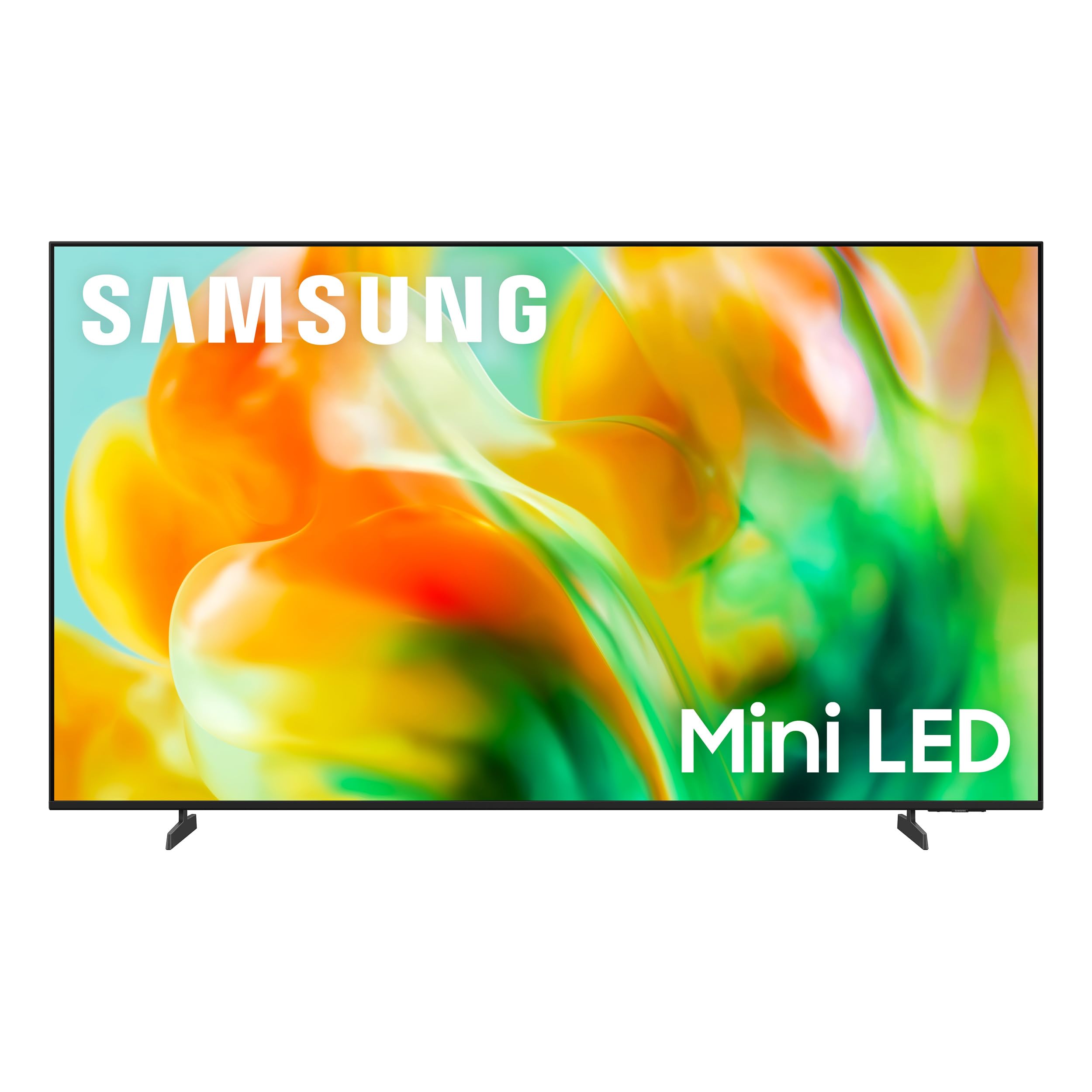
Samsung’s M80H brings the NQ4 AI Gen2 Processor — a chip originally developed for higher-tier Neo QLED models — to the sub-$1000 category. This processor performs 4K AI upscaling that adds genuine texture and sharpness to 1080p and 1440p content, making streaming video look noticeably more detailed than on standard upscaling engines. The Mini-LED backlight with Pure Spectrum Color covers a wide color volume, producing rich reds and deep greens without oversaturation.
The Motion Xcelerator 144Hz ensures smooth playback of fast-moving sports and games, and Auto HDR Remastering intelligently converts standard dynamic range content to HDR-like quality, boosting highlight detail and contrast. The display is a native 120Hz panel (with 144Hz capability via motion acceleration), which is perfectly adequate for console gaming. Samsung’s Tizen OS is responsive and clean, though the app store has fewer niche options compared to Google TV.
Built-in Alexa support is convenient, and the TV integrates well with Samsung smart home devices. The picture quality is excellent for sports and streaming, with Samsung’s signature bright, punchy image. However, the M80H does not include Dolby Vision — it relies on HDR10+ instead, which is less widely supported across streaming libraries. If Dolby Vision is a priority, look at the Hisense or TCL options.
Why it’s great
- NQ4 AI Gen2 processor upscales lower-resolution content effectively
- Pure Spectrum Color delivers accurate and vibrant color reproduction
- Auto HDR Remastering improves SDR content noticeably
Good to know
- No Dolby Vision support; relies on HDR10+ which has narrower content support
- Tizen app selection is smaller than Google TV or Roku
5. iFFALCON F75 (2025)
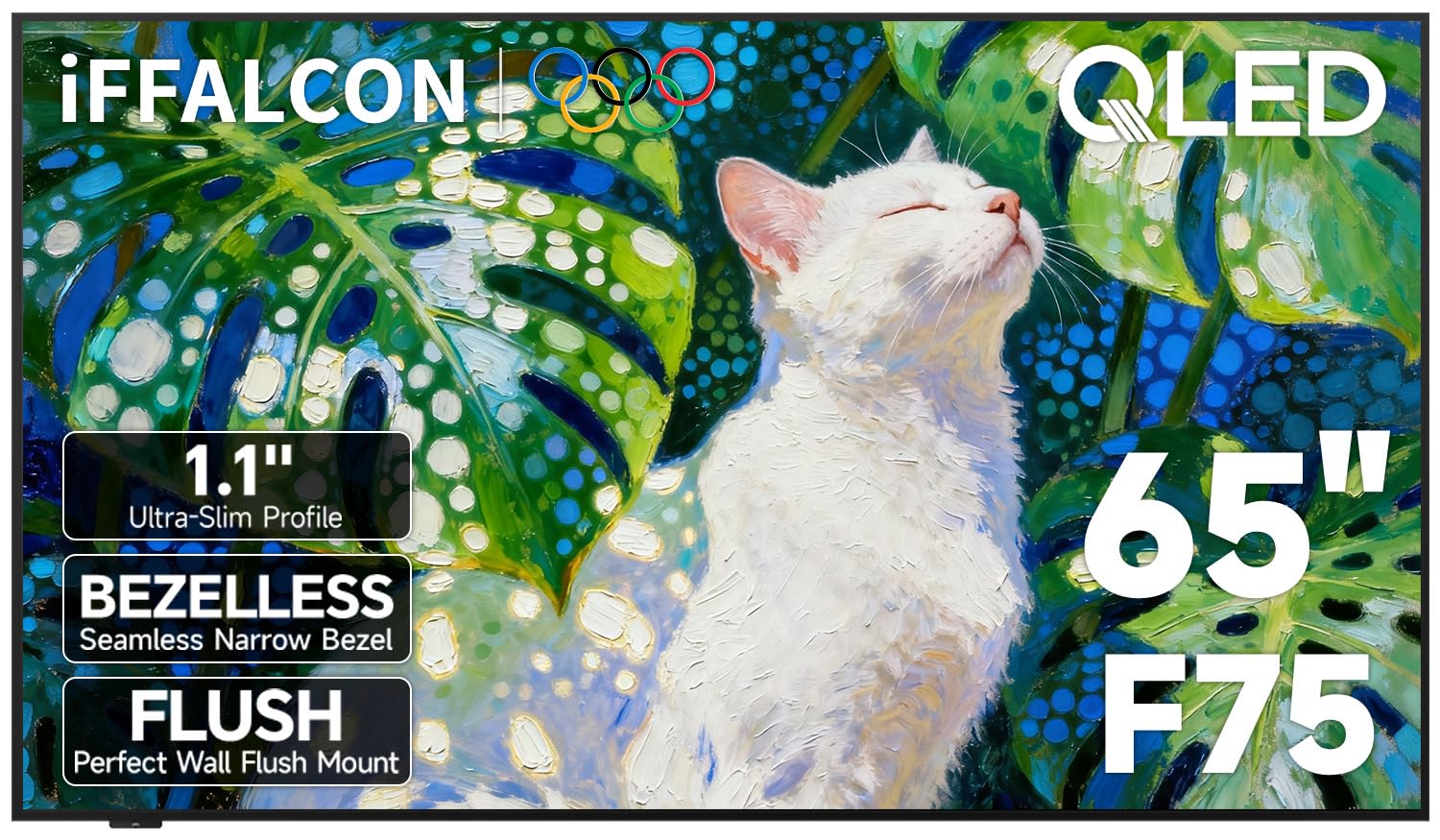
The iFFALCON F75 redefines expectations for design in the sub-$1000 category. At just 1.1 inches thick with a black metal front frame, it mounts nearly flush against the wall using the included bracket — no gap, no visible cables with the hidden management channel. This is a TV that your living room will not resent; it blends into the wall like a piece of art, and the Art Mode displays your personal photos or curated artwork when idle, turning the screen into an ambient visual element rather than a dead black rectangle.
Under the elegant exterior lies real performance: a QLED panel with 93% DCI-P3 color coverage, Dolby Vision IQ for automatic lighting-based picture adjustment, and a native 144Hz display with MEMC for smooth motion. The F75 includes a composite AV input via 3.5mm adapter, allowing older game consoles, DVD players, and camcorders to connect without extra hardware — a thoughtful inclusion that no other model in this roundup offers. Four HDMI ports (one with eARC), two USB ports, and optical audio out cover modern connectivity comprehensively.
Google TV runs smoothly, and the AMD FreeSync Premium Pro certification makes it a competent gaming display at 144Hz with low latency. The included wall mount and slim profile make installation straightforward, but the stand is also well-built for those who prefer a tabletop setup. If design and legacy device compatibility matter as much as picture quality, the F75 is a uniquely balanced package that punches well above its price point.
Why it’s great
- Ultra-slim 1.1″ profile with flush wall-mount design and cable management
- Composite AV input for legacy game consoles and DVD players
- Native 144Hz with FreeSync Premium Pro for smooth gaming
Good to know
- Dark scenes can appear slightly washed out in very bright rooms
- Google TV can occasionally feel sluggish with many apps installed
6. Sony BRAVIA 2 II (2025)

Sony’s BRAVIA 2 II is the go-to choice for PlayStation 5 owners because it includes exclusive Auto HDR Tone Mapping and Auto Genre Picture Mode — features that automatically optimize HDR settings and switch to game-optimized picture mode when a PS5 is detected. The 4K Processor X1 delivers Sony’s trademark natural color reproduction and excellent upscaling of 1080p and 720p content, making it a strong choice for viewers who watch a mix of streaming HD and 4K material.
The panel is a standard LED-backlit 4K display (not Mini-LED), so contrast is not as deep as the Hisense or TCL models in this roundup. However, Sony’s motion processing with Motionflow XR keeps fast-moving sports and action films fluid without the soap-opera effect. Google TV is clean and responsive, and the inclusion of Sony Pictures CORE gives buyers access to a selection of free movies — a nice bonus for movie collectors.
Sound quality is above average for an LED TV, and the Eco Dashboard helps manage power consumption efficiently. The biggest drawback is the lack of local dimming, which means blacks in dark scenes will appear grayish compared to the Mini-LED competition. If you prioritize PS5 integration and natural color accuracy above raw contrast, the BRAVIA 2 II is a solid choice. For gamers who want deeper blacks, the Hisense or TCL Mini-LED models offer better value.
Why it’s great
- Exclusive PS5 Auto HDR Tone Mapping and Auto Genre Picture Mode
- 4K Processor X1 delivers excellent upscaling and natural colors
- Motionflow XR keeps fast action clear without artifact
Good to know
- Standard LED backlight with no local dimming — blacks are not as deep as Mini-LED models
- Some users report occasional freezing requiring a power cycle
7. Amazon Ember QLED Series (2026)
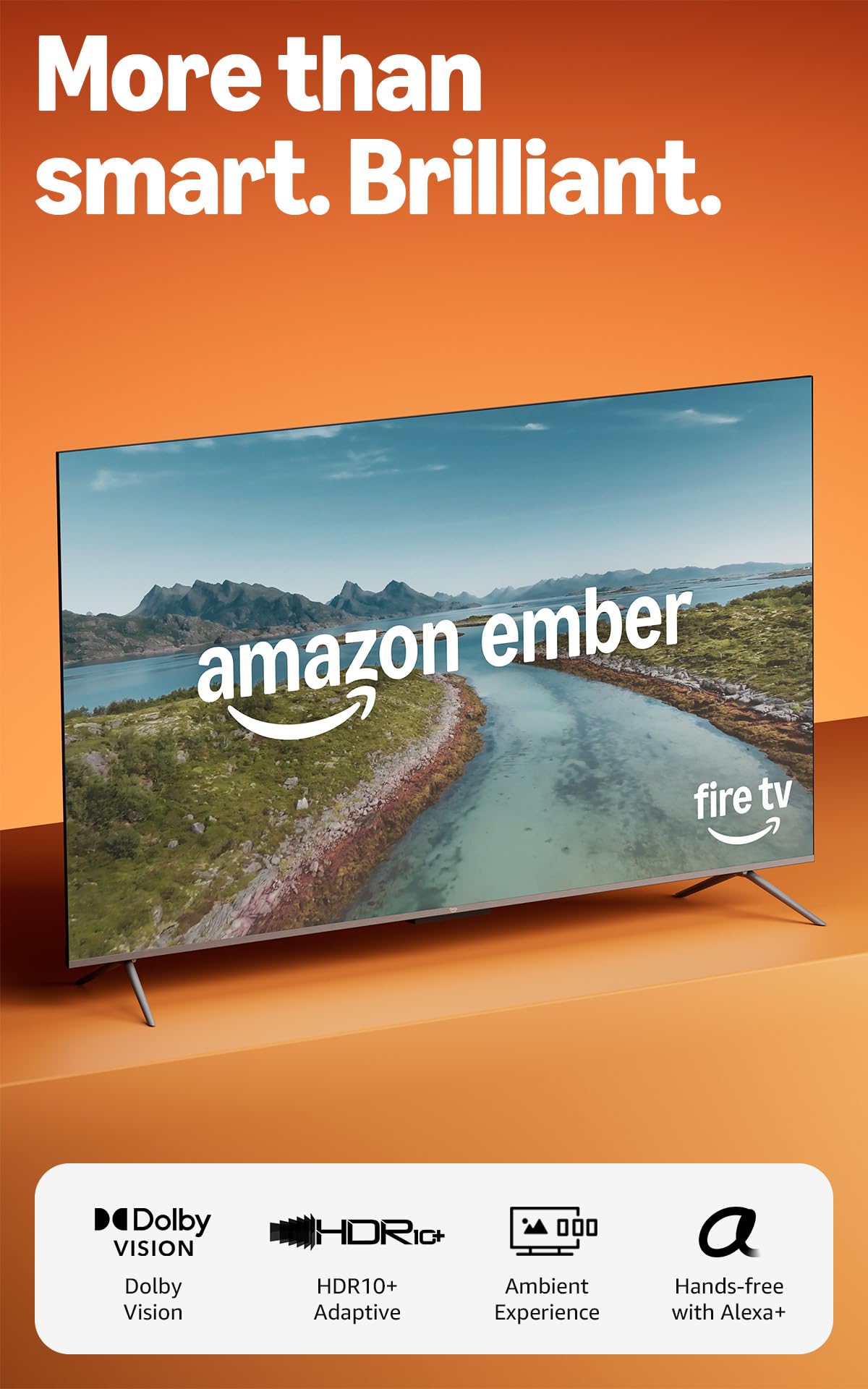
The Amazon Ember QLED Series positions itself as the fastest streaming TV you can buy, thanks to Wi-Fi 6 and a quad-core processor that launches apps nearly instantly. The 4K QLED display with full-array local dimming and Dolby Vision delivers vibrant colors and decent contrast, though the local dimming zone count is lower than the Ember Mini-LED model — expect some blooming around bright subtitles in dark scenes.
Deep integration with Alexa+ allows you to search across apps, control smart home devices, and even ask questions with the screen off. The Omnisense sensor wakes the display when you enter the room, and the Ambient Experience shows artwork or photos during idle time. For gaming, the panel handles 60Hz content well but lacks the high refresh rate of the Mini-LED Ember or the TCL QM7K — if competitive gaming is a priority, this is not the right model.
The Fire TV software is Amazon’s fastest implementation to date, but the home screen still prioritizes promoted content and rentals over your own library. Audio quality is adequate for casual viewing, but a soundbar is recommended for movies. The Ember QLED is a solid choice for Alexa-heavy households that want snappy app performance and vibrant color without paying for Mini-LED.
Why it’s great
- Wi-Fi 6 and quad-core processor make app launching very fast
- Deep Alexa+ integration with hands-free voice control even when screen is off
- Full-array local dimming improves contrast over standard edge-lit panels
Good to know
- Only 60Hz panel — not ideal for high-frame-rate gaming
- Fire TV home screen is cluttered with ads and promotions
8. Samsung M70H (2026)
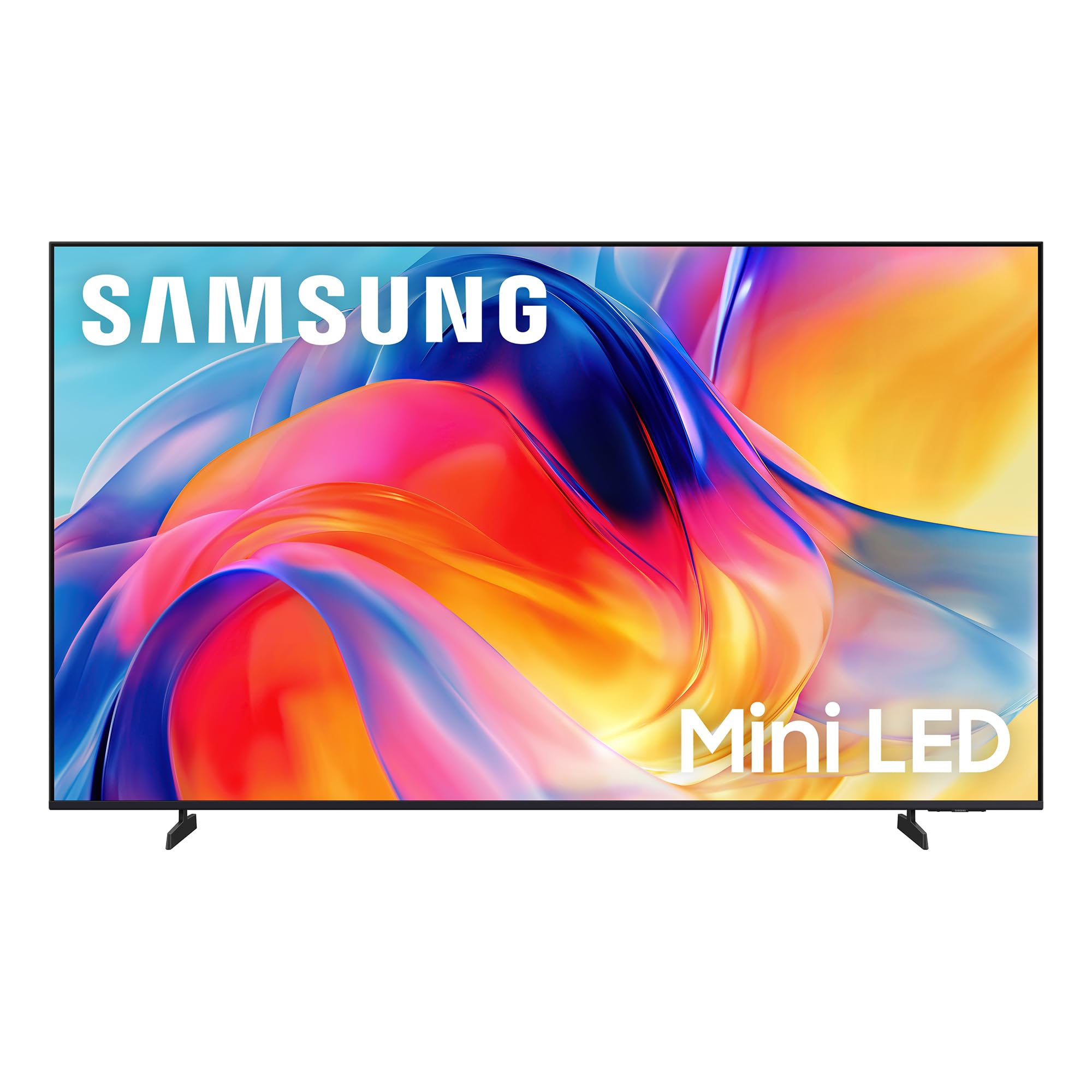
The Samsung M70H is the brand’s most affordable Mini-LED 65-inch model, and it delivers the core benefit of Mini-LED backlighting — improved contrast and brightness over standard LED — at a price that competes with entry-level QLED panels. The Pure Spectrum Color and Color Booster technologies produce vivid, saturated colors that look punchy in showroom lighting, and the Mini LED HDR processing adds depth to bright highlights.
Where the M70H falls short is motion handling: it is a native 60Hz panel (not 120Hz or 144Hz), so fast camera pans and sports content will exhibit more motion blur than higher-refresh competitors. Motion Xcelerator is listed but operates at 60Hz with some minor interpolation, not true 120Hz. For movie watching and casual TV, this is perfectly fine. For sports fans and gamers, it is a significant limitation.
The included Soccer Mode optimizes settings for football matches, and Gaming Hub consolidates cloud gaming services. Samsung TV Plus offers 2700+ free channels. The remote is sleek but lacks number buttons, and the startup time is slightly slower than the competition. The M70H is a respectable Mini-LED entry point for buyers who prioritize Samsung’s color science and interface over raw refresh rate performance.
Why it’s great
- Mini-LED backlight with Pure Spectrum Color for vivid, accurate colors
- Samsung TV Plus offers a huge library of free streaming content
- Color Booster enhances vibrancy without over-saturating skin tones
Good to know
- Native 60Hz panel — motion blur is noticeable in fast-paced content
- Remote lacks number buttons and startup times can be slow
9. Roku Plus Series (Mini-LED)
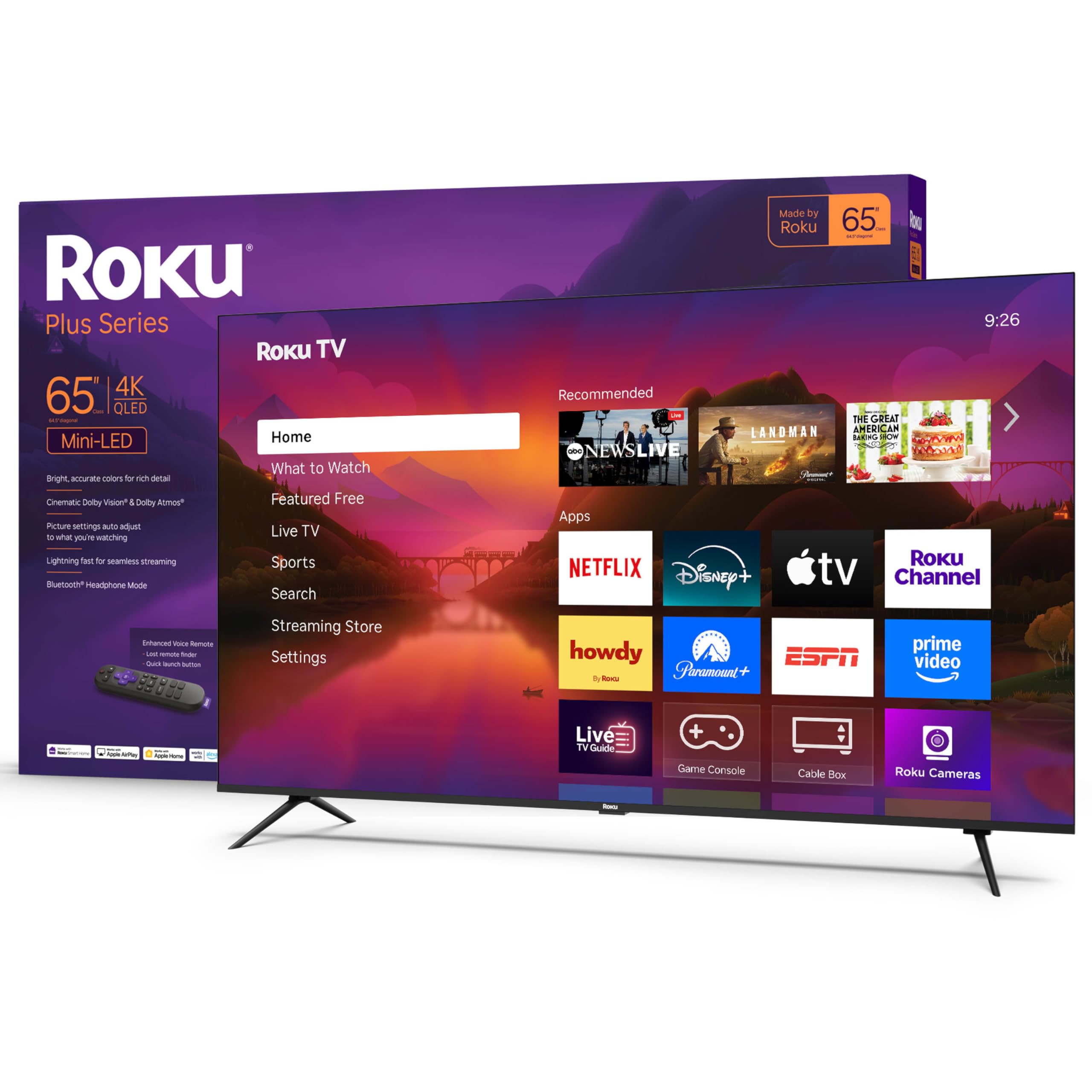
The Roku Plus Series combines Mini-LED backlighting with QLED color and Dolby Vision, producing an image that rivals mid-range competitors in contrast and color accuracy. The Mini-LED array provides better black levels than standard QLED panels, and the included built-in subwoofer adds genuine low-end presence to the audio — explosions and bass lines have weight that most TV speakers lack. Dolby Atmos support creates a believable soundstage for a built-in system.
Roku OS remains the most user-friendly smart platform on the market: a simple grid of apps with no algorithm-driven homepage clutter and no promoted content taking up half the screen. Apps launch quickly, and the Enhanced Voice Remote includes lost remote finder and voice search across thousands of channels. The Roku Smart Picture Max AI upscaling cleans up lower-resolution signals effectively.
The main trade-off is that Roku’s app selection, while broad, lacks some niche streaming services that Google TV offers. The built-in sound is good for a TV but still benefits from a soundbar for true home theater immersion. For buyers who value simplicity and ease of use above all else, the Roku Plus Series Mini-LED is the most friction-free way to get Mini-LED performance.
Why it’s great
- Mini-LED QLED with Dolby Vision delivers strong contrast and color
- Built-in subwoofer provides genuine bass response
- Roku OS is simple, fast, and free of ad clutter
Good to know
- Roku app library is slightly smaller than Google TV
- Automated AI upscaling may oversharpen certain content
10. Panasonic W70 (2025)

The Panasonic W70 brings a trusted brand name and Fire TV integration to the budget-friendly tier without sacrificing build quality. The HDR Bright Panel powered by the 4K Studio Color Engine delivers decent color accuracy and brightness for the price, and HDR10+ support ensures compatible content displays with proper dynamic metadata. The inclusion of an HDMI 2.1 port at this price point is noteworthy, allowing 4K at 60Hz with VRR for casual console gaming.
The Fire TV platform is responsive enough for app navigation, though some users report the processor feels slower than higher-end Fire TV models — expect occasional delays when switching between apps. The four HDMI ports and Bluetooth 5.0 provide good connectivity. Build quality is solid with metal feet that feel substantial.
The key limitation is the standard LED backlight with no local dimming, so contrast is average and blacks will appear grayish in a dark room. The 60Hz panel is fine for movies and TV but not ideal for fast sports or competitive gaming. The Panasonic W70 is a reliable, no-nonsense option for buyers who prioritize brand trust and Fire TV integration over high-end picture performance.
Why it’s great
- Trusted Panasonic build quality with metal stand feet
- HDMI 2.1 port with VRR for casual gaming
- HDR10+ support ensures accurate dynamic metadata
Good to know
- Standard LED backlight — blacks are not deep in dark rooms
- Fire TV processor can feel sluggish during multitasking
11. Roku Select Series (QLED)
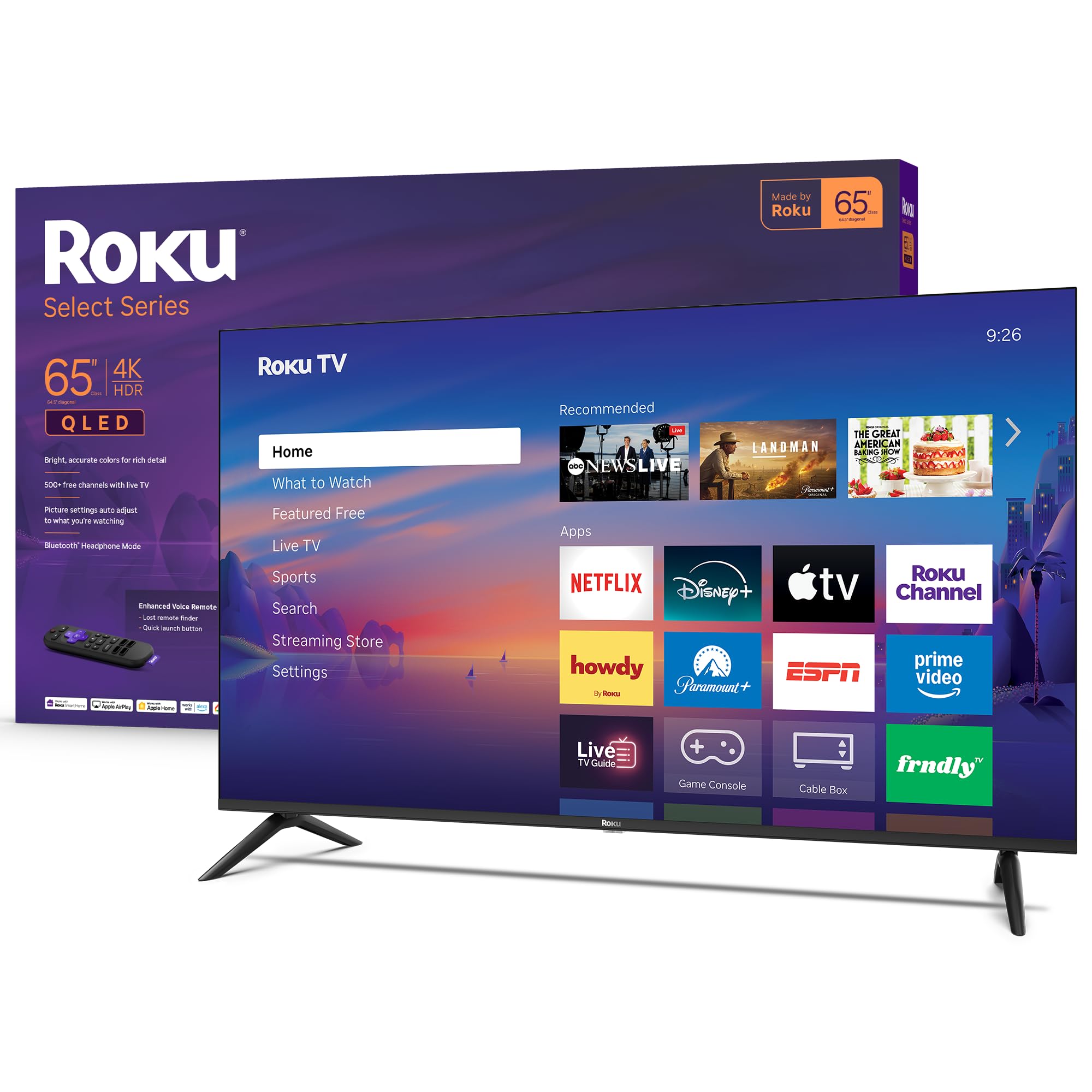
The Roku Select Series QLED is the most affordable 65-inch QLED television in this roundup, and it punches surprisingly hard for the price. The Quantum Dot layer produces a wider color gamut than standard LED panels, making streaming content in HDR10 look noticeably more vibrant. The Direct LED backlight provides better uniformity than edge-lit alternatives, and the Roku Smart Picture processing cleans up incoming signals effectively.
Roku OS is the star here — it is fast, straightforward, and receives automatic updates. The Voice Remote includes lost remote finder and Bluetooth Headphone Mode for private listening, a genuinely useful feature for late-night viewing. Setup takes minutes, and the interface stays responsive even after months of use. The 60Hz panel is fine for movies and casual TV, and Game Mode reduces input lag for non-competitive gaming.
The limitations are clear at this price: no local dimming, so blacks are typical LED gray in dark scenes, and peak brightness is lower than premium models, which limits HDR impact. The plastic build feels lightweight but not flimsy. For a secondary bedroom TV, a first apartment, or a budget-conscious primary setup, the Roku Select Series QLED delivers dependable QLED color with the best smart TV experience available — without breaking the bank.
Why it’s great
- Affordable QLED panel with wide color coverage for the price
- Roku OS is the fastest and simplest smart platform available
- Bluetooth Headphone Mode for private listening without soundbar
Good to know
- No local dimming — blacks appear gray in dark environments
- 60Hz panel and lower peak brightness limit HDR and motion performance
FAQ
Is Dolby Vision support important at this price point?
What is the difference between QLED and Mini-LED?
Can I use a 65-inch TV in a bright living room?
How important is HDMI 2.1 for this category?
Final Thoughts: The Verdict
For most users, the best 65 inch tv under $1000 winner is the Hisense 65U7SG because it combines a native 165Hz panel, up to 3000 local dimming zones, and anti-glare coating into a package that excels across gaming, sports, and bright-room movie watching without compromise. If you want the best value Mini-LED performance per dollar, grab the TCL QM7K — its QD-Mini LED panel with up to 2500 zones delivers near-flagship contrast at a noticeably lower price. And for the buyer who prioritizes design and legacy device support, nothing beats the iFFALCON F75, a wall-mountable art TV with a 144Hz panel that hides cables and connects vintage consoles without adapters.