
Our readers keep the lights on and the weekend projects moving. As an Amazon Associate, I earn from qualifying purchases.
Crunches on the floor aggravate your lower back, and standard ab rollers transfer all the load straight to your wrists and shoulders. An ab roller with dedicated elbow support changes that — it shifts the force to your forearms, letting your core do the work instead of your joints. The result is deeper rollouts with less compensation and a real burn in the rectus abdominis.
I’m Rikta — the co-founder and writer behind FitlyFast. I’ve spent countless hours analyzing the construction materials, axle tolerances, and rebound mechanics of several dozen ab rollers to separate the genuinely stable designs from those that wobble after a few weeks.
This guide breaks down the models that actually keep your arms locked in a safe position so you can progressively overload your abs without sacrificing form. Here is my pick for the very best ab roller with elbow support on the market right now.
How To Choose The Best Ab Roller With Elbow Support
Not all elbow-support rollers function the same. The padding density, wheel count, and rebound mechanism all determine whether you get a smooth, safe rollout or a rickety tool that slides sideways. Focus on these three specs before you buy.
Wheel Design: Four-Wheel vs. Dual-Wheel vs. Single
Four-wheel designs provide the widest base and best anti-tip stability, making them ideal for beginners still learning to brace their core. Dual-wheel models offer better control for advanced users who want to target obliques by rolling at slight angles. Single wheels force maximum balance demand but strain wrists — that defeats the purpose of elbow support, so they rarely appear in this category.
Rebound Tension and Control
Automatic rebound systems use a spring or brake to assist the return phase. A lighter rebound (around 10–15 lbs of resistance) helps beginners complete full range of motion without compromising form. Heavier rebound (20+ lbs) challenges advanced users on the eccentric phase. Look for a smooth, silent spring — squeaky mechanisms indicate poor internal bushing quality that degrades quickly.
Elbow Pad Material and Width
The elbow rests must be wide enough to cradle your forearms without digging in. High-density foam (minimum 1-inch thick) prevents rapid compression and pressure points. Avoid thin foam that flattens after a few sessions — once the foam bottoms out, the plastic frame presses directly into your arms and defeats the comfort purpose of the design.
Quick Comparison
On smaller screens, swipe sideways to see the full table.
| Model | Category | Best For | Key Spec | Amazon |
|---|---|---|---|---|
| DMoose Ab Roller | Premium | Maximum durability & comfort | Stainless steel frame; 330 lb capacity | Amazon |
| BERTER Dual Wheel | Premium | Controlled oblique targeting | Left/right separate wheels; 3.5 lbs | Amazon |
| Sunny Health & Fitness | Premium | Multi-exercise versatility | 30.9″ L build; dip station mode | Amazon |
| Royal Blaze 4-Wheel | Mid-Range | Built-in rep tracking | 5-layer anti-slip; 300 lb limit | Amazon |
| Uota Abdominal Wheel | Mid-Range | Quiet, eco-friendly build | Stainless steel; 3 lb weight | Amazon |
| POYIPI 4-Wheel | Budget | Best value entry-level pick | Automatic rebound; 600 lb capacity | Amazon |
| Pqeert 4-Wheel | Budget | Compact office-friendly unit | ABS plastic; 15.7″ H frame | Amazon |
In‑Depth Reviews
1. DMoose Fitness Ab Roller

The DMoose Ab Roller uses a stainless steel frame that resists flex even when you push into full extension at 220 lbs of body weight. The high-density foam elbow rests are two inches thick — wide enough to distribute pressure evenly across the forearm without any hard plastic digging in. Users consistently report zero assembly required, so it rolls straight out of the box.
The rubber-coated 4-inch wheel glides silently over both tile and low-pile carpet without leaving scuff marks. The 360-degree core engagement design means you can rotate your torso slightly during the rollout to hit the obliques, something rigid four-wheel frames cannot do. The 330 lb weight limit covers virtually all home users without frame compromise.
Two included knee pads (a thick foam pad and a thinner gel pad) let you choose your comfort level on hard floors. Experienced users who have trained with gym-grade single-wheel rollers note that this model matches the build quality of commercial units at a fraction of the footprint. The only trade-off is the higher upfront cost compared to plastic-frame alternatives.
Why it’s great
- Stainless steel frame eliminates flex during deep rollouts
- Extra-wide foam elbow rests prevent forearm pressure points
- Zero assembly required — use immediately out of the box
Good to know
- Higher price point than plastic-body rollers
- Single wheel requires more balance than four-wheel models
2. BERTER Ab Roller

BERTER breaks from the four-wheel crowd with a left-right dual-wheel axle that allows independent rotation. This lets you roll at a slight diagonal to engage the internal and external obliques — a movement standard ab wheels lock you out of. The curved padded handle and high-density foam elbow rests reduce wrist and shoulder strain during angled rollouts.
The automatic rebound spring uses a silent mechanism that stores and releases energy smoothly without the squeaking common in lower-end units. Users weighing up to 260 lbs report no frame flex on the ABS-plastic body, though the metal axle and rubber wheel handle the load. The 16.8-inch length suits average-height users; taller individuals may want a longer wheelbase.
Assembly takes under two minutes with no tools required — the wheels snap onto the axle and the elbow pads clip into the handle frame. The grey finish resists sweat staining and wipes clean easily. Advanced users note that the rebound tension is moderate enough to allow slow eccentric control, making it suitable for both strength and hypertrophy rep schemes.
Why it’s great
- Dual independent wheels allow oblique-targeting angled rolls
- Silent spring mechanism avoids disruptive squeaking
- Tool-free assembly in under two minutes
Good to know
- Plastic body may show wear faster than stainless steel frames
- Wheelbase length is shorter than premium rollers
3. Sunny Health & Fitness Ab Trainer
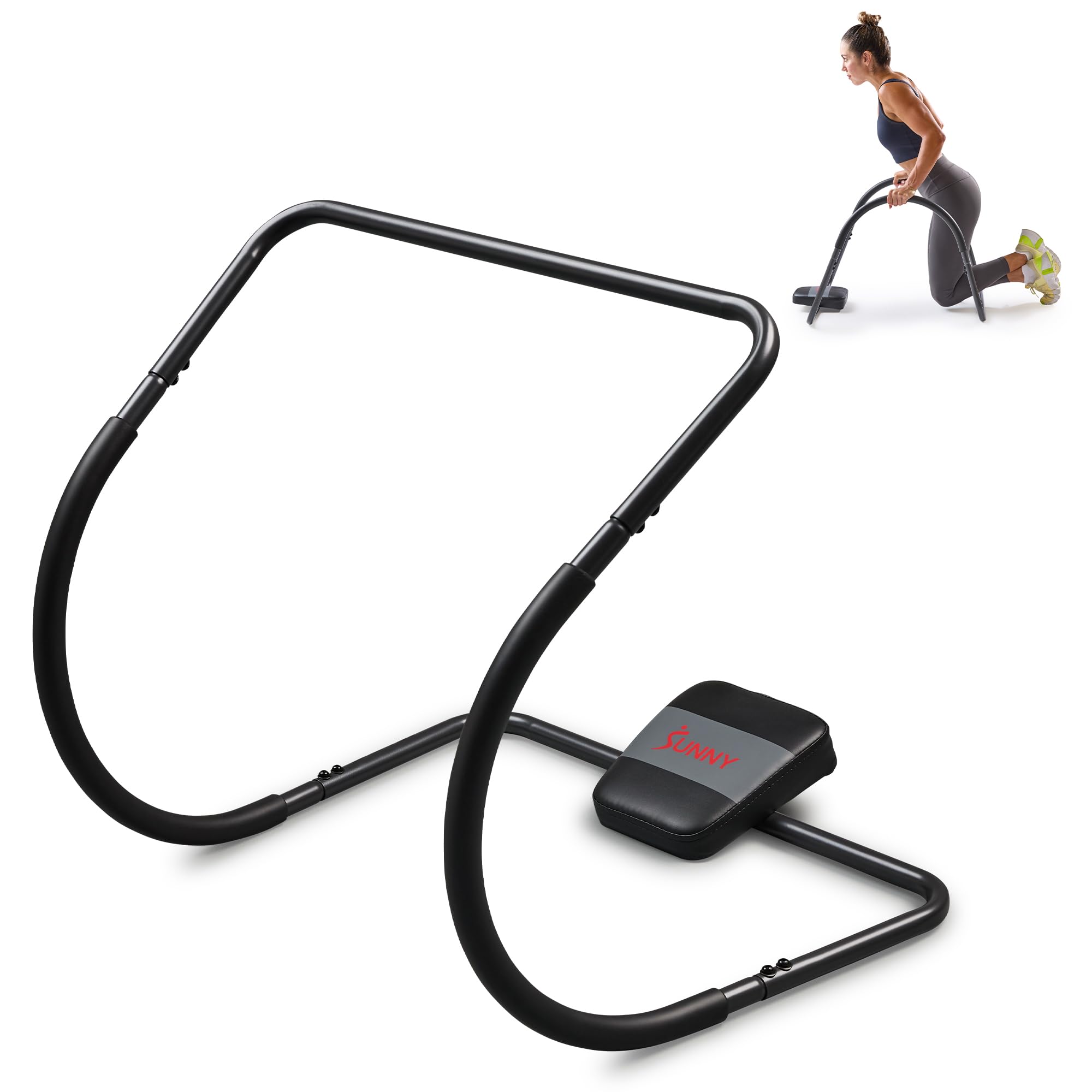
The Sunny Health & Fitness unit is unique: it is not an ab wheel but a floor-based waist trainer with elbow support pads and a swivel seat. You sit on the padded seat, anchor your elbows into the rests, and crunch forward using your core to lift the seat. This eliminates any balance requirement and isolates the rectus abdominis without involving the hip flexors.
The carbon steel frame and bolted connections (no flimsy pop pins) support users up to 300 lbs with zero wobble. Flipping the machine over converts it into a dip station for triceps work, which adds value for small home gyms. The padded headrest and anti-slip floor pads protect both your spine and your flooring during intense sessions.
Users with lower back issues or herniated disks report being able to train abs pain-free on this machine because the supported crunch pattern removes spinal flexion stress. Assembly requires basic bolt tightening but takes under 15 minutes. The 30.9-inch length means it needs dedicated floor storage — it does not stash in a drawer like a wheel roller.
Why it’s great
- Completely removes balance challenge — pure core isolation
- Converts to a dip station for triceps work
- Back-friendly design ideal for users with spinal conditions
Good to know
- Large footprint requires dedicated floor space
- Some units develop spring noise after several months
4. Royal Blaze 4-Wheel Roller
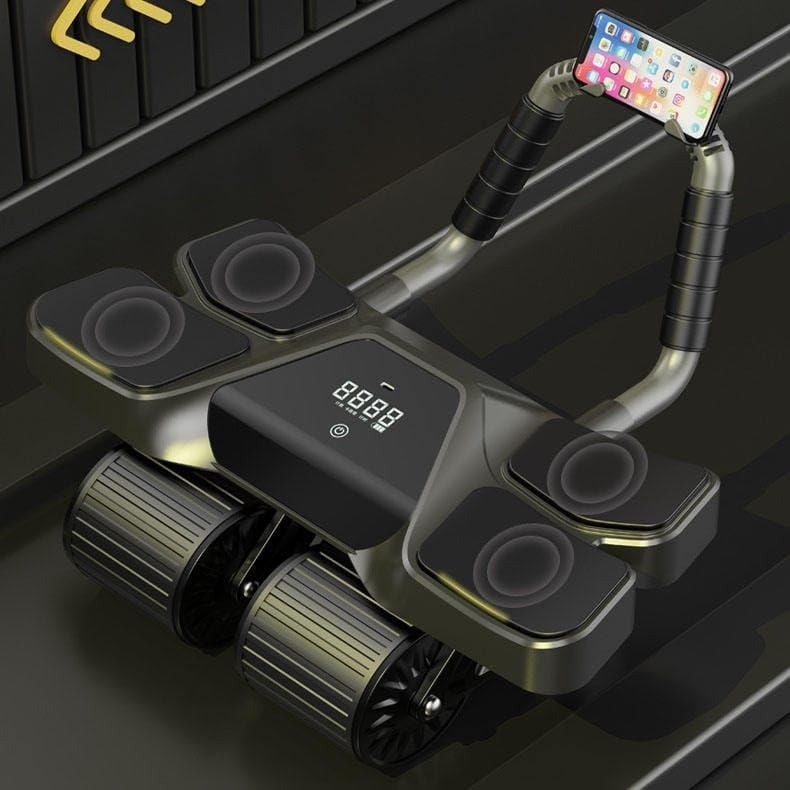
Royal Blaze incorporates a digital rep tracker into the handle — a small screen that counts each full extension-and-return cycle so you do not have to keep mental tabs during hard sets. The four-wheel base with five-layer anti-slip padding grips hardwood and laminate floors securely, eliminating sideways drift even at maximum rollout depth.
The alloy steel frame carries a 300 lb weight limit, and the automatic rebound system uses an intelligent auxiliary brake to control return speed. Users note the elbow pads are wide and sweat-resistant, though some early units had a plastic bracket flex issue that the seller corrected with a free replacement. At 8.19 inches long, the compact design stores easily under a couch or bed.
Accessories include a small knee pad and a set of resistance bands, adding pull-apart and chest-fly exercises to your ab routine. The rep tracker requires a button cell battery (included) and automatically resets after each session. Beginners like the visual feedback; advanced users may find the four-wheel base limits oblique rotation compared to a dual-wheel design.
Why it’s great
- Digital rep counter removes guesswork during sets
- Five-layer anti-slip system prevents drift on hardwood
- Comes with resistance bands for expanded workouts
Good to know
- Some units required a replacement due to plastic bracket flex
- Four-wheel design limits oblique-targeting movement
5. Uota Abdominal Wheel

The Uota wheel uses a stainless steel axle and five-layer non-slip wheel construction to deliver near-silent operation — no squeaks, no floor scraping, just the smooth hum of the spring winding during the eccentric phase. The foam elbow pads are denser than most budget rollers, maintaining their shape after repeated use rather than compressing into flat plastic.
Assembly is the fastest in this category: the handle and wheel snap together in about 15 seconds, no tools required. A magnetic timer attachment clips onto the handle for interval training, though some users note the timer is basic and lacks start-stop controls. The orange color scheme is highly visible, making it easy to spot in a cluttered gym bag.
Users weighing up to 180 lbs report the rebound tension feels moderate — enough assist to prevent flopping on the return but light enough to keep the core engaged. The 300 lb weight limit is lower than other models, which matters if you are a heavier lifter. A few users mention a slight squeak developing after heavy use, but lubricating the axle with silicone spray resolves it.
Why it’s great
- Stainless steel axle provides smooth, near-silent operation
- 15-second assembly with no tools needed
- Dense elbow foam resists compression over time
Good to know
- 300 lb capacity may not suit heavier athletes
- Included magnetic timer has limited functionality
6. POYIPI 4-Wheel Roller

POYIPI offers the lowest entry price in the category while still delivering a true four-wheel base and padded elbow supports. The five-layer wheel construction (non-slip, enhanced, shock absorption, noise reduction, support) provides stable tracking on both carpet and hard floors without leaving marks. The 600 lb weight rating is the highest in this review, though the ABS plastic frame makes that number a static load spec rather than a dynamic workout limit.
Users consistently praise the comfortable elbow rests and the automatic rebound assist that helps beginners complete full rollouts without collapsing. The included knee pad is a thin foam piece — adequate for carpet but minimal on hardwood. The spring mechanism feels smooth out of the box, though a few users question the plastic durability beyond one year of daily use.
At this price point, the trade-off is material quality. The plastic frame flexes slightly during deep extension, and the long hair of some users has gotten caught in the wheel axle. For someone testing whether ab wheel training fits their routine, the POYIPI is a low-risk entry point that proves the concept.
Why it’s great
- Four-wheel design offers excellent beginner stability
- Aggressive 600 lb static weight rating
- Includes knee pad and automatic rebound assist
Good to know
- ABS plastic frame may flex under heavy loads
- Thin knee pad insufficient for hardwood floors
7. Pqeert 4-Wheel Roller
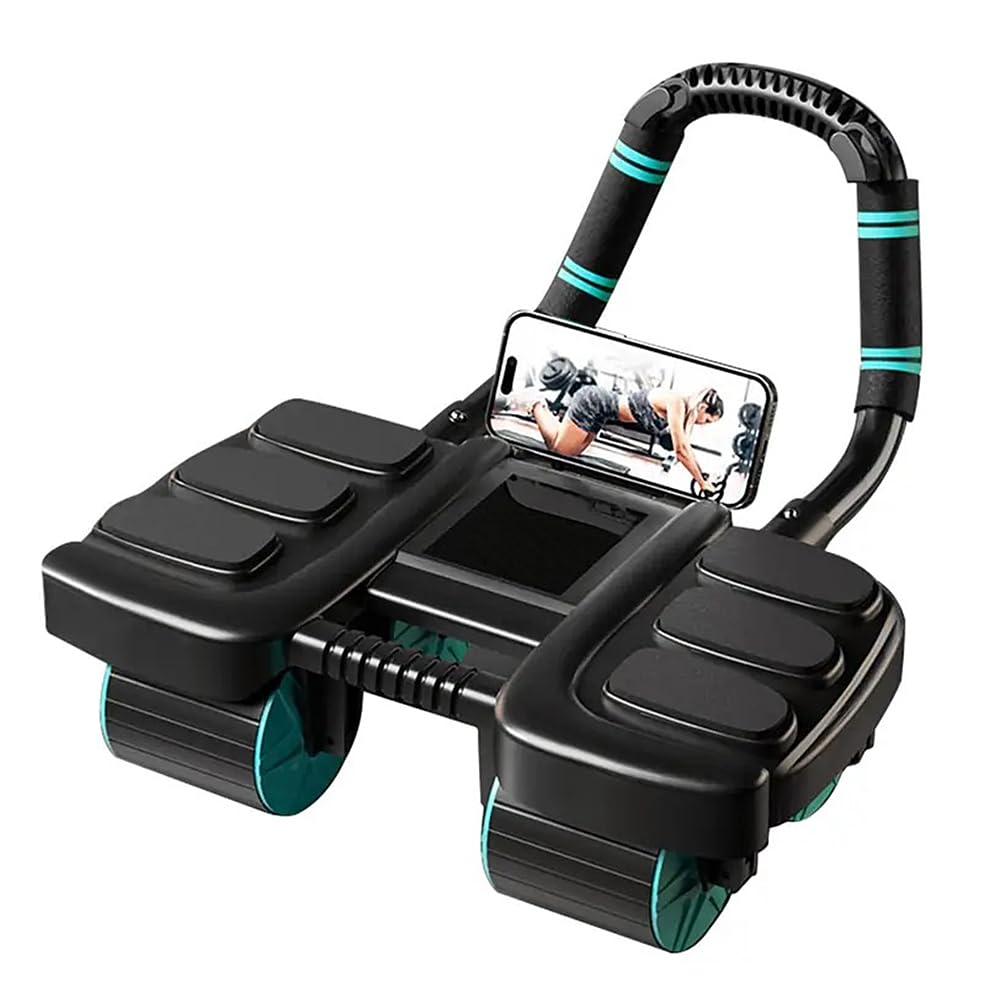
The Pqeert 4-wheel roller matches the POYIPI in price but targets a slightly different buyer: someone who needs the smallest possible footprint. At 6.9 inches long and 5.62 inches wide, it slides into a desk drawer or gym bag easier than any other model here. The ABS plastic frame keeps weight down to 1.74 kg, making it genuinely portable.
The automatic rebound uses a high-elasticity silent spring that stores energy well during forward movement. Users around 220 lbs report the frame holds up without cracking, though the wrist-to-elbow distance is shorter than the DMoose and BERTER models — taller users may feel cramped during full extension. The elbow foam compresses faster than premium pads, so expect some bottoming out after a few months.
No assembly instructions are included, but the design is intuitive enough to snap together in under a minute. The knee pad is small and lacks grip on smooth floors, which makes it less practical for bare hardwood sessions. For the price, it works as a backup unit or a travel roller, but the long-term durability does not match the mid-range and premium options.
Why it’s great
- Compact footprint fits in a desk drawer or gym bag
- Silent spring mechanism for quiet home workouts
- Holds weight well for its ABS plastic construction
Good to know
- Elbow foam compresses and bottoms out faster than premium pads
- Short wheelbase feels restrictive for taller users
FAQ
Is a four-wheel ab roller better for beginners than a dual-wheel model?
Can I use elbow-support rollers on thick carpet without damaging it?
How much weight can an ABS plastic ab roller realistically handle?
Will elbow support prevent lower back pain during ab wheel rollouts?
Final Thoughts: The Verdict
For most users, the ab roller with elbow support winner is the DMoose Fitness Ab Roller because its stainless steel frame and dense elbow pads deliver commercial-grade stability that lasts through daily use without creaking or flexing. If you want the ability to target your obliques through angled rolls, grab the BERTER Dual Wheel. And for a back-friendly, zero-balance alternative that also doubles as a dip station, nothing beats the Sunny Health & Fitness Ab Trainer.