
Our readers keep the lights on and the weekend projects moving. As an Amazon Associate, I earn from qualifying purchases.
Specs are compiled from manufacturer listings and verified buyer reviews and can change over time — please confirm the key details on the product page before buying.
If you have ever watched a blueberry bush turn yellow or a gardenia refuse to bloom, the pH (the measure of how acidic or alkaline your soil is) in your pot is almost certainly the culprit. Many standard potting soils sit at a neutral pH of 7.0, which starves acid-loving plants of the nutrients they need to thrive. This guide cuts through the confusing labels and shows you exactly which mixes deliver the low-pH environment your blueberries, azaleas, ferns, and citrus trees actually need to grow strong and flower freely.
I’m Rikta — the founder and writer behind FitlyFast. This guide is built by comparing the manufacturers’ published specifications and the patterns across verified customer reviews, so you get each pick’s real strengths and trade-offs instead of marketing spin.
Whether you are potting a Meyer lemon, repotting a fern, or starting a blueberry patch in containers, finding the right acidic potting soil makes the difference between a plant that merely survives and one that truly flourishes.
Quick Picks
- Soil Sunrise Acid Loving Plant Potting Soil Mix (12 Quarts) — Best Overall
- Coast of Maine Organic & Natural Planting Soil for Acid Loving Plants (20 Qt) — Premium Volume
- GARDENWISE Organic Lemon Tree Soil – Citrus Potting Mix (3 Quarts) — Citrus Star
- Perfect Plants Specialty Blueberry Potting Mix (4qt) — Blueberry Buddy
- Jessi Mae Potting Soil – 4-Quart Bag, Perlite (Slightly Acidic) — Houseplant Hero
- Spike & Bloom High Drainage Cactus Soil Potting Mix (4 Quarts) — Cactus Performer
- Spike & Bloom High Drainage Succulent Soil w/ Coffee Compost & Mycorrhizae (4 Quarts) — Succulent Specialist
How To Choose The Best Acidic Potting Soil
Not all bags labeled “for acid-loving plants” are created equal. A few key specs separate the truly effective mixes from the ones that just add marketing. Here is what to look for before you buy.
Check the pH range first
A bag that does not state a pH number is a gamble. Most acid-loving plants need a pH between 5.0 and 6.5. If the soil is too alkaline (above pH 7.0), your plant cannot absorb iron, and the leaves will turn yellow between the veins — a condition called chlorosis. Some mixes, like the GARDENWISE Citrus mix, call out a specific range of 5.5 to 6.5, which gives you a reliable starting point.
Drainage and texture matter as much as acidity
Root rot kills more potted acid-lovers than pH mistakes. A good acidic potting soil includes perlite (tiny white volcanic glass beads), coarse sand, or pine bark to create air pockets. Heavy, compacted soil holds water against the roots and suffocates them. Look for terms like “well-draining,” “light and airy,” or “gritty” — especially for succulents and cacti that also need a lower pH.
Pre-fertilized versus bare soil
Some mixes come with a slow-release fertilizer already blended in, which saves you a step for the first few months. The Specialty Blueberry Mix includes a slow-release 18-6-8 fertilizer (18% nitrogen, 6% phosphorus, 8% potassium) that the manufacturer claims feeds for up to 12 months. Others are just a base soil, leaving you in control of feeding. Decide if you want convenience or the ability to customize your nutrient schedule.
Quick Comparison
| Model | Best For | Volume | pH Range | Key Ingredient | Amazon |
|---|---|---|---|---|---|
| Soil Sunrise Acid Loving Mix | Heavy feeders (azaleas, rhodies) | 12 Quarts | Low (acidic) | Peat moss, pine mulch | Amazon |
| Perfect Plants Blueberry Mix | Blueberries & fruit shrubs | 4 Quarts | Low (acidic) | Peat moss, pine bark | Amazon |
| GARDENWISE Citrus Potting Mix | Lemon & citrus trees | 3 Quarts | 5.5 – 6.5 | Peat moss, organic compost | Amazon |
| Spike & Bloom Succulent Mix | Succulents & cacti | 4 Quarts | ~6.7 | Coffee compost, mycorrhizae | Amazon |
| Spike & Bloom Cactus Mix | Cacti & high-drainage pots | 4 Quarts | 6.5 | Mycorrhizae, clays, sands | Amazon |
| Jessi Mae Potting Soil | Indoor houseplants | 4 Quarts | Slightly acidic | Perlite, organic materials | Amazon |
| Coast of Maine Acid-Loving Mix | Garden beds & big pots | 20 Quarts | Low pH | Sphagnum peat, composted manure | Amazon |
In‑Depth Reviews
1. Soil Sunrise Acid Loving Plant Potting Soil Mix (12 Quarts)
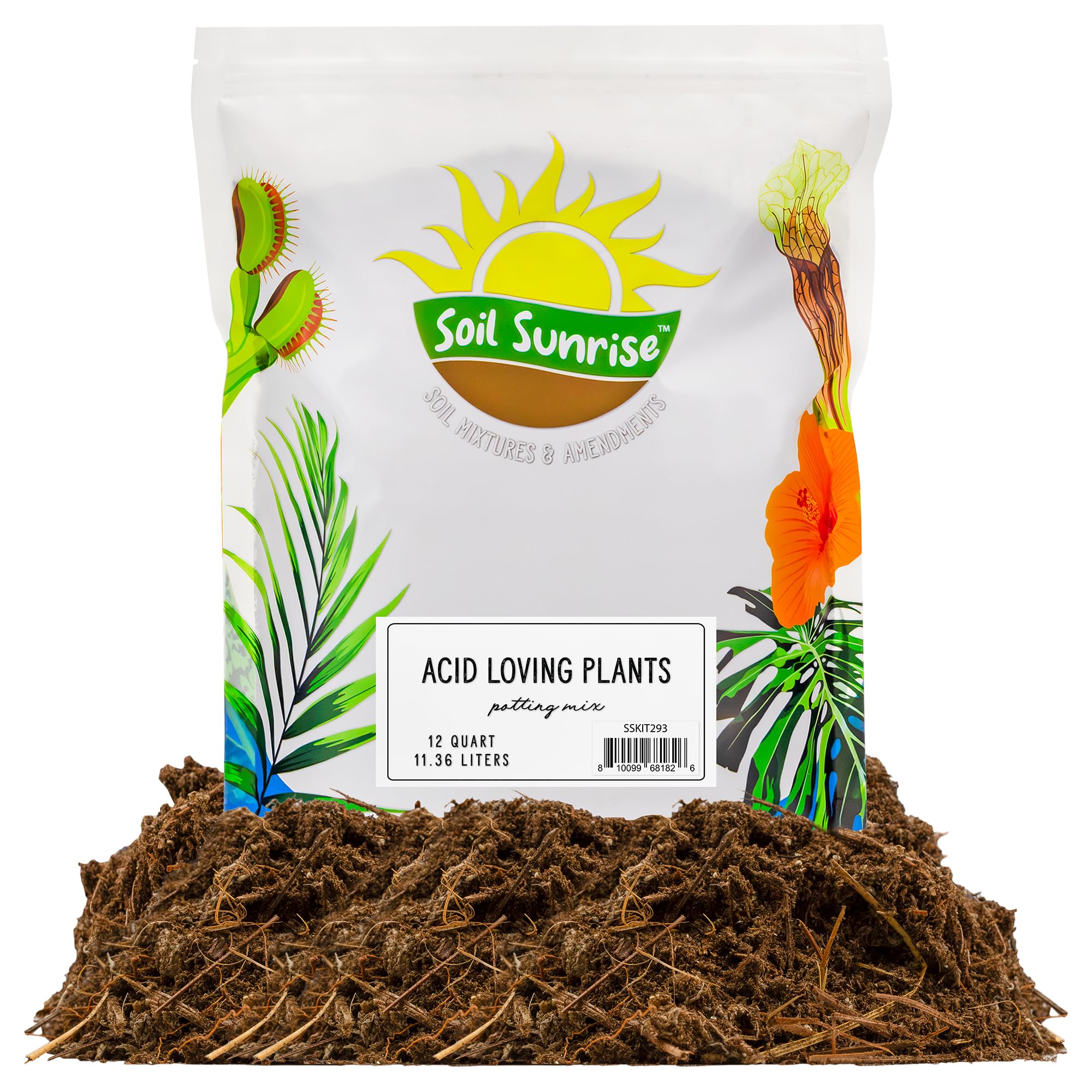
The biggest bag that gives your acid-lovers the longest run for your money.
At 12 Quarts, this Soil Sunrise blend holds four times the volume of the GARDENWISE Citrus mix, making it the clear choice when you have multiple pots, large containers, or a full garden bed to fill. The formula combines peat moss, pine needle mulch, pine bark mulch, sphagnum moss, and vermiculite (a mineral that holds moisture and air) — a mix that provides both natural acidity and improved drainage. The bag weighs just 3.33 Pounds, so even though you get a lot of soil, carrying it from the car to the yard is not a struggle.
Buyers report that the soil can be hydrophobic (repels water) at first, so you should pre-moisten it thoroughly before potting. One reviewer shared that an olive cutting grew from 6 inches to a 5-foot bush in 3 years after planting in this mix. Another noted that their coffee plant doubled in size after repotting. The downside for some: the bag is smaller than the product images suggest, so check the 12-Quart volume rather than guessing by the photo.
What wins
- Largest volume (12 Quarts) in the list — best for multiple pots or big containers
- All-natural ingredients with pine mulch to boost acidity naturally
- Reviewers report exceptional growth: olive cutting from 6in to 5ft in 3 years
Watch for
- Initially hydrophobic — needs thorough pre-moistening before use
- Bag looks smaller than the online photos
Grab this if: you have several acid-loving plants or large containers and want the best volume-to-value ratio in a natural blend.
Think twice if: you only need a small pot of soil and prefer a resealable bag — the resealable Perfect Plants or Jessi Mae bags might suit you better.
2. Coast of Maine Organic & Natural Planting Soil for Acid Loving Plants (20 Qt)

A big-bag organic option with composted manure for serious garden enthusiasts.
Coast of Maine delivers a 20-Quart bag that dwarfs the 12-Quart Soil Sunrise and the 4-Quart bags from other brands, making it the most generous volume in this lineup. The mix combines composted manure and sphagnum peat moss to achieve a low pH while also feeding the soil with organic matter. It is OMRI listed (Organic Materials Review Institute — certified for organic use), which matters if you are growing edible plants like blueberries or strawberries and want to keep things chemical-free.
Reviewers describe the soil as dark, rich, and moist, with excellent moisture retention that prevents compaction. One reviewer noted noticeable improvement in growth and flower production within weeks after switching to this mix. A caveat: the 20-Quart bag weighs a full 28 Pounds, so it is not a grab-and-go option if you have mobility issues. Also, a few reviewers suggest checking the pH yourself after potting to confirm it is in the acid-loving range.
Why it stands out
- Largest volume (20 Quarts) — best for multiple large pots or garden beds
- OMRI listed for organic gardening, including edible plants
- Rich, dark texture with composted manure for natural nutrients
A real trade-off
- Heavy bag at 28 Pounds — not easy to carry or move once delivered
- Some buyers recommend double-checking pH after potting
Reach for this if: you are filling raised beds or many large containers with organic, low-pH soil and want the absolute most volume per bag.
skip it if: you only need a small amount for a single potted plant — the bag is too heavy and generous for a quick repot.
3. GARDENWISE Organic Lemon Tree Soil – Citrus Potting Mix (3 Quarts)
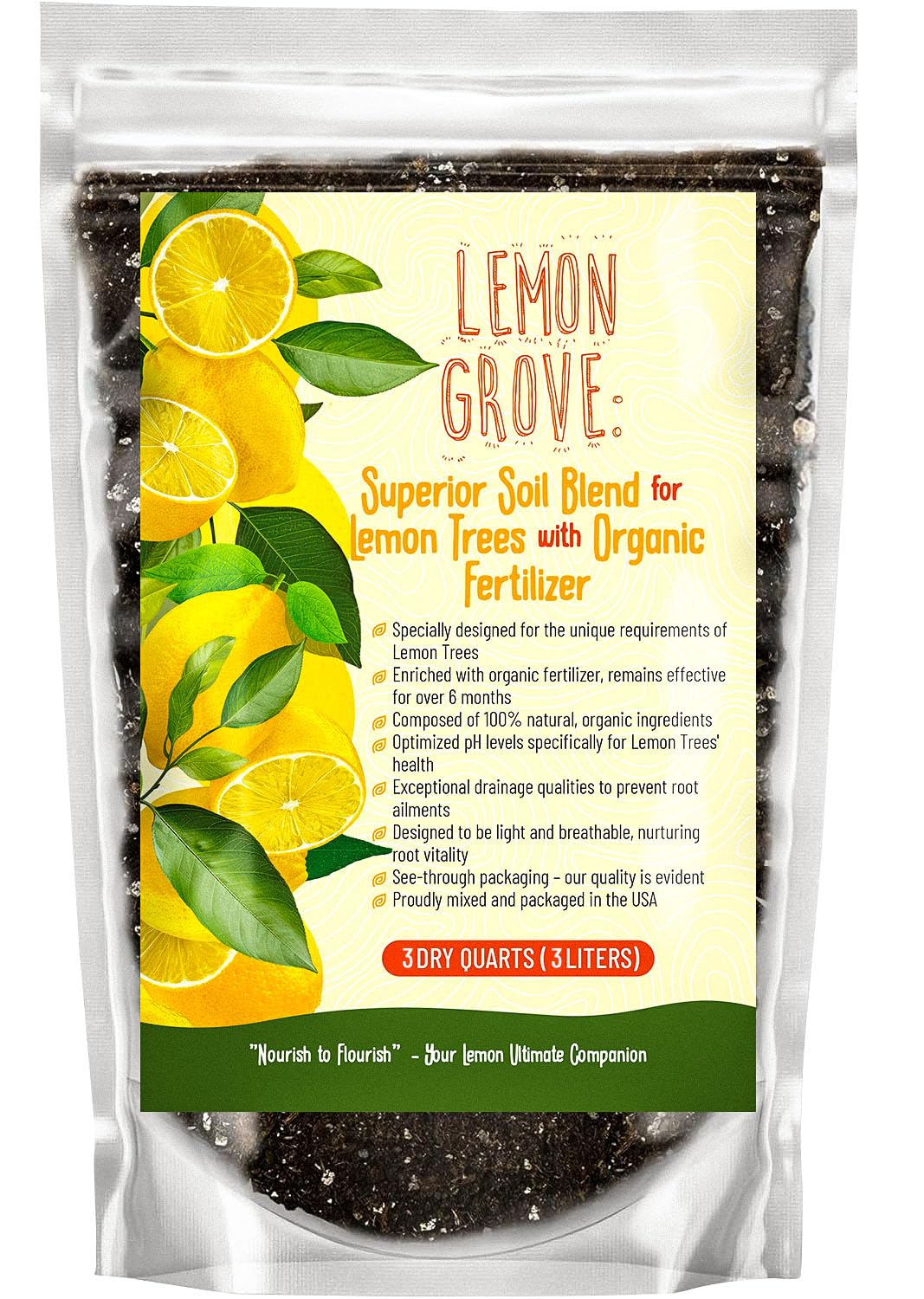
Formulated for citrus and pre-loaded with fertilizer that feeds for six months.
GARDENWISE engineered this mix specifically for potted lemon trees, Meyer lemons, and other citrus plants, with a stated pH range of 5.5 to 6.5 — the balance for citrus uptake of iron and magnesium. The blend includes extra perlite and coarse sand to ensure water drains fast, which prevents the waterlogged roots that citrus trees hate. It also comes with an organic fertilizer already mixed in that provides nutrients for up to 6 months, so you do not need to add anything during that time.
Owners mention that the soil delivers excellent aeration and strong results: one buyer mentioned their Meyer dwarf lemon tree showed new sprout growth in just 2 weeks time. However, at 3 Quarts, it is a small bag — four times smaller than the Soil Sunrise mix. If you have a large container or multiple citrus trees, you will need several bags, which adds up.
Best parts
- Explicit pH range of 5.5 to 6.5 — ideal for citrus nutrient absorption
- Enriched with organic fertilizer that feeds for up to 6 months
- Includes perlite and coarse sand for superior drainage against root rot
Consider this
- Only 3 Quarts — a small volume for the price compared to Soil Sunrise (12 Quarts)
- Best for a single small to medium pot; not economical for large containers
Best for: anyone repotting a single Meyer lemon or dwarf citrus tree and wanting a ready-to-use mix with built-in feeding for months.
Look elsewhere if: you have multiple citrus plants or large pots — buying several bags gets expensive fast.
4. Perfect Plants Specialty Blueberry Potting Mix (4qt)
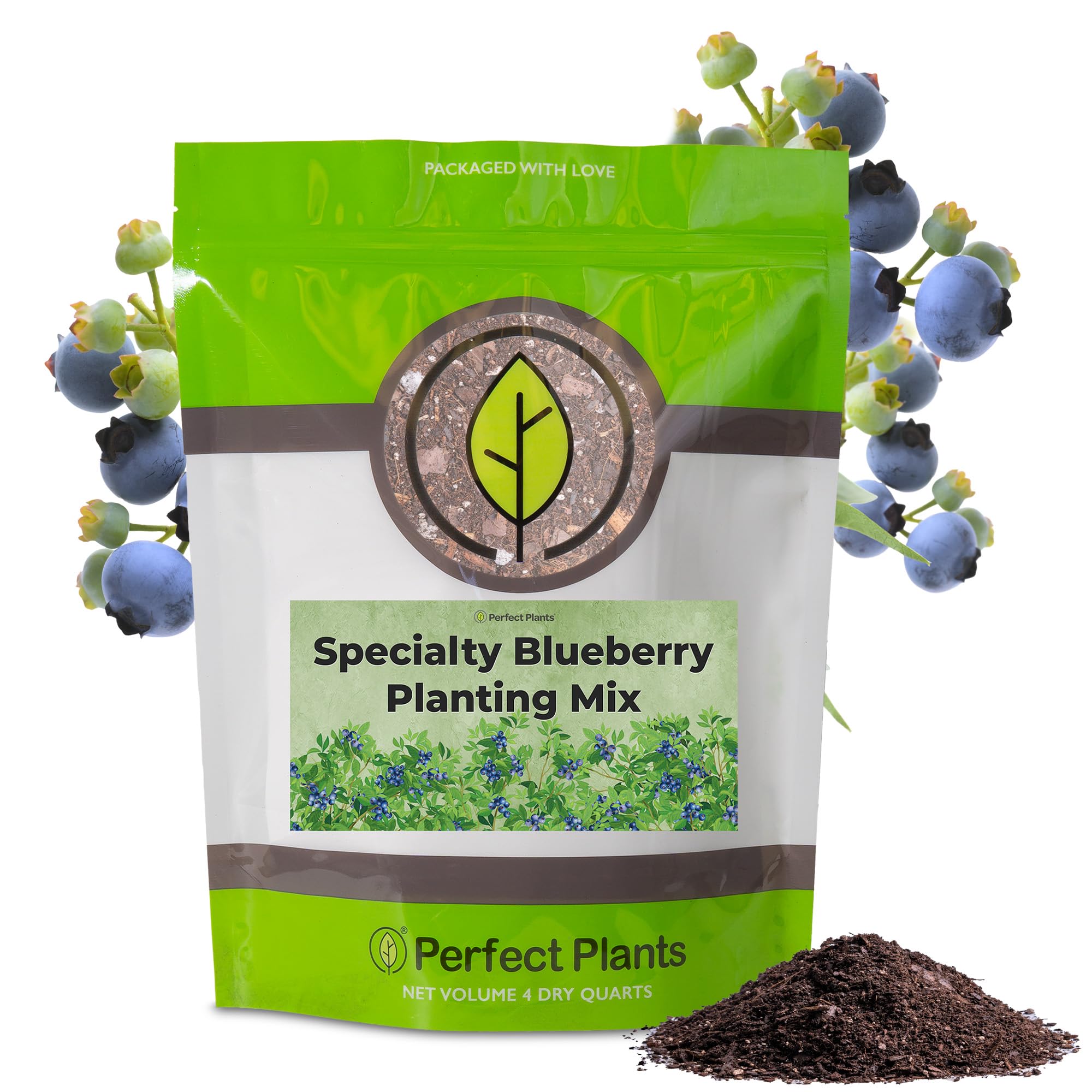
A fast-draining, pre-fertilized mix that gives blueberries a strong start right out of the bag.
Perfect Plants formulates this mix specifically for blueberries of all varieties — including rabbit eye and northern high bush — using composted pine bark, granite sand, and peat moss to create a medium-drainage, nutrient-rich environment. The peat moss naturally acidifies the soil, so you do not need to add sulfur or other acidifiers. A slow-release 18-6-8 fertilizer is already blended in, feeding your plants for up to 12 months according to the manufacturer.
Several customers note their blueberry bushes looked healthier in just days after repotting. One owner reported that their first-time blueberry planting was flourishing and happy. However, one customer observed a concerning issue: the product is extremely alkaline, not acidic as labeled, which caused their plant to change color and may not survive. This is a risk with any bagged soil — test the pH yourself if you are growing a prized plant.
What you get
- Includes slow-release 18-6-8 fertilizer that feeds for up to 12 months
- Hand-mixed on a family-owned farm with over 40 years of experience
- Available in 4 and 8 Quart heavy-duty, resealable bags
The risk
- One user highlighted the soil tested alkaline, not acidic — pH inconsistency possible
- Some buyers might find the 4-Quart bag small for large container blueberries
Choose this for: a single blueberry bush or two small shrubs in pots, where the pre-mixed fertilizer saves you effort for an entire growing season.
Be cautious if: you are growing expensive acid-loving plants that cannot recover from a pH mismatch — consider testing the bag before planting.
5. Jessi Mae Potting Soil – 4-Quart Bag, Perlite (Slightly Acidic)

A hand-mixed organic blend for indoor houseplants that like a little acidity in their pot.
Jessi Mae markets this as a slightly acidic potting mix ideal for peace lilies, snake plants, parlour palm, and ivy. The soil is hand-mixed in small batches and includes perlite and organic materials to create a light, fluffy texture that enhances airflow and drainage. It is packaged in food-grade materials and contains no synthetic chemicals, so you avoid the risk of chemical burn on sensitive houseplant roots.
Reviewers point out that the bag is smaller than expected, but the product works well. One reviewer used it for a peace lily and noted it was giving a new bud after a few weeks. Another mentioned that their snake plants love it, though the soil does smell strongly organic for the first day or two before the odor dissipates.
Strong points
- Hand-mixed in small batches for consistent quality
- Light, fluffy texture with perlite for good drainage
- 33% more volume (128 fl oz) than GARDENWISE Citrus mix (96 fl oz)
Weak points
- Bag is smaller than packaging photos suggest
- Strong organic smell that lingers for a couple of days
Perfect for: indoor gardeners with a few houseplants — peace lilies, snake plants, pothos — who want a chemical-free, slightly acidic mix they do not have to blend themselves.
pass on it if: you need a large volume for outdoor beds or your nose is sensitive to earthy smells — the organic odor is noticeable at first.
6. Spike & Bloom High Drainage Cactus Soil Potting Mix (4 Quarts)

A gritty, mycorrhizae-enhanced mix designed to keep cactus roots dry and healthy.
Spike & Bloom targets this mix at cactus and succulent enthusiasts who need both high drainage and a slightly acidic pH. The bag states a pH of 6.5, which suits cactus plants that prefer a mildly acidic root zone. The blend uses clays, sands, and a small amount of organic matter, plus a mycorrhizae powder (beneficial fungi that help roots absorb more water and nutrients). This is a specialized formula — it drains fast enough to prevent root rot even if you tend to water a little too often.
Reviewers report excellent results with exotic cacti, noting that the fine mix with charcoal and wood chips promotes root growth and flowering. One shopper added their cactus showed new growth within weeks. A common point of feedback: the bag is expensive for the volume, and it is not economical for large cactus arrangements. If you have a few prized specimens in small pots, this mix is worth the splurge.
Reasons to buy
- pH 6.5 — specifically tune for cactus and succulents
- Mycorrhizae powder promotes healthy root growth and bigger blooms
- Fast-draining gritty texture prevents root rot effectively
Reasons to hesitate
- Premium price for 4 Quarts — not a budget-friendly option for large collections
- Best suited for small, high-value plants in small pots
Ideal for: collectors with a few rare or exotic cacti where root health is critical and the higher cost per quart is acceptable.
Not for: anyone filling large beds or multiple pots on a tight budget — the price per quart is steep.
7. Spike & Bloom High Drainage Succulent Soil w/ Coffee Compost & Mycorrhizae (4 Quarts)

A slightly acidic succulent mix that uses coffee compost and beneficial fungi for deeper root growth.
This succulent soil from Spike & Bloom targets a pH of approximately 6.7, placing it in the slightly acidic range that succulents and cacti prefer. The standout ingredients are coffee compost (specially processed to remove excess acidity and nitrogen) and mycorrhizal fungi, which create filament networks that help roots reach more water and nutrients. The blend of clays and aggregates keeps the texture gritty enough that water never sits around the roots.
Shoppers say that the coffee compost and mycorrhizal fungi provide nutrients, reduce root rot, and promote healthy root growth. One reviewer noted that their plants thrive in this mix. The main complaint across reviews is the price: at 4 Quarts, it is expensive enough that one buyer mentioned they cannot afford to use it for all their plants and reserve it for their favorites. If you are on a budget with a large succulent collection, this might be a splurge you reserve for special specimens.
What works
- Includes coffee compost for water-soluble nutrients and beneficial bacteria
- Mycorrhizal fungi increase root reach for better nutrient and water uptake
- Formulated to prevent water-logging and root rot
What gives pause
- Considered expensive per quart — one reviewer called it “sooooo expensive”
- Budget option for favorites only, not for whole collections
Buy this for: a handful of favorite succulents where you want to prioritize root health and growth with a scientifically blended, organic mix.
Skip if: you need soil for a large succulent collection on a budget — the cost per bag adds up quickly.
Understanding the Specs
pH Level
The pH scale runs from 0 (most acidic) to 14 (most alkaline), with 7 being neutral. Acid-loving plants like blueberries, azaleas, and citrus need a pH roughly between 5.0 and 6.5 to access iron and other nutrients. If the soil is too alkaline, leaves turn yellow in a condition called chlorosis. Always look for a stated pH on the bag — some brands like GARDENWISE and Spike & Bloom give you an exact number, while others simply say “acidic” or “low pH.”
Drainage & Aeration
Soil that stays soggy suffocates roots and invites fungal rot. Good acidic potting soil includes perlite (tiny white volcanic glass beads), coarse sand, pine bark, or vermiculite to create air channels. For succulents and cacti, a “gritty” texture with fast drainage is critical. For blueberries and azaleas, medium drainage that holds some moisture while still letting excess water escape is the goal. Check the ingredient list for aeration materials before you buy.
FAQ
What pH range is best for acidic potting soil?
Can I use acidic potting soil for all my houseplants?
How do I know if my soil is actually acidic enough?
Will adding peat moss lower the pH of my existing soil?
Can I use acidic potting soil in outdoor garden beds?
What is the difference between acidic soil and ericaceous compost?
Why did my bagged acidic soil kill my plant?
How long does acidic potting soil stay acidic in a pot?
Can I mix acidic potting soil with regular potting soil?
Final Thoughts: The Verdict
For most buyers, the right acidic potting soil depends on how many plants you are potting and what you are growing. The Soil Sunrise Acid Loving Plant Potting Soil Mix (12 Quarts) is the best all-around pick — it gives you the largest volume of any mid-range option, an all-natural ingredient list, and proven results from buyers who saw plants like olive cuttings and coffee shrubs double in size. If you are focused on a single Meyer lemon tree, the GARDENWISE Organic Lemon Tree Soil saves you the guesswork with a stated pH of 5.5 to 6.5 and fertilizer included for months. And if you are filling garden beds or many large pots with organic soil, the Coast of Maine mix (20 Quarts) offers the most generous volume at a low per-quart cost, with OMRI-listed organic ingredients that support sustainable gardening.
How We Picked
We do not accept paid placement. Every pick is matched to a real buyer and a real use-case; we do not hands-on test units.
Sources & Methodology
Specifications: manufacturer listings and product documentation. Review insights: verified customer reviews, as of July 2026. Pricing: not shown on this page (it changes often); check the current price via the retailer link.
As an Amazon Associate, FitlyFast earns from qualifying purchases. This does not affect which products we feature.