
Our readers keep the lights on and the weekend projects moving. As an Amazon Associate, I earn from qualifying purchases.
Attaching a wafer-thin sheet of wood veneer without bubbles, ripples, or glue squeezing through the face grain is a precision skill that starts with the correct adhesive. A bad bond turns expensive veneer into scrap, while the right formula gives you a seamless, permanent lamination that looks like a solid slab of exotic hardwood.
I’m Rikta — the co-founder and writer behind FitlyFast. I’ve spent hundreds of hours researching adhesive chemistries, analyzing user reports on bleed-through failures and bond strength, and comparing the real-world application behavior of the top formulas to build this guide.
After reviewing dozens of formulas, these seven adhesives represent the best options available for bonding thin wood veneer to substrate, and this analysis will help you identify the ideal adhesive for wood veneer to match your specific project needs.
How To Choose The Best Adhesive For Wood Veneer
Selecting the wrong adhesive for veneer work leads to bleed-through that ruins the surface grain, or failed adhesion that causes the veneer to lift and bubble. The right choice depends on your pressing method, the porosity of both the veneer and substrate, and your tolerance for clamp or press time.
Understand Bleed-Through and Open Time
Thin wood veneers, especially those with open grain like oak or ash, will allow liquid glue to seep through the face and create visible stains that sanding cannot remove. Adhesives specifically formulated for veneer work minimize this bleed-through by using a thicker viscosity or faster initial tack. Open time — the window between glue application and the bond becoming permanent — dictates how much repositioning you can do. Cold-press PVA glues offer longer open times for large panels, while instant-bond CA glues set in under a minute.
Match the Adhesive to Your Pressing Method
If you use a vacuum bag press, a slower-setting PVA formula like Titebond Cold Press gives you an hour of working time and cures under consistent pressure. For hand-pressing with a J-roller or clamps, a contact adhesive that tacks quickly lets you bond without maintaining pressure. Spray contact adhesives work well for large, flat laminations where uniform coverage is critical, while gel cyanoacrylates are the go-to for edge banding and small patch repairs where clamping is impractical.
Quick Comparison
On smaller screens, swipe sideways to see the full table.
| Model | Category | Best For | Key Spec | Amazon |
|---|---|---|---|---|
| FastCap 2P-10 Kit | Cyanoacrylate Gel | Edge banding & gap filling | 4,000 psi cure in 30 sec | Amazon |
| Titebond Cold Press Veneer Glue | PVA Liquid | Large panel vacuum pressing | PVA formula minimizes bleed-through | Amazon |
| Titebond Instant Bond Thick | CA Gel | Quick repairs & small parts | 18-second cure without clamp | Amazon |
| 3M Hi-Strength 94 ET Spray | Spray Contact | Large surface laminations | 60-minute bonding window | Amazon |
| 3M Max Strength 90 Spray | Spray Contact | High-heat & moisture areas | Heat/water resistant bond | Amazon |
| Weldbond Extra Strength | PVA Liquid | Furniture & craft projects | 3,700+ psi shear strength | Amazon |
| DAP Weldwood Landau | Solvent Contact | Automotive & fabric-backed veneer | 1-gallon can for heavy use | Amazon |
In‑Depth Reviews
1. FastCap 2P-10 Adhesive & Activator Set

The FastCap 2P-10 system is a two-part cyanoacrylate gel that bonds in 10 seconds and reaches 4,000 psi tensile strength within 30 seconds when used with the included activator spray. The thick gel viscosity fills gaps up to 1/16 inch without running, making it ideal for vertical edge banding and crown molding repairs where clamping is impossible.
Cabinet makers and trim carpenters rely on this kit for its instant grab on porous materials like wood and MDF. The activator can is generous at 12 ounces, while the adhesive bottle holds 2 ounces of thick gel. Users report that the bond holds after sanding and finishing, though perfect alignment is critical since repositioning is impossible once the activator hits the glue.
The main drawback is shelf life after opening — the gel can harden in the bottle over several months if not stored properly. For production shops bonding multiple pieces per day, this kit delivers the fastest turnaround of any option here. For occasional use, consider a single-use CA glue instead.
Why it’s great
- Bonds in 10 seconds, cures to full strength in 30 seconds
- Thick gel fills gaps without dripping on vertical surfaces
Good to know
- No margin for repositioning after activator is applied
- Glue bottle can harden prematurely over time
2. Titebond Cold Press Veneer Glue, 32 oz (Pack of 2)
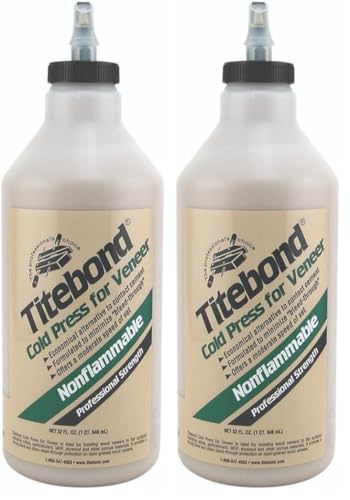
Titebond Cold Press is a PVA formula engineered specifically for veneer lamination, with a tan color and thick consistency that resists bleeding through open-grained veneers like oak and walnut. The two-pack provides 64 ounces total, enough for several large panel projects. It bonds solid wood, MDF, plywood, and particleboard with a translucent glue line that is invisible under most finishes.
This glue requires a cold press or clamped setup for at least three hours — experienced users recommend overnight pressing at 70°F or higher for a full cure. The moderate open time allows careful alignment of large veneer sheets before applying pressure. Users who shake the bottle thoroughly and apply even pressure report excellent adhesion with zero bleed-through on backed and unbacked veneers.
A small minority of users experienced adhesion failure when pressing for only one hour at lower temperatures. For best results, use a vacuum bag press or evenly distributed clamps with a caul board. This is not suitable for quick patch repairs, but for serious panel lamination it is the most bleed-resistant water-based option.
Why it’s great
- Specialized formula minimizes bleed-through on open-grained veneer
- Safe, water-based PVA with no flammable fumes
Good to know
- Requires prolonged clamping or cold press for proper bond
- Must be shaken thoroughly before each use
3. Titebond Instant Bond Wood Adhesive Thick, 2 oz

Titebond Instant Bond is a thick cyanoacrylate gel that eliminates clamping entirely — simply align the veneer or wood part, hold it in place for roughly 18 seconds, and the bond reaches full cure. The gel consistency prevents running on vertical surfaces and swells slightly as it dries to fill small gaps in the joint. It bonds wood, MDF, acrylic, and even PVC, making it versatile for mixed-material repairs.
Woodworkers call this the super glue for wood because the bond strength exceeds the tensile strength of the wood itself. The 2-ounce bottle includes a precision applicator tip that reduces waste. Users aged 72 and above report being able to repair items with minimal effort and no clamping. The thin format also exists, but the thick gel is the correct choice for veneer work where you need gap filling and control.
Because the bond is instantaneous, there is zero room for alignment errors — position your veneer exactly before applying pressure. Some users found the bond to swell noticeably, which can create a visible glue line if too much is used. This is best for small edge repairs, loose veneer lifting, and instant fixes rather than full-panel lamination.
Why it’s great
- Cures in 18 seconds with no clamping required
- Thick gel fills small gaps and won’t run
Good to know
- Zero repositioning time — alignment must be perfect
- Swells as it dries; overapplication creates visible glue lines
4. 3M Hi-Strength 94 ET Spray Adhesive, 19.75 oz
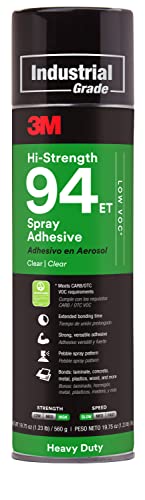
3M Hi-Strength 94 ET is a low-VOC spray contact adhesive with a remarkably long bonding window of up to 60 minutes. This extended open time is a game-changer for large-format laminations where you need to align wide veneer sheets without rushing. The spray provides an even, aggressive tack that bonds wood, metal, rubber, carpet, and flooring with a clear, flexible glue line.
The aerosol can delivers consistent coverage across broad surfaces without the brush marks or uneven thickness that come with liquid PVA. It is GREENGUARD certified and contributes to LEED credits, making it suitable for indoor workshops. Users report excellent adhesion on foam soundproofing and plastic substrates, and the long open time reduces rework because you can adjust the substrate before the final press.
The strong odor requires good ventilation, and the spray pattern means you need to mask off surrounding areas to avoid overspray. For veneer-to-substrate lamination, apply an even coat to both surfaces, let it dry to the touch, then press together. The 19.75-ounce can covers roughly 30 square feet per coat, making it efficient for large projects.
Why it’s great
- Up to 60 minutes open time allows careful alignment of large veneers
- Even spray coverage eliminates brush lines and uneven glue layers
Good to know
- Strong solvent odor requires a respirator and ventilation
- Overspray can settle on nearby surfaces
5. 3M Max Strength 90 Contact Adhesive Spray, 12.6 oz (Pack of 2)

3M Max Strength 90 delivers an industrial-grade contact bond that tacks within 1 minute and forms a permanent, heat-resistant, and water-resistant joint. This is the adhesive to reach for when veneering surfaces exposed to humidity, like kitchen cabinet panels or bathroom vanity sides. The adjustable nozzle allows a controlled web spray pattern for vertical or overhead application with minimal overspray.
The high-solids formula means fewer coats for full coverage compared to standard spray adhesives. It bonds laminate, wood, metal, plastic, and concrete, making it a versatile shop staple. Users in marine environments report zero bond failures in wet conditions, and auto upholsterers use it for headliners and interior trim. The initial tack is aggressive enough to hold materials in place immediately, but remains repositionable for about one minute.
The two-pack provides good value for ongoing projects. Like all contact adhesives, you need to apply to both mating surfaces and let them flash off until tacky before joining. In hot climates, the flash time drops to about 2 minutes, so work quickly in warm conditions. The strong odor demands a respirator for indoor use.
Why it’s great
- Heat and water resistant bond ideal for humid environments
- Adjustable nozzle minimizes overspray on vertical applications
Good to know
- Strong vapor requires respiratory protection indoors
- Flash time shortens significantly in warm conditions
6. Weldbond Extra Strength Wood Glue, 14.2 oz
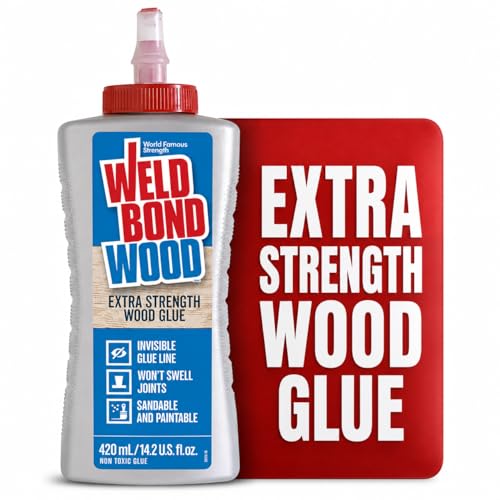
Weldbond Extra Strength is a professional-grade PVA glue that delivers over 3,700 psi shear strength and dries to a virtually invisible glue line that is sandable and paintable. It bonds hardwood, softwood, MDF, plywood, and bamboo with a grip that often exceeds the wood’s own internal strength. The liquid flows easily from the bottle but resists excessive running.
This is a strong performer for general woodworking, furniture repair, and craft projects where veneer is being glued to a substrate that will later be sanded and finished. The white liquid dries clear in thin applications, but thicker beads dry white, so you should use the minimum coverage necessary. Cleanup with water is easy before the glue dries, and the non-toxic formula is safe for indoor workshops.
Some users on yellow pine reported joint failure at the glue line, while white pine broke before the joint, suggesting that dense oily woods may need surface preparation or a different adhesive. The 24-hour full cure time is standard for PVA, so this is not an instant-bond solution. For veneer work requiring immediate tack, a spray contact adhesive or CA gel is more appropriate.
Why it’s great
- High shear strength exceeds most wood internal bond strength
- Dries clear and is sandable for flush finishing
Good to know
- Requires 24-hour cure time for full strength
- Not ideal for instant-tack applications or vertical surfaces
7. DAP Weldwood Landau Top & Trim HHR Solvent Spray Grade Contact Adhesive, 1 Gal
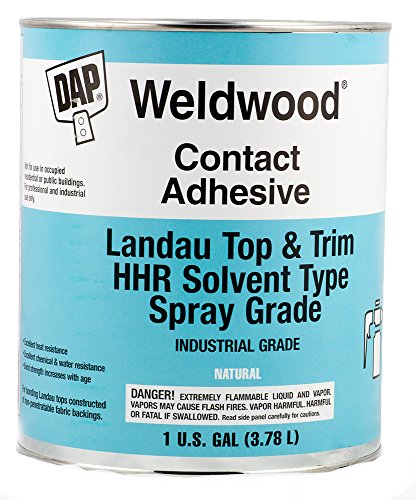
DAP Weldwood Landau HHR is a solvent-based contact adhesive designed for high-heat and water-resistant bonding of fabric, vinyl, and foam to substrates — making it the go-to choice for automotive upholstery and speaker box covering where veneer is backed with fabric. The 1-gallon can is intended for use with a spray gun, offering consistent application across large surfaces without the waste of aerosol cans.
This adhesive delivers a permanent bond that withstands the heat inside a vehicle cabin and resists moisture. Upholsterers report it works flawlessly on headliners, kick panels, and interior trim. For veneer work, it is best suited when the veneer has a fabric or foam backing that needs to conform to curved surfaces. The bond becomes permanent within 24 hours.
The solvent odor is extremely strong — a full respirator and cross-ventilation are mandatory, not optional. The liquid consistency is thin enough to pass through a spray gun but will soak into porous materials, so test on scrap first. This is not a brush-on glue; buying a cheap spray gun is essential for getting even coverage without clumping.
Why it’s great
- Exceptional heat and water resistance for automotive environments
- Large 1-gallon volume is cost-effective for high-use shops
Good to know
- Extremely strong solvent fumes require full PPE and ventilation
- Requires a spray gun for proper application
FAQ
Can I use regular wood glue for veneer?
What is the best glue to prevent veneer bubble?
Is contact cement better than PVA for veneer?
How long should I let veneer glue cure before sanding?
Final Thoughts: The Verdict
For most users, the adhesive for wood veneer winner is the Titebond Cold Press Veneer Glue because it specifically minimizes bleed-through, offers a manageable open time for large panels, and cures to a strong translucent glue line when pressed overnight. If you need instant bonding for edge banding and gap-free repairs, grab the FastCap 2P-10 Kit. And for large, flat laminations where even spray coverage and no clamping are required, nothing beats the 3M Hi-Strength 94 ET Spray Adhesive.