
Our readers keep the lights on and the weekend projects moving. As an Amazon Associate, I earn from qualifying purchases.
Compacted soil strangles your lawn by blocking air, water, and nutrients from reaching the roots, leaving you with a thin, weak yard that can’t thrive. A manual or tow-behind aerator is the single most effective tool to fix this, but choosing between spike models, plug corers, and rolling drums can feel overwhelming. I’m Rikta — the co-founder and writer behind FitlyFast. I’ve spent many hours analyzing the build materials, tine designs, and user performance data of today’s leading aerators to separate genuine soil-relief tools from those that just poke holes. This guide zeroes in on the key specs and real-world feedback to help you pick the right machine for your turf type and yard size. My goal is to help you confidently select the best aerator for lawn that breaks up compaction without breaking your back.
How To Choose The Best Aerator For Lawn
Selecting the right aerator depends on the type of compaction you’re dealing with, the size of your lawn, and your budget for physical effort. The most important distinction is between spike aeration (which pushes soil aside) and core aeration (which removes plugs of soil). For most lawns, hollow-tine coring is the more effective choice.
Spike vs. Core: The One Decision That Matters Most
Spike aerators use solid tines or star-shaped wheels to punch holes in the ground. This action can actually increase compaction around each hole in heavy clay soils. Core aerators use hollow tubes to pull out a plug of soil, removing thatch and creating real channels for air and water. If your soil is mostly clay or heavily compacted, a core aerator is the right investment.
Manual vs. Tow-Behind vs. Rolling
Manual step aerators (like those with a footplate and two handles) are best for small to medium lawns under 5,000 square feet. Tow-behind models attach to a riding mower or ATV and are ideal for large properties. Rolling drum aerators offer a middle ground — they require pushing but cover ground faster than a step tool, making them a good fit for medium-sized lawns without a tractor.
Quick Comparison
On smaller screens, swipe sideways to see the full table.
| Model | Category | Best For | Key Spec | Amazon |
|---|---|---|---|---|
| Xuperace Core Aerator | Core / Manual | Non-clogging coring in clay | 3 hollow tines with side-eject ramp | Amazon |
| Landzie Hollow Tine Aerator | Core / Manual | Professional-grade durability | 3 stainless steel clog-free tines | Amazon |
| Dolibest Lawn Coring Aerator | Core / Manual | Value with plug storage tray | 4 stainless steel corers + tray | Amazon |
| Brinly SAT2-40BH-P | Spike / Tow | Large lawn spike aeration | 11 star tines, 150-lb weight tray | Amazon |
| Senvert Rolling Aerator | Spike / Rolling | Medium lawns, easy push | 32-lb drum, expandable to 55 lbs | Amazon |
| Suchtale Tow Behind Aerator | Spike / Tow | Budget-friendly tow option | 10 star tines, 110-lb weight tray | Amazon |
| Yard Butler Spike Aerator | Spike / Manual | Entry-level small lawn aeration | 4 x 3-inch spikes | Amazon |
In‑Depth Reviews
1. Xuperace Core Aerator
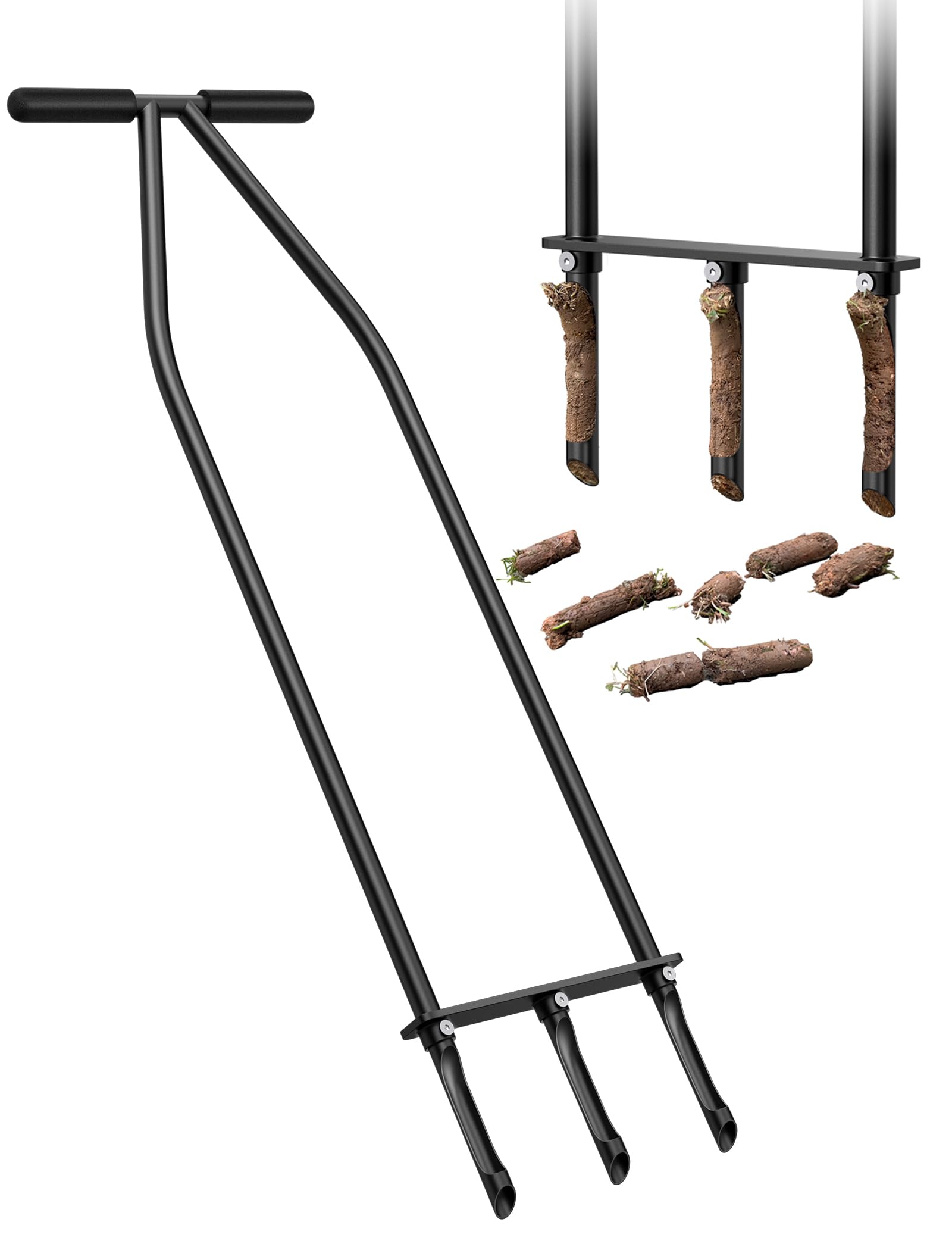
The Xuperace core aerator stands out with its patented side-eject design that solves the common clogging problem found in many hollow-tine tools. Instead of soil cores backing up inside the tube, they slide out through a ramp, allowing you to keep working without stopping to clear the tines. This is a critical advantage when aerating sticky clay soils.
The frame is constructed from high-strength alloy steel with a durable powder coating. The three hollow tines are replaceable and secured with screws, so you can swap them out if they dull over time. At roughly 5.7 pounds, it’s heavy enough to drive the tines deep with a firm step, yet light enough to carry around the yard.
User feedback consistently praises its build quality and efficiency on compacted clay. The screws do need re-tightening after the first few uses, which is common with this style of tool, and the included Allen wrench makes that simple. For a manual corer that actually works without constant jamming, this is the top contender.
Why it’s great
- Side-eject design prevents plug jams
- Replaceable hollow tines extend tool life
- Sturdy alloy steel frame handles tough soil
Good to know
- Screws may loosen and need periodic tightening
- Requires moist soil for best penetration
2. Landzie Hollow Tine Aerator
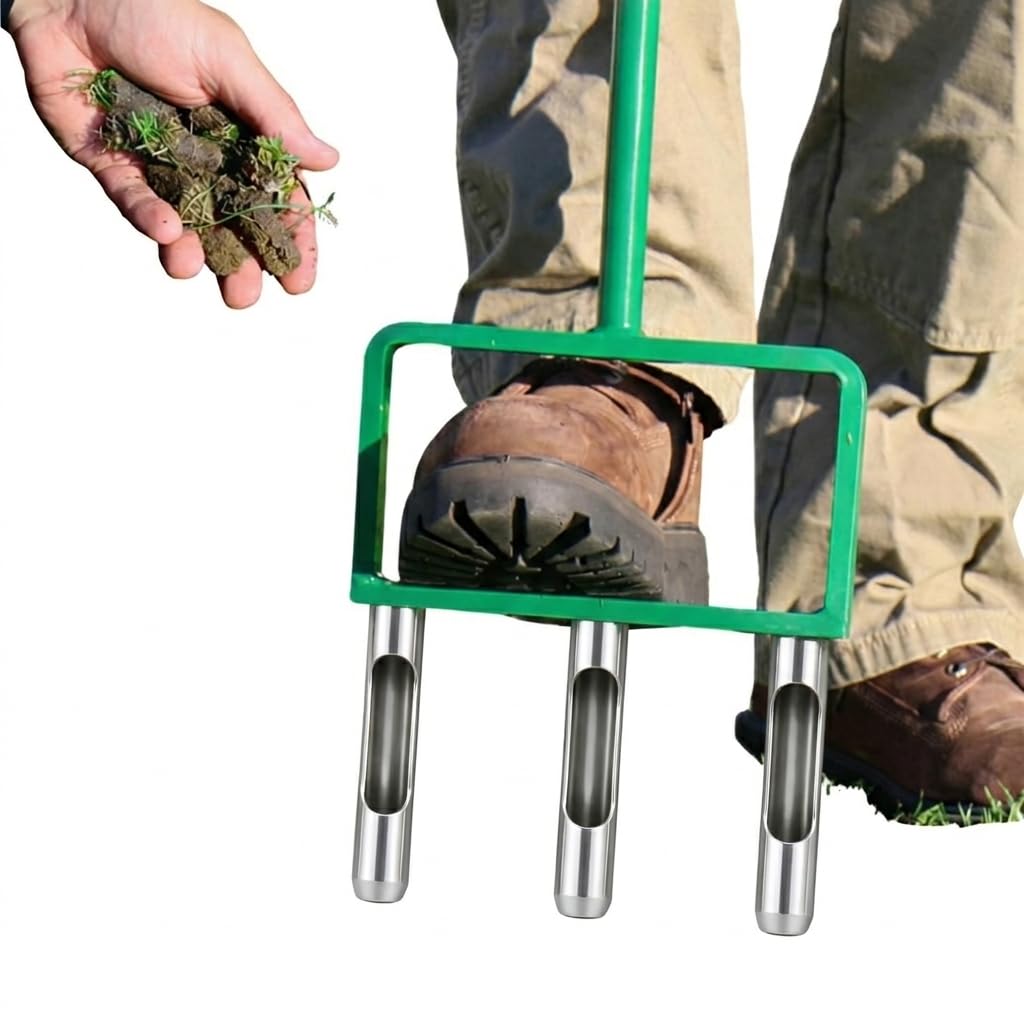
The Landzie aerator is built for the long haul. The three hollow tines are made from solid stainless steel and feature a beveled edge that resists clogging — soil cores are pushed up and out with each press. The entire tool arrives fully assembled, so you can start aerating immediately, and the tines are removable for cleaning or replacement.
The powder-coated steel frame is noticeably robust. The foot bar is wide enough to accommodate a size-12 boot, though some users report it can be slippery when wet. The self-cleaning tines work exceptionally well when the soil is damp, which is the ideal condition for any core aeration. At 5.6 pounds, it feels substantial without being unwieldy.
Real-world reviews highlight its durability after dozens of hours of use, with many owners saying it outlasted cheaper models. The tines should be checked and tightened every hour or so during use. This is a “buy once, cry once” tool for homeowners who plan to aerate annually and want a manual corer that won’t quit.
Why it’s great
- Clog-free beveled stainless steel tines
- Arrives fully assembled, ready to work
- Replaceable tines extend product lifespan
Good to know
- Tines need periodic tightening during use
- Very physically demanding on large lawns
3. Dolibest Lawn Coring Aerator
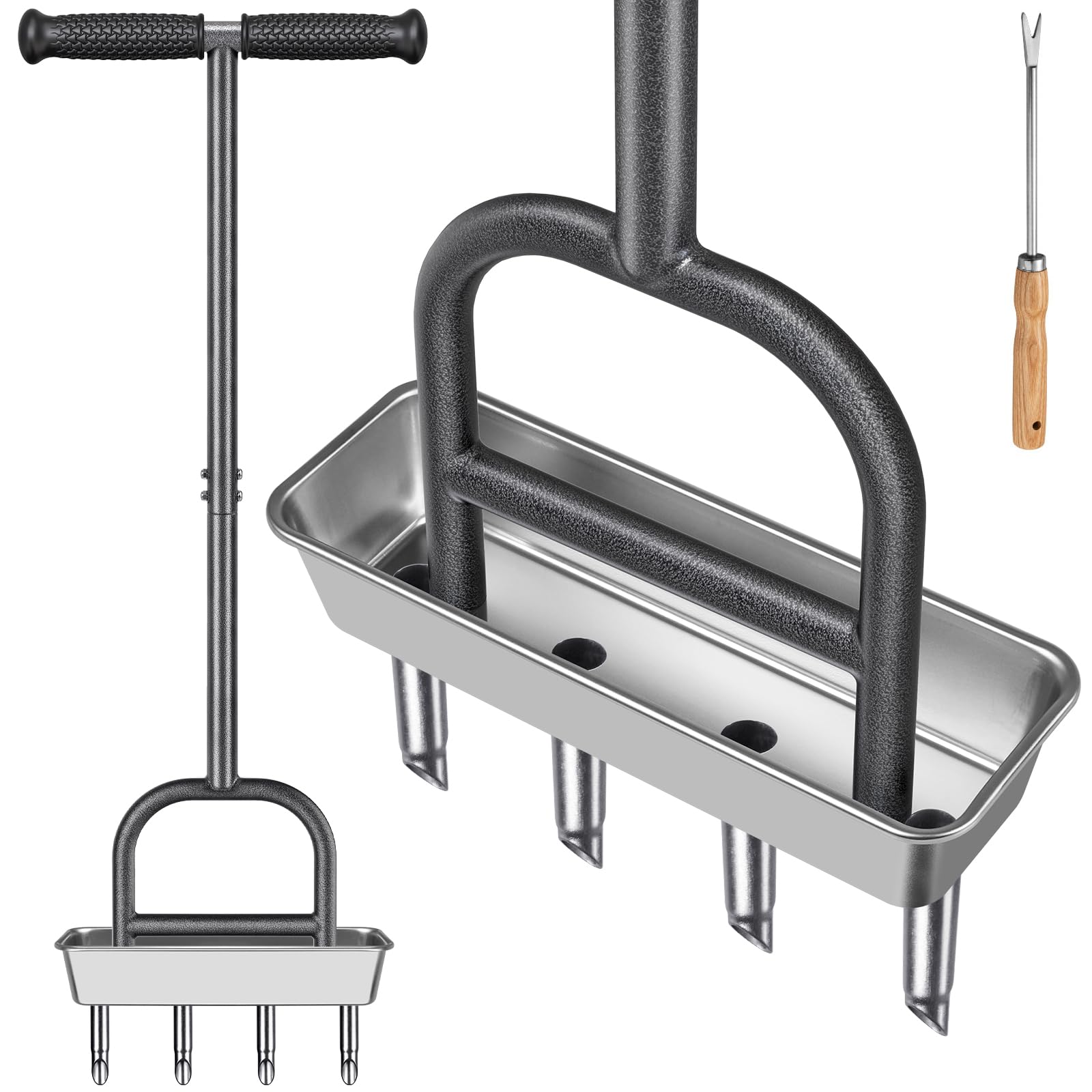
The Dolibest aerator brings four SUS 304 stainless steel coring plugs to the table, making it a great entry point into manual core aeration. Its standout feature is the stainless steel soil core storage tray that collects the ejected plugs automatically — no more sweeping up hundreds of soil cores after you finish aerating. This convenience saves a significant amount of post-work cleanup.
The frame uses a solid steel rod with a black powder coating for rust resistance. The elevated crossbar is designed to keep your shoes clear of the ejection path, and the soft rubber grip reduces hand fatigue. Assembly is straightforward, requiring only a few screws to lock the pole, handle, and tine assembly together.
User feedback suggests it works best on moist soil and is ideal for targeting problematic areas rather than aerating an entire lawn in one go. The included 12-inch weeding tool is a practical bonus for cleaning the tines and tackling small garden tasks. Some users note the tines could be sharper for dense soils, but for the price point, this is a solid, functional tool.
Why it’s great
- Soil core storage tray eliminates clean-up
- 4 stainless steel tines for efficient coring
- Quick two-minute assembly
Good to know
- Tines may struggle with very hard, dry soil
- Heavy at 6+ pounds for extended sessions
4. Brinly SAT2-40BH-P

The Brinly SAT2-40BH-P is a spike aerator designed to be towed behind a riding mower or ATV. Its 11 tine stars, each with 12 spike tips, rotate independently to cover the full 40-inch width without leaving missed strips. The patent-pending 3-D tines are made from galvanized steel, offering double the bending resistance of standard flat tines, which is crucial when hitting hidden rocks or roots.
The all-steel frame is reinforced with a double tow bar and a solid 5/8-inch axle. The weight tray can hold up to 150 pounds of additional weight, such as cement blocks, to drive the spikes deeper into compacted soil. A single-lever transport mode engages turf-tread wheels, making it easy to cross driveways without dragging the tines on pavement.
Real-world owners confirm it transformed hard, cracked clay soil into a workable lawn after a single season. Assembly requires careful handling due to sharp tines, and some users note the wheel lock nuts could be improved with nylon locking nuts. For large properties — an acre or more — this automated solution saves hours of manual labor.
Why it’s great
- 11 independent tine stars for full coverage
- 150-lb weight tray for deep penetration
- Transport wheels protect pavement
Good to know
- Sharp tines require careful assembly
- Some hardware quality concerns reported
5. Senvert Rolling Lawn Aerator
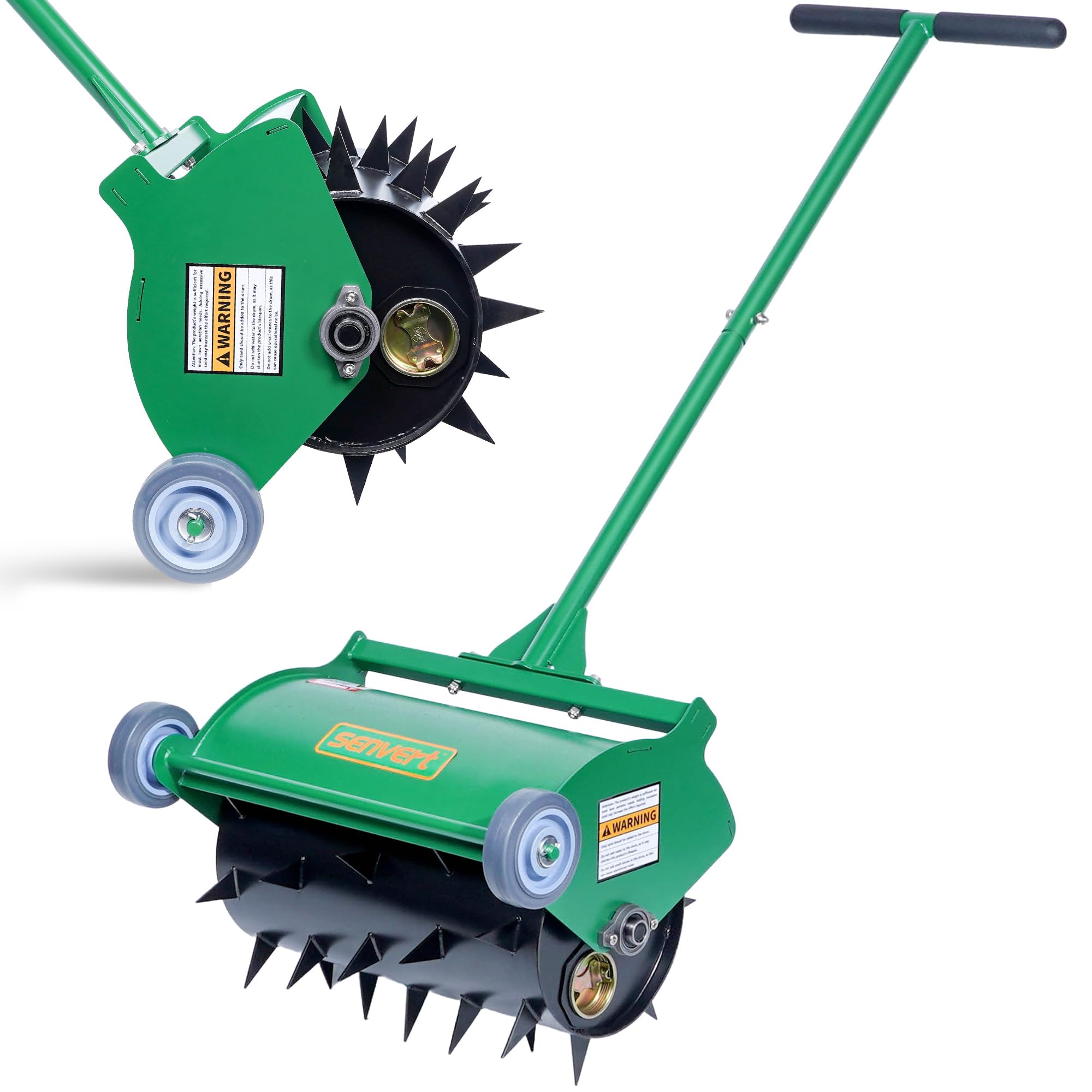
The Senvert rolling aerator offers a different approach: a pushable drum with spiral-spiked treads that puncture the soil as you roll. It weighs 32 pounds out of the box, and you can add sand or stones through a covered opening to bring the total up to 55 pounds. This adjustability allows you to dial in the penetration depth based on your soil hardness.
The main drum comes fully assembled, so you only need to attach the handle in a few minutes. A pair of auxiliary TPR wheels flip down for transport, preventing the spikes from scratching driveways or patios. The rolling motion is smoother than step-style aerators, and the spiral pattern helps maintain a straight line, making it easier to cover a medium-sized lawn.
Users on smaller properties (under a quarter acre) say it works well and is easy to push, especially after watering the lawn. The drum can be noisy if filled with rocks, but sand provides a quiet, even weight distribution. It’s a good fit for the owner who wants more speed than a step tool but doesn’t have a riding mower.
Why it’s great
- Expandable weight drum up to 55 pounds
- Quick assembly, main body pre-built
- Transport wheels prevent surface damage
Good to know
- May need multiple passes for deep aeration
- Can be heavy to push when fully loaded
6. Suchtale 40-Inch Tow Behind Spike Aerator

The Suchtale spike aerator is a budget-friendly tow-behind option with 10 star-shaped tines, each featuring 10 uneven spike tips that rotate independently. The 8-inch diameter stars penetrate up to 2 inches deep, and the all-steel weight tray can hold up to 110 pounds of extra weight — typically a couple of concrete blocks fit perfectly — for added penetration in firmer ground.
The frame uses a thick channel-shaped tow bar designed to resist bending, and the reinforced side plates add rigidity. Assembly is required, but the included manual provides a clear parts breakdown. The pin-style hitch connects quickly to any riding mower or ATV with no additional equipment needed.
Owner feedback is mixed on long-term durability. Some report the connecting arms are flimsy and bent after minimal use on rocky soil, while others praise the spikes for working well in soft turf. The frame and wheels are generally considered solid. This is a workable choice for large, loose lawns on a tight budget, but not for heavy duty or rocky conditions.
Why it’s great
- 110-lb weight tray for deeper penetration
- Independent star tines for even coverage
- Low price for a tow-behind model
Good to know
- Connecting arms can bend under heavy use
- Spikes bend on rocks; avoid debris
7. Yard Butler Spike Aerator
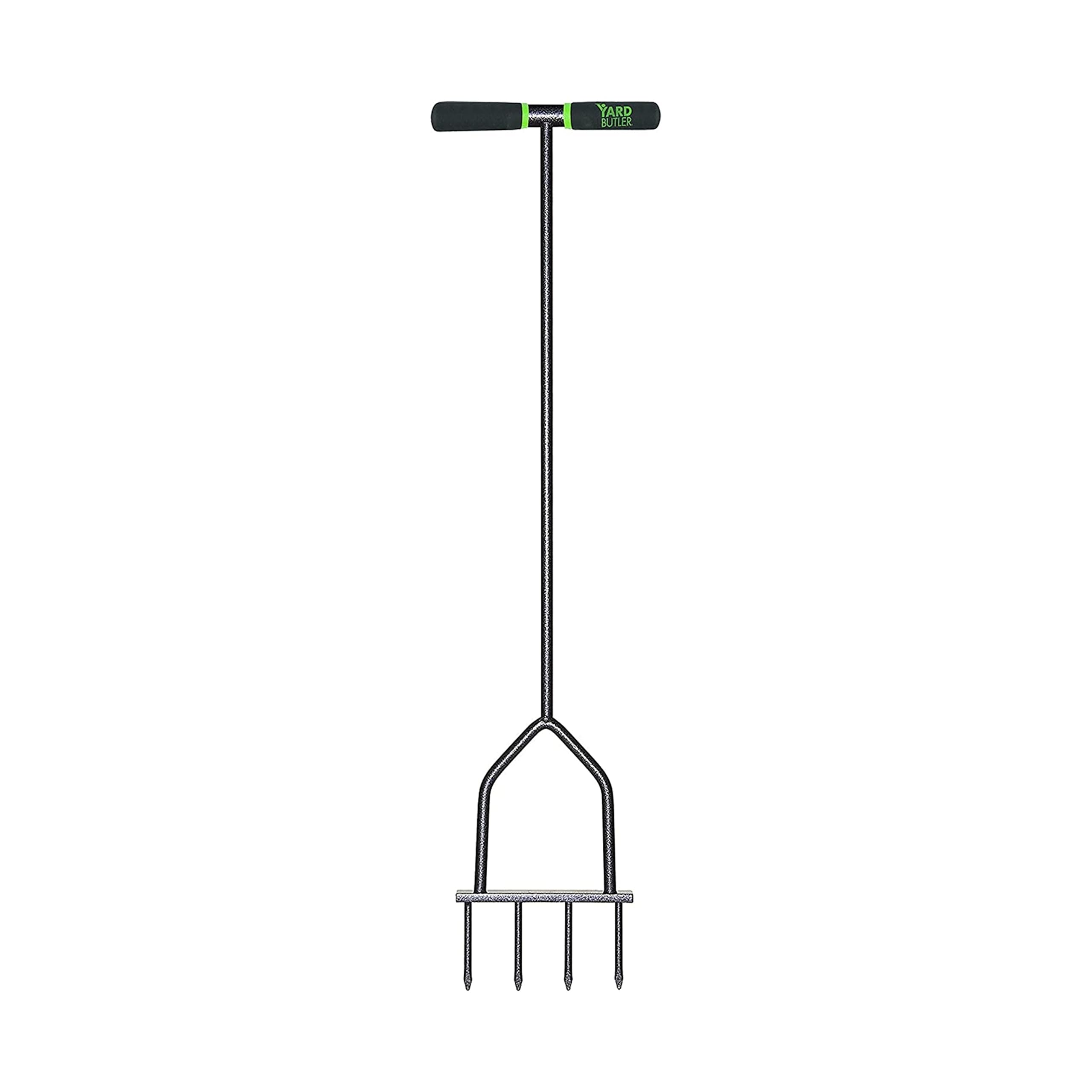
The Yard Butler IM-7C is a classic manual spike aerator that uses four 3-inch spikes to break up soil. Its powder-coated steel frame is designed for durability, and the long handle provides leverage to reduce bending. This is a straightforward, no-frills tool aimed at homeowners with small lawns who want a simple way to improve water infiltration.
The tool weighs just over 2 pounds, making it easy to handle and carry. It works best when the soil is moist — after a rain or a thorough watering — so the spikes can penetrate fully. The spike design means it’s pushing soil sideways rather than removing it, so it’s less effective on heavy clay than a coring tool, but perfectly adequate for loose or sandy loam.
Multiple reviews mention that the handle length could be taller for those over 6 feet, potentially causing back strain during extended use. Some recent buyers also note that the steel quality has declined compared to older versions, with tines bending more easily. For small spot aeration on a budget, it’s a functional tool, but it lacks the longevity and deep-tissue relief of a core aerator.
Why it’s great
- Light and easy to carry at 2.25 lbs
- Long handle provides good leverage
- Simple, intuitive operation
Good to know
- Spike design can compact soil around holes
- Recent models may have softer steel tines
FAQ
How often should I aerate my lawn?
Should I water the lawn before aerating?
Can I aerate through weeds and thatch?
Final Thoughts: The Verdict
For most users, the best aerator for lawn winner is the Xuperace Core Aerator because its side-eject design solves the clogging problem that plagues manual corers, and its alloy steel frame offers long-term durability. If you want a heavy-duty manual tool that will last for decades, grab the Landzie Hollow Tine Aerator. And for large properties where automating the job is a priority, nothing beats the Brinly SAT2-40BH-P tow-behind aerator.