
Our readers keep the lights on and the weekend projects moving. As an Amazon Associate, I earn from qualifying purchases.
Chasing detail retrieval in a wired in-ear monitor begins with understanding driver configurations, impedance curves, and crossover design — not marketing claims. The difference between a multi-driver hybrid and a single-dynamic flagship often comes down to phase coherence, harmonic distortion, and how the soundstage paints layers across the stereo field. For the discerning listener, every component matters: the diaphragm material, the magnet structure, and the cable’s conductor purity.
I’m Rikta — the co-founder and writer behind FitlyFast. I’ve spent hundreds of hours analyzing frequency response graphs, driver topology patents, and build quality trends across the portable audio market to separate genuine engineering from audiophile marketing hype.
Knowing which driver type suits your preferred genre, whether you need a balanced armature or a dynamic driver, and understanding the value of a detachable cable are the real skills behind choosing the right pair of best audiophile earbuds for your specific library and listening habits.
How To Choose The Best Audiophile Earbuds
Selecting an audiophile-grade IEM requires evaluating the acoustic architecture, tuning philosophy, and ergonomic design. Your listening environment, preferred genres, and source equipment all play a critical role in determining which driver configuration and impedance rating will satisfy your expectations for detail, soundstage, and tonal balance.
Driver Types and Crossover Complexity
Dynamic drivers deliver natural bass slam and airy treble through a single diaphragm, while balanced armature (BA) drivers offer precise, low-distortion response across narrow frequency bands. Hybrid designs merge dynamic lows with BA mids and highs, but require sophisticated crossover networks to avoid phase smearing. Pure BA arrays (like 8BA or 10BA) rely on multi-way passive crossovers with film capacitors for accurate frequency division — products like the Kiwi Ears Orchestra Lite use a three-way passive strategy to keep total harmonic distortion minimal while preserving a flat, studio-grade response.
Impedance, Sensitivity, and Source Pairing
Low-impedance IEMs (below 32 ohms) are easy to drive from a smartphone dongle but can reveal noise floor hiss on powerful amplifiers. High-impedance or low-sensitivity models (like many BA-heavy designs) demand a dedicated DAC/amp to achieve full dynamic range and micro-detail retrieval. The Sennheiser IE 600, with its 7mm TrueResponse transducer, benefits from a balanced 4.4mm output to minimize crosstalk and maximize channel separation, while the FiiO FA19 includes a “Monitor/HiFi” mode switch that adjusts the bass shelf to match your source’s output impedance.
Build Quality, Cable, and Comfort
A detachable cable with standard MMCX or 0.78mm 2-pin connectors ensures long-term serviceability and aftermarket upgrade options. Shell materials — from 3D-printed resin (Linsoul SIMGOT SuperMix 4) to amorphous zirconium (Sennheiser IE 600) — affect resonance damping and longevity. Fit is equally critical: foam ear tips (Comply, included with the Westone Pro X50) provide superior isolation for critical listening, while silicone tips (TPU or hybrid) offer more consistent treble presentation.
Quick Comparison
On smaller screens, swipe sideways to see the full table.
| Model | Category | Best For | Key Spec | Amazon |
|---|---|---|---|---|
| Technics EAH-TZ700 | Premium | Natural, distortion-free mids | 10mm w/ magnetic fluid | Amazon |
| Shure SE846 PRO Gen 2 | Premium | Customizable sound signatures | Quad BA + swappable filters | Amazon |
| FiiO FA19 | Premium | Competitive gaming + studio | 10 Knowles BA, 0.1% crossover | Amazon |
| FiiO FT7 | Premium | Open-back planar soundstage | 106mm planar, 1µm diaphragm | Amazon |
| Sennheiser IE 600 | Premium | Tonally neutral critical listening | 7mm TrueResponse + 4.4mm bal | Amazon |
| Westone Pro X50 | Mid-Range | Live monitoring & isolation | 5 BA, ±2dB channel match | Amazon |
| Kiwi Ears Orchestra Lite | Mid-Range | Studio reference + vocals | 8 BA, 3-way passive crossover | Amazon |
| MEZE AUDIO ALBA | Mid-Range | Comfort-first neutral listening | 10.8mm dynamic + USB-C DAC | Amazon |
| Linsoul SIMGOT SuperMix 4 | Entry-Level | Versatile hybrid, Harman tuning | 4-driver: DD+BA+Planar+PZT | Amazon |
In‑Depth Reviews
1. Technics EAH-TZ700

The Technics EAH-TZ700 is a premium single-dynamic-driver IEM that leverages a 10mm driver with proprietary magnetic fluid technology to virtually eliminate harmonic distortion across the frequency range. The Air Control Chamber inside the housing precisely regulates internal airflow, delivering exceptionally tight bass and airy, extended treble without any perceivable bloom or smear. With both a dedicated balanced 4.4mm cable and an unbalanced 3.5mm cable included, it offers immediate flexible source pairing from a smartphone dongle to a high-end desktop DAC.
Real-world listening reveals a soundstage that stretches well beyond the earpieces — classical passages and live recordings gain a tangible sense of depth and separation. The MMCX connectors are knurled gold-plated for reliable signal transfer, and the four sizes of oval and round eartips accommodate most ear canals with a secure seal. While the price positions this as a flagship, the refinement in midrange neutrality and transient response justifies the investment for the most critical listeners.
Where it truly excels is its ability to render complex vocal harmonies and micro-detail without fatigue. The magnetic fluid damping keeps the diaphragm under complete control, making it ideal for extended sessions with acoustic instruments, opera, or studio mixes. The shell is graphite black with gold accents, giving it a luxurious aesthetic that matches its acoustic pedigree.
Why it’s great
- Magnetic fluid driver yields ultra-low distortion even at high SPL
- Includes both balanced and unbalanced cables for versatile source pairing
- Neutral, highly resolved midrange ideal for classical and acoustic genres
Good to know
- Requires a capable DAC/amp to reveal full microdetail
- Premium price limits availability for budget-focused buyers
2. Shure SE846 PRO Gen 2

The Shure SE846 PRO Gen 2 updates a legendary quad-balanced-armature IEM with a fourth extended filter nozzle that adds sparkling treble to the existing balanced, warm, and bright signatures. The custom-engineered three-way BA configuration uses a low-pass filter to deliver true subwoofer bass impact while retaining BA-level clarity in the mids and highs. The sound-isolating design blocks ambient noise effectively, making it a strong choice for both critical listening and on-the-go monitoring.
The included fit kit is among the most comprehensive in the industry — Comply foam sleeves in four sizes, soft flex silicone sleeves, triple flange sleeves, and yellow foam sleeves ensure a perfect acoustic seal for any ear shape. The detachable MMCX cable uses a robust over-ear design that stays secure during movement, and the ability to swap nozzles on the fly lets users tailor the frequency response to match their library or mood. Running the SE846 balanced through a DAC/amp significantly improves stage width and bass definition.
For gamers and studio professionals, the noise isolation and consistent tuning across the four BA drivers make it a versatile tool. The housing is ergonomically low-profile, comfortable for hours of wear, and the construction feels solid enough for daily use. The removable cable system also supports wireless conversion with Shure’s RMCE adapter.
Why it’s great
- Four swappable filter nozzles allow on-the-fly tonal adjustment
- Exceptional noise isolation with premium foam and silicone tips
- Removable cable supports balanced operation and wireless conversion
Good to know
- Needs a powerful source to drive the BA array to full potential
- Shell design is larger than some competitors, may not fit small ears perfectly
3. FiiO FA19

The FiiO FA19 packs ten custom Knowles balanced armature drivers into a single shell, utilizing a Japanese ruby audiophile-grade film crossover with an error tolerance of just 0.1%. This precision results in exceptionally clean frequency division, keeping each driver focused on its designated band for minimal intermodulation distortion. The unique “Monitor/HiFi” mode switch physically changes the bass shelf — Monitor mode keeps the low end tight and analytical for studio work, while HiFi mode adds impact and warmth for enjoyable casual listening.
The 8-strand, 224-wire pure silver cable ensures that every micro-detail reaches the drivers without resistance, and the MMCX connectors are recessed for durability. In practical use, the imaging is pinpoint accurate — competitive FPS gamers report being able to distinguish footstep direction and elevation with remarkable clarity. The bass response from the custom low-frequency enhanced BA driver is surprisingly punchy, rivaling some dynamic drivers in impact while retaining BA speed and control.
Build quality is top-tier, with a black resin shell that feels solid yet lightweight for extended wear. The stock tips provide decent isolation, but upgrading to foam tips further improves bass consistency. The FA19 benefits from a quality DAC/amp, particularly in Monitor mode where the analytical tuning reveals every nuance in the mix without coloration.
Why it’s great
- Dual tuning switch adapts from studio monitoring to HiFi enjoyment
- Ruby crossover capacitors deliver 0.1% precision for clean separation
- Pure silver cable maximizes signal transparency and detail retrieval
Good to know
- Higher impedance requires a dedicated amplifier for full dynamics
- Stock ear tips may need replacement for optimal seal and comfort
4. FiiO FT7
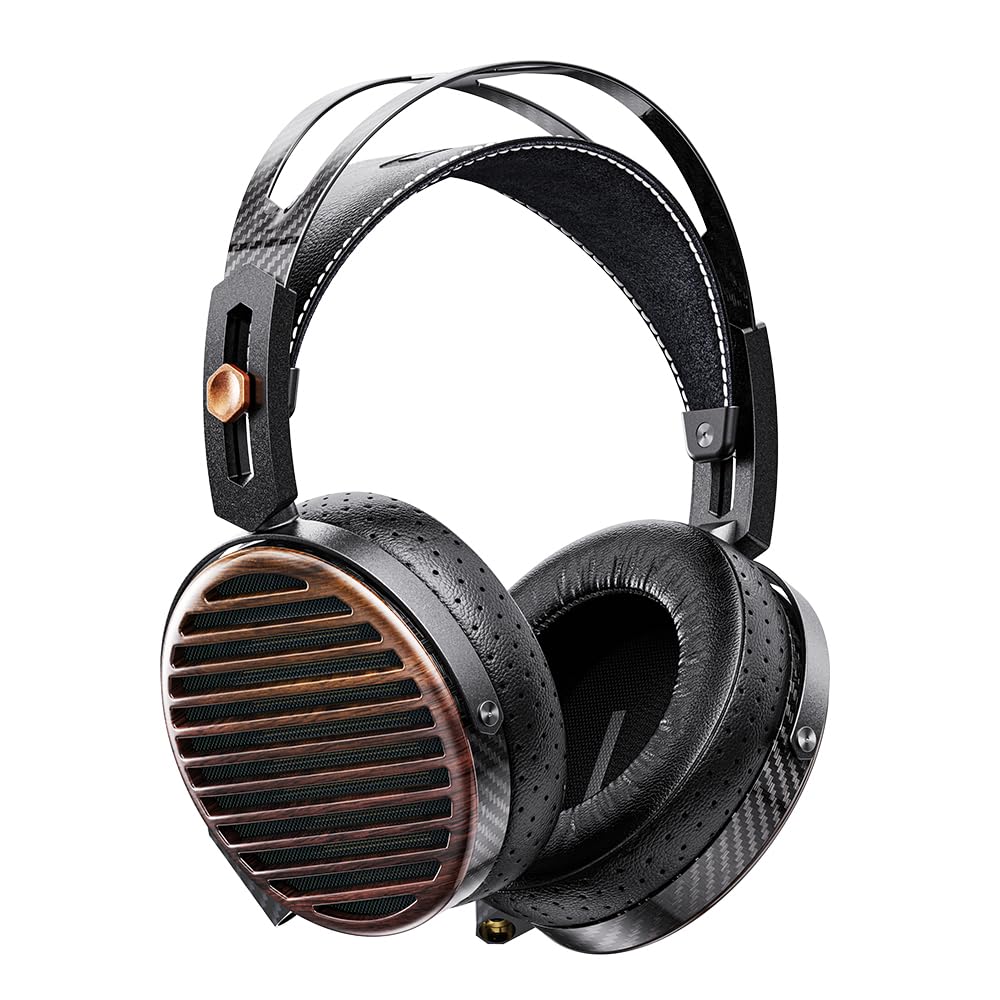
The FiiO FT7 is an open-back planar magnetic headphone, not an IEM, but it earns a place here for audiophiles who prioritize soundstage over portability. Its 106mm self-developed planar driver uses an ultra-thin 1µm diaphragm with a proprietary multi-layer coating of 24K gold and pure silver to deliver lightning-fast transient response and exceptional high-frequency extension up to 40kHz. The zebrawood grille and carbon fiber shell keep weight at just 427g, making it comfortable for long sessions despite the large driver surface.
Acoustically, the FT7 offers a vast 3D soundstage with articulate bass placement and a pleasing blend of warmth and technicality. The open-back design naturally sacrifices isolation but rewards with an airy, speaker-like presentation that makes orchestral and live recordings feel expansive. The modular cable system uses a 4.4mm balanced connector with cryogenically treated monocrystalline copper conductors for pristine signal path.
Two sets of ear pads (genuine lambskin and breathable fabric) allow users to tweak the bass response — lambskin pads tighten sub-bass and ease mid-treble, while fabric pads offer a more neutral presentation. The FT7 is relatively easy to drive at 25 ohms, but pairing it with a clean DAC/amp unlocks its full dynamic range. For planar newcomers, it represents a superb entry point into the category.
Why it’s great
- Massive 106mm planar driver delivers speaker-like soundstage depth
- Gold/silver coated diaphragm provides exceptional transient speed
- Interchangeable ear pads allow tonal tuning without EQ
Good to know
- Open-back design leaks sound and offers no noise isolation
- Bass may feel lean without EQ or lambskin pads
5. Sennheiser IE 600

The Sennheiser IE 600 uses a 7mm TrueResponse dynamic driver engineered and manufactured in Germany, housed in 3D-printed amorphous zirconium shells that are three times harder than steel. This material choice virtually eliminates resonances from the housing itself, allowing the dual-chamber absorber system to deliver a tonally neutral, intimate voicing with extended treble that avoids typical brightness. The frequency response is remarkably flat from the mid-bass through the presence region, making it an excellent reference tool for mix evaluation.
The included accessories cover most bases: a para-aramid reinforced 3.5mm cable and a separate balanced 4.4mm cable, plus silicone and memory foam eartips in three sizes. The MMCX Fidelity+ connectors are recessed and robust, rated for over 500 attachment cycles. Bass is impactful but not overwhelming, with excellent control and texture — think of a well-tuned studio monitor rather than a consumer-boosted sound.
Where the IE 600 falls short for some is in the cable quality: many users report the stock cable is stiff and prone to microphonics, and the proprietary connectors limit aftermarket options unless using an adapter. The eartips also benefit from aftermarket upgrades (e.g., Final Type E) to achieve consistent seal. However, for those seeking a neutral, high-resolution IEM with German engineering pedigree, the IE 600 remains a benchmark.
Why it’s great
- Amorphous zirconium housing eliminates structural resonances
- Neutral, reference-grade tuning with extended yet smooth treble
- Includes both 3.5mm and 4.4mm cables for flexible pairing
Good to know
- Stock cable is stiff and prone to microphonic noise
- Eartips often require replacement for optimal seal and bass consistency
6. Westone Audio Pro X50

The Westone Pro X50 employs five proprietary balanced armature drivers capable of extending well beyond typical in-ear frequency ranges, with left and right earpieces matched to an extraordinary ±2dB tolerance for precise acoustic symmetry. This tight matching is critical for professional stage use where consistent imaging and tonal balance across both channels is non-negotiable. The universal-fit earpiece is the result of 60 years of Westone’s ear-related design experience — it’s compact, low-profile, and extremely lightweight.
The Linum Bax T2 detachable cable uses an ultra-low resistance tensile wire design with aramid fiber reinforcement, but several users note it tangles easily and lacks an ear guide for a secure over-ear fit. Westone includes five pairs of foam tips and five pairs of silicone tips, allowing users to dial in isolation and comfort. The impact-resistant Monitor Vault carrying case adds durable protection for transport.
Sonically, the Pro X50 delivers a very balanced, uncolored presentation ideal for live monitoring. Bass is present but not boosted, mids are forward and articulate for vocal clarity, and treble is smooth without harshness. For live sound applications — drummers, in-ear monitoring for musicians — the noise isolation is excellent and the tonal balance allows players to hear every element of the mix without fatigue.
Why it’s great
- Industry-leading ±2dB channel matching for consistent imaging
- Compact, ergonomic shell designed from 60 years of ear expertise
- Comprehensive tip selection (5 foam + 5 silicone) for perfect isolation
Good to know
- Linum cable tangles easily and lacks over-ear ear guide
- Bass presentation is accurate but not impactful for bass-heavy genres
7. Kiwi Ears Orchestra Lite

The Kiwi Ears Orchestra Lite uses eight balanced armature drivers in a three-way passive crossover configuration to achieve intricate layering with total harmonic distortion kept extremely low. The bass is restricted to sub-bass frequencies with an 8dB peak from 20Hz to 200Hz, the mids stay nearly neutral within a 1dB window from 200Hz to 800Hz, and the treble follows a 7dB pinna-compensated rise at 2.5kHz with slow natural decay. This tuning mirrors the sound of professional studio monitors, making it a perfect companion for audio engineers and musicians.
The 4-core 7N oxygen-free copper cable is intentionally lightweight for stage or portable use, though some users note the 2-pin connectors are recessed and require precise alignment. Each unit undergoes two rounds of quality control with left/right frequency matching. The shell is handcrafted with a translucent green faceplate that adds visual flair without adding weight.
Where the Orchestra Lite shines is in its midrange reproduction, especially female vocals and acoustic instruments — it renders breath, articulation, and harmonic texture with remarkable realism. The soundstage is wide and well-defined, placing instruments with good separation even in dense mixes. The unvented design can cause pressure buildup for some users, and aftermarket tips (like Dunu S&S) are recommended to improve seal and bass response.
Why it’s great
- Studio monitor tuning with neutral mids and controlled sub-bass
- Handcrafted shell with meticulous channel matching QC
- Excellent vocal clarity and soundstage width for the price point
Good to know
- Unvented design can cause suction discomfort for some users
- Stock cable is stiff and 2-pin connectors require careful alignment
8. MEZE AUDIO ALBA

The MEZE AUDIO ALBA is built around a 10.8mm dynamic driver tuned for natural, balanced sound with enhanced lower tones for richness and crisp, clean high notes. The zinc alloy and anodized aluminum shell with an iridescent pearl-like finish feels premium in hand, and the ergonomic shape ensures high levels of comfort and noise isolation. The highlight is the custom-designed 3.5mm to USB-C adapter with a built-in DAC/AMP, allowing direct connection to any modern smartphone or laptop without an external dongle.
The 2-pin braided SPC 1.2m cable with gold-plated 3.5mm jack is lightweight, though some users report it feels thin and tangles more than expected. The included eco-leather pouch and four sizes of silicone eartips (S, M, L, XL) cover the basics for comfortable daily use. Sonically, the ALBA delivers a mature, relaxed treble with fast, dry bass — it excels with acoustic, folk, classical, and vocal-centric music but doesn’t have the sub-bass slam for hip-hop or EDM.
The built-in USB-C DAC adapter is a genuine convenience for listeners who want a single-cable solution for on-the-go use, and the overall tuning is musical and non-fatiguing for long listening sessions. For an introduction to high-fidelity IEMs, the ALBA offers a compelling blend of build quality, comfort, and coherent tuning.
Why it’s great
- Built-in USB-C DAC adapter enables direct smartphone use with dongle-free convenience
- Premium zinc/aluminum shell with iridescent finish looks and feels high-end
- Natural, non-fatiguing tuning ideal for long listening sessions
Good to know
- Bass lacks sub-bass weight for bass-forward genres like hip-hop and EDM
- Stock cable feels thin and is prone to tangling
9. Linsoul SIMGOT SuperMix 4

The Linsoul SIMGOT SuperMix 4 is a budget-friendly technical marvel that packs four different driver types — a 10mm dynamic driver, a large balanced armature, a micro planar magnetic driver, and a PZT piezoelectric transducer — into a single 3D-printed resin shell with CNC-machined metal faceplate. The RC four-way crossover network uses independent acoustic ducts to minimize phase inconsistencies and distortion, delivering a sound that is remarkably coherent for a multi-driver design at this price.
The 10mm dynamic driver uses a high-elastic suspension system and custom high-polymer nano-diaphragm for powerful, natural low frequencies, while the BA handles mids with lush density, the planar covers high frequencies with low distortion, and the PZT extends the ultra-treble for enhanced airiness. The overall tuning follows a Harman-like target: balanced, engaging, with strong sub-bass, punchy mid-bass, smooth mids, and non-fatiguing treble. The soundstage is wide and imaging is precise — several users report excellent performance in competitive FPS gaming.
The included 0.78mm 2-pin oxygen-free copper silver-plated cable is functional but slightly stiff, and the black translucent shell looks stylish but can be prone to scratches. At its price point, the SuperMix 4 offers an unprecedented level of technical performance and driver variety, making it an excellent entry point for listeners curious about hybrid driver configurations without committing to a high-end investment.
Why it’s great
- Four distinct driver types deliver exceptional frequency range and detail
- Harman-tuned sound signature with balanced, engaging presentation
- Excellent value for the technical complexity and performance offered
Good to know
- Stock cable is stiff and feels less premium than the shell
- PZT driver can sound slightly artificial or shouty to some ears
FAQ
What does “burn-in” mean for audiophile IEMs and is it real?
Can I use high-end IEMs directly from my smartphone without an amplifier?
Why do some audiophile earbuds have multiple drivers but still sound worse than a single-driver model?
Final Thoughts: The Verdict
For most users, the best audiophile earbuds winner is the Technics EAH-TZ700 because its magnetic fluid driver delivers ultra-low distortion with a natural, highly resolved midrange that suits every genre without fatigue. If you want customizable tuning for gaming and studio work, grab the FiiO FA19. And for an entry-level hybrid that punches far above its price, nothing beats the Linsoul SIMGOT SuperMix 4.