
Our readers keep the lights on and the weekend projects moving. As an Amazon Associate, I earn from qualifying purchases.
Buying an aerial photography drone is no longer just about how high it can fly—it’s about the quality of the image sensor, the stability of the gimbal, and the intelligence of the flight system. Whether you’re capturing cinematic real-estate walkthroughs, documenting backcountry adventures, or building a professional portfolio, the wrong camera specs or a weak transmission link can turn your investment into a frustrating collection of shaky, unusable footage.
I’m Rikta — the co-founder and writer behind FitlyFast. I’ve spent hundreds of hours parsing through camera specifications, gimbal stabilization technologies, flight times, and transmission protocols to bring clarity to this complex market.
For most creators and hobbyists, the right choice balances a capable camera sensor, a genuine 3-axis mechanical gimbal, and a reliable digital transmission system—which is exactly what you’ll find in this guide to the best aerial photography drone.
How To Choose The Best Aerial Photography Drone
Choosing the right aerial photography drone means understanding how the camera, stabilization, flight time, and transmission system work together as a complete capture platform. Beginners often fixate on a single spec like “4K video” while overlooking the gimbal type or sensor size that actually determines image quality. This section breaks down the critical decisions.
Gimbal Type: Mechanical vs. Electronic Stabilization
A 3-axis mechanical gimbal uses motors and sensors to physically counteract the drone’s movements, keeping the camera level and steady in real-time. This is non-negotiable for professional-grade footage. Electronic Image Stabilization (EIS) crops and smooths the video digitally, which can introduce a wobbly “jello” effect and reduces the field of view. Always prioritize a drone with a true 3-axis mechanical gimbal for aerial photography.
Sensor Size and Aperture
The physical size of the camera sensor dictates how much light it can capture. A 1/2-inch CMOS sensor (common in budget to mid-range drones) works well in good light but struggles with dynamic range and low-light noise. A 1-inch sensor and especially a 4/3 CMOS sensor (like the Hasselblad on premium DJI models) deliver significantly better color depth, detail retention in shadows, and clean night shots. A wider aperture (f/1.8 or f/1.7) further improves low-light performance.
Transmission System: Digital Relay vs. Wi-Fi
Wi-Fi-based transmission is prone to interference and signal dropouts, limiting reliable range to a few hundred feet. Dedicated digital transmission systems (like O4+, PixSync, or proprietary wired-relay systems) use a separate radio frequency link that provides much lower latency, higher resolution live feeds (often 1080p), and stable control at ranges of 6 to 30 kilometers. For serious aerial photography, a non-Wi-Fi transmission system is essential.
Weight Class and FAA Regulations
Drones under 249 grams are exempt from FAA registration and Remote ID requirements in the United States, making them ideal for casual travel and quick flights. Models over 250 grams (and especially those over 600 grams) require registration, Remote ID compliance, and must follow stricter right-of-way rules. Heavier drones generally offer larger sensors, better wind resistance, and longer flight times, so choose based on your tolerance for paperwork versus performance.
Flight Time and Battery Ecosystem
Advertised flight times are measured in ideal, windless conditions at slow speeds. Real-world flight times are typically 50-70% of the stated maximum. Look for drones that come with multiple intelligent batteries in a “Fly More” or bundle package. Features like fast charging hubs and USB-C Power Delivery (PD) charging drastically reduce downtime between flights.
Quick Comparison
On smaller screens, swipe sideways to see the full table.
| Model | Category | Best For | Key Spec | Amazon |
|---|---|---|---|---|
| DJI Mavic 4 Pro | Flagship Pro | Professional cinematography | 4/3 CMOS Hasselblad, 100MP | Amazon |
| Antigravity A1 Explorer | 360 FPV | Immersive 360° video | 8K 360° capture, 39-min flight | Amazon |
| DJI Mini 5 Pro | Pro Compact | Premium travel & vlogging | 1-inch CMOS, 52-min flight | Amazon |
| Potensic ATOM 2 | Mid-Range Value | Hobbyist with premium RC | Sony 1/2″ CMOS, 10km range | Amazon |
| Holy Stone HS600D | Mid-Range Wind | Windy conditions & stability | Level-6 wind, Sony CMOS | Amazon |
| K600PRO GPS Drone | Screen Controller | Beginner with built-in screen | 5.5″ touchscreen, 15km range | Amazon |
| Bwine F7GB2 Pro | High-Altitude | Mountainous terrain flights | L6 wind, 2000m altitude | Amazon |
| Holy Stone HS790 | Night Flying | Twilight & dusk photography | AI Night Shot, 60-min flight | Amazon |
| Ruko F13 | Budget All-Rounder | Entry-level 8K photos | 8K photo, 96-min flight | Amazon |
| Bwine F7MINI | Best Value | Budget-friendly 4K | 249g, 3-axis gimbal | Amazon |
| HOVERAir X1 | Pocket Self-Fly | Action self-filming | 125g, enclosed propeller guard | Amazon |
In‑Depth Reviews
1. DJI Mavic 4 Pro
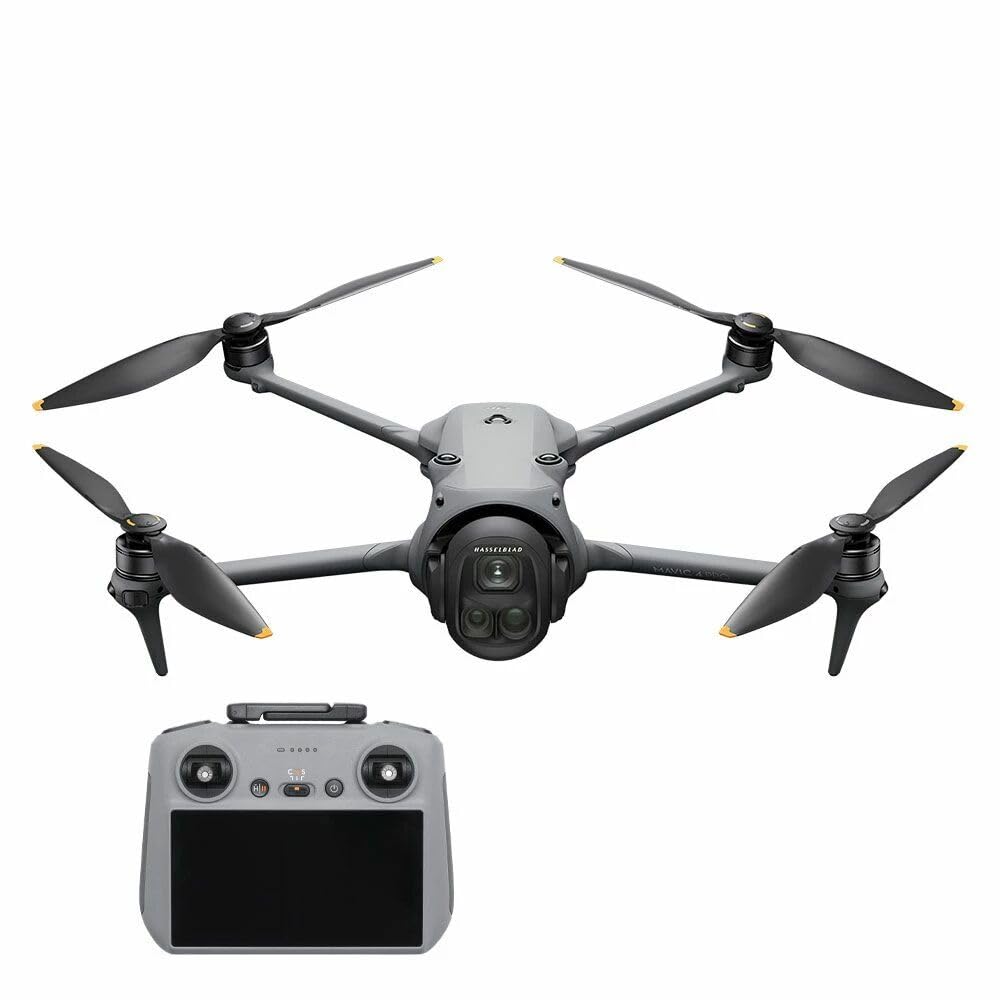
The DJI Mavic 4 Pro is the undisputed flagship for serious aerial photographers, built around a massive 4/3 CMOS Hasselblad camera that captures 100MP stills and 6K/60fps HDR video. Its 360° Infinity Gimbal allows dynamic camera movement without repositioning the aircraft, and the 0.1-Lux Nightscape Omnidirectional Obstacle Sensing delivers safe autonomous flight in near-dark environments. The O4+ video transmission system pushes a 10-bit HDR feed up to 30 kilometers, which is class-leading for professional remote shoots.
Flight performance is equally impressive with a 51-minute max flight time, though real-world usage lands closer to 35-40 minutes when flying with a gimbal load. The RC Pro 2 controller collapses for easy packing but still provides a 7-inch high-brightness display that is readable in direct sunlight. The dual tele cameras complement the main sensor with crisp optical zoom, making this the most versatile imaging platform in the lineup. Professional users will also appreciate the robust build and sensor density that makes it nearly impossible to crash under normal conditions.
This drone commands a premium investment, and the included single battery means you will want the Fly More combo for extended sessions. It is heavy at over 2 kilograms, requiring full FAA registration and Remote ID compliance. For creators whose income depends on image quality and reliability, the Mavic 4 Pro justifies every ounce of its cost with unmatched color science and safety features.
Why it’s great
- 4/3 CMOS Hasselblad sensor delivers professional-grade dynamic range and color depth
- 30km O4+ digital transmission ensures stable 10-bit HDR feed at long distances
- Near-zero crash risk with omnidirectional obstacle sensing at 0.1 lux
Good to know
- Requires full FAA registration and Remote ID
- Single battery included in base package; Fly More combo recommended
2. Antigravity A1 Explorer Bundle
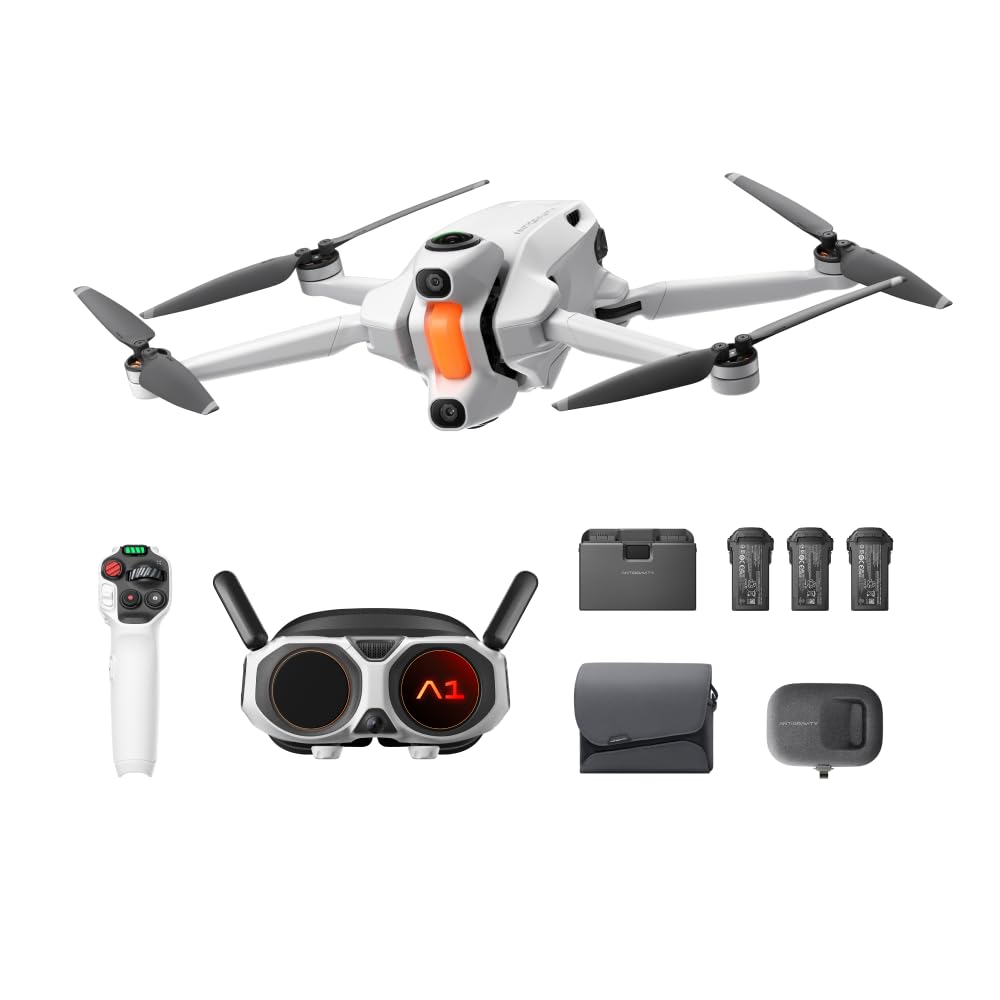
The Antigravity A1 Explorer is a category-defying drone that captures everything around it in 8K 360° video, thanks to a decade of Insta360’s stitching technology. The included Vision Goggles offer a 90° FOV through dual 1-inch Micro-OLEDs and Pancake optics with built-in diopter adjustment, creating an immersive first-person flying experience unmatched by any traditional camera drone. The “Fly First, Frame Later” workflow lets you shoot in 360° and reframe the shot in post-production, eliminating the need to pan the gimbal mid-flight.
It offers dual-battery flexibility: a Standard Battery keeps the drone under 249 grams for FAA exemption, while the High-Capacity Battery extends flight time to 39 minutes for longer shoots. The omnidirectional obstacle avoidance system fuses 360° sensing with binocular vision for comprehensive safety. FreeMotion Mode’s simple “point-to-fly” control lowers the entry barrier for new pilots, while FPV Mode gives experienced flyers wrist-based directional control. The Sky Path and Virtual Cockpit features add gamified elements that blur the line between flight simulation and reality.
The bundle includes three batteries, a charging hub, the grip controller, and the Vision Goggles, making it a complete out-of-box ecosystem. The 8K 360° footage requires more storage and editing time than standard 4K flat video, and the immersive FPV experience may not suit users who prefer traditional screen-based framing. For content creators looking to differentiate their work with rewind-and-reframe flexibility, this is the most innovative tool on the market.
Why it’s great
- 8K 360° capture with invisible stitching eliminates the need for gimbal aiming
- Vision Goggles provide deep immersion for FPV flying
- Modular battery system allows sub-249g or 39-min flight flexibility
Good to know
- 360° workflow requires more storage and post-processing time
- FPV immersion is different from traditional screen-based piloting
3. DJI Mini 5 Pro Fly More Combo Plus
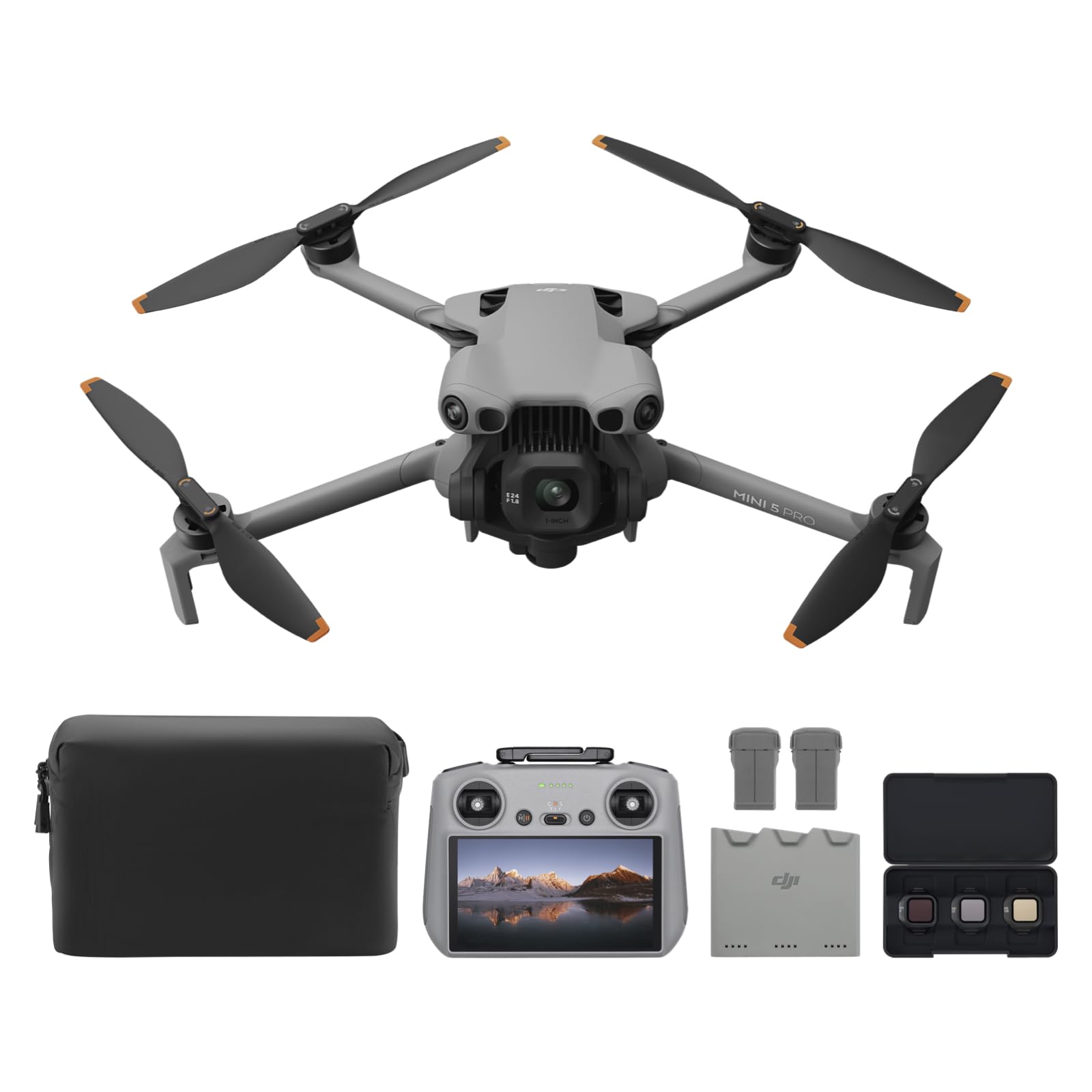
The DJI Mini 5 Pro packs a 1-inch CMOS sensor into a sub-250 gram airframe, maintaining FAA-exempt weight while delivering 4K/60fps HDR video and 50MP stills. The 225° gimbal rotation enables true vertical filming without cropping, which is a game-changer for social media content destined for TikTok and Instagram Reels. Nightscape Omnidirectional Obstacle Sensing uses forward-facing LiDAR and vision sensors to enable safe autonomous night flights, a feature typically reserved for much heavier drones.
The upgraded ActiveTrack 360° keeps subjects locked during dynamic movement like cycling or running, and the 42GB of internal storage means you never need a microSD card for a full day of shooting. With the Intelligent Flight Battery Plus, flight time extends to 52 minutes, though the combined weight of the larger battery pushes the drone over 250 grams, triggering FAA registration requirements when using that specific battery. The DJI RC 2 controller with a bright built-in screen eliminates the need for a phone tether, though the controller itself is on the heavier side.
The Fly More Combo Plus comes with three batteries, a charging hub, ND filter set, and shoulder bag. The 1-inch sensor is a significant step up from the 1/2-inch sensors found in mid-range competitors, offering better low-light performance and dynamic range. Some users report the activation process can be finicky with strict home networks, and the lack of a US warranty on import units is worth noting. For travel-first creators who refuse to compromise on sensor quality, this is the goldilocks drone.
Why it’s great
- 1-inch CMOS sensor delivers superior dynamic range and low-light performance
- True vertical filming from 225° gimbal rotation for social media
- Nightscape omnidirectional obstacle sensing for safe autonomous night flight
Good to know
- Larger battery pushes weight over 250g requiring FAA registration
- No US warranty on some import units; activation can be finicky
4. Potensic ATOM 2 Fly More Combo
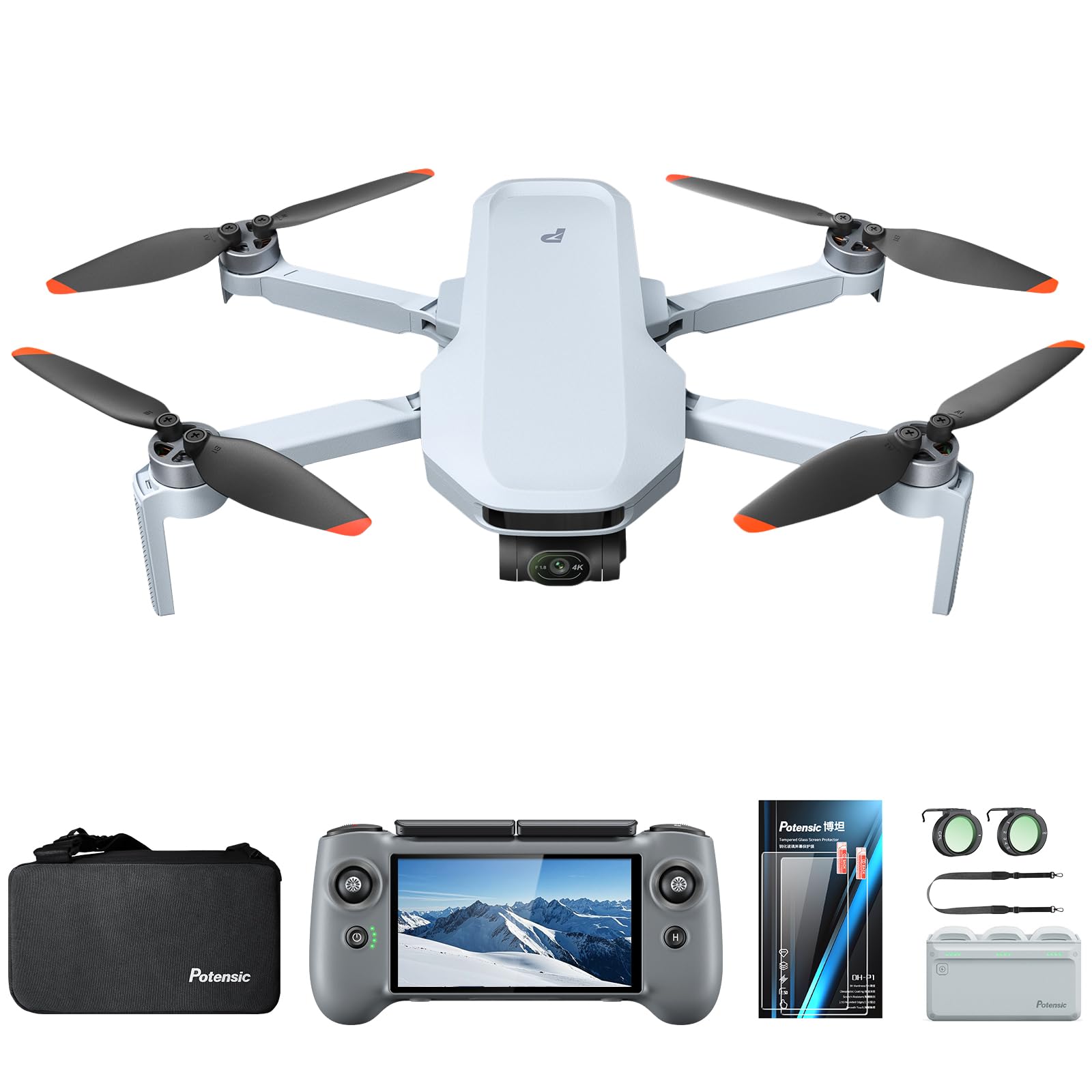
The Potensic ATOM 2 Fly More Combo is the best mid-range option for photographers who want a controller with a built-in display without paying DJI prices. Equipped with a 1/2-inch Sony CMOS sensor, it captures 48MP photos and 4K/30fps HDR video stabilized by a genuine 3-axis mechanical gimbal. The PixSync 4.0 transmission system delivers 1080p/30fps live video up to 10 kilometers with low latency, and the PTD 1 remote features a bright 700-nit 5.5-inch FHD touchscreen that is comfortable to use in sunlight.
The bundle includes three batteries that charge simultaneously in 1.3 hours via the parallel charging hub, providing 96 minutes of total flight time. The ND and CPL filter set gives you exposure control in bright conditions and reflection reduction for water and glass shots. AI-powered tracking modes including Spotlight, Follow, and Parallel work reliably for dynamic subjects, and the AI Night Shot mode captures clean low-light footage that outperforms other 1/2-inch sensor drones. The under-249g design means FAA registration is entirely unnecessary.
Some users note that visibility at extreme viewing angles can cause glare on the glossy controller screen, and using a matte screen protector solves this issue. The SmartTransfer feature allows up to 25 MB/s downloads to your phone for quick social media sharing. For the price point, you get a flying ecosystem that rivals much more expensive drones, with the only meaningful trade-off being a smaller sensor compared to the 1-inch options above. This is the smart buy for budget-conscious serious shooters.
Why it’s great
- PTD 1 controller with 700-nit built-in screen eliminates phone tethering
- 10km PixSync 4.0 digital transmission provides stable long-range FPV
- Under 249g with no FAA registration, yet includes ND/CPL filters and AI tracking
Good to know
- 1/2-inch sensor cannot match 1-inch sensors in low-light scenarios
- Controller screen can show glare in direct sunlight without matte protector
5. Holy Stone Sentinel HS600D

The Holy Stone Sentinel HS600D is designed for photographers who fly in challenging weather, featuring a reinforced 603-gram frame with Level-6 wind resistance that keeps the camera stable in conditions that would ground lighter drones. It uses a 1/2-inch Sony CMOS sensor with a bright f/1.8 aperture for improved low-light performance, capturing 4K HDR video and 8K/48MP stills. The combination of a 3-axis mechanical gimbal and EIS provides double-layer stabilization for Follow Me and Action tracking shots.
The wired-relay digital transmission system replaces unreliable Wi-Fi links, providing a low-latency HD feed at up to 20,000 feet. Dual batteries deliver 80 minutes of total flight time, and the beginner mode with altitude limits and multi-sensor safety (TOF, GPS, optical flow) ensures stress-free early flights. The remote controller features a built-in screen with telemetry overlay, and the GNSS positioning holds position tightly even in wind gusts. Smart tracking, time-lapse, and panorama modes are accessible with one tap.
Because the HS600D weighs over 600 grams, it requires full FAA registration and Remote ID compliance, which is clearly stated in the packaging and customer reviews. The camera lacks manual ISO and exposure adjustment, which is a limitation for experienced photographers who want fine control. The Son viewfinder on the controller screen is useful but not as bright as dedicated RC screens. For coastal, mountain, or open-plain photographers who regularly fly in wind, the HS600D offers stability that lighter drones cannot touch.
Why it’s great
- Level-6 wind resistance with 603g reinforced frame keeps footage steady in gusts
- Wired-relay digital transmission eliminates Wi-Fi interference and dropouts
- Dual gimbal + EIS stabilization for smooth action tracking
Good to know
- Over 600g requires FAA registration and Remote ID compliance
- No manual ISO or exposure adjustments available in the app
6. K600PRO GPS Drone with EIS 4K Camera
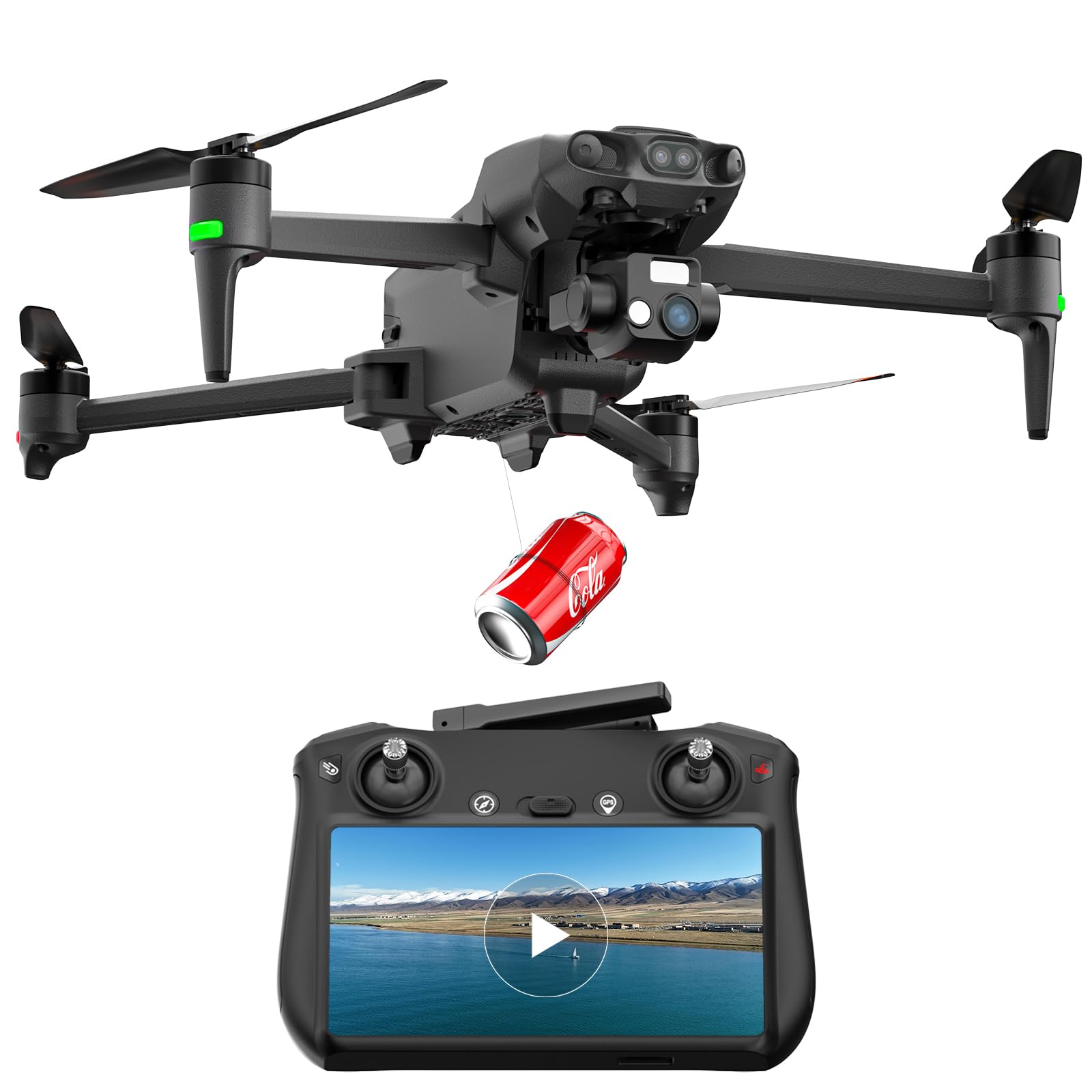
The K600PRO is built around its 5.5-inch touchscreen controller, which provides an integrated FPV experience without needing a phone mount or cable. It captures 4K video with a 3-axis gimbal and Electronic Image Stabilization (EIS), and the 50x digital zoom gives you framing flexibility when you cannot physically reposition the aircraft. The 15-kilometer HD transmission range is impressive at this price tier, using a non-Wi-Fi digital link that resists interference better than budget options.
The brushless motor system paired with an 11.1V 3500mAh battery delivers 55 minutes of advertised flight time, though real-world usage is closer to 25-30 minutes in moderate wind. The GPS system with Follow Me, Orbit, and Waypoint modes is accurate and reliable, and the auto-return function works consistently based on multiple verified customer reports. The drone includes a dedicated beginner mode with height lock that limits altitude and speed for new pilots, making this accessible from the first flight.
The K600PRO is loaded with TOF and six high-precision GPS sensors for low-altitude stability, which reviewers note is a significant improvement over earlier models. The EIS is a digital crop-based system, not a mechanical gimbal, so during aggressive maneuvers you may notice some wobble compared to full 3-axis mechanical systems. For a recreational photographer who values the convenience of a screen on the controller and reliable GPS autonomy, this package provides strong value.
Why it’s great
- 5.5-inch touchscreen on the controller eliminates phone tethering
- 15km digital transmission range is excellent for the mid-range category
- TOF and 6-sensor GPS system for stable low-altitude flight
Good to know
- EIS is digital stabilization, not a true mechanical gimbal
- Advertised 55-min flight is significantly less in real-world wind conditions
7. Bwine F7GB2 Pro

The Bwine F7GB2 Pro is engineered for high-altitude environments, with its 1806 brushless motors and L6 wind resistance allowing controlled flight at up to 2000 meters above sea level. The 4K camera uses a larger CMOS sensor with a 120° FOV and is mounted on a genuine 3-axis mechanical gimbal, with 5x digital zoom for framing distant subjects. The FAA Remote ID certification is already completed and included on the drone arm, so commercial users can fly legally without extra modules.
Three 2600mAh intelligent batteries provide 75 minutes of total flight time, and each battery is UL 2054 certified for safety compliance—a rare detail at this price point. The transmission range stretches to 10,000 feet with a stable Wi-Fi-based FPV feed, and the Bwine Mini app includes six filters and ten background music tracks for in-app social media editing. The Follow Me, Waypoint, and Orbit modes are reliable, and the auto-return function activates on low battery, signal loss, or one-key press.
Some users report that the dedicated remote screen can be hard to read in bright sunlight, and the camera quality shows some edge distortion during fast turns typical of the Wi-Fi transmission class. The SD card compatibility is finicky with certain brands; a Samsung 128GB EVO card is confirmed to work reliably. For real-estate photographers or farmers flying at elevation, the F7GB2 Pro’s stability in thin air and strong wind makes it a niche specialist that outperforms many mid-range options in controlled conditions.
Why it’s great
- Certified L6 wind resistance with stable flight at 2000m altitude
- FAA Remote ID pre-installed and UL 2054 certified batteries
- Three batteries for 75-min total flight with safe charging
Good to know
- Remote screen difficult to read in direct sunlight
- Camera quality degrades during fast turns typical of Wi-Fi transmission
8. Holy Stone HS790
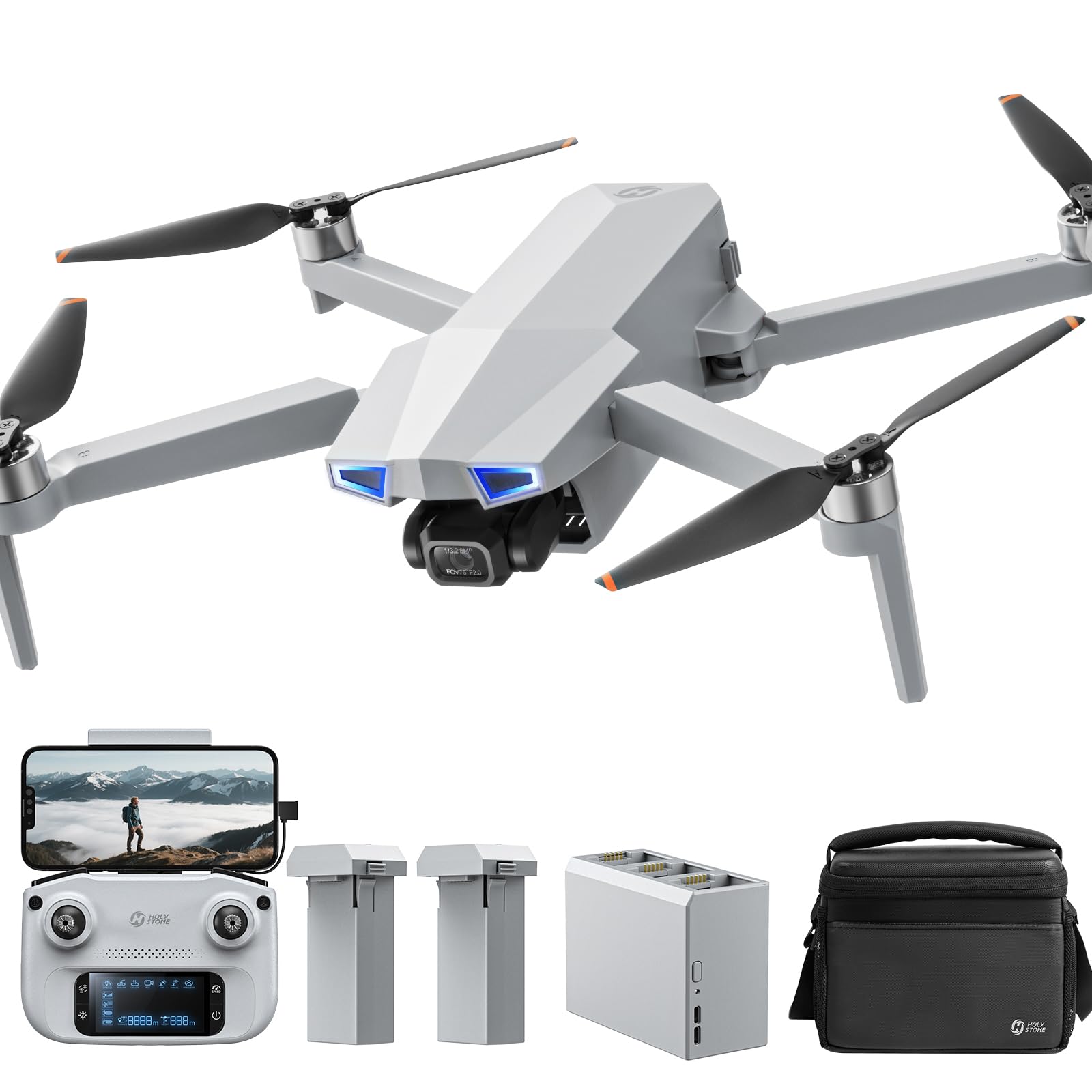
The Holy Stone HS790 is purpose-built for twilight and dawn photography, featuring a dedicated Night Flying Mode with enhanced navigation visibility and a specialized AI Night Shot algorithm. The 3-axis mechanical gimbal captures smooth 4K/30fps video and 6K photos, and the Holy Stone Wi-Fi Repeater system provides low-latency streaming up to 9 kilometers (30,000 feet). The drone is built around 1506 brushless motors for quiet, efficient flight and includes built-in Remote ID (RID) for FAA compliance without external modules.
The dual intelligent batteries with a Smart PD Charging Hub support fast charging and double as a power bank for field charging of phones or tablets, providing 60 minutes of total flight time. The GPS platform includes Follow Me, Waypoint, and Auto Return Home functions that work consistently based on customer feedback. QuickShots like Dronie, Circle, and Helix are accessible with a single tap, making cinematic sequences easy for beginners. The foldable body packs into a premium carrying case with minimal bulk.
Because the HS790 weighs 375 grams, it requires FAA registration and Remote ID compliance, which the built-in RID module satisfies. The Wi-Fi-based transmission is reliable at mid-range but can struggle in dense interference zones like urban parks with many Wi-Fi networks. Some users note that the gimbal can struggle to keep up with fast yaw rotations, causing slight horizon tilt during aggressive maneuvering. For dusk wedding shoots or golden-hour landscape photography, the AI Night Shot mode is a standout feature that gives the HS790 a clear advantage over non-specialized drones.
Why it’s great
- Dedicated AI Night Shot mode for superior low-light and twilight photography
- Built-in Remote ID for hassle-free FAA compliance
- PD charging hub doubles as a power bank for field charging devices
Good to know
- Gimbal can show horizon tilt during fast yaw maneuvers
- Wi-Fi transmission is prone to interference in dense urban areas
9. Ruko Drone with 4K UHD Camera

The Ruko 4K drone is an FAA-exempt, pocket-sized aircraft that balances an 8K still image capability with 4K/30fps video on a sub-250 gram platform. The 1/2-inch 48MP CMOS sensor combined with a 3-axis brushless gimbal and EIS delivers stable footage that punches above its weight class for the entry-level budget. The R2 digital transmission system provides a reliable feed up to 20,000 feet without the interference problems of standard Wi-Fi drones, which is a significant advantage at this price point.
Three intelligent batteries provide 96 minutes of total airtime, and the AI Takeoff/Landing system paired with quadruple positioning (GPS, barometric, TOF, and optical flow) ensures precise and safe flight in both outdoor and limited indoor conditions. The controller features a built-in display with telemetry data, and the buzzer on the drone can be activated from the controller to locate it in tall grass or brush. The complete package includes a protective carrying case, extra propellers, and a full screwdriver set.
Some customers report defective batteries in early batches, but Ruko’s customer service is consistently praised for sending immediate replacements. The joysticks are sensitive in the default mode, though adjustments can be made. The 8K photo resolution is interpolated from the 48MP sensor, so it does not match a true 8K sensor’s detail. For a first-time buyer who wants a complete bundle with extra batteries and a case, the Ruko delivers the best overall value with the least registration hassle.
Why it’s great
- Under 249g with no FAA registration needed
- R2 digital transmission beats standard Wi-Fi drones for range and stability
- Three batteries with 96-min total flight and buzzer for lost drone recovery
Good to know
- 8K photo is interpolated from 48MP sensor, not native 8K resolution
- Sensitive joysticks require adjustment for some users
10. Bwine F7MINI 4K Video 8K Photo Drone
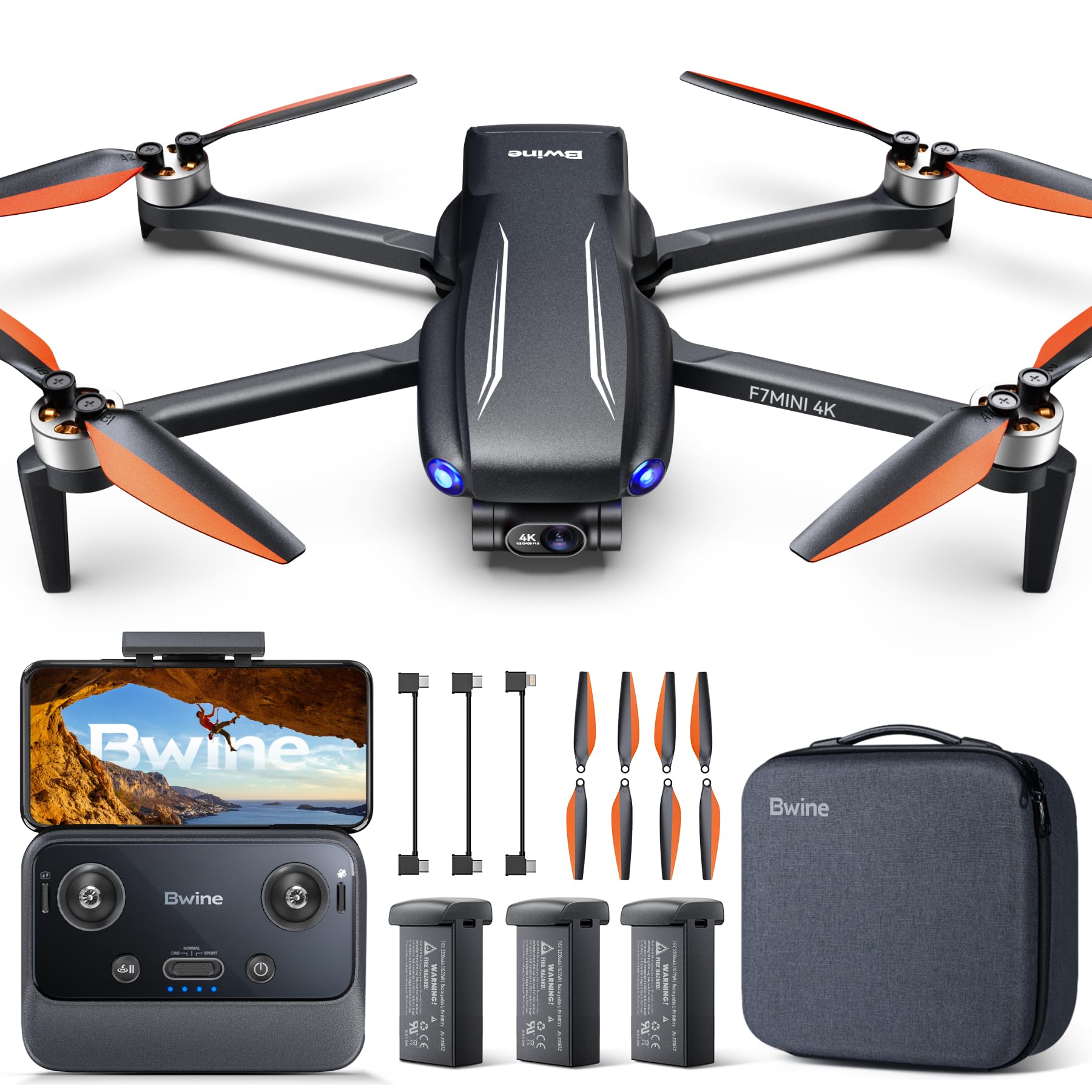
The Bwine F7MINI is the most compelling entry-level drone for the price, offering a full 3-axis mechanical gimbal and a 48MP camera on a sub-249g airframe that requires no FAA registration. The controller features a built-in 5.5-inch touchscreen, eliminating the awkward phone mount experience that plagues other budget drones. It captures 8K photos and 4K/30fps video with the 1/2-inch F1.8 aperture CMOS sensor, and the L5 wind resistance (31mph top speed from the 1503 brushless motors) keeps the camera steady in moderate breeze.
The three high-density batteries support PD 3.0 fast charging and deliver 96 minutes of total flight time, with one battery pre-installed in the drone. The 20,000-foot (6km) digital transmission uses wired technology with 150% stronger anti-interference than standard Wi-Fi, providing zero signal loss at typical flying distances. The intelligent GPS system supports auto cruise, Follow Me with 0.5-meter accuracy, Waypoint, and Orbit modes. The 120dB locator buzzer is a practical safety feature for finding the drone in thick vegetation.
Customer reviews highlight the exceptional value and the controller’s built-in screen as the standout feature that makes flying feel premium despite the budget price point. Some users note that downloading media to a phone is slow via the app, and it is faster to connect the drone directly to a computer via USB. The camera quality is good for the price but does not match the dynamic range of Sony-sensor drones in the next tier. For a budget-conscious photographer who refuses to sacrifice gimbal quality, the Bwine F7MINI is an unbeatable starting point.
Why it’s great
- 3-axis mechanical gimbal and built-in screen controller at this price point
- Under 249g FAA exemption with L5 wind resistance
- PD 3.0 fast charging batteries with 96-min total flight time
Good to know
- Media download via app is slower than direct USB connection
- Camera dynamic range is limited compared to Sony-sensor mid-range drones
11. HOVERAir X1 Drone with Camera

The HOVERAir X1 is a fundamentally different category of flying camera—it is a fully enclosed, palm-launch drone weighing just 125 grams that acts as an autonomous cameraman rather than a traditional pilot-controlled aircraft. It requires zero flying skill: you press a button on the drone itself to launch, and it automatically selects from pre-programmed flight paths like Hover, Follow, Zoom Out, Orbit, and Bird’s Eye. The fully enclosed propeller guard makes it safe to launch and catch from your hand, and the absence of any remote control means you are fully in the frame.
The camera captures 2.7K@30fps and 1080P HDR video with a triple stabilization system, and the 32GB of internal storage eliminates the need for SD cards entirely. Each battery supports approximately 11 minutes of flight time (20 intelligent flight paths), and the batteries charge quickly via the hub. The Hover X1 App provides real-time previews and manual control options, and the SmartTransfer feature downloads footage to your phone quickly for immediate social media sharing. The follow speed of up to 15 mph tracks cyclists, skaters, and runners effectively.
The HOVERAir X1 does not work well over water, as the downward sensors cannot get a clear lock, and it has no obstacle avoidance sensors, so crashes into trees or walls are possible during manual control. It also lacks a hard carrying case in the standard bundle, though the included storage bag offers basic protection. The image quality at 2.7K is not competitive with dedicated 4K aerial photography drones for high-resolution work. For active lifestyle content creators who want hands-free self-filming without learning to fly, the HOVERAir X1 is a revolutionary tool that sacrifices resolution for autonomy.
Why it’s great
- Zero piloting skill needed; one-button palm launch for hands-free filming
- 125g weight and enclosed propeller guard for ultra-portable safety
- Fully autonomous flight paths for dynamic self-filming scenarios
Good to know
- No obstacle avoidance sensors; crashes into objects possible
- Does not work over water and lacks a hard carrying case
FAQ
What is the real-world benefit of a 1-inch CMOS sensor over a 1/2-inch sensor for drone photography?
Do I need FAA registration for a drone that weighs under 249 grams?
Why does my drone’s advertised flight time not match the real-world flight time?
Is a 3-axis mechanical gimbal better than Electronic Image Stabilization (EIS) for drone video?
What does Remote ID mean and which drones require it?
Final Thoughts: The Verdict
For most users, the aerial photography drone winner is the DJI Mini 5 Pro Fly More Combo Plus because it combines a 1-inch sensor and omnidirectional obstacle sensing in a sub-250 gram package that avoids FAA registration, striking the best balance between image quality and portability. If you want the absolute best sensor in a compact body, grab the DJI Mavic 4 Pro for its professional 4/3 CMOS Hasselblad camera. And for a hands-free self-filming experience that requires zero flying skill, nothing beats the HOVERAir X1.