
Our readers keep the lights on and the weekend projects moving. As an Amazon Associate, I earn from qualifying purchases.
Snowshoeing demands a backpack that balances thermal gear storage, hydration freeze protection, and a stable load profile across uneven, packed, or powder terrain. A standard hiking pack fails here because its water tube freezes at the first gust, its slender pockets can’t hold a puffy jacket, and its hip belt slides under a bulky parka.
I’m Rikta — the co-founder and writer behind FitlyFast. This guide is the result of dozens of hours cross-referencing reservoir insulation specs, frame suspension designs, fabric denier ratings, and real-field reviews from snowshoers who log miles in sub-freezing conditions. I break down the seven packs that actually solve the cold-weather carry problem.
From minimalist hydration packs for fast lift-laps to multi-compartment expedition hauls for backcountry traverses, this guide delivers a practical breakdown of the best backpack for snowshoeing that matches your specific winter output and trip duration.
How to Choose the Best Backpack For Snowshoeing
Picking a pack for snowshoeing isn’t about maximum capacity or the most pockets. It’s about keeping your water flowing at 20°F, securing an avalanche beacon within reach, and having a frame that doesn’t torque sideways when you’re climbing a steep snow slope. Focus on these three non-negotiables.
Hydration Freeze Protection
The number one complaint in winter backpacking is a frozen drinking tube. Look for a pack that includes an insulated tube sleeve or is marketed with a “Therminator” or similar thermal harness. Without this feature, you’ll be stopped mid-trail trying to blow warm air backward into a rigid mouthpiece. A dedicated internal reservoir compartment also helps retain body heat around the bladder.
Volume vs. Trip Duration
For a half-day snowshoe outing, 20 to 30 liters is sufficient for a puffy layer, snacks, first aid, and a 3L water reservoir. Multi-day hut-to-hut routes demand 45L to 65L to accommodate extra clothing layers, a sleeping bag, and stove fuel. Be honest about your gear — a compression strap system on a smaller pack can sometimes hold a shell, but a bigger pack with load lifters will carry a full winter kit far more comfortably.
Load Stability and Back Ventilation
When you’re lifting your feet high with snowshoes, the pack moves with your torso. A pack with a rigid internal frame, load-lifter straps, and a padded hip belt transfers weight to your hips and prevents the load from swaying. Mesh back panels with ventilated foam reduce sweat buildup when you’re generating heat climbing a snow-covered ridge. Avoid packs with a flat, non-breathable back panel if your route involves sustained uphill effort.
Quick Comparison
On smaller screens, swipe sideways to see the full table.
| Model | Category | Best For | Key Spec | Amazon |
|---|---|---|---|---|
| Osprey Atmos AG 65L | Expedition | Multi-day deep snow treks | 65L capacity / Anti-Gravity suspension | Amazon |
| Thule Landmark 60L | Travel/Adventure | Hut-to-hut travel with security | 60L total / removable 20L daypack | Amazon |
| Salomon Trailblazer 30 | Day Hike | Ventilated day tours | 30L / 3D perforated foam back | Amazon |
| Osprey Sportlite 25L | Lightweight | Fast & light summit pushes | 25L / rescue whistle sternum strap | Amazon |
| CamelBak Zoid Snow | Hydration | Lift-access laps & short tours | 70oz reservoir / Therminator harness | Amazon |
| Thule Aion | Travel | Apres-snowshoe carry & commute | 28-32L expandable / waxed canvas | Amazon |
| Peak Design Travel 45L | Travel | Snowshoe travel & urban carry | 35-45L expandable / weatherproof shell | Amazon |
In‑Depth Reviews
1. Osprey Atmos AG 65L Men’s Backpacking Backpack
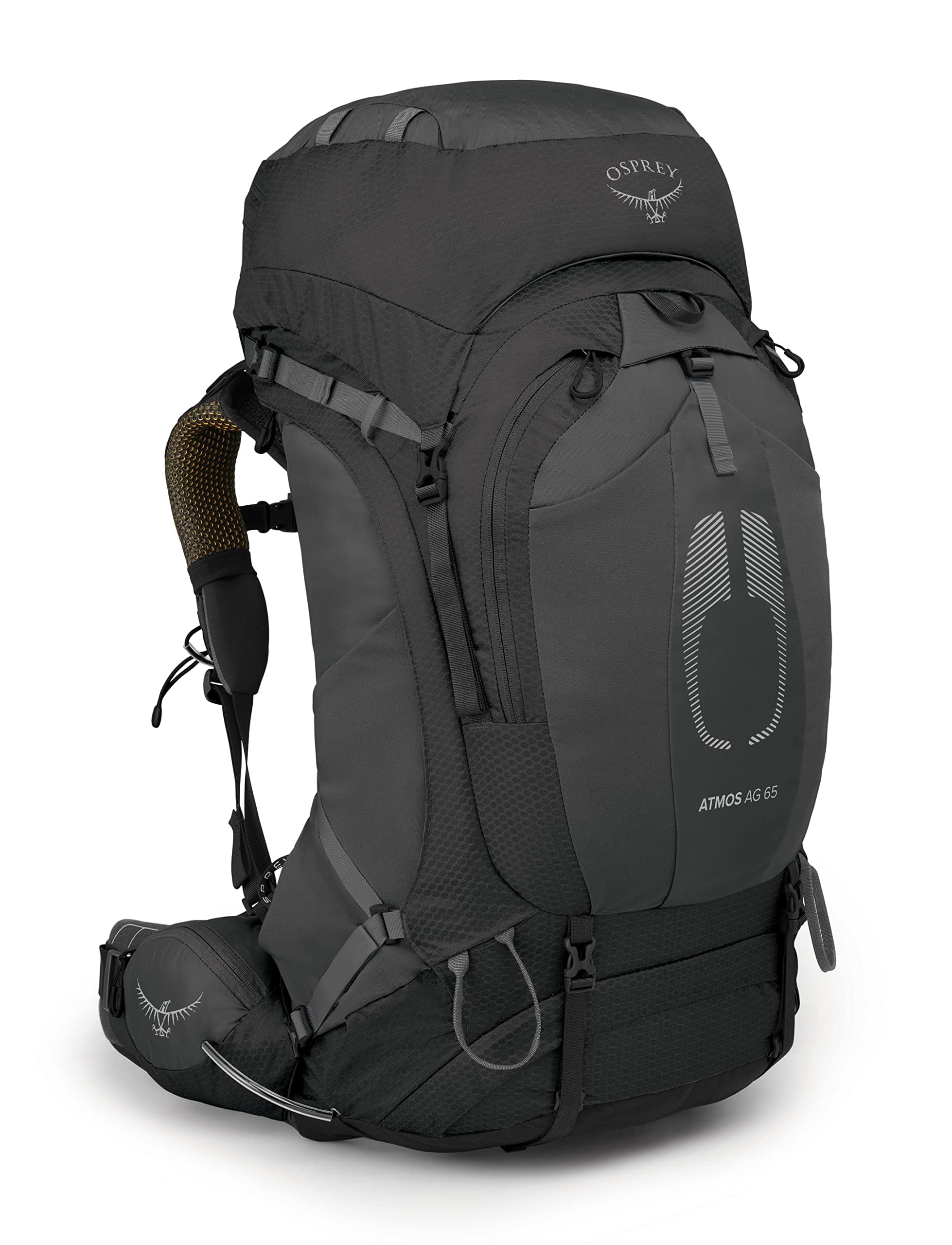
The Osprey Atmos AG 65L is the benchmark for carrying heavy winter loads over undulating snow terrain. Its Anti-Gravity suspension system uses a tensioned mesh backpanel that presses evenly across your entire back, distributing 40+ pounds of gear so effectively that the pack feels lighter than its physical mass. The included rain cover, made with PFAS-free DWR, adds a crucial layer when wet snow begins to saturate pack fabric.
For snowshoeing specifically, the curved side zip access is a standout — you can reach a puffy mid-layer or an emergency bivvy without unloading the main compartment. The floating top lid with lash points lets you strap snowshoes or a helmet to the outside. The removable sleeping bag divider creates a dedicated lower compartment, so a wet tent fly doesn’t dampen your clothing or food.
At 65 liters, this pack is overbuilt for a casual afternoon stroll but ideal for multi-day hut traverses or winter backpacking trips where you’re hauling a -20°F sleeping bag and a 4-season tent. Customer feedback consistently points to the seamless torso adjustability as a key comfort feature. The waistbelt zippers are the only minor operational friction — some say they require two hands to manipulate with gloves on.
Why it’s great
- Anti-Gravity mesh back eliminates sweat buildup on uphill pushes
- Side zip access allows mid-hike gear retrieval without unpacking
- Floating lid with lash points secures snowshoes or helmet externally
Good to know
- Large capacity is overkill for day tours under 4 hours
- Waistbelt zippers are stiff with gloved hands
2. Thule Landmark Backpack 60L
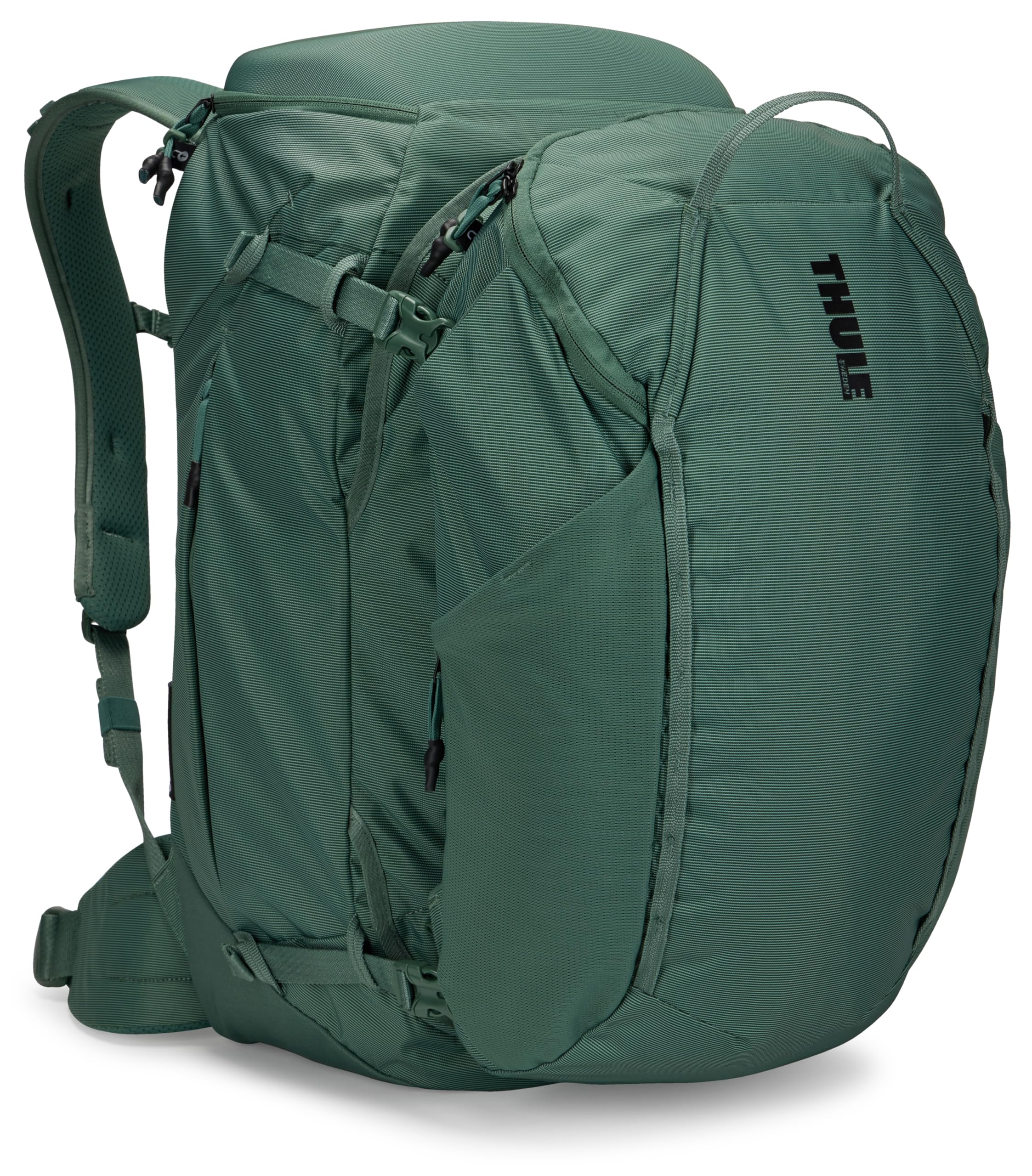
The Thule Landmark 60L is a dual-system travel backpack built for extended snowshoe expeditions where security and organizational separation matter. It combines a 40L main pack with a removable 20L daypack that features its own hidden CashStash pocket for passport and cash. For snowshoeing, this means you can stash your base camp gear in the large compartment at the trailhead hut, then clip the daypack on for a summit push.
Thule’s SafeZone design and LoopLocks secure zipper pulls to the bag, a valuable feature when you’re traversing busy trailheads or leaving gear at a rental station. The main pack body is lightweight for its volume, though experienced users note the material isn’t fully waterproof — only treated with a DWR coating. A dedicated rain cover would make this setup more bombproof for heavy snowfall days.
Internal compression straps keep your load stable, and the padded laptop sleeve (up to 15 inches) is useful for hybrid work-and-play snowshoe trips. The shoe pocket is small, so oversized mountaineering boots may not fit. For multi-country hut-to-hut travel where you need one pack to hold everything and a second for the day, this design is unmatched.
Why it’s great
- Removable 20L daypack provides flexible base-camp and summit configurations
- Hidden CashStash pocket adds security at trailheads
- LoopLocks deter theft when pack is left unattended
Good to know
- Fabric is not fully waterproof — wet snow saturates the main compartment
- Side bottle holders and top strap show wear faster than main body
3. Salomon Unisex Trailblazer 30

The Salomon Trailblazer 30 is a 30-liter daypack that excels in ventilated load control, making it a strong contender for half-day snowshoe outings where maintaining comfort across rolling terrain is the priority. Its updated 3D padded back system uses perforated foam that actively channels heat away from the spine, a critical feature when you’re generating body warmth climbing snow-covered hills in a hardshell.
Compression straps and load lifter straps stabilize the load, while the 3D comfort belt with EVA foam rides securely over a midweight base layer. Dedicated zippered belt pockets mean quick access to gloves, a GPS, or an energy bar without dropping your poles. The included trekking pole holder integrates seamlessly with snowshoe-specific pole sets.
One limitation for winter use is the lack of a dedicated insulated hydration sleeve. While the pack has an internal reservoir sleeve, the drinking tube runs externally and will freeze in sustained sub-20°F conditions without an aftermarket insulator. The pack is also not waterproof — several buyers noted wet gear after a day of rain or heavy wet snowfall, so a separate rain cover is recommended for snowshoe days.
Why it’s great
- 3D perforated foam back reduces sweat buildup during aerobic climbs
- Zippered hip belt pockets keep small essentials within reach
- Trekking pole holder accommodates snowshoe-specific poles
Good to know
- No insulated tube sleeve — water delivery freezes in deep cold
- Not waterproof; wet snow soaks through fabric without a cover
4. Osprey Sportlite 25L Lightweight Hiking Backpack

The Osprey Sportlite 25L strips weight to a bare minimum, making it a prime choice for fast-and-light snowshoe tours where every ounce matters. At just over a pound, the pack uses a simple compression-molded back panel and a fixed hip belt that still manages to transfer load well enough for a 10-to-15 pound winter kit. The adjustable sternum strap integrates a plastic rescue whistle, an safety feature that is practical for solo backcountry snowshoeing.
Volume-wise, 25 liters holds a mid-weight down jacket, a 2L reservoir, snacks, a first aid kit, and a small camera, but leaves no room for bulky items like an extra pair of boots or a large insulated layer. The side pockets are snug — they hold one 750ml bottle but struggle with a Nalgene. The main compartment lacks internal organization, so smaller items can migrate to the bottom during a climb.
For snowshoeing, the pack’s lightweight frame means it won’t pull on your shoulders when you’re lifting your feet high over deep powder, but the lack of a load-lifter strap becomes noticeable on steep sections. The mesh back panel provides decent ventilation, though it’s not as breathable as the perforated foam on the Salomon Trailblazer. It’s a focused, functional pack for short jaunts, not all-day expeditions.
Why it’s great
- Ultra-lightweight design reduces fatigue during high-step snowshoe motion
- Integrated rescue whistle adds a safety layer for solo backcountry travel
- Compression straps stabilize a minimal load
Good to know
- No load-lifter straps — load shifts on steep snow climbs
- Side pockets are too narrow for wide Nalgene bottles
5. CamelBak Zoid Snow Hydration Pack
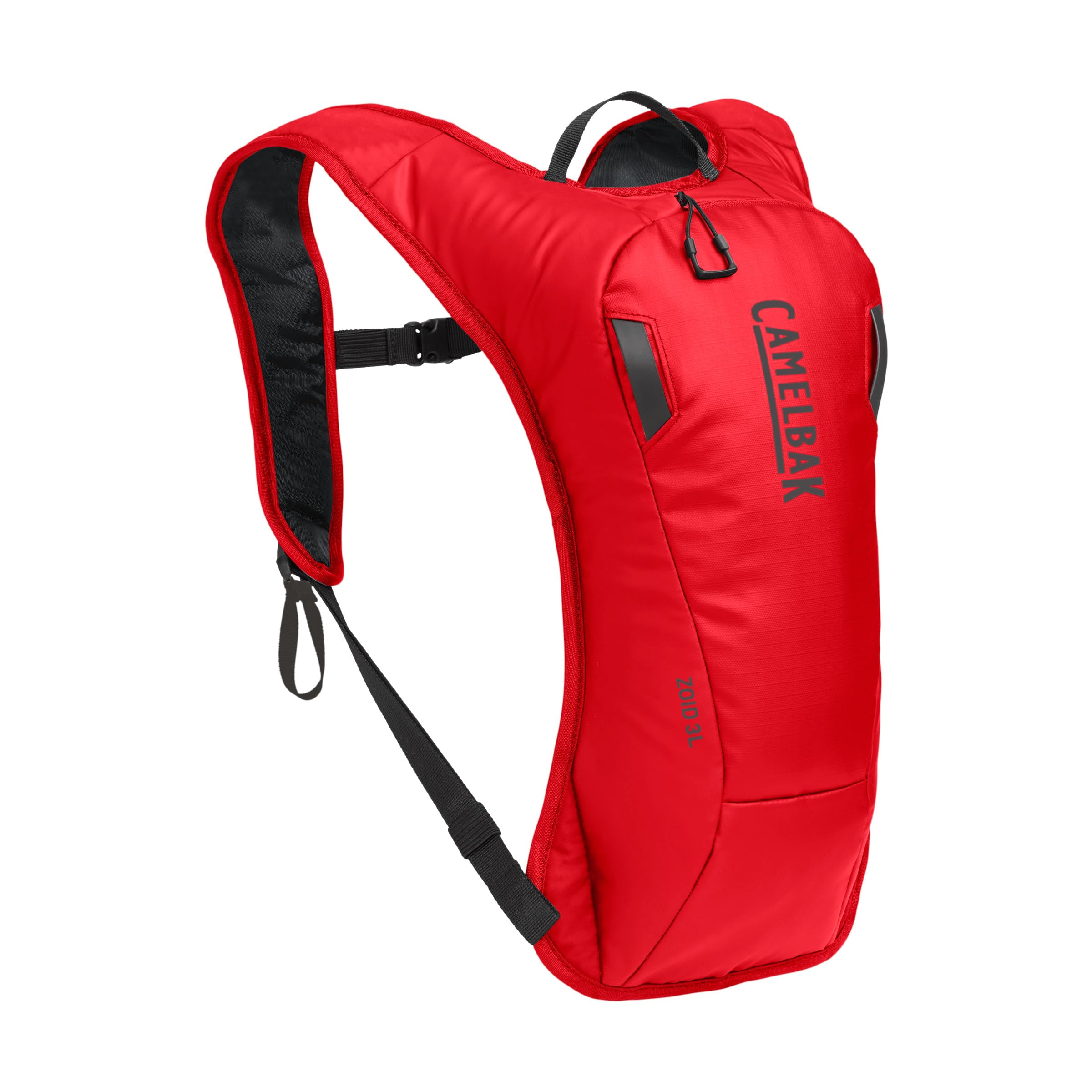
The CamelBak Zoid Snow is a 2-liter hydration pack purpose-built for cold-weather activities like snowshoeing, skiing, and snowboarding. Its defining feature is the Therminator harness — an insulated sleeve that wraps the drinking tube within the shoulder strap, preventing ice formation down to temperatures where standard hydration systems turn into solid pipes. The 70oz Crux reservoir delivers high water flow per sip, with a on/off lever that you can operate with gloved fingers.
The pack uses SnowShield fabric that actively repels snow and moisture, so when wet snow accumulates on the top panel during a shower, it beads off rather than soaking into the compartment. The minimalist design has a single zippered pocket and a 1-liter cargo capacity, which is sufficient for a protein bar, Leatherman tool, and a small first aid kit, but leaves no room for a bulky puffy jacket or extra layers.
For lift-assisted snowshoe laps or short trail runs, the streamlined profile slides easily under a parka shell without restricting shoulder movement. The Lift Access QR Harness lets you quickly drop the pack for chairlift rides. However, for a full-day backcountry snowshoe tour that requires a packed lunch, an insulated jacket, and navigation tools, the Zoid’s 1-liter cargo space is far too tight. It’s a specialized hydration tool, not a gear hauler.
Why it’s great
- Therminator harness prevents drinking tube from freezing in sustained cold
- SnowShield fabric actively repels moisture in wet snow conditions
- Ultra-low profile fits under a shell or parka without bunching
Good to know
- 1-liter cargo capacity holds only absolute essentials — not for full-day tours
- First unit quality control cited by some buyers — inspect on arrival
6. Thule Aion Backpack

The Thule Aion is a 28-32 liter expandable travel backpack that bridges the gap between a snowshoe day pack and an everyday carry for the apres-snowshoe commute. Made from bluesign-approved recycled polyester with a waxed canvas finish and a PFC-free DWR coating, it shrugs off light snow flurries and wet condensation. The roll-top wet bag compartment separates damp gloves or a wet base layer from the rest of your gear, which is a premium feature for snowshoeing transitions.
Padded storage protects up to a 17-inch laptop, so this pack doubles as a work bag that you grab after a morning snowshoe session. The internal compression straps keep a change of clothes or a puffy jacket snug against the back, and the dedicated water bottle pocket securely holds a 32oz Nalgene. The main compartment opens via a zippered top or a full clamshell, making organization simple.
For snowshoeing, the Aion lacks external gear lashing points — you can’t strap snowshoes or poles to the outside. The waxed canvas fabric is durable but marks easily, showing scuffs from ice and branches. The laptop-oriented design means the main compartment is split in a way that limits bulky winter clothing storage. It’s a capable hybrid pack for light duty, not a dedicated snowshoe assault pack.
Why it’s great
- Waterproof roll-top wet bag keeps damp gear separate from dry items
- Expandable from 28L to 32L accommodates fluctuating daily carry volume
- Laptop sleeve up to 17 inches makes it a versatile commuter pack
Good to know
- No external lashing loops for strapping snowshoes or poles
- Waxed canvas scuffs easily from ice and tree branches
7. Peak Design Travel Backpack 45L

The Peak Design Travel 45L is a 35-to-45 liter expandable travel pack whose weatherproof 400D recycled nylon canvas shell and burly #10 UltraZip offer serious moisture protection for snowshoe travel. The weatherproof coating means wet snow or a slushy parka won’t soak the interior, and the concealed main zipper provides an extra layer of theft deterrence in crowded trailhead parking lots. The pack collapses to a 35L carry-on-friendly size for flights to snowshoe destinations.
For snowshoe-specific needs, the side pockets expand to hold water bottles or a small tripod, and the tuck-away shoulder straps and hip belt allow the pack to double as a duffel when you’re stowing it in a car or overhead bin. The laptop sleeve fits a 17-inch device, and the multiple interior zipper compartments provide the organizational depth that the Osprey Sportlite lacks. However, the stowable hip belt is non-padded and less supportive for heavy winter loads.
Customer feedback highlights the pack’s exceptional build quality and sleek urban aesthetic, but taller users note that the shoulder strap length is optimized for average-height frames, and the waist strap can feel short when cinched over a puffy jacket. The lack of dedicated external lashing points for snowshoes or trekking poles limits its utility for heavy winter backcountry use. It’s a premium travel pack that works for snowshoeing in a pinch, not a specialized winter pack.
Why it’s great
- Weatherproof 400D nylon shell keeps gear dry in slush and snowfall
- Expandable design adapts from 35L travel to 45L expedition carry
- Tuck-away straps and hip belt convert pack to duffel mode
Good to know
- No external lashing points for strapping snowshoes or poles
- Shoulder and waist straps feel short for taller users with bulky parkas
FAQ
What pack volume is best for a day of snowshoeing?
How does a ventilated back panel help in cold conditions?
Final Thoughts: The Verdict
For most users, the best backpack for snowshoeing winner is the Osprey Atmos AG 65L because its Anti-Gravity suspension and breathable mesh backpanel make carrying heavy winter loads feel effortless, and the side zip access is a lifesaver for retrieving gear mid-trail without unloading. If you want modularity with a detachable daypack for base-camp-and-summit flexibility, grab the Thule Landmark 60L. And for fast, lift-assisted laps where hydration freeze prevention is the single priority, nothing beats the CamelBak Zoid Snow Hydration Pack.