
Our readers keep the lights on and the weekend projects moving. As an Amazon Associate, I earn from qualifying purchases.
Choosing an affordable camcorder used to mean accepting soft video and jerky pans. That trade-off is no longer necessary. Modern sensor tech, gimbal stabilization, and high-bitrate codecs have trickled down into sub- models, making it possible to capture clean 4K or 5K footage without a mirrorless budget.
I’m Rikta — the co-founder and writer behind FitlyFast. I’ve spent the last three months obsessing over camcorder specifications, reading thousands of verified buyer reports, and cross-referencing sensor sizes, stabilization methods, and bit-depth specs to separate real performance from marketing buzz.
Below you will find the only analysis you need to select a best affordable camcorder that delivers smooth footage, good low‑light capability, and useful features without draining your wallet.
How To Choose The Best Affordable Camcorder
The affordable camcorder category is crowded with options that look identical on paper but perform very differently in real-world use. To cut through the noise, you need to focus on three specific pillars: sensor quality, stabilization method, and audio flexibility.
Sensor Size Dictates Low‑Light Performance
The single most important spec for video quality is the physical size of the imaging sensor. A 1‑inch CMOS sensor (found on mid-range and premium models) collects roughly four times more light than a 1/2.3‑inch or 1/2.5‑inch sensor. This means noticeably cleaner footage in indoor or evening settings, with less noise and better color retention.
Mechanical vs. Electronic Stabilization
Electronic image stabilization crops into the frame and can introduce a jello‑like wobble during fast movement. A 3‑axis gimbal — either built into the camcorder body or integrated as a mechanical stabilizer — physically counteracts motion. For any shooting that involves walking, running, or handheld panning, gimbal stabilization is the difference between usable footage and a shaky mess.
Audio Inputs Separate Hobby Gear from Creator Tools
Built‑in microphones pick up handling noise and room echo. A camcorder with a 3.5mm external microphone jack or a TRSS port lets you attach a lapel mic or a shotgun mic, dramatically improving voice clarity. If you plan to vlog, interview people, or record lectures, an external mic input is a non‑negotiable feature.
Quick Comparison
On smaller screens, swipe sideways to see the full table.
| Model | Category | Best For | Key Spec | Amazon |
|---|---|---|---|---|
| DJI Osmo Pocket 3 | Pocket Gimbal | Active vlogging & travel | 1″ CMOS, 4K/120fps, 3‑axis gimbal | Amazon |
| Sony ZV-1F | Compact Vlog | Solo creators & product reviews | 1″ sensor, 20mm f/2.0, Eye‑AF | Amazon |
| Canon PowerShot V10 | Ultra‑Compact | Pocket‑ready daily carry | 1″ sensor, built‑in stand, 4K/30fps | Amazon |
| Xtra Muse 4K/120fps | Gimbal Pocket | Budget 4K/120fps alternative | 1″ CMOS, 3‑axis gimbal, 10‑bit color | Amazon |
| ORDRO M5 (5K Gimbal) | Gimbal Vlog | Vloggers wanting built‑in gimbal | 5K video, 3‑axis gimbal, face tracking | Amazon |
| ORDRO M5 WiFi Variant | WiFi Gimbal | Wireless transfer & remote control | 5K/30fps, 4K/60fps, IR night vision | Amazon |
| ABJURNJ 6K Camcorder | All‑in‑One Kit | Beginners wanting a full bundle | 6K/30fps, 4.5‑hour battery, 18x zoom | Amazon |
| Canon VIXIA HF R600 | Traditional Zoom | Lectures, events, schools | 57x advanced zoom, 1080p Full HD | Amazon |
| Sony FDR-AX43 | Premium Handycam | Family events & true 4K zoom | 20x optical zoom, Balanced OIS | Amazon |
In‑Depth Reviews
1. DJI Osmo Pocket 3
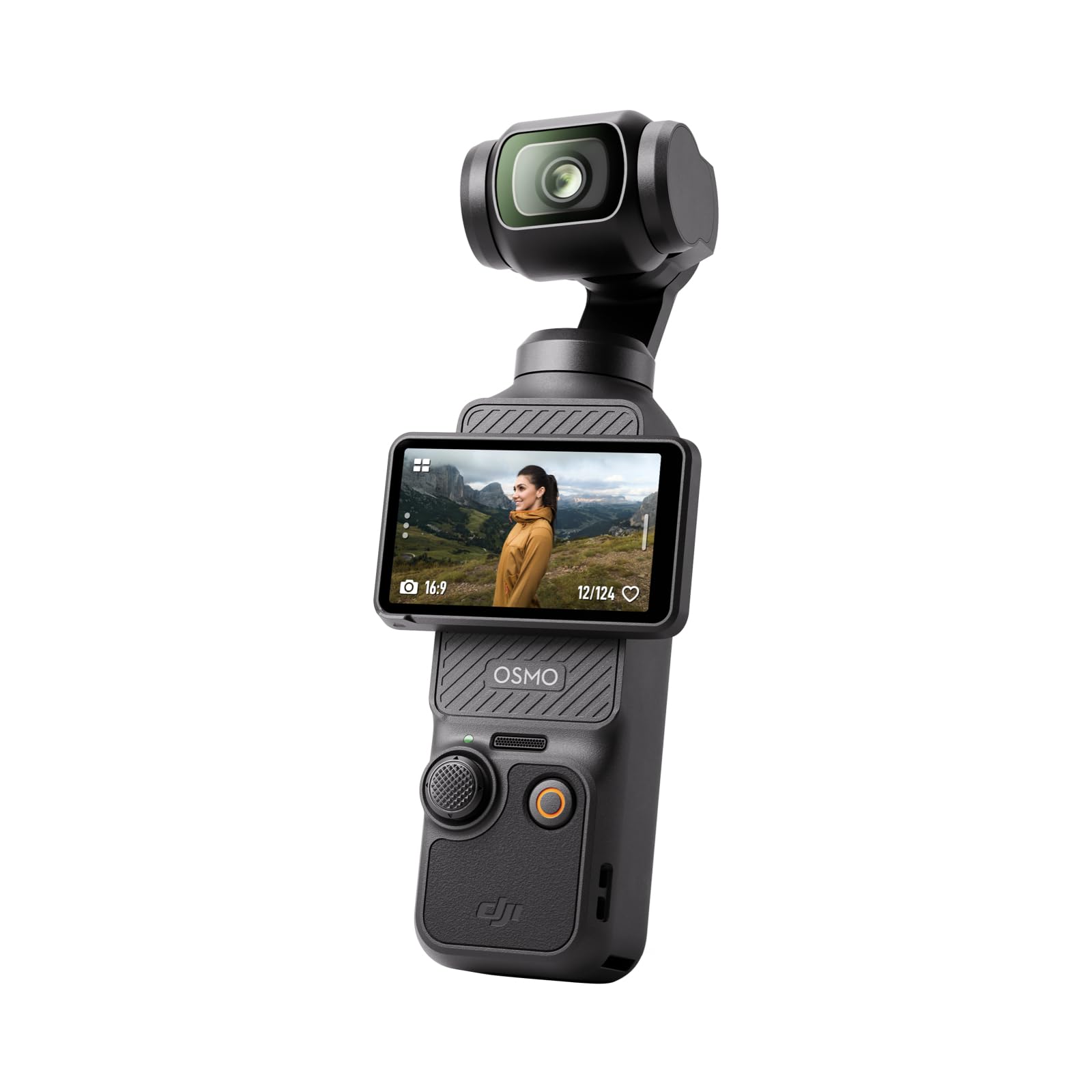
The DJI Osmo Pocket 3 sets the benchmark for what a pocket‑sized camcorder should deliver. Its 1‑inch CMOS sensor captures 4K resolution at a fluid 120fps, giving you the option to slow down fast action in post‑production without stuttering. The 3‑axis mechanical gimbal is class‑leading — walking, jogging, or even chasing a pet produces footage that looks like it was shot on a glidecam.
ActiveTrack 6.0 keeps you or your subject locked in the center of the frame automatically, which is invaluable for solo vloggers who move around. The rotating 2‑inch touchscreen switches instantly between horizontal and vertical framing, and D‑Log M color profile with 10‑bit depth allows serious color grading in DaVinci Resolve. Battery life averages just under three hours of continuous recording.
On the audio side, the built‑in stereo mic is serviceable for quiet environments, but the ability to wirelessly connect to DJI Mic 2 transmitters elevates it to a proper interview tool. The only compromises are the fixed wide lens and the requirement to register the device before the fifth use. For the majority of creators, the Osmo Pocket 3 is the one to beat.
Why it’s great
- Outstanding 3‑axis gimbal stabilization; walking shots look professional.
- 1‑inch sensor delivers clean low‑light footage with minimal noise.
- 10‑bit D‑Log M color for serious post‑production flexibility.
Good to know
- Mandatory online registration before fifth use; app required.
- Fixed lens means no optical zoom range.
- External battery charger not included in the box.
2. Sony ZV-1F Vlog Camera

Sony designed the ZV-1F specifically for solo content creators who need reliable autofocus and a genuinely wide field of view. The fixed 20mm f/2.0 lens (35mm equivalent) is wide enough to keep your face and a decent background in frame at arm’s length, and the f/2.0 aperture creates a soft background defocus that separates the subject from cluttered environments.
The 1‑inch sensor combines with Sony’s Eye‑AF and real‑time tracking to keep sharp focus on eyes even when you move around the frame. A three‑capsule directional mic with an included deadcat windscreen captures clean dialogue outdoors, and the side‑articulating touchscreen makes framing a selfie shot trivial. Product Showcase mode is a hidden gem for unboxing or review videos, smoothly racking focus from your face to the object you hold up.
The trade‑off is stabilization: the ZV-1F relies on electronic image stabilization, which crops the frame and produces a mild wobble during active walking shots. Battery life is roughly 45 minutes in 4K, so you will want at least one spare. For desk‑based vlogging, livestreaming, and controlled talking‑head content, this camcorder delivers video quality that punches well above its tier.
Why it’s great
- Eye‑AF and product showcase autofocus are best‑in‑class for solo creators.
- 20mm f/2.0 lens captures wide, bright selfie shots with nice background blur.
- Built‑in directional mic with windscreen produces clear audio outdoors.
Good to know
- Battery life is short; investing in spares is essential.
- Electronic stabilization only — shaky during fast walking or running.
- Fixed lens with no optical zoom capability.
3. Canon PowerShot V10

The Canon PowerShot V10 is one of the most pocket‑friendly camcorders on the market, with a unique vertically‑oriented body that fits easily into a jacket pocket or small bag. Despite its size, it packs a genuine 1‑inch back‑illuminated CMOS sensor that produces clean 4K video at up to 30fps, with good color science straight out of camera.
The built‑in folding stand is a clever addition — it flips out to support the camera on a tabletop for hands‑free vlogging, cooking demos, or live streaming without needing a tripod. The front‑facing retractable screen is ideal for self‑recording, and the stereo microphone array with a center channel to cancel background noise does a respectable job for a device this small. Image stabilization works well for minor handheld movement.
The compromise comes in flexibility: the lens is a fixed 19mm wide‑angle with no zoom at all, and the battery is internal (non‑replaceable). You also lose the option for an external viewfinder. For a daily carry that you can pull out for quick clips, restaurant reviews, or travel memories, the V10 is a clean, capable choice that prioritizes portability over bells and whistles.
Why it’s great
- Truly pocket‑sized design with a built‑in folding stand for tabletop use.
- 1‑inch sensor delivers excellent color and low‑light clarity for its size.
- Front‑flip screen makes solo vlogging effortless.
Good to know
- Fixed wide lens with zero optical or digital zoom.
- Internal battery cannot be swapped in the field.
- No external mic input or hot shoe for accessories.
4. Xtra Muse 4K/120fps Pocket Camera

The Xtra Muse camera is a direct challenger to the DJI Pocket ecosystem, offering a 1‑inch CMOS sensor capable of 4K resolution at 120fps combined with a built‑in 3‑axis gimbal. The 10‑bit X‑Log color profile unlocks a billion‑color grading space, giving editors serious latitude to recover highlights and shadows in post‑production.
Autofocus is snappy and reliable, and the face/object tracking keeps subjects centered during movement. The 2‑inch touchscreen rotates for vertical or horizontal framing, and the battery life averages around 161 minutes on a full charge. In bright daylight and controlled indoor lighting, footage is sharp with vibrant color reproduction. Many users report that DJI Pocket 3 accessories — cases, filters, and tripod adapters — physically fit the Xtra Muse body, which is a nice bonus.
The main drawback is that audio performance lags behind the DJI equivalent: built‑in mics are usable but not exceptional, and wireless mic pairing is not as seamless. The gimbal occasionally hunts in very low light. For creators who want 4K/120fps and 10‑bit color at a significant discount relative to the market leader, the Xtra Muse is a compelling value proposition.
Why it’s great
- 1‑inch sensor with 4K/120fps slo‑mo capability in a compact body.
- 10‑bit X‑Log color profile rivals high‑end grading workflows.
- Compatible with DJI Pocket 3 accessories for expanded rig options.
Good to know
- Built‑in microphone quality is average; external mic integration could be smoother.
- Gimbal may struggle with focus in extremely dark scenes.
- Brand is newer, so long‑term support and spare parts are unproven.
5. ORDRO M5 5K Gimbal Camcorder

The ORDRO M5 offers a rare combination for its price point: true 5K video resolution paired with a 3‑axis gimbal stabilizer built directly into the handheld body. The 3.5‑inch rotating touchscreen gives you a large preview area, and the IR night vision mode can capture usable black‑and‑white footage in near‑dark conditions.
Face tracking works reliably once you tap the subject on the screen, and the 120‑degree wide‑angle lens captures a broad field of view that suits travel vlogging and group shots. The included carrying bag and lanyard make it easy to pack, and the battery life of roughly 3 hours is adequate for a full day of casual shooting. For beginners who want smooth footage without investing in a separate gimbal rig, this is an easy on‑ramp.
The catch is audio and durability. The internal microphone is thin and picks up handling noise easily — an external mic via the port is strongly recommended. A minority of buyers have reported gimbal glitches after heavy trail use, though most units perform well out of the box. At this price, the M5 delivers gimbal‑stabilized 5K that was previously locked behind much higher price tags.
Why it’s great
- Integrated 3‑axis gimbal for smooth handheld footage without extra gear.
- 5K video resolution provides flexibility for cropping and reframing.
- Large 3.5‑inch rotating touchscreen for easy composition.
Good to know
- Built‑in audio quality is poor; an external microphone is essential.
- Gimbal reliability can vary; some units experience glitches after extended use.
- Learning curve for the menu system; not fully intuitive for absolute beginners.
6. ORDRO M5 WiFi 5K Camcorder
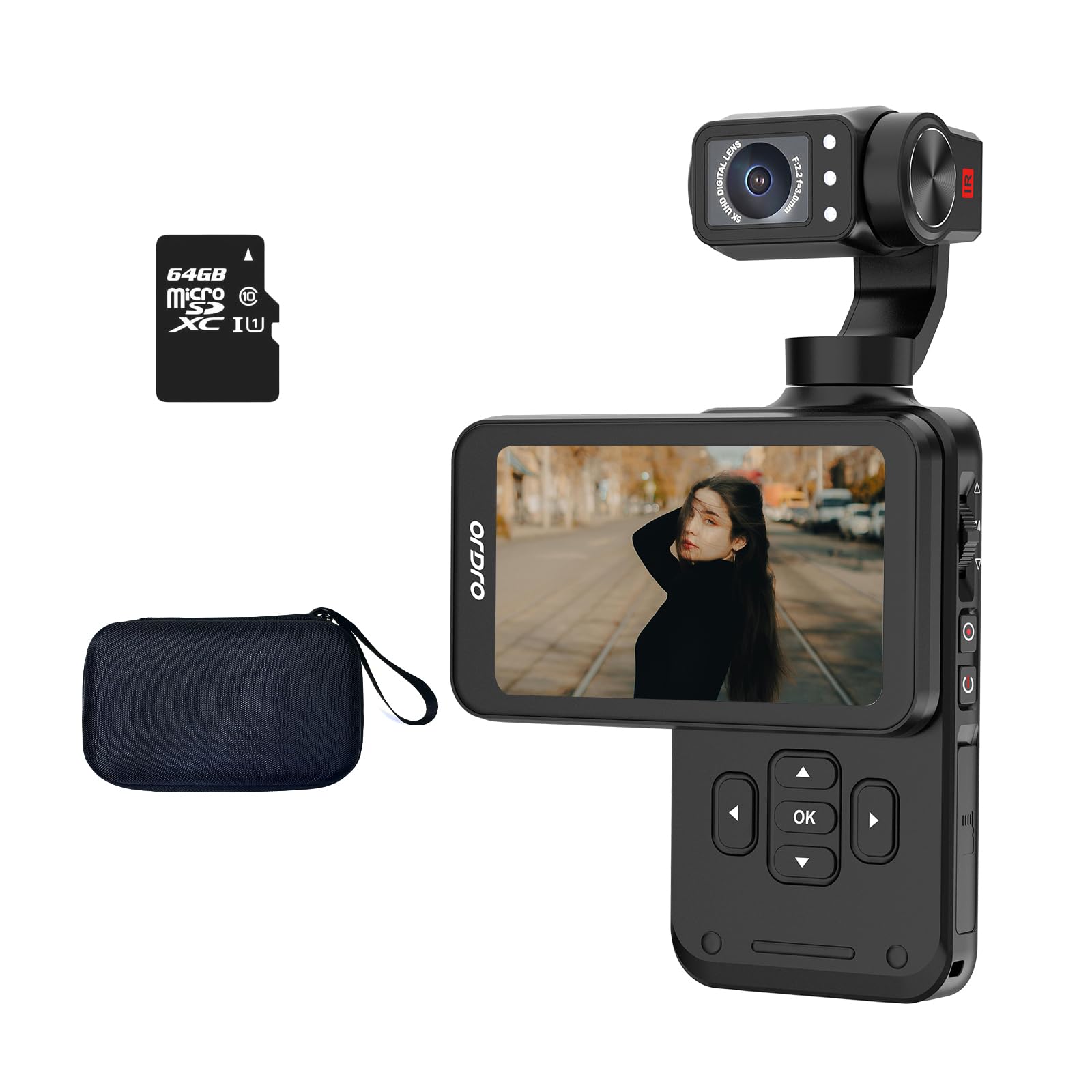
This variant of the ORDRO M5 adds WiFi connectivity to the same capable 5K sensor and 3‑axis gimbal hardware. The WiFi feature allows you to remotely preview the feed on a smartphone, control recording, and transfer clips wirelessly — a practical addition for tripod‑mounted interviews or group selfies where you want to monitor the frame from a distance.
The core imaging specs remain strong: 5K at 30fps or 4K at 60fps from the 1/2.5‑inch CMOS sensor, combined with gimbal stabilization that delivers smooth walking footage. The IR night vision mode works at a similar quality to the standard M5, and the 3.5‑inch flip screen makes framing easy in both portrait and landscape orientations. Autofocus is generally reliable in good light, though it can hunt slightly in dim conditions.
User experience is mixed on video quality — some buyers report soft image detail and washed‑out colors, while others find it perfectly usable for social‑media content. The vendor/seller quality matters here: a few users reported issues with returns and customer support. If you want WiFi control for remote shooting and can accept that the image may not match a 1‑inch sensor, this is a flexible tool for the price.
Why it’s great
- WiFi connectivity enables remote monitoring and wireless file transfer.
- 5K/30fps and 4K/60fps options with 3‑axis gimbal stabilization.
- Flip touchscreen supports both landscape and vertical orientation.
Good to know
- Image quality can be inconsistent; some units produce soft, desaturated footage.
- Vendor support has been reported as poor in some instances.
- Plastic build may not withstand rough or frequent travel.
7. ABJURNJ 6K Camcorder Bundle

The ABJURNJ 6K camcorder is the definition of a complete starter kit. The box includes the camera body, a 4500mAh battery, a lens hood, a wired microphone, a handheld stabilizer brace, a 2.4G remote control, a 64GB SD card, and a padded bag — everything a beginner needs to start shooting on day one without buying accessories separately.
The camera itself records at 6K (5760×3240) at 30fps and 4K at 60fps, with an 18x digital zoom. The 4‑inch touchscreen is responsive, and IR night vision enables low‑light black‑and‑white recording. The large battery provides up to 4.5 hours of rated recording time, which is excellent for all‑day events. The external mic noticeably improves audio clarity over the built‑in microphone, reducing room echo and handling noise.
That said, the 18x zoom is digital, not optical — so zooming in past a moderate range quickly degrades image resolution. The handheld stabilizer is a passive brace rather than a powered gimbal, so it dampens small shakes but won’t eliminate walking bounce. For classroom recordings, family gatherings, and YouTube studio content where you are mostly stationary, this bundle offers genuine value for the money.
Why it’s great
- Everything included in the box — no additional accessories needed to start.
- 4500mAh battery rated for 4.5 hours of recording on a single charge.
- 6K resolution gives headroom for digital cropping in editing.
Good to know
- 18x zoom is digital, not optical; image softens at high zoom levels.
- Handheld stabilizer is a passive brace, not a motorized gimbal.
- Build quality feels plasticky; not designed for heavy‑duty outdoor use.
8. Canon VIXIA HF R600 (Renewed)

The Canon VIXIA HF R600 is a traditional camcorder aimed at users who need a long optical zoom range rather than a compact sensor. Its 57x advanced zoom can pull distant subjects — a speaker on a stage, a bird in a tree, a child at a soccer game — into clear Full HD 1080p view. The 3‑inch touchscreen and straightforward menu system make this an easy pick for non‑technical users like teachers or parents.
The renewed nature of this unit means you receive a professionally refurbished device at a lower cost. It includes essential pro‑video connections: a 3.5mm external microphone jack and a headphone out port for monitoring audio — features that many modern mirrorless cameras omit. The automatic exposure and focus are reliable for predictable lighting conditions like classrooms or indoor events.
The main limitation is resolution: at 1080p Full HD, this camcorder cannot match the sharpness of 4K or 5K sensors. The screen is also quite dim outdoors, requiring a hood or shade for comfortable composition. Build quality is lightweight plastic; this is not a rugged field camera. If your priority is a long optical reach on a budget for HD recording, the VIXIA HF R600 remains a functional workhorse.
Why it’s great
- 57x optical zoom reaches subjects far beyond typical camcorder range.
- External mic and headphone jacks enable professional audio monitoring.
- Touchscreen interface is simple and familiar for non‑tech users.
Good to know
- Limited to 1080p HD; no 4K recording capability.
- Screen is dim in direct sunlight; a hood is recommended.
- Renewed units may show cosmetic wear; no original manual included.
9. Sony FDR-AX43 4K Handycam

The Sony FDR-AX43 represents the traditional camcorder experience upgraded to 4K. The 1/2.5‑inch Exmor R CMOS sensor captures genuine 4K video, and the 20x optical ZEISS Vario‑Sonnar T zoom lens reaches far distances without the resolution loss that plagues digital zoom. Sony’s Balanced Optical SteadyShot acts like a built‑in gimbal, canceling out walking vibration optically rather than through cropping.
The BIONZ X processing engine enables Fast Intelligent AF that tracks moving subjects — useful for following a child running across a field. The camcorder includes both a mic input and a micro‑HDMI output for monitoring and external recording. WiFi and NFC allow quick transfer of clips to a smartphone, and the battery is large enough for a full day of event shooting.
The price is the highest in this guide, and some users note the fixed battery protrudes awkwardly from the back, making the camera less comfortable for selfie‑stick use. There is also no internal memory — you must provide your own SD card. For users who need true optical zoom in 4K with proven optical stabilization, the FDR-AX43 delivers performance that budget zoomless options simply cannot match.
Why it’s great
- 20x optical ZEISS zoom preserves 4K detail at long focal lengths.
- Balanced Optical SteadyShot provides gimbal‑like stabilization without cropping.
- Fast Intelligent AF and reliable subject tracking for action scenes.
Good to know
- Premium price; the FDR-AX53 may offer better value at a similar cost.
- Battery protrudes from the rear, limiting selfie‑stick compatibility.
- No internal storage; a memory card must be purchased separately.
FAQ
Is 5K or 4K/120fps actually useful for an affordable camcorder?
Do I need a gimbal camcorder or can I get by with electronic stabilization?
Why do some affordable camcorders mention “6K” but cost less than ?
Final Thoughts: The Verdict
For most users, the best affordable camcorder winner is the DJI Osmo Pocket 3 because it combines a large 1‑inch sensor with class‑leading 3‑axis gimbal stabilization, 4K/120fps recording, and reliable subject tracking in a truly pocketable package. If you want a fixed wide‑angle camera optimized for solo vlogging with strong autofocus, grab the Sony ZV-1F. And for a full zoom range in true 4K with optical stabilization, nothing beats the Sony FDR-AX43 Handycam.