
Our readers keep the lights on and the weekend projects moving. As an Amazon Associate, I earn from qualifying purchases.
The hardest part of buying an affordable virtual reality headset isn’t finding a cheap one—it’s finding one where the lenses, tracking, and processing power don’t make you regret the purchase the second you put it on. From standalone performance to tethered clarity, the budget-friendly VR market is packed with compromises that can ruin immersion before you even launch a game.
I’m Rikta — the co-founder and writer behind FitlyFast. I’ve spent countless hours analyzing the specs, reading through buyer experiences, and comparing the fine print on refresh rates, display resolutions, field of view, and processor capabilities to separate the headsets that deliver real immersion from the ones that just look good on paper.
Whether you want wireless freedom, the sharpest screen for the price, or a headset that pairs with your gaming console, this guide covers the models that actually earn their place in your home. Here is my breakdown of the best affordable virtual reality headset options available right now.
How To Choose The Best Affordable Virtual Reality Headset
Choosing a value-driven VR headset means balancing display quality, processing power, and ecosystem compatibility while staying within a comfortable spend. The wrong focus—like chasing storage size over lens quality—can leave you with a headset that gathers dust.
Standalone vs. Tethered vs. AR/XR
A standalone headset like the Meta Quest 3S runs everything on board with no wires, perfect for room-scale gaming and fitness. Tethered headsets like the PlayStation VR2 rely on a console or PC for processing power, delivering higher graphical fidelity but limiting your movement. AR/XR glasses such as the RayNeo Air 3s Pro serve as external displays for your phone or laptop—they don’t run VR games natively but offer a portable personal theater.
Display Resolution and Refresh Rate
Resolution per eye (e.g., 1832 x 1920 or 2064 x 2208) determines how sharp text and objects appear; higher numbers reduce the screen-door effect. Refresh rate (90Hz or 120Hz) dictates smoothness—120Hz significantly reduces motion sickness during fast-paced games. OLED panels deliver deeper blacks and richer contrast than LCD, but LCD units often hit higher brightness levels for mixed reality passthrough.
Field of View and Tracking
Field of view (FOV) between 95 and 110 degrees creates a believable sense of immersion; anything below 90 degrees feels like looking through goggles. Inside-out tracking (cameras on the headset) eliminates external base stations and makes setup simpler, but base station–free tracking can lose accuracy when controllers leave the camera’s view behind your back.
Quick Comparison
On smaller screens, swipe sideways to see the full table.
| Model | Category | Best For | Key Spec | Amazon |
|---|---|---|---|---|
| Meta Quest 3 512GB | Standalone VR | Highest standalone resolution | 4K+ per eye OLED | Amazon |
| Meta Quest 3S 128GB | Standalone VR | Best all-around value | 2064×2208 per eye LCD | Amazon |
| XREAL 1S | AR/XR Glasses | Spatial anchored display | 1920×1080 OLED 52° FOV | Amazon |
| HTC Vive XR Elite | Mixed Reality | PC VR with diopter dials | 3840×1920 combined LCD | Amazon |
| PlayStation VR2 | Console Tethered | PS5 exclusive VR gaming | 3840×2160 per eye OLED | Amazon |
| Oculus Quest 2 256GB | Standalone VR | Large storage capacity | 3664×1920 combined LCD | Amazon |
| Oculus Quest 2 128GB | Standalone VR | Budget-friendly entry point | 1832×1920 per eye LCD | Amazon |
| RayNeo Air 3s Pro | AR/XR Glasses | Brightest portable display | 1200 nits Micro-OLED | Amazon |
| Sony PSVR Marvel’s Iron Man | Console Tethered | PS4/PS5 bundled starter | 1920×1080 per eye OLED | Amazon |
In‑Depth Reviews
1. Meta Quest 3 512GB
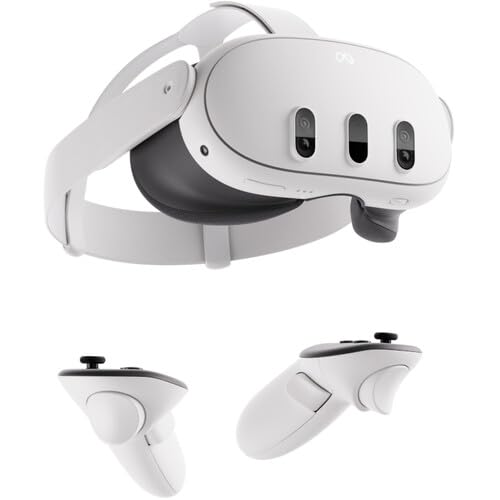
The Meta Quest 3 brings a near 30% leap in resolution over its predecessor, delivering sharp 4K Infinite Display visuals that make text readable and environments richly detailed. The Snapdragon XR2 Gen 2 processor powers smooth 120Hz performance, and the full-color passthrough cameras blend virtual objects with your real space convincingly for mixed reality experiences.
The 512GB storage gives plenty of room for large game libraries and media, though the stock headband tends to cause pressure after extended sessions—many users swap it for a third-party strap. Battery life sits around two hours, which is adequate for most play sessions but may require a power bank for all-day use.
Setup is quick and wireless out of the box, and the Touch Plus controllers offer reliable haptic feedback and tracking. The renewed premium units arrive in excellent condition with full functionality, making this a strong high-end option for those who want the best standalone resolution without moving into the premium tier.
Why it’s great
- Sharpest standalone display at this level with 4K+ resolution
- Snapdragon XR2 Gen 2 provides smooth 120Hz gaming
- Full-color passthrough enables solid mixed reality
Good to know
- Stock headband uncomfortable for sessions over one hour
- Battery life is adequate but not exceptional
- IPD adjustment doesn’t accommodate all face shapes
2. Meta Quest 3S 128GB
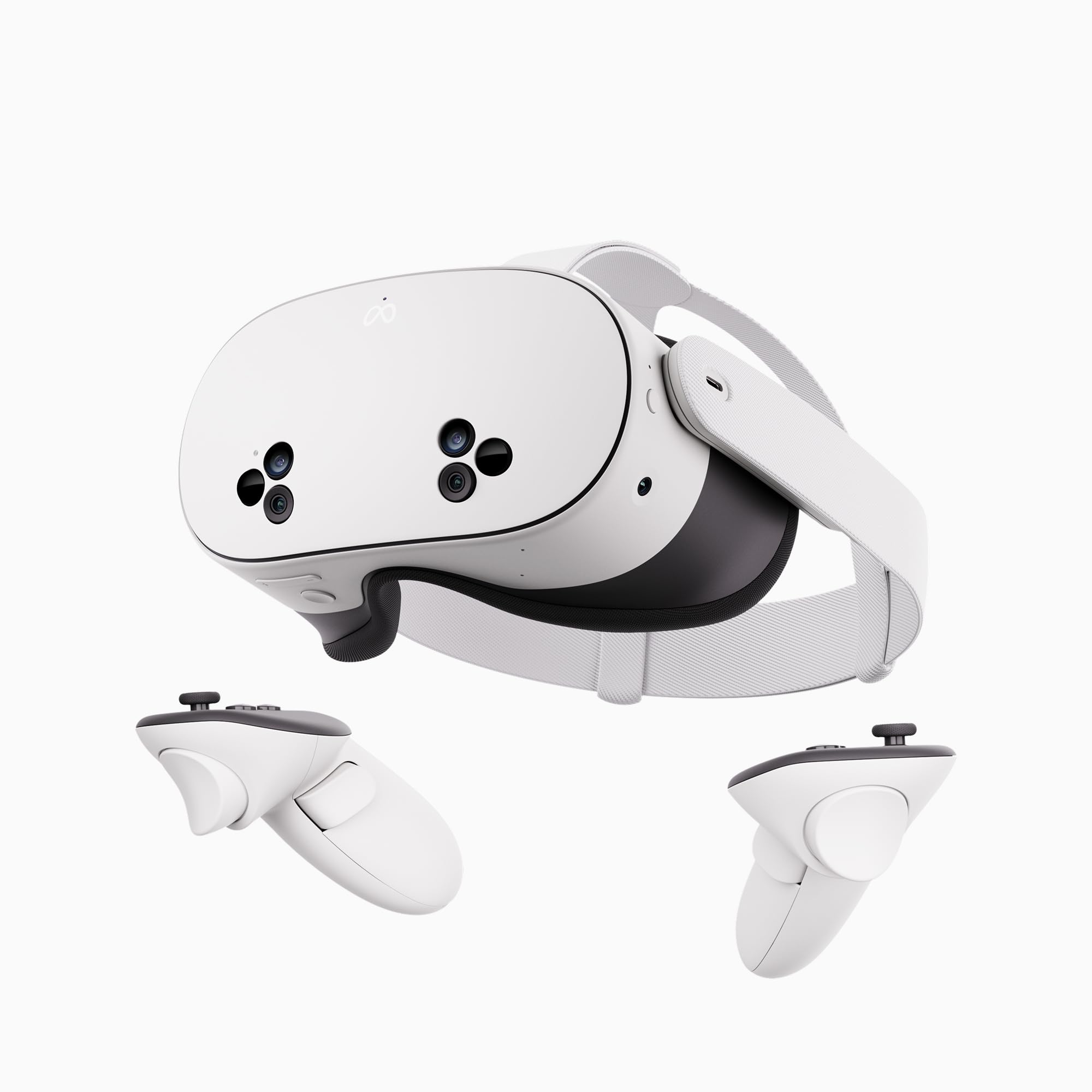
The Meta Quest 3S delivers the same Snapdragon XR2 Gen 2 chipset found in the Quest 3, offering double the graphical processing of the Quest 2 at a much lower entry point. The 2064 x 2208 per eye LCD display provides crisp visuals for gaming, fitness, and media, while the dual RGB color cameras enable high-fidelity color passthrough for mixed reality.
Battery life stretches past two hours, and the added 8GB of RAM ensures responsive performance during multitasking or heavy games. The included three-month Meta Horizon+ trial gives instant access to over 40 games, which significantly reduces the initial cost of building a library.
User feedback highlights quick setup, accurate controller tracking, and comfortable fit for extended wear. The 128GB storage is plenty for most users, but heavy downloaders may need to manage space carefully. This is the sweet spot for anyone wanting premium standalone features without the premium price.
Why it’s great
- Same Gen 2 processor as Quest 3 at a lower entry cost
- 2064×2208 resolution delivers sharp, clear visuals
- Dual RGB cameras enable excellent color passthrough
Good to know
- 128GB fills quickly with large game downloads
- LCD panel lacks OLED contrast and deep blacks
- No included carrying case
3. XREAL 1S
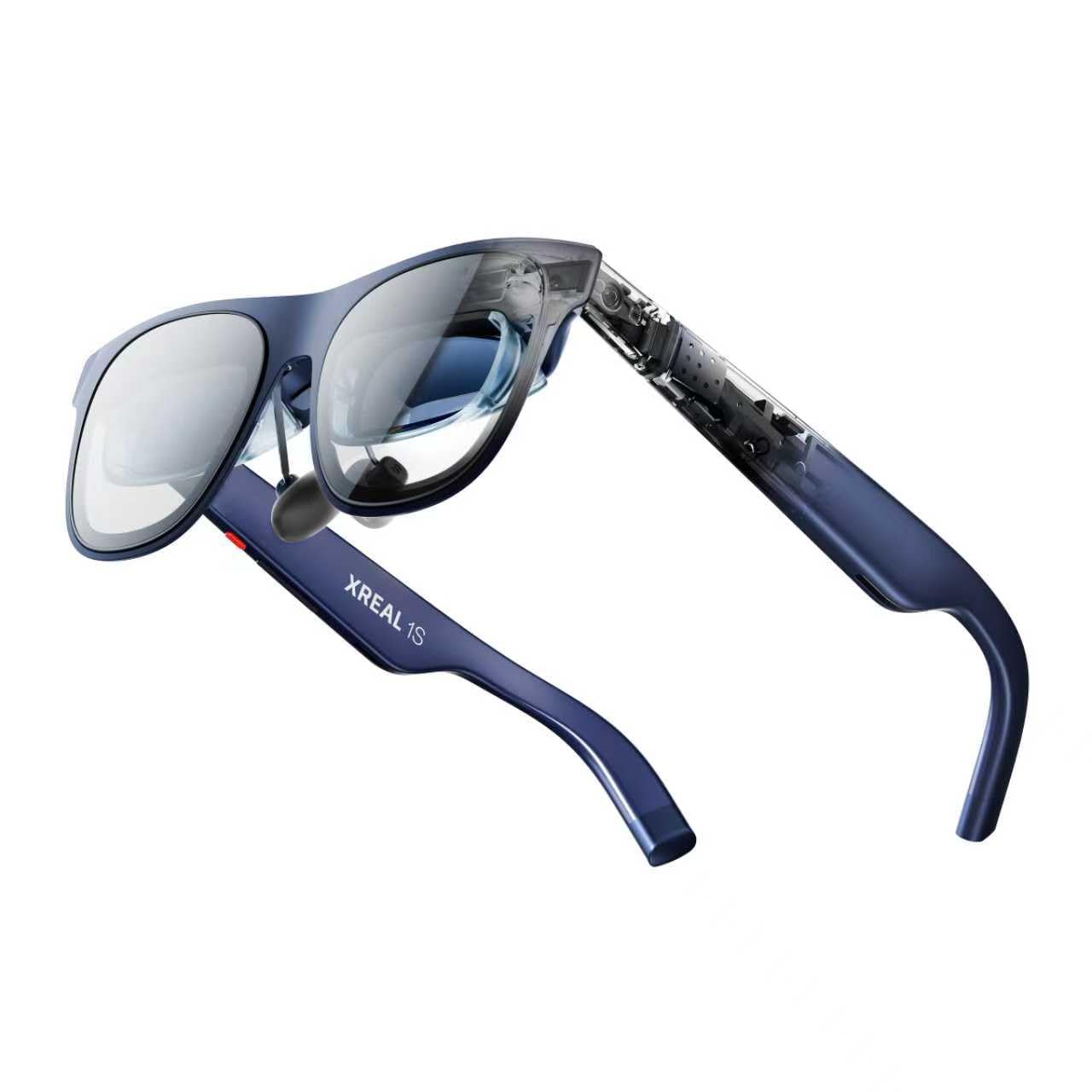
The XREAL 1S is a different breed—these are AR/XR glasses that project a virtual screen up to 500 inches using a self-developed X1 chip for 3ms motion-to-photon latency at 120Hz. The 52-degree field of view feels like a large monitor floating in front of you, and the native 3DoF spatial anchoring keeps that screen locked in place without any apps or setup.
The OLED display delivers crisp 1080p resolution with individually color-tuned panels, and the Bose-tuned speakers provide spacious, clear audio without earbuds. REAL 3D mode converts standard content into spatial depth, though the frame rate drops to 30fps in that mode. The electrochromic film offers three dimming levels but doesn’t fully block side light.
Users praise the plug-and-play compatibility with USB-C DP devices, including iPhones, laptops, and handhelds. The anchor mode is excellent for productivity or treadmill use, but some report occasional drift. The nose pad and tinted lenses can cause discomfort or reflections, and the lack of an out-of-box setup guide means a higher learning curve for newcomers.
Why it’s great
- X1 chip delivers 3ms latency at 120Hz for smooth tracking
- Native 3DoF spatial anchoring works without apps
- Bose audio provides immersive open-ear sound
Good to know
- 52-degree FOV feels narrower than VR headsets
- Anchor mode can drift over time
- Side light leaks through unless using included cover
4. HTC Vive XR Elite with Deluxe Pack

The HTC Vive XR Elite packs a 3840 x 1920 combined LCD resolution into a compact, lightweight body with stepless IPD and diopter dials that let you fine-tune focus without wearing glasses. The deluxe pack adds a more comfortable face gasket, an overhead strap, and a mixed reality gasket that improves the color passthrough experience.
As a standalone headset, it runs the Vive ecosystem natively with four wide-FOV tracking cameras, but its real strength shines when tethered to a VR-ready PC for low-latency PC-VR gaming. The hot-swappable battery design lets you extend sessions by swapping packs, though the base battery only lasts about two hours.
Setup has a steeper learning curve than competing headsets, and the standalone performance doesn’t match the Quest 3’s Snapdragon XR2 Gen 2. However, the diopter adjustment, premium build materials, and excellent mixed reality passthrough make it a top choice for users who prioritize ergonomics and PC-VR versatility.
Why it’s great
- Stepless IPD and diopter dials eliminate glasses requirement
- Hot-swappable battery design for extended play
- Excellent MR passthrough with depth sensor
Good to know
- Standalone performance trails Quest 3
- Setup process is more involved than competitors
- Face tracking sold separately
5. PlayStation VR2 Horizon Call of The Mountain Bundle

The PlayStation VR2 delivers an uncompromising console VR experience with dual OLED panels offering 3840 x 2160 per eye resolution and a 110-degree field of view. Eye tracking enables foveated rendering, which improves performance by sharpening only where you’re looking, and the haptic feedback built into the headset adds physical immersion during gameplay.
The Horizon Call of The Mountain bundle is a standout entry point, but the PSVR2 is locked to PlayStation 5, limiting its use to that ecosystem. The Sense controllers feature adaptive triggers and finger-touch detection, making interactions feel tactile and precise. The 120Hz refresh rate keeps motion smooth and reduces nausea.
Some users report that not all PSVR2 games support the DualSense controllers properly, and PC compatibility is not officially supported yet despite community workarounds. For PS5 owners who want a premium VR experience with eye-tracking and haptics, this is the best option in its category.
Why it’s great
- OLED panels deliver deep blacks and rich colors
- Eye tracking enables foveated rendering for better performance
- Headset haptic feedback adds immersion
Good to know
- Requires PlayStation 5—no standalone or PC mode
- Some games have DualSense recognition issues
- Cable tethered to console limits movement
6. Oculus Quest 2 256GB Bundle
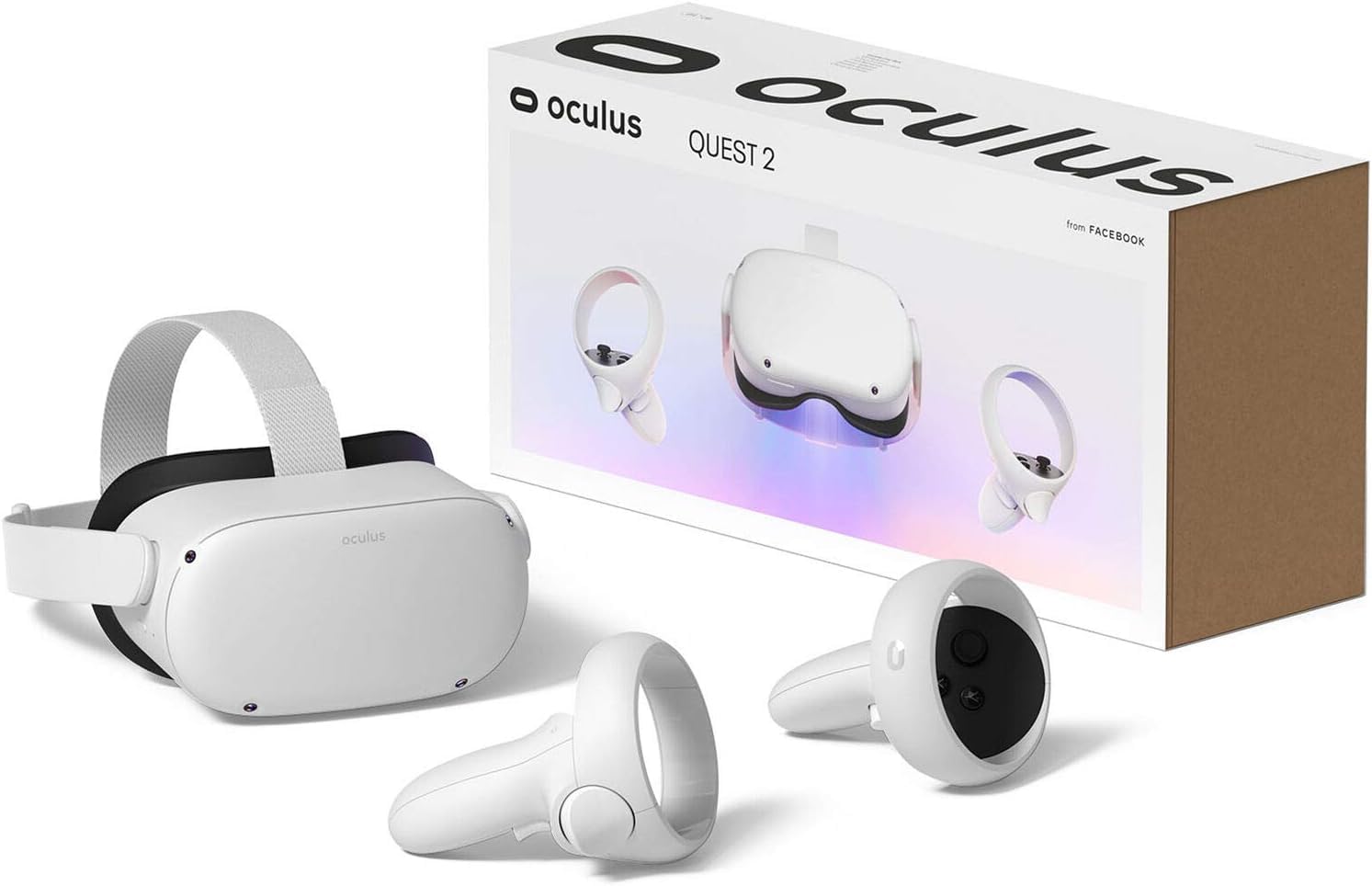
This Oculus Quest 2 256GB bundle offers double the storage capacity of the base model, allowing you to install more games and apps without worrying about space. The all-in-one design uses a Snapdragon XR2 Gen 1 processor and a 3664 x 1920 combined LCD display with a 100-degree field of view, providing a solid entry into standalone VR.
The bundle includes four color-coded microfiber cleaning cloths, which are useful for keeping the lenses smudge-free. The Quest 2 requires a Facebook account to log in, which may be a concern for privacy-focused users. The display is LCD, so blacks appear more gray compared to OLED panels, but the sharpness and brightness are adequate for most experiences.
User reviews are generally positive, with families enjoying the shared experience and easy setup. However, some units arrived with charging issues, and the Quest 2 platform is being phased down in favor of the Quest 3 lineup, meaning future game support may taper off.
Why it’s great
- 256GB storage holds a large game library
- All-in-one standalone design with no wires
- Bundled microfiber cloths protect lenses
Good to know
- Requires Facebook/Meta account for login
- LCD display lacks deep black levels
- Platform is being superseded by Quest 3
7. Oculus Quest 2 128GB

The Oculus Quest 2 128GB remains a viable entry point into VR, offering a 1832 x 1920 per eye LCD display with a 90Hz refresh rate and a Snapdragon XR2 Gen 1 processor. The included silicone cover, glasses spacer, and adjustable knuckle straps provide good value out of the box, helping new users get comfortable quickly.
The 128GB storage is sufficient for casual users who rotate through a few titles, though heavy gamers may need to uninstall and reinstall frequently. The 95-degree field of view is narrower than current-gen competitors, and the Fresnel lenses can cause god rays in high-contrast scenes.
Community support remains strong with a vast library of games and experiences. The anti-slip controller grips and knuckle straps are a nice addition that prevents accidental drops during active games. For a budget-friendly first VR headset, this still delivers a solid experience despite being a generation behind.
Why it’s great
- Low-cost entry into standalone VR with large game library
- Includes silicone cover, spacer, and knuckle straps
- Proven reliability with years of user feedback
Good to know
- 18832×1920 resolution shows screen-door effect
- Fresnel lenses produce god rays
- Platform is being phased out for Quest 3
8. RayNeo Air 3s Pro
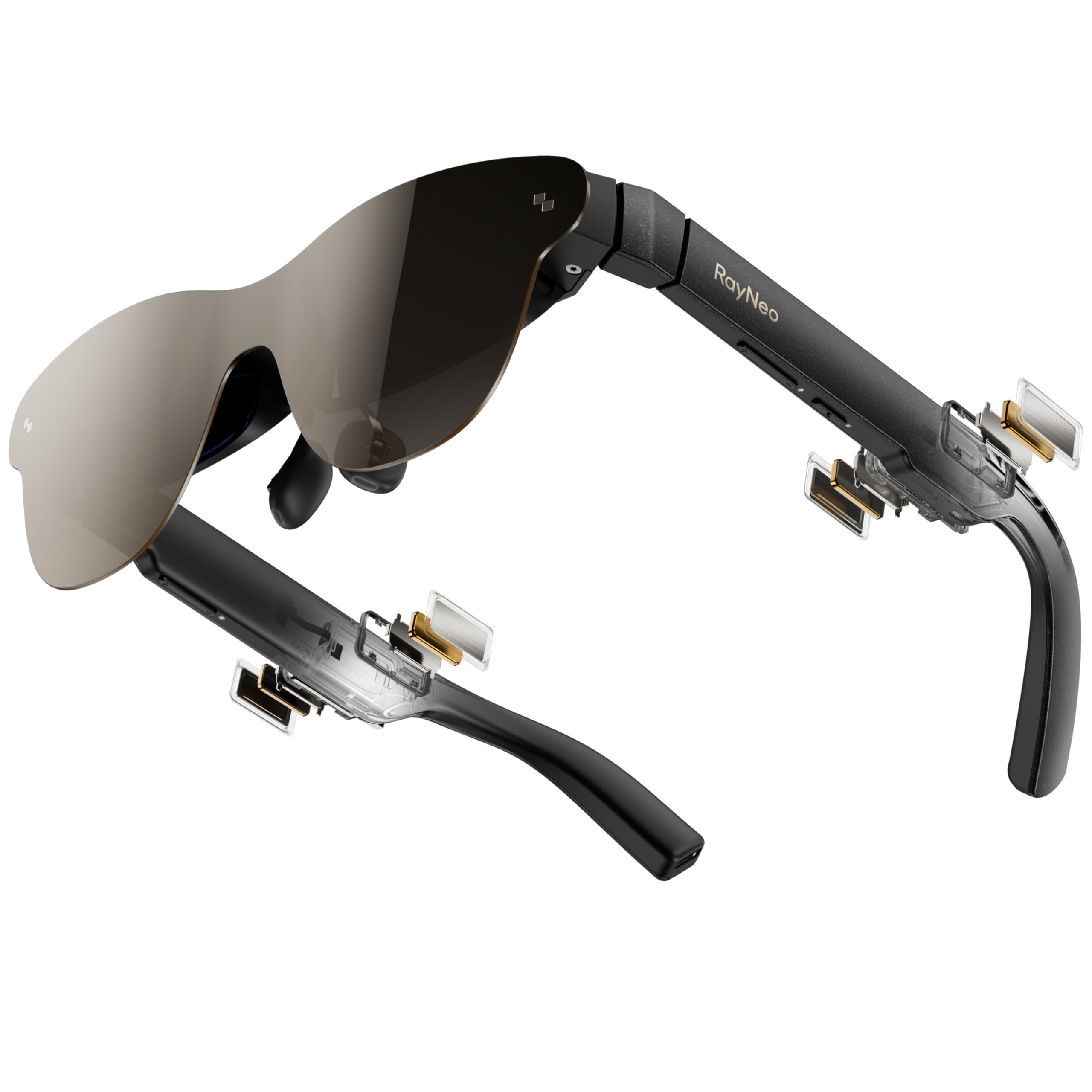
The RayNeo Air 3s Pro AR glasses deliver an astounding 1200 nits to-eye brightness—the highest among AR glasses—making them usable even in well-lit environments. The 5.5th-generation tandem Micro-OLED display with HueView 2.0 offers a 200,000:1 contrast ratio and 98% DCI-P3 coverage, producing vivid, lifelike visuals on a virtual 201-inch screen.
At just 76 grams, these glasses are lightweight and comfortable for 2-3 hour sessions, though some users report that the nose pads and stiff cable cause discomfort. The dual TÜV SÜD certifications for low blue light and flicker-free viewing, combined with 3840Hz PWM dimming, make them easy on the eyes during extended use.
They work as a plug-and-play external display for any USB-C DP device, including iPhones, Android phones, Macs, and consoles like the Switch 2 and PS5. The 46-degree FOV feels more like a large monitor than an immersive VR environment, which is fine for media consumption but not for room-scale VR gaming.
Why it’s great
- 1200 nits brightness enables use in daylight conditions
- HueView 2.0 delivers excellent color and contrast
- Ultra-lightweight at 76g
Good to know
- 46-degree FOV is narrow for immersive VR
- Nose pads can leave marks after extended use
- Stiff power cable pulls glasses downward
9. Sony PlayStation VR Marvel’s Iron Man Bundle

This PSVR bundle includes the original PlayStation VR headset, a PlayStation Camera, two PlayStation Move motion controllers, and physical discs for Marvel’s Iron Man VR and Blood & Truth. The OLED display delivers deep blacks and rich colors at a 1920×1080 resolution per eye with a 110-degree field of view, providing a solid console VR experience.
The original PSVR uses outside-in tracking via the camera, which means you need to face it and stay within its field of view. The Move controllers replicate the Repulsor Jets in Iron Man VR convincingly, but the tracking can be less precise than modern inside-out solutions. The setup is more involved due to the camera and cable routing.
Users praise the value of getting the headset, camera, and two controllers together, but warn that the included digital codes may expire and some bundles arrive without the Iron Man disc. The headset works on both PS4 and PS5 (with a free camera adapter for PS5), making it a flexible option for PlayStation owners.
Why it’s great
- OLED display with deep blacks for immersive visuals
- Includes camera, two Move controllers, and games
- Works on PS4 and PS5 with adapter
Good to know
- Outside-in tracking requires camera line of sight
- Game codes may expire—not all are valid
- Lower resolution than modern VR headsets
FAQ
Can I use AR glasses like the RayNeo Air 3s Pro for VR gaming?
What is the minimum resolution I should look for in an affordable VR headset?
Will the Meta Quest 3S work without a Facebook account?
Can I connect the XREAL 1S to a Nintendo Switch or Steam Deck?
How important is 120Hz refresh rate for reducing motion sickness?
Final Thoughts: The Verdict
For most users, the best affordable virtual reality headset winner is the Meta Quest 3S 128GB because it packs the same Snapdragon XR2 Gen 2 processor as the premium Quest 3 into a much more accessible package, delivering sharp visuals, smooth 120Hz performance, and excellent mixed reality passthrough. If you want the sharpest standalone display with OLED-level contrast and 512GB of storage, grab the Meta Quest 3 512GB. And for portable media consumption and spatial anchored displays without the bulk of a VR headset, nothing beats the XREAL 1S with its native 3DoF and Bose-tuned audio.