
Our readers keep the lights on and the weekend projects moving. As an Amazon Associate, I earn from qualifying purchases.
Nothing ruins a night in the backcountry like the sound of a bear sniffing through your pack, or worse, shredding it for a bag of trail mix. A rigid, bear-resistant canister is the only reliable defense between your hard-earned food supply and a determined bruin—no fumbling with tree branches, no midnight wake-up calls. Choosing the right container means balancing weight, certified durability, and the exact capacity your route demands.
I’m Rikta — the co-founder and writer behind FitlyFast. After digging through real-world field reports, user experiences, and the latest IGBC certification standards, I’ve mapped out what separates a smart buy from a backcountry liability.
Whether you’re thru-hiking the Sierra or making a weekend escape to grizzly territory, this guide helps you find the perfect bear canister for backpacking to match your style and route.
How To Choose The Best Bear Canister For Backpacking
A bear canister isn’t something you upgrade every season, so getting the fit right from the start saves both money and hassle. Focus on three pillars: regulatory approval, usable volume, and how the closure performs when your fingers are cold and your patience is thin.
IGBC Certification Is Non-Negotiable in Many Parks
The Interagency Grizzly Bear Committee (IGBC) tests canisters against real bear attacks—prying, biting, and rolling. If your route crosses Yellowstone, Yosemite, or any national forest with mandatory bear-canister rules, an IGBC-approved model is required. Skipping certification can mean a fine or being forced to turn around.
Capacity vs. Packable Shape
One person consuming 2,500–3,000 calories per day needs roughly 1–1.5 liters per day. A 7-liter canister covers a 3-to-5-day solo trip. But a tall, tapered canister fits into a backpack differently than a short, wide one. Measure your pack’s main compartment height and width before buying.
Opening Mechanism Real-World Usability
Screw-top canisters with aggressive threads can bind in cold weather or become frustrating after a long day. Push-button or lever-style lids are faster but may require two hands. The best design is one you can reliably open without a multitool at the end of a rainy hike.
Quick Comparison
On smaller screens, swipe sideways to see the full table.
| Model | Category | Best For | Key Spec | Amazon |
|---|---|---|---|---|
| BearVault BV ONE | Premium | Multi-day thru-hikes with adjustable volume | 8.3L adjustable, 1 lb 15 oz | Amazon |
| BearVault BV475 | Mid-Range | 5-day solo trips | ~2 lbs, clear body | Amazon |
| Backpackers’ Cache | Mid-Range | Multi-use as seat/table | 3 lbs, 200 fl oz | Amazon |
| SABRE Frontiersman | Mid-Range | Large group trips | 11.86L, 3.6 lbs | Amazon |
| BearVault BV425 Sprint | Mid-Range | 1-2 night overnight trips | 2 lbs, 27.45 oz | Amazon |
| Quini 7.2L | Budget-Friendly | Car camping or areas without IGBC rules | 1.9 lbs, transparent | Amazon |
| RATSACK Ultralight Bundle | Budget-Friendly | Ultralight trips with small rodents | Large (foldable) | Amazon |
In‑Depth Reviews
5. BearVault BV ONE Adjustable
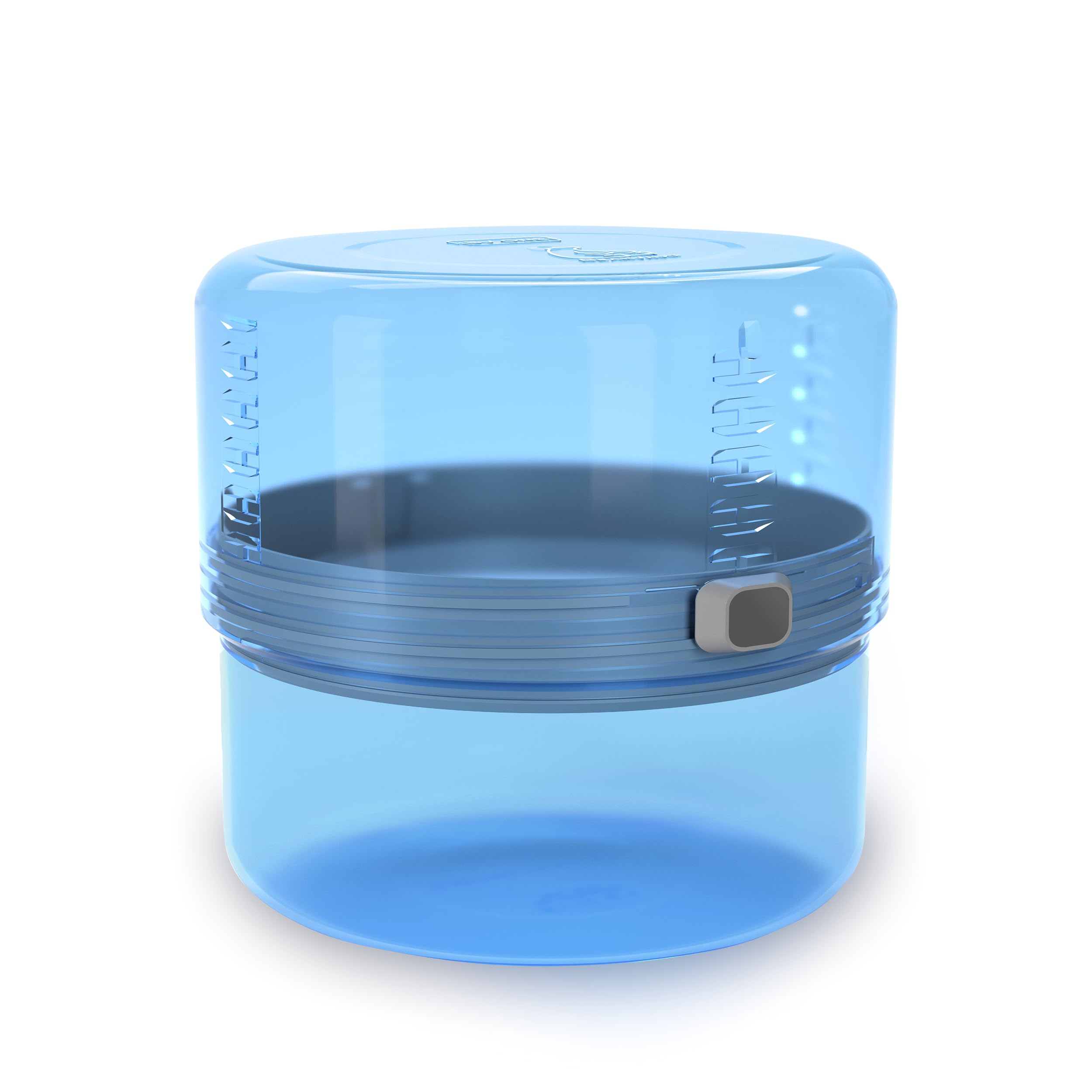
The BearVault BV ONE solves the classic bear-canister pain point: hauling an empty cavern when your food supply shrinks. Its telescoping design collapses as you eat, saving precious pack volume over 4+ days. Weighing just 1 lb 15 oz with 8.3 liters of capacity, it achieves a 20% improvement in weight-to-volume efficiency over the classic BV500.
The push-button closure with tactile feedback opens smoother than traditional screw-type lids, though users note the buttons can be stiff with small hands or thick gloves. IGBC certification means it’s legal in every national park that requires a canister, and the clear polycarbonate body lets you locate your rice dinner without digging.
An optional internal divider helps separate meals from snacks, and the wide mouth on both halves makes packing and unpacking faster. The two-button mechanism requires a short learning curve—once mastered, it’s the easiest canister to access at the end of a long day.
Why it’s great
- Adjustable volume eliminates wasted space as food is consumed
- Lightest certified canister at 1 lb 15 oz
- Push-button lid is more user-friendly than threaded designs
Good to know
- Two-button mechanism can be hard to operate with very small hands
- Must keep smaller half pointed down to avoid water ingress
4. BearVault BV475

The BV475 has been a standard in the Sierra for years, offering a proven screw-down lid and transparent body that lets you see exactly how many breakfasts remain. With roughly 11.5 liters of usable space, it comfortably holds 5 days of food for one person at 3,000 calories per day.
At around 2 pounds, it hits a sweet spot between durability and pack weight. The clear polycarbonate wall is a genuine convenience — you can spot the bag of almonds at the bottom without unrolling everything. The wide opening accommodates bulky items like a full Mountain House pouch.
The screw lid is the main sticking point. In cold weather or with damp hands, the threads can bind, requiring a plastic card or stick for extra torque. Many users learn the trick of holding the canister between their knees, but it’s a skill you’ll want to practice before your trip.
Why it’s great
- Excellent visibility through clear body simplifies meal planning
- Wide opening fits large food pouches
- Proven track record in grizzly bear testing
Good to know
- Screw lid can be difficult to open with cold hands
- Bulky shape may cause back pain if packed vertically
6. Backpackers’ Cache

The Backpackers’ Cache from Garcia Machine is a veteran of the backcountry. At 3 pounds and 200 fluid ounces, it’s heavier than polycarbonate competitors, but the ABS polymer construction is famously durable—surviving falls from ledges and aggressive bear interactions. Its rectangular profile packs more efficiently into most backpack shapes than round canisters.
A flat-head tool or coin is required to twist the lid, which eliminates the “cold hands can’t open” problem common on threaded designs. The lid doubles as a stable seat or small table, and the sturdy body can be used as a camp stool without wobbling.
Because the body is opaque black, locating items inside requires either a headlamp or dumping the contents. Many users add reflective tape to the exterior for nighttime visibility. The weight penalty is real—nearly a pound heavier than the BV ONE—but for durability and peace of mind, it’s a classic.
Why it’s great
- Extremely durable ABS polymer stands up to abuse
- Rectangular shape fits packs more neatly than round canisters
- Functions as a stable seat/table at camp
Good to know
- Requires a tool to open the lid
- Heavy at 3 pounds relative to newer designs
3. SABRE Frontiersman

When you’re feeding two or three people out of one container, the SABRE Frontiersman delivers the largest certified capacity on this list at 11.86 liters. The tapered design fits into 45-liter packs more comfortably than a wide cylinder, and the high-visibility orange color is easy to spot in fading daylight.
A locking lid mechanism with slotted screws keeps bears out but requires a coin or flat tool to operate—not ideal for gloved hands. The integrated high-pressure release valve prevents the canister from cracking if a bear compresses it, an engineering detail that adds genuine backcountry resilience.
At 3.6 pounds, it’s the heaviest canister here, making it best suited for groups where weight is shared across packs. The water- and airtight gasket locks in food odors, something the IGBC test measures closely. For families or guided trips, the Frontiersman’s sheer volume is hard to beat.
Why it’s great
- Largest IGBC-certified capacity at 11.86 liters
- High-visibility orange is easy to find in camp
- Pressure release valve adds bear-proof durability
Good to know
- Heavy at 3.6 pounds; shared use is ideal
- Slotted screw lid requires a tool for opening
2. BearVault BV425 Sprint

The BV425 Sprint is BearVault’s smallest and lightest certified canister, tipping the scales at just 27.45 ounces. It’s built for overnight and weekend trips where a full-size canister would waste pack volume. At 7.2 liters, it holds 1–2 days of food for a normal eater or up to 4–5 days for an ultralight calorie-packer.
The transparent blue body gives the same see-through convenience as larger BearVaults, and the screw-down lid is identical in design—meaning the same cold-weather binding issue applies. Users report that opening the smaller canister is more difficult because there’s less surface area to grip between your knees.
Despite its compact size, the BV425 is fully IGBC approved and doubles as a camp stool when the lid is mostly closed. For section hikers or weekend warriors who need the lightest legal canister on the market, this is the answer.
Why it’s great
- Lightest IGBC-certified canister at 27.45 oz
- Perfect for 1-2 night trips
- Clear body lets you see contents at a glance
Good to know
- Small size makes screw lid harder to open
- Limited capacity for longer trips or high-calorie diets
7. Quini 7.2L Airtight Container
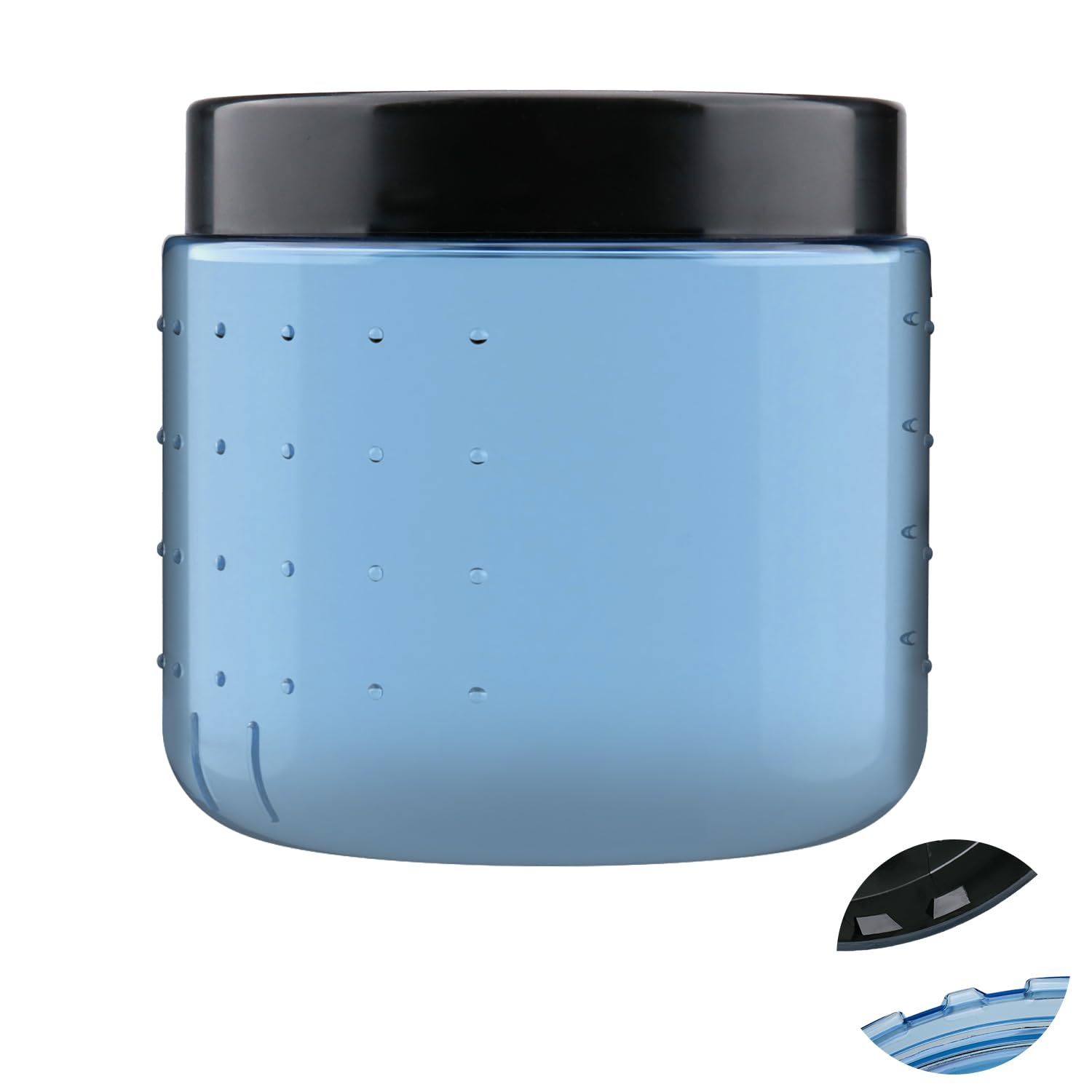
The Quini 7.2-liter container is a transparent polycarbonate canister that emphasizes lightness (1.9 pounds) and a wide-mouth opening for easy access. Its anti-pry locking mechanism and airtight seal keep odors contained, making it a viable option for car camping or areas without mandatory bear-canister rules.
The catch is clear: the product has not received IGBC certification, which means it’s not legal to carry in national parks or forests that require approved bear-resistant food storage. Several purchasers noted that a three-year-old could open the latch, raising questions about its real-world bear resistance.
If you’re camping in black-bear country where canisters are recommended but not mandated, the Quini offers a lightweight, affordable alternative. For anyone traveling through grizzly territory or federally regulated zones, choose a certified canister instead.
Why it’s great
- Lightweight at 1.9 pounds
- Transparent body with wide mouth for quick packing
- Low entry price for casual use
Good to know
- Not IGBC certified—illegal in many national parks
- Latch may not deter a determined bear
1. RATSACK Ultralight Camping Bundle
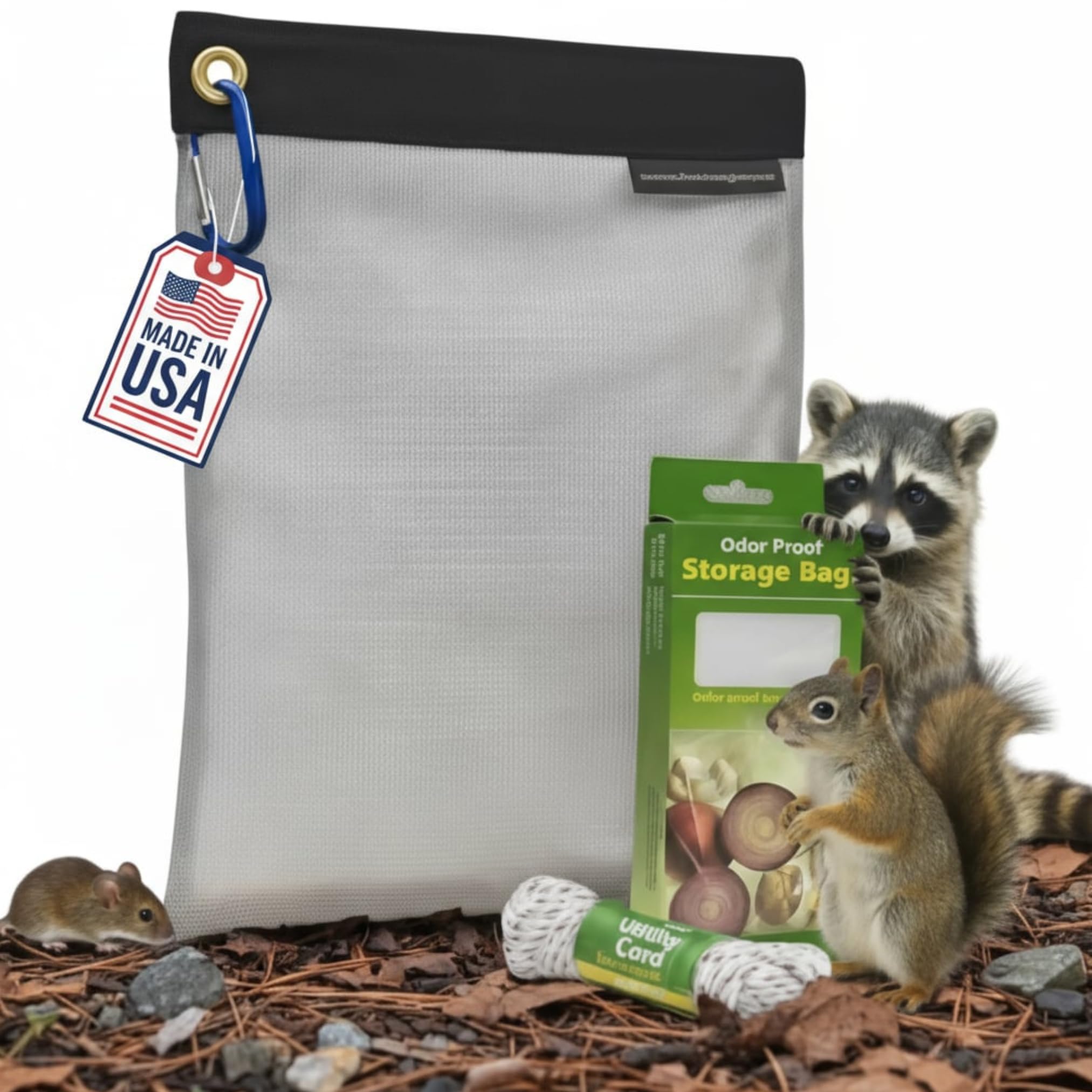
The RATSACK is not a rigid canister—it’s a stainless steel mesh dry bag designed to stop rodents and small animals, not grizzly bears. Weighing significantly less than any hard-sided canister, it rolls up into a small bundle when empty and comes as a complete kit with odor-proof bags, paracord, and a carabiner.
Field reports from Havasupai and other high-rodent zones confirm it stops determined squirrels and pack rats from chewing through food bags. The soft-sided design is easy to stuff into pack nooks, and the Velcro closure holds tight against four-legged thieves.
If you’re hiking in areas where IGBC certification isn’t required—like the Appalachian Trail or most desert environments—the RATSACK offers the lightest possible food protection. For grizzly country or mandated national parks, you’ll still need a hard-sided, certified canister.
Why it’s great
- Extremely lightweight and packable
- Complete kit includes odor-proof bags and hanging rope
- Handmade in the USA from stainless steel mesh
Good to know
- Not bear-proof—only deters rodents
- Not IGBC certified; illegal in some parks
FAQ
Why is IGBC certification important for a bear canister?
Can I use a bear canister as a camp stool?
What size bear canister do I need for a 5-day solo trip?
How do I open a stuck screw-lid bear canister in cold weather?
Final Thoughts: The Verdict
For most long-distance backpackers, the bear canister for backpacking that wins on weight efficiency, adaptability, and ease of use is the BearVault BV ONE because its telescoping volume eliminates wasted pack space while keeping IGBC approval at just 1 lb 15 oz. If you want straightforward simplicity and a proven track record, grab the BearVault BV475. And for group trips requiring the largest possible certified container, nothing beats the SABRE Frontiersman with its 11.86-liter capacity.