
Our readers keep the lights on and the weekend projects moving. As an Amazon Associate, I earn from qualifying purchases.
An Alpinist backpack is a specialized piece of gear engineered for vertical terrain, where every gram of frame weight and every attachment point for an ice axe or trekking pole can determine the success of a climbing day. The wrong pack shifts your center of gravity on a traverse, overheats your back on a scramble, or fails to distribute a 25-pound load of ropes and hardware across your hips. This guide cuts through the marketing to isolate the actual suspension systems, fabric deniers, and volume configurations that matter most for alpine pursuits.
I’m Rikta — the co-founder and writer behind FitlyFast. I’ve spent countless hours analyzing the load-bearing geometry, material science, and real-world durability data behind dozens of mountain packs to build this comparison.
Whether you need a lightweight summit pack for a technical day or a multi-day expedition hauler, this guide to the best alpinist backpack breaks down each model by its carry system, weather protection, and organizational DNA.
How To Choose The Best Alpinist Backpack
An Alpinist backpack must disappear on your back during technical movement while remaining accessible when you need a shell or a snack mid-pitch. The wrong choice adds drag, traps heat, or forces you to unpack everything to reach your crampons. Focus on these four factors before buying.
Suspension System & Frame Type
Alpine packs rely on either a peripheral wire frame (like Osprey’s LightWire) or a Delrin U-frame (like Deuter’s Alpine Back system). These frames transfer the weight of ropes, ice screws, and water from your shoulders to your hips. A frameless pack under 25L works for summit pushes but becomes unbearable on multi-day approaches. Look for adjustable torso lengths and load-lifter straps that let you dial the fit while wearing a helmet and harness.
Volume-to-Weight Ratio
Alpinist packs typically span 22L to 55L. A 22–26L daypack covers single-pitch climbs, hut-to-hut traverses, and fast-and-light ascents where every ounce matters. A 35–48L pack handles overnight bivouacs, rope carries, and full alpine kits. Packs above 48L are expedition territory — needed for winter camping or extended traverses but overkill for standard weekend objectives. Match the volume to your typical trip duration, not your theoretical ambitions.
Attachment Points & Gear Loops
An Alpinist backpack without dedicated ice axe loops and trekking pole attachments is a hiking pack, not an alpine pack. The best designs integrate these loops into the compression system so they don’t flap or snag on rock. Daisy chains on the front panel allow you to lash a helmet, climbing rope, or crampon bag externally. Check that the axe loops can be stowed when not needed — some models, like the Deuter Guide 30, offer detachable rope straps and stowable hip fins.
Weather Protection & Fabric Durability
Mountain weather changes fast. A pack built from 400D to 600D nylon (like the Arc’teryx Mantis 26 or Peak Design Travel Backpack) withstands scrapes against granite while remaining light enough for long approaches. An integrated rain cover saves you from stopping to deploy a separate poncho in a downpour. Some high-end packs use DWR-coated recycled fabrics — functional but less abrasion-resistant than standard 400D or 420D ripstop.
Quick Comparison
On smaller screens, swipe sideways to see the full table.
| Model | Category | Best For | Key Spec | Amazon |
|---|---|---|---|---|
| Deuter Guide 30L | Alpine Climbing | Technical mountaineering with rope carry | 1.9 lb / Delrin U-frame | Amazon |
| Osprey Stratos 44L | Multi-Day Hiking | Overnight trips with ventilated carry | 3.7 lb / AirSpeed suspension | Amazon |
| Osprey Kestrel 48L | Backpacking | Extended weekend with integrated raincover | 4.62 lb / AirScape backpanel | Amazon |
| Cotopaxi Allpa 35L | Travel Hybrid | Suitcase-style packing in a mountain shell | 3.1 lb / Full-wrap zipper | Amazon |
| Cotopaxi Allpa 28L | Travel Daypack | Single-bag carry-on with gear access | 2.4 lb / Clamshell opening | Amazon |
| Peak Design Travel 45L | Travel & EDC | 1-bag air travel with expandable volume | 4.5 lb / 35-45L expandable | Amazon |
| Arc’teryx Mantis 26 | Light Daypack | Technical daily carry & light trails | 1.2 lb / 600D rePET fabric | Amazon |
| Mammut Ducan 22 | Fast & Light | Trail running and short alpine climbs | 1.98 lb / Hydration sleeve | Amazon |
| The North Face Terra 55 | Multi-Day Expedition | Thru-hiking with full camping kit | 5.0 lb / Cinch-top with U-zip | Amazon |
In‑Depth Reviews
1. Deuter Guide 30L
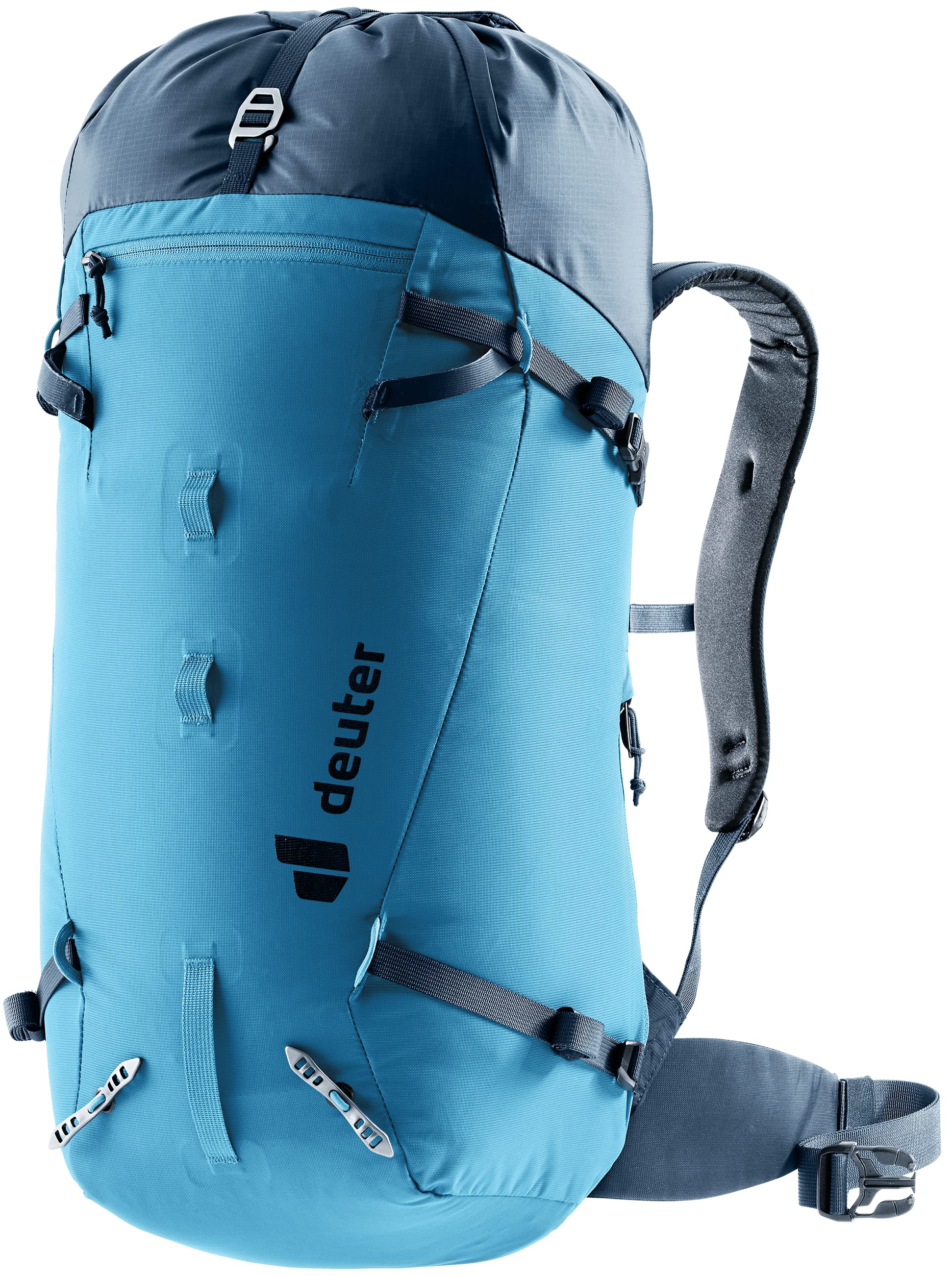
The Deuter Guide 30L is built specifically for the alpine zone — not retrofitted from a hiking design. Its tensioned Delrin U-frame delivers an exceptional weight-to-stability ratio, distributing loads up to 30 pounds through two padded stripe pads that keep your back cool on steep ascents. The 420D PA FD ripstop fabric resists abrasion from rock and ice without adding bulk, and the whole pack weighs just 1.9 pounds — virtually weightless until you load it.
Attachment points are the real story here. The integrated helmet holder in the lid, detachable rope strap, and dedicated ice axe loops mean you can lash your entire kit externally without blocking main compartment access. The stowable hip fins let you drop the waist belt when the terrain gets technical and you need unrestricted hip movement. The front zippered pocket holds a phone and key clip, though the pocket is snug with gloves on.
Reviewers consistently highlight the pack’s ability to carry awkward loads — beach chairs and mats in one case — as proof of its versatile frame. The main drawback is the lack of a side water bottle pocket; you’ll rely on the hydration sleeve for fluid access. For pure alpine climbing where weight and stability are non-negotiable, the Guide 30L earns the top slot.
Why it’s great
- Delrin U-frame offers unmatched load stability under 30 lbs
- Stowable hip fins allow unrestricted scrambling
- Includes helmet holder, rope strap, and ice axe loops
Good to know
- No water bottle side pocket
- Helmet holder blocks outside pocket access
- Minimal pocket organization inside
2. Osprey Stratos 44L
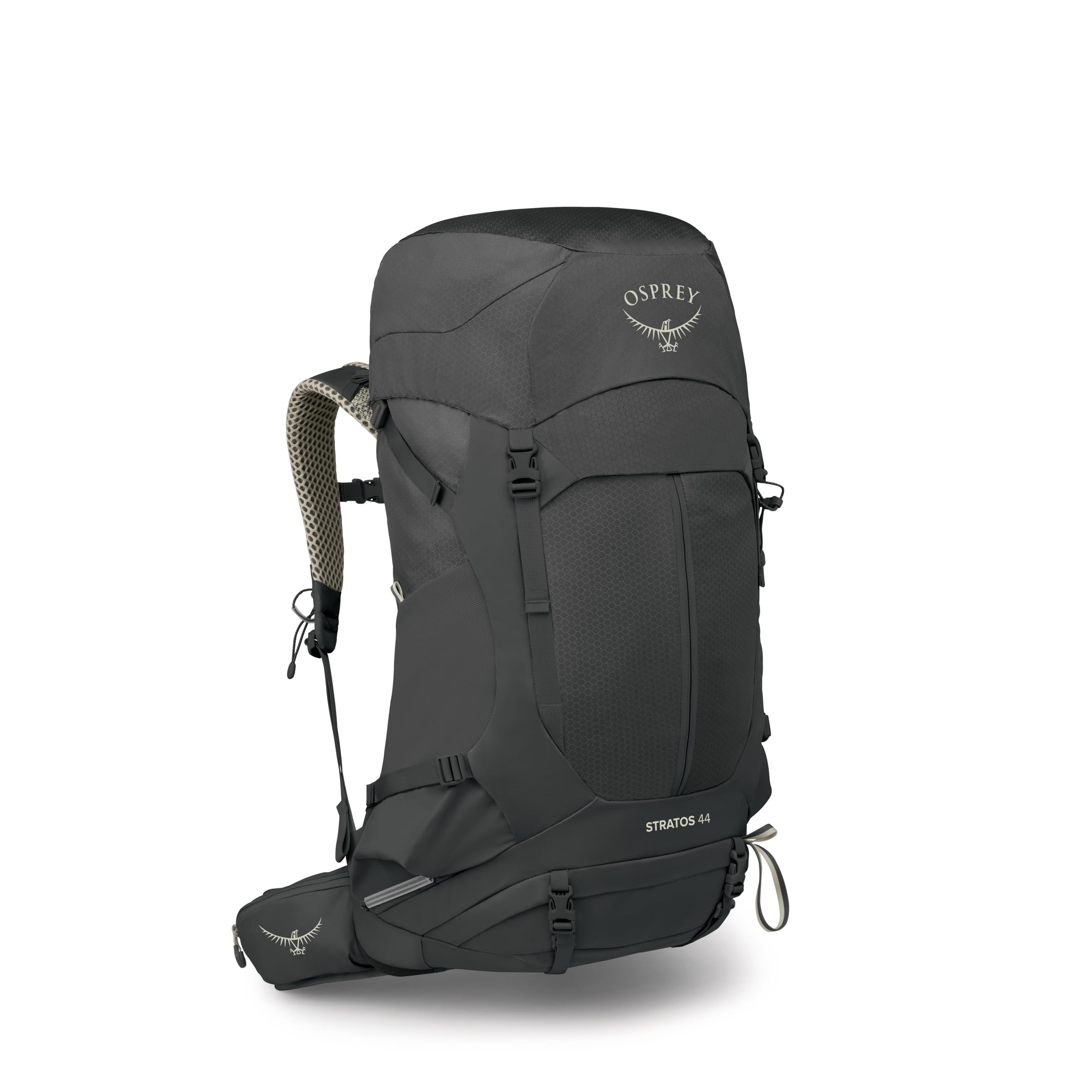
Osprey’s Stratos 44L uses the AirSpeed trampoline suspension — a mesh backpanel that creates a ventilated gap between your spine and the pack. On steep, sweaty approaches, this system makes a genuine difference in comfort, reducing back sweat accumulation even under loads of 35 pounds. The LightWire peripheral frame transfers weight effectively to the padded ErgoPull hipbelt, and the adjustable torso length accommodates different body geometries.
The Stratos packs serious organizational depth into a 44-liter volume. The dual-access main compartment combines with a bottom-zip compartment (perfect for a sleeping bag or a large toiletries kit), two hipbelt pockets, and a front stash pocket. The Stow-on-the-Go trekking pole attachment and ice tool loop confirm this is built for mountain objectives, not just flat trails. A waterproof raincover stows in its own bottom compartment.
Reviewers praise the Stratos for its comfort on multi-day trips — one took it through three weeks in Wales and reported a dry back throughout. The main trade-off is weight: at 3.7 pounds, it’s heavier than minimalist alpine packs, and the rigid frame makes it unsuitable as a personal item on airlines. For overnight to multi-day alpine trips where ventilation and load management matter more than absolute pack weight, the Stratos delivers.
Why it’s great
- AirSpeed trampoline backpanel reduces sweat buildup
- Bottom-zip compartment and dual hipbelt pockets
- Adjustable torso length for custom fit
Good to know
- Hard frame prevents use as personal item on planes
- Heavier than dedicated alpine packs
- Side pockets work best with tall, thin water bottles
3. Osprey Kestrel 48L
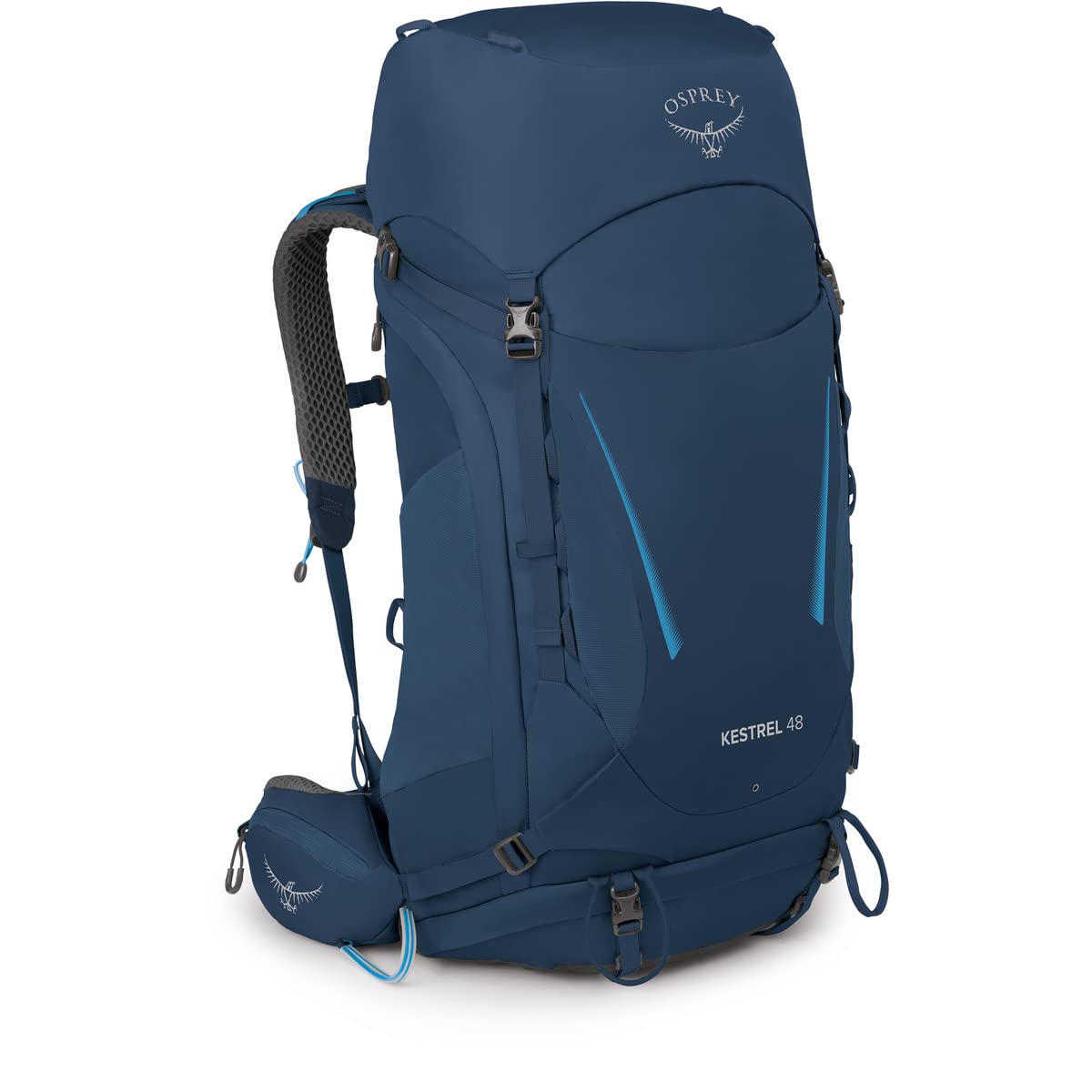
The Kestrel 48L is Osprey’s answer to the multi-day alpine backpacking crowd. Its injection-molded AirScape backpanel provides a stable, close-to-body carry that keeps the load from shifting on uneven terrain — critical when you’re carrying a full camp kit up a boulder field. The fixed hipbelt and load-lifter straps work together to transfer weight efficiently, and the adjustable torso length gives you room to dial the fit with a thick insulating layer underneath.
Integrated raincover is a welcome inclusion for mountain weather. The top lid has a large zippered pocket with an under-lid mesh pocket and key clip for small essentials. Daisy chains on the front panel let you lash extra gear, and the side elastic pockets are easier to access than on the Talon series. The compression system flattens the pack for day-use carry once you’ve dropped camp.
Customers report excellent durability — one used it at Glacier National Park for a week-long backpacking trip, then compressed it flat for day hikes. The main concern from some buyers is the chemical coating used on the fabric; Osprey notes it washes off, but sensitive users may want to pre-treat the pack. For extended weekend trips that demand a full camp system, the Kestrel 48L is a proven performer.
Why it’s great
- Built-in raincover for sudden alpine storms
- Thicker shoulder pads and tougher outer than Talon series
- Versatile compression system for variable loads
Good to know
- Heavy at 4.62 lbs for a 48L pack
- Fabric may have residual formaldehyde coating
- Fixed hipbelt — not convertible to frameless
4. Cotopaxi Allpa 35L
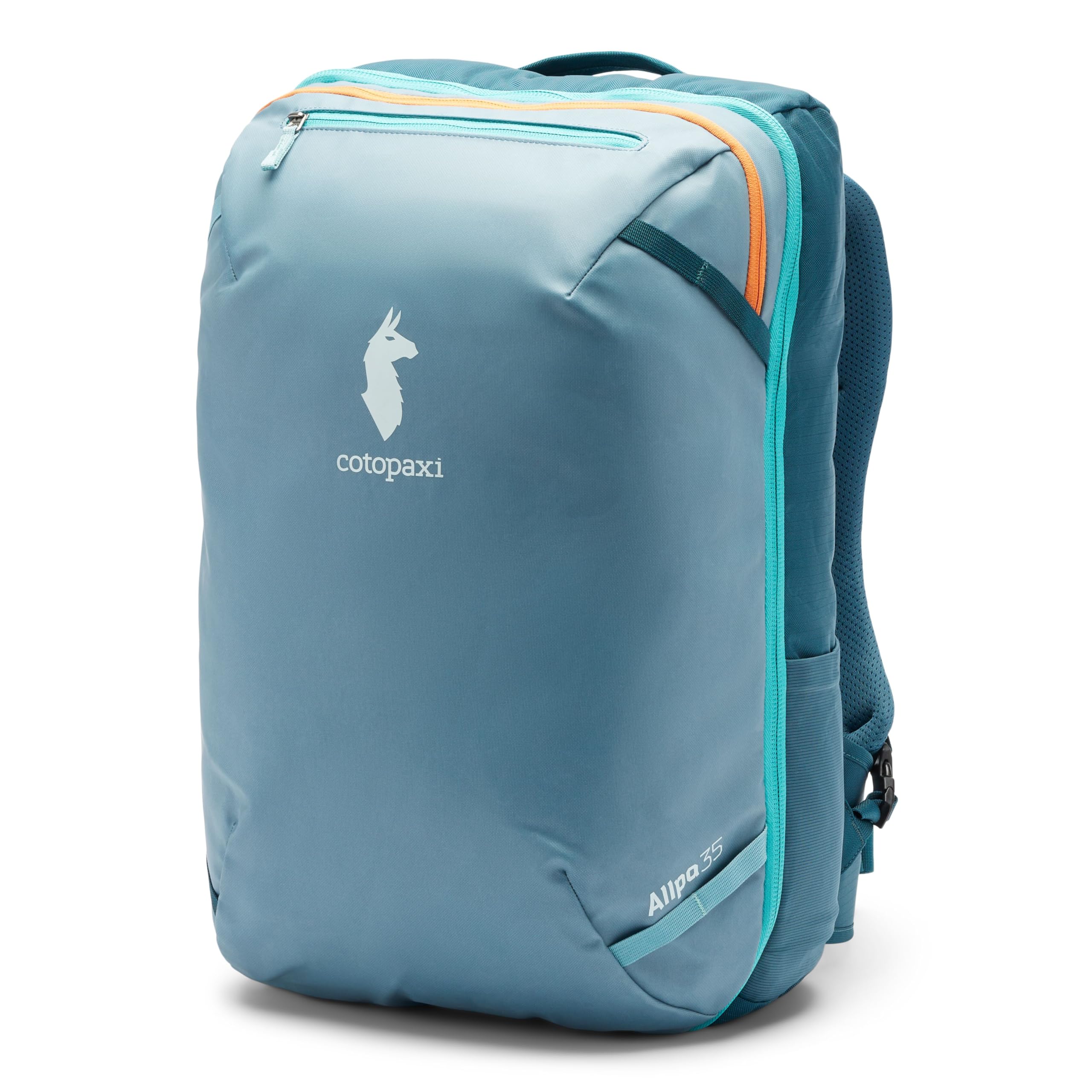
The Cotopaxi Allpa 35L bridges the gap between an Alpinist pack and a travel backpack, using a suitcase-style full-wrap zipper opening that lets you pack and unpack like a duffel — a massive advantage when you’re organizing climbing kit inside a hut or hostel. The internal pocket configuration (one large, one medium, one small) keeps gear separated without requiring packing cubes. The tuckable shoulder straps and hip belt convert the pack to streamlined carry for flight overhead bins.
Exterior webbing loops provide four attachment points for lashing extra gear, and the stretch mesh water bottle pocket accommodates up to a 1-liter bottle. The 15-inch padded and fleece-lined laptop sleeve protects electronics, and the roller-bag pass-through strap on the back makes airport transitions smoother. Lockable zippers on the main opening add security during travel.
Reviewers highlight the pack’s performance on two-week trips to Switzerland, where the 35L volume proved sufficient for a full travel wardrobe plus tech gear. The trade-off: the Allpa is not built for technical alpine use. It lacks dedicated ice axe loops and a dedicated suspension system for heavy loads. For climbers who also travel through cities and need one pack for both worlds, the Allpa 35L is a smart compromise.
Why it’s great
- Clamshell opening for easy packing and access
- Convertible straps and hip belt for flight carry
- Sturdy 100% polyester with lockable zippers
Good to know
- No integrated rain cover
- Not designed for heavy technical alpine loads
- Backpack straps don’t stow completely flat
5. Cotopaxi Allpa 28L

The 28-liter version of the Allpa series delivers the same clamshell organization and rugged build in a smaller footprint. The internal compartment layout mirrors the 35L model — one large, one medium, one small pocket — but the reduced volume forces you to pack smarter, which many users find liberating for fast weekend trips. The front zip accessory pocket includes a key clip and internal organization slots for passports, chargers, and small hardware.
Cotopaxi added a stretch mesh water bottle pocket (up to 1 liter) on this version, a clear improvement over earlier iterations. The tuckable waist belt and padded laptop sleeve (fits 15 inches) remain, and the color-coded YKK zippers (each compartment gets a different color) make finding gear intuitive in low light. The 28L fits comfortably under airline seats, which reviewers confirm for regional jets like the ERJ 175.
One consistent criticism: the main zipper can feel rough during the first few weeks of use, though it smooths out over time. The pack also lacks a rain cover, so you’ll need to pack a separate shell for wet alpine approaches. For an Alpinist who needs a personal-item-sized pack that transitions from the mountain to the airport without looking out of place, the Allpa 28L is a strong contender.
Why it’s great
- Personal-item sized at 28L, fits under most seats
- Color-coded zippers for fast gear access
- Stretch water bottle pocket added in new version
Good to know
- Main zipper can feel stiff initially
- No rain cover included
- Price is high relative to volume
6. Peak Design Travel Backpack 45L
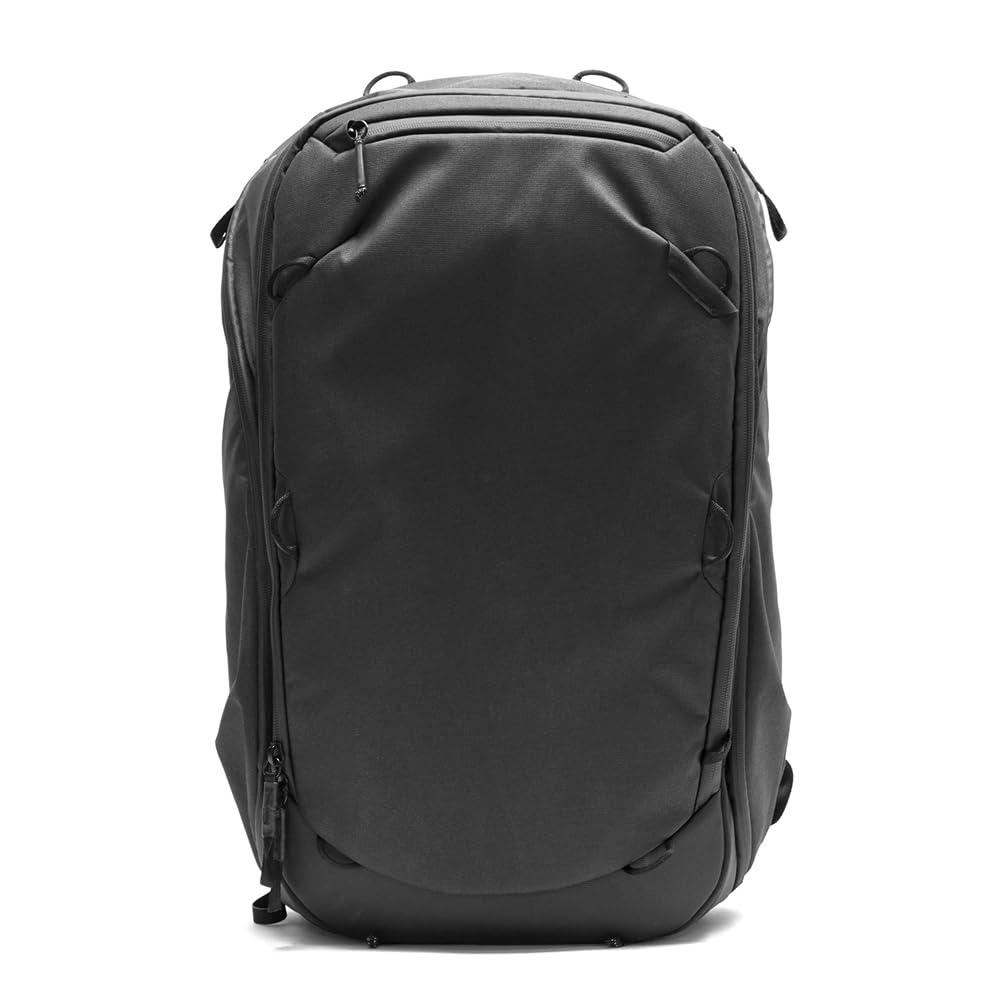
Peak Design’s Travel Backpack 45L is the most technically ambitious pack in this lineup, offering expandable volume from 35 to 45 liters by unzipping internal baffles. The 400D recycled nylon canvas shell with an ultra-durable #10 UltraZip and a reinforced bottom liner makes this pack tough enough for alpine travel while maintaining a clean, urban silhouette. The weatherproof shell stands up to snow and light rain without a separate cover.
The organization architecture is exceptional: side pockets expand to hold water bottles or tripods, a padded laptop sleeve fits up to 17-inch machines, and top, side, and rear access points let you grab gear without digging through the main compartment. Tuck-away shoulder straps and hip belt convert the pack to streamlined carry for flight overhead bins, and the luggage pass-through strap integrates with rolling bags.
Reviewers consistently call this pack a game-changer for one-bag travel — one used it for two weeks in Japan with a 16-inch MacBook Pro, tech pouch, and wash pouch. The main drawback for alpine use is weight: at 4.5 pounds, this is a heavy pack for its volume, and the strap geometry can feel short for broad-shouldered climbers. For the Alpinist who flies to remote trailheads and needs a single pack for both the plane and the mountain, the Peak Design 45L is unmatched.
Why it’s great
- Expandable 35-45L volume adapts to load
- #10 UltraZip and 400D shell offer extreme durability
- Multiple access points — top, side, rear
Good to know
- Heavy at 4.5 lbs for alpine use
- Shoulder straps can feel short for larger torsos
- Sternum strap is difficult to connect
7. Arc’teryx Mantis 26
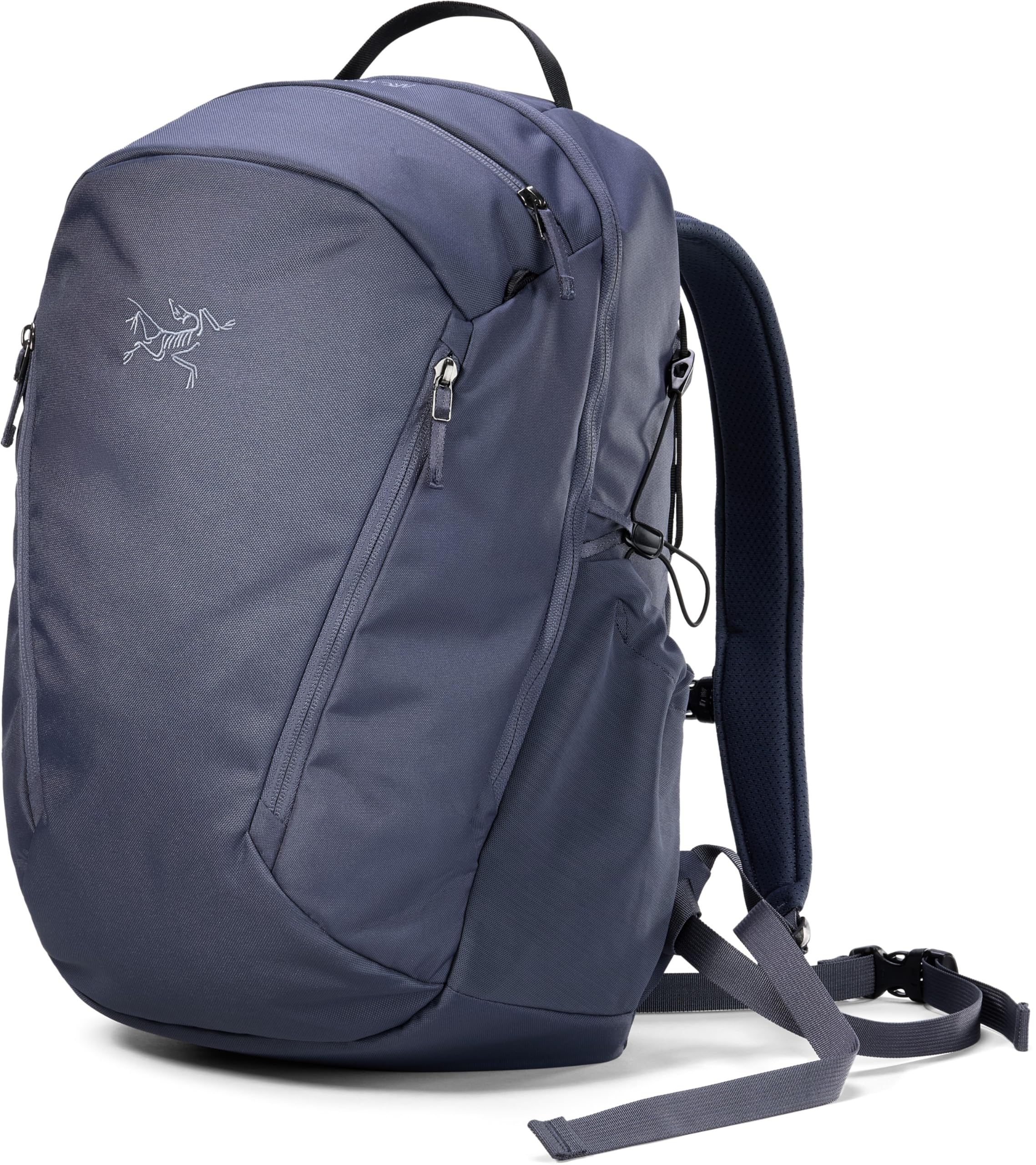
Arc’teryx brings its signature clean design philosophy to the Mantis 26, a lightweight daypack built for technical activities where simplicity and durability matter more than bells and whistles. The 600D rePET fabric — made from recycled materials with a DWR finish — provides solid abrasion resistance for scrambling over granite while keeping the pack weight at just over a pound. The fit is regular but close-to-body, minimizing bounce during trail runs or quick ascents.
The Mantis 26 is deliberately streamlined. It has one large main compartment with a padded laptop sleeve, a front zip pocket for smaller items, and two stretch side pockets for water bottles. No ice axe loops, no daisy chains, no suspension frame — this is a pack for the Alpinist who carries light and fast, not for extended multi-day roped climbs. The Fair Trade Certified production adds a layer of ethical sourcing.
Customers praise the “best functioning pockets ever” and the pack’s ability to fit a surprising amount without looking bulky. The main criticism from mountain users is the lack of specialized attachment points — you’ll need to clip gear to the compression straps. For hut-to-hut traverses, summit pushes, or daily alpine training, the Mantis 26 offers Arc’teryx-level build quality in an ultra-light format.
Why it’s great
- Ultra-light at just over 1 lb with durable 600D fabric
- Clean, close-to-body fit minimizes bounce
- Fair Trade Certified production
Good to know
- No dedicated ice axe or trekking pole loops
- Limited pocket organization
- Not suited for heavy loads over 15 lbs
8. Mammut Ducan 22
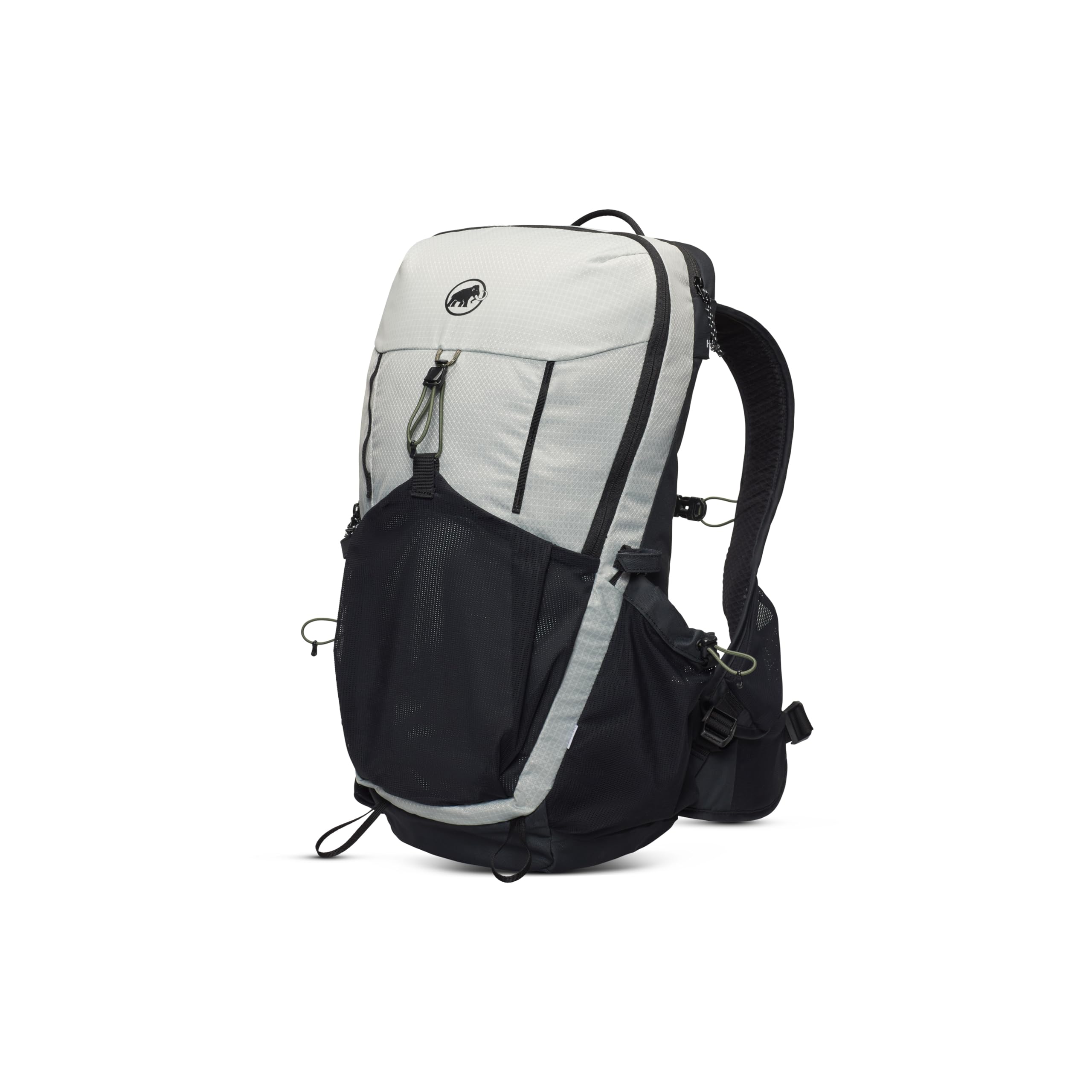
The Mammut Ducan 22 is the closest thing in this lineup to a dedicated running-approach pack repurposed for alpine days. At 22 liters and just under 2 pounds, it disappears on your back during quick ascents and trail runs. The anatomically shaped, soft-padded hip belt and shoulder straps provide surprising comfort for a pack this small, and the Federstahl (spring steel) frame distributes 6-7 kg loads evenly — impressive for a sub-25L pack.
The mesh backpanel keeps your back cool during high-output climbs, and the angled mesh side pockets allow bottle access while running — a detail runners will appreciate. The detachable rain cover adds weather protection without adding permanent weight. The hydration sleeve accommodates up to 3 liters, and the internal pocket for valuables secures keys and a phone. The unisex fit works well for both men and women, though some find the frame curves inward, interfering with laptop placement if used for commuting.
Reviewers highlight the pack’s ventilation and lightweight feel, with one calling it “the perfect companion for day tours” and another noting that the frame curves enough to bother laptop users. The Ducan 22 earns its spot for Alpinists who cover ground fast — trail runners, speed climbers, and skimo athletes who need a minimalist pack with actual load support.
Why it’s great
- Spring steel frame distributes 6-7 kg loads evenly
- Angled mesh side pockets for bottle access while running
- Detachable raincover adds weather protection
Good to know
- Frame curves inward, can interfere with laptop placement
- 22L is tight for packed summits with extra layers
- Phone pocket on the back is awkward to access
9. The North Face Terra 55
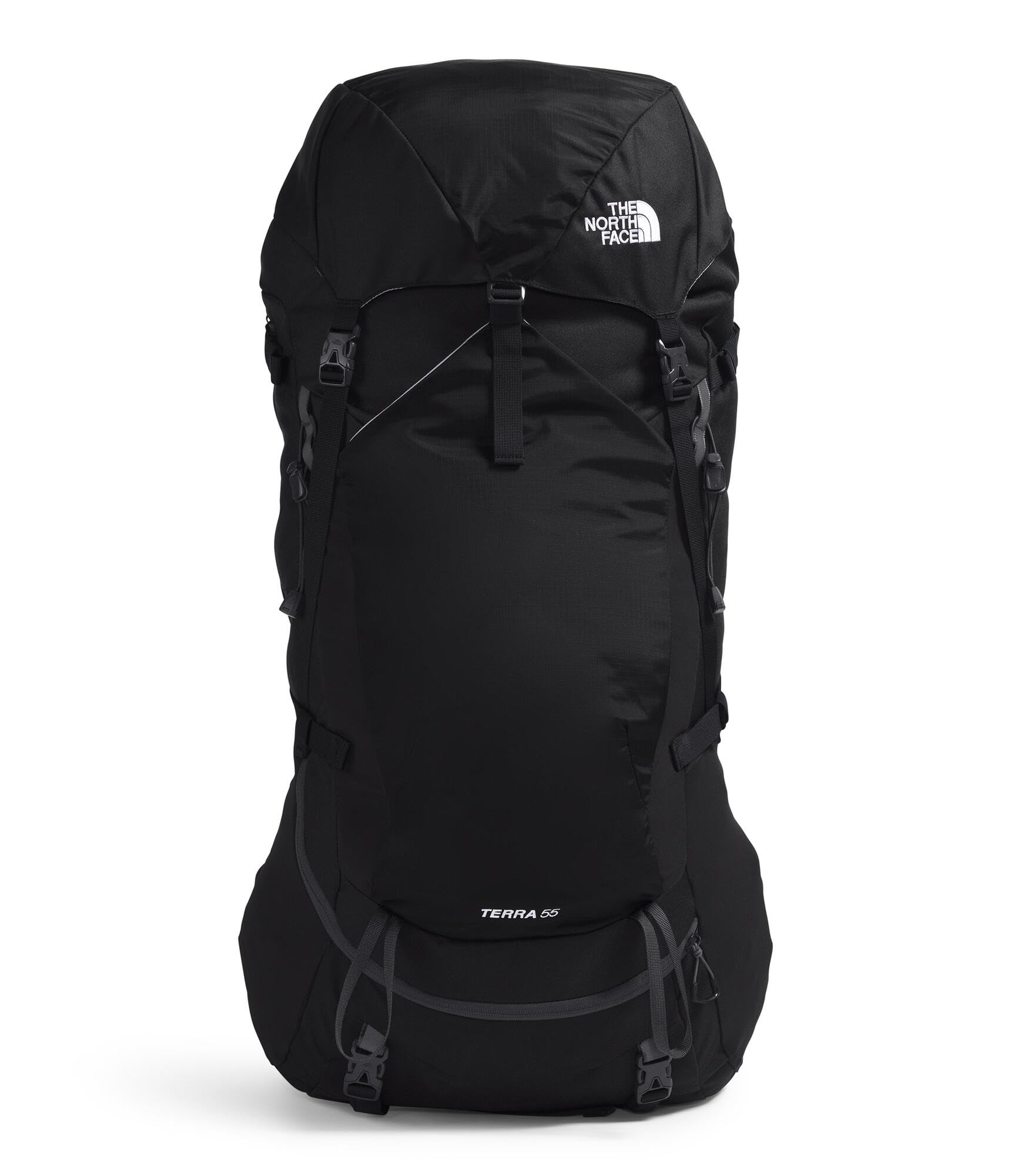
The Terra 55 is The North Face’s entry point into multi-day backpacking, offering 53 to 57 liters of volume (depending on size) at a weight that undercuts most competitors in its class. The padded back panel and hip belt prioritize comfort for long trail days, and the removable frame sheet provides adjustable support: you can pull it out for lightweight summit dashes and reinsert it for full camp carries. Load-lifter straps and a sternum strap help distribute weight across your frame.
Storage is where the Terra 55 shows its design maturity. The full-length two-way U-zip gives quick access to the cinch-top main compartment without having to dig through the top opening — a feature normally reserved for more expensive packs. The removable lid has an internal zip pocket and key hook, and the external stuff-it pocket tightens with an S/R buckle for securing wet gear or a jacket. Trekking pole and ice axe attachments are included, and the side compression straps can hold a sleeping pad externally.
Reviewers praise the comfort and material quality (“good zippers, good fabric”) but some note the pack runs smaller than the stated 55L — the S/M is closer to 53L, and the L/XL is closer to 57L. The weight of 5 pounds is respectable for its volume class but heavy for dedicated alpine use. For budget-conscious Alpinists who need a multi-day pack with ice axe loops and comfortable load distribution, the Terra 55 delivers reliable performance at a lower entry point.
Why it’s great
- Full-length U-zip for quick access to main compartment
- Removable frame sheet for weight savings
- Includes ice axe and trekking pole attachments
Good to know
- Volume runs smaller than stated — test before a long trip
- 5 lb weight is heavy for technical alpine use
- Hip belt pockets are small for glasses or GPS
FAQ
What size Alpinist pack should I buy for a single-day technical climb?
Do I need a framed pack for alpine climbing or can I use a frameless pack?
How do I care for my Alpinist backpack after a wet or muddy climb?
Can I use a travel backpack like the Cotopaxi Allpa for technical alpine climbs?
What is the best way to attach a rope to an Alpinist backpack?
Final Thoughts: The Verdict
For most climbers, the best alpinist backpack winner is the Deuter Guide 30L because its Delrin U-frame delivers the ideal balance of weight, stability, and technical attachment points for day-long alpine objectives. If you prioritize back ventilation on multi-day trips, grab the Osprey Stratos 44L. And for peak-bagging speedsters who need a minimalist carry with frame support, nothing beats the Mammut Ducan 22.