
Our readers keep the lights on and the weekend projects moving. As an Amazon Associate, I earn from qualifying purchases.
Sitting for long hours in a wheelchair creates a persistent, unseen enemy: constant pressure that cuts off blood flow to the soft tissues of the buttocks and tailbone. The result isn’t just discomfort—it’s the rapid development of pressure ulcers (bedsores) that can lead to infection, hospitalization, and a severe decline in quality of life. An alternating pressure wheelchair cushion is the single most effective countermeasure, using a cycle of inflating and deflating air cells to mimic natural repositioning and keep your skin healthy.
I’m Rikta — the co-founder and writer behind FitlyFast. This guide is the result of weeks of cross-referencing medical-grade specs, analyzing customer durability reports across hundreds of verified purchases, and matching therapy types (alternating pressure, low air loss, static air) to specific user mobility levels and wound care needs.
Whether you’re a caregiver managing a loved one’s recovery or a full-time wheelchair user looking to prevent sores, you need a cushion that delivers reliable, quiet, and uninterrupted therapy day after day. This review of the best alternating pressure wheelchair cushion options breaks down the real-world performance, battery life, and build quality of the top contenders on the market.
How To Choose The Best Alternating Pressure Wheelchair Cushion
Selecting the right cushion isn’t just about picking a brand—it’s about matching the therapy technology to the user’s stage of risk or wound severity. A wrong choice can mean wasted money and continued skin breakdown.
1. Alternating Pressure vs. Static Air vs. Low Air Loss
An alternating pressure cushion actively cycles air through different cells—typically every 6 to 15 minutes—moving the point of contact to prevent any single area from being compressed for too long. This is the gold standard for anyone with a history of pressure ulcers or limited ability to self-reposition. Static air cushions (like the Roho Mosaic) provide immersion and pressure redistribution but require the user to manually shift weight. Low air loss systems add a gentle venting of air to wick away moisture and keep the skin cool, which is critical for wound healing.
2. Battery Life and Portability
Full-time wheelchair users need a cushion that works all day, everywhere. A rechargeable battery (offering 8 to 12 hours) is essential for independence—allowing you to leave the house, attend appointments, and travel without being tethered to a wall outlet. If the user is primarily bedridden or stationary, a pump that plugs in continuously (like the mattress-style pads) may be more cost-effective and reliable.
3. Pump Noise and Cycle Comfort
A pump that runs constantly with a loud hum or a jarring inflation sound can ruin sleep and make public use of the cushion embarrassing. Look for pumps rated below 30 dBA (whisper-quiet). Also consider the cycle rhythm: some users find a gentle, slow inflation more comfortable, while others prefer a quicker cycle that doesn’t fully deflate the cells, providing more consistent support throughout the day.
Quick Comparison
On smaller screens, swipe sideways to see the full table.
| Model | Category | Best For | Key Spec | Amazon |
|---|---|---|---|---|
| Brace Direct Alternating Pressure Cushion | Active Therapy | All-day wheelchair use with battery | 12-hour battery, 17″x17″ | Amazon |
| MobiCushion MC1000 | Active Therapy | Posture support & pressure relief | 12-hour battery, foam base | Amazon |
| Roho Mosaic Cushion | Static Air | Custom pressure redistribution | Individual air cells, 20″x18″ | Amazon |
| KEKOY (130-Cell Pad) | Mattress Pad | Bed-based pressure sore prevention | 130 air cells, <28 dBA pump | Amazon |
| KEKOY (Low Air Loss Pad) | Mattress Pad | Cooling + alternating therapy | Wider tubes, low air loss | Amazon |
| ProHeal Inflatable Cushion | Static Air | Manual pressure relief on the go | 18″x18″, 315lb capacity | Amazon |
| Alcedo Air Pressure Pad | Mattress Pad | Budget-friendly bed care | 75″x35″, 300lb capacity | Amazon |
In‑Depth Reviews
1. Brace Direct Alternating Pressure Wheelchair Cushion

The Brace Direct cushion is the ideal choice for active wheelchair users who need consistent therapy away from a power source. Its dynamic air cell system is genuinely alternating—not just a static pad—cycling pressure across the seat surface to reduce the risk of tissue breakdown. The integrated rechargeable battery delivers a full 12 hours of continuous use, making it suitable for all-day outings, work, or travel without compromise.
A manual inflation pump lets you adjust the firmness to your exact preference, while the breathable cell design promotes airflow to keep the skin dry—a critical factor in preventing maceration. The 17″x17″ dimensions fit standard wheelchairs, transport chairs, and mobility scooters, and the cushion supports users up to 300 pounds. Users report significant improvements in comfort, with many noting it eliminated the “sitting on a rock” sensation that plagued them with other cushions.
Some users noted that the battery may need recharging more frequently with heavy daily use—lasting closer to a week of few-hour sessions before needing a top-up. The airline connecting the controller can detach on occasion, though the alarm system alerts you immediately. Overall, the combination of true alternating therapy, long battery life, and the backing of an American-owned company with fitting support makes this a standout.
Why it’s great
- True dynamic alternating pressure system for active therapy
- Rechargeable 12-hour battery enables all-day independence
- Adjustable firmness with manual inflation pump
- Free video fitting session available for personalized setup
Good to know
- Battery life may vary with heavier daily cycles
- Airline to controller can detach if not secured properly
2. MobiCushion MC1000 Alternating Pressure Cushion

The MobiCushion MC1000 stands out by pairing alternating pressure technology with a solid foam base—a design that provides both dynamic therapy and vital postural support. The foam base includes medial thigh support to prevent adduction (legs falling inward), which is a common problem with pure air cushions. This makes it a particularly strong choice for users with neurological conditions or those who need help maintaining proper hip and knee alignment.
The air cells cycle through consistent low air pressure, giving each area of the buttocks time to rest, and you can choose from 5 comfort levels or switch to a static mode for a constant cushioning effect. The 4-way stretch cover is fluid-resistant and vapor-proof, adding an extra layer of skin protection. The rechargeable lithium battery offers up to 12 hours of use, and the touchpad provides clear visual and audible status indicators, including a low-pressure alarm.
A small number of users reported unit failures after a few months of use, though the manufacturer responded by replacing the machine promptly. Some found that the battery could drain faster than expected, requiring the user to plug it in during long days. Despite these occasional issues, the MC1000 has a strong reputation—particularly among caregivers of elderly or dementia patients—for healing stage 2 ulcers where other cushions (including the Roho) had failed.
Why it’s great
- Combines alternating air cells with a supportive foam base
- Medial thigh support prevents leg adduction
- Fluid-resistant, vapor-proof cover protects the skin
- 5 comfort levels and static mode for versatile use
Good to know
- Some units have experienced pump failures after a few months
- Battery may not last a full 12 hours under heavy use
3. Roho Mosaic Cushion
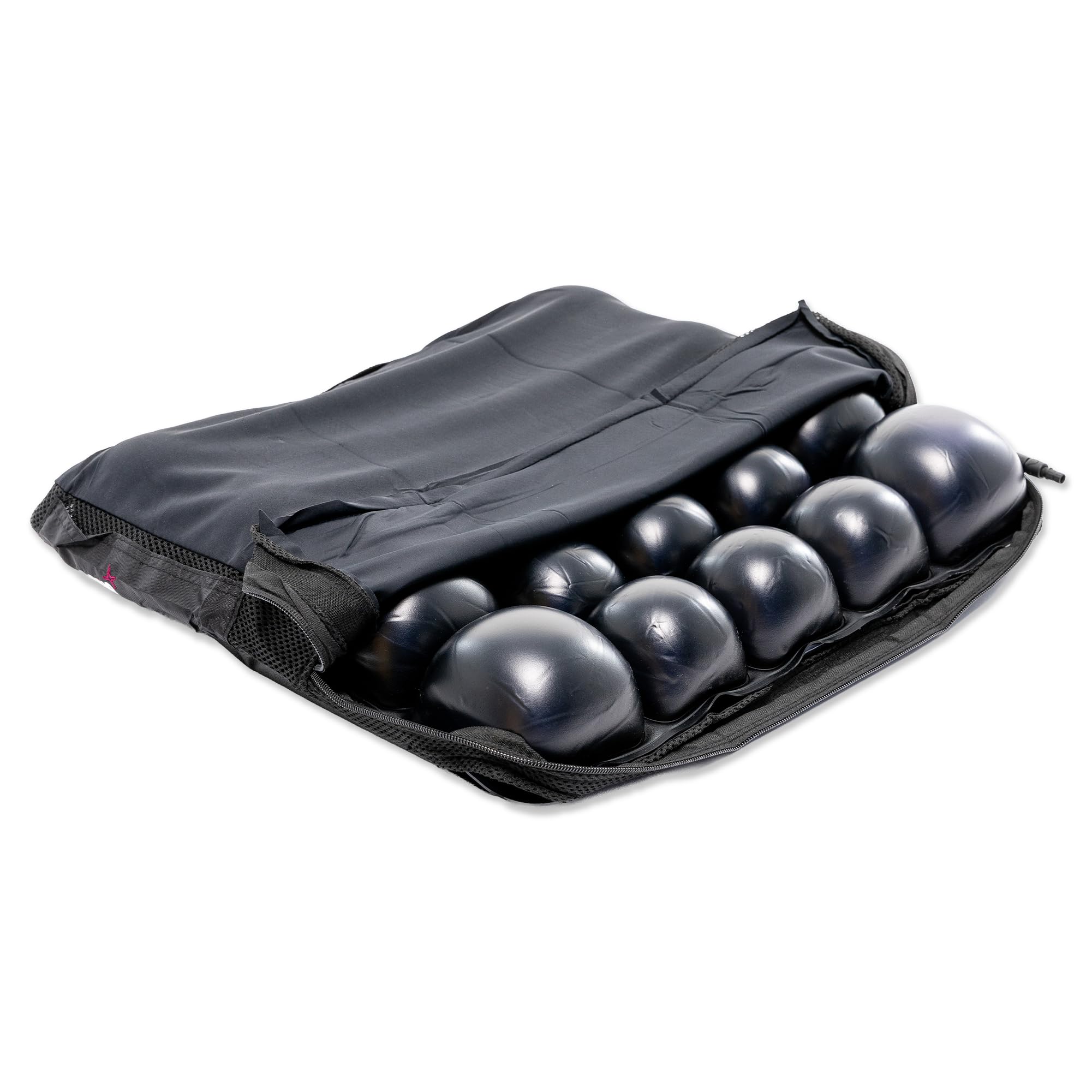
The Roho Mosaic is not an alternating pressure cushion—it is a static air cushion that uses individually adjustable air cells to provide custom immersion and pressure redistribution. For users who do not need active cycling therapy, the Mosaic offers a simpler, highly reliable solution that is widely recommended by clinicians and physical therapists. The user or caregiver adjusts the air level by opening the valve and letting out or adding air until the pelvis is properly immersed but not bottoming out.
The cushion measures 20.25″ x 18.25″ x 3″ and is made with a durable nylon/spandex cover that breathes well. The individual cells allow for precise zone adjustment—you can make one side softer or firmer depending on the user’s asymmetry or specific wound location. Users report excellent air retention, with some cushions maintaining proper inflation for months or years without needing to refill. The low profile (3 inches) makes it easy to transfer on and off the cushion.
The key limitation is that this is a passive system—it requires the user to have the ability and discipline to perform weight shifts throughout the day. It will not automatically cycle pressure like an alternating cushion. For users who are immobile or cannot self-reposition, the Roho Mosaic is not the right primary cushion. It also does not have a battery or pump, so it’s simple and lightweight, but it won’t alert you if pressure is building.
Why it’s great
- Individually adjustable air cells for precise custom fit
- Clinician-recommended for pressure redistribution
- Excellent long-term air retention (months to years)
- Low profile (3″) simplifies transfers
Good to know
- Static design—requires user to self-reposition
- No battery, pump, or alternating cycle
4. Kekoy 130-Cell Alternating Pressure Mattress Pad

While technically a mattress pad, the Kekoy 130-cell model is included here because it represents the best value entry point into true alternating pressure therapy for users who are primarily bedridden but may also use a wheelchair. The 130 individual bubble air cells create a dense grid that continuously inflates and deflates in cycles, redistributing pressure across the entire body surface. This makes it ideal for preventing bedsores in the sacrum, hips, and heels—the most common sites for pressure ulcers in bed-bound individuals.
The upgraded aluminum pump operates below 28 dBA, which is genuinely whisper-quiet—users consistently report it doesn’t disturb sleep or conversation. The 5 adjustable pressure levels let you dial in comfort from soft to firm support, accommodating body weights up to 300 pounds. The waterproof PVC surface is easy to clean and protects against incontinence and spills. Customers have reported that this pad helped heal existing sores and prevented new ones from forming, with many noting it outperformed what they received in hospital settings.
The most common criticism is that the PVC material retains body heat, making it a warmer sleep surface. Users recommend using a soft cotton or bamboo blanket on top to improve breathability. The pump must stay plugged in at all times—there is no battery backup—so it’s not portable for wheelchair use. The pad measures 75″ x 35″ when inflated and fits standard hospital and twin beds.
Why it’s great
- High-density 130-cell grid for thorough pressure redistribution
- Ultra-quiet pump (<28 dBA) for peaceful use
- 5 adjustable pressure levels for custom comfort
- FSA/HSA eligible and includes repair patch kit
Good to know
- PVC surface can trap body heat
- Requires continuous power—no battery for portability
5. Kekoy Low Air Loss Alternating Pressure Pad
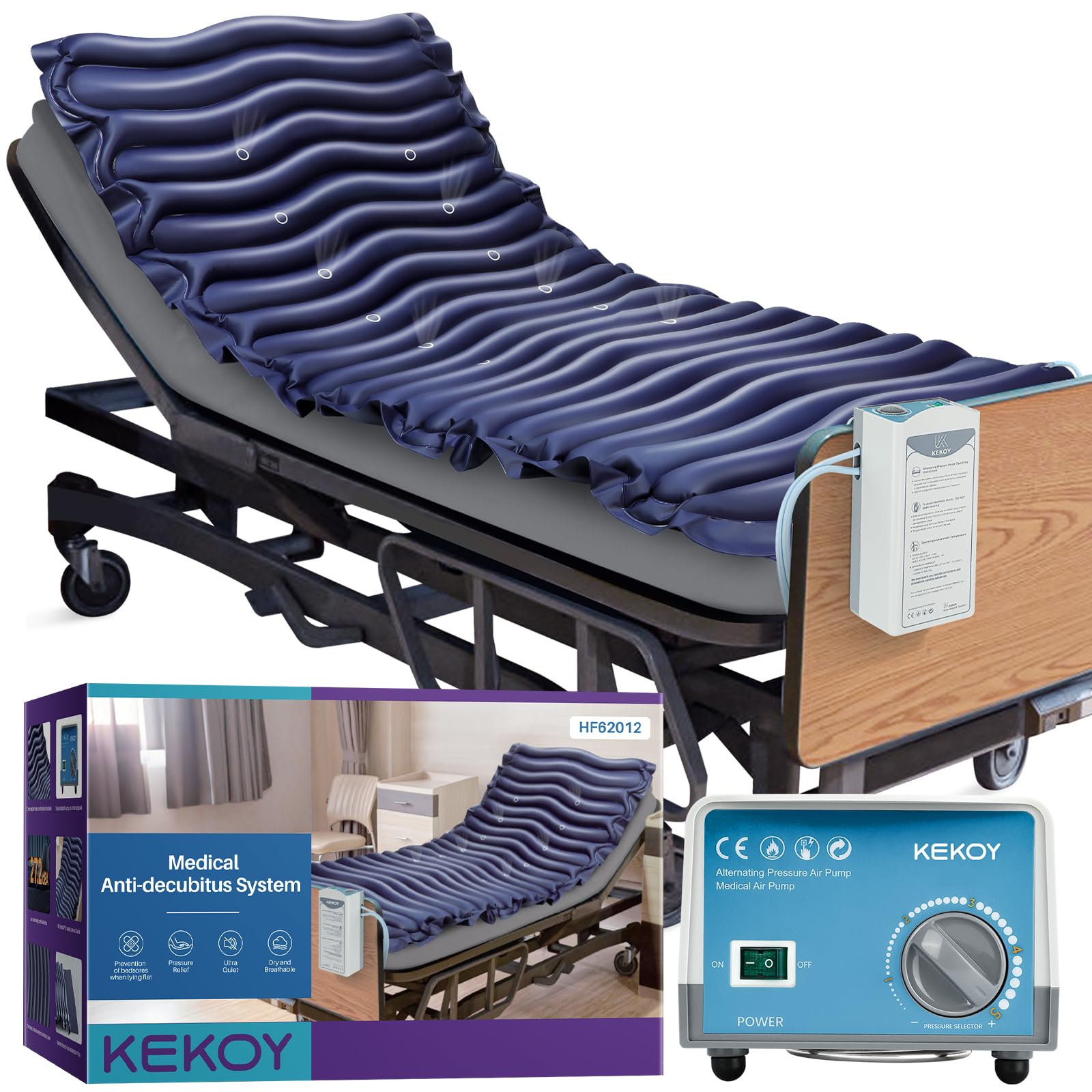
This Kekoy variant adds low air loss technology to the alternating pressure formula—making it a superior option for users who are prone to moisture-related skin breakdown. Tiny micro vents in the air tubes release a gentle stream of airflow across the skin’s surface, helping to keep the skin cooler and drier. This is particularly valuable for users with Stage 1 or 2 pressure ulcers, where moisture can exacerbate tissue damage.
The cushion features wider tube-style air chambers compared to the bubble cells of the previous model, which creates smoother pressure transitions and less of a “bumpy” feel. Users report that it provides a more consistent support surface, with the gentle cycling occurring every 10-12 minutes. The pump is similarly quiet (<28 dBA) and offers 5 pressure settings. The waterproof medical-grade PVC surface is heat-sealed for durability and easy to sanitize.
One practical note: the pad can be slippery on a standard mattress—users recommend using a zippered mattress cover or sheet with elastic straps to keep it in place. The product is intended for continuous power use and will deflate when unplugged. While designed as a bed pad, its low profile makes it feasible to use on a large wheelchair or recliner in a pinch, though it’s not purpose-built for that application.
Why it’s great
- Dual alternating pressure + low air loss for cooling
- Wider tube chambers provide smoother pressure cycling
- Quiet pump (<28 dBA) with 5 adjustable levels
- Heat-sealed waterproof surface for easy cleaning
Good to know
- May slide on mattress without a cover or straps
- No battery—must be plugged in continuously
6. ProHeal Inflatable Wheelchair Seat Cushion
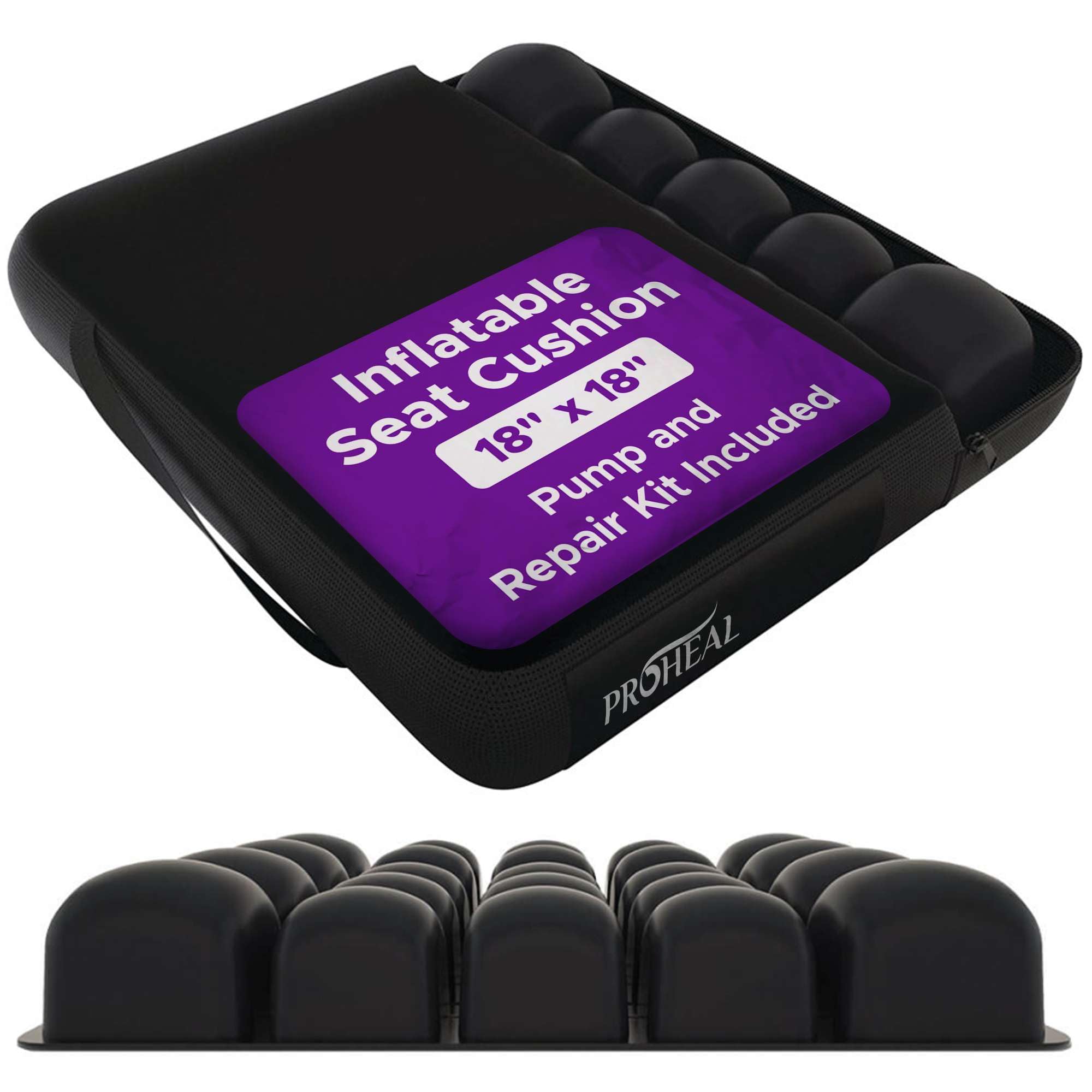
The ProHeal cushion is a static air cushion designed specifically for wheelchair seats. It uses interconnected air cells that vary in height—the outer cells are 3 inches tall, while the inner cells are slightly shorter at 2.8 and 2.6 inches respectively. This graduated cell height is engineered to provide better postural stability and prevent the user from sliding forward or listing to one side, which is a common issue with flat air cushions.
The cushion includes a removable, machine-washable stretch nylon cover that breathes well and feels more like fabric than plastic. It comes with a manual hand pump and a repair kit, and the simple valve system allows the user to easily adjust the air level for the perfect amount of immersion. With a 315-pound weight capacity and multiple size options (16×16, 18×16, 18×18, 20×16, 20×18), it fits a wide range of standard wheelchairs.
The main concern with this product is air retention durability—several users reported the cushion started losing air within 2-3 months of use, eventually requiring constant reinflation. This appears to be a manufacturing defect affecting some units, possibly related to the seam integrity of the interconnected cells. Because it’s a static air cushion, it cannot provide the automatic cycling of an alternating pressure system, so users must still rely on manual weight shifts.
Why it’s great
- Graduated cell heights enhance posture and stability
- Removable, machine-washable nylon cover is easy to clean
- Multiple size options fit different wheelchair widths
- Manual inflation allows precise air level adjustment
Good to know
- Some units have air retention issues after 2-3 months
- Static design requires manual repositioning
7. Alcedo Alternating Air Pressure Mattress Pad
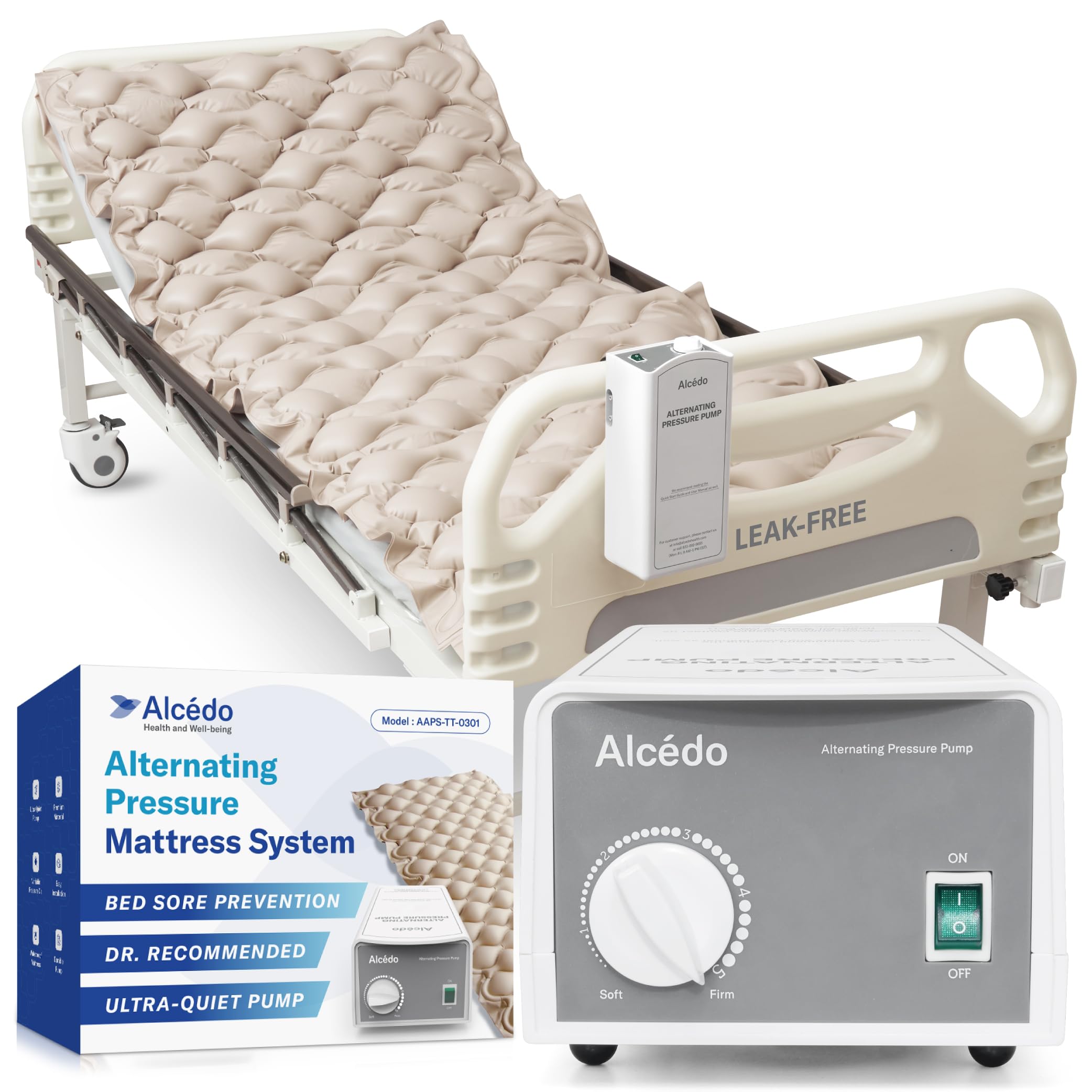
The Alcedo alternating pressure mattress pad is the most budget-conscious entry into true alternating pressure therapy. It uses the same fundamental technology as the higher-priced pads—alternating inflation and deflation of air chambers to prevent bedsores and improve circulation—but at a significantly lower price point. The pump features 5 adjustable pressure settings and is described by users as surprisingly quiet, which is a welcome feature for a product at this level.
The pad measures 75″ x 35″ when inflated and fits standard hospital, homecare, and twin beds. The waterproof vinyl surface is easy to wipe down and sanitize. The pump includes metal hooks for secure attachment to the bed frame, and the product is FSA/HSA eligible, making it accessible to those with health savings accounts. Customer reviews emphasize that it is well-made, with durable seams and a sturdy feel that belies its price.
The main compromises are material and size. The inflatable area is 75″ x 35″, which is slightly narrower than some other pads, and the vinyl fabric, while waterproof, can be less breathable than more premium materials. There is no low air loss function, so moisture management is limited to the pad’s surface properties. The pump must remain plugged in at all times, and there is no battery backup for power outages.
Why it’s great
- True alternating pressure therapy at an entry-level price
- FSA/HSA eligible for healthcare savings
- 5 adjustable pressure settings for customized support
- Quiet pump operation for restful use
Good to know
- Vinyl surface can retain heat
- Smaller pad width (35″) may not fully cover some wider mattresses
FAQ
Can I use an alternating pressure wheelchair cushion on a standard dining or office chair?
How often should the alternating pressure cycle run for optimal therapy?
What weight capacity do most alternating pressure wheelchair cushions support?
Final Thoughts: The Verdict
For most users, the best alternating pressure wheelchair cushion winner is the Brace Direct Alternating Pressure Cushion because it combines true dynamic therapy with a reliable 12-hour rechargeable battery, making it suitable for all-day use both indoors and out. If you want the additional postural support of a foam base with your alternating therapy, grab the MobiCushion MC1000. And for a budget-friendly entry into alternating pressure care for bedridden users, nothing beats the Alcedo Air Pressure Pad.