
Our readers keep the lights on and the weekend projects moving. As an Amazon Associate, I earn from qualifying purchases.
Sliding across a frozen parking lot or losing your footing on an icy trail isn’t just a minor inconvenience—it’s a genuine safety hazard that can send you to urgent care. The difference between a confident stride and a brutal fall comes down to the rubber compound, lug depth, and insulation integrity of your footwear. This guide cuts through the marketing fluff to identify the boots that deliver real traction on black ice, packed snow, and slush without sacrificing warmth or all-day comfort.
I’m Rikta — the co-founder and writer behind FitlyFast. I’ve spent countless hours analyzing traction compound performance, waterproof membrane ratings, and insulation density data to separate the legitimate cold-weather performers from the fashion-first failures that leave you stranded.
Whether you’re commuting in a northern city, clearing a mountain driveway, or working outdoors in sub-zero conditions, finding the right pair starts with understanding how outsoles, thermal liners, and waterproof construction actually work together. This is exactly what this review of the best anti slip snow boots was built to uncover.
How To Choose The Best Anti Slip Snow Boots
Not every boot labeled “winter-ready” delivers the edge you need on glare ice or hardpack. You need to evaluate the outsole’s grip mechanism, the insulation’s thermal rating, and the boot’s water defense system as a unified package. Here’s what separates a safe, warm investment from a cold, dangerous dud.
Traction Technology: The Outsole Is Everything
A snow boot’s slip resistance depends on the rubber compound’s flexibility at low temperatures and the lug pattern’s depth. Look for winter-specific compounds like Vibram Arctic Grip or Icepaw that contain natural rubbers or silica additives to maintain grip below freezing. Deeper, multi-directional lugs (5mm or more) channel snow and mud away so the rubber can contact the ice directly. Avoid generic hard rubber soles meant for pavement—they turn into hockey pucks in the cold.
Insulation and Temperature Rating
Manufacturers express warmth in grams of synthetic insulation (e.g., 200g, 400g) or specific comfort ranges like “rated to -30°F.” For general winter use, 200g-400g of insulation is sufficient for sub-zero comfort during light activity. For stationary use (ice fishing, hunting) or extreme cold exposure (below -20°F), look for multi-layer foam construction or removable thermal liners that trap dead air space. Over-insulating can cause sweating, which leads to cold, damp feet—match the insulation to your activity level.
Waterproofing and Construction
Waterproofing prevents snowmelt from soaking through and cooling your feet. The most reliable boots use a full rubber shell or a seamless waterproof membrane (like a bootie) combined with sealed seams. Leather or textile uppers with a DWR (durable water repellent) finish are less reliable over time. Always check the shaft height—taller shafts keep deep snow from entering over the top, while a gaitor or snug cuff around the calf prevents snow packing inside.
Quick Comparison
On smaller screens, swipe sideways to see the full table.
| Model | Category | Best For | Key Spec | Amazon |
|---|---|---|---|---|
| Baffin Men’s Selkirk | Premium Insulated | Extreme cold / Ice gripping | Rated to -94°F; Icepaw outsole | Amazon |
| Dryshod Arctic Storm Hi | Extreme Cold | Farm / Barn work in sub-zero | 7 layers of protection; -50°F rating | Amazon |
| Helly Hansen V3 | Mid-Premium | Daily commuting / Hiking | Waterproof leather; rubber outsole | Amazon |
| Kamik Fargo 2 Wide | Mid-Range Wide | Snow shoveling / Wet work | HEAT-MX lining; seam-sealed | Amazon |
| MUCK Arctic Ice Tall | Premium Work | Wet fields / Mud and ice | Vibram Arctic Grip; 100% rubber | Amazon |
| Columbia Ice Maiden Slip III | Mid-Range | Light snow / Rain | Omni-Grip outsole; 200g insulation | Amazon |
| XPETI Crest Thermo High-Top | Budget-Friendly | Light hiking / Casual cold | All-rubber construction; ankle support | Amazon |
In‑Depth Reviews
1. Baffin Men’s Selkirk Snow Boot

The Baffin Selkirk sets the standard for extreme-cold traction, featuring a proprietary Icepaw rubber compound that maintains flexibility and bite down to arctic temperatures. Owners consistently report zero slipping on black ice and hardpack, even during snowmobile trips and ice fishing sessions at -50°F with wind chill. The removable liner adds 8mm of dense foam that compresses slightly after a few minutes for a custom fit, while the nylon upper with integrated snow gaiter keeps powder out during deep snow wading.
At 2.6 pounds per boot, the Selkirk is remarkably light for its warmth rating, making all-day wear feasible during outdoor chores or long walks. The 13-inch shaft height provides excellent protection above the ankle, and the lower heel strap secures the foot to prevent lift inside the boot. Owners with wide feet appreciate the generous toe box and sizing guidance to go up one full size for thick wool sock clearance.
Durability feedback is overwhelmingly positive—the multi-layer construction resists abrasion, and the removable liners dry quickly after a wet day. A few users noted a single loose thread upon arrival, but no structural failures have emerged in reviews. For anyone who needs uncompromising grip and warmth in the most punishing winter conditions, this boot delivers a level of security few competitors can match.
Why it’s great
- Icepaw outsole provides best-in-class grip on glare ice
- Removable liner dries fast and allows for custom footbed upgrades
- Exceptionally warm for its weight at 2.6 lbs per boot
Good to know
- Wet liners can loosen the toe fit slightly after extended use
- Premium price point; best suited for extreme cold exposure
2. Dryshod Arctic Storm Hi Extreme Cold Women’s Winter Boot
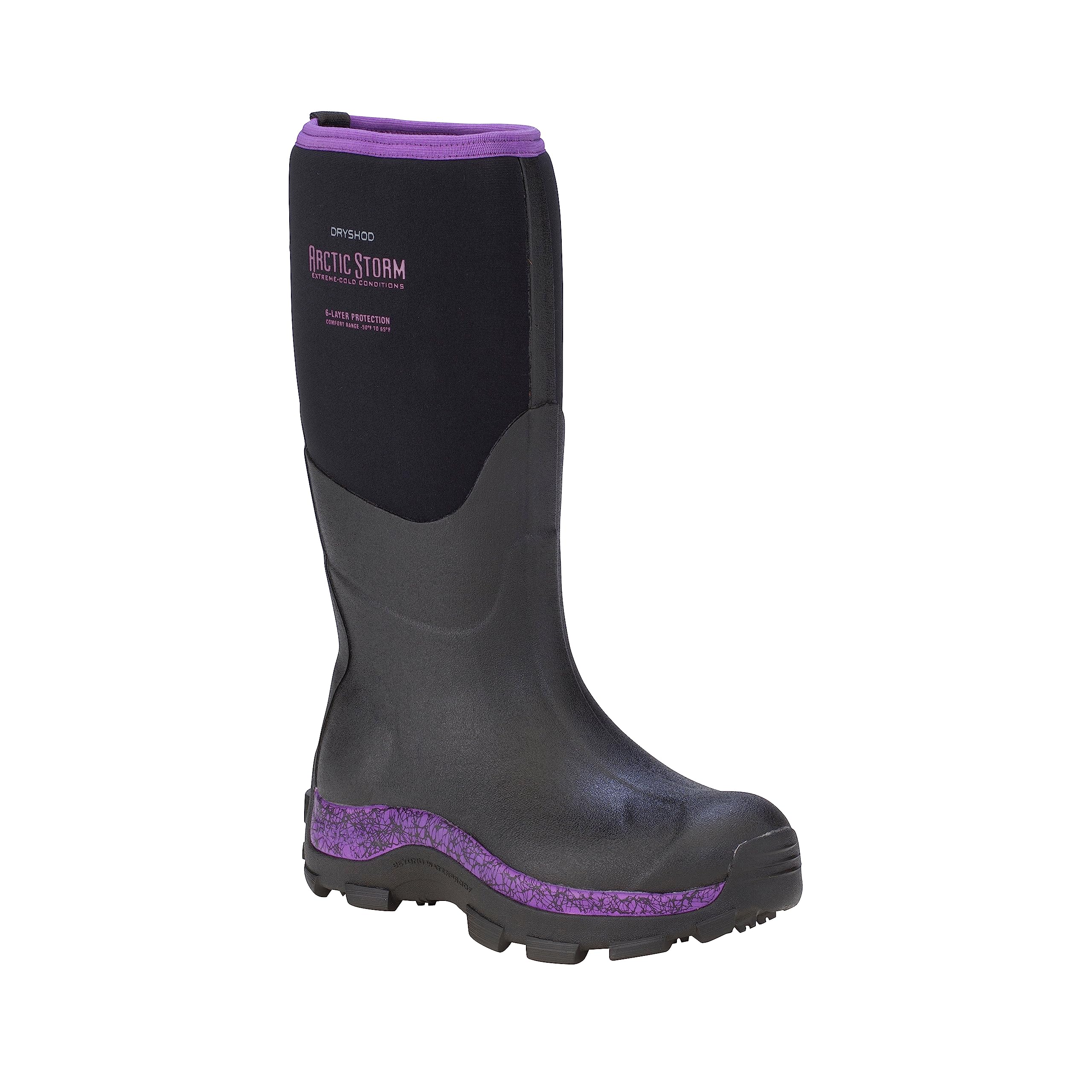
The Dryshod Arctic Storm Hi is engineered for stationary cold—the exact scenario where feet go numb fastest. Its construction stacks 5.5mm of bootie material, 2.5mm of Densoprene XD foam, a 2mm airmesh layer, and a 2mm fleece lining, capped with an EVA cold-blocking midsole for seven total protective layers. The result is a comfort range from -50°F to 65°F, meaning your toes stay warm during hour-long barn chores in single-digit Wisconsin mornings without overheating during moderate activity.
Traction comes from a two-piece DS1 outsole made of natural rubber with an aggressive inner-set lug design for multi-directional grip on ice and packed snow. Users specifically highlight the slip resistance on frozen surfaces as “excellent,” even compared to other dedicated winter boots. The Hydrokote water-repellent finish on the nylon outer prevents the textile from icing up, and the genuine hand-laid rubber overlays ensure 100% waterproofing from top to bottom.
The pull-on design with a generous heel kick and roll-down calf pipe makes entry and exit simple, even with thick gloves. The wide shaft accommodates tucked-in pants, and the reinforced heel tab aids removal without tearing. Some users note the boots feel slightly heavy initially, but the weight is balanced well for prolonged standing. Durability questions linger around the pull tab stitching, but the overall build quality enjoys strong praise from farmers and outdoor workers who demand reliable warmth.
Why it’s great
- Seven-layer insulation system delivers unmatched warmth for cold-weather stationary use
- Natural rubber outsole with deep lugs provides excellent grip on ice and mud
- Hydrokote finish repels water and prevents exterior icing
Good to know
- Heavier than typical snow boots; best for shorter walks and standing
- Pull tab durability is a minor concern based on early user feedback
3. Helly Hansen V3 Winter Boots – Men’s

The Helly Hansen V3 strikes a rare balance between alpine-grade performance and city-ready aesthetics, making it a favorite for those who commute through slushy streets and then hit the trails on weekends. The waterproof leather upper combined with sealed seams keeps feet dry through standing water and wet snow, while the rubber outsole with multi-directional lugs provides reliable grip on icy sidewalks and packed trails. Owners using the V3 at high altitudes above 9,000 feet report confident footing on crusted snow and frozen ground.
Warmth is handled by a medium-weight insulation layer that keeps feet comfortable down to -11°F without causing excessive sweating during indoor transitions. The round-toe design offers a natural fit for normal-width feet, and the lace-up closure secures the ankle without loosening throughout the day. Users highlight the boot’s breathability as a major advantage—the interior doesn’t turn clammy after hours of wear, unlike many fully rubber-lined alternatives.
Build quality is consistently rated high: the stitching holds up well after a full season, the leather upper resists scuffing, and the sole shows minimal wear on abrasive concrete. The ankle-height shaft is shorter than insulated work boots, so it’s not ideal for deep powder, but for daily winter use in northern climates, the V3 provides a refined, durable solution that looks as good as it performs. A few users noted the break-in period is nearly nonexistent.
Why it’s great
- Breathable waterproof leather reduces sweat buildup during mixed indoor/outdoor use
- Comfortable out of the box with no break-in period
- Excellent snow traction combined with a stylish profile
Good to know
- Ankle-height shaft leaves lower calf exposed in deep snow
- Not designed for extreme cold below -20°F for extended stationary use
4. Kamik Fargo 2 Wide Snow Boots for Men
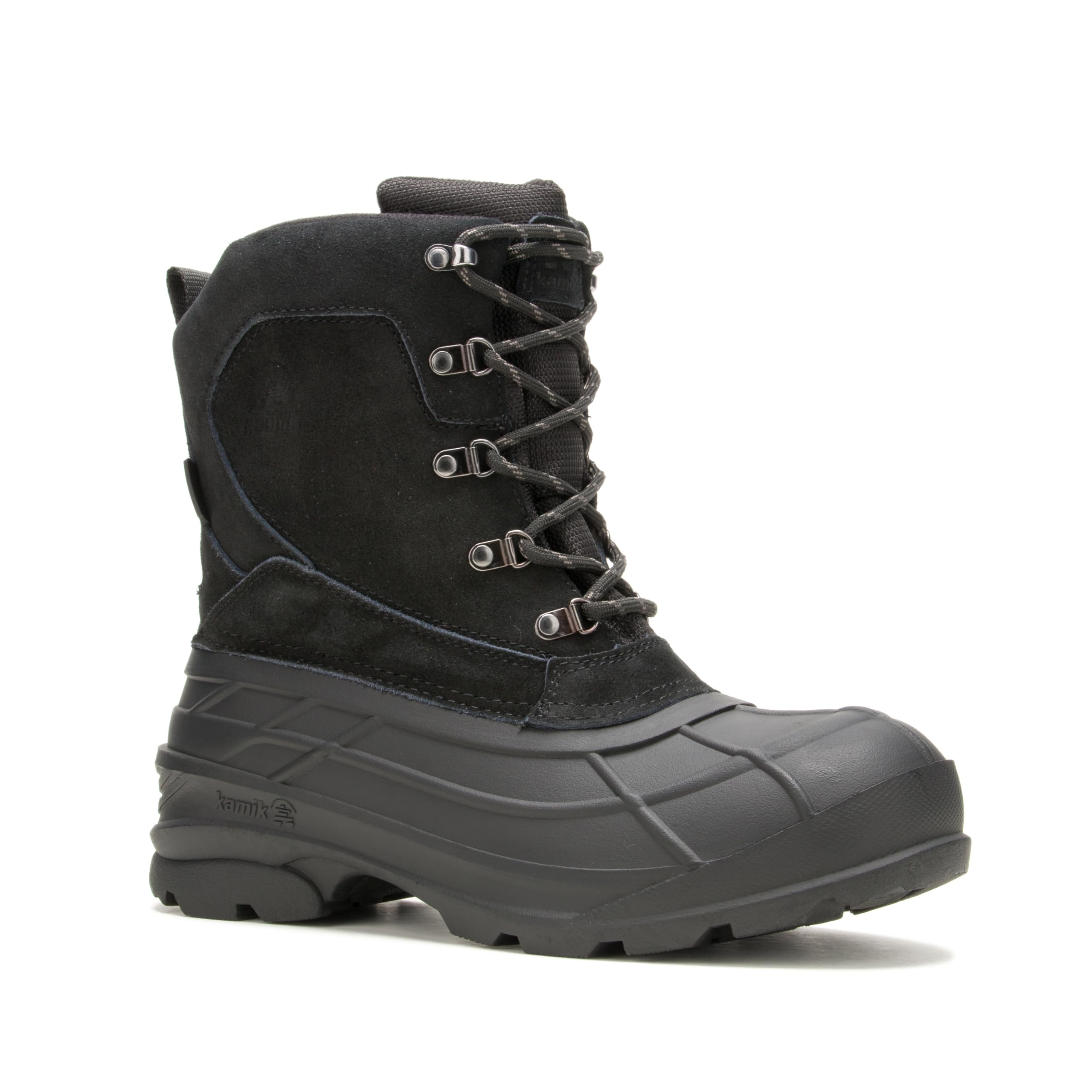
The Kamik Fargo 2 delivers serious cold-weather protection without the premium price tag, making it a top contender for budget-conscious buyers who still demand real cold-weather performance. The HEAT-MX lining provides consistent warmth in freezing conditions, with users reporting comfortable feet during wet workdays at 36°F and mountain use at 7,800 feet elevation. The seam-sealed construction and rubber shell keep moisture out during snow shoveling and wet field work, while the synthetic rubber outsole with deep, beefy lugs offers solid grip on packed snow and wet grass.
The wide fit is a standout feature—the Fargo 2 accommodates thick wool socks and orthotic inserts without squeezing the forefoot, which is a common pain point with narrow winter boots. Owners who sized up half a size found the boot fits perfectly for all-day comfort. The shaft reaches the lower calf, providing enough coverage to keep snow out during moderate-depth walks, though the laces require a double knot to stay secure during active use.
While the outsole is warm and waterproof, a few users noted the sole padding is minimal, creating a disconnect between the supportive upper and the ground feel. The grip on sheer ice is rated as decent rather than exceptional, so those who routinely walk on glare ice may want a boot with a specialized winter rubber compound. Durability is a strong point—multiple owners report the boots lasting over a decade, with one user on his second pair after 14 years of service from the first.
Why it’s great
- Wide last fits thick socks and orthotics comfortably
- HEAT-MX lining provides reliable warmth for freezing conditions
- Exceptional build quality with reports of boots lasting over a decade
Good to know
- Sole padding is thin, causing reduced shock absorption on hard surfaces
- Anti-slip performance on pure ice is average; not a dedicated ice boot
5. MUCK Men’s Arctic Ice Tall Boot with Vibram Arctic Grip

MUCK’s Arctic Ice Tall integrates Vibram Arctic Grip technology—a rubber compound specifically formulated to maintain traction on wet ice where standard winter soles fail. The aggressive tread pattern bites into slick surfaces, and users consistently confirm excellent grip on mud and ice during wet field work. The 15-inch shaft height provides exceptional protection for wading through deep snow or standing water, and the 100% rubber shell makes the boot fully muckproof and easy to hose clean after a day in the barn.
Warmth is handled by a lightweight midsole and a bioDEWIX footbed that manages moisture and odor. The boot retains heat well enough for stationary use in 20°F weather, though it is not designed for extreme sub-zero exposure like the Baffin or Dryshod. The pull-on closure with a sturdy tab makes entry straightforward, and the rugged Spandura upper adds durability without excessive weight. The combination of EVA insole and rubber shell provides a stable platform for long days on your feet.
Durability is the primary concern with this model. The rubber shell is known to crack after about two years of regular wear, leading to leaks. For users who prioritize ice grip and waterproofing above all else and are willing to replace boots every season or two, the Arctic Ice Tall remains a top choice for wet, icy conditions.
Why it’s great
- Vibram Arctic Grip outsole provides unmatched traction on wet ice
- Tall 15-inch shaft keeps deep snow and water out
- Easy to clean and fully waterproof rubber construction
Good to know
- Recent quality control issues with sole delamination reported
- Rubber shell cracks after roughly two years of regular use
6. Columbia Women’s Ice Maiden Slip III Snow Boot

The Columbia Ice Maiden Slip III is engineered for moderate winter conditions where flexibility and weight matter more than extreme cold ratings. The Omni-Grip outsole uses multi-directional lugs to provide reliable traction on rain-slicked pavement, wet grass, and light snow, though it is not a dedicated ice-crawling sole. Owners report keeping feet 100% dry during California storms and daily mucking in horse paddocks, thanks to the combination of a waterproof membrane and sealed seams. The flexible sole avoids the clunky feel of heavier boots, making it ideal for light hiking and daily errands.
The 200g insulation is sufficient for temperatures down to about 20°F with moderate activity, but users note that the boot is not designed for extended exposure to sub-zero conditions. The slip-on design with a pull tab makes entry quick, though several owners with wider feet find the boot mouth too narrow, causing the heel to catch during insertion. Sizing up a half size helps, but the narrow toe box may still feel restrictive with thick socks.
Build quality is solid—the boots hose clean easily and show minimal wear after a season of mixed use. A few users received what appeared to be returned items sold as new, and the sole squeaks on smooth indoor flooring. For those in milder winter climates who need a lightweight, waterproof boot for rain, slush, and light snow, the Ice Maiden delivers good value. It is not, however, the right choice for deep powder or icy mountain trails.
Why it’s great
- Lightweight and flexible sole for easy walking and commuting
- 100% waterproof performance in wet conditions
- Easy to clean and maintain after muddy use
Good to know
- Narrow boot mouth and toe box may not accommodate wide feet or thick socks
- Not suitable for extreme cold or deep snow
7. XPETI Men’s Crest Thermo High-Top Winter Hiking Boots
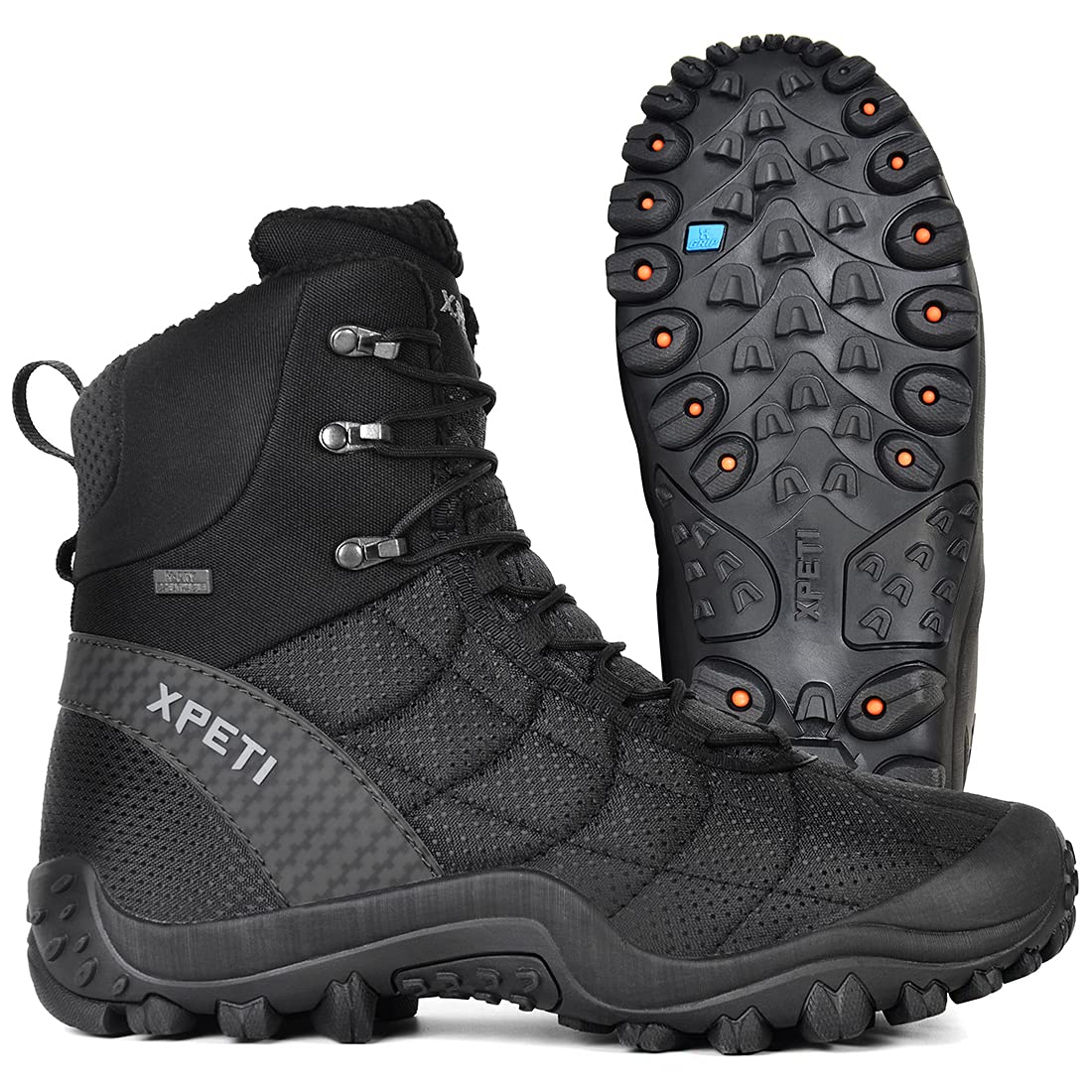
The XPETI Crest Thermo is a budget-friendly winter hiker that prioritizes ankle support and lightweight agility over extreme insulation. The all-rubber construction makes the boot flexible and easy to clean, while the high-top cut provides excellent ankle stability on uneven terrain. Owners report good grip on icy grass and muddy trails, though the sole is best suited for mixed surfaces rather than pure glare ice. The boot fits comfortably with orthotic insoles and thick wool socks when sized up, and most users report no break-in period.
Warmth is adequate for temperatures in the 26-39°F range, but the boot lacks the thick insulation needed for sustained exposure below 20°F. Some users noted that the boot is not as waterproof as expected—snow can melt on the tongue and seep through the lace area, leading to damp feet during prolonged wet snow exposure. A waterproofing spray is recommended for better moisture protection. The bottom lace hook sits against the ankle bone on some wearers, which may cause discomfort during long walks.
For the price, the Crest Thermo offers a solid package of comfort, traction, and support for light winter hiking and casual cold-weather use. The robust outsole provides plenty of confidence on groomed trails, and the modern design looks sleek compared to bulkier winter boots. It is not a heavy-duty snow boot for blizzards or sub-zero commutes, but as an affordable option for moderate winter conditions, it punches above its weight class.
Why it’s great
- Lightweight and flexible for easy walking right out of the box
- Excellent ankle support for uneven winter terrain
- Competitive price point for a waterproof winter hiker
Good to know
- Water resistance is limited; snowmelt can enter through the lace area
- Insulation is thin for extended use below 20°F
FAQ
How can I tell if a snow boot has good anti-slip traction?
What insulation weight do I need for commuting versus standing still?
Are rubber snow boots better than leather for waterproofing?
How should snow boots fit for thick winter socks?
Final Thoughts: The Verdict
For most users, the best anti slip snow boots overall is the Baffin Men’s Selkirk because the Icepaw outsole delivers uncompromising grip on the most treacherous ice while the removable liner system provides unmatched warmth in extreme cold. If you need the highest possible traction on wet ice with a tall waterproof shell, grab the MUCK Arctic Ice Tall with Vibram Arctic Grip. And for a budget-friendly, everyday winter boot that balances ankle support and lightweight comfort, the XPETI Crest Thermo is a solid choice for moderate conditions.