
Our readers keep the lights on and the weekend projects moving. As an Amazon Associate, I earn from qualifying purchases.
The repetitive shock of concrete doesn’t just tire your legs—it sends a vibration wave through your entire skeletal system, accelerating joint fatigue and compromising your stability over an eight-hour shift. Choosing a boot built specifically to dampen that impact is the difference between finishing your day with energy or hobbling to the truck.
I’m Rikta — the co-founder and writer behind FitlyFast. I’ve spent hundreds of hours analyzing tread compounds, midsole densities, and safety certifications to separate marketing claims from genuine all-day support on unforgiving slabs.
This guide ranks the top options by shock absorption, slip resistance, and structural integrity so you can confidently select the best boots for working on concrete for your specific job site.
How To Choose The Best Boots For Working On Concrete
Concrete is the most unforgiving surface you can stand on because it absorbs almost none of your body’s kinetic energy. Unlike dirt or even asphalt, every step sends shock straight up through your ankles, knees, and lower back. To counter this, you need a boot engineered with two specific features: a thick, resilient midsole that compresses to dampen impact, and an outsole compound flexible enough to maintain grip on smooth, dusty, or oil-slicked concrete.
Shock Absorption Technology
Look for boots with dedicated anti-fatigue or shock-absorbing midsoles made of EVA, polyurethane, or proprietary foam blends like Timberland PRO’s Anti-Fatigue or Wolverine’s Durashock. On concrete, a midsole that is at least a half-inch thick at the heel and has a density rating designed for repeated compression will reduce the cumulative strain that causes plantar fasciitis and shin splints.
Slip Resistance on Smooth Surfaces
Concrete floors vary from rough broom-finished to polished epoxy. A boot’s outsole needs a self-cleaning tread pattern with deep, multi-directional lugs to channel away water and debris. Check for ASTM F2913-19 slip-resistance ratings, which test on ceramic tile with slippery oil, a good indicator of how the boot will behave on a wet concrete slab.
Safety Toe and Underfoot Protection
Steel toes offer the most impact protection but can conduct cold and add noticeable weight over a long day on concrete. Alloy toes are lighter and thinner-walled, while composite toes don’t conduct temperature, making them more comfortable in cold warehouses. Additionally, a puncture-resistant plate between the outsole and insole protects against hidden debris that often lurks on concrete job sites.
Quick Comparison
On smaller screens, swipe sideways to see the full table.
| Model | Category | Best For | Key Spec | Amazon |
|---|---|---|---|---|
| Timberland PRO Endurance | Mid-Range | Metatarsal Protection | Steel Toe / Met-Guard | Amazon |
| KEEN Utility Gibson | Mid-Range | Zero Break-In | Composite Toe / 2.53 lbs | Amazon |
| Timberland PRO Boondock | Premium | Extreme Durability | Composite Toe / Tri-Stitch | Amazon |
| Wolverine Durashock | Premium | Immediate Cushioning | Durashock Midsole | Amazon |
| Timberland PRO Gridworks | Mid-Range | Wedge Sole Comfort | Alloy Toe / Wedge Sole | Amazon |
| Skechers Arch Fit Tarver | Mid-Range | Arch Support | Composite Toe / 3.1 lbs | Amazon |
| Cat Footwear Striver | Budget | Tough Value | Steel Toe / Heavy Duty | Amazon |
| TIDEWE Work Boots | Budget | Wet Conditions | Steel Toe / Neoprene | Amazon |
| Generic Steel/Soft Toe | Budget | Light Duty / ESD | Steel Toe / Slip-On | Amazon |
In‑Depth Reviews
1. Timberland PRO Endurance
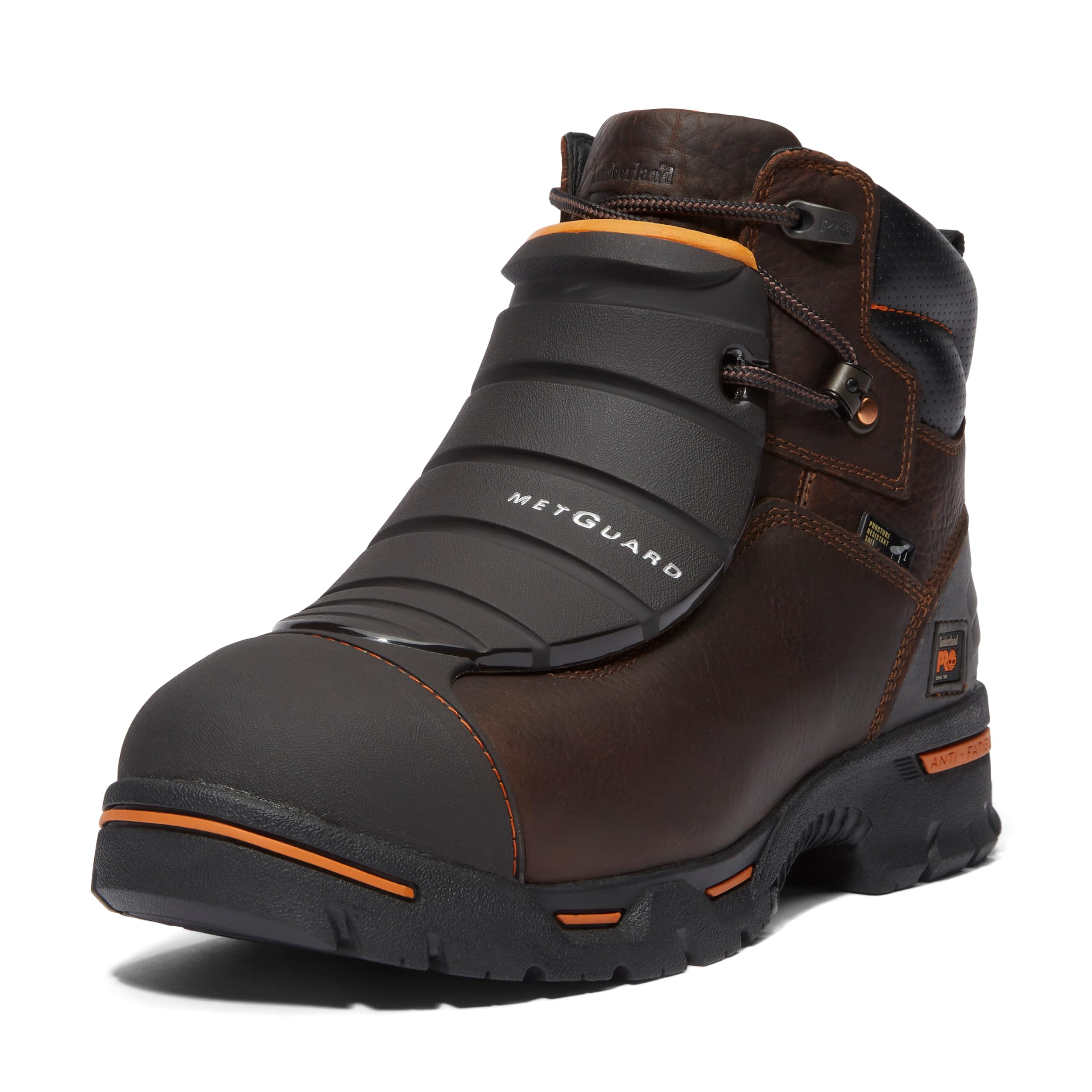
The Endurance model is the most complete package for concrete workers who need metatarsal protection without sacrificing mobility. The external met-guard design avoids the pressure-point discomfort that internal versions create across the top of the foot, a critical advantage during long standing shifts. Multiple users report these boots lasting a full year of daily wear, which is strong for a boot in this tier.
That durability comes with a weight penalty—at over four pounds per boot, they are among the heavier options in this guide. This is a non-issue for flat concrete work where you’re planted most of the day, but worth noting if your shift involves frequent ladder climbs or long-distance walking. The heel counter has been noted to rub some users raw until broken in, so a quality insole and double socks are smart additions during the first week.
The overall build quality justifies the mid-range investment for anyone who needs serious foot protection. The included spare laces are a practical touch, and the steel toe is rated to withstand significant impact. For a concrete environment where dropped tools and rolling loads are a daily reality, this boot offers a rare combination of safety and all-day wearability.
Why it’s great
- External met-guard eliminates top-of-foot pressure
- Survives a full year of heavy daily wear
- Comfortable right out of the box for most foot shapes
Good to know
- Heavier than many competitors at over 4 lbs per boot
- Heel area may require a short break-in period
2. KEEN Utility Gibson

The KEEN Utility Gibson is a revelation for concrete workers who swear no safety toe boot could ever be comfortable on day one. The composite toe cap is noticeably lighter than steel, and the mid-height shaft provides ankle stability without restricting natural flexion. Users consistently highlight the lack of break-in period as the standout feature—you can open the box, lace them up, and stand on concrete for ten hours without a hotspot.
The weight penalty here is minimal at just over two and a half pounds per boot, which reduces the energy expenditure of each step over an eight-hour period. The leather upper is thick and durable but does scuff more readily than some competitors. Most scuffs can be buffed out with a leather conditioner, and the boot prioritizes fit and performance over a pristine cosmetic appearance. The traction pattern on the outsole holds well on both dry and slightly damp concrete.
KEEN’s reputation for wide-friendly toe boxes is on full display here. Users with broader feet will appreciate the room across the metatarsals, while the heel lock keeps the foot securely in place. The composite toe doesn’t conduct cold, making the Gibson a solid year-round choice for uninsulated concrete warehouses.
Why it’s great
- Zero break-in period on concrete
- Very lightweight for a composite-toe work boot
- Roomier toe box for wide feet
Good to know
- Leather scuffs easier than some competitors
- May not be durable enough for heavy construction
3. Timberland PRO Boondock

The Boondock is Timberland PRO’s answer to the worker who destroys a standard boot in six months. The triple-stitched lower and double-stitched upper, combined with a glued and stitched sole, create a structure that survives snow, deep puddles, sharp debris, and repeated chemical exposure. Users consistently report this boot lasting over a year in conditions that killed other brands in half that time, making it a genuine endurance choice for concrete work.
The anti-fatigue sole technology is the key reason this boot works on concrete. The insert feels like a rubberized stress ball under the heel, compressing with every step to absorb the hard slab shock before it reaches your knees. The composite toe stays warm in cold concrete plants and doesn’t conduct heat in summer, thanks to the combination of a mesh lining and thick insulation. The only recurring complaint involves the insoles’ cloth separating from the foam after several months, though this is a minor issue compared to the boot’s overall resilience.
At about two and a half pounds, the Boondock is heavier than a sneaker-style safety shoe but perfectly balanced for its protection level. The rubber toe protector prevents gouging when kneeling on rough concrete, and the slightly wide fit accommodates thick work socks. If your job site punishes boots, this is the premium model to beat.
Why it’s great
- Triple-stitched and glued construction lasts over a year
- Anti-fatigue sole absorbs concrete shock effectively
- Rubber toe guard prevents scuff damage
Good to know
- Laces may fray at the eyelets over time
- Insole cloth can separate from the foam layer
4. Wolverine Durashock

The Wolverine Durashock has a loyal following for one reason: the midsole delivers immediate, noticeable cushioning that makes standing on concrete feel like standing on a padded mat. Users describe the out-of-box comfort as unmatched, with soft full-grain leather that conforms to the foot without a stiff break-in period. For a premium-priced boot, it consistently earns praise for lasting over a year with occasional leather conditioning.
Some users have reported a shift in build quality in recent years, with stitching and upper separation issues appearing before the sole wears down. This has led some long-time Wolverine buyers to explore alternative brands, but the overall satisfaction remains high for those who prioritize immediate comfort. The Durashock sole technology specifically targets vertical shock absorption, making it a top choice for concrete workers who need relief from heel-strike impact.
The boot weighs around two pounds and runs true to size for most foot shapes. The steel toe offers standard protection without being overly bulky, and the outsole provides decent grip on dry concrete. While it may not be the most durable option in this list for extreme conditions, it is arguably the most comfortable for the first hour you put it on—critical if you’re standing on concrete from the moment you clock in.
Why it’s great
- Immediate, plush cushioning on concrete
- Soft leather requires little to no break-in
- Long-lasting comfort over a year of use
Good to know
- Some quality control concerns with stitching
- Sole wear may outpace upper durability
5. Timberland PRO Gridworks Wedge
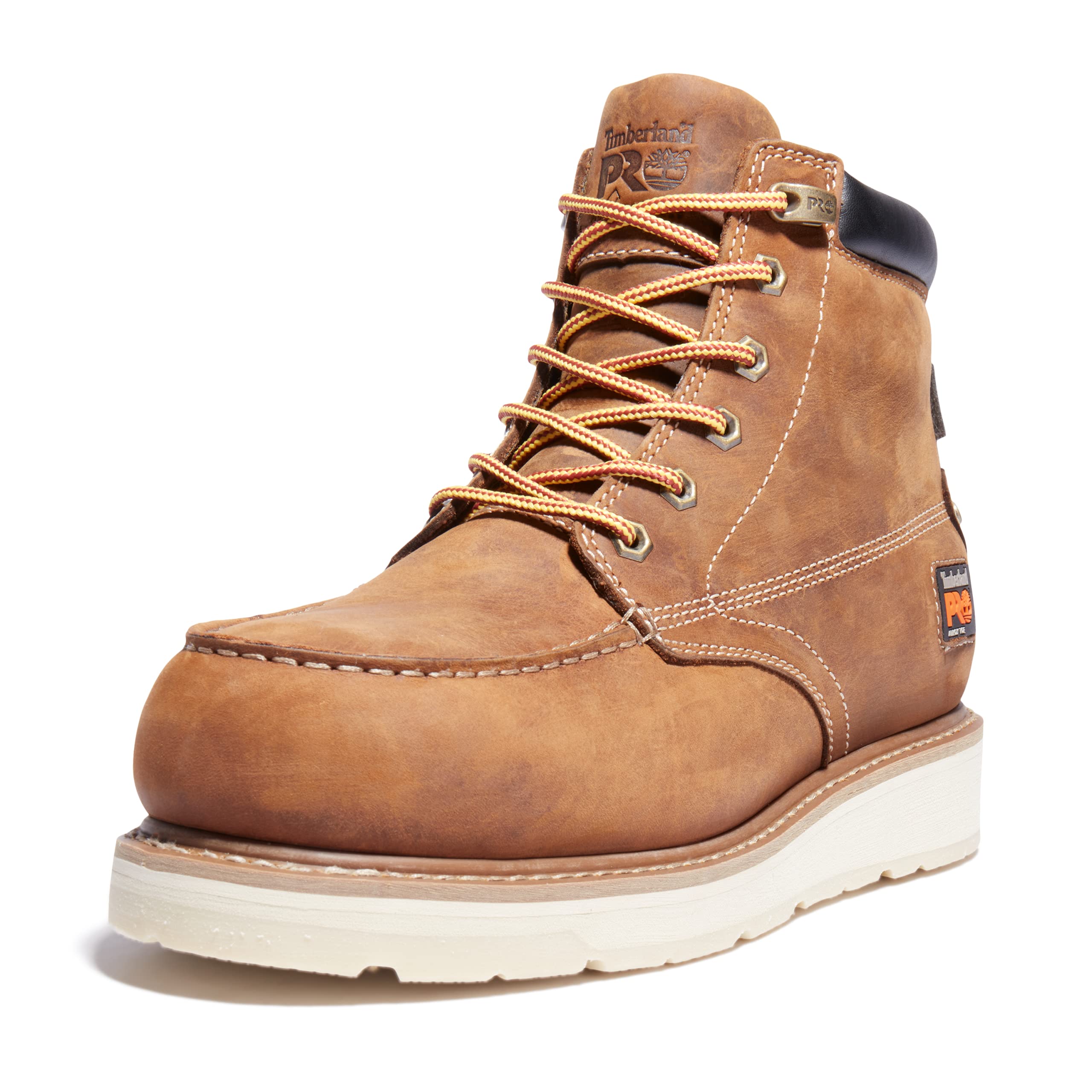
The Gridworks Wedge is a mid-range boot that prioritizes a flat, stable platform for concrete. The alloy toe is lighter than steel and offers a lower profile, reducing the risk of catching on scaffolding or ladder rungs. Users who have worn this boot for over two years report that with regular insert changes and bi-weekly waxing, the bottom holds up well and scuffs remain cosmetic rather than structural.
The wedge sole design distributes weight evenly across the entire foot, minimizing pressure points that cause fatigue on hard surfaces. This is a specific advantage for concrete workers who stand in one zone for extended periods, as the flat contact patch prevents the heel from digging into softer ground. The boot is comfortable for wide feet and all-day wear, though the wedge sole offers less grip on loose debris or muddy terrain compared to a lugged outsole.
Overall, the Gridworks represents a solid value for its price tier. It doesn’t break new ground in technology, but it executes the fundamentals—durable waterproofing, reliable alloy toe protection, and stable platform comfort—better than most boots at this price point. For concrete work where you need a reliable daily driver without spending premium money, this is a smart pick.
Why it’s great
- Wedge sole provides a stable, flat platform on concrete
- Alloy toe is lighter and lower profile than steel
- Durable enough to last 2+ years with maintenance
Good to know
- Wedge sole offers less grip on loose debris
- Requires regular conditioning for longevity
6. Skechers Arch Fit Tarver

The Skechers Arch Fit Tarver brings genuine sneaker-like comfort to the mid-range safety boot segment. The Arch Fit insole technology, borrowed from Skechers’ walking shoe line, provides podiatrist-certified arch support that reduces strain on the plantar fascia during long standing shifts. Users who transitioned from rigid work boots report dramatically reduced foot and knee pain after switching to the Tarver.
The composite toe is non-metallic and doesn’t conduct temperature, which helps regulate foot heat inside a concrete plant. At 3.1 pounds, the boot is lighter than steel-toe competitors but heavier than the KEEN Gibson. The main durability concern is stitching around the toe cap, which has been reported to separate after about a month and a half for some users in heavy mechanical work. A dab of super glue resolves the issue, but it’s worth noting for those who put their boots through extreme abrasion.
For concrete work that involves a mix of standing on hard floors and walking short distances, the Tarver’s balance of weight, arch support, and affordable price makes it a strong mid-range option. It’s best suited for mechanics, inspectors, and warehouse workers who prioritize comfort over maximum ruggedness.
Why it’s great
- Excellent arch support reduces foot fatigue on concrete
- Lightweight and comfortable for all-day wear
- Composite toe stays temperature-neutral
Good to know
- Stitching near the toe may separate early
- Not built for extreme heavy construction conditions
7. Cat Footwear Striver

The Cat Striver is a budget-friendly steel-toe work boot that refuses to cut corners on durability. Users have subjected these boots to remodeling projects and snow-crete demolition with no visible wear after a full month. The steel toe cap is robust and protects well, though you will feel the weight during the first few days of heavy walking on concrete. The break-in period is rough—users recommend wearing two wool socks and applying mink oil with a hair dryer to soften the leather.
One of the standout features is the grip, which holds tenaciously on concrete and construction debris. The boot runs slightly large, so ordering a half-size down is common practice. Some users note that the boot is heavy but that the weight becomes unnoticeable after a few hours of use. For concrete work where budget constraints are real, this boot punches above its price.
The overall fit works well for wide feet, and the boot accommodates custom insoles easily. A few users have reported cosmetic symmetry issues with eyelet placement, but the structural integrity remains solid. If your concrete job site chews through expensive boots, the Cat Striver offers a legitimate way to maintain safety without overpaying.
Why it’s great
- High durability for the price point
- Excellent grip on concrete surfaces
- Steel toe provides reliable impact protection
Good to know
- Long and uncomfortable break-in period
- Heavier than mid-range and premium options
8. TIDEWE Work Boots
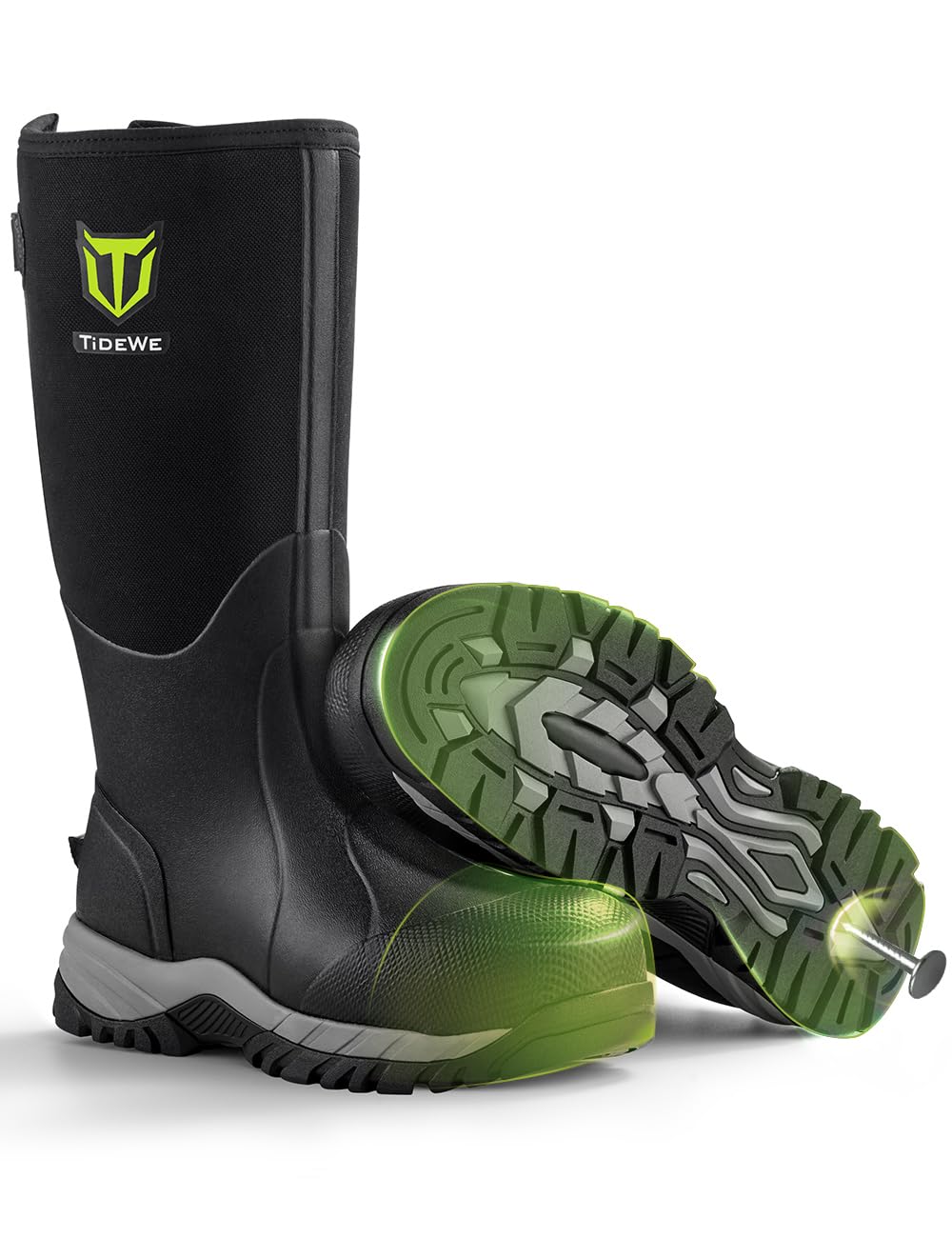
The TIDEWE Work Boots are a specialized option for concrete workers who also deal with wet, muddy, or slushy conditions. The 100% waterproof rubber and neoprene construction is a genuine barrier against moisture, keeping feet dry even when standing in puddled concrete washout areas. The puncture-proof steel shank and steel toe provide solid underfoot protection against rebar and sharp debris that often hides in wet concrete.
The grip depth on the outsole is substantial, but the rubber compound is not as tacky as some competitors, leading to slipping on wet, smooth concrete floors. The boots run significantly large—multiple users report needing to order a full size down. The 6mm neoprene lining is well-insulated and keeps feet warm, but this also means the boots trap heat and can cause excessive sweating in warmer environments or during active work.
For the budget price, you get a boot that is warm, waterproof, and puncture-resistant. If your concrete work day includes standing in water or slush, this is a functional choice. For purely dry concrete work, the large sizing and limited grip make it less ideal than some competitors in the same price range.
Why it’s great
- Fully waterproof in wet concrete conditions
- Puncture-resistant steel shank protects underfoot
- Warm and well-insulated for cold environments
Good to know
- Runs very large—order at least one size down
- Limited grip on wet, smooth concrete
9. Generic Steel/Soft Toe Slip-On

This budget slip-on boot is a good entry-level option for light-duty concrete work where you need static dissipation and quick on-off functionality. The steel toe provides standard impact protection, and users report that the size 14 wide version fits well and eliminates foot pain for those with larger feet. The boot is lightweight and easy to slide on, making it practical for job sites where you frequently enter and exit controlled zones.
The main drawback is the sole’s grip performance: users consistently note that the boot is very slippery on tile and smooth concrete, especially when wet. The breathable sides allow dust and fine debris to enter, which is a concern on concrete job sites with airborne silica dust. The ankle fit is loose and offers minimal support compared to lace-up work boots, which can lead to instability when carrying heavy loads on uneven concrete.
For concrete workers who need a basic static-dissipative boot for clean, dry environments and who prioritize easy on-off over stability, this boot fills a niche. However, for anyone doing heavy standing, walking, or lifting on concrete, a lace-up boot with better grip and ankle support is a much safer investment.
Why it’s great
- Lightweight and easy to slip on and off quickly
- Static dissipative for sensitive environments
- Available in wide sizes for larger feet
Good to know
- Very slippery on smooth and wet concrete
- Loose ankle fit offers minimal support
FAQ
Why do my feet hurt more on concrete than on other surfaces?
How often should I replace boots used primarily on concrete?
Is a steel toe or composite toe better for concrete work?
Final Thoughts: The Verdict
For most users, the best boots for working on concrete winner is the Timberland PRO Endurance because it combines external metatarsal protection, rugged durability, and all-day comfort in a single package that handles flat concrete work without compromise. If you want a zero break-in experience straight out of the box, grab the KEEN Utility Gibson. And for extreme longevity in crushing conditions, nothing beats the Timberland PRO Boondock.