
Our readers keep the lights on and the weekend projects moving. As an Amazon Associate, I earn from qualifying purchases.
That inward roll of your ankle every time your foot hits the pavement isn’t just a quirk of your stride — it’s a mechanical chain reaction that can collapse your arch, torque your knee, and send shockwaves up to your hip. Overpronation demands footwear that actively resists that motion, not a squishy neutral shoe that lets it run wild.
I’m Rikta — the co-founder and writer behind FitlyFast. I’ve spent years analyzing gait biomechanics and the structural data behind stability footwear to separate the shoes that actually control motion from those that just market a wider heel.
This guide breaks down the essential stability features — from medial posts to dual-density midsoles — so you can confidently choose the best arch support for overpronation without wasting money on sneakers that can’t handle the job.
How To Choose The Best Arch Support For Overpronation
Overpronation isn’t a condition you correct with a single feature. Your foot hits the ground, rolls inward, and if the shoe’s midsole can’t slow that roll, your arch takes the full load. The best footwear uses a combination of a firm medial post, a stable heel counter, and a wide base to guide your foot into a neutral strike every single step.
Level of Stability Categorization
Not every stability shoe corrects the same degree of overpronation. Mild overpronators can get away with a lightweight structured shoe like the ASICS GT-1000, which uses a subtle medial density post. Severe overpronators need a true motion-control shoe with a rigid heel counter and a pronounced post that extends along the entire arch — think the Saucony Hurricane or the Hoka Arahi’s J-Frame technology that cradles the foot from the inside out.
The Medial Post Profile
The medial post is the denser foam built into the arch side of the midsole. On a shoe like the Saucony Omni, this post is clearly visible as a firmer gray block that resists compression when your foot wants to roll in. A longer, taller post offers more aggressive correction. If the shoe description only mentions a “stability feature” without detailing the medial support, it likely won’t hold up for true overpronators who log miles daily.
Weight and Drop Dynamics
Heavier stability shoes pack more foam and structure, which equals more support but also more mass. The Saucony Hurricane delivers maximum medial density, which some runners find heavy for speed work. The Hoka Arahi uses a lighter foam platform while maintaining structure through geometric design. Drop — the height difference between heel and toe — also matters: overpronators typically do best with a higher drop (8-12mm) that shifts impact forward and reduces ankle stress during the roll.
Quick Comparison
On smaller screens, swipe sideways to see the full table.
| Model | Category | Best For | Key Spec | Amazon |
|---|---|---|---|---|
| Hoka Arahi 8 | Premium Stability | Max control without weight penalty | J-Frame midsole stability rail | Amazon |
| Saucony Hurricane 24 (W) | Max Support | Severe overpronation & long runs | Extensive medial post | Amazon |
| ASICS GT-1000 14 (M) | Structured Stability | Daily training & gym use | LITETRUSS midsole support | Amazon |
| Saucony Guide 18 (M) | Lightweight Stability | Mild to moderate pronation control | Center-path technology | Amazon |
| Saucony Omni 21 (W) | Value Stability | Plantar fasciitis & walking | Dual-density medial post | Amazon |
| Saucony Omni 21 (M) | Value Stability | High-mileage walking & running | Dual-density medial post | Amazon |
| ASICS GT-1000 14 (W) | Budget Structured | Everyday comfort & walking | LITETRUSS medial support | Amazon |
In‑Depth Reviews
1. Hoka Men’s Arahi 8
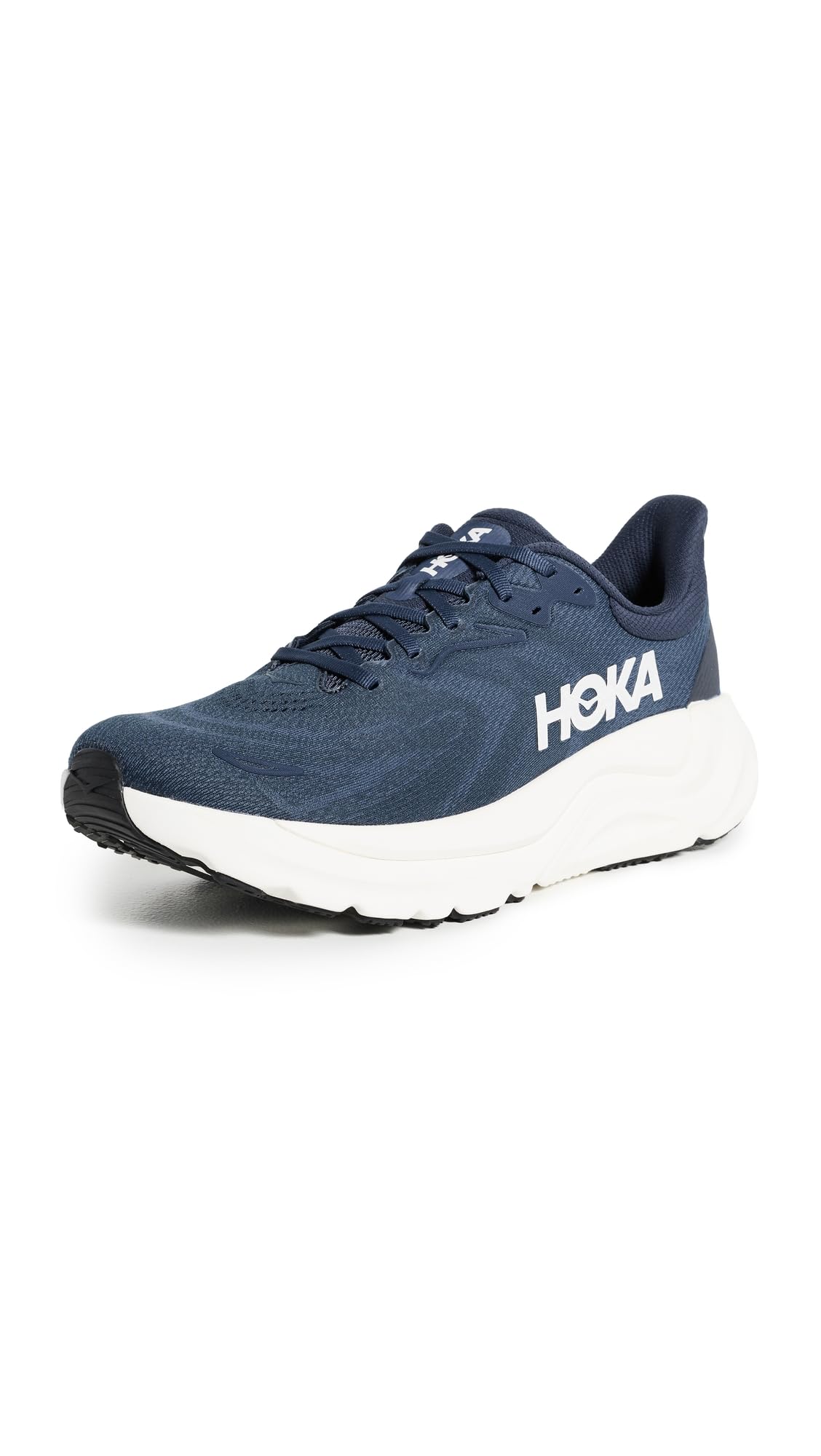
The Hoka Arahi 8 replaces a traditional medial post with a J-Frame — a firmer foam rail that wraps around the heel and extends along the inner arch. This design cradles the foot without the heavy slab feel of a classic post, making it ideal for runners and standers who need all-day structure without excessive weight. The wide sole platform and heel bevel actively encourage a heel-to-toe strike while preventing the inward roll that strains arches and knees.
Reviewers consistently note that the Arahi handles 8+ hour standing shifts and daily 5-mile walks without causing foot pain or sciatica flare-ups. The prominent yet soft arch support and roomy toe box accommodate custom orthotics. At 2.19 pounds per pair, it’s lighter than most max-stability shoes while delivering comparable pronation control.
The one trade-off is that the J-Frame geometry takes a few miles to break in if you’re used to a traditional rigid post. Once the foam molds to your foot, the stability feels natural rather than forced — a key advantage for anyone transitioning from neutral shoes into structured support.
Why it’s great
- J-Frame rail controls pronation without stiffness
- Roomy toe box accommodates custom orthotics
- Lightweight for a premium stability shoe
Good to know
- Break-in period required for J-Frame adaptation
- Premium-tier price point
2. Saucony Women’s Hurricane 24
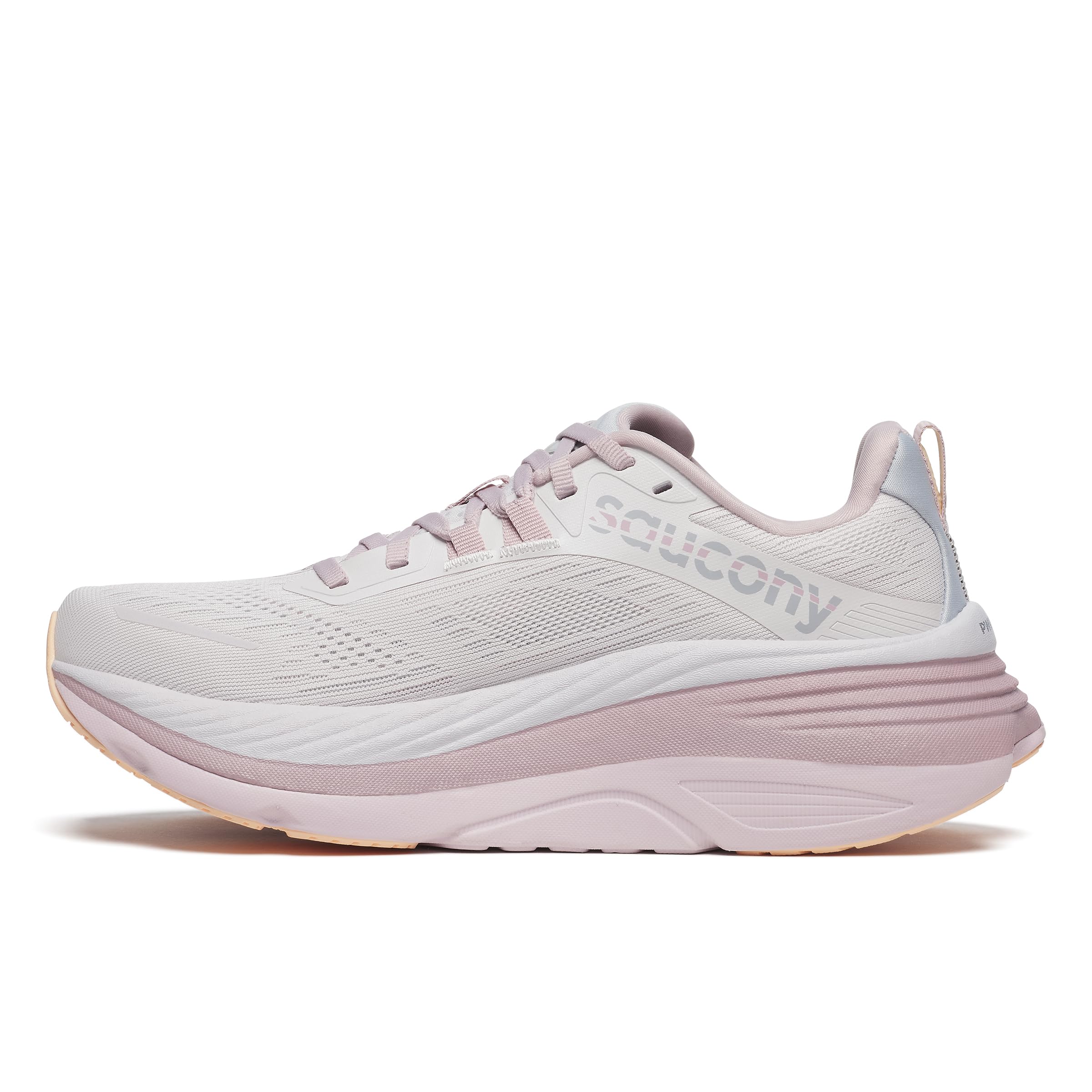
The Saucony Hurricane 24 is built for runners and walkers with severe overpronation or plantar fasciitis. Its full-length medial post runs from the heel through the midfoot, providing the most aggressive pronation correction in this lineup. The PWRRUN+ midsole foam delivers a responsive but plush ride that reduces foot fatigue over long distances — making it a strong choice for half-marathon training or full-day standing shifts.
Users report that the Hurricane resolved chronic hammer toe pain and tendon strain after other stability shoes failed. The aggressive toe rocker and wide platform create a stable base that feels planted during heel strikes. The trade-off is weight: at 9.8 ounces, some runners find it heavy for speed intervals and tempo runs, though the support trade-off is acceptable for injury recovery.
A few reviewers noted that the mesh upper stains more easily than competitors and that the reflective strip can peel with regular use. For pure structural support during recovery or high-mileage training, however, the Hurricane’s medial posting remains unmatched.
Why it’s great
- Full-length medial post for severe pronation
- Toe rocker aids gait transition
- Great for plantar fasciitis and injury recovery
Good to know
- Heavy for speed training
- Upper fabric stains easily
3. ASICS Men’s GT-1000 14
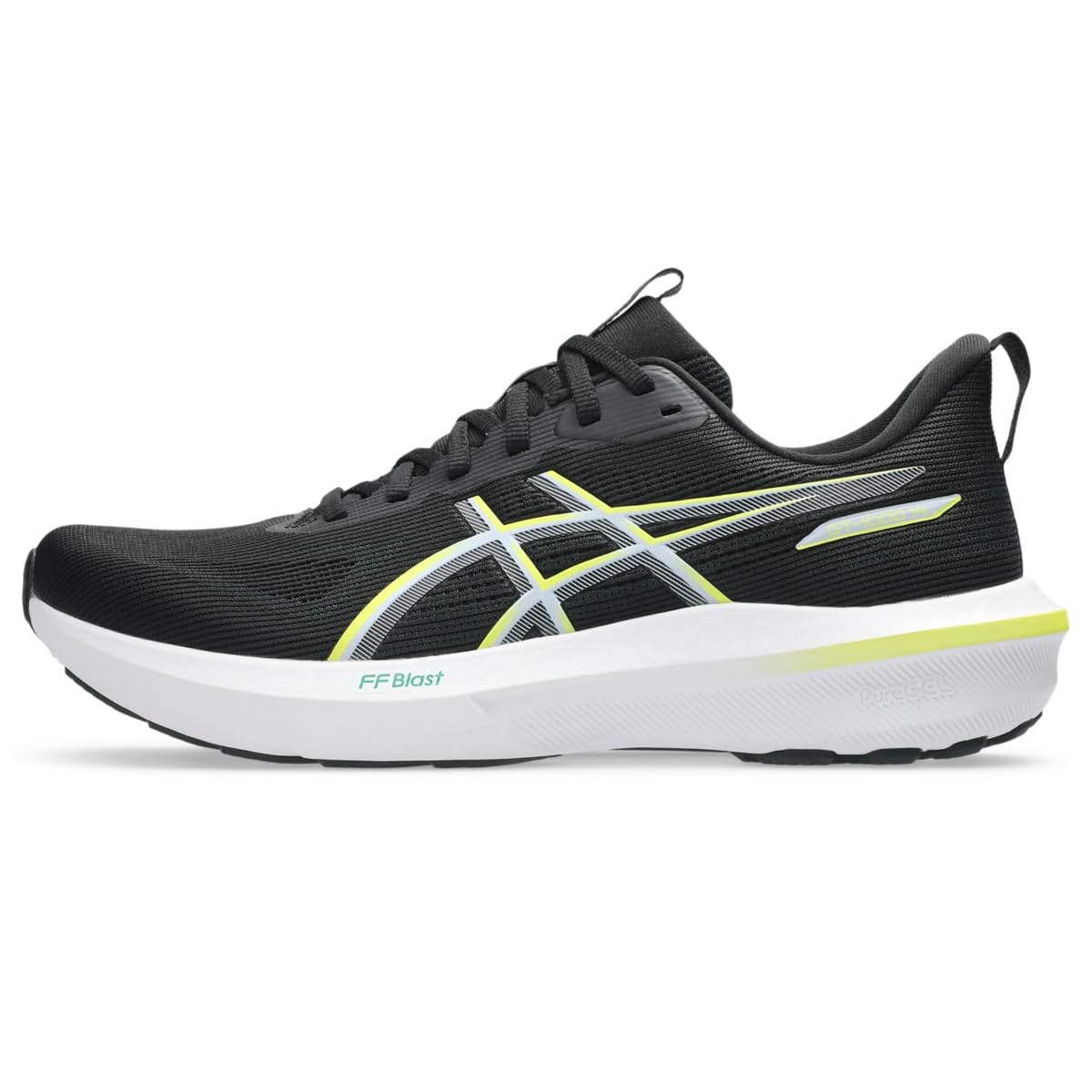
The ASICS GT-1000 14 is a structured stability shoe that uses LITETRUSS — a denser foam block positioned along the medial side to resist excessive pronation without adding the weight of a traditional plastic post. This version feels noticeably more cushioned than the GT-2000, making it a compelling option for runners who want mild correction without the stiffness of a motion-control shoe. The 1.44-pound build keeps the shoe nimble for daily training, gym work, and light trail use.
Long-time ASICS users who switched from the GT-2000 report that the GT-1000 delivers comparable pronation control with a softer heel strike, and several mention that it outlasts the GT-2000 in durability for walking-heavy routines of 10,000 steps per day. The X-Wide option fits wide feet without pinching toes — a critical detail for overpronators who often need a wider base to feel stable.
The midsole may feel “dead” within a year of heavy mileage, which is typical for foam-based rather than plastic-post stability. Given the moderate price point, pairing these with a replacement cycle every 300-400 miles is a practical approach to maintaining arch support without investing in premium-tier footwear.
Why it’s great
- LITETRUSS provides mild-moderate pronation control
- Available in X-Wide for wide feet
- Lightweight with good breathability
Good to know
- Foam midsole may compress faster than plastic-post shoes
- Cushioning level may feel dead by 400 miles
4. Saucony Men’s Guide 18
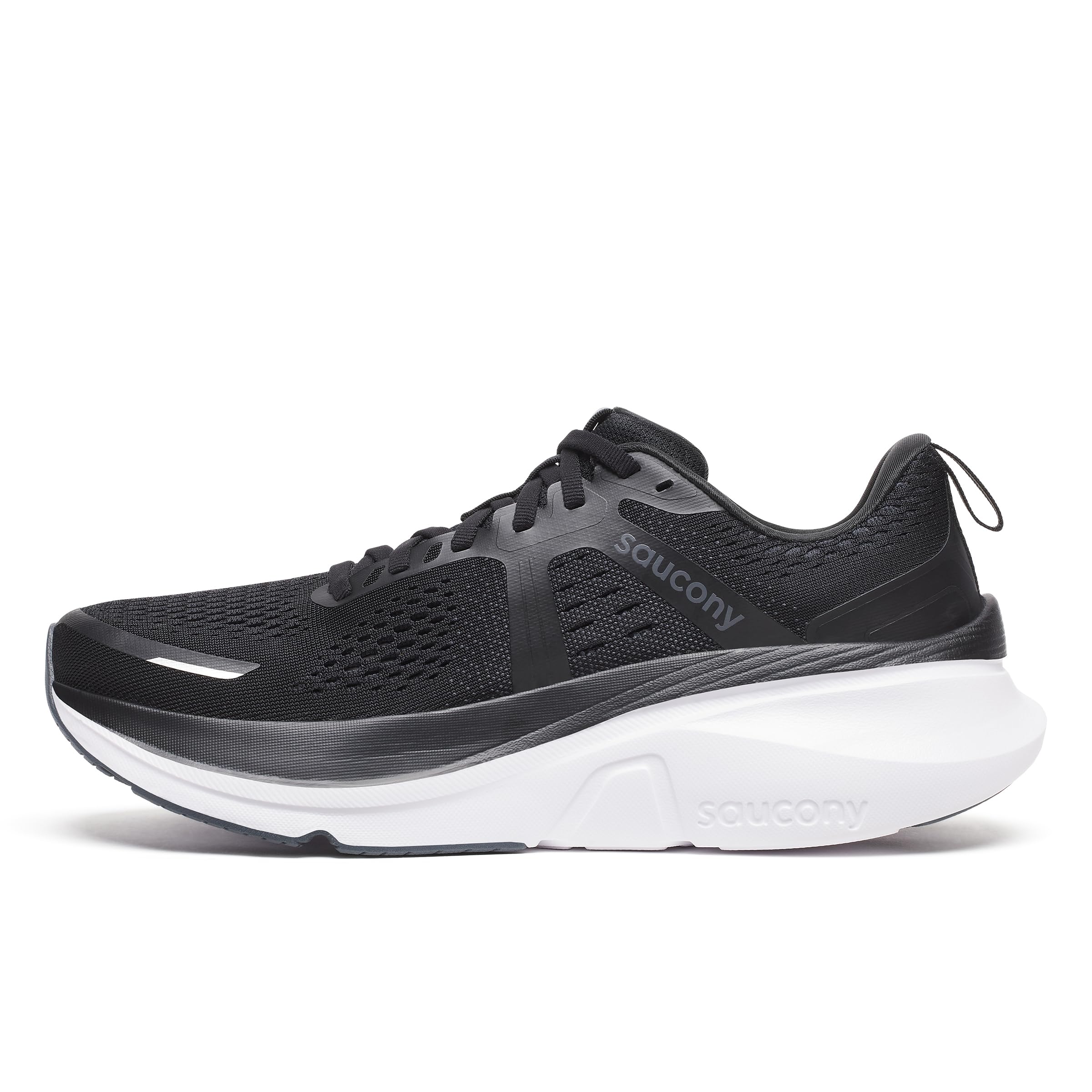
The Saucony Guide 18 uses Center-Path Technology, a guidance system built into the midsole that gently steers the foot toward a neutral gait without the harsh feel of a rigid medial post. This makes it a strong option for mild to moderate overpronators who find max-stability shoes too aggressive for daily wear. The 6mm drop and flexible upper accommodate a wide range of foot shapes, including orthotic inserts.
Flat-footed users and larger runners report that the Guide 18 resolved foot pain and numbness caused by high-drop, narrow shoes, while still providing decent arch support for long walks on hard pavement. The shoe feels noticeably softer underfoot than the Omni or Hurricane, which helps during recovery days or gym sessions where you want stability without a board-like feel.
Some reviewers note that the mesh upper developed a hole near the big toe after around five months of non-running use, which raises a durability concern. For the price, the Guide 18 offers a balanced ride that excels for active daily wear and light gym use — just inspect the upper fabric regularly if you plan to log heavy miles.
Why it’s great
- Center-Path guidance feels natural, not rigid
- Flexible upper fits orthotics well
- Soft ride suitable for gym and recovery
Good to know
- Mesh upper durability questioned after heavy use
- Narrower toe box than previous versions
5. Saucony Men’s Omni 21

The Saucony Omni 21 is a proven stability workhorse that uses a visible dual-density medial post to slow pronation from heel strike through toe-off. Long-term users report that each pair lasts over 1,000 miles of combined running and walking, making it one of the most durable options at its price tier. The Omni fits true to size with no pressure points — a key detail for overpronators who often develop hot spots in poorly structured shoes.
Reviewers praise the Omni for handling daily 3-kilometer runs and brisk city walking equally well, with enough cushioning to rival the Brooks Ghost or Adrenaline at a lower price. The cozy fit and stable platform reduce ankle fatigue during extended standing sessions, and the cool color options add visual appeal without sacrificing performance.
Consistently reported downsides include a squeaking noise that develops in some pairs after break-in, which has caused some users to reach for other shoes for quieter environments. For durability and consistent pronation control at a budget-friendly price, the Omni 21 remains a strong choice for daily trainers who don’t need max-stability.
Why it’s great
- Dual-density medial post for stable pronation control
- Consistent durability beyond 1,000 miles
- Cozy fit with no pressure points
Good to know
- Some pairs develop audible squeaking
- Mild pronation control compared to Hurricane
6. Saucony Women’s Omni 21
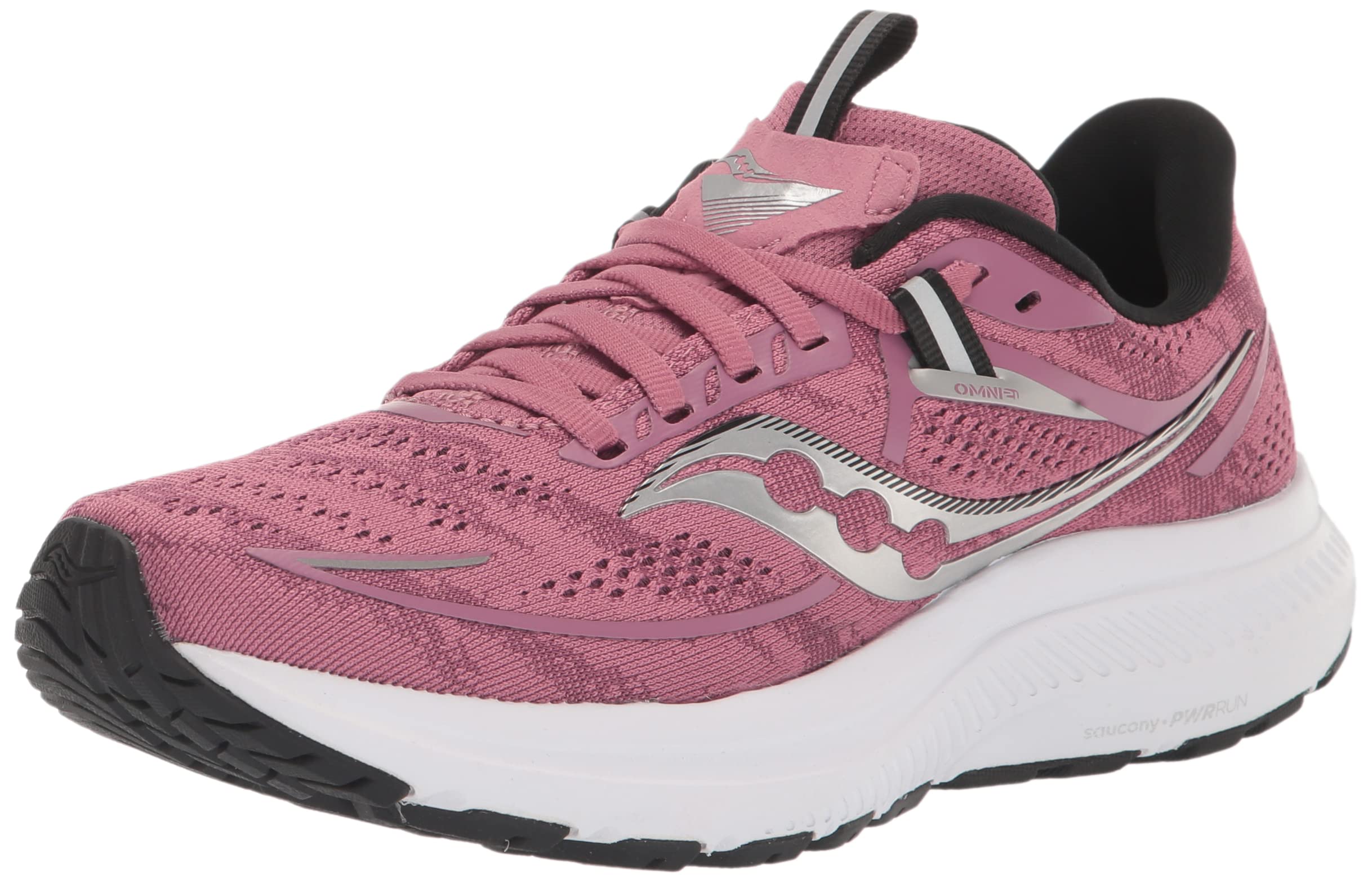
The women’s Saucony Omni 21 mirrors the men’s version in its dual-density medial post design but tailors the fit to a woman’s narrower heel and wider forefoot profile. Users specifically note that the wide toe box accommodates wide feet and custom orthotics without cramping toes, while the grey colorway hides dirt well for daily walking. The shoe’s stability platform provides noticeable reduction in arch strain for those managing plantar fasciitis alongside overpronation.
Customers report using these for walking, running, and even lighter court sports like pickleball. The “spring-effect” sole offers a responsive feel that bounces you through each stride without feeling mushy, and the hiking-boot-style tread provides solid grip on light trails. Many reviewers size up half a size to accommodate thicker orthotic inserts, a common recommendation for stability shoes with built-in posts.
The Omni 21 lacks the aggressive medial posting of the Hurricane line, so severe overpronators may find the correction insufficient for high-mileage running. For daily walking, standing, and light runs, however, the combination of support, tread, and fit makes it a versatile daily driver at a value-oriented price.
Why it’s great
- Wide toe box fits orthotics and wide feet
- Spring-effect sole enhances walking comfort
- Versatile for running, walking, and court use
Good to know
- Medial post less aggressive than Hurricane
- May need half size up for orthotics
7. ASICS Women’s GT-1000 14
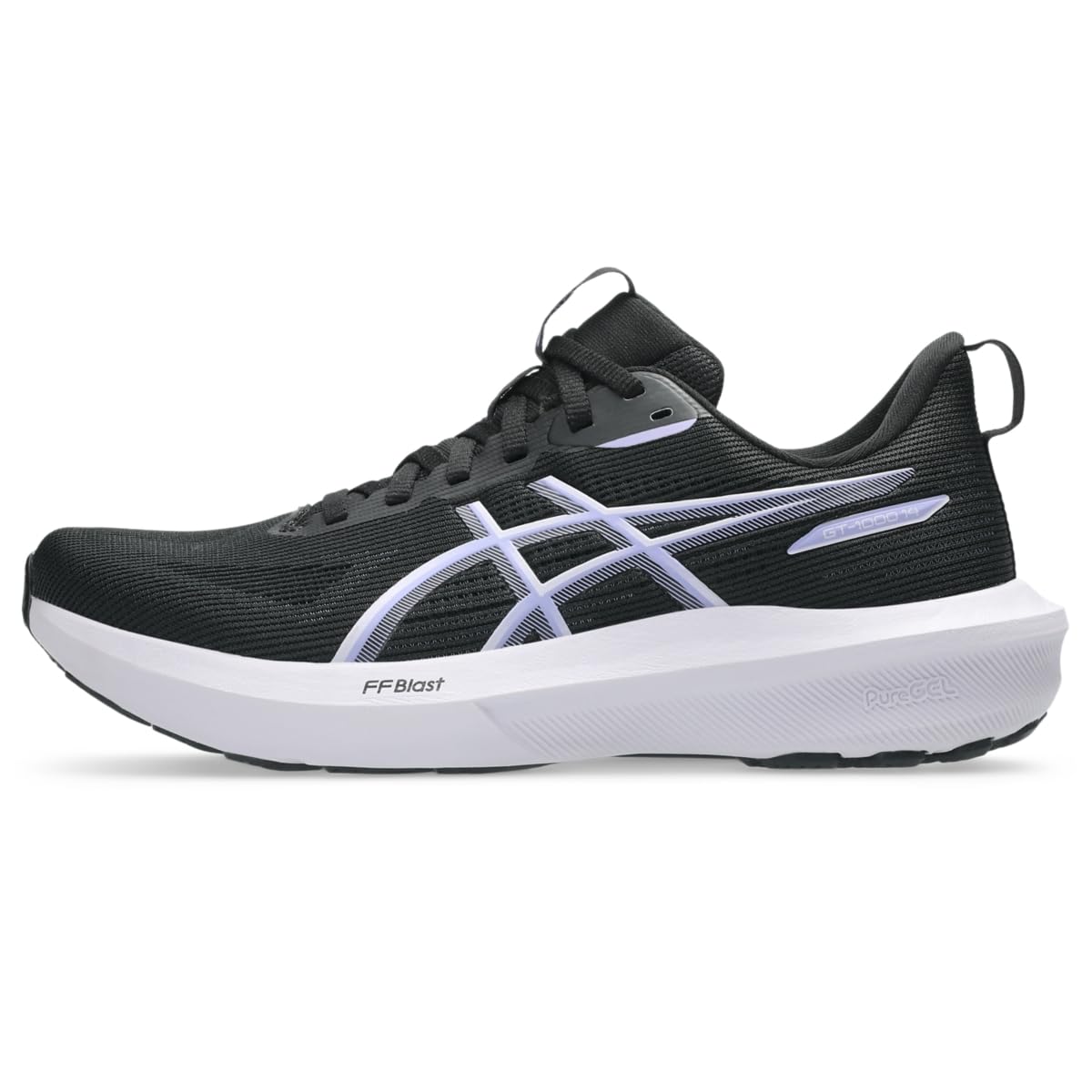
The women’s ASICS GT-1000 14 delivers a soft, cloud-like cushioning platform that feels more forgiving than traditional stability shoes. Its LITETRUSS support provides gentle medial guidance suitable for mild to moderate overpronation, making it a smart entry point for runners or walkers transitioning from neutral shoes. The wide toe area and true-to-size fit have earned praise from users who spend 10+ hours on concrete floors daily.
Reviewers note that the cushioning significantly reduces knee stress during walking routines, and the subtle inside support helps stabilize the foot without feeling intrusive. The black-and-lilac color option appears navy in outdoor lighting, which adds a classy aesthetic that works for both gym and casual wear. The lightweight build (1.44 pounds) makes it easy to pack for travel or gym rotation.
The GT-1000 14’s LITETRUSS support is not designed for severe overpronation or heavy heel strikers. Users who need aggressive correction may find the shoe collapses too quickly under high mileage. For everyday comfort and mild support at a practical price, this ASICS model delivers a cushioned ride that keeps feet fresh during long standing periods.
Why it’s great
- Cloud-like cushioning for all-day standing comfort
- Gentle LITETRUSS support for mild pronation
- Wide toe area with true-to-size fit
Good to know
- Not aggressive enough for severe overpronation
- Midsole may not hold up for high-mileage runners
FAQ
Can a stability shoe fix overpronation permanently?
How often should I replace overpronation support shoes?
Should I buy a stability shoe bigger to fit orthotics?
Final Thoughts: The Verdict
For most users, the arch support for overpronation winner is the Hoka Arahi 8 because its J-Frame rail offers maximum pronation control in a lightweight package that works for both long runs and all-day standing. If you want an aggressive medial post for severe overpronation, grab the Saucony Hurricane 24. And for the best balance of value and durability, nothing beats the Saucony Omni 21.