
Our readers keep the lights on and the weekend projects moving. As an Amazon Associate, I earn from qualifying purchases.
Setting up a new aquarium is exciting until your ammonia test reads a solid green and your fish are gasping at the surface. That bottleneck — the nitrogen cycle — is the single most frustrating hurdle for every aquarist, and the difference between a tank that crashes and one that thrives comes down to one thing: the bacterial strain you introduce. Not all bottles of live microbes are equal, and the wrong choice can stall your cycle for weeks or even crash an established tank.
I’m Rikta — the co-founder and writer behind FitlyFast. I’ve spent years analyzing water chemistry data, studying microbial formulations, and cross-referencing real-world cycle-completion times reported by aquarists to separate genuinely effective beneficial bacteria from the marketing fluff that fills most product listings.
This guide cuts through the microbiology to give you the hard data on the most effective beneficial bacteria for aquarium starters, stabilizers, and maintenance formulas based on strain composition, shelf-life stability, and documented ammonia-to-nitrate conversion rates.
How To Choose The Best Beneficial Bacteria For Aquarium
Picking the right bacterial supplement is about matching the strain profile and concentration strength to your specific tank phase — whether you are cycling a brand-new aquarium, recovering after medication, or maintaining biological balance in a high-stock community tank. The wrong product can introduce heterotrophic bacteria that spike ammonia instead of processing it.
Strain Composition — Autotrophs vs. Heterotrophs
True nitrifying bacteria (Nitrosomonas for ammonia, Nitrobacter and Nitrospira for nitrite) are autotrophic and slow-growing. Many budget brands load their bottles with heterotrophic bacteria that consume organic carbon and produce ammonia, creating a false cycle that collapses when the carbon source runs out. Look for products that specifically list Nitrosomonas and Nitrospira strains on the label.
Concentration and Viable Cell Count
Liquid bacteria degrade over time; a bottle with 10 billion CFU per gram means nothing if half the cells are dead on arrival. Concentrated products using refrigerated shipping and opaque UV-protected bottles retain higher viability. Refrigerated-stable formulas like Fritz TurboStart 700 maintain potency because the bacteria are stored in a dormant metabolic state that reactivates in the tank.
Shelf Life and Storage Requirements
Heat is the enemy of live nitrifying bacteria. Products shipped in non-refrigerated trucks during summer often arrive with dead cultures. Brands that require cold-chain shipping or include cold packs are worth the logistics hassle. Shelf-stable formulas like Brightwell MicroBacter use a proprietary base that extends viability at room temperature for over a year.
Quick Comparison
On smaller screens, swipe sideways to see the full table.
| Model | Category | Best For | Key Spec | Amazon |
|---|---|---|---|---|
| Fritz Turbo Start 700 | Premium | Rapid cycle completion | Single-dose nitrite eliminator | Amazon |
| DrTim’s One & Only Freshwater | Premium | Scientific fishless cycling | 30-gal dose, ammonium chloride kit | Amazon |
| Brightwell MicroBacter Start XLM | Premium | High-density & reef tanks | 15x concentrated, shelf-stable | Amazon |
| Seachem Stability 1L | Mid-Range | Daily maintenance dosing | 1-liter bottle, dual salt/fresh | Amazon |
| Aqueon Pure Live Bacteria 24-Pack | Mid-Range | Weekly gel ball maintenance | Sustained-release gel balls, 240-gal | Amazon |
| Seachem SureStart Tri-Pack | Budget | Complete starter bundle | Prime + Stability + Pristine | Amazon |
| Aquascape Pond Bacteria 8.45 oz | Budget | Pond clarity & sludge control | 8 strains incl. PSB, 5,000-gal | Amazon |
In‑Depth Reviews
1. Fritz Turbo Start 700 Freshwater

Fritz Turbo Start 700 is the closest thing to a cycling cheat code in the aquarium hobby. Multiple aquarists report it eliminating high nitrite concentrations (over 10 ppm) within 24 hours after other brands failed over 30 days. The refrigerated shipping requirement is not a gimmick — it preserves the dormant Nitrosomonas and Nitrobacter strains in a metabolic state that activates immediately upon contact with ammonia in your tank water.
Unlike heterotrophic-heavy formulas that cause bacterial blooms and temporary cloudiness, Fritzzyne seeds the filter media with true autotrophic nitrifiers that establish a permanent biological colony. The 4-ounce bottle treats a standard 55-gallon tank in one dose for a fishless cycle, and experienced hobbyists with decades in the trade recommend it as the only product that delivers measurable ammonia-to-nitrate conversion within 8 hours of dosing.
The main trade-off is shelf life — Fritz requires refrigeration and expires roughly six months after manufacture. Shipping delays during summer heat can kill the culture even with cold packs, so ordering from a seller with fast fulfillment is critical. Once it works, it cycles faster than any competitor on this list.
Why it’s great
- Documented nitrite reduction from 10+ ppm to zero in under 24 hours
- Seeds true autotrophic nitrifying bacteria, not heterotrophic bloomers
- Single-dose format simplifies cycling protocol significantly
Good to know
- Requires refrigeration — heat damage during shipping kills viability
- Short six-month shelf life after manufacture
- Higher per-ounce cost compared to daily-dosed liquids
2. DrTim’s Aquatics One and Only Freshwater
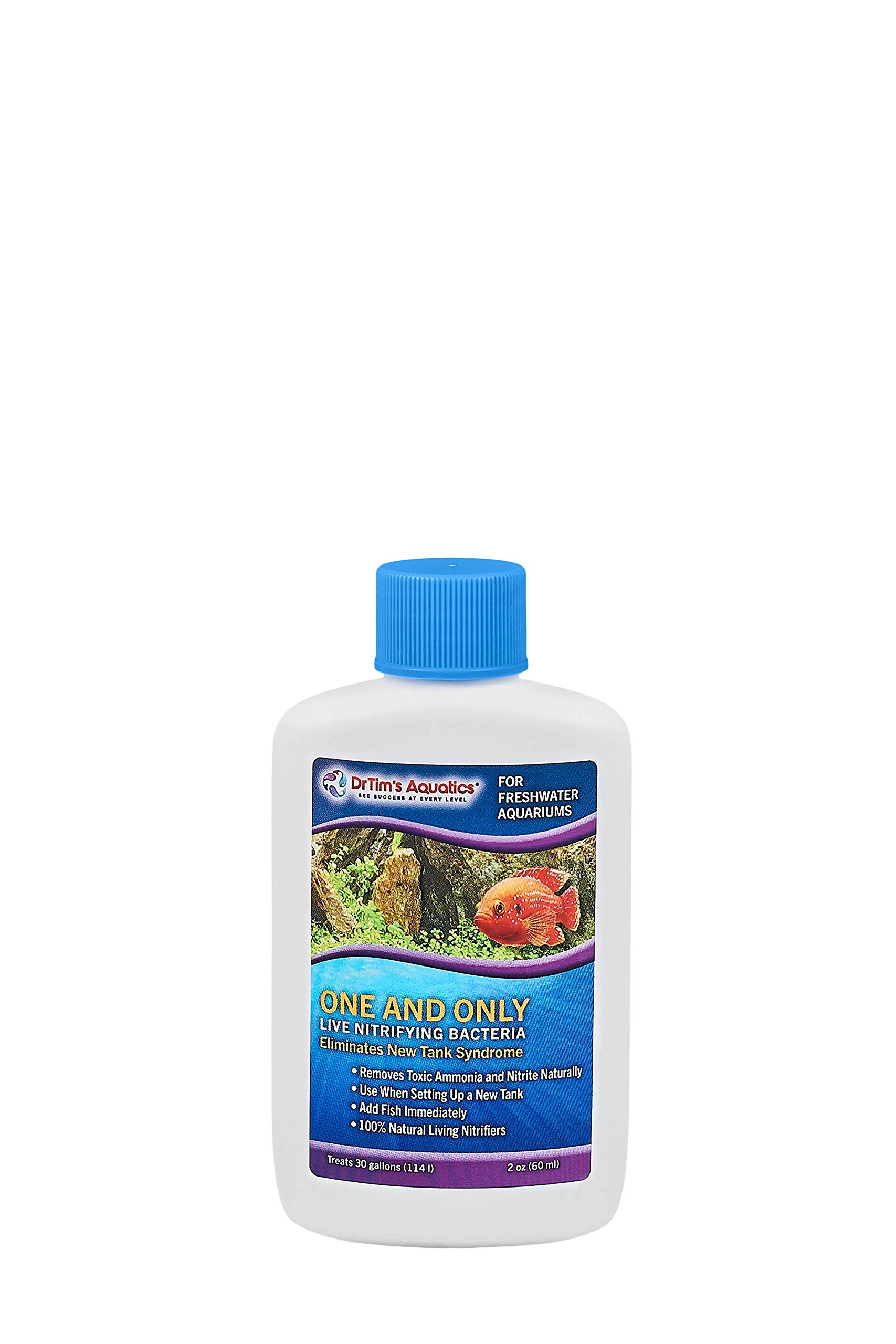
Dr. Tim’s One & Only Freshwater is built around a controlled fishless cycling method using a pure ammonium chloride food source, which allows you to precisely measure ammonia availability for the bacterial colony. A head-to-head comparison with API Quick Start showed DrTim’s tank producing 50 ppm nitrates in just six days while the API tank barely registered 20 ppm, confirming its superior nitrifying conversion speed.
The formula contains specialized strains of Nitrosomonas and Nitrospira that are naturally occurring and free of the sulfur-based odors common in cheap bacterial supplements. The company provides a detailed cycling recipe: dose 4 drops per gallon of ammonium chloride to reach 2 ppm ammonia, maintain pH above 7, use a non-ammonia-binding dechlorinator, and keep the heater at 82°F for optimal metabolism. Most users report complete cycling in 14 to 21 days when following the protocol.
The primary limitation is that DrTim’s is a living product highly sensitive to temperature extremes. Bottles that sit in a hot delivery truck can arrive with dead bacteria, so purchasing from a retailer with climate-controlled shipping is essential. The 2-ounce bottle covers just 30 gallons, making it less economical for large tanks unless you buy the larger sizes.
Why it’s great
- Pure ammonium chloride included enables precise fishless cycling control
- Documented 14-day cycle completion with proper protocol
- No sulfur odor — contains only true nitrifying autotrophs
Good to know
- Heat-sensitive — shipping damage can kill the live bacteria
- Small 2-ounce bottle covers only 30 gallons
- Requires strict adherence to pH, temperature, and ammonia dosing guidelines
3. Brightwell Aquatics MicroBacter Start XLM

Brightwell MicroBacter Start XLM is the most concentrated blend in this roundup, delivering a 15x concentrated formulation of non-pathogenic, autotrophic nitrifying bacteria in a proprietary base that eliminates the need for refrigeration. Aquarists using it in nano reef tanks and high-density planted aquariums report complete nitrogen cycle establishment within 7 to 10 days when combined with live sand or established biomedia.
The concentration allows for a much smaller dosing volume per gallon compared to standard products, which makes the 4.22-ounce bottle go surprisingly far despite the premium price point. The formula is particularly effective for re-establishing bacterial colonies after medication treatments that often crash biofilters — several users noted that previous big-box brand bacterial starters failed completely while MicroBacter cycled their tanks within a week.
Because it is sulfur-free and sulfite-free, the product won’t cause the rotten-egg odor that sometimes accompanies bacterial supplements during the first few days of dosing. The shelf stability is a major advantage for hobbyists who don’t want to worry about cold-chain shipping or refrigerator storage, though the upfront cost per bottle is higher than basic starters.
Why it’s great
- 15x concentrated formula reduces required dosage volume
- Shelf-stable for over a year at room temperature — no refrigeration needed
- Effectively restores biofilters after medication or filter cleaning upsets
Good to know
- Higher per-bottle price than standard liquid bacteria
- Best results require live rock or established biomedia for seeding
- Size options limited compared to more common starter brands
4. Seachem Stability (1 Liter)
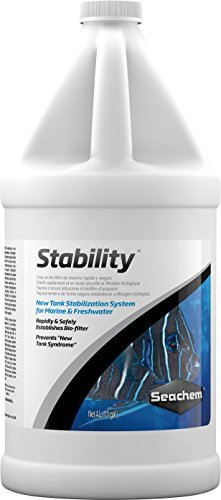
Seachem Stability is one of the most trusted names in aquarium maintenance, and the 1-liter bulk size offers the best cost-per-dose ratio among mid-range beneficial bacteria. It is formulated for both freshwater and marine systems, making it a versatile choice for households running multiple tank types. The formula uses a blend of aerobic and anaerobic nitrifying bacteria that colonize the entire filter system rather than just the surface layer.
Long-term users running Stability as part of every water change report consistent zero ammonia and zero nitrite readings along with crystal-clear water visibility. The liquid is safe for all fish types including sensitive species like discus and wild-caught tetras, and it does not require refrigeration, which simplifies storage and shipping. Many hobbyists have used Stability for years as their go-to maintenance bacterial supplement.
The primary caveat is that Stability works best as a daily or weekly maintenance dose rather than a one-shot cycle accelerator. For a fishless cycle from scratch, it typically takes 14 to 21 days of consistent dosing, while specialized products like Fritz Turbo Start finish the job in days. Additionally, the 1-liter bottle is bulky and requires cabinet space, though the value per dose is undeniable.
Why it’s great
- Bulk 1-liter size offers best per-dose value in the mid-range tier
- Safe for both freshwater and marine aquariums
- Non-refrigerated and shelf-stable for long storage periods
Good to know
- Requires consistent daily or weekly dosing for effective cycle establishment
- Slower initial cycle speed compared to concentrated single-dose products
- Large bottle takes up significant storage space under the aquarium
5. Aqueon Pure Live Beneficial Bacteria 24-Pack

Aqueon Pure takes a completely different approach to beneficial bacteria delivery by using sustained-release gel balls instead of liquid dosing. Each ball sinks to the substrate and gradually dissolves over weeks, continuously seeding the aquarium with live nitrifying bacteria and sludge-digesting enzymes. This hands-off format is ideal for aquarists who want to automate biological maintenance without measuring droplets daily.
Users with 15-gallon Fluval Flex tanks report dropping two new balls during each water change and enjoying consistently clear water with minimal effort. The balls remain visually distinct on the substrate until they shrink to a cracked-egg size, at which point they should be removed with tweezers to prevent fish from swallowing the remaining pieces. The 24-pack treats up to 240 gallons total, making it economical for small to medium tanks.
The main limitation is that Aqueon Pure is a maintenance product rather than a cycle starter. It helps maintain biological balance once the cycle is established, but it lacks the rapid colonization power needed to kickstart a fishless cycle from zero. Additionally, the gel balls can be mistaken for food by curious cichlids and goldfish, so placing them in a perforated media cup is recommended for heavy feeders.
Why it’s great
- Sustained-release gel balls eliminate daily dosing routine
- Enzymes in the formula actively break down organic sludge
- Large 24-pack covers up to 240 gallons total treatment
Good to know
- Not suitable for initial cycle kickstarting — best for established tanks
- Small gel remnants must be manually removed to prevent fish ingestion
- Higher per-dose cost compared to liquid bottles of equivalent volume
6. Seachem SureStart Tri-Pack (Prime + Stability + Pristine)

Seachem’s SureStart Tri-Pack bundles Prime (water detoxifier), Stability (biofilter starter), and Pristine (sludge eliminator) into a single kit that covers the three essential pillars of aquarium water management. Prime detoxifies chlorine, chloramine, and ammonia on contact, Stability seeds the biological filter, and Pristine introduces heterotrophic bacteria that consume organic waste. It is a genuinely complete starter package for a novice setting up their first tank.
Each 100-milliliter bottle provides enough volume for multiple water changes and maintenance cycles in a standard 20- to 40-gallon aquarium. The kit eliminates the guesswork of purchasing separate products and ensures chemical compatibility since all three are designed by the same lab. Users report visible water clarity improvement within days and stress-free fish introduction after the initial cycling period.
The limitation is that the 100-milliliter bottles are relatively small, and if you run a large tank or need to dose heavily during a cycle crash, you may deplete the kit quickly. Additionally, the combo kit includes Prime as a dechlorinator — if you already use a different water conditioner, you are paying for a product you do not need. For a true beginner starting from scratch, the convenience is hard to beat.
Why it’s great
- Complete three-bottle system covers detox, biofilter, and sludge elimination
- All bottles are chemically compatible — no risk of harmful interactions
- Excellent value for a beginner setting up their first tank from scratch
Good to know
- 100-milliliter bottles run small for larger aquariums
- Includes Prime dechlorinator which may duplicate existing products you own
- Not concentrated — requires more frequent reordering for heavy users
7. Aquascape Beneficial Bacteria for Ponds 8.45 oz
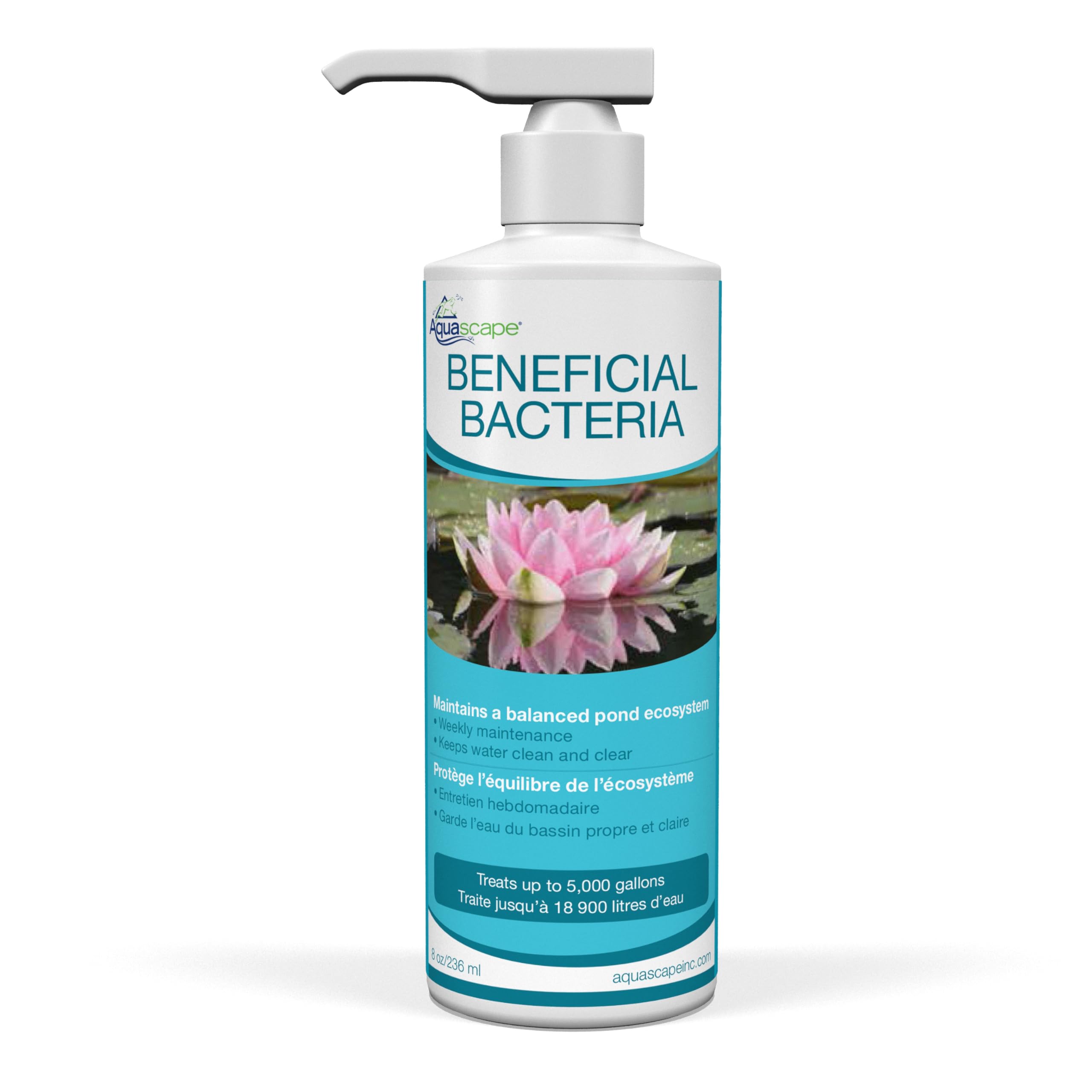
Aquascape’s formula is engineered specifically for pond environments, containing eight distinct strains of bacteria including photosynthetic bacteria (PSB) that clump fine suspended debris and allow it to settle out of the water column. This is not a typical aquarium bottle — it is designed for the higher volume and organic load of outdoor koi ponds and water gardens, treating up to 5,000 gallons per bottle.
The inclusion of PSB combined with marigold extract and vitamin B differentiates it from standard aquarium bacteria. Users report visible water clarity improvement within two days of dosing, particularly for brown water caused by wind-blown debris or plant disturbance. The bacteria also target the sludge layer on the pond bottom, reducing the need for manual vacuuming during the growing season.
The formula is less effective against green algae blooms — algae control requires a separate algaecide or UV clarification system. Additionally, the 8.45-ounce bottle treats a full pond, so if you are using it in a standard aquarium, the bottle will last an impractically long time. It is best reserved for pond owners who need a biological solution for suspended dirt and bottom sludge rather than aquarium nitrogen cycle management.
Why it’s great
- Photosynthetic bacteria clump fine debris for rapid settling and clarity
- Single bottle treats large ponds up to 5,000 gallons
- Marigold and vitamin B additives support fish health directly
Good to know
- Not formulated for standard aquarium nitrogen cycling
- Does not control green algae — requires separate treatment
- Overkill for any tank under 50 gallons in volume
FAQ
Can I use beneficial bacteria while fish are already in the tank?
Why does my beneficial bacteria smell like rotten eggs after opening?
Final Thoughts: The Verdict
For most users, the beneficial bacteria for aquarium winner is the Fritz Turbo Start 700 because it delivers documented nitrite elimination within 24 hours and seeds true autotrophic colonies that permanently stabilize your biofilter. If you want a precision fishless cycling protocol with controlled ammonia dosing, grab the DrTim’s One & Only Freshwater. And for a shelf-stable concentrated formula that requires no refrigeration and works in high-density planted tanks, nothing beats the Brightwell MicroBacter Start XLM.