
Our readers keep the lights on and the weekend projects moving. As an Amazon Associate, I earn from qualifying purchases.
Finding a sweetener that dissolves evenly, caramelizes properly, and delivers the same tender crumb as sugar without leaving a chemical aftertaste is the single biggest challenge in low-carb and sugar-free baking. Most alternatives either refuse to brown, turn baked goods gummy, or hit the palate with a cooling sensation that ruins the whole bite.
I’m Rikta — the co-founder and writer behind FitlyFast. I’ve spent hundreds of hours comparing the molecular behavior of erythritol, allulose, monk fruit blends, and caster sugar to determine which options actually perform under oven heat without sacrificing texture or flavor.
After cross-referencing solubility rates, caramelization thresholds, glycemic impact metrics, and real baker feedback across dozens of formulas, I’ve narrowed the field to the best options worth your time. This guide breaks down the top choices for anyone seeking the best artificial sweetener for baking.
How To Choose The Best Artificial Sweetener For Baking
Not every zero-calorie sweetener can survive an oven. Some break down under heat, some refuse to brown, and others leave a crystalline grit in your frosting. Before you buy, match the sweetener chemistry to the type of baking you do most often.
Heat Stability and Caramelization
Allulose is the gold standard here — it caramelizes at roughly the same temperature as table sugar, giving you golden-brown edges on cookies and real browning on quick breads. Erythritol, by contrast, does not caramelize at all; baked goods using erythritol alone will stay pale. Monk fruit blends typically inherit the heat stability of their bulking agent (erythritol or allulose), so check the label before assuming browning will happen.
The Cooling Effect and Mouthfeel
Erythritol creates a distinct cooling sensation on the tongue when it dissolves — think of mint without the mint. This is fine in beverages or no-bake cheesecakes but can ruin the mouthfeel of warm cookies or brownies. Allulose and pure monk fruit (without erythritol) have no cooling effect, making them better choices for recipes where the sweetener must go unnoticed.
Sweetness Concentration and Measuring
Erythritol is about 70% as sweet as sugar; allulose is also roughly 70% as sweet. Many “1:1” blends use a mix of monk fruit extract (which is intensely sweet) with erythritol or allulose to reach sugar-like sweetness. If you are switching to a pure allulose or pure erythritol formula, expect to use about 1.3 times the volume of sugar the recipe calls for. Read the conversion ratio on the package before you start mixing.
Quick Comparison
On smaller screens, swipe sideways to see the full table.
| Model | Category | Best For | Key Spec | Amazon |
|---|---|---|---|---|
| Micro Ingredients Golden Monk Fruit | Monk Fruit + Allulose | Brown sugar replacement | 1:1 brown sugar substitute, no erythritol | Amazon |
| Truvia Allulose | Pure Allulose | All-purpose baking & ice cream | 48 oz, single-ingredient allulose | Amazon |
| Viva Doria Allulose | Pure Allulose | High-volume baking & jam | 5 lb bag, non-GMO allulose | Amazon |
| Swerve Baker’s Trio | Erythritol Blend | Keto baking variety (granular, brown, powdered) | 3-pack: granular, confectioners, brown | Amazon |
| Roots Circle Allulose | Pure Allulose | Entry-level allulose trial | 25 oz, zero-calorie allulose | Amazon |
| Anthony’s Erythritol | Pure Erythritol | Budget-friendly bulk erythritol | 2.5 lb, non-GMO erythritol granules | Amazon |
| Medley Hills Farm Caster Sugar | Real Superfine Sugar | Traditional baking (meringues, sponge cakes) | 2.5 lbs superfine cane sugar | Amazon |
In‑Depth Reviews
1. Micro Ingredients Golden Monk Fruit Sweetener with Allulose
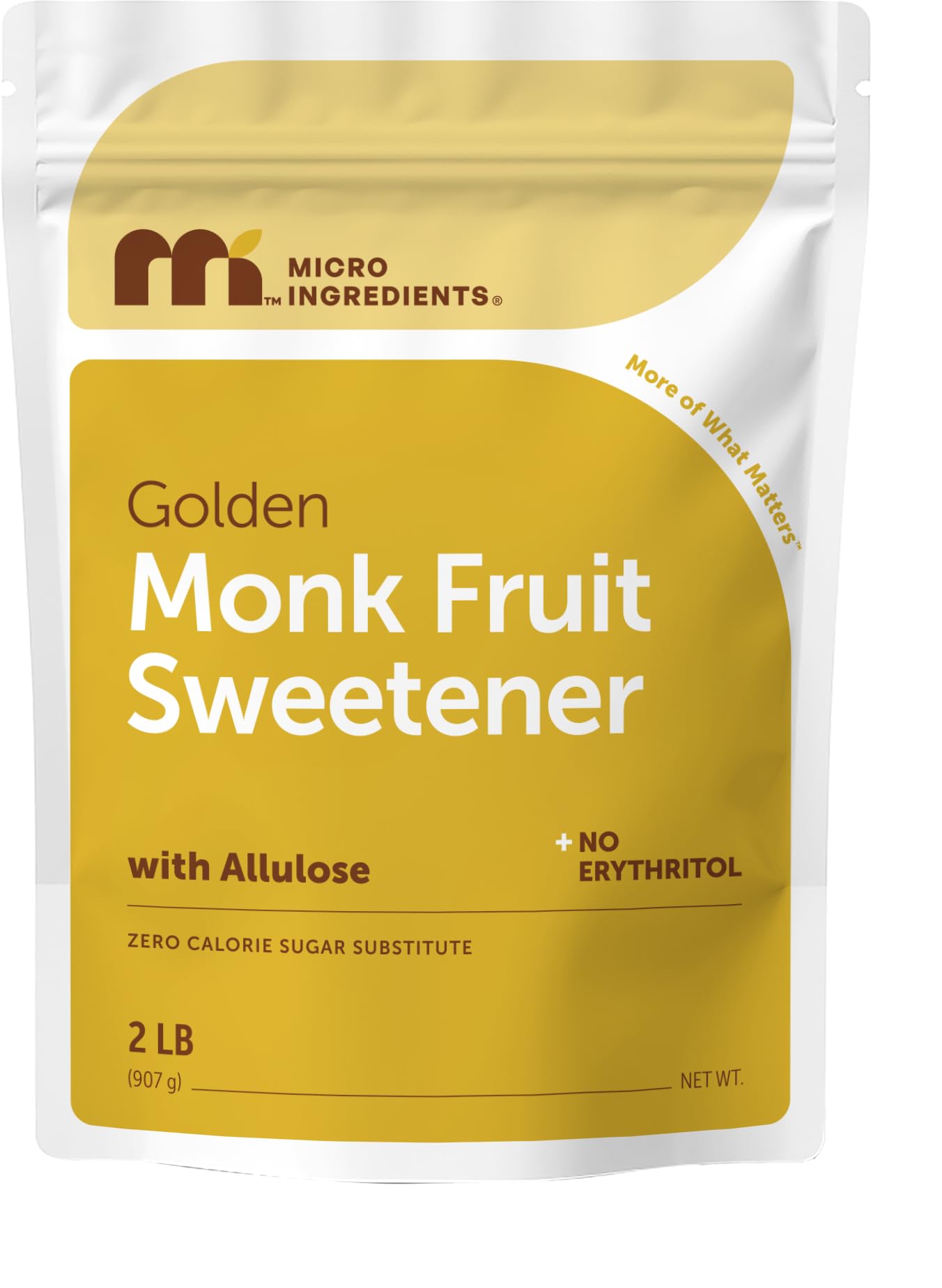
This two-ingredient blend of golden monk fruit and allulose solves the two biggest problems with sugar-free baking: it browns like real brown sugar (thanks to the allulose content) and it leaves zero cooling aftertaste because there is no erythritol in the formula. Bakers report that cookies stay soft, coffee tastes clean, and the caramelization happens slightly faster than traditional brown sugar, so pull your trays a minute early.
At 2 pounds, the pouch delivers roughly 226 servings, and the 1:1 substitution ratio makes it the easiest swap for anyone converting standard brown sugar recipes. The texture is a fine golden powder that dissolves readily in both hot liquids and batters, making it equally useful for glazes, oatmeal, and mug cakes.
Some users note that it is less sweet than pure sugar, requiring a volume adjustment if you are not using the 1:1 ratio posted on the label. For most brown sugar applications — banana bread, cookies, crumbles — the 1:1 works perfectly, but for very sweet frostings you may want to add an extra tablespoon.
Why it’s great
- No erythritol means zero cooling sensation on the tongue
- Caramelizes and browns like real brown sugar
- 1:1 substitution ratio simplifies recipe conversion
Good to know
- Browns slightly faster than standard brown sugar — watch your bake time
- Some users report it is less sweet than expected for certain recipes
2. Truvia Allulose Calorie-Free Sweetener

Truvia’s allulose entry is a single-ingredient, zero-calorie sweetener with a powdery texture that behaves almost identically to sugar in the oven. Reviewers consistently praise its lack of aftertaste — a major differentiator from stevia and monk fruit blends — and its performance in ice cream makers, where it produces a firm but creamy scoop without the rock-hard freeze that Splenda and erythritol cause.
The 48-ounce bag gives you plenty of runway for weekly baking, and the label confirms it is diabetic-friendly, keto-friendly, and tooth-friendly (allulose does not contribute to cavities). One tablespoon sweetens roughly like two teaspoons of sugar, so you will use slightly more volume than regular sugar for equivalent sweetness.
A small number of users reported a bacterial odor on their first order, though flavor itself was unaffected. Overconsumption of allulose can cause digestive upset (loose stools) in sensitive individuals, so start with moderate amounts until you know your tolerance.
Why it’s great
- Completely neutral taste with no chemical or cooling aftertaste
- Powdery texture dissolves fully in both cold and hot applications
- Excellent for ice cream — yields creamy texture, not hard ice
Good to know
- More expensive per ounce than erythritol-based options
- Can cause digestive issues if consumed in large quantities
3. Viva Doria Allulose Sweetener, 5 lb
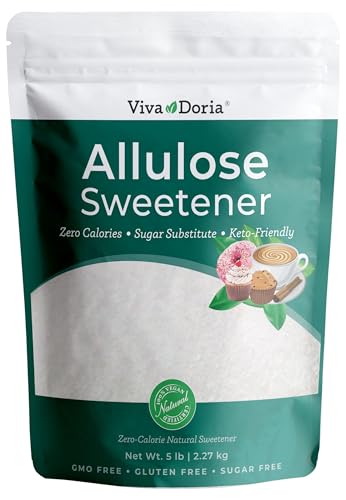
Viva Doria’s 5-pound bag is the most economical way to buy pure allulose for bakers who go through sweetener quickly. The granules are fine and measure roughly 70% as sweet as table sugar, matching the standard allulose ratio, but the sheer volume means you can afford to experiment with conversion ratios in muffins, quick breads, and even homemade jams without worrying about running out.
Users on keto and diabetic diets report no blood glucose spikes and no stomach upset — a notable advantage over erythritol, which causes bloating for many. The clean taste works well in both baking and cold beverages, and multiple reviews highlight its performance in sugar-free fruit jam, where allulose’s solubility prevents graininess.
The trade-off is the same as with any pure allulose: you need about 1.3 to 1.5 cups for every cup of sugar to hit the same sweetness level, which increases the total volume of dry ingredients in your recipe. If you are adapting a delicate sponge cake, you may need to reduce another dry ingredient to compensate.
Why it’s great
- Best cost-per-ounce among pure allulose options
- No cooling effect and no digestive issues for most users
- Dissolves well in hot and cold applications, including jam-making
Good to know
- Requires volume adjustment — about 30% more needed than sugar
- Large bag can be cumbersome to scoop from if not transferred to a canister
4. Swerve Sweetener Granular, Brown and Confectioners Baker’s Trio

Swerve’s three-bag set covers the full spectrum of baking needs: granular for white sugar replacement, confectioners for frostings and glazes, and brown for recipes that call for molasses-rich flavor. The erythritol-plus-oligosaccharides formula measures cup-for-cup like sugar and produces zero net carbs, making it a staple in the keto baking community.
Bakers consistently report that Swerve produces results indistinguishable from sugar in cookies, coffee cake, and lemon bars, with no chemical aftertaste. The brown sugar version is particularly praised for its flavor depth in oatmeal and crumb toppings. However, because the base is erythritol, baked goods will not brown or caramelize the way sugar-based versions do — expect a pale finished product.
The cooling effect of erythritol is noticeable in applications where the sweetener dissolves on the tongue, such as in frostings or coffee. Many users advise using the confectioners version for icings rather than granular to minimize grittiness, and recommend avoiding Swerve in beverages if you are sensitive to the cool mouthfeel.
Why it’s great
- Three formats (granular, brown, confectioners) cover all baking scenarios
- 1:1 cup-for-cup substitution — no math required
- No aftertaste according to most users, even in delicate desserts
Good to know
- Does not caramelize — baked goods stay pale
- Cooling sensation can be off-putting in frostings and drinks
- Erythritol may cause digestive disruption in sensitive individuals
5. Roots Circle Allulose Plant Based Sweetener
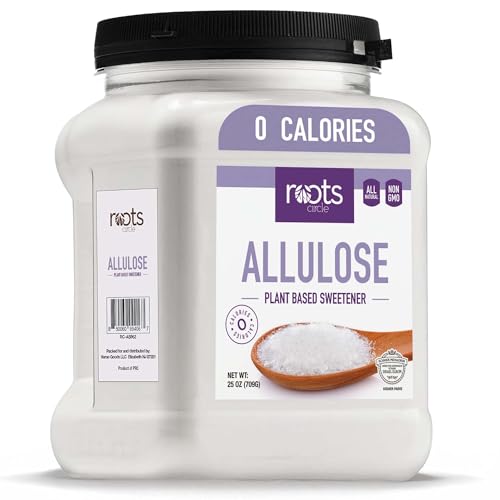
Roots Circle offers a solid entry point for anyone new to allulose. The 25-ounce resealable container is modest enough to test the sweetener without committing to a 5-pound bag, and the airtight screw top keeps the powder fresh on the shelf. At roughly 70% the sweetness of sugar, it works well in coffee, hot cocoa, mug cakes, and baked goods where a slight volume increase does not affect the structure.
Users highlight the lack of weird aftertaste — a common complaint with stevia and monk fruit — and the fine powder texture that blends smoothly into batters. Multiple reviews note that it caramelizes beautifully in desserts, giving low-carb bakers the golden color they miss when using erythritol.
A handful of reviewers mention a mild aftertaste, though this appears to be subjective. As with all allulose products, overconsumption can lead to digestive discomfort, and those with very sensitive stomachs should start with small amounts.
Why it’s great
- Smaller container ideal for first-time allulose users
- No cooling effect and no chemical aftertaste for most people
- Caramelizes and browns like sugar in baked goods
Good to know
- Less sweet than sugar — requires about 1.3x the volume
- Occasional reports of mild aftertaste depending on individual palate
6. Anthony’s Erythritol Granules, 2.5 lb
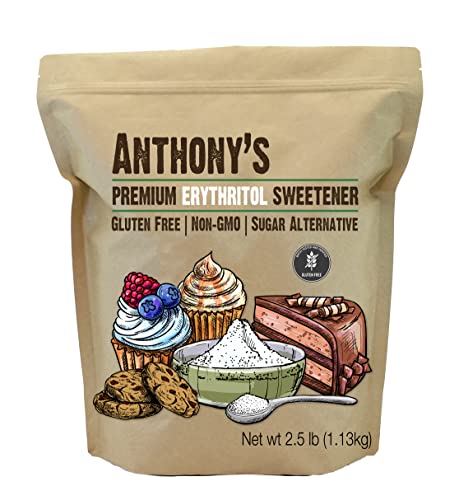
Anthony’s is a straightforward, no-additive erythritol that dissolves like table sugar and delivers 70% of the sweetness at a price point that beats most branded alternatives. It is batch-tested gluten-free, non-GMO, and suitable for keto and paleo diets. The 2.5-pound bag is a practical size for bakers who use erythritol as their primary sweetener and want to keep a steady supply on hand.
Users report that it performs well in royal icings (where the crystalline structure helps with stability) and in homemade ice cream, though the texture is noticeably different from sugar-based ice cream. The biggest advantage is taste — pure erythritol has no bitter or chemical aftertaste compared to stevia blends, and many reviewers use it daily in coffee and tea without issue.
The cooling effect is present, as with all erythritol, and some users experience bloating or digestive rumblings. If you are prone to stomach sensitivity, allulose may be a better choice. Also, because it does not caramelize, baked goods will come out of the oven looking pale — consider adding a pinch of molasses or using a brown sugar alternative for color.
Why it’s great
- Lowest cost per ounce among pure sweeteners in this guide
- No chemical aftertaste — clean, sugar-like flavor
- Dissolves well and works in royal icings and beverages
Good to know
- Cooling sensation can be distracting in warm baked goods
- No caramelization — baked goods remain pale
- May cause bloating or digestive upset in sensitive users
7. Medley Hills Farm Superfine Caster Sugar

This is real superfine cane sugar — not a sugar substitute — included here because it represents the gold standard for meringues, angel food cakes, and soufflés where grain size determines success. The finer particles dissolve faster than standard granulated sugar, producing a smoother texture in whipped cream, mousse, and delicate batter without the risk of gritty residue.
Bakers who make angel food cake regularly will notice the difference immediately: the superfine grain incorporates air more evenly and dissolves completely into egg whites, giving a lighter, taller rise. It also works as a bar sugar for cocktails and simple syrups, making it a versatile pantry item beyond baking.
This product contains real sugar and is not suitable for low-carb, keto, or diabetic diets. Its presence in this guide is for bakers who want the traditional benchmark against which to compare sugar-free alternatives — and for those who occasionally splurge on a classic dessert.
Why it’s great
- Finest grain size available — dissolves instantly in cold and hot preparations
- Ideal for meringues, sponge cakes, and frostings where texture matters
- Comes in a reusable container for easy pantry storage
Good to know
- Not a sugar substitute — contains real sugar and carbohydrates
- Not suitable for keto, diabetic, or low-carb diets
FAQ
Can I substitute allulose 1:1 for sugar in any baking recipe?
Why do erythritol-based baked goods feel cold on my tongue?
Will allulose or erythritol cause digestive problems?
Final Thoughts: The Verdict
For most users, the best artificial sweetener for baking winner is the Micro Ingredients Golden Monk Fruit Sweetener with Allulose because it delivers brown sugar flavor, real caramelization, and zero cooling aftertaste in a single 1:1 bag. If you want a pure allulose option in bulk for high-volume baking, grab the Viva Doria Allulose 5 lb. And for traditional recipes where sugar itself is non-negotiable — meringues, angel food cake, or fine-crumb sponge cakes — nothing beats the Medley Hills Farm Superfine Caster Sugar.