
Our readers keep the lights on and the weekend projects moving. As an Amazon Associate, I earn from qualifying purchases.
Building a patio that stays level and looks professional starts with one decision: what you put underneath the pavers. A shifting, sinking, or weed-infested surface is almost always traced back to a base that could not handle the load or the weather. The right ground grid or stabilizer system locks your aggregate in place, prevents erosion, and distributes weight so your patio stones do not wander over time.
I’m Rikta — the co-founder and writer behind FitlyFast. I have spent hundreds of hours analyzing geocell specifications, HDPE tensile strengths, and installation methods to understand what separates a base system that lasts from one that causes headaches.
Whether you are paving a walkway, building a shed foundation, or stabilizing a gravel driveway, choosing a reliable base for patio pavers changes a weekend project into a permanent outdoor feature.
How To Choose The Best Base For Patio Pavers
The base layer does the heavy lifting. Without proper confinement, gravel migrates, pavers tilt, and weeds take hold. The right system combines load rating, cell depth, and durable construction to keep everything locked in place for years.
Cell Depth Matters for Your Specific Use
Shallow 1-inch grids work well for pedestrian walkways and light decorative paths. For driveways, RV pads, or any area that sees regular vehicle traffic, a 3-inch or 4-inch depth keeps the aggregate stable under heavier loads. Matching cell depth to your specific traffic type prevents the base from deforming under pressure.
Material Quality and Tensile Strength
High-Density Polyethylene (HDPE) resists UV degradation, chemical erosion from soil acids, and temperature swings. Look for a load rating of at least 1,800 lbs per square foot for driveways. Ultrasonic welding at the cell seams is a sign of quality — it prevents the grid from pulling apart when filled and compacted.
Ease of Installation and Connector Hardware
Some grids require J-hooks, landscape staples, or separate connector clips. Check whether the included hardware matches the scale of your project. A system that ships with too few connectors or weak stakes can turn a weekend job into a frustrating search for workarounds. Zip ties or bolts may be needed as alternatives if the supplied parts fall short.
Quick Comparison
On smaller screens, swipe sideways to see the full table.
| Model | Category | Best For | Key Spec | Amazon |
|---|---|---|---|---|
| Vodaland HexPave | Premium Paver | Heavy load & eco‑friendly | 27,000 lbs load capacity | Amazon |
| TRUEGRID PRO LITE | Premium Grid | All‑weather driveways | 120,000 lb load class | Amazon |
| Happybuy 4‑Inch | Deep Cell | Slope & heavy traffic | 4‑inch depth / 1.5 mm wall | Amazon |
| VEVOR 25 ft Grid | Large Area | Large patios & sheds | 237.5 sq ft coverage | Amazon |
| VEVOR 17 ft Grid | Mid‑Range | Walkways & parking | 3‑inch depth / 1,885 psf | Amazon |
| Vodaland GeoCell 2‑Inch | Pedestrian | Foot paths & patios | 160 sq ft per section | Amazon |
| LXVOOEE Gravel Grid | Budget | Entry‑level stabilization | 2‑inch depth / 1,901 psf | Amazon |
In‑Depth Reviews
1. TRUEGRID PRO LITE Permeable Paver
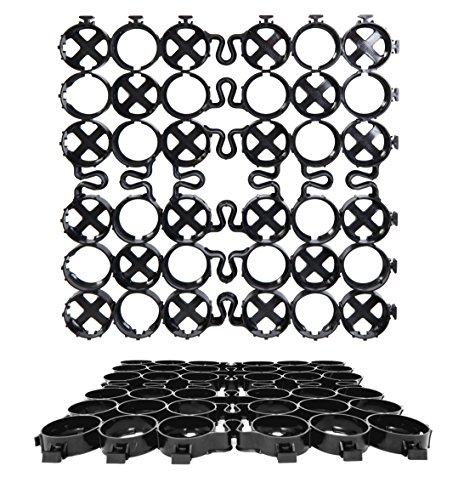
The TRUEGRID PRO LITE sets the standard for paver base systems with an extraordinary 120,000 lb load class rating. Made in the USA from 100 percent post-consumer recycled HDPE, these 24-inch square panels click together without tools and can be saw-cut for custom fits around tree roots or odd angles. The 1-inch depth is designed specifically for driveways, shed bases, and RV pads where heavy vehicles park daily.
Users report that once filled with 3/4-inch crushed gravel and compacted, the surface feels cement-like underfoot and resists rutting even with skid-steer traffic. The all-weather design makes it snow-plowable and 100 percent permeable, so water drains instantly and never pools. Installation is straightforward for any DIYer, though cutting with a skill saw or garden shears takes a little practice for curved paths.
One experienced user noted that while the grid is easy to install, removing or repositioning sections after gravel is down is very difficult. A two-tile-wide path is recommended over a single-tile width for comfortable walking. Overall, this is the premium choice for anyone who wants a permanent, maintenance-free base that handles the heaviest residential loads without shifting.
Why it’s great
- Extreme 120,000 lb load rating for any vehicle
- Easy tool-free click assembly
- 100% recycled HDPE, snow-plowable
Good to know
- Difficult to reposition once filled
- Fewer anchors than ideal for sloped areas
2. Vodaland Permeable HexPave System

The Vodaland HexPave system takes a modular approach with 22 interlocking units per box covering 65 square feet. Each polypropylene paver is crafted from 100 percent recycled PPE plastic and boasts a 27,000 lb load capacity depending on the base and fill material. The 1-inch chamber depth makes it ideal for grass patios, walkways, and shed bases where a low-profile, permeable surface is desired.
Users praise the tool-free assembly — the hexagon grids snap together securely and require no cutting for most rectangular layouts. The design allows rainwater to seep through and recharge groundwater, making it a top choice for eco-conscious projects. Many reviewers solved years of erosion problems with this system, noting that it retains soil and prevents washouts even on sloped terrain.
One common feedback point is that the included anchors are insufficient for full coverage on larger installations. Buyers often supplement with extra stakes or J-hooks, especially in areas with loose soil or heavy rain. The HexPave works best on a properly leveled base of sand and vapor barrier, and it has held up for over two years with minimal aggregate top-ups on gravel roads.
Why it’s great
- High load capacity from recycled material
- Tool-free snap assembly, no cutting needed
- Excellent erosion control and drainage
Good to know
- Package includes fewer anchors than ideal
- 1-inch depth limits heavy vehicle use
3. Happybuy Geo Grid Ground Grid 4‑Inch

The Happybuy 4-Inch Geo Grid delivers the deepest cell structure in this lineup at a full 4 inches, making it the right choice for slopes, unstable terrain, and areas that need serious aggregate confinement. Each 9×17 ft section covers 153 square feet with individual cells measuring 9.6 by 8.3 inches, and the 1.5 mm thick HDPE walls resist UV and chemical degradation effectively.
Real-world users have used this grid to stabilize gravel under carports, lift sunken sidewalks, and create a firm base for back patios. The supersonic welding at each seam holds up to 1,885 lbs per square inch when filled, and the open-cell structure allows water to drain laterally through the base. It is labor-saving to install — simply spread, anchor, and fill — though some users found the included stakes (under 1 inch) too short for loose ground.
The 4-inch height surprised some buyers who expected a shallower profile, so be sure to account for this when planning your excavation depth. One user noted that filling must be done slowly to avoid lifting the grid, as removing trapped rocks is tedious. Overall, this is a rugged, commercial-grade option for anyone needing maximum depth for heavy or sloped applications.
Why it’s great
- Deepest 4-inch cells for maximum stability
- High 1,885 psf load rating
- Good lateral drainage through open cells
Good to know
- Included stakes are very short
- Tall profile requires deeper excavation
4. VEVOR Ground Grid 25 ft x 9.5 ft

Covering 237.5 square feet per unit, the VEVOR 25 ft Ground Grid is the largest single-section geocell in this roundup. The 3-inch depth is a versatile middle ground — deep enough for light vehicle traffic and driveway stabilization but not so tall that excavation becomes a major project. Each 25 ft length gives you plenty of coverage for large patios or shed foundations without needing to join multiple smaller pieces.
Users appreciate the cost-effectiveness and ease of installation, noting that the HDPE material is cuttable with tin snips and flexible enough to conform to gentle slopes. The 1,885 psf load rating comes from ultrasonic welding at the seams, and the honeycomb structure spreads load evenly across the base. Reviewers have used it to control erosion under cabin porches, hold wood chips on steep inclines, and create stable walkways.
A few users reported that the plastic connector clips included in the package are not durable enough for heavy-duty use. Many recommend substituting galvanized 1/4-inch bolts with washers for a more permanent connection. Edges and seams also benefit from additional anchoring with long lawn staples, especially on curved or slanted areas. One early adopter noted that after six months, the grid remained water permeable and resilient with minimal settling.
Why it’s great
- Massive coverage per piece reduces seams
- 3-inch depth suits most residential uses
- Flexible HDPE conforms to slopes
Good to know
- Plastic clips need upgrading for reliability
- No installation instructions included
5. VEVOR Gravel Grid 3‑Inch Depth

The VEVOR Gravel Grid at 3-inch depth and 17 by 8.86 ft dimensions provides a balanced option for walkways, parking lots, and patio bases. The 0.06-inch thick HDPE is recyclable and resists photooxidation aging, while the ultrasonic-welded seams deliver 1,885 lbs per square inch of holding power when filled. Each cell measures 9.65 by 8.27 inches, giving good aggregate confinement without excessive weight.
Real-world installation feedback is generally positive. One user created a parking lot for light vehicles and reported that 3/4-inch gravel stays put even under daily use. The grid unfolds easily and can be cut with a utility knife for custom shapes. Another reviewer noted that the grid works well on erosion problems when properly staked and filled with class 5 road base.
Quality control issues have been reported — some packages arrived with missing connector bags or only 75-80 percent of the expected clips. Alignment holes on adjacent sections may not line up perfectly, requiring zip ties as a workaround. For straightforward rectangular installations on level ground, this grid performs well, but buyers should budget for extra stakes and connectors to ensure full stability.
Why it’s great
- Good balance of depth and flexibility
- Unfolds easily for quick installation
- Effective gravel retention for light vehicle use
Good to know
- Inconsistent connector quantities in packaging
- Alignment holes may not match between sections
6. Vodaland GeoCell 2‑Inch Gravel Grid

The Vodaland GeoCell 2-Inch is designed specifically for pedestrian areas, making it a focused solution for walkways, garden paths, and light patio applications. Each 9×17 ft section covers 160 square feet with a 2-inch depth, and the modified polyethylene material boasts a tensile strength of 1,885 lbs per square foot. The perforated walls allow water to permeate while keeping gravel or soil locked in each 8.9-inch cell.
Users consistently praise the ease of cutting and zip-tying the grid to fit irregular layouts. One reviewer installed a 70-foot walkway by excavating to 4 inches, laying the grid directly without a gravel base, and filling with 6 cubic yards of #57 stone — the result was stable and cost-effective compared to paver quotes. Another reviewer used it on a riverfront embankment with a triaxial geogrid base and reported zero erosion after three years.
The documentation from the seller is a recurring frustration. Instructions are vague regarding gravel type, base layer necessity, and stake quantity. Buyers who did their own research reported excellent results, but first-timers should plan to read installation tips from user reviews. The 2-inch depth limits this grid to foot traffic only — vehicles will deform the surface over time.
Why it’s great
- High tensile strength for pedestrian loads
- Easy to cut and join with zip ties
- Proven 3-year erosion control performance
Good to know
- Poor installation documentation from seller
- Pedestrian-only — not for vehicle traffic
7. LXVOOEE Gravel Grid 9×17.5 FT
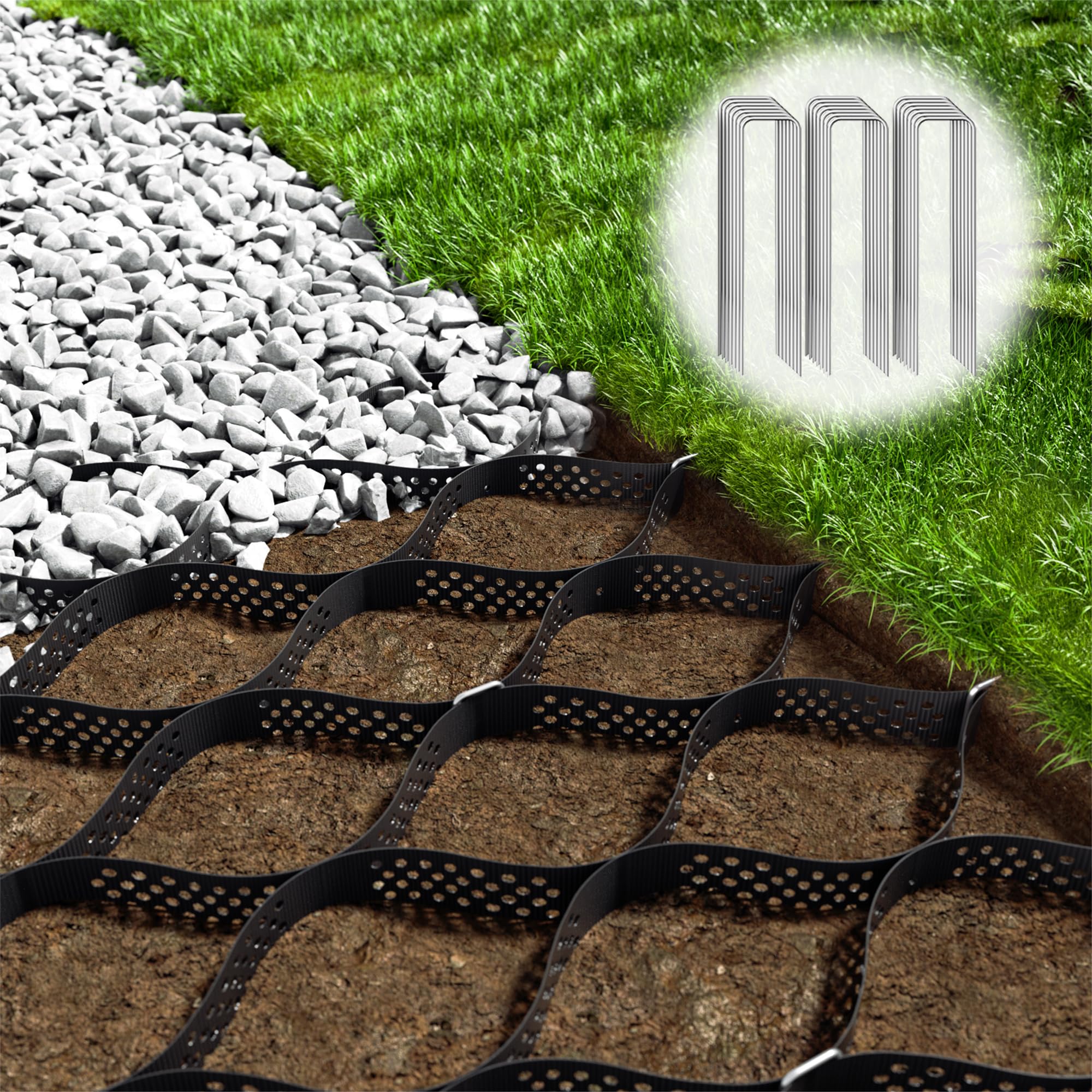
The LXVOOEE Gravel Grid offers the highest load rating in the entry-level tier at 1,901 lbs per square foot. The 2-inch depth is paired with double-row ultrasonic welding, which provides stronger tension resistance than single-weld alternatives. The kit includes 15 landscape staples and 20 clips, making it a nearly complete package for small to medium perimeter projects.
One user in Florida with sandy soil installed this grid with J-hooks and rebar on a road base underlayment, and it held up well for two months without shifting. Another used it to stabilize trailer parking with 3/4-inch crushed rock and reported that the gravel stayed in place even under vehicle use. The HDPE material is resistant to photooxidation aging and acids, so it holds up in a variety of climates.
The primary downside is the flexibility of the cells. Some users found the grid too soft for tight spaces, and one gave a 3-star review stating that firmer cells would be easier to work with. The included stakes are adequate for level ground, but on slopes or soft soil, you will need longer anchors. For a budget-friendly option that still delivers a high load capacity, this grid works well for straightforward, flat installations.
Why it’s great
- Highest load rating in budget tier (1,901 psf)
- Double-row welding for extra seam strength
- Includes stakes and clips for basic setup
Good to know
- Cells are flexible, not rigid
- Stakes may be too short for loose soil
FAQ
Do I need a geotextile fabric under the geocell grid?
Can I drive a car on a 2-inch deep geocell base?
What type of gravel works best with these grids?
How do I cut a geocell grid to fit irregular shapes?
Final Thoughts: The Verdict
For most users, the base for patio pavers winner is the TRUEGRID PRO LITE because it combines an unmatched 120,000 lb load class with easy click-together installation and all-weather durability. If you want an eco-friendly modular system that handles heavy loads and prevents erosion, grab the Vodaland HexPave. And for deep stabilization on slopes or unstable terrain where standard 1-inch grids fall short, nothing beats the Happybuy 4-Inch Geo Grid.