
Our readers keep the lights on and the weekend projects moving. As an Amazon Associate, I earn from qualifying purchases.
An erratic heartbeat detected during a routine checkup often sends patients down a rabbit hole of expensive clinic visits and anxiety, yet the single most effective tool for capturing episodic arrhythmias like Atrial Fibrillation is a device you can hold in one hand. A medical-grade, FDA-cleared portable EKG monitor puts the power of a 3-lead or single-lead electrocardiogram directly into your daily routine, recording a cardiac rhythm strip in under thirty seconds without any subscription locking the baseline feature behind a paywall.
I’m Rikta — the co-founder and writer behind FitlyFast. My deep market research and rigorous spec analysis for this guide focuses on real-world trace quality, FDA clearance status, lead count, data storage capacity, and compatibility with iOS and Android devices to separate the clinically useful from the merely convenient.
Whether you need to monitor for AFib post-diagnosis, track heart rate variability after a cardiac event, or simply want a documented record to share with your cardiologist, finding the right at home ekg monitor depends on understanding lead configurations, app ecosystem maturity, and whether the device stores data locally or exclusively in the cloud.
How To Choose The Best At Home EKG Monitor
Not every portable EKG device offers the same diagnostic depth. Some provide a simple heart rate number, while others produce a full waveform trace that a cardiologist can interpret. Your choice hinges on three core factors: lead configuration, FDA clearance status, and data portability.
Lead Count: 1-Lead vs 3-Lead vs 6-Lead
A single-lead device (like the KardiaMobile) records one electrical vector of the heart, enough to identify basic rhythm abnormalities such as AFib. A 3-lead or 6-lead monitor captures multiple vectors simultaneously, giving a more complete picture of electrical activity across different heart regions. For routine AFib screening, 1-lead suffices. For broader arrhythmia investigation or if your doctor recommends a more detailed trace, a multi-lead unit such as the Beurer Cardio Companion ME75 provides superior clinical value.
FDA Clearance vs General Wellness Claims
Any device claiming to detect or monitor a medical condition like Atrial Fibrillation must have FDA clearance to be legally marketed for that purpose in the US. Wellness trackers that display a heart rate number without a rhythm interpretation are not substitutes for FDA-cleared EKG monitors. Always check the product specifications for explicit FDA clearance language — this ensures the device meets the accuracy standards required for clinical data sharing.
Data Storage, Subscription Costs, and App Ecosystems
Some EKG monitors store all data locally on the device and require no app subscription to view your results — the EMAY Portable ECG Monitor is a strong example of that philosophy. Others, like the KardiaMobile, offer free basic interpretation but push a paid subscription for advanced features like unlimited saved readings or cardiologist reviews. If you intend to share files directly with your physician, verify whether the device can export a standard PDF or CSV file without a paywall.
Quick Comparison
On smaller screens, swipe sideways to see the full table.
| Model | Category | Best For | Key Spec | Amazon |
|---|---|---|---|---|
| Beurer Cardio Companion ME75 | 3-Lead Portable | Clinical-level detail at home | 3-Lead, FDA Cleared, 30 seconds | Amazon |
| KardiaMobile 1-Lead | 1-Lead Pocket | Ultra-portable AFib detection | 1-Lead, FDA Cleared, < 1 oz | Amazon |
| EMAY Portable ECG EMG-6L | Standalone 1-Lead | On-device display with PC sync | 1-Lead, USB/Bluetooth, built-in screen | Amazon |
| HaSoCare Personal EKG | Value 1-Lead | No-subscription budget entry | 1-Lead, Rechargeable, 60g | Amazon |
| OMRON Silver Blood Pressure | BP + IHB Detection | Combined BP and irregular heartbeat | Upper arm, IHB detection, Bluetooth | Amazon |
| Garmin HRM 600 | Athletic HR Strap | Real-time HRV and running dynamics | Chest strap, HRV, swim tracking | Amazon |
| Withings ScanWatch Nova | Luxury Smart Watch | Style meets medical-grade ECG | ECG, SpO2, 30-day battery | Amazon |
In‑Depth Reviews
1. Beurer Cardio Companion EKG Monitor ME75
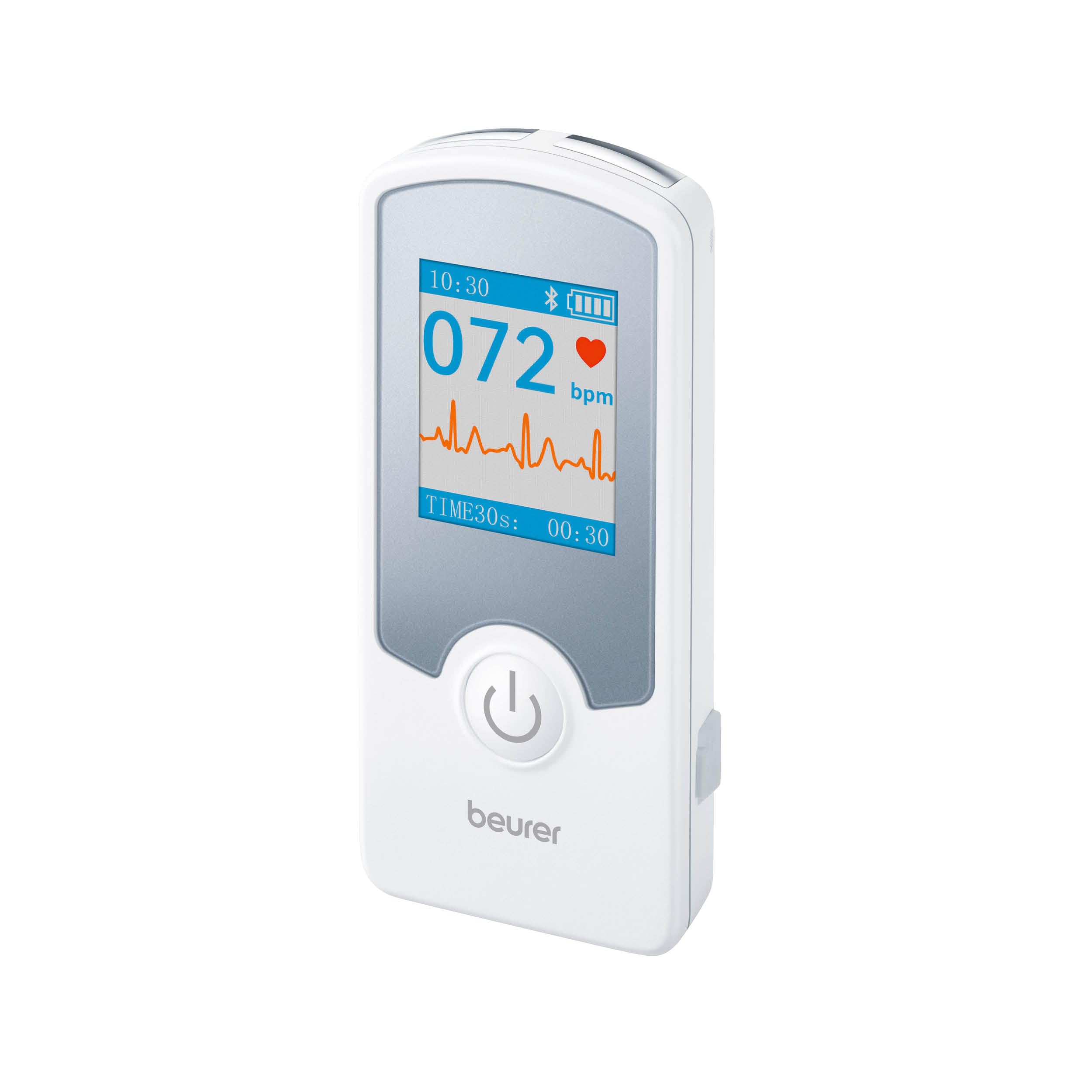
The Beurer Cardio Companion ME75 stands apart in this category because it packs a 3-lead clinical-grade electrocardiogram into a device that weighs just over two ounces and returns a reading in under thirty seconds. German-engineered and FDA-cleared, it captures a multi-vector heart rhythm analysis that a single-lead device simply cannot match — making it the most diagnostically useful option for anyone monitoring arrhythmias beyond basic AFib.
Four measurement modes (hand-to-hand, hand-to-wrist, hand-to-leg, and hand-to-chest) give you flexibility to get a clean trace even when your hands are cold or dry. The bright color display shows your rhythm strip immediately, and the optional Bluetooth app stores unlimited readings for trend tracking. Local storage for up to 100 EKGs means you do not lose data if your phone is not nearby.
Cardiologists have noted the trace quality rivals that of clinic-based 3-lead units, making this a legitimate tool for remote patient monitoring rather than just a wellness gadget. The only real caveat is that it is not compatible with pacemakers or metal implants, and the hand-to-hand grip takes a few tries to master. For the price-to-feature ratio in a multi-lead personal EKG, this is the strongest contender on the current market.
Why it’s great
- 3-lead capture for superior diagnostic depth
- FDA-cleared with cardiologist-validated trace quality
- Rechargeable battery with local storage of up to 100 readings
Good to know
- Not compatible with pacemakers or metal implants
- Hand-to-hand measurement technique requires practice for consistent contact
2. KardiaMobile 1-Lead EKG Monitor
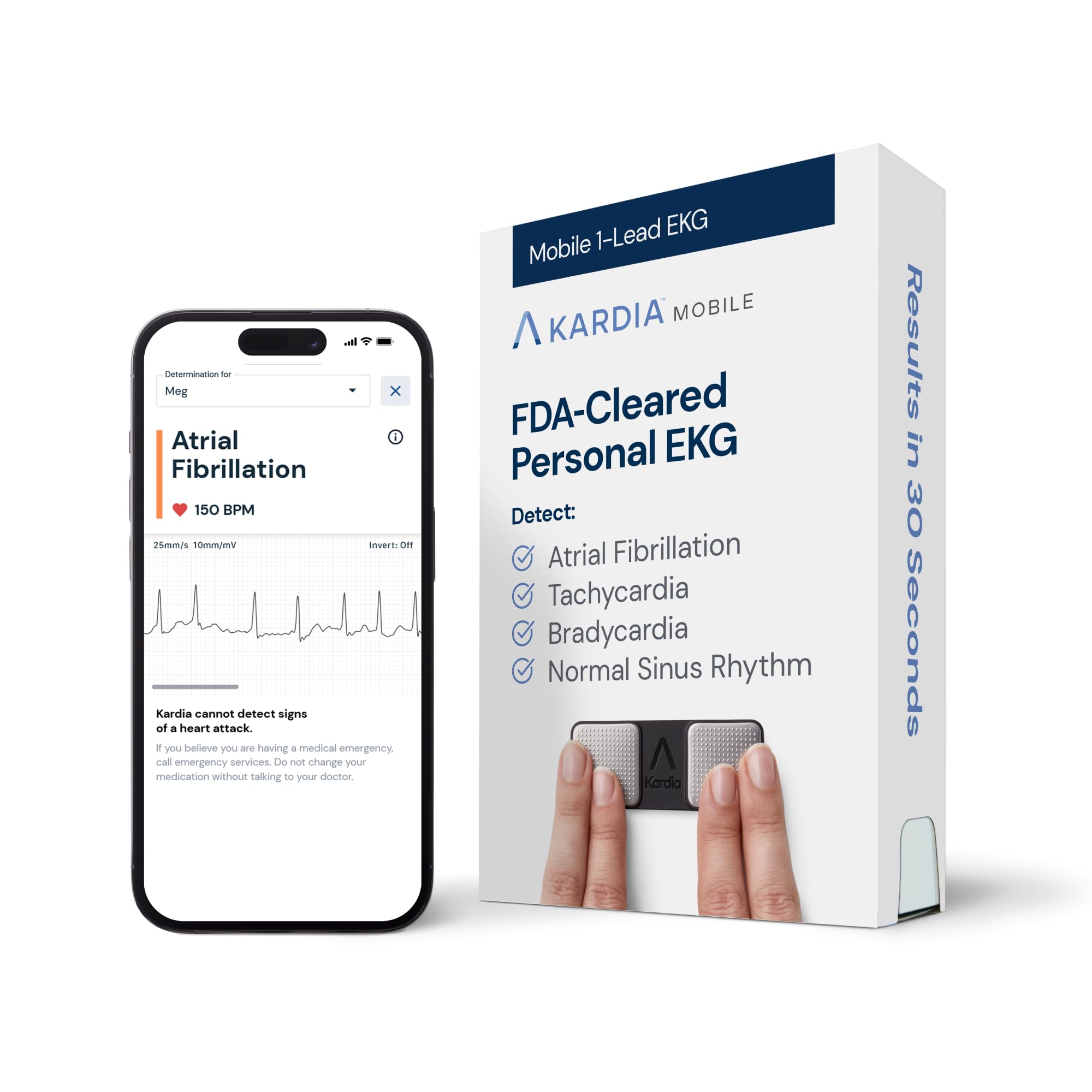
The KardiaMobile is the most widely recommended single-lead personal EKG on the market, and for good reason — its pocket-sized form factor (weighing under an ounce) and thirty-second recording protocol make it the go-to device for anyone needing quick AFib detection without the complexity of chest leads. The #1 cardiologist-recommended personal EKG brand, it has powered over 350 million recordings globally and is trusted by leading hospitals for remote monitoring programs.
No Bluetooth pairing, cords, or Wi-Fi are required to take a reading. You simply place your fingers on the silver sensors, and the free Kardia app displays a clear interpretation: Normal Sinus Rhythm, Atrial Fibrillation, Tachycardia, or Bradycardia. You can email a PDF of the trace directly to your physician from within the app. The replaceable CR2016 battery lasts up to two years with daily use, so there is no charging chore.
The main limitation is the lead count: a single vector cannot detect all arrhythmia types, and the app interface feels dated compared to newer competitors. A paid KardiaCare subscription unlocks unlimited saved readings and cardiologist reviews, but the basic detection feature works perfectly without any recurring fee. For pure portability and ease of use in an FDA-cleared device, the KardiaMobile remains the standard-bearer.
Why it’s great
- Ultra-light and small enough to carry in any pocket
- No charging needed — one battery lasts up to two years
- Instant AFib detection with PDF export for doctor sharing
Good to know
- Single-lead capture limits diagnostic scope versus 3-lead devices
- App interface is less polished and requires firm finger pressure
3. EMAY Portable ECG Monitor EMG-6L

The EMAY EMG-6L distinguishes itself with a built-in 1.8-inch color display that shows your live ECG trace directly on the device — no phone required for the initial reading. This standalone capability is a major advantage for older users who may not be comfortable pairing with a smartphone app every time they need a quick rhythm check. The metal chassis feels substantial in the hand, and the rechargeable lithium battery delivers about two to three hours of cumulative use, which translates to hundreds of thirty-second recordings between charges.
Trace quality on this unit has been praised by users as rivaling that of more expensive units costing three times as much. The device connects via Bluetooth to a phone or via USB to a PC, allowing you to upload, review, and export PDF reports. There is no subscription fee for any feature — the software is completely free and fully functional for storing and sharing data.
The EMG-6L is a single-lead device, so it captures only Lead I, which limits its diagnostic range compared to multi-lead alternatives. Also, the micro-USB charging port feels outdated in a USB-C world, and the instruction manual mentions pacemaker incompatibility. For a user who wants a high-quality trace with on-device viewing and zero ongoing costs, this is a compelling mid-range choice.
Why it’s great
- On-device color display shows trace without needing a phone
- Zero subscription fees for full data export and storage
- High trace quality with a durable metal build
Good to know
- Single-lead only, limiting arrhythmia detection scope
- Micro-USB charging port instead of USB-C
4. HaSoCare Personal EKG Monitor

The HaSoCare Personal EKG Monitor is a lightweight, rechargeable entry-level device that prioritizes simplicity and affordability without cutting corners on basic functionality. Weighing only 60 grams and roughly the size of a smartphone, it fits easily into a purse or glove compartment. It records a single-lead ECG in thirty seconds and displays the heart rate and rhythm strip on a clear LCD screen directly on the unit.
Compatibility with both mobile phones (via Bluetooth) and computers (via USB cable) gives you flexible options for data management. The free companion app allows you to set sampling times and choose measurement modes — hand-to-hand, hand-to-chest, or hand-to-leg — which can improve trace quality depending on your physiology. No subscription is required to view, store, or share your EKG data.
Customer feedback reveals a notable quality-control concern: a small number of units stopped functioning after a few weeks, and the customer support experience was reportedly frustrating. Additionally, the device is a single-lead monitor, so it will not match the diagnostic breadth of the Beurer ME75. For those on a tight budget who need a functional, no-subscription EKG monitor and are willing to accept some variability in longevity, the HaSoCare offers a fair value proposition.
Why it’s great
- Very lightweight and portable at 60 grams
- Rechargeable battery with no recurring subscription fees
- Works with both phone (Bluetooth) and computer (USB)
Good to know
- Single-lead only, limiting diagnostic depth
- Some reports of early device failure and poor customer support
5. OMRON Silver Blood Pressure Monitor
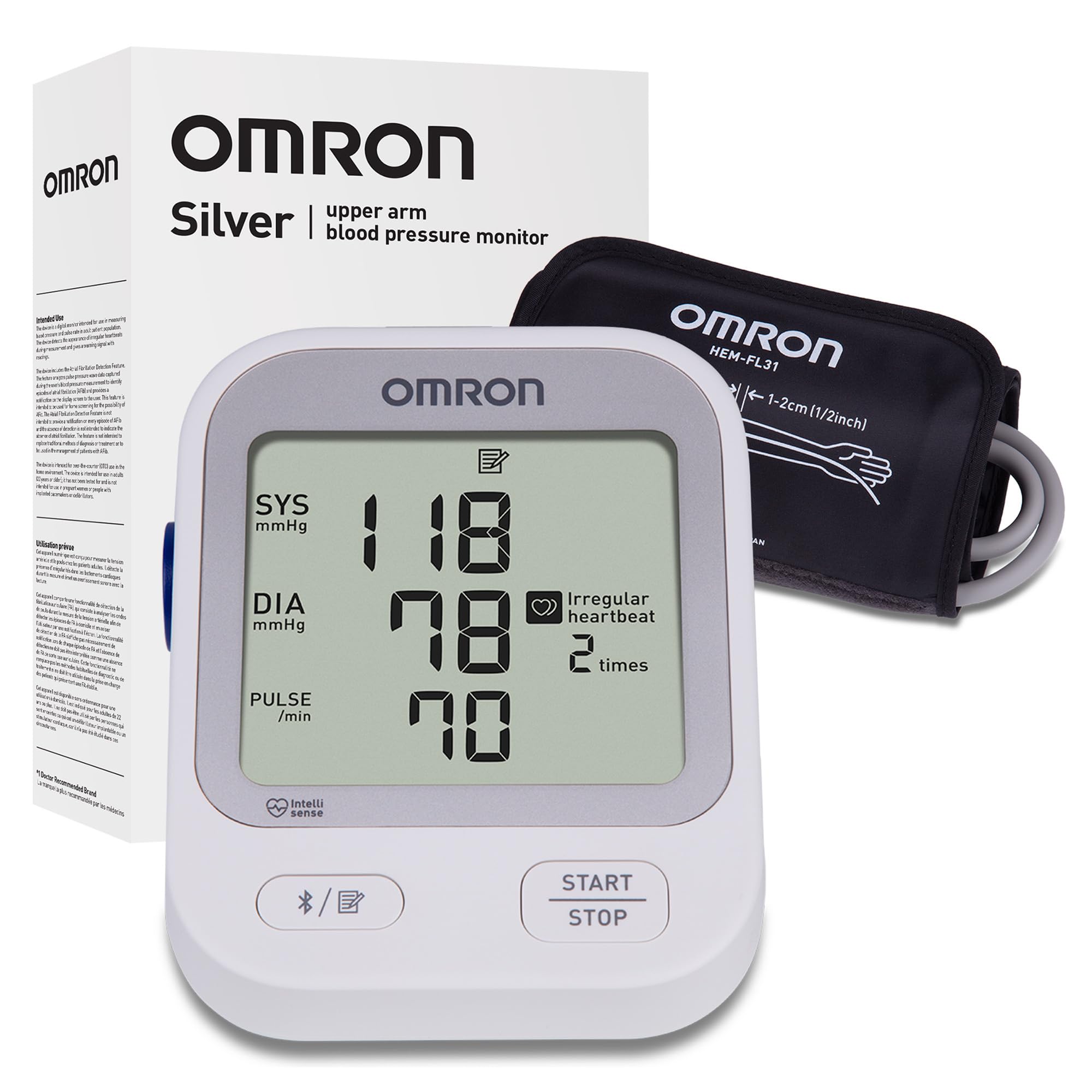
The OMRON Silver is not a dedicated EKG recorder, but it deserves a spot on this list because of its Irregular Heartbeat Detection feature, which alerts you during routine blood pressure measurements if an arrhythmia is present. Since high blood pressure and atrial fibrillation often coexist, this combination device serves a dual purpose for cardiovascular monitoring. OMRON is the #1 doctor and pharmacist recommended brand for home blood pressure monitors, and the Silver model uses Advanced Accuracy Technology validated against clinical standards.
The pre-formed ComFit cuff slides on easily and fits arm circumferences from 9 to 17 inches, making it one of the most user-friendly cuffs on the market. Readings sync via Bluetooth to the free OMRON connect app, which integrates with Apple Health and Google Fit for consolidated health tracking. The large LCD display shows systolic and diastolic values along with a hypertension indicator that alerts you if your reading is elevated.
The IHB detection is a secondary feature, not a primary diagnostic tool — it does not produce an ECG waveform or store rhythm strips for physician review. If your only need is arrhythmia detection with a full trace, a dedicated EKG monitor is essential. But for someone managing both blood pressure and heart rhythm concerns who wants a single reliable device, the OMRON Silver is a smart and practical choice.
Why it’s great
- Combines clinically-validated BP monitoring with IHB detection
- Easy-slide pre-formed cuff fits a wide arm range
- Bluetooth app syncs with Apple Health and Google Fit
Good to know
- Does not provide a full EKG waveform or rhythm strip
- Battery life is moderate; AC adapter sold separately
6. Garmin HRM 600

The Garmin HRM 600 is a high-accuracy chest strap heart rate monitor designed for serious athletes who need real-time heart rate and heart rate variability (HRV) data during training, not a clinical EKG for arrhythmia screening. It transmits accurate HR and running dynamics — including stride length, vertical oscillation, and ground contact time balance — to compatible Garmin smartwatches and cycling computers. It also stores workout data for activities like swimming or team sports where wearing a watch is impractical.
The rechargeable battery lasts up to two months, and the machine-washable strap is available in two sizes (XS-S and M-XL) for a secure fit. The device tracks daily steps, heart rate, and calories even when you are not actively recording a workout, syncing directly to the Garmin Connect app. For users who already own a Garmin ecosystem watch, the HRM 600 provides data that wrist-based optical sensors cannot match.
This is not a replacement for an EKG monitor. The HRM 600 does not have FDA clearance for rhythm detection, does not produce an interpretable ECG trace, and cannot diagnose AFib or other arrhythmias. It is purpose-built for performance tracking, not medical monitoring. If your goal is athletic performance optimization with precise HRV data, this is a top-tier tool. If your goal is cardiac health screening, stick with an FDA-cleared EKG device.
Why it’s great
- Provides accurate HR, HRV, and advanced running dynamics
- Stores data for swim and team sport workouts without a watch
- Rechargeable battery with two-month life
Good to know
- Not FDA-cleared for medical arrhythmia detection
- Premium price point aimed at serious athletes, not general users
7. Withings ScanWatch Nova Brilliant

The Withings ScanWatch Nova is a luxury analog smartwatch that embeds medical-grade sensors — including ECG, SpO2, and a breakthrough TempTech24/7 skin temperature module — beneath a classic stainless steel case and deployant clasp. It provides on-demand electrocardiogram recordings that can detect AFib, and it offers 24/7 heart rate monitoring with alerts for high and low readings. The thirty-day battery life is unmatched by any full-color smartwatch competitor, eliminating the daily charging burden.
Beyond heart monitoring, the ScanWatch Nova tracks sleep stages (light, deep, and REM), overnight respiratory rate, blood oxygen levels, and menstrual cycles. It auto-recognizes over forty activity types and estimates VO2 max for fitness assessment. The connected GPS uses your phone’s location, so you can leave the watch free of an always-on cellular connection. The design is genuinely elegant — many users report receiving compliments on its traditional analog appearance.
The trade-offs are significant for a device at this price tier. The companion app is clunky and lacks on-watch alarm functionality. Sleep tracking accuracy has been reported as inconsistent compared to dedicated sleep trackers like Oura. The battery is non-replaceable, meaning the entire unit has a finite lifespan. Real-world battery life under moderate training use is closer to twenty days than the advertised thirty. For someone who values medical-grade ECG in an heirloom-quality watch with long battery life, the ScanWatch Nova delivers. For pure diagnostic value at a lower cost, a dedicated EKG monitor is the better investment.
Why it’s great
- Medical-grade ECG in a luxury traditional watch design
- Outstanding 30-day battery life for a smartwatch
- Multi-sensor health suite (ECG, SpO2, Temp, Sleep)
Good to know
- Sleep tracking accuracy is inconsistent
- Non-replaceable battery limits long-term lifespan
- High price point; real-world battery ~20 days with training
FAQ
Can a 1-lead EKG monitor detect a heart attack?
Do I need a monthly subscription to use a personal EKG monitor?
Will the Beurer ME75 work with an implanted pacemaker?
Final Thoughts: The Verdict
For most users, the at home ekg monitor winner is the Beurer Cardio Companion ME75 because its 3-lead capture provides genuinely superior diagnostic depth over single-lead alternatives while remaining portable enough for daily use. If you want ultra-portable AFib detection that fits in your pocket and requires zero charging, grab the KardiaMobile. And for a standalone device with an on-board screen and zero ongoing subscription fees, nothing beats the EMAY Portable ECG EMG-6L.