
Our readers keep the lights on and the weekend projects moving. As an Amazon Associate, I earn from qualifying purchases.
You’ve loaded up Ableton, your synth is armed, and the second you press play on a clip, there it is — that hollow, clicky lag between hitting a pad and hearing the sound. That latency isn’t your computer. It’s your audio interface bottlenecking the real-time signal path between Live’s engine and your monitors. The wrong interface turns Ableton’s session view into a guessing game, while the right one makes your MIDI controller feel like a real instrument.
I’m Rikta — the co-founder and writer behind FitlyFast. I’ve combed through dozens of interface spec sheets, analyzed round-trip latency figures, compared preamp floor noise, and cross-referenced Ableton’s audio buffer requirements to find the units that actually deliver bit-perfect timing with Live’s 11 and 12 session workflows.
Whether you’re building beats with drum racks, tracking vocals in arrangement view, or warping samples on the fly, choosing the right unit means trusting your monitors instantly. This guide breaks down the nine top contenders for the audio interface for ableton to help you find your perfect hardware partner.
How To Choose The Best Audio Interface For Ableton
Not all interfaces behave the same way when pushed by Ableton’s complex warp algorithms and multi-track session clips. The key specs that matter inside Live differ from what general buyers look for. Focus on these three pillars to avoid buying a box that sounds good at idle but buckles under a nine-track Ableton set.
Prioritize Low Round-Trip Latency (RTL) at Small Buffers
Ableton’s strength — real-time audio warping and MIDI monitoring — demands low RTL figures at 64 or 32 sample buffers. A high round-trip latency above 12ms creates a perceptible delay when playing pads or recording overdubs. Interfaces with optimized ASIO drivers (like Focusrite’s or Universal Audio’s) consistently deliver sub-8ms RTL, making them significantly more responsive during Live’s loop recording sessions.
Look for Transparent Preamps With Low Noise Floor
Ableton’s built-in effects suite — from Glue Compressor to Hybrid Reverb — adds gain and color to your raw signal. If your interface’s preamps introduce hiss or coloration, those artifacts compound inside Live’s effect chains. Aim for a noise floor rating of -127 dB or better. Clean preamps give you the headroom to apply Abetton’s saturation and compression without hitting a noise floor ceiling.
Consider Output Count for Separate Cue Mixes
If you record vocals, instruments, or live takes alongside your Ableton backing track, you need at least two independent headphone outputs or line outputs for a separate cue mix. Ableton doesn’t route the master and a click separately on a basic 2-output interface. Units with four or more outputs allow you to send a click and backing track to the musician while you monitor the full mix without interrupting your session flow.
Quick Comparison
On smaller screens, swipe sideways to see the full table.
| Model | Category | Best For | Key Spec | Amazon |
|---|---|---|---|---|
| Focusrite Scarlett Solo 4th Gen | Mid-Range | All-Around Ableton Recording | 120dB Dynamic Range | Amazon |
| MOTU M4 | Premium | Ultra-Low Latency Tracking | 2.6ms RTL at 64 Buffer | Amazon |
| Solid State Logic SSL 2 MKII | Mid-Range | Warm Analog Sound + Mixing | Legacy 4K Analog Enhancement | Amazon |
| Universal Audio Volt 2 | Mid-Range | Vintage 610 Preamp Character | 24-bit / 192 kHz Converters | Amazon |
| Audient EVO 8 | Premium | Multi-Mic Ableton Sessions | 4 EVO Mic Pres + JFET DI | Amazon |
| Focusrite Scarlett 4i4 4th Gen | Premium | Synth & Drum Machine Recording | 4 Line Inputs + MIDI I/O | Amazon |
| Focusrite Scarlett Solo 3rd Gen | Budget | Entry-Level Ableton Setup | 24-bit / 192 kHz Converters | Amazon |
| M-AUDIO AIR192x4 VSPro | Budget | Complete Beginner Package | 2.59ms Round-Trip Latency | Amazon |
| RØDE RØDECaster Duo | Premium | Live Ableton Streaming | Revolution Preamps (-131.5dBV) | Amazon |
In‑Depth Reviews
1. Focusrite Scarlett Solo 4th Gen
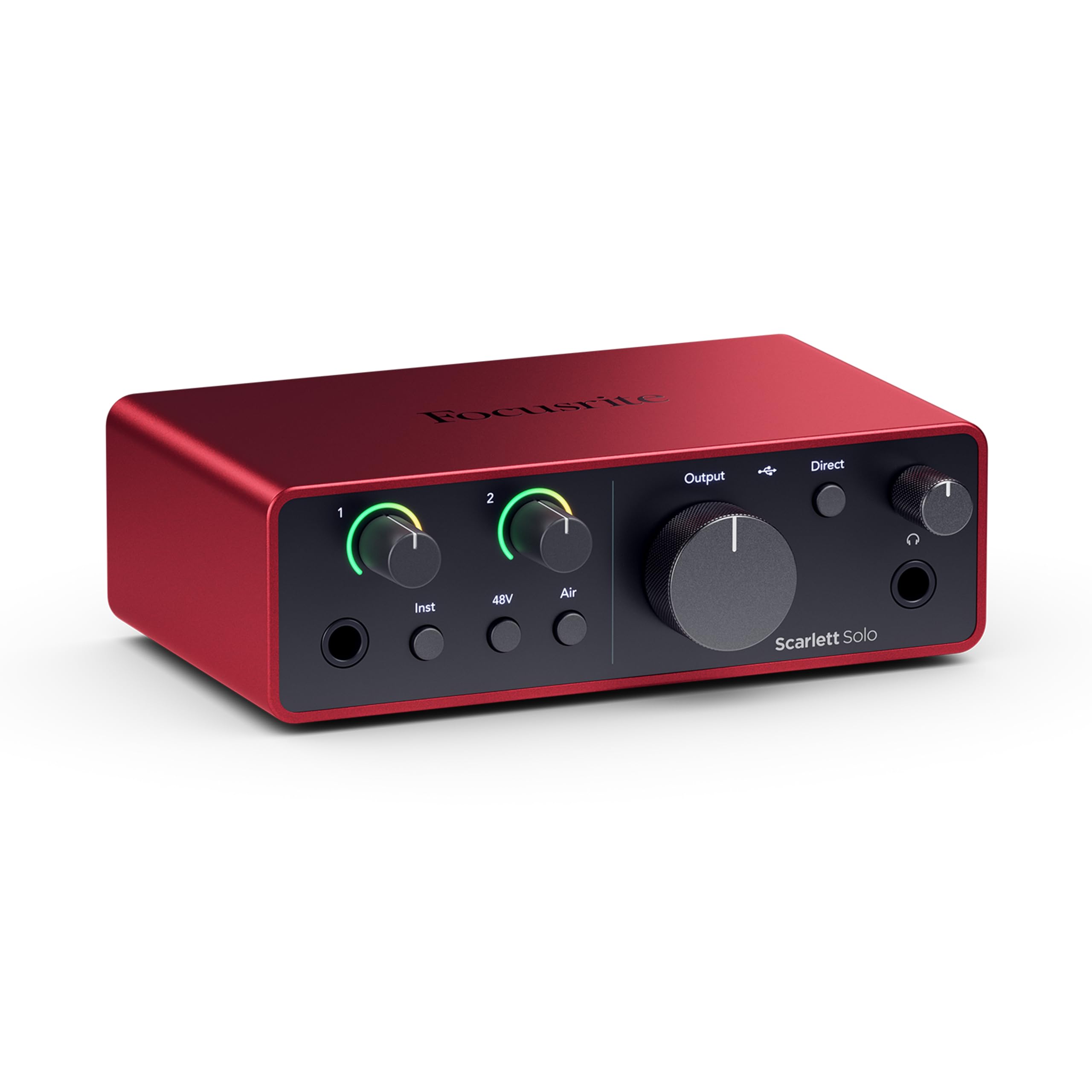
The Scarlett Solo 4th Gen delivers studio converters with a 120dB dynamic range — the same spec set found in Focusrite’s RedNet rack units. In Ableton, this translates to extremely clean signal capture when recording vocal takes with multiple instances of Live’s Pedal or Amp effects applied. The improved Air mode adds a subtle presence lift around the upper mids, specifically helping acoustic guitar and vocal tracks cut through a busy Ableton mix without additional EQ.
Auto Gain sets the recording level automatically when you begin arming a track in Live, which eliminates the tedious round of setting input trim while monitoring Live’s metering. Clip Safe acts as a safety net during improvisational loop recording — if you hit a loud transient while jamming with Ableton’s drum rack, the interface catches it before digital clipping hits your track. The USB-powered bus design means you don’t need an extra wall wart when recording with a laptop at a coffee shop.
Some users have reported needing to update firmware out of the box for proper headphone routing when using Ableton’s cue output system. The included Ableton Live Lite license gets you started immediately with up to eight tracks, but you’ll want to upgrade to Standard or Suite for serious producing. The single XLR input limits multi-mic recording, making this choice better for solo Ableton artists than band tracking.
Why it’s great
- 120dB dynamic range matches pro studio converters for pristine Ableton stems
- Auto Gain and Clip Safe remove the guesswork during session view improvisation
- USB-powered design with 192kHz sample rate for high-fidelity mobile recording
Good to know
- Only one XLR input prevents simultaneous multi-mic recording in Ableton
- Some units require immediate firmware update for stable headphone routing
2. MOTU M4

When you need the absolute lowest round-trip latency for playing Ableton’s Operator synth live with soft synth automation, the MOTU M4 delivers 2.6ms at a 64-sample buffer — among the best figures available in a bus-powered interface. The dedicated ASIO drivers are rock-solid stable on both Windows and macOS, meaning no crackling audio during complex Ableton arrangement views with dozens of MIDI clips stacked. The onboard LCD screen provides precise level metering for both inputs and outputs, allowing you to dial in gain without guessing on Live’s clip volume bars.
Four inputs and four outputs give you the flexibility to route a separate headphone mix inside Ableton’s session view. You can send the master out to monitors while routing a click track and a guide vocal to the second headphone output — ideal for recording overdubs without latency interference. The loopback feature records your Ableton master directly into a new track for seamless live streaming or sampling. The mic preamps are transparent with a very low noise floor, so even quiet vocal layers recorded with Live’s Hybrid Reverb come out clean.
The headphone amplifier feels slightly underpowered when running bus power — owners of high-impedance studio headphones may want to add a dedicated headphone amp. Volume knobs have a noticeable dead zone from 0% to 25%, making precise level matching tricky at very low monitoring volumes. The MOTU M4 costs more than most mid-range options, but for Ableton users who prioritize tracking with absolute zero latency, it’s a worthwhile investment.
Why it’s great
- 2.6ms round-trip latency allows real-time soft synth play inside Ableton without lag
- Rock-solid Windows ASIO drivers with no dropouts even at 64-sample buffers
- LCD screen and loopback output streamline leveling and live Ableton streaming
Good to know
- Headphone output is less powerful on USB bus power alone
- Volume knobs have a 0-25% dead zone requiring careful low-level adjustments
3. Solid State Logic SSL 2 MKII

The SSL 2 MKII brings the legendary Legacy 4K analog enhancement circuit directly into your Ableton signal path. When engaged, the 4K button adds harmonic saturation and presence that mimics classic 4000 series console routing — you can print this character onto your session view clips before Ableton’s effects even touch the signal. The mic preamps have an exceptionally low noise floor with detailed, clean capture that works beautifully with Ableton’s Saturator and Glue Compressor on the same channel.
The high-pass filter built into each channel removes rumble from voice tracks before it reaches Ableton’s warp engine, which is especially helpful for podcasting and narration work inside Live. With two XLR inputs, two instrument inputs, and MIDI I/O via 5-pin DIN jacks, you can connect a keyboard controller, a synth, and a microphone simultaneously — no need to unplug and swap during a session. The 32-bit / 192kHz converters ensure your stems retain full dynamic range even when pushed through Live’s complex return track routing.
The unit is larger and heavier than most compact interfaces — at over 2.5 pounds, it’s not ideal for a mobile Ableton backpack studio. Some users note that the Legacy 4K effect can be subtle on certain microphones, and you may want a backup interface if you require pure transparency without analog coloring. The MIDI I/O is a welcome addition, letting you sync external hardware to Ableton’s transport without an extra USB hub.
Why it’s great
- Legacy 4K analog circuit adds console-quality saturation before Ableton processing
- HPF removes rumble before it reaches Live’s warped session clips for cleaner takes
- Built-in MIDI I/O lets you sync hardware synths to Ableton transport seamlessly
Good to know
- Heavier metal chassis less portable for mobile Ableton producers
- 4K effect can be subtle with certain microphones — not ideal for pure transparency
4. Universal Audio Volt 2

The Universal Audio Volt 2 brings a taste of the classic 610 tube preamp character to your Ableton recordings without the rack hardware. Engaging Vintage mode adds a pleasing harmonic saturation that warms up vocal tracks and DI guitar before Ableton’s clip processing — think of it as studio-quality analog mojo written directly into the signal chain. The 24-bit / 192kHz converters deliver crystal clarity across your arrangement view stems, preserving the low-end weight of kick drums and basslines after warp processing.
Volt 2 works well when you want a recorded sound that requires less post-processing inside Live’s mixer. The Vintage mode is especially effective on male vocals and acoustic guitar, reducing the need for corrective EQ in the arrangement. It’s USB-powered, so you can set up with a laptop and record anywhere without hunting for a power outlet. The included LUNA DAW integrates with the hardware for a tape-style workflow, but you can route it directly into Ableton without any driver hassles.
Vintage mode is not defeatable in the sense that it always adds some hardware character — if you want flat, neutral capture for pristine mix stems, this interface adds a layer you might not want. The input count is limited to two channels, so multi-instrument Ableton setups require frequent cable swaps. Some buyers report that the Vintage effect varies in noticeable intensity between units, so consistency across multiple Volt interfaces can be unpredictable.
Why it’s great
- Vintage 610 preamp mode adds tube-like harmonic saturation to Ableton vocal takes
- USB-powered for quick mobile recording with a laptop in any environment
- 192kHz converters preserve clean transients for warped bass and drum clips
Good to know
- Vintage mode always colors the signal — not a neutral capture for purist tracking
- Limited to two inputs, requiring frequent cable swaps for multi-source Ableton sessions
5. Audient EVO 8

The Audient EVO 8 packs four EVO mic preamps and a dedicated JFET instrument input into a compact chassis, making it the best choice for Ableton users who need multiple microphones or a DI guitar alongside vocal takes. The preamps are exceptionally clean with a noise floor that rivals interfaces costing nearly twice as much — your Ableton stems stay clear even after heavy processing with Live’s multiband dynamics. The SmartGain system automatically sets recording levels for each input, which is a huge time-saver when you’re juggling several armed tracks in the session view.
The JFET instrument input adds a subtle warmth to DI guitar and bass recordings, giving you a more amp-like feel when playing through Ableton’s Amp and Cabinet effects. Two independent headphone outputs with separate mix controls allow you to create a custom cue mix for a performer while monitoring the full Ableton master — perfect for recording overdubs or vocal takes against a complex backing track. The compact design takes very little desk space, fitting neatly next to a laptop for a portable multi-input Ableton rig.
The unit is so light that heavy USB cables can lift the front edge, requiring you to place a block under the cables for stability. The software setup forces you to install drivers before plugging in the hardware for the first time — failing to read the instructions can cause a frozen installation screen that requires a Windows reinstall to undo. The maximum sample rate is 96kHz, which is fine for most Ableton workflows but may be limiting if you rely on 192kHz sampling for high-frequency content capture.
Why it’s great
- Four EVO preamps allow simultaneous multi-mic recording into Ableton arrangement view
- SmartGain auto-sets levels for multiple armed tracks during session view recording
- JFET DI input adds analog warmth to guitar tracking through Ableton Amp effects
Good to know
- Lightweight build requires cable management to prevent the unit from tipping
- Driver installation must be done before hardware connection to avoid OS-level freeze
6. Focusrite Scarlett 4i4 4th Gen
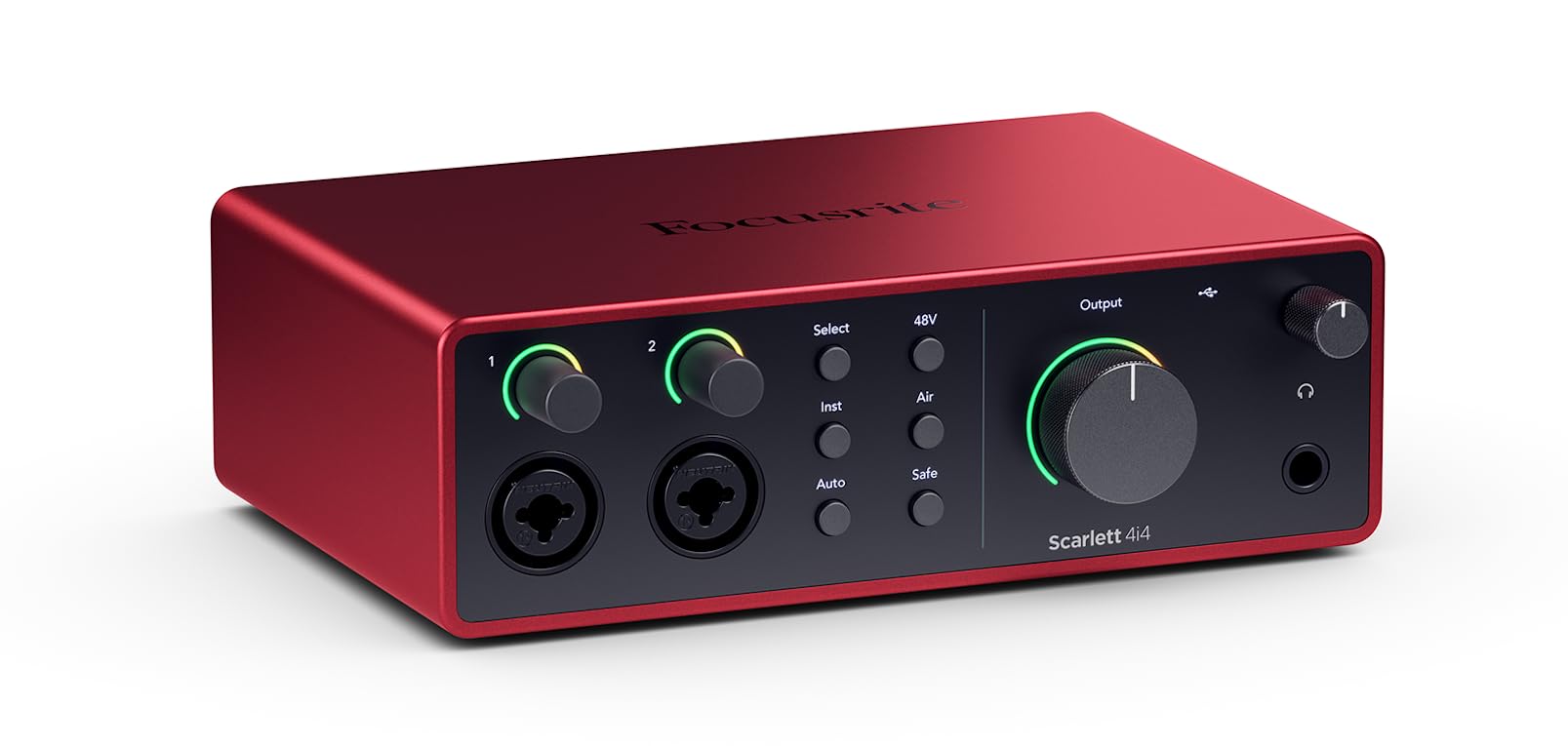
The Scarlett 4i4 4th Gen expands on the Solo formula with four line-level inputs and MIDI I/O, making it the definitive hub for hardware synth integration inside Ableton Live. Two Scarlett mic preamps handle vocal and instrument capture, while the additional two line inputs accept synth outputs directly without the need for external DI boxes. The 120dB dynamic range matches Focusrite’s flagship converters, ensuring your synth patches retain their full frequency spectrum when warped inside Ableton’s Simpler or Sampler devices.
Auto Gain and Clip Safe work across all four input channels simultaneously, so you can set levels on multiple hardware synths at once while arming tracks in the session view. The dedicated MIDI in and out ports let you sequence external hardware from Ableton’s piano roll without a separate MIDI interface — no latency offsets needed for tight timing. Separate level controls for monitors and headphones give you independent mix options when tracking a vocal live alongside pre-recorded synth loops.
The 4i4 requires an external USB-C power supply when using all inputs — bus power no longer works with the full I/O bank active. Only two of the four inputs are XLR, meaning additional preamps or outboard gear may be needed for multi-mic recording. Some users have reported ASIO driver crashes during some Windows games that pause Ableton playback, requiring a reboot to restore function.
Why it’s great
- Four line inputs plus MIDI I/O integrate hardware synths seamlessly into Ableton arrangement view
- Auto Gain and Clip Safe across all channels simplify multi-synth recording in session view
- 120dB dynamic range preserves synth patch detail through Ableton warp processing
Good to know
- Requires external power supply when using all inputs simultaneously
- ASIO driver can crash during some gaming applications, pausing Ableton playback
7. Focusrite Scarlett Solo 3rd Gen

The Scarlett Solo 3rd Gen remains a trusted entry point for Ableton beginners who need reliable performance without premium pricing. Its 24-bit / 192kHz converters produce clear, detailed recordings that hold up well inside Live’s complex effect chains. The included Switchable Air mode adds presence to top-end frequencies when recording acoustic guitar or vocals, helping tracks sit better in a dense Ableton mix without additional EQ automation.
The all-metal chassis is surprisingly durable — it has survived multiple desk moves and cold storage sessions while maintaining full functionality. Setup on macOS is genuinely plug-and-play with USB-C, while Windows users need to install Focusrite Control for ASIO routing. The bundle includes Ableton Live Lite, Pro Tools Intro+, and the Hitmaker Expansion plugin suite, giving you a solid software foundation for building arrangement view comps.
The Solo is strictly a one-mic, one-instrument interface — you cannot record a vocal and a guitar simultaneously into separate Ableton tracks. The 3rd Gen preamps, while clean, don’t match the 120dB dynamic range of the 4th Gen models. At the price point, it’s a great starter interface, but most serious Ableton users will outgrow its input limitations within the first year of production.
Why it’s great
- Proven 192kHz converters deliver clean recordings that Tolerate Ableton effect chains well
- Metal housing is rugged enough for mobile studio use and daily transport
- Ableton Live Lite and Hitmaker Expansion provide a complete software start for new producers
Good to know
- Cannot record two sources simultaneously into separate Ableton tracks
- 3rd Gen preamps lack the 120dB dynamic range of the newer 4th Gen line
8. M-AUDIO AIR192x4 VSPro

The M-AUDIO AIR192x4 VSPro is the rare interface package that includes a condenser microphone, shock mount, XLR cable, and studio headphones along with the interface itself — everything you need to start recording into Ableton arrangement view on day one. The interface itself delivers a class-leading 2.59ms round-trip latency, allowing responsive real-time monitoring through Live’s effects without audible delay. The AIR series preamps are clean and transparent, capturing vocal tracks with enough headroom for heavy Ableton compression routines.
Two combo inputs accept XLR mics or ¼-inch instrument connections, so you can record vocals alongside a DI guitar into two separate armed tracks in the session view. The included Nova condenser microphone handles spoken word and vocal recording well for the price point, and the HDH40 headphones provide balanced monitoring for basic mixing inside Ableton. The bundle features Ableton Live Lite, MPC Beats, and a suite of virtual instruments including Xpand!2 and Mini Grand — a generous software package for any Ableton newcomer.
The Nova microphone quality is average — you’ll likely upgrade to a better condenser like an AT2020 or SM57 within six months as your ears develop. Some users have reported the interface unit failing within the first year, though M-Audio’s replacement service was responsive in swapping out the entire package. The included USB-C cable is short, so be prepared to route it close to your laptop or use an extension.
Why it’s great
- 2.59ms round-trip latency enables responsive real-time monitoring inside Ableton effects chains
- Complete bundle with mic, headphones, and cables removes need for separate purchases
- Ableton Live Lite, MPC Beats, and virtual instruments provide a robust software foundation
Good to know
- Included Nova condenser mic has average quality that most users eventually outgrow
- Some units have reported early failures, though warranty replacement is available
9. RØDE RØDECaster Duo
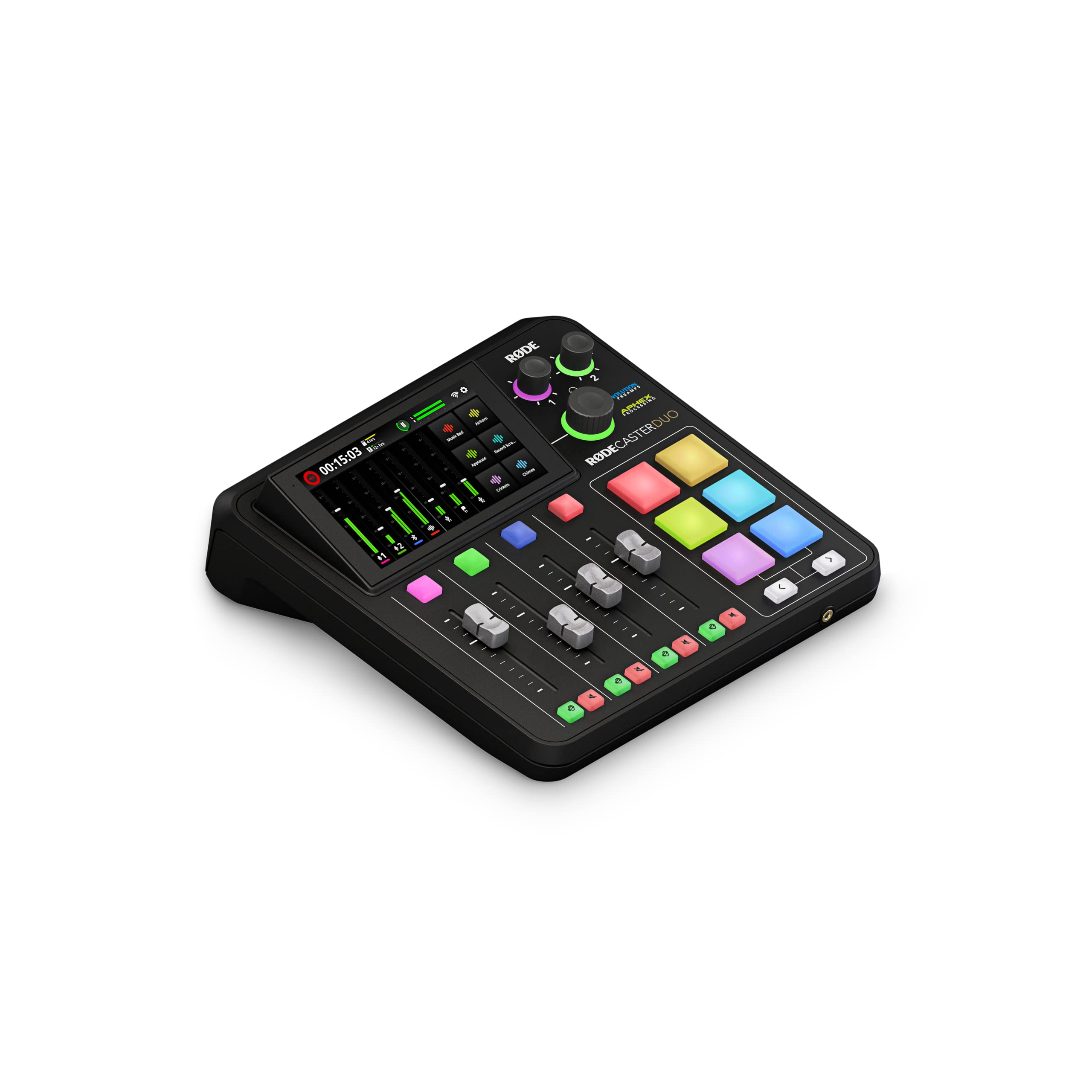
The RØDE RØDECaster Duo is designed for creators who combine Ableton music production with live streaming — it functions as both an audio interface and a mixer with broadcast-quality effects. The Revolution Preamps with -131.5dBV EIN and 76dB of gain deliver pristine capture that rivals standalone preamp units, perfect for recording clean vocals in Ableton arrangement view. The four broadcast faders allow you to control microphone levels, music playback, and system audio independently while Live plays in the background.
APHEX processing including the Aural Exciter and Big Bottom effects adds professional polish to your voice before it reaches Ableton’s track — you can dial in radio-ready vocal processing while keeping Live’s mixer clean for music production. The 5.5-inch touchscreen with haptic feedback provides tactile control over effects, routing, and sound pads without needing to mouse around inside Abelton’s session view. The compact all-in-one design eliminates the need for separate preamps, a mixer, and a headphone distribution unit in your studio.
The initial setup process can be frustrating for beginners — firmware updates and driver installations require following RØDE’s specific order, and some users report a freeze on the loading screen that requires a 24-hour power reset to fix. The unit is not a traditional audio interface in the sense that you manage routing through RØDE’s own software rather than through Ableton’s I/O configuration. For pure music producers who don’t stream, its mixer-centric feature set may add unnecessary complexity to a simple Ableton recording setup.
Why it’s great
- Revolution Preamps with 76dB of gain handle demanding microphones cleanly in Ableton tracks
- APHEX processing applies broadcast-quality vocal effects before reaching Live’s arrangement view
- Four faders and touchscreen provide tactile control for live Ableton streaming workflows
Good to know
- Setup process is not beginner-friendly and may require technical troubleshooting
- Mixer-centric routing adds complexity for users who only need basic I/O in Ableton
FAQ
What buffer setting should I use in Ableton when recording vocals?
Can I connect a MIDI keyboard directly to any audio interface for Ableton?
Why does Ableton crackle when I lower the buffer size below 128 samples?
Does Ableton Live Lite work with all the interfaces in this guide?
Final Thoughts: The Verdict
For most users, the audio interface for ableton winner is the Focusrite Scarlett Solo 4th Gen because its 120dB dynamic range, auto-gain setup, and included Ableton Live Lite cover everything from first arming a track to recording polished arrangement stems. If you want ultra-low latency for real-time soft synth play, grab the MOTU M4. And for producers who record multiple microphones or need independent cue mixes, nothing beats the Audient EVO 8.