
Our readers keep the lights on and the weekend projects moving. As an Amazon Associate, I earn from qualifying purchases.
Distortion, microphonics, and a congested soundstage are often traced back to the last thing you suspect: the cable connecting your headphones to your amplifier. A high-quality headphone cable isn’t about flashy looks; it’s the final critical path for the pure, uncolored electrical signal that determines everything from channel balance to transient response.
I’m Rikta — the co-founder and writer behind FitlyFast. I’ve spent hundreds of hours dissecting the spec sheets, connector metallurgy, dielectric materials, and shielding topologies of headphone cables to separate genuine performance upgrades from aesthetic marketing claims.
In this guide, I break down the best aftermarket cables for audiophile headphones, covering critical factors like conductor purity, termination types, and build quality to help you find the best audiophile headphone cables that actually improve your listening experience without draining your wallet.
How To Choose The Best Audiophile Headphone Cables
Choosing a good headphone cable involves balancing electrical performance with mechanical fit. The best upgrade for your system depends on your headphone’s connector type, your amplifier’s output stage, and the listening environment’s noise floor.
Conductor Material & Purity
Oxygen-Free Copper (OFC) and Ohno Continuous Cast (OCC) copper are the industry standards. OFC reduces signal loss compared to standard copper, while OCC copper offers superior grain structure for even lower distortion. Silver-plated OFC raises the surface conductivity for high-frequency treble air but can sound bright with analytical headphones; pure silver cables offer the highest conductivity but must be properly designed to avoid a harsh top end.
Balanced vs. Single-Ended Termination
Balanced connections (XLR, 4.4mm Pentaconn) require a balanced amplifier. They provide a true ground reference, double the voltage swing, and cancel common-mode noise picked up along the cable path. Single-ended (3.5mm, 6.35mm) connectors are simpler and work with nearly all portable and desktop amps but lack the noise rejection benefits of a balanced topology. For long cable runs or systems with high noise floors, a balanced cable is a real upgrade.
Quick Comparison
On smaller screens, swipe sideways to see the full table.
| Model | Category | Best For | Key Spec | Amazon |
|---|---|---|---|---|
| Sennheiser HD 660S2 | Stock Cable | Detailed midrange | 42mm driver | Amazon |
| Shure SRH1540 | Stock Cable | Closed-back isolation | 40mm neodymium driver | Amazon |
| HIFIMAN Arya Stealth | Stock Cable | Expansive soundstage | Planar magnetic driver | Amazon |
| Audio-Technica ATH-AD2000X | Stock Cable | Airy open-back sound | 53mm CCAW driver | Amazon |
| Focal Celestee | Stock Cable | Versatile closed-back | 35 ohm impedance | Amazon |
| HIFIMAN HE1000se | Stock Cable | Top-tier open-back | Nanometer diaphragm | Amazon |
| Focal Utopia (2022) | Stock Cable | Flagship precision | ‘M’-shaped grille | Amazon |
In‑Depth Reviews
1. HIFIMAN HE1000se

The HIFIMAN HE1000se uses nanometer-thickness diaphragms and Acoustically Invisible Stealth Magnets to produce an exceptionally transparent, spacious sound. Owners often pair it with multi-strand silver cables to unlock even greater clarity and instrument separation, as the stock crystalline copper cable is competent but not the final word in resolution.
Its asymmetrical earcups and window shade system provide a comfortable, open listening experience, though upgrading to a high-purity OCC or silver-plated copper cable with a balanced XLR termination can dramatically sharpen the imaging and reduce the noise floor, especially when paired with a high-end DAC like the Benchmark DAC2 HGC.
The HE1000se benefits from a cable with solid 3.5mm connectors and a flexible jacket to accommodate its large earcups. This headphone responds visibly to cable upgrades, making it a perfect candidate for aftermarket audiophile cables that prioritize low capacitance and high conductivity.
Why it’s great
- Nanometer diaphragm delivers incredible detail retrieval and air between instruments.
- Responds exceptionally well to high-purity aftermarket cables for further soundstage expansion.
- Lightweight for its size, making long listening sessions more comfortable.
Good to know
- Stock cable is decent but not optimized for the driver’s full potential.
- Requires careful pairing with a balanced amplifier to maximize signal-to-noise ratio.
- Open-back design is unsuitable for noisy environments.
2. Focal Utopia (2022)

The Focal Utopia (2022) is a flagship open-back headphone with a dynamic driver that delivers pin-point imaging and exceptional resolution. Its stock cable is purpose-engineered for the Utopia’s low impedance, but many owners upgrade to a high-purity silver or OCC copper cable with a balanced 4.4mm termination to fully exploit the driver’s speed and detail.
Cable upgrades for the Utopia often target reducing microphonics and improving treble smoothness, as the stock cable can exhibit slight noise transfer when brushed against clothing. A well-shielded, finely stranded aftermarket cable preserves the Utopia’s clean high-frequency extension without adding harshness.
Given its sensitivity, the Utopia can reveal the quality of your entire signal chain. A superior cable with low capacitance helps maintain the integrity of transient attacks on piano strikes and percussion hits, making an aftermarket cable a worthy investment for owners seeking the last few percent of performance.
Why it’s great
- Exceptional clarity and resolution across the entire frequency range.
- Responds well to cable upgrades that reduce microphonics and improve treble refinement.
- ‘M’-shaped grille provides excellent high-frequency linearity without harshness.
Good to know
- Stock cable can be slightly microphonic, which some users find distracting.
- Requires a high-quality balanced DAC/amp to hear the full benefit of an upgraded cable.
- Heavier than some competitors, making fit stability a consideration.
3. Focal Celestee

The Focal Celestee is a closed-back headphone with a 35-ohm impedance, designed to be portable yet deliver incredible bass extension and tonal balance. The stock cable is often criticized for being too short and stiff, with a screw-on 6.35mm adapter that some users find cumbersome. A flexible, longer aftermarket cable with a proper 3.5mm or 4.4mm termination improves usability and reduces weight strain on the headphone jack.
Due to its closed-back nature, cable microphonics are more noticeable with the Celestee. Upgrading to a cable with a soft, fabric-like jacket and minimal triboelectric noise (like a braided OCC copper cable) resolves this issue cleanly, preserving the headphone’s rich, detailed presentation without introducing mechanical noise transfer during movement.
The Celestee’s mids and treble are highly revealing, meaning conductor purity matters. A well-made OCC copper cable adds weight to vocals and bass, while a silver-litz option can extend treble air. Either route, the primary benefit is the dramatic reduction in noise from the stock cable’s handling noise.
Why it’s great
- Stock cable’s microphonics are a clear upgrade opportunity that a better cable solves completely.
- Low impedance (35 ohms) makes it compatible with a wide range of portable DAC/amps.
- Outstanding build quality with premium Navy Blue and copper finishes.
Good to know
- Stock cable is short (approx. 4ft) and stiff, requiring an aftermarket cable for desk use.
- Closed-back design can make microphonics from cable movement more noticeable.
- The screw-on 6.35mm adapter is not the most user-friendly design.
4. HIFIMAN Arya Stealth

The HIFIMAN Arya Stealth offers exceptional planar magnetic performance at a mid-range price point. Its stock crystalline copper cable is functional, but many owners report that upgrading to a balanced XLR or 4.4mm cable with a higher strand count and better shielding unlocks the headphone’s full soundstage width and bass control.
The Arya’s large earcups and open-back design mean cable length and flexibility are important. A longer cable (6ft+) with a soft jacket prevents tangling and strain on the 3.5mm connectors. An upgraded cable also reduces the noise floor, allowing the driver’s nanometer-thickness diaphragm to express micro-details more clearly.
Given that the Arya Stealth is a top audio bargain, a reasonably priced OCC copper upgrade cable is a smart investment. New buyers should budget for a cable upgrade alongside the headphones, as it transforms the already impressive sound into something genuinely high-end without breaking the bank.
Why it’s great
- Stock cable is adequate but upgrading to a balanced cable noticeably widens the soundstage.
- Large driver area produces bass with authority and airy treble.
- Lightweight for its size, making long listening sessions comfortable.
Good to know
- Stock cable can be a weak point; an aftermarket cable is recommended for full performance.
- Large earcups may not fit all head shapes comfortably.
- Significant sound leakage due to open-back design.
5. Sennheiser HD 660S2
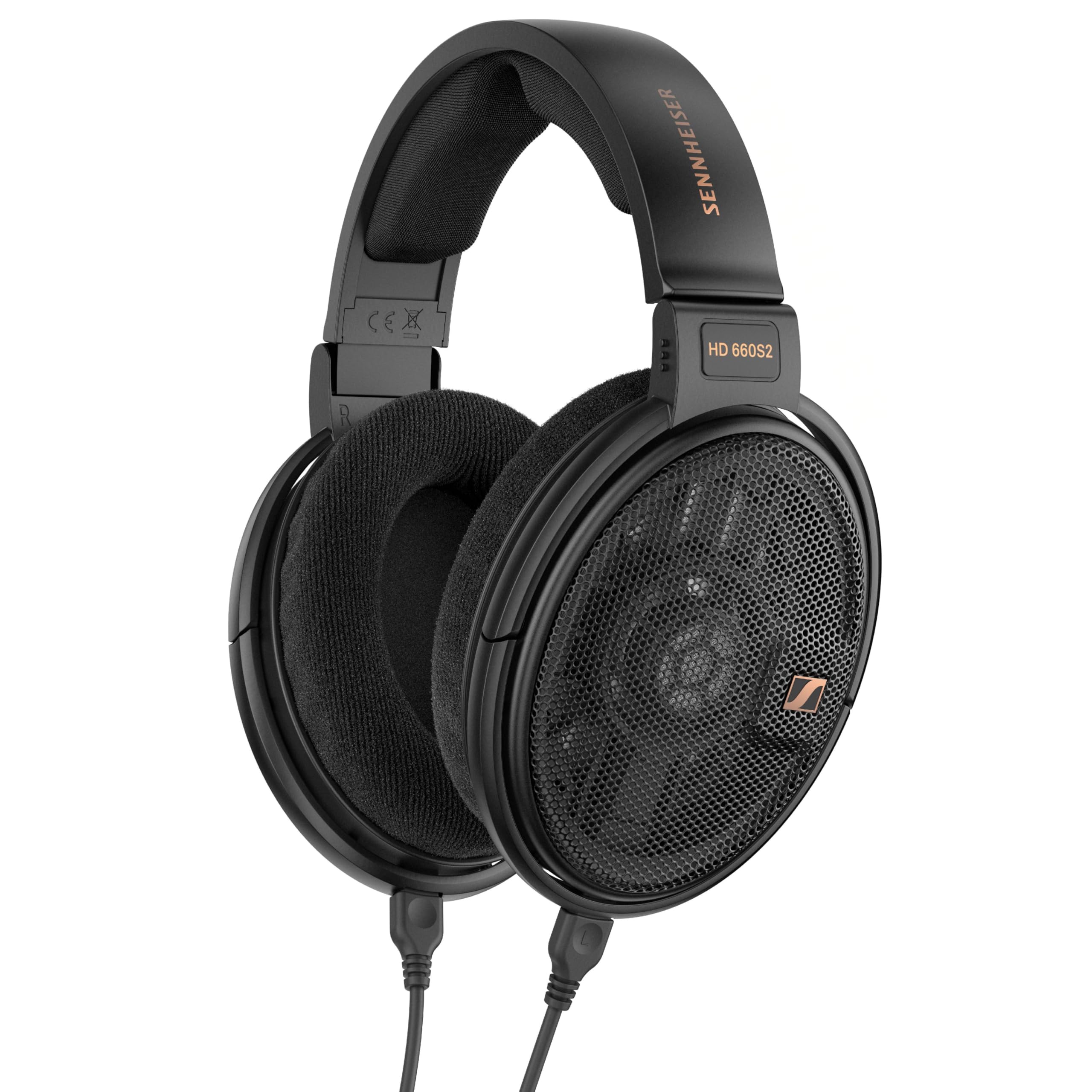
The Sennheiser HD 660S2 refines the classic HD 6-series formula with deeper sub-bass extension and a more balanced soundstage. It comes with two stock cables (6.3mm and 4.4mm), but both have a known microphonic Y-split that transmits handling noise. Upgrading to a braided, low-microphonic cable from brands like Periapt or Hart Audio resolves this issue while also improving the overall build feel.
With a 300-ohm impedance, the HD 660S2 benefits from a balanced connection (4.4mm or XLR) to a decent amplifier, which a good aftermarket cable provides. A better cable also helps with channel matching and reduces signal loss in long runs, preserving the detailed highs and warm bass of this well-regarded headphone.
For owners who find the stock cables too short or too stiff, a custom-length cable with the Sennheiser 2-pin connectors is a simple upgrade that enhances the daily user experience and protects the headphone’s jack from undue stress.
Why it’s great
- Includes both 6.3mm and 4.4mm cables, but microphonics are an easy fix with an aftermarket cable.
- Detailed, natural sound with excellent instrument separation.
- Lightweight and extremely comfortable for long listening sessions.
Good to know
- Stock cables can be microphonic, especially at the Y-split.
- Open-back design is not suitable for noisy environments.
- No XLR cable option included; a balanced cable is a worthwhile upgrade.
6. Shure SRH1540

The Shure SRH1540 is a premium closed-back headphone known for its neutral sound and exceptional comfort. However, a significant mechanical cable noise issue is well-documented; the stock cable is stiff and transmits every bump and brush directly to the earcups. Upgrading to a flexible, lightweight cable with a soft jacket is the single most important improvement a user can make.
The SRH1540’s earcups use a locking mini-XLR connector, which is robust but requires a cable with the specific Shure termination. Aftermarket cables designed for Shure headphones (like those from ZMF or custom builders) use softer insulation that eliminates the mechanical noise, allowing the headphone’s clear, extended highs and warm bass to shine without distraction.
For those using the SRH1540 for critical mixing or quiet listening, a low-microphonic cable is not a luxury but a necessity. It transforms the experience from one where you’re constantly aware of cable handling into a transparent, immersive listening session.
Why it’s great
- Excellent neutral sound signature suitable for mixing and monitoring.
- Very comfortable with low clamping force for long sessions.
- Durable build with aircraft-grade aluminum yoke.
Good to know
- Significant mechanical cable noise that requires an aftermarket cable to eliminate.
- Stock cables can break over time; third-party cables are often more durable.
- No inline remote or controls on the stock cable.
7. Audio-Technica ATH-AD2000X

The Audio-Technica ATH-AD2000X is an open-air headphone with a unique 53mm CCAW voice coil driver that delivers a spacious, airy soundstage with exceptional vocal reproduction. Its stock cable is a standard 3.5mm terminated cable that’s adequately functional but not optimized for low microphonics or long-term durability. Upgrading to a high-purity OCC copper cable can add body to the midrange and tighten the bass without sacrificing the AD2000X’s signature treble sparkle.
The large earcups and 3D Wing Support system mean cable weight and flexibility directly affect comfort. A lighter, more flexible aftermarket cable with a removable 3.5mm termination (rather than the fixed stock cable) is a practical upgrade for users who want to easily switch between portable and desktop setups. It also protects the headphone’s jack from the strain of a thick, stiff cable.
Given the high cost of replacement ear pads, investing in a quality cable that lasts is a smart move. A braided OCC cable with a pre-formed 90-degree jack is ideal for desk use, reducing strain and tangling.
Why it’s great
- Excellent, airy open-air sound signature that excels with vocals and acoustic instruments.
- Unique 3D Wing Support system provides comfortable, vibration-proof fit.
- Large 53mm CCAW drivers deliver impressive dynamic range and imaging.
Good to know
- Stock cable is functional but can be stiff and microphonic; aftermarket upgrade improves experience.
- Comfort can be a challenge for some due to hard clamp and small earcups.
- Replacement ear pads are expensive, so protecting the pads and cable is wise.
FAQ
Do aftermarket cables actually change the sound of headphones?
What is the difference between a balanced and single-ended headphone cable?
Can I use any 3.5mm cable with my headphones?
What is microphonics and why does it matter?
How long should my headphone cable be?
Final Thoughts: The Verdict
For most users, the best audiophile headphone cables winner is the Sennheiser HD 660S2 because its balanced, detailed sound signature is the most versatile across genres, and its microphonic stock cable represents a clear upgrade opportunity. If you want a closed-back design with exceptional neutrality and comfort, grab the Shure SRH1540 and invest in a low-microphonic cable. And for top-tier planar magnetic performance, nothing beats the HIFIMAN HE1000se paired with a high-purity aftermarket cable.