
Our readers keep the lights on and the weekend projects moving. As an Amazon Associate, I earn from qualifying purchases.
The inside of a car is a hostile environment for electronics — temperature swings, vibration, and a 12-volt electrical system that wasn’t designed for today’s power-hungry phones. Settling for a slow, single-port brick that barely maintains battery level while navigation and streaming run simultaneously is a missed opportunity. The right auto USB charger solves this by delivering clean, fast power through multiple ports, turning every drive into a reliable charging session.
I’m Rikta — the co-founder and writer behind FitlyFast. I’ve spent countless hours analyzing charging protocols, port configurations, and build materials across this entire category to identify the chargers that actually deliver on their wattage claims and keep your devices safe.
Whether you need to top off an iPhone on a short commute, keep a Samsung Galaxy alive during a road trip, or charge a laptop on the go, finding the right auto usb charger boils down to matching port count and wattage to your specific device ecosystem.
How To Choose The Best Auto USB Charger
Not every charger labeled “fast” actually delivers peak power to your device. The real differentiation lies in the charging protocol support — USB-C Power Delivery (PD) and PPS are the two standards that determine whether your Galaxy S24 or iPhone 15 hits its advertised charge speed or throttles to a trickle. Beyond that, port count, physical footprint, and build quality separate a daily driver from a disposable accessory.
Wattage and Protocol Match
Total wattage is less important than per-port output and protocol compatibility. A Samsung Galaxy S series phone requires PPS (Programmable Power Supply) to achieve its “Super Fast Charging” rate — without it, you get standard fast charging at best. iPhones rely on USB-C PD. Check your device’s maximum supported input wattage: an iPhone 16 caps around 30W, while a high-end Android phone can pull 45W, and a laptop needs 60W or more. A charger that splits its total wattage across too many ports may leave each device underfed.
Port Configuration and Physical Design
The layout of USB-C and USB-A ports dictates how many devices you can charge simultaneously without negotiating a speed compromise. A 2-port unit is sufficient for a driver and one passenger. A 4-port or 6-port model becomes essential for families or rideshare drivers. Physical size also matters: oversized chargers can block adjacent 12V outlets or interfere with center console lids. Retractable cable models, like the LISEN, eliminate cable clutter but typically trade raw speed for built-in cord convenience.
Safety and Build Quality
Vehicle electrical systems are prone to voltage spikes. A well-built charger includes over-current, over-voltage, over-temperature, and short-circuit protection. Anker’s ActiveShield 2.0 technology monitors temperature in real time and adjusts output to prevent overheating. Metal housings dissipate heat better than plastic and feel more durable when inserted and removed regularly. Look for certifications like USB-IF or PD 3.0 compliance to ensure the charger negotiates power safely with your device.
Quick Comparison
On smaller screens, swipe sideways to see the full table.
| Model | Category | Best For | Key Spec | Amazon |
|---|---|---|---|---|
| JUNVANG 130W | Premium | Voltage monitoring + high-watt Samsung charging | 130W total, 2 USB-C + 1 USB-A, PPS, LED voltage display | Amazon |
| Graaci 320W | Premium | Charging a laptop + multiple phones simultaneously | 320W total, 4 USB-C + 2 USB-A, 100W per top port | Amazon |
| LISEN Retractable | Mid-Range | Keeping the cabin tidy with built-in retractable cables | 75W total, dual built-in retractable USB-C cables + extra USB-A ports | Amazon |
| Anker 323 | Mid-Range | Reliable dual-port with temperature monitoring | 52.5W total, 30W USB-C + 22.5W USB-A, ActiveShield 2.0 | Amazon |
| Belkin BoostCharge 42W | Mid-Range | Trusted brand with sustainable materials and warranty | 42W total, 30W USB-C + 12W USB-A, PPS, 2-year warranty | Amazon |
| JUNVANG 90W 4-Port | Entry-Level | Highest port count under | 90W total, 2 USB-C + 2 USB-A, includes 240W USB-C cable | Amazon |
| Bangfun 36W 5-Pack | Budget | Outfitting multiple vehicles with one purchase | 36W each, 1 USB-C PD + 1 USB-A QC 3.0, 5 chargers per pack | Amazon |
In‑Depth Reviews
1. JUNVANG 130W 3-Port with Voltage Display
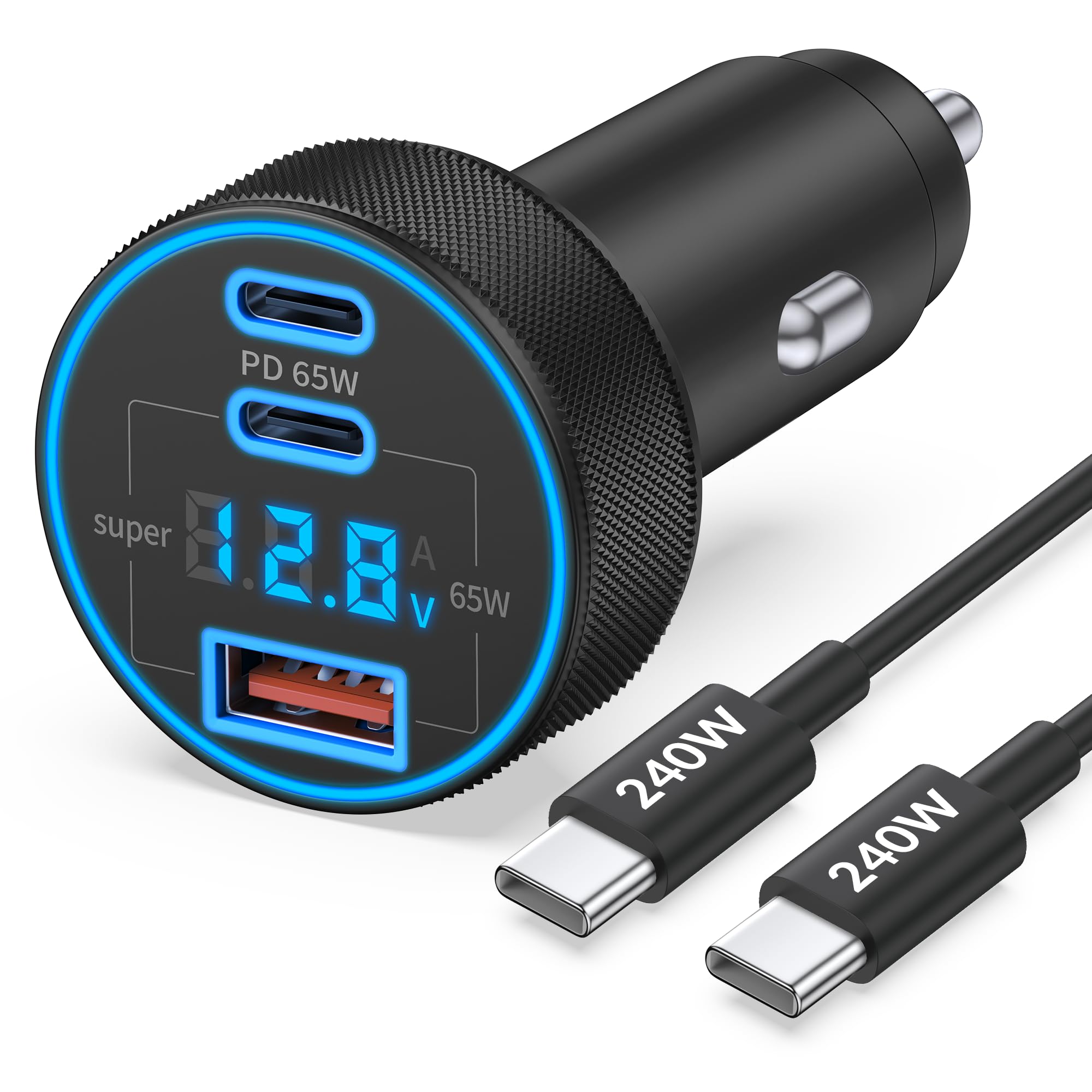
The JUNVANG 130W earns the top spot because it checks every box for a modern road warrior. Its 130W total output is split across three ports: two USB-C and one USB-A. The primary USB-C ports support PPS, which is essential for triggering Samsung’s Super Fast Charging protocol — a feature many comparably priced chargers omit. The built-in LED voltage display is a practical bonus, giving you real-time insight into your car battery’s health without needing a separate diagnostic tool.
Charging performance is genuinely impressive. Real-world tests show it can push a Samsung Galaxy S21 from near-empty to a usable charge level in minutes, even while the phone is running navigation and streaming music. The included 240W USB-C to USB-C cable is a high-value addition, supporting full power delivery to future laptops and devices. Users report it maintains or increases battery level during heavy usage, a trait that separates a good charger from a great one.
One minor trade-off is physical size — the unit is slightly longer than a standard plug, which may interfere with tight center console arrangements or outlet covers. The metal housing feels premium and aids heat dissipation, but the length could be a problem in deep or angled 12V sockets. That said, the combination of PPS support, a voltage gauge, and a high-quality included cable makes this the most versatile option for most drivers.
Why it’s great
- PPS support enables Samsung super fast charging
- Real-time voltage display monitors car battery health
- Includes a 240W-rated USB-C cable
Good to know
- Longer body may not fit flush in deep or angled 12V sockets
- Only 3 ports total; heavy users may want more
2. Graaci 320W 6-Port
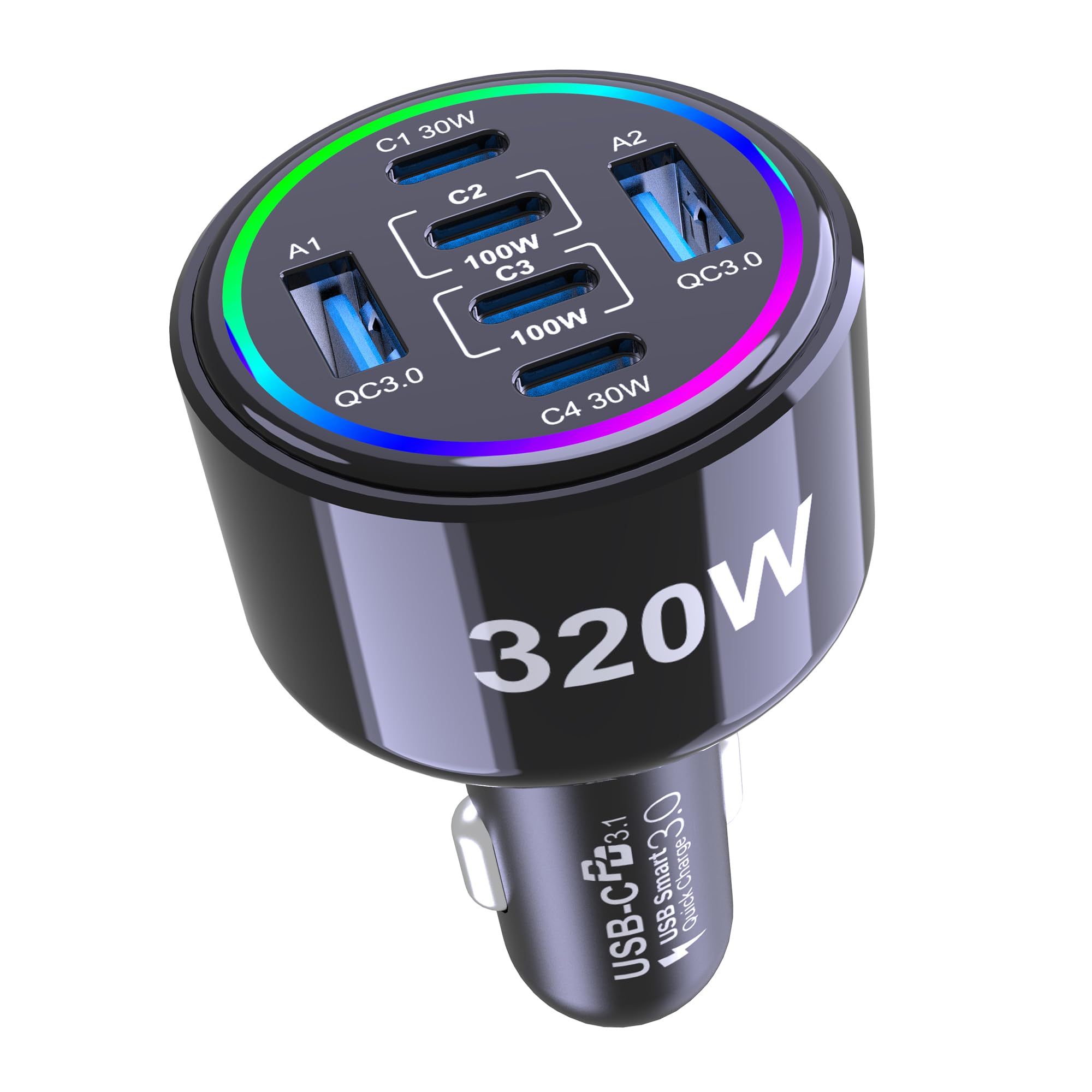
The Graaci 320W is a desktop-grade charging station designed to live in your car. With four USB-C ports and two USB-A ports, it can power a MacBook Air or Pro through its 100W-capable USB-C ports while simultaneously feeding 30W each to a couple of iPhones and another 60W to an Android tablet. This is the only unit on this list that can realistically handle a family’s worth of devices — including laptops — without breaking a sweat.
Build quality is robust, with a tight-fitting shell that stays firmly in place even with multiple heavy cables pulling on it. The ABS+PC 94V0 fireproof material adds a genuine safety layer, and the integrated heat dissipation design keeps temperatures in check during extended charging sessions. Users note that charging a Samsung phone at full speed requires the PPS protocol, which this unit supports on its higher-wattage ports.
The main downside is physical diameter — it’s wider than standard car chargers, which means it may not fit past the cover of a Ford F-150’s power outlet or other tight spaces. If your vehicle has a recessed or covered 12V socket, measure the opening before purchasing. For everyone else with accessible outlets, this is the most powerful and future-proof auto USB charger available.
Why it’s great
- Four USB-C ports with up to 100W each support laptops
- Fireproof ABS+PC housing and active heat dissipation
- Wide protocol support including PPS and QC 4.0
Good to know
- Large diameter may block adjacent outlets or fail to fit behind console covers
- Overkill for a single driver with only a phone
3. LISEN Retractable Dual USB-C 75W
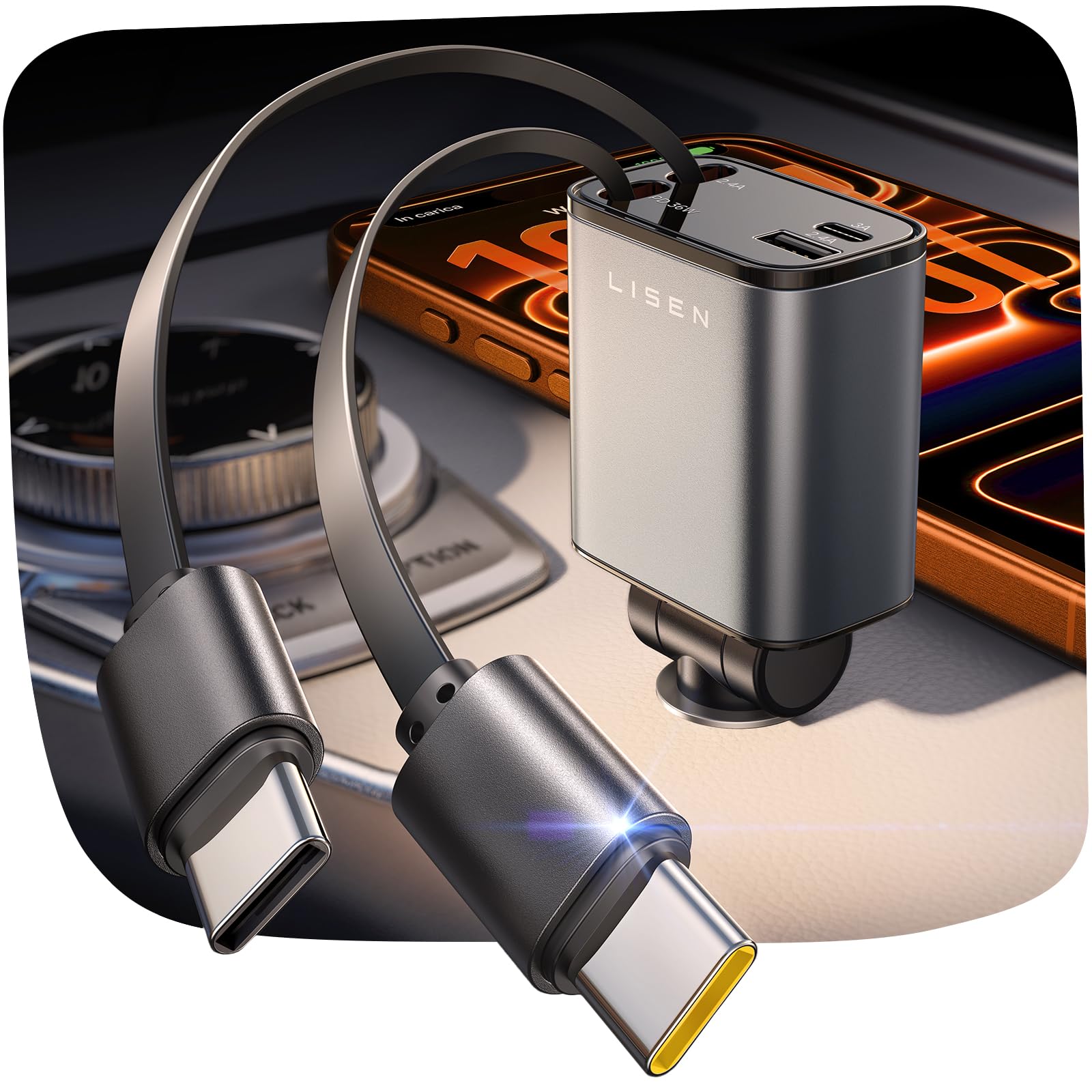
The LISEN solves a real pain point: dangling cables that clutter the center console and trap dirt. Its dual retractable USB-C cables extend up to 2.6 feet and retract smoothly with one hand, keeping the interior tidy. In addition to the two built-in cables, there are two extra USB-A ports for passengers who bring their own cords, giving you four charging options total in a relatively compact footprint.
Constructed with a premium metal housing, the LISEN feels substantial and looks more like dashboard trim than a generic plastic adapter. The hinge mechanism allows the body to angle slightly, which is helpful when the 12V socket is oriented at an awkward angle under the dash. The 75W total output is sufficient to fast-charge two phones simultaneously through its retractable cables, though the USB-A ports are lower wattage.
The retractable mechanism limits maximum charging speed compared to a direct high-wattage cable. Users report it charges Samsung and Apple devices quickly, but if you need to push 100W to a laptop, this isn’t the right tool. The physical profile is also slightly bulkier than a standard plug, which can be an issue in vehicles with very tight outlet spacing. For daily commuters and cord neatness obsessives, this is a satisfying middle ground.
Why it’s great
- Built-in retractable USB-C cables eliminate dangling cord mess
- Premium metal housing blends with car interior
- Hinged body fits angled or tight 12V socket positions
Good to know
- Maximum per-port speed is lower than high-wattage direct-cable chargers
- Bulky design may block adjacent outlets in small spaces
4. Anker 323 52.5W Dual Port
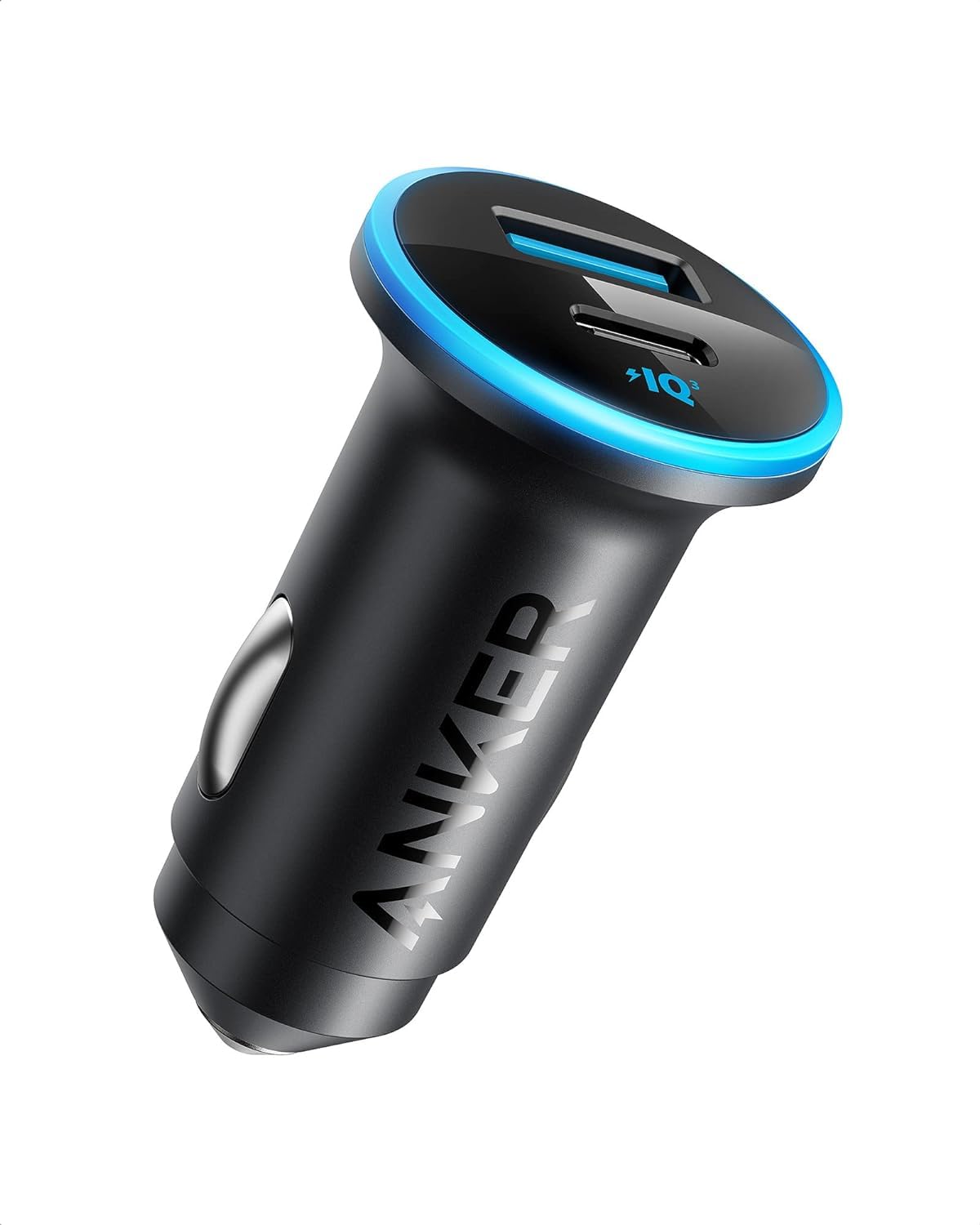
Anker has built a reputation on reliable charging accessories, and the 323 model reinforces that trust. This compact dual-port unit delivers 30W through its USB-C port and 22.5W through its USB-A port. The USB-C port supports PowerIQ 3.0, which ensures compatibility across iPhone and Samsung devices without needing to think about protocols. Anker’s ActiveShield 2.0 technology monitors the internal temperature and adjusts power output to prevent overheating — a meaningful safety feature during summer drives.
The 52.5W total is modest compared to the high-end options, but it’s perfectly matched to the needs of a single driver. Charging an iPhone 16 Pro from near-empty to 50% takes well under half an hour, and the USB-A port is handy for an older device or a passenger’s phone. The build quality is excellent: the shell feels dense, fits snugly into the 12V socket, and includes a soft blue LED ring that’s visible day or night but not distracting.
There are no advanced features like PPS or a voltage display. If you own a Samsung Galaxy S24 or S25 and want to access its “Super Fast Charging” mode, you’ll need a PPS-compatible charger. Also, some users have noted that the USB-C cable included in the box is rated under 60W, so it can’t unlock the full potential of power-hungry tablets or laptops. As a daily driver for a single phone, though, it’s hard to beat this combination of price and reliability.
Why it’s great
- ActiveShield 2.0 temperature monitoring adds real safety
- Compact profile fits flush in most 12V sockets
- Proven Anker build quality with 18-month warranty
Good to know
- No PPS support — Samsung devices won’t reach Super Fast Charging
- Included USB-C cable is under 60W, limiting laptop charging
5. Belkin BoostCharge 42W Dual Port

Belkin’s BoostCharge 42W is a well-rounded dual-port charger that brings a few unexpected extras. The 30W USB-C port is PD 3.1 certified and includes PPS technology, meaning it can dynamically adjust voltage and current to optimize charging for Samsung Galaxy devices. This is a feature typically reserved for higher-priced chargers. The 12W USB-A port handles legacy devices or slow-charging accessories without draining the main port’s bandwidth.
Charging speed is competitive: an iPhone can go from 0 to 50% in about 21 minutes, and a Galaxy S25 does the same in roughly 26 minutes. The housing is made from post-consumer recycled content, and the packaging is entirely plastic-free, making this a solid choice for environmentally conscious buyers. The 2-year warranty and connected equipment warranty provide extra peace of mind that most budget chargers don’t offer.
The total 42W is lower than the Anker 323 or any of the multi-port units, which means simultaneous charging of two power-hungry devices will be noticeably slower. The USB-A port is capped at 12W, so it won’t fast-charge modern Android phones through that port. If you primarily need a single fast USB-C port with broad compatibility and PPS support, this is one of the most thoughtfully built options available.
Why it’s great
- PPS support enables optimized charging for Samsung Galaxy devices
- Sustainable build with recycled plastic housing and plastic-free packaging
- 2-year warranty and connected equipment warranty
Good to know
- 42W total is lower than many competitors — dual-device charging is slower
- USB-A port limited to 12W, not suitable for fast charging modern phones
6. JUNVANG 90W 4-Port with 240W Cable
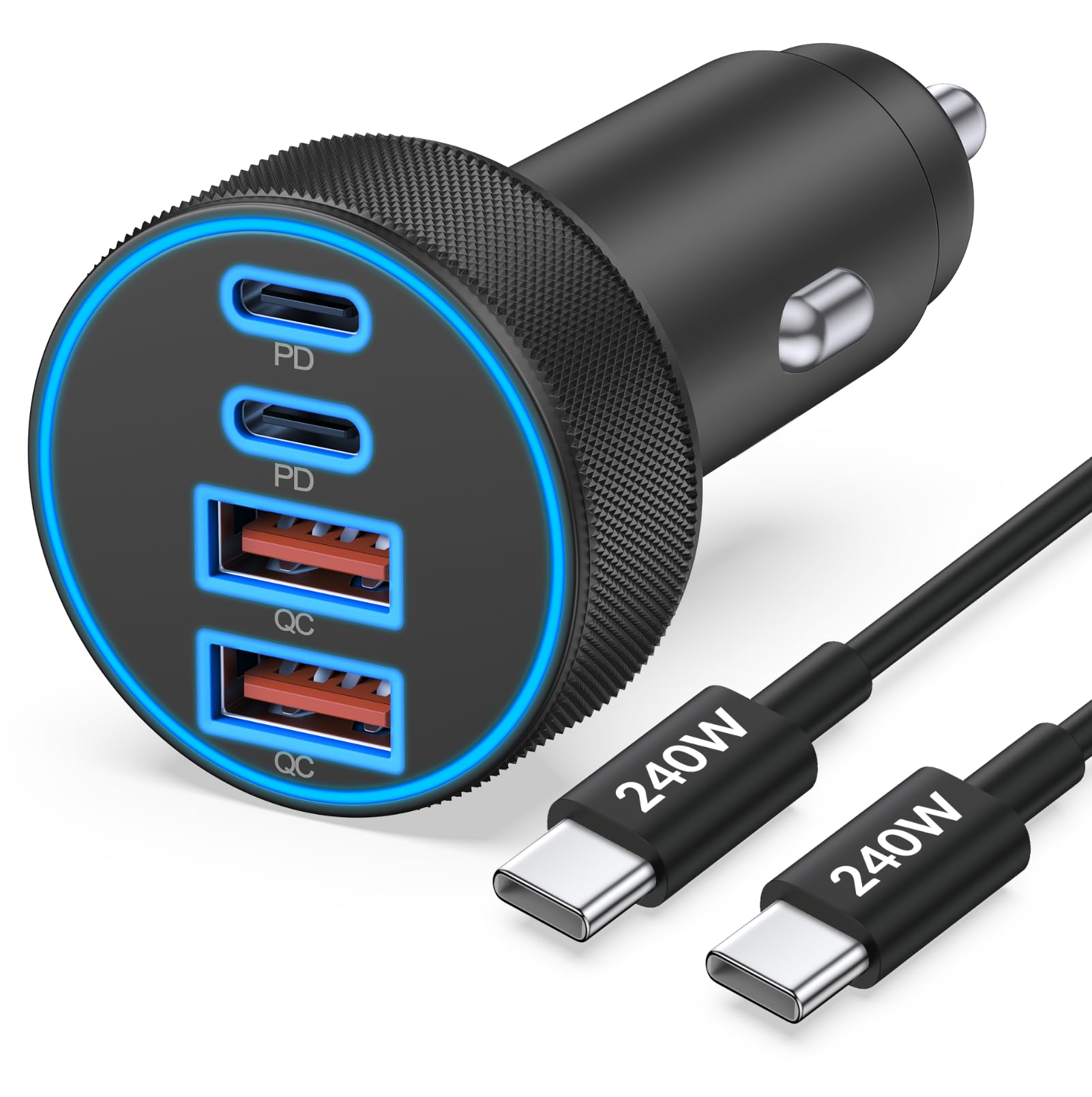
The JUNVANG 90W offers an aggressive port-to-dollar ratio. For entry-level money, you get four ports — two USB-C and two USB-A — plus a bundled 240W-rated USB-C to USB-C cable. This makes it the cheapest way to charge four devices simultaneously in a car. The USB-C ports support PD and QC fast charging, delivering up to 45W each when used alone, and the USB-A ports add QC 45W for compatible Android devices.
Real-world performance is strong for the price. Users report fast charging on iPhones and Samsung phones, and the included 3-foot cable is a genuinely useful addition that saves you from buying one separately. The build quality is decent for the price bracket, with a metal housing that dissipates heat better than all-plastic alternatives. The unit fits snugly in standard 12V sockets and works reliably over months of use.
Protocol support is wide but not deep — there is no PPS for Samsung super fast charging, and the total wattage must be shared across all active ports, so plugging in four devices will significantly slow each one. The brand is less established than Anker or Belkin, which may matter if you prioritize warranty support. For those on a tight budget who need to charge multiple phones on road trips, this is the best entry-level deal.
Why it’s great
- Four ports (2 USB-C + 2 USB-A) at a very low entry price
- Includes a 240W-rated USB-C cable
Good to know
- No PPS support — Samsung phones won’t super fast charge
- Brand less established than Anker or Belkin
7. Bangfun 36W 5-Pack

The Bangfun 36W 5-pack is the logical solution for households or small fleets with multiple vehicles. For the price of a single premium charger, you get five identical units, each with one USB-C PD port and one USB-A QC 3.0 port. The USB-C port delivers up to 20W, which is enough to fast-charge an iPhone 15 or 16, while the QC 3.0 port can push a Samsung Galaxy from 0 to 80% in about 35 minutes. Each unit includes a soft blue LED ring for nighttime visibility.
Build quality is solid for the budget tier — metal housings with a compact diameter that fits flush in most 12V sockets. Users report they last well in service vehicles and trucks, with some noting they’ve held up for months without failure. The 36W total is split across the two ports, so charging two devices simultaneously will reduce speed, but for topping off a single phone per charger, it’s more than adequate.
The main trade-off is the per-unit wattage: 20W on the USB-C port is fine for phones but useless for tablets or laptops. There’s no PPS support, and the brand is relatively new with a shorter track record than established names. A small number of users report units failing after extended use, though the 5-pack means you have backups on hand. For equipping every car in a multi-vehicle family without overspending, this is the most practical option.
Why it’s great
- 5 chargers in one package — one for every car in the family
- Compact metal housing with dual ports and LED indicator
- Fast enough for iPhone and standard Android fast charging
Good to know
- Per-unit USB-C output is only 20W — not laptop compatible
- No PPS support; some units may have shorter lifespans
FAQ
What does PPS mean on a car charger and do I need it?
Can a USB-C car charger charge a MacBook Pro or a Windows laptop?
Is it safe to leave a car charger plugged in all the time?
Final Thoughts: The Verdict
For most users, the auto usb charger winner is the JUNVANG 130W because it combines PPS support for Samsung’s fastest charging, a real-time voltage display, and includes a high-quality cable at a sensible price. If you need to charge a laptop alongside multiple phones, grab the Graaci 320W. And for keeping the cabin free of cable clutter, nothing beats the LISEN Retractable.