
Our readers keep the lights on and the weekend projects moving. As an Amazon Associate, I earn from qualifying purchases.
A sleeping bag rated to zero degrees is a serious piece of gear—it’s the difference between a restorative night in the backcountry and a shivering, sleepless struggle that drains your next day’s miles. The best options balance insulation type, fill power, weight, and packability so you carry less while sleeping warmer.
I’m Rikta — the founder and writer behind FitlyFast. I spend my time analyzing gear specifications, reading customer field reports, and comparing insulation technologies to find the real-world performers in cold-weather backpacking.
Whether you prioritize ultralight goose down or reliable synthetic fill, finding the right backpacking 0 degree sleeping bag means understanding how fill type, baffle design, and temperature ratings translate to actual trail performance.
How To Choose The Best Backpacking 0 Degree Sleeping Bag
Selecting a zero-degree bag for backpacking involves more than just checking the temperature rating on the tag. You need to weigh insulation type, fill quality, weight, and features that trap heat without adding bulk to your pack.
Down vs. Synthetic Insulation
The biggest decision is insulation material. Goose or duck down offers the best warmth-to-weight ratio and compresses smaller, making it ideal for multi-day trips where pack space is tight. The trade-off is that down loses insulating ability when wet unless treated with a hydrophobic finish. Synthetic fill (like Cirroloft or FireLine Max Eco) retains insulation when damp and is typically less expensive, but it’s heavier and bulkier for the same warmth level.
Fill Power and Fill Weight
Fill power measures how many cubic inches one ounce of down occupies—higher numbers (800FP vs. 650FP) mean more loft and better insulation per ounce, translating to a lighter bag for the same warmth. Fill weight, often listed in grams, tells you how much down is actually inside the bag. A zero-degree bag needs sufficient fill weight regardless of fill power; a 650FP bag with a high fill weight can be just as warm as an 800FP bag with less down, though it will be heavier.
Temperature Ratings and Baffle Design
Ignore the “survival” rating. Look for the ISO or EN comfort rating, which indicates the temperature at which a cold sleeper can rest comfortably. For a true 0°F bag, the comfort rating should be around 10°F to 20°F for most users, with the limit rating at 0°F or below. Vertical or box baffles prevent down from shifting and creating cold spots, while a continuous baffle design lets you adjust loft. A full-length draft tube behind the zipper and a cinchable draft collar at the neck are non-negotiable features for sealing in warmth below freezing.
Quick Comparison
On smaller screens, swipe sideways to see the full table.
| Model | Category | Best For | Key Spec | Amazon |
|---|---|---|---|---|
| Naturehike 0° RDS Down | Down | Best value down warmth | 650FP RDS Down, 18°F limit | Amazon |
| QEZER 600FP Down | Down | Roomy semi-rectangular fit | 600FP Down, 3.68 lbs | Amazon |
| QEZER 650FP 0° Bag | Down | Cold weather reliability | 650FP Down, vertical baffles | Amazon |
| Naturehike Ultralight 650FP | Down | Warm-weather ultralight use | 650FP RDS Down, 2 lbs | Amazon |
| Kelty Cosmic Synthetic 0° | Synthetic | Damp condition durability | Cirroloft Synthetic, 4.95 lbs | Amazon |
| Kelty Cosmic 20 Down | Down | Versatile 3-season down bag | 550FP RDS Down, 2.4 lbs | Amazon |
| OMVMO 800FP 0° | Down | Wearable multi-function design | 800FP Goose Down, 4.6 lbs | Amazon |
| Big Agnes Echo Park 0° | Synthetic | Spacious car camping comfort | FireLine Max Eco Synth, PadLOC | Amazon |
| Sea to Summit Spark | Down | Premium ultralight performance | 850+FP Down, 10D shell | Amazon |
In‑Depth Reviews
1. Naturehike 0 Degree RDS Down Mummy Sleeping Bag
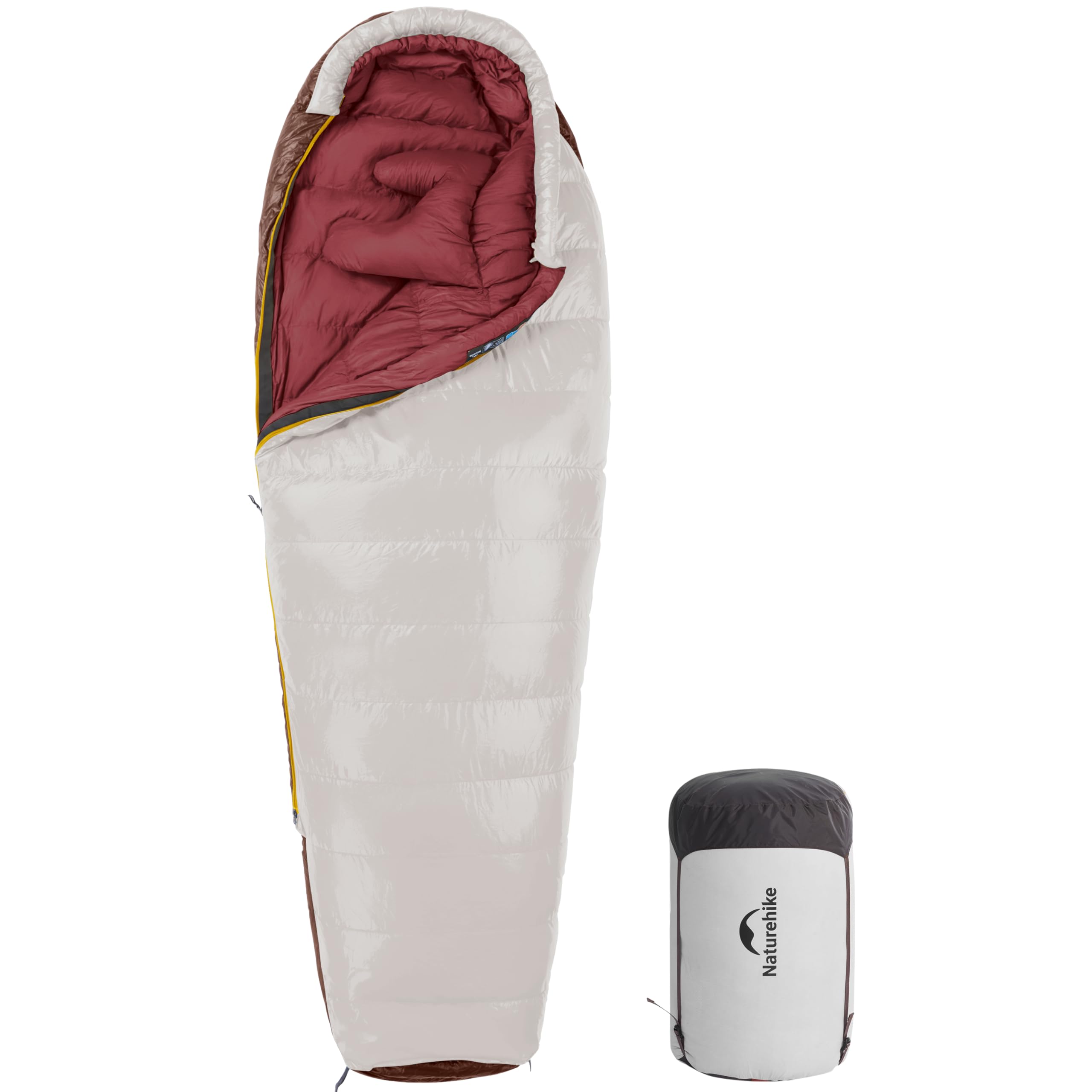
The Naturehike Snowbird delivers an exceptional warmth-to-weight ratio with 650FP RDS-certified duck down and thoughtful cold-weather features. Its C-shaped wrapped design and U-shaped cap cover concentrate insulation on top of your body where heat loss is greatest, while the full-length draft tube and wind blocking strip prevent cold air from sneaking in through the YKK zipper. The 18°F limit rating means you can comfortably sleep down to the low 20s with proper layering.
Field testers consistently report feeling cozy in the mid-20s to low 30s, with the U-neck collar and adjustable hood effectively sealing in warmth. The bag includes an internal pocket for keeping electronics from freezing and a spacious 3D footbox that allows natural foot movement. The SP550 variant (reviewed most often) provides a good balance of warmth and weight for backpacking.
The SP1000 version with 1000g fill weight offers even more warmth for serious cold, but adds pack weight. The down requires time to loft fully—unfold the bag a day before use for best performance. Pair with a proper sleeping pad to maximize the thermal rating, as the bag’s insulated bottom relies on pad insulation below freezing.
Why it’s great
- Excellent warmth-to-weight ratio with 650FP RDS down
- Thickened wind barrier and draft collar eliminate cold spots
- YKK zipper with anti-snag design for reliable operation
Good to know
- Needs pre-loft time before first use for full performance
- Requires compatible sleeping pad for bottom insulation
2. QEZER 600 Fill Power Down Sleeping Bag
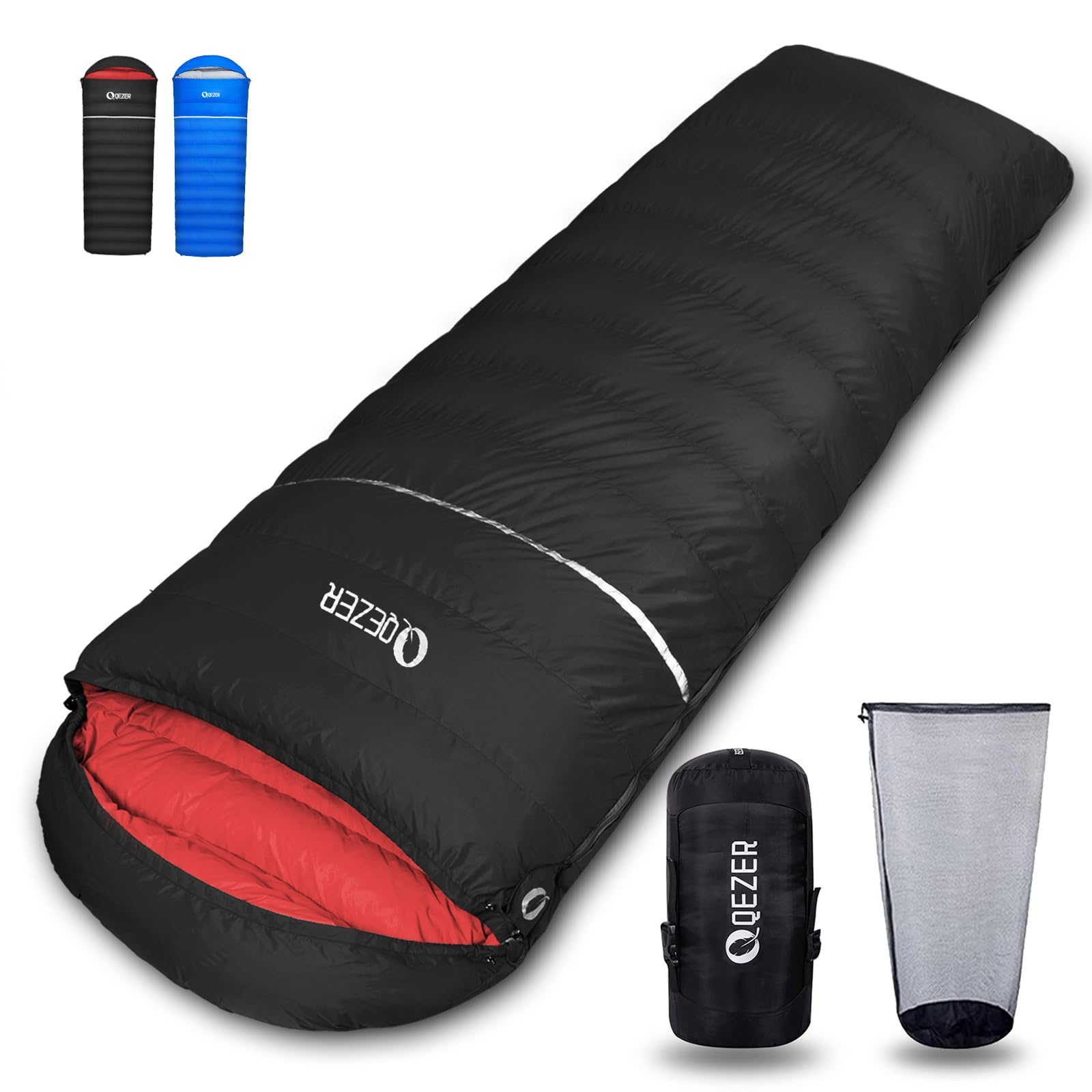
For backpackers who find traditional mummy bags claustrophobic, the QEZER 600FP offers a semi-rectangular shape that provides generous shoulder and hip room while still maintaining decent thermal efficiency. Filled with 2.2 pounds of 600FP premium duck down, it achieves a comfort range of 18°F to 32°F with a limit of 10°F—warm enough for most winter backpacking scenarios. The 30.71-inch width is significantly wider than standard mummy bags.
The 400T 20D high-density nylon shell resists moisture and tearing, though some users report the outer fabric is thin enough to puncture from sharp debris. The double zipper design includes a chest insulation layer for added warmth, and the foot zipper provides ventilation when temperatures rise. At 86.6 inches long, it accommodates taller sleepers without restriction.
The included compression sack is functional but thin—consider upgrading to a more durable stuff sack for frequent use. The bag mates with another unit to create a double sleeping bag, a useful feature for couples backpacking in cold conditions. The down clusters evenly and does not shift significantly during the night, maintaining consistent insulation.
Why it’s great
- Spacious semi-rectangular fit for side sleepers
- Accurate 10°F limit rating with quality down fill
- Durable 400T nylon shell resists tears
Good to know
- Thin outer fabric may puncture from sharp objects
- Compression sack could be more robust
3. QEZER 650 Fill Power 0 Degree Down Sleeping Bag
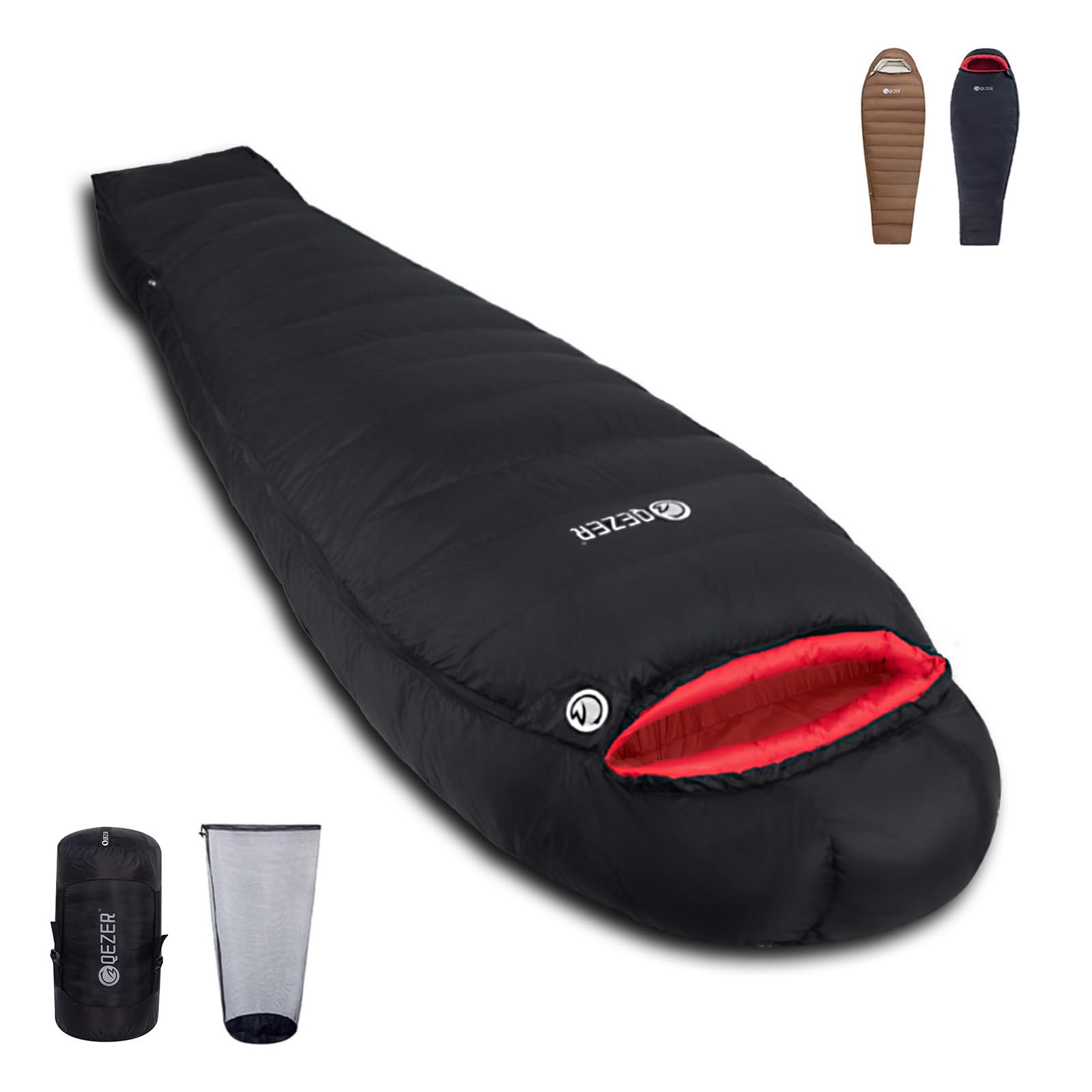
The QEZER 650FP bag uses vertical baffle construction to keep the down positioned over your body when you shift positions, preventing cold spots that horizontal baffles can allow. With 2.2 pounds of 650FP white duck down, it’s rated for temperatures from 10°F to 27°F, making it a serious contender for deep winter backpacking. The upgraded version adds a saddle-shaped neck collar that wraps tightly to prevent heat escape from your shoulders.
Users report reliable warmth in the low teens when sleeping in base layers, and several multi-night testers noted no significant down shifting after 60 nights of use. The ergonomic footbox design gives toes room to wiggle without creating dead air space. The 400T nylon shell is crinkly but durable, and the YKK zipper is smooth with an anti-snag slider.
The bag packs down to 15.35 x 7.87 inches, which fits easily into a 50-60 liter backpack. Some users experienced feather leakage after extended use, so a storage mesh bag is recommended for long-term loft maintenance. The 10°F rating is best for warm sleepers—cold sleepers should budget for an additional liner in the single digits.
Why it’s great
- Vertical baffles prevent down shifting during sleep
- Saddle-shaped neck collar seals shoulder heat
- Compact packed size for backpacking
Good to know
- Some feather leakage reported after months of use
- Crinkly shell fabric may bother sensitive sleepers
4. Kelty Cosmic 20 Down Mummy Sleeping Bag

The Kelty Cosmic 20 has been a staple of the brand’s backpacking lineup for years, and the current version uses 550FP RDS-certified down in a recycled nylon and polyester shell with PFAS-free DWR treatment. At 2.4 pounds, it’s one of the lighter 20-degree bags on the market, packing down to 13 x 7 inches—small enough to fit inside a 50-liter pack with room for other gear. The ISO limit rating of 21°F means you can push it to the upper teens with a good base layer.
The bag features a dual-direction zipper, a draft collar, and a comfortable hood that cinches down to eliminate drafts. Users praise the soft fabric feel and the bag’s ability to keep them warm in the high 20s while wearing a thin wool layer. The mummy cut is snug, particularly in the shoulder area—side sleepers or broad-shouldered individuals may find it restrictive. The footbox is spacious, allowing natural foot splay.
The recycled shell is slightly less durable than premium 20D fabrics, but it stands up to standard backpacking use. The stuff sack is integrated with compression straps but could be tighter for ultralight packing. The bag is best suited for 3-season use down to about 20°F, making it a versatile choice for most backpackers who don’t face extreme winter conditions.
Why it’s great
- Lightweight at 2.4 lbs with compact packed size
- RDS-certified down with recycled, PFAS-free shell
- Soft fabric and smooth YKK zipper operation
Good to know
- Snug shoulder fit for broader users
- Compression sack could pack tighter
5. OMVMO 800FP 0° Down Sleeping Bag

The OMVMO bag stands out with over 80 independent rectangular 3D baffles—more than double typical designs—ensuring stable down distribution and eliminating cold spots. Filled with 800FP goose down, it provides premium insulation at a 0°F rating while offering a unique convertible design: unzip it fully to use as a down blanket, wear it as a cloak using the buttons, or attach it to a sleeping pad with the included buckle strap. The detachable half-circle hood allows for pillow use.
At 4.6 pounds, this bag is heavier than dedicated ultralight options, but its dual functionality reduces the need for a separate camp layer. The 400T 20D nylon shell with DWR coating resists down leakage, and the YKK zipper has an anti-snag slider. Users report comfortable sleep just below freezing with a base layer, and the spacious 31.5-inch width accommodates side sleepers and larger frames well.
The draft collar sits low for some users—those over 5’8″ may find it presses against the chin rather than the neck. The bag’s compressibility is moderate compared to premium 800FP down options, and the included storage mesh sack is essential for maintaining loft. The convertible features add complexity, but for backpackers who value multi-use gear, this bag eliminates the need for a separate puffy jacket around camp.
Why it’s great
- Over 80 3D baffles prevent cold spots
- Convertible wearable design for camp use
- Spacious width for side sleepers
Good to know
- Heavier than dedicated ultralight bags
- Draft collar may sit low for taller users
6. Kelty Cosmic Synthetic Fill 0 Degree Backpacking Sleeping Bag
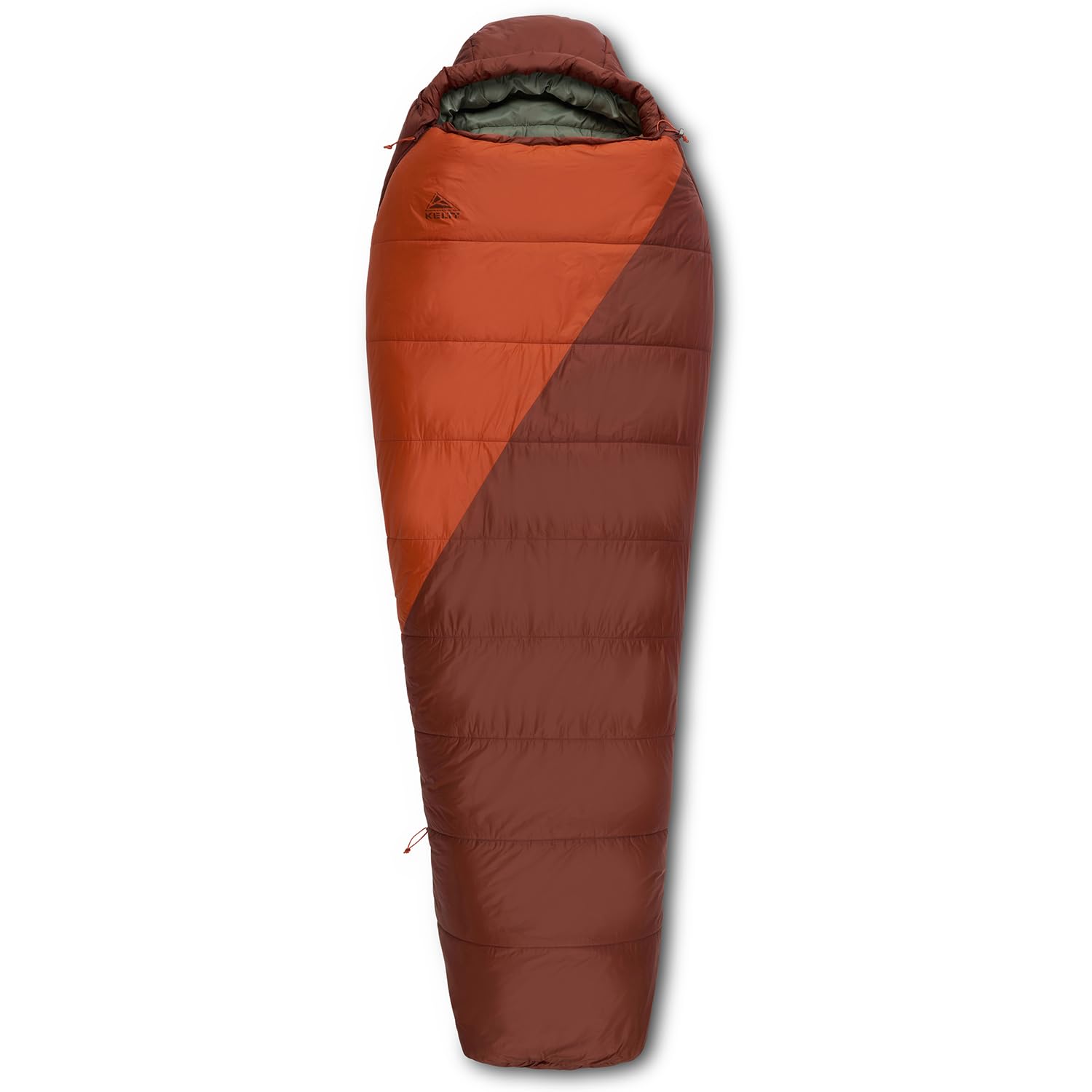
The Kelty Cosmic Synthetic delivers reliable 0°F warmth using Cirroloft synthetic insulation, which maintains loft even when damp—a crucial advantage for wet winter camping where down can fail. With an ISO comfort rating of 18°F, it’s a genuine zero-degree bag for cold sleepers. At 4.95 pounds for the long size, it’s heavier than down alternatives, but the integrated compression stuff sack helps reduce volume for backpacking. The 60-ounce fill weight provides serious insulation mass.
Users consistently report staying warm and cozy in snow and sub-freezing conditions, with several scout leaders praising its performance during multi-night winter excursions. The natural-fit footbox offers more toe room than traditional mummy bags, and the exterior stash pocket is handy for keeping headlamp or gloves accessible. The 20D recycled nylon shell with PFAS-free DWR sheds light moisture effectively.
The main drawbacks are weight and bulk—this bag consumes significant pack volume compared to down alternatives. The zipper can snag on the draft tube near the upper chest, and there’s no velcro patch to prevent the zipper from creeping open overnight. For backpackers who prioritize reliability in wet conditions over pack weight, this synthetic bag is a solid choice for winter trips.
Why it’s great
- Cirroloft synthetic insulation performs when wet
- Accurate 0°F rating with 18°F ISO comfort
- Integrated compression stuff sack for packing
Good to know
- Heavy and bulky for backpacking
- Zipper snags near the bicep area
7. Big Agnes Echo Park Sleeping Bag 0°
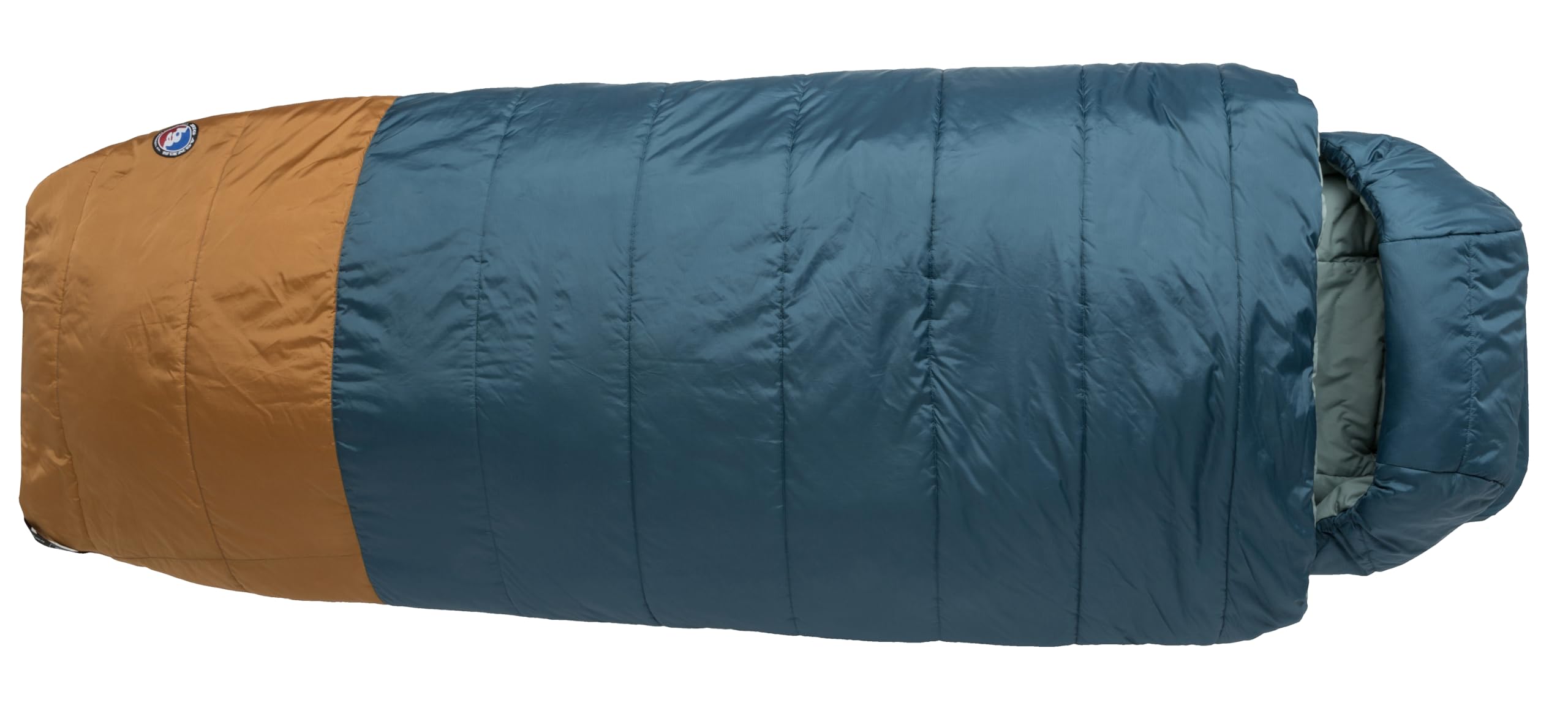
The Big Agnes Echo Park redefines camping comfort with a spacious rectangular cut that sleeps more like a down comforter than a traditional bag. The PadLOC system integrates your sleeping pad into the bag via a cinch sleeve on the underside, preventing you from rolling off while allowing the bag to function like a top quilt. The 0°F version uses FireLine Max Eco—100% post-consumer recycled polyester insulation—making it an eco-friendly choice for car camping and basecamp use. The cotton/poly blend lining is soft and quiet.
The bag features oversized draft collars, a full zipper draft tube, and a free-range hood design that allows you to lift your head without exposing skin. Top corner hand pockets let you wrap the bag around your shoulders like a home comforter. The Pillow Barn on the pad sleeve keeps your pillow in place, and double zippers allow entry from either side for easy venting on warmer nights. The 80-inch width provides exceptional space for movement.
This bag is not designed for ultralight backpacking—it’s bulky and heavy, even for a synthetic bag. Users report it’s too warm for 50°F nights, even with ventilation, making it best suited for deep winter camping where you can leave the car or basecamp behind. The PadLOC system works best with pads 25-30 inches wide and 78 inches long. The included mesh sack is ideal for storage, but you’ll want a compression stuff sack for transport.
Why it’s great
- Ultra-spacious rectangular cut for maximum comfort
- PadLOC system keeps you on the sleeping pad
- Eco-friendly recycled insulation and PFAS-free DWR
Good to know
- Too bulky for backpacking—car camping only
- Overheats easily above freezing without venting
8. Sea to Summit Spark Ultralight Down Sleeping Bag

The Sea to Summit Spark sets the standard for ultralight winter backpacking, using 850+ fill power goose down with a non-PFC Ultra-Dry treatment that improves moisture resistance by 50% compared to untreated down. The 10D nylon shell is featherlight yet surprisingly durable for its denier, and the 10D breathable liner manages moisture overnight. The contoured mummy shape provides a natural sleeping position while minimizing wasted internal volume that would require extra down to heat.
At just over 1.5 pounds for the 15°F version, the Spark is one of the lightest bags in its temperature class, packing down smaller than a football. The full box baffle construction ensures even down distribution, and the YKK #5 zipper operates smoothly without snagging even in cold, gloved hands. Users consistently praise the bag’s ability to keep them warm in the low 20s while feeling nearly weightless in their pack. The RDS certification provides peace of mind about ethical down sourcing.
The premium price reflects the high fill power down and ultralight materials—this is an investment for serious long-distance hikers and mountaineers. The thin shell requires careful handling to avoid tears from sharp gear. The 15°F rating is more of a 3-season + shoulder-season bag rather than a deep winter option; for true 0°F use, consider the warmer Spark model. The stuff sack is minimal, and you’ll want a dedicated compression sack for long-term packing.
Why it’s great
- Exceptional warmth-to-weight ratio with 850+FP down
- Ultra-Dry down treatment improves moisture resistance
- Incredibly compact packed size for backpacking
Good to know
- Premium investment for serious ultralight use
- Thin 10D shell requires careful handling
9. Naturehike Ultralight Down Sleeping Bag 650FP
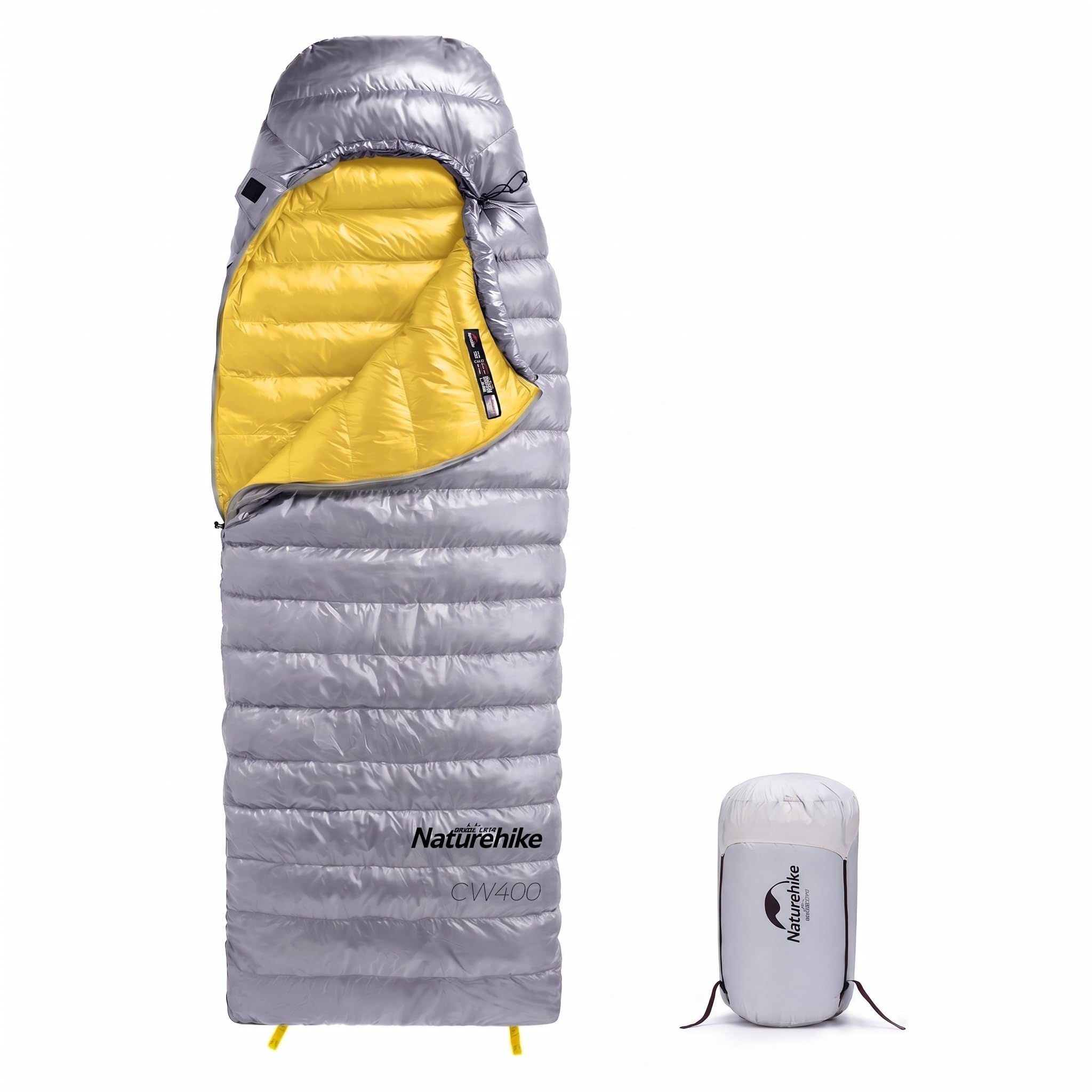
The Naturehike Ultralight combines a mummy upper body with a rectangular lower section, offering a unique hybrid shape that keeps your shoulders snug while allowing your feet to move freely. Weighing just 2 pounds with a packed size of 13.8 x 7.1 inches, it’s a strong contender for warm-weather backpacking where weight and space are critical. The 650FP RDS-certified down provides reliable insulation with a comfort rating around 40.4°F, making it a 3-season bag rather than a true cold-weather option despite the “down” label.
Users praise the bag’s comfort for side sleepers, with the hybrid design eliminating the claustrophobic feeling of traditional mummy bags. The YKK zipper is smooth, and the 20D ripstop nylon shell is durable for its weight class. The bag comes in regular and large sizes, accommodating sleepers up to 7.22 feet in the large version. The included compression sack with three straps allows for efficient packing.
This bag is not suitable for winter backpacking near 0°F—its comfort limit is in the upper 30s. The fabric is thin and requires careful handling against tent poles or sharp ground. The hood cinches well but can leave a draft on your face if not properly adjusted. For summer and shoulder-season trips where weight matters most, this bag offers excellent value; for cold weather, look at the heavier Naturehike Snowbird or dedicated winter bags.
Why it’s great
- Ultralight 2-pound weight for 3-season backpacking
- Hybrid envelope-mummy design for side sleepers
- RDS-certified down with excellent loft
Good to know
- 40°F comfort rating—not for below-freezing use
- Thin fabric requires careful handling
FAQ
Can I use a 40°F bag in 0°F weather with extra layers?
How do I prevent down from shifting in my sleeping bag?
Final Thoughts: The Verdict
For most users, the backpacking 0 degree sleeping bag winner is the Naturehike 0 Degree RDS Down because it offers an unbeatable balance of 650FP down warmth, thoughtful cold-weather features, and budget-friendly value. If you want a lighter pack for multi-day hikes, grab the Sea to Summit Spark. And for damp winter conditions where synthetic insulation is a must, nothing beats the Kelty Cosmic Synthetic 0°.