
Our readers keep the lights on and the weekend projects moving. As an Amazon Associate, I earn from qualifying purchases.
A backpacking daypack is the one piece of gear you carry from trailhead to summit and back — and a poor fit or a lack of smart organization can turn a beautiful ridge walk into a session of shoulder ache and gear rummaging. The difference between a pack that disappears on your back and one that fights you every step comes down to weight, suspension, and how it manages your water and layers.
I’m Rikta — the co-founder and writer behind FitlyFast. I have spent years dissecting the specs of outdoor gear, comparing foam density, fabric denier, and hydration compatibility to separate the trail-ready from the merely storage-minded.
This guide breaks down the best current options for carrying a day’s worth of essentials without excess bulk, and it will help you find the right backpacking daypack for your specific hike length and packing style.
How To Choose The Best Backpacking Daypack
Choosing a daypack for backpacking involves more than looking at a volume number. The real factors are how the pack transfers weight to your hips, how it breathes on a warm climb, and whether the pocket layout matches how you access snacks, a filter, or a rain shell on the move. Ignoring these specifics leads to a pack that feels heavier than it is.
Volume and Fit (The 20-30L Sweet Spot)
Most day hikes call for 20 to 30 liters of capacity. Under 18L and you will struggle to fit a puffy jacket, a liter of water, and a lunch; above 30L and the pack becomes overkill for a single day on the trail, encouraging you to carry weight you do not need. Torso length matters more than height — measure from your C7 vertebra to your iliac crest and compare it to the pack’s back panel range.
Suspension — Trampoline vs. Foam Framesheet
A trampoline back panel (like Eddie Bauer’s FreeCool or Osprey’s AirScape) holds the load away from your spine, creating an air channel that reduces sweat buildup on hot climbs. Foam framesheets (like the Atilon panel in the Osprey Sportlite) are stiffer, transfer weight to the hip belt more directly, but sit closer to your back. If you hike in dry, cool conditions, foam wins for stability; if you sweat heavily in humid heat, prioritize a trampoline panel.
Hydration System — Bladder Sleeve vs. Bottle Pockets
A dedicated hydration sleeve with a hose port allows you to sip without stopping, which matters on steep, hands-on terrain. Side bottle pockets are more versatile if you switch between water and electrolyte mixes, but deep, angled pockets keep bottles from falling out when you bend forward. Look for a pack that supports your preferred method: sleeve + port for bladders, or stretch woven pockets with a cinch for bottles.
Quick Comparison
On smaller screens, swipe sideways to see the full table.
| Model | Category | Best For | Key Spec | Amazon |
|---|---|---|---|---|
| Osprey Daylite Expandable 26+6 | Travel/Daypack | Airline personal item + day hike | 26L (expandable to 32L) | Amazon |
| Cotopaxi Allpa 28L | Travel/Daypack | One‑bag weekend trips | 28L, clamshell opening | Amazon |
| Osprey Sportlite 20L | Hiking Daypack | Light, fast day hikes | 20L, 1 lb weight | Amazon |
| Eddie Bauer Adventurer 30L | Hiking Daypack | All‑day treks with layers | 30L, trampoline back panel | Amazon |
| Water Buffalo Sherpa 22L | Hydration Pack | Hands‑on hydration hiking | 22L, 2L bladder included | Amazon |
| Eddie Bauer Venture 26L | Versatile Daypack | Work‑to‑trail transitions | 26L, recycled shell fabric | Amazon |
| Osprey Ultralight Stuff Pack 18L | Packable Daypack | Emergency extra bag | 18L, 0.33 lb weight | Amazon |
In‑Depth Reviews
1. Osprey Daylite Expandable 26+6

This Osprey Daylite hits a rare balance: it functions as a compliant personal item on the majority of international airlines (16.9 x 13 x 6.3 inches unexpanded) and then unzips to add two full inches of depth, bringing total volume from 26L to 32L. The AirScape backpanel keeps your spine ventilated during a long day at airports or on twisty trails, and the luggage pass-through locks it onto a rolling carry-on handle seamlessly.
The internal layout includes two stretch water bottle pockets (one on each side), a dedicated tech sleeve for a laptop or tablet, and a front zip pocket for documents. The main compartment opens wide enough that you can pack it like a mini duffel, and the expandable gusset gives you room for a souvenir jacket or a trail-side grocery stop without busting seams.
At 1.85 pounds, it is not the lightest option here, but the expanded capacity and travel-friendly dimensions make it the most versatile choice for anyone who hikes at their destination. The sternum strap and padded shoulder straps deliver enough support for a full day of walking, though the hip belt is minimal — expect the load to sit on your shoulders.
Why it’s great
- Expandable design adds 6L without exceeding airline personal-item sizers
- AirScape rear panel reduces back sweat during warm-weather carry
- Luggage pass-through makes it a natural travel companion
Good to know
- Hip belt is a thin strap, not load-bearing for heavy gear
- No included rain cover or hydration bladder
2. Cotopaxi Allpa 28L Travel Pack
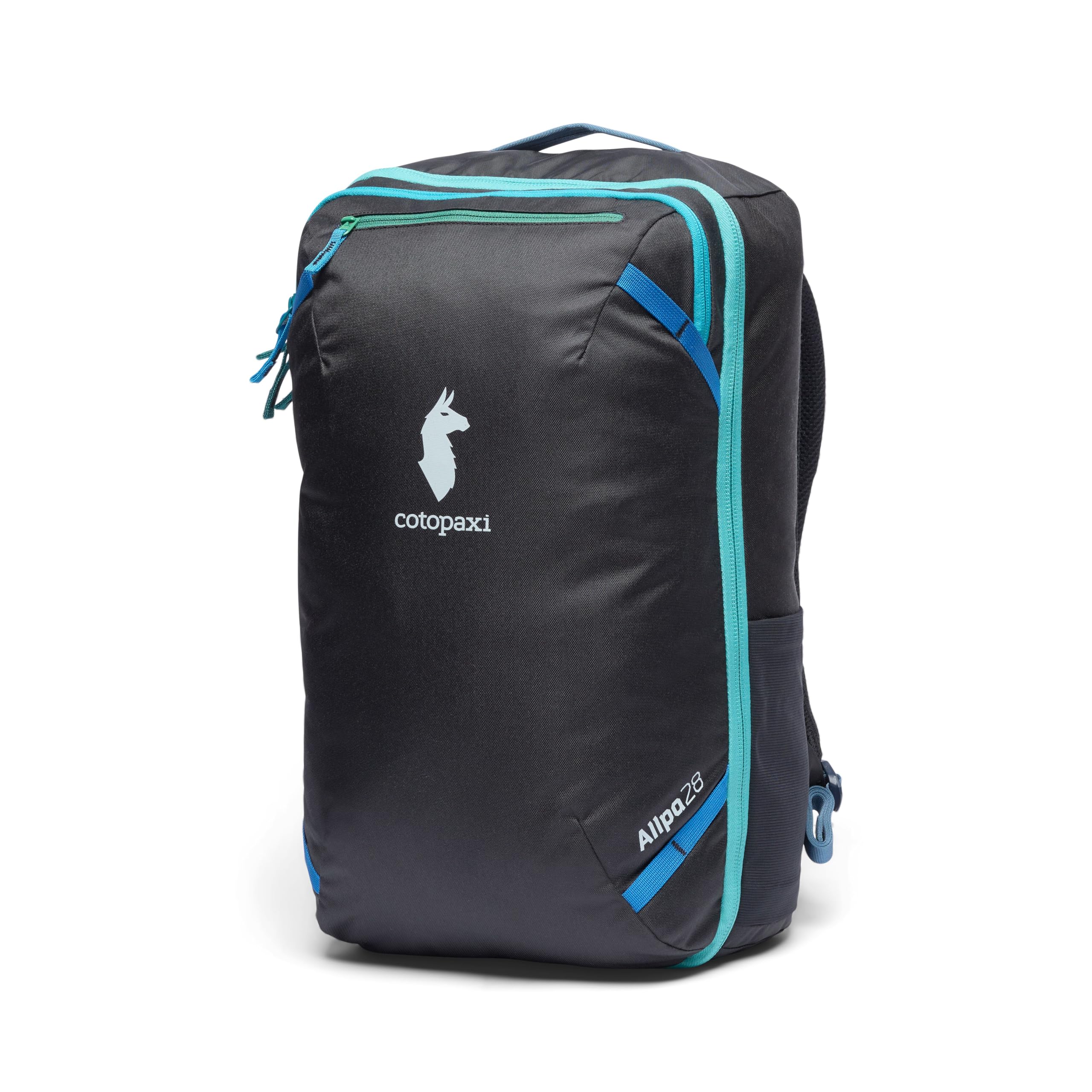
Cotopaxi’s Allpa 28L stands out for its clamshell, full-wrap zipper opening — the same convenience you get from a travel suitcase, but in a backpack format. This makes packing cubes optional: the internal sub-sections (one large, one medium, one small zippered pocket) keep a change of clothes, tech, and toiletries separated without extra gear. The 100% deadstock fabric means every unit has a unique color combination, and the estimated 30% lower carbon footprint appeals if sustainability is a factor in your purchasing decision.
The stretch mesh side pocket fits a 32-ounce water bottle, and the padded shoulder straps are surprisingly comfortable given the minimalist look. The waist strap helps stabilize the load when the pack is full (roughly 15-20 pounds), but this is still a travel-focused pack rather than a technical hiking frame. The YKK zippers are smooth and color-coded, making it easy to identify compartments at a glance.
At 9.6 ounces, this is the lightest full-featured pack on the list by a large margin — lighter than many packable daypacks. The trade-off is that the fabric, while durable against rain, lacks a dedicated rain cover, and the main zipper can feel a touch stiff when new. For one-bag travelers who also want a pack that works for urban exploration and moderate trail use, this is the most polished option.
Why it’s great
- Clamshell opening with internal sub-sections eliminates need for packing cubes
- Deadstock fabric reduces environmental waste and gives unique aesthetics
- Extremely lightweight (9.6 oz) for a 28L structured pack
Good to know
- Main zipper can feel stiff until broken in
- No rain cover included; shoulder straps do not stow away
3. Osprey Sportlite 20L
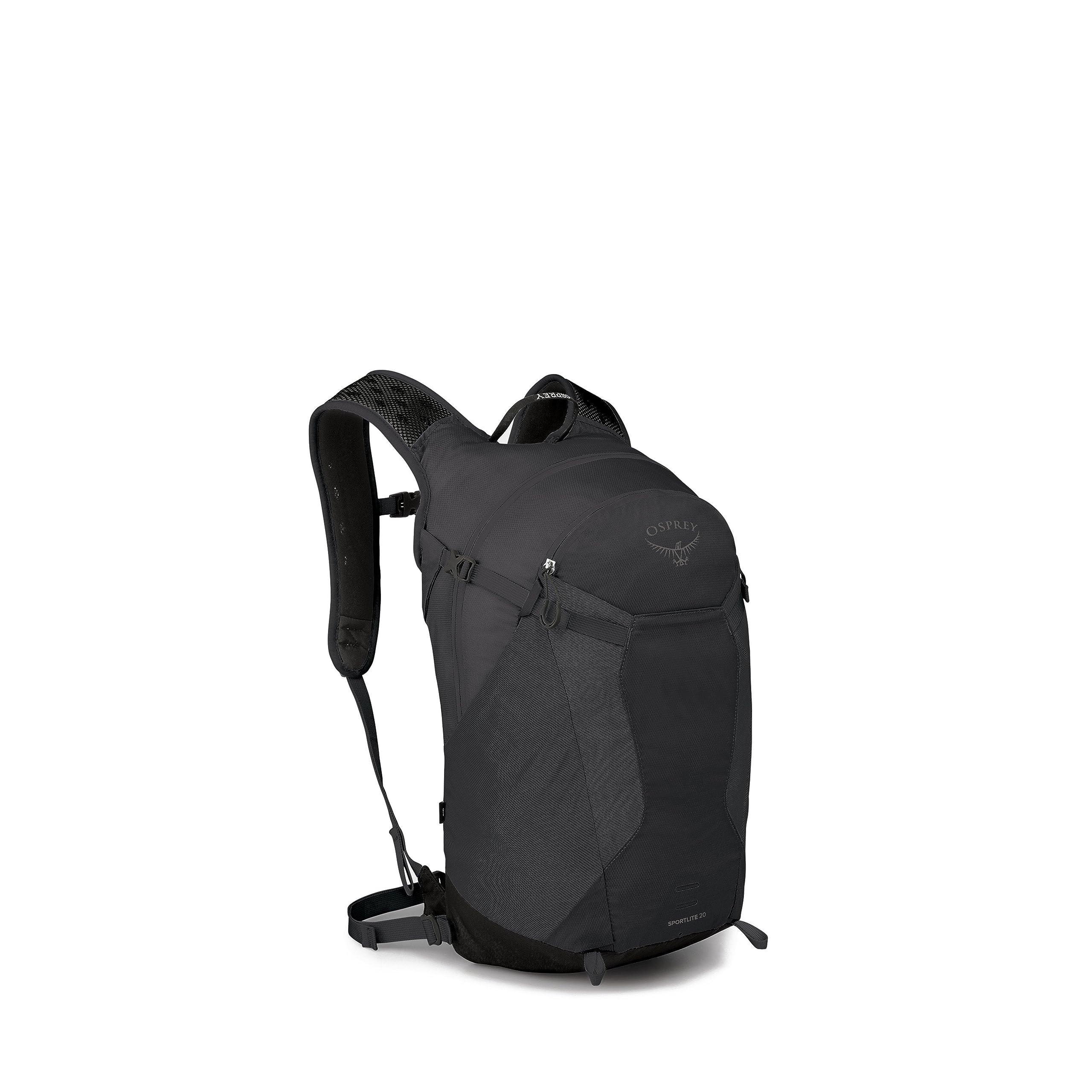
The Sportlite 20L strips away bulk to deliver a sub-1-pound daypack that still feels structured. The Atilon foam framesheet with a center air channel keeps the pack from collapsing against your spine, so ventilation exists despite the foam core.
Side pockets are deep enough for two 22-ounce bottles or one 32-ounce Nalgene, with a slight stretch woven material that holds the bottle securely without a separate cinch strap. The adjustable sternum strap has a built-in rescue whistle, and the quick-release upper compression straps let you cinch down a puffy or shell strapped to the outside. The detachable hip belt is minimal but keeps the pack from bouncing during a jog or scramble.
Internal organization is sparse — one main compartment and a front stuff-it pocket — which fits the ultralight ethos but means small items need pouches. The lack of a hydration pass-through hole is a notable omission for a hiking pack, though the water bottle pockets are excellent. If you prioritize sub-1-pound weight and a clean, technical carry over pocket abundance, this is the most focused choice.
Why it’s great
- Weighs only one pound with a functional foam framesheet
- Deep side pockets securely hold Nalgene-size bottles
- Rescue whistle integrated into the sternum strap
Good to know
- No hydration bladder sleeve or hose port
- Minimal internal pockets — small items require separate organizers
4. Eddie Bauer Adventurer 30L

The Adventurer 30L is the largest daypack on this list, and it earns that volume with a smart trampoline back panel (FreeCool) that creates a full inch of air gap between your spine and the pack. On a humid 90°F hike, that gap makes a noticeable difference in sweat accumulation. The 70-denier shadow ripstop nylon body keeps the weight to 1 pound 9 ounces while still feeling abrasion-resistant against rock and brush.
The pocket layout includes two deep exterior side pockets for water bottles, an interior hydration sleeve that also fits laptops up to 17.5 inches, and multiple gear loops on the front for clipping carabiners or a helmet. The adjustable hip and sternum straps lock the load down so most of the weight transfers to your hips rather than your shoulders, which matters when you are carrying a full 30L of layers, food, and water.
One common feedback point is that the shoulder straps have a stiff, scratchy texture when new, though they soften after a few miles. The lumbar support padding is generous and the trampoline back panel keeps ventilation working, even when the pack is fully loaded. If you frequently pack for full-day or dawn-to-dusk hikes where a 20L bag feels tight, this is the most comfortable high-volume option in the mid-range tier.
Why it’s great
- FreeCool trampoline back panel gives premium airflow for a 30L pack
- Hydration sleeve fits a large laptop or 3L bladder
- Load‑transferring hip belt makes heavy loads feel lighter
Good to know
- Shoulder straps can feel stiff and scratchy before break-in
- At 1 lb 9 oz, it is heavier than half the list
5. Water Buffalo Sherpa 22L
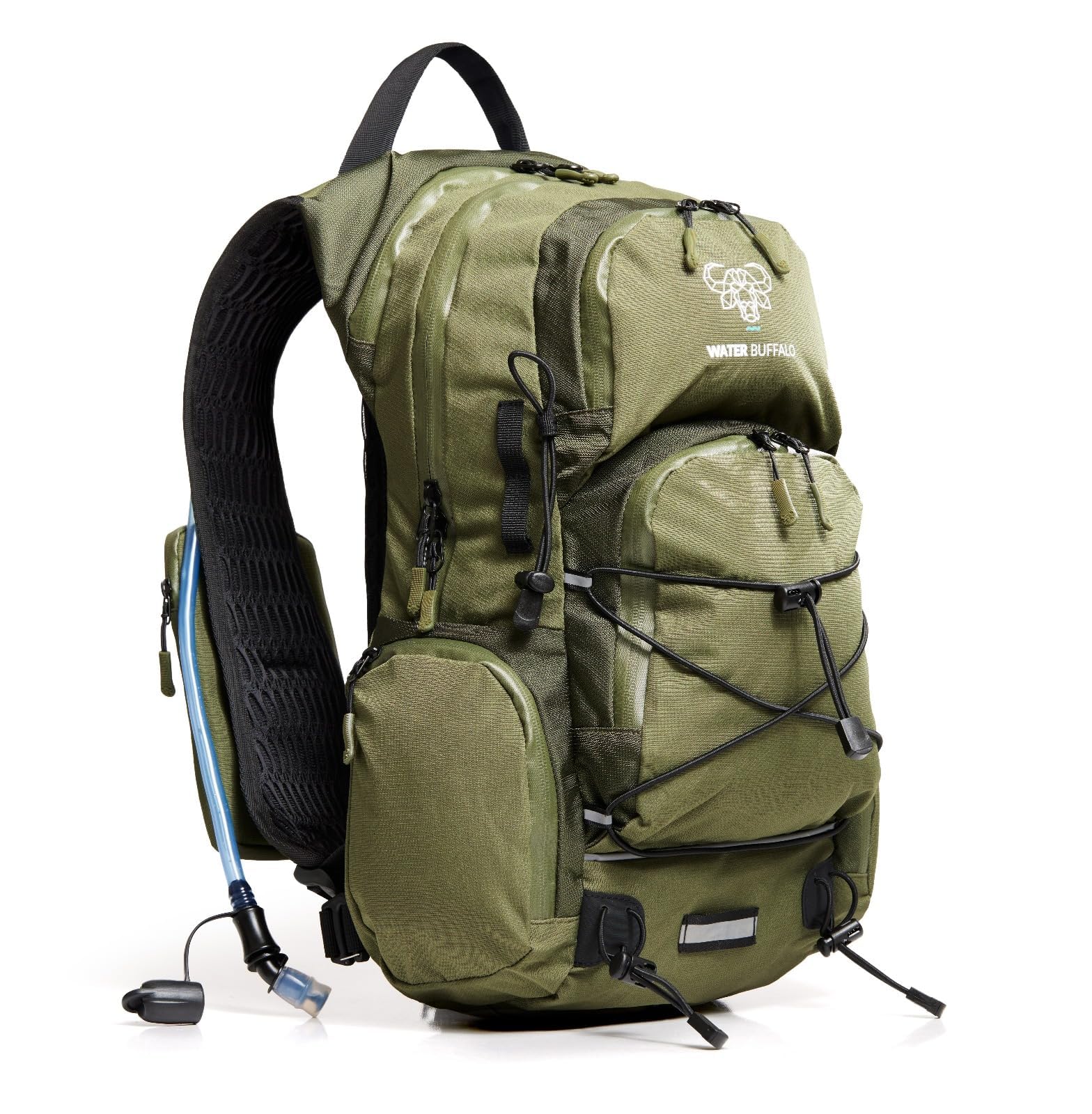
The Water Buffalo Sherpa 22L is the only pack on this list that ships with a 2-liter BPA-free bladder, which makes it the simplest out-of-box solution if you want hands-free hydration on your first hike. The 22L capacity is ideal for half-day trips (5-10 miles) where you need water, snacks, an insulation layer, and a small first aid kit — anything beyond that and the volume starts feeling tight. The 150D ripstop polyester and 420D jacquard nylon body resists abrasion reasonably well for the price tier.
Storage is handled by six pockets overall, including a small zippered front pocket for keys and phone, plus trekking pole loops and gear loops that let you lash extra equipment to the outside. The adjustable hip and chest straps lock the pack securely against your torso, preventing bounce when you move quickly downhill. The rainproof zipper liners add an extra layer of weather protection that many sub- packs skip entirely.
The included bladder has received mixed feedback — some users find the bite valve smooth and the wide opening convenient, while others note that the threaded cap can cross-thread over time. Several reviews recommend swapping the bladder for a higher-end brand if you plan to use it heavily. For the price, the bag itself offers solid build, trekking pole management, and waterproof zippers that punch above its weight class.
Why it’s great
- Includes a 2L hydration bladder, ready to use immediately
- Rainproof zipper liners and trekking pole loops at an accessible price
- Good fit for shorter hikers (5’2″ reviewers report comfortable sizing)
Good to know
- Included bladder threading can wear or cross-thread with regular use
- At 22L, capacity may feel limited for all-day trips with extra layers
6. Eddie Bauer Venture 26L
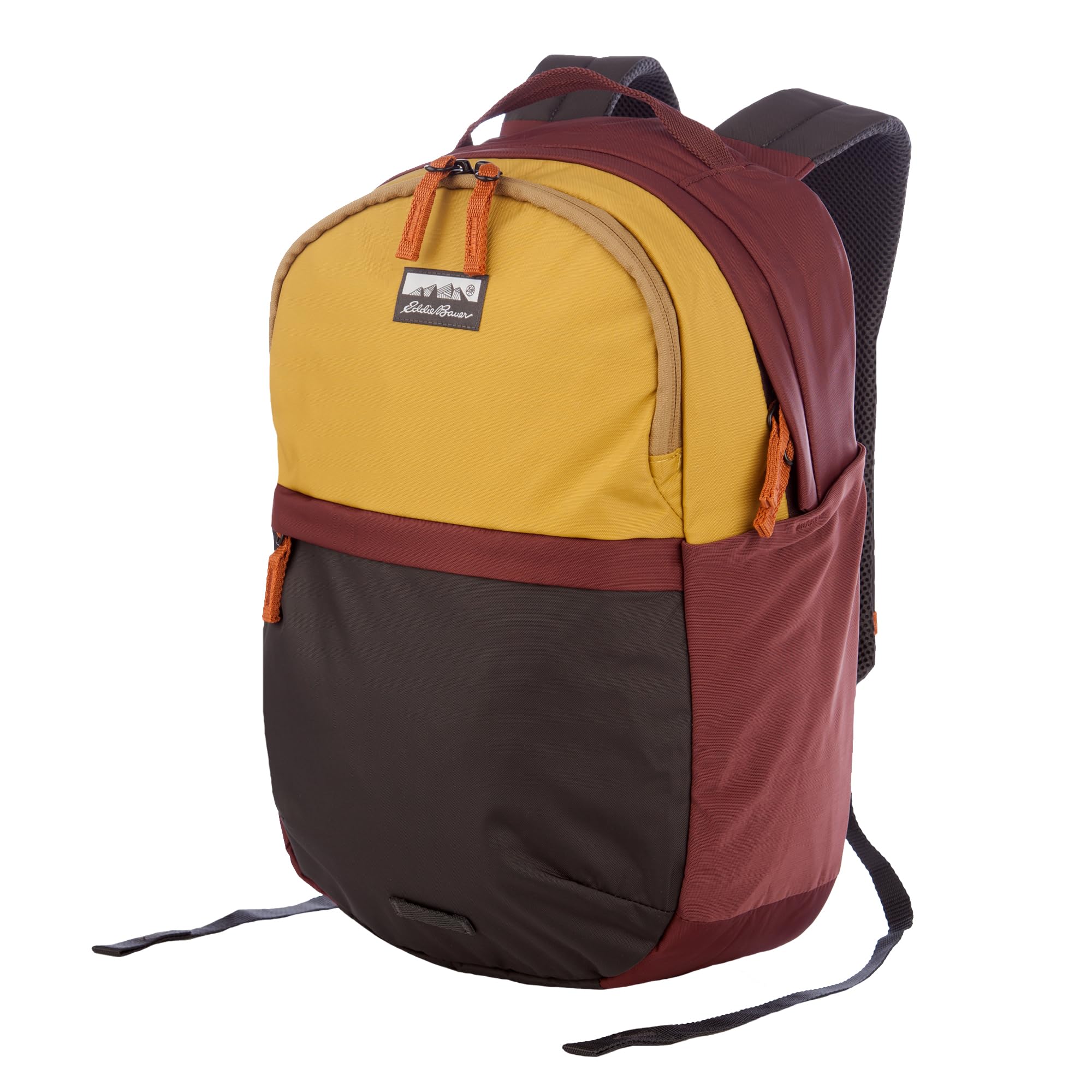
The Venture 26L is the commuter-hybrid of the group — it transitions from a hiking daypack to a work backpack because of its laptop sleeve (fits up to 15 inches) and the eight internal pockets that organize pens, power banks, and documents without scattering. The shell and lining are made from 100% recycled materials, and a PFC-free water-repellent finish handles light rain and wet foliage on the trail. At 1.3 pounds, it is light enough for day hikes but structured enough for a loaded office carry.
The breathable air mesh back panel and adjustable sternum strap provide decent ventilation on warm walks, though the back panel is a standard mesh overlay rather than a trampoline design, so airflow is moderate. The stretch mesh side pockets fit a 24-ounce Owala or similar bottle comfortably, but reviewers note that when the main compartment is packed full, the side pockets compress and become difficult to use. The pocket layout also includes an organization front compartment that is deeper than typical, which is excellent for trail snacks but can feel excessive for minimalists.
The 26L volume hits a sweet spot for short overnight trips or summit days where you need a hydration-compatible sleeve plus room for a lunch and a camera insert. Some users mention that the water bottle holders become nearly unusable when the bag is stuffed — this is a genuine ergonomic quirk that matters if you tend to overpack. If you want a single pack for the trail, the gym, and the office, and the recycled construction is a priority, the Venture is the most versatile entry-level choice.
Why it’s great
- Made from 100% recycled shell and lining with PFC-free water repellency
- Laptop sleeve and deep front organization pocket work for commuting
- Lightweight at 1.3 pounds for a 26L pack with padding
Good to know
- Side bottle pockets compress and become difficult when main compartment is full
- Standard mesh back panel offers less airflow than trampoline designs
7. Osprey Ultralight Stuff Pack 18L

The Ultralight Stuff Pack is Osprey’s answer to the problem of “I need a daypack only sometimes.” When empty, it stuffs into a small pouch roughly the size of an orange, making it the go-to extra bag for trips where you fly with a main pack but want a daypack for summit hikes or exploring a city. The 40D high-tenacity nylon is impressively tear-resistant for its sub-6-ounce weight, and the GRS-certified recycled construction with bluesign APPROVAL adds genuine eco credentials.
The features are minimal but purposeful: two stretch mesh side pockets for water bottles, an internal key clip, padded mesh shoulder straps, and an adjustable sternum strap with an integrated emergency whistle. The 18L capacity is enough for a rain jacket, a 1L water bottle, lunch, and a camera, but you will not fit bulky layers or a 15-inch laptop. The lack of a front quick-access pocket is the most common complaint — anything small has to go inside the main compartment, which means unzipping the top every time you want your phone.
The comfort ceiling is lower than on a framed pack: the shoulder straps are thin, and there is no hip belt to speak of, so this pack is best kept under 5 pounds of total gear. If you already own a larger travel pack and need a lightweight, stowable daypack that disappears into your luggage, this is the most proven option by far. For dedicated backpacking where you carry it all day, every day, the Osprey Sportlite or Adventurer offer more support.
Why it’s great
- Stuffs down to the size of a small orange for minimal luggage footprint
- 40D recycled nylon with bluesign approval at only 0.33 pounds
- Stretch side pockets fit water bottles securely without added bulk
Good to know
- No exterior quick-access pocket — small items require opening the main compartment
- Thin shoulder straps and no hip belt limit load to about 5 pounds max
FAQ
What is the ideal volume for a backpacking daypack for a full day hike?
Should I buy a daypack that includes a hydration bladder or use my own?
How do I measure my torso length for a daypack that fits?
Final Thoughts: The Verdict
For most users, the backpacking daypack winner is the Osprey Daylite Expandable 26+6 because it merges compliant airline personal-item dimensions with daypack functionality and an expandable gusset — few packs travel as well while still performing on the trail. If you want a dedicated, ultralight hiking pack that barely registers on your back, grab the Osprey Sportlite 20L. And for a premium travel-and-trail hybrid that packs like a suitcase and weighs under ten ounces, nothing beats the Cotopaxi Allpa 28L.