
Our readers keep the lights on and the weekend projects moving. As an Amazon Associate, I earn from qualifying purchases.
A backpacking puffy jacket is the single piece of gear that decides whether your alpine evening is a serene campfire moment or a shivering, miserable countdown to dawn. The right one disappears into your pack, weighs almost nothing, and unleashes a shocking amount of warmth the moment you stop moving. The wrong one leaves you cold, wet, or hauling unnecessary bulk for miles.
I’m Rikta — the co-founder and writer behind FitlyFast. I’ve spent hundreds of hours analyzing insulation types, fill powers, fabric deniers, and packability metrics across the entire puffy jacket market to build this guide with real, actionable data for the committed backpacker.
Every gram and every baffle matters when your shelter is on your back. This guide separates the true backpacking workhorses from the weekend fashion pieces, helping you find the best backpacking puffy jacket for your specific trail style and climate demands.
How To Choose The Best Backpacking Puffy Jacket
Selecting the right puffy for the trail is a balancing act between warmth, weight, packed size, and weather resistance. Over-insulate and you carry unnecessary grams. Under-insulate and you risk hypothermia at camp. The key is matching the jacket’s build to your specific use case: the insulation type, the shell fabric, and the fit all interact to determine whether this layer works for you.
Down vs. Synthetic Insulation
Down offers the highest warmth-to-weight ratio and compresses smaller than any synthetic alternative, making it the default choice for dry, cold backcountry trips. The critical metric is fill power — a 700-fill down traps more heat per gram than a 600-fill. The tradeoff is catastrophic performance loss when wet. A down jacket without an effective DWR finish becomes a soggy, cold liability in sustained rain or snowmelt. Synthetic insulation, like the Coreloft found in the Arc’teryx Atom Hoody, maintains most of its insulating loft when damp and dries faster, making it superior for high-output activities or trips in humid, unpredictable weather.
Shell Fabric and Weather Resistance
The outer fabric determines the jacket’s durability and its ability to shed wind and light moisture. Lightweight 10D or 15D nylon fabrics save ounces but tear easily against rock or branch contact — the Mountain Hardwear Ghost Whisperer/2 is famously delicate. A heavier 20D or 30D face fabric, like the Pertex Quantum on the Rab Microlight Alpine, adds a few grams but greatly improves trail durability and wind resistance. A durable water-repellent (DWR) finish is non-negotiable for any backpacking puffy; it causes light snow and drizzle to bead off rather than soaking into the insulation.
Fit and Layering Intent
A backpacking puffy must layer over a base and possibly a mid-weight fleece, yet still fit under a rain shell when the weather turns. An athletic fit with articulated sleeves allows full range of motion for hiking poles and camp chores. A jacket that is too trim restricts layering; one that is too loose lets warm air escape. Look for a hem that drops below the waist to seal out drafts when you lift your arms, and a hood that fits comfortably under a helmet or shell hood without blocking peripheral vision.
Quick Comparison
On smaller screens, swipe sideways to see the full table.
| Model | Category | Best For | Key Spec | Amazon |
|---|---|---|---|---|
| Rab Microlight Alpine | Down Hoody | All-mountain backpacking | 700-fill down / 16.5 oz | Amazon |
| Arc’teryx Atom Hoody | Synthetic Hoody | High-output, wet conditions | Coreloft 60 insulation | Amazon |
| Marmot Echo Featherless | Synthetic Jacket | Damp/wet weather value | Recycled synthetic fill | Amazon |
| Mountain Hardwear Ghost Whisperer/2 | Ultralight Down | Gram-counting fastpackers | 800-fill down / 8.2 oz | Amazon |
| Outdoor Research Helium Down | Down Hoodie | All-around backpacking | Duck down / packable | Amazon |
| The North Face McMurdo Parka | Expedition Parka | Extreme cold basecamps | 600-fill down / DryVent shell | Amazon |
| Fjällräven Skogso Jacket | Waxed Shell | Classic bushcraft, low pace | G-1000 fabric / 1.22 lb | Amazon |
| Eddie Bauer CirrusLite Down | Entry Down | Budget fair-weather trips | 650-fill down / 7.83 oz | Amazon |
| Marmot Stockholm Down | Urban/Winter Down | Everyday cold + casual hikes | 700-fill down / lofty fit | Amazon |
In‑Depth Reviews
1. Rab Microlight Alpine Down Hooded Jacket
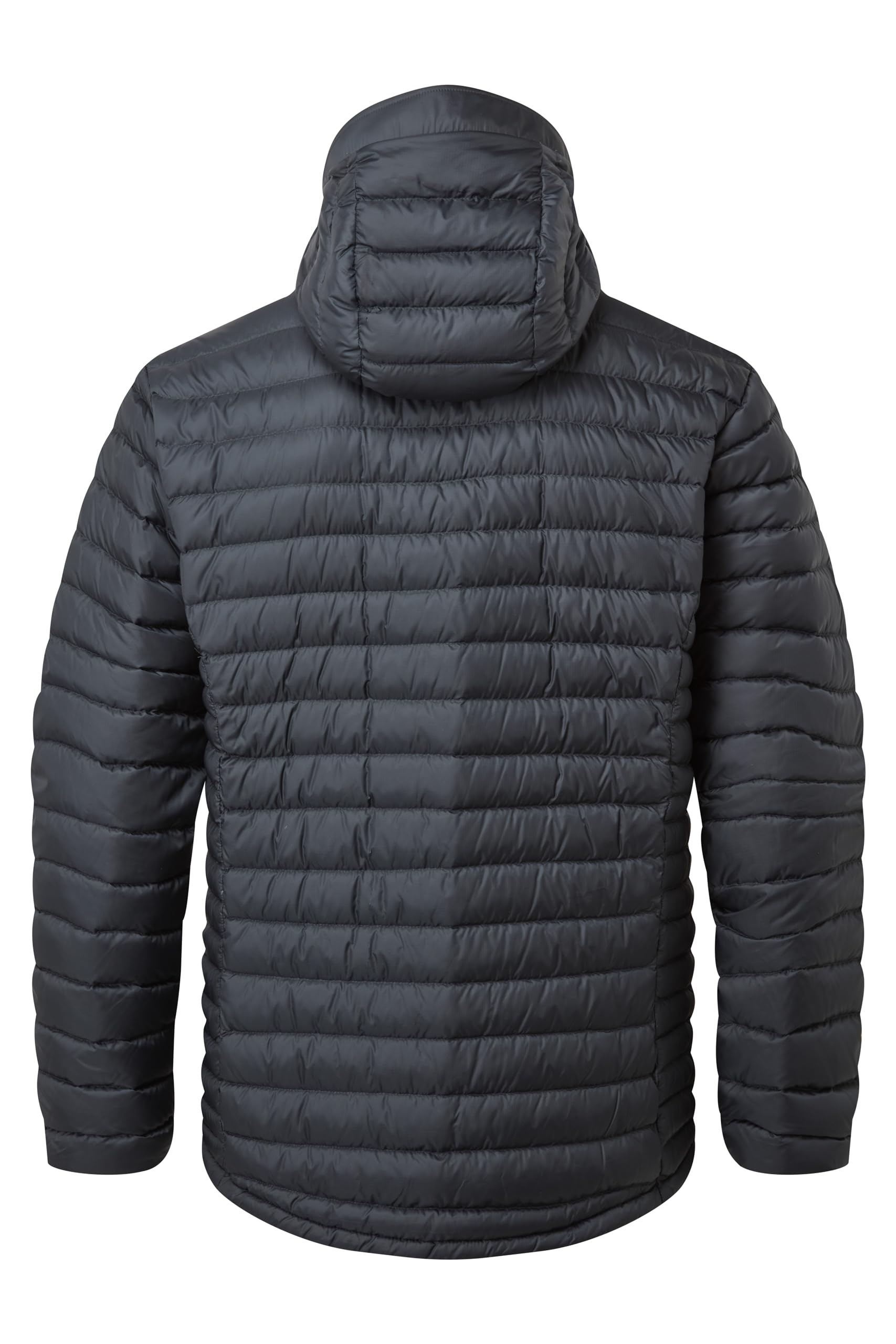
The Rab Microlight Alpine is the Goldilocks puffy for serious backpackers — light enough at 16.5 ounces to justify a permanent spot in your pack, yet packed with 700-fill ethically sourced down that delivers reliable warmth for three-season use. The Pertex Quantum outer fabric strikes a hard-to-find balance between weight savings and trail durability, resisting wind and light precipitation without the crinkle or bulk of heavier shells. Nano baffles under the arms improve breathability during active use, a detail that matters when you’re climbing elevation with the jacket on.
Real-world feedback from Patagonia trekkers confirms this jacket handles variable conditions: the hood stays secure in gusty wind, the athletic cut layers cleanly over a fleece, and the whole package compresses into its own pocket without a fight. The only honest complaint is the zipper feels slightly underwhelming for the price bracket, and the water-repellent treatment is for light flurries, not sustained rain. But as a do-it-all down piece for the backcountry, it nails the warmth-to-weight ratio better than most competitors near this price.
For the backpacker who needs one puffy that works from late spring through early winter, the Microlight Alpine is the most versatile contender here. It’s not the absolute lightest or the absolute warmest, but it is the most balanced — a true workhorse that earns its spot in your pack on every trip.
Why it’s great
- Excellent warmth-to-weight ratio with 700-fill down
- Pertex Quantum shell offers real wind resistance with low weight
- Micro and nano baffle design improves breathability and reduces cold spots
Good to know
- Zipper quality feels below the premium price point
- Not fully waterproof — needs a shell in sustained rain
2. Arc’teryx Atom Hoody Men’s
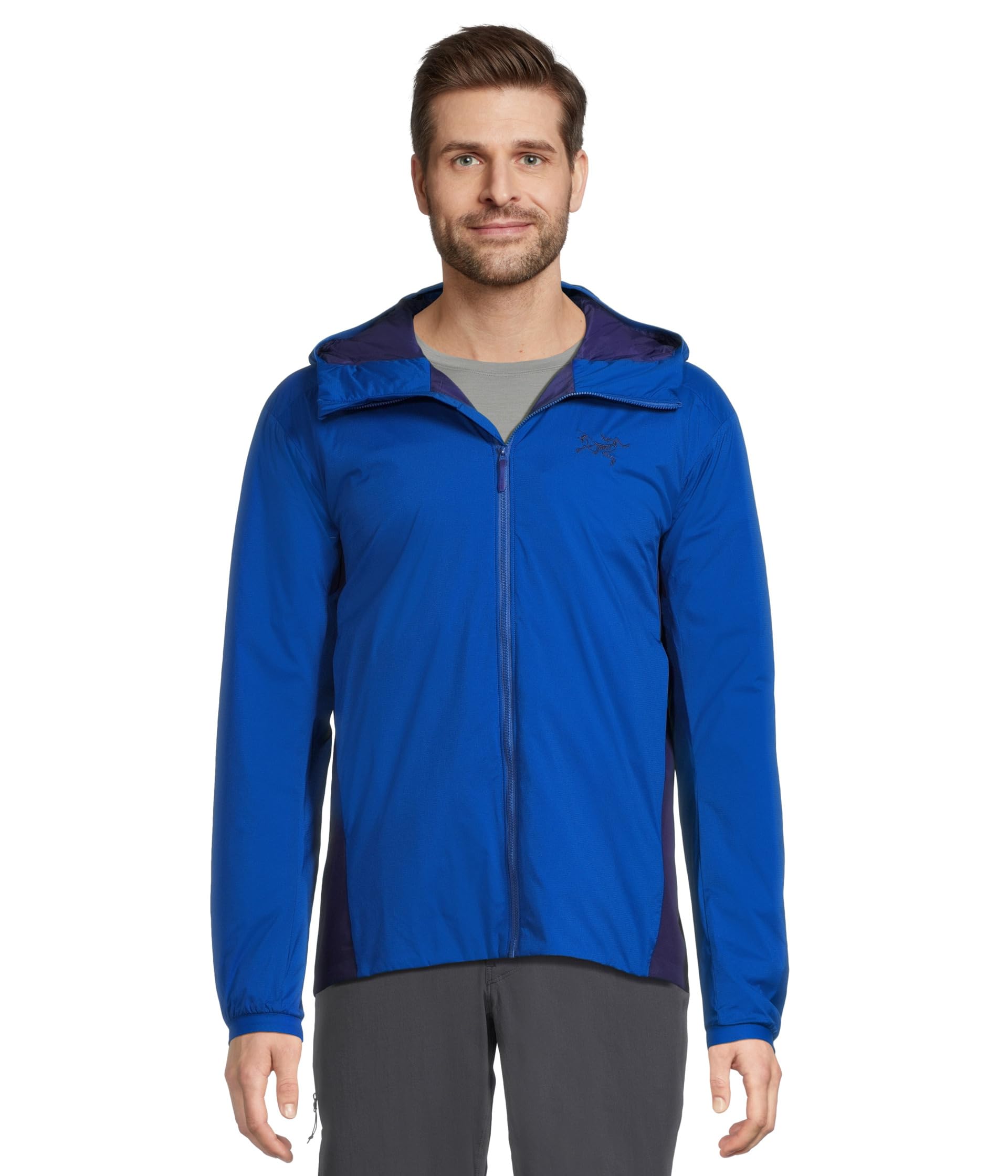
The Arc’teryx Atom Hoody is the gold standard for active insulation — a hybrid design that uses Coreloft Compact 60 synthetic insulation on the core and performance stretch fleece on the side panels. This configuration is engineered for high-output activities where a traditional down puffy would soak through with sweat. The Tyono 20 face fabric balances wind resistance with air permeability, so you can hike in it comfortably without overheating, then zip up and retain warmth during a rest break.
Reviewers consistently praise its everyday versatility: it works as a standalone fall jacket, a mid-layer under a shell for winter resorts, and a packable travel piece that handles unpredictable weather. The articulated patterning and adjustable StormHood allow full mobility without the restriction common in insulated jackets. The tradeoffs are real — it’s not as warm as a dedicated down puffy for static camp use, and the price is high for a synthetic jacket. But for the backpacker who values breathability and wet-weather reliability over maximum loft, this is the right tool.
The Atom Hoody shines brightest on moving days where you need insulation that doesn’t trap moisture. Pair it with a proper rain shell for camp, and you have a two-layer system that covers 90 percent of three-season conditions. It is not a replacement for a deep-winter down parka, but it is an indispensable piece for the active backpacker.
Why it’s great
- Synthetic Coreloft insulation retains warmth when damp
- Fleece side panels dump heat during high-output movement
- Articulated patterning and StormHood provide excellent mobility
Good to know
- Not warm enough for static use below freezing without a shell
- Runs slightly small — consider sizing up if layering
3. Marmot Echo Featherless Jacket
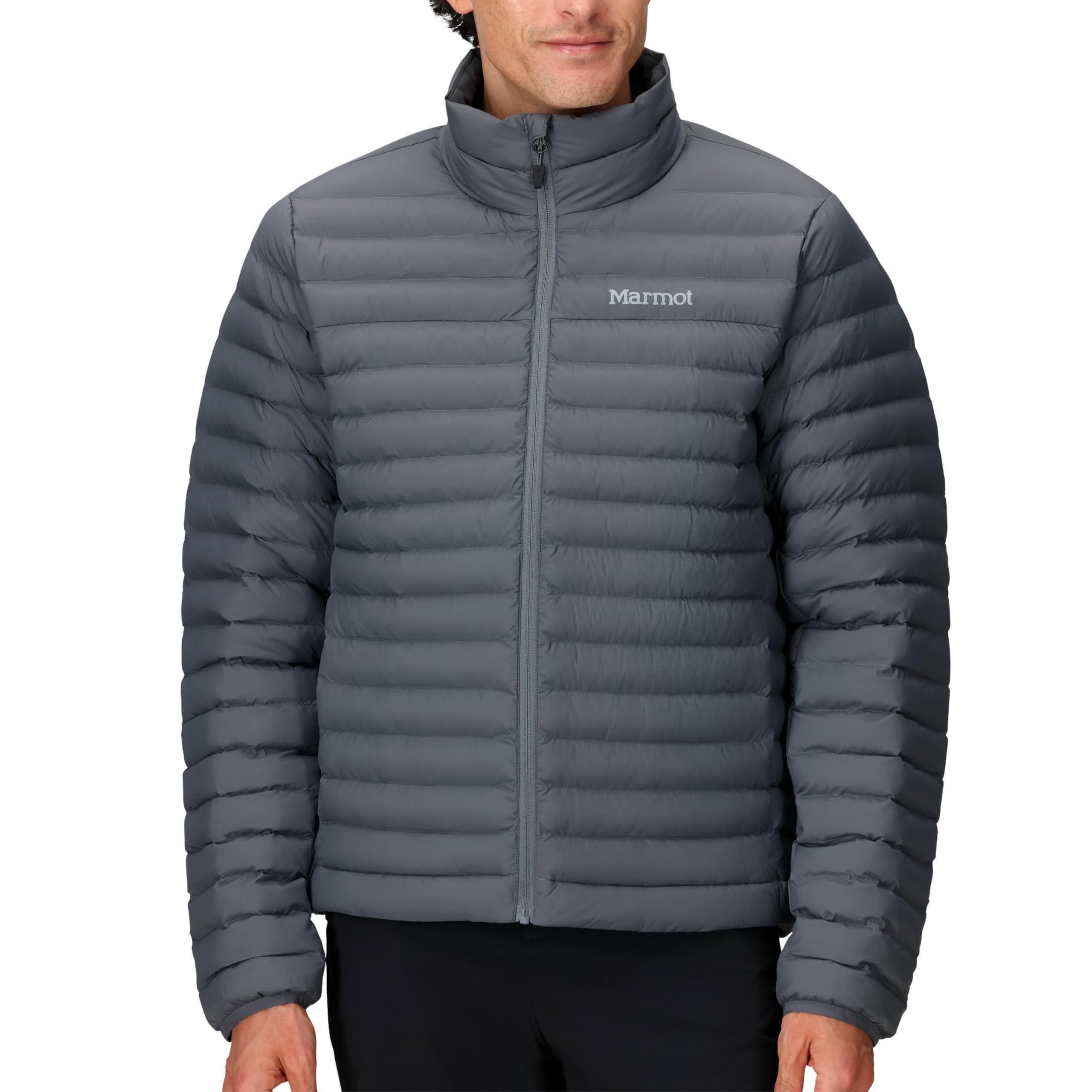
The Marmot Echo Featherless Jacket solves a specific backpacking problem: what do you wear when conditions are too damp for down but you still need real warmth? Its recycled synthetic fill mimics the hand feel of 700-fill down while maintaining insulation performance even when wet from perspiration or a light drizzle. This is a jacket that keeps working when a down alternative would collapse into a cold, clammy shell.
Customer reports place its effective range between 25°F and 50°F, which covers spring and fall shoulder seasons perfectly. The fit is athletic without being restrictive, and the construction quality is typical Marmot — clean stitching, reliable zippers, and a durable outer fabric that doesn’t feel fragile. It lacks pit zips and a chest pocket, which experienced backpackers will notice, and the warmth ceiling is lower than a high-fill down jacket. But as a synthetic option that doesn’t cost premium money, it delivers impressive performance per dollar.
For the backpacker who regularly deals with mist, wet snow, or high-output hiking followed by cold camp stops, the Echo Featherless is a smart choice. It won’t win any weight competitions against ultralight down hoodies, but it will keep you warm when they fail. That reliability in wet conditions makes it a strong mid-range pick.
Why it’s great
- Synthetic insulation retains loft and warmth when damp
- Comfortable 25°F to 50°F range covers shoulder seasons
- Durable outer fabric resists trail wear better than ultralight shells
Good to know
- Missing pit zips and an internal chest pocket
- Lower warmth ceiling than mid-weight down jackets
4. Mountain Hardwear Ghost Whisperer/2 Hoody

The Mountain Hardwear Ghost Whisperer/2 is the jacket that gram-counting backpackers dream about. Weighing just 8.2 ounces in a size medium, it compresses smaller than a Nalgene bottle and provides surprising warmth for its weight thanks to 800-fill RDS-certified down. The completely recycled 10D face fabric is the lightest in this lineup, making this an ideal choice for fastpackers, thru-hikers, and anyone who treats every ounce as a liability.
The tradeoff for this extreme lightness is fragility. Multiple owners report that the thin shell tears easily against rough granite, branch snags, and even pet claws. The zippers require delicate handling, and the hood lacks adjustability, which can be annoying in wind. It also loses all insulating value when wet and takes a long time to dry. This is not a jacket for bushwhacking or wet climates — it is a specialized tool for dry, cold, lightweight missions where the jacket lives mostly in the pack until camp.
When used within its intended envelope — dry, cold weather and careful camp use — the Ghost Whisperer/2 performs brilliantly. It’s the warmest jacket at its weight class by a wide margin. But you must treat it with care and pair it with a robust shell for any weather uncertainty. It is the ultimate luxury for the weight-conscious, not a general-purpose puffy.
Why it’s great
- Incredible 8.2 oz weight with 800-fill down insulation
- Extremely packable — compresses to fist-sized bundle
- Recycled face fabric and responsible down sourcing
Good to know
- Thin 10D shell is prone to tearing on abrasion
- Hood lacks adjustment; not for wet or brushy conditions
5. Outdoor Research Helium Down Hoodie
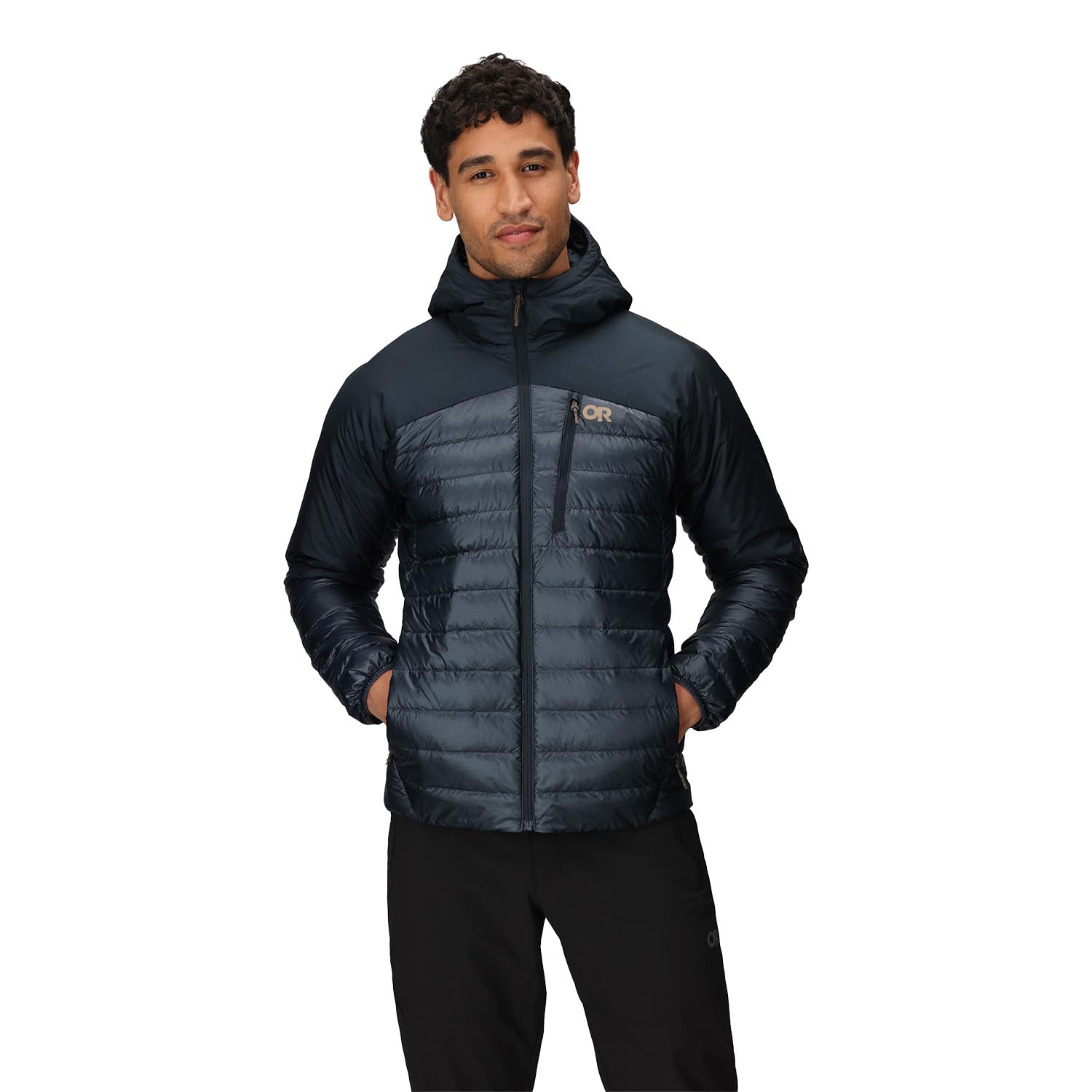
The Outdoor Research Helium Down Hoodie brings a pragmatic, feature-rich approach to the backpacking puffy category. It uses 90/10 duck down insulation in a recycled nylon shell, and the design includes thoughtful details that experienced backpackers will appreciate: a key clip inside the hand pockets, an interior stash pocket for warming gloves or electronics, and an adjustable drawcord hem that seals out drafts without restricting movement.
Owners consistently report it performs well from the 25°F to 45°F range when paired with a thermal or fleece layer. The standard fit accommodates layering without being baggy, and the jacket packs down small enough to disappear into a pack. The Helium Down doesn’t push extreme ultralight boundaries like the Ghost Whisperer, but it also doesn’t demand the same delicate handling — the fabric feels stout enough for regular trail use. A 40-minute walk in rain left one reviewer dry and warm inside, demonstrating a capable DWR finish.
The main caveat is the fit runs slightly small, which means sizing up is advisable if you plan to layer heavily underneath. It’s also a mid-premium product that doesn’t include flashy features like helmet-compatible hoods or pit zips. But for the backpacker who wants a reliable, well-rounded down hoodie with smart pocket layouts and solid construction, the Helium Down is a contender that deserves serious attention.
Why it’s great
- Smart pocket layout with key clip and interior stash pocket
- Effective DWR finish handles light rain well
- Balanced weight and durability for regular trail use
Good to know
- Runs slightly small — consider sizing up for layering
- No helmet-compatible hood or pit zips
6. The North Face McMurdo Parka
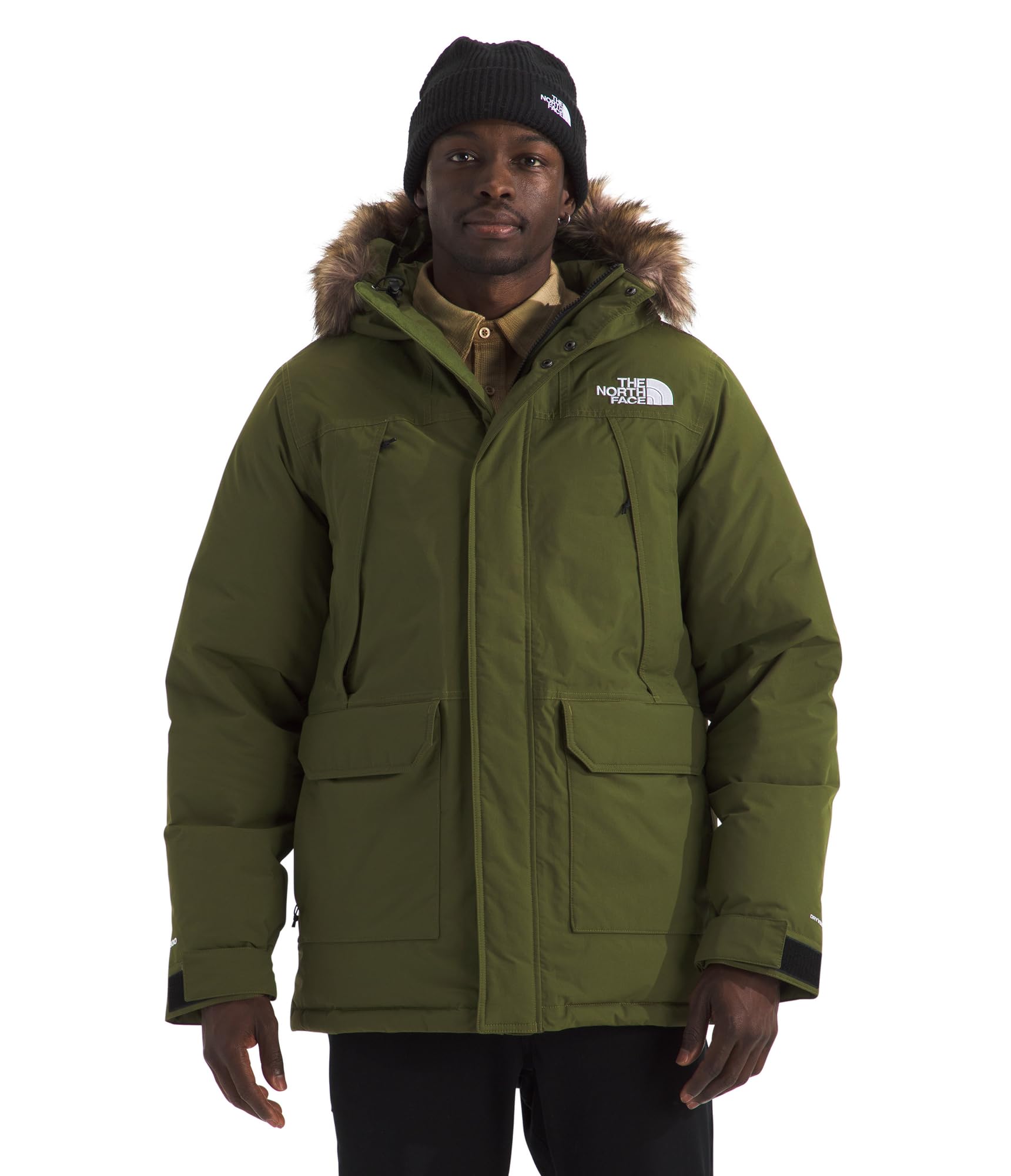
The North Face McMurdo Parka is a beast built for a specific mission: keeping you alive and comfortable in extreme cold conditions where a lightweight puffy simply won’t cut it. This is the longest coat in this guide, featuring a fully waterproof, breathable, seam-sealed DryVent 2L shell with a non-PFC DWR finish, packed with 600-fill recycled waterfowl down. It is windproof, snowproof, and tested by reviewers in temperatures as low as -23°F with wind chills approaching -48°F.
The McMurdo is not a backpacking puffy in the traditional ultralight sense — it is heavy, bulky, and designed for basecamp use, resort days, and extreme winter commutes where warmth and weather protection are the only priorities. The relaxed fit allows heavy mid-layers underneath, and the three-piece adjustable hood with a removable faux-fur ruff provides unparalleled face protection in blizzard conditions. Multiple chest and hand pockets offer ample storage for essentials and electronics.
For the backpacker who ventures into deep winter — think ice climbing approaches, winter mountaineering basecamps, or long exposure at high elevations — the McMurdo provides a level of security that no lightweight puffy can match. It does not compress well and it weighs significantly more than any other jacket here. But when the temperature drops below zero and the wind howls, you will be grateful for every ounce of it.
Why it’s great
- Fully waterproof and windproof DryVent shell blocks extreme elements
- Tested effective at -23°F with proper layering
- Generous pocket layout with chest and hand pockets
Good to know
- Very heavy and bulky — not for lightweight backpacking
- Runs large; size down for proper fit
7. Fjällräven Skogso Men’s Jacket
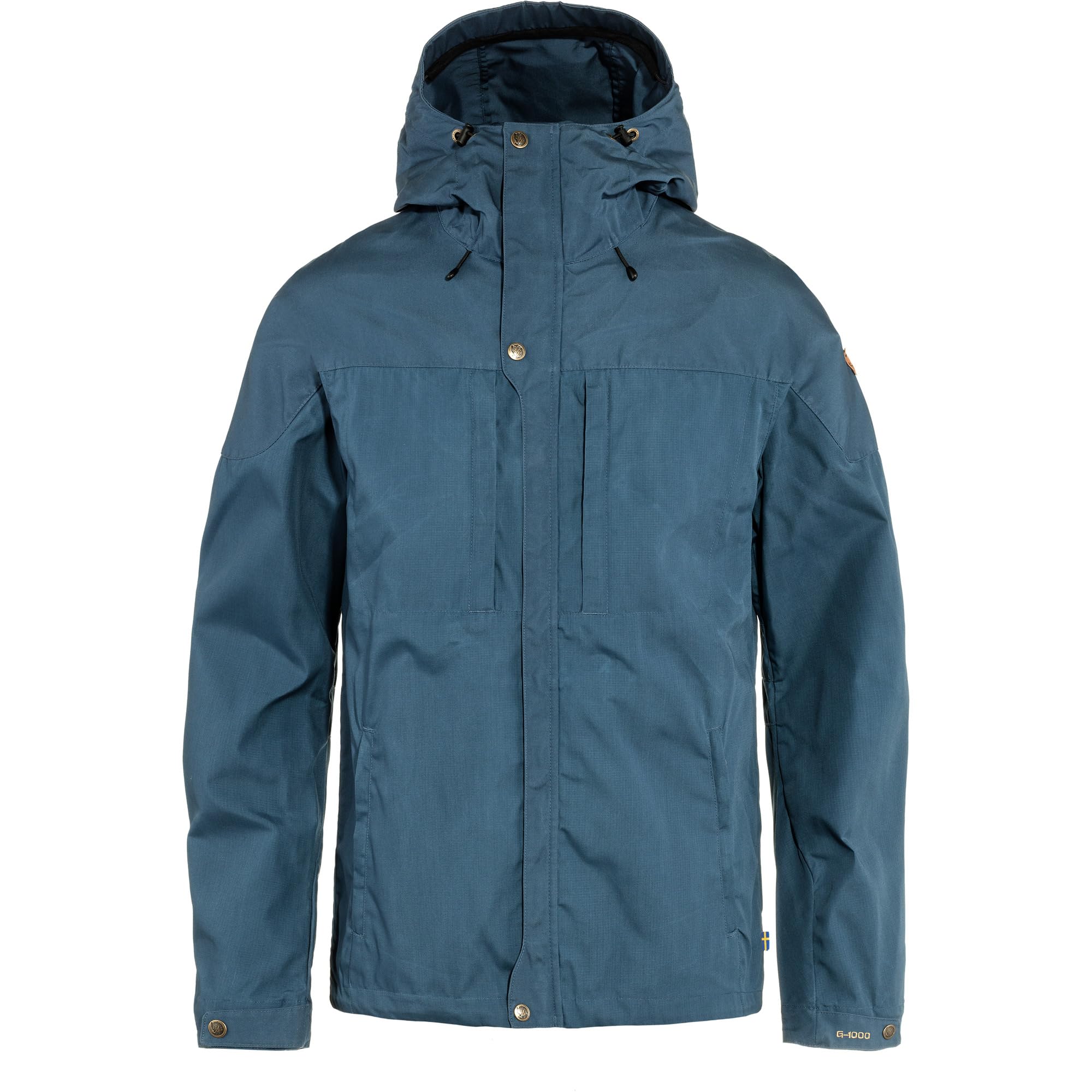
The Fjällräven Skogso Jacket represents a different philosophy in outdoor wear — one rooted in durability, repairability, and timeless design rather than ultralight performance. Its G-1000 fabric (a blend of recycled polyester and organic cotton) is treated with Greenland Wax, which can be reapplied over the life of the jacket to maintain water and wind resistance. This is a jacket meant to last a decade or more, not a season or two.
For the backpacker, the Skogso is a niche tool. It weighs over a pound, does not compress well, and provides minimal insulation compared to a dedicated puffy — it’s more of a soft-shell windbreaker with light weather protection. It fits slim, which works for layering but may feel restrictive over bulky mid-layers. Its best use case is low-intensity bushcraft, hut-to-hut hiking, or everyday outdoor wear where the priority is quiet fabric, natural materials, and a clean aesthetic.
It is not the right jacket for fast-and-light alpine objectives or deep winter camping. But for the backpacker who values a buy-it-for-life garment and prefers natural fibers over technical synthetics, the Skogso offers a unique, durable, and repairable option. The lack of insulation means it must be paired with a fleece or puffy for cold weather, reducing its standalone utility in this guide.
Why it’s great
- Extremely durable G-1000 fabric with renewable wax treatment
- Quiet fabric doesn’t rustle when moving
- Slim fit works well over a base layer
Good to know
- No insulation — requires additional layers for warmth
- Heavy and non-compressible for backpacking standards
8. Eddie Bauer CirrusLite Down Jacket

The Eddie Bauer CirrusLite Down Jacket is the entry-level down puffy that proves you don’t need to spend a fortune to get functional insulation. With 650-fill premium down and a 100% nylon StormRepel DWR finish, it provides enough warmth for mild backpacking trips where temperatures stay above freezing. At just 7.83 ounces, it is genuinely lightweight and packs down small enough for a daypack, making it an accessible option for new backpackers or as a camp layer for summer trips.
The compromises are clear when compared to higher-end options. Reviewers note the jacket lacks a hem drawstring, a chest pocket, and a double zipper — features that experienced backpackers depend on for sealing warmth and accessing gear. There are minor reports of feather leakage and loose threads, and the warmth range tops out in the 32°F to 50°F range without a fleece underneath. It is a simple jacket with a simple feature set, and it performs best within those limits.
For the budget-conscious backpacker who needs a puffy for fair-weather trips or as an emergency layer in milder conditions, the CirrusLite is a solid value buy. It will not survive the abuse of alpine bushwhacking or perform in freezing rain, but it occupies a useful niche for those who want down insulation without the premium price tag.
Why it’s great
- Very lightweight at 7.83 ounces for a down jacket
- Stormshed DWR finish handles light moisture
- Down insulation at an entry-level price point
Good to know
- No hem drawstring, chest pocket, or double zipper
- Warmth range limited to mild conditions above freezing
9. Marmot Stockholm 700 Fill Down Puffer
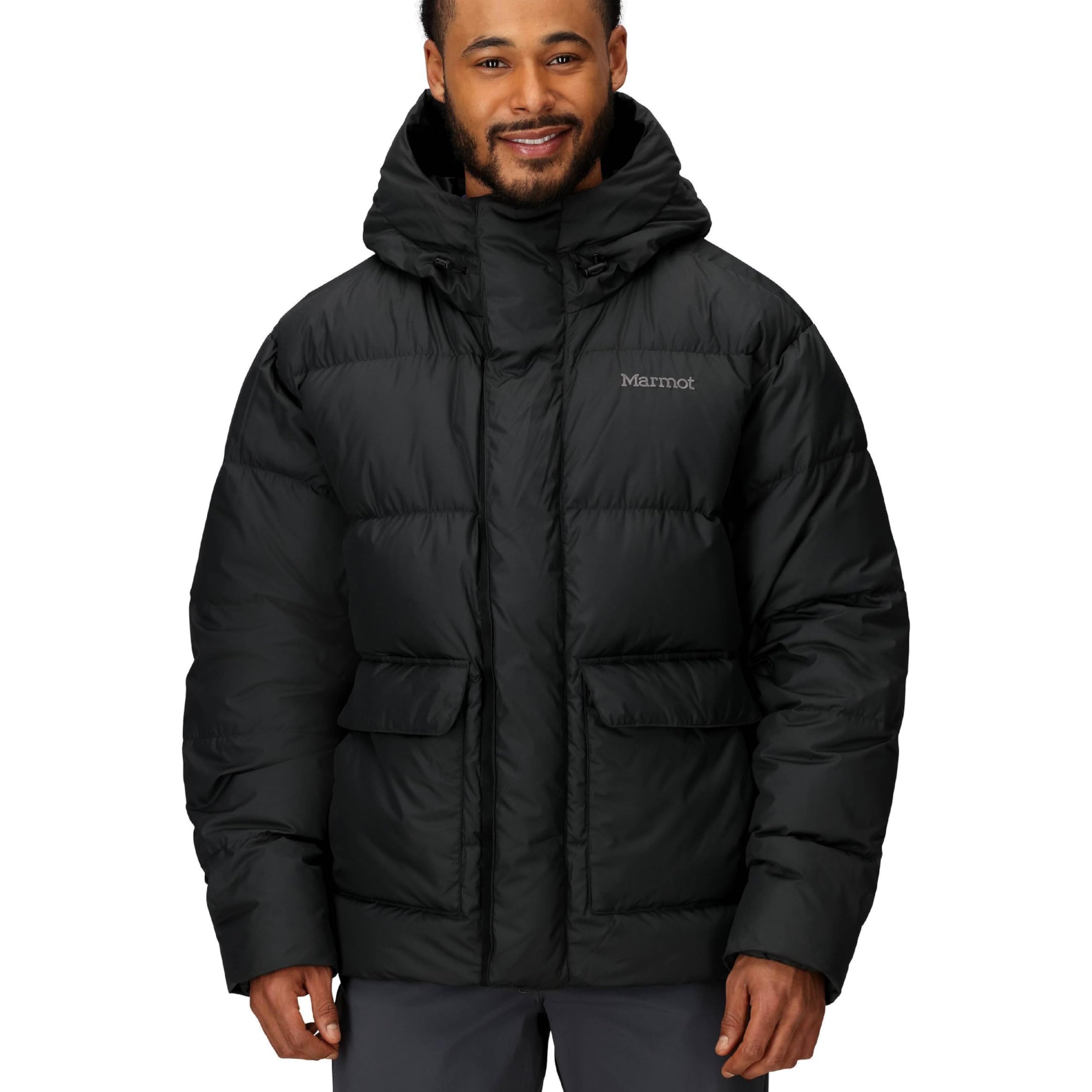
The Marmot Stockholm Down Puffer leans into style and warmth rather than ultralight backpacking performance. Stuffed with generous 700-fill down in large baffles, it is a noticeably lofty jacket that provides substantial static warmth for cold winter days. The oversized hand pockets, adjustable hood cinches, and internal zippered pocket make it a practical choice for daily winter use that transitions from the trailhead to the city without missing a beat.
For backpacking, the Stockholm is a mixed proposition. It is bulky and does not compress well, taking up significant pack space that a dedicated backpacking puffy would not. The fit runs large, which owners consistently note — it’s designed for ease of movement and layering, not for a trim athletic silhouette. It is most at home on casual winter hikes, snowshoe outings, or as a warm layer for cold car-camping trips where weight and packed size are secondary concerns.
If your backpacking style includes basecamp comfort and you are willing to sacrifice packability for loft and everyday versatility, the Stockholm is a satisfying choice. It is a proper winter jacket that happens to be light enough for short trips, not a technical backpacking puffy. Recognize its role for what it is, and it will serve you well through many cold seasons.
Why it’s great
- Very warm with lofty 700-fill down construction
- Adjustable hood and hem cinches seal in heat
- Generous fit allows comfortable layering
Good to know
- Bulky packed size — not ideal for multi-day backpacking
- Fit runs large; size down for a closer cut
FAQ
What fill power do I need for three-season backpacking?
Can I use a backpacking puffy as my everyday winter coat?
How do I maintain my down jacket’s loft?
What is the difference between a DWR finish and a waterproof membrane?
Final Thoughts: The Verdict
For most backpackers, the backpacking puffy jacket winner is the Rab Microlight Alpine because it strikes the best balance of warmth, weight, durability, and weather resistance for three-season use. If you need a synthetic option that handles wet conditions and high-output activity, grab the Arc’teryx Atom Hoody. And for the gram-counting ultralight purist who demands maximum warmth with zero excess weight, nothing beats the Mountain Hardwear Ghost Whisperer/2.