
Our readers keep the lights on and the weekend projects moving. As an Amazon Associate, I earn from qualifying purchases.
Load a standard backpack past 25 pounds and the straps dig into your shoulders, the frame bends awkwardly against your spine, and the bottom fabric starts fraying within weeks. A pack built for heavy loads must distribute weight through a proper internal frame, padded hip belt, and dense foam in the shoulder straps — not just thicker fabric. Every inch of stitching, every buckle, and every zipper on this list was selected because it directly addresses the mechanical stress of carrying 30, 40, or even 50 pounds over distance.
I’m Rikta — the co-founder and writer behind FitlyFast. I’ve spent hundreds of hours analyzing load-bearing backpack designs, suspension systems, and material stress points to build a guide that treats heavy carry as an engineering problem, not a feature checklist.
Whether you’re hauling camera gear through airports, carrying tools on a job site, or packing for a multi-day trek, finding the right backpacks for heavy loads means looking past marketing claims and focusing on frame structure, hip belt integration, and fabric denier ratings that actually prevent long-term failure.
How To Choose The Best Backpacks For Heavy Loads
Most buyers assume thicker fabric alone makes a backpack heavy-duty, but the real failure points are the frame and suspension system. The frame transfers weight from your shoulders to your hips, and the hip belt anchors that load around your pelvis — without both, even 600D fabric won’t save you from strain or collapse.
Frame Type and Suspension
Internal frame packs use a lightweight metal or plastic frame sheet that sits against your back, distributing the load evenly across your spine and hip belt. For loads above 30 pounds, a frameless pack will sag and shift regardless of padding. The best options include adjustable torso lengths so the hip belt sits correctly — roughly two inches above your iliac crest — rather than drifting onto your belly.
Hip Belt Design and Padding
The hip belt is the single most important load-bearing component. Look for belts at least two inches wide with high-density foam that wraps around the hip bones. A properly fitted belt transfers 70 to 80 percent of the weight off your shoulders. Packs without a load-bearing hip belt — or with a thin strap instead of a padded belt — should not be considered for heavy carry.
Fabric Denier and Reinforcement
Fabric durability is measured in denier — higher numbers indicate thicker, more abrasion-resistant threads. For heavy loads, look for 600D minimum on the main body and at least 1000D on the base panel. Reinforcement stitching at stress points like strap attachments and zipper seams prevents the tearing issues that cheaper packs show within a year of daily heavy use.
Quick Comparison
On smaller screens, swipe sideways to see the full table.
| Model | Category | Best For | Key Spec | Amazon |
|---|---|---|---|---|
| Osprey Kestrel 48L | Backpacking | Technical multi-day hikes with rain protection | AirScape backpanel, 48L | Amazon |
| Osprey Rook 65L | Backpacking | Extended trips needing 65L capacity | AirSpeed suspension, 65L | Amazon |
| Peak Design Travel 45L | Travel | Urban 1-bag travel with carry-on size | Expandable 35-45L | Amazon |
| Thule Landmark 70L | Travel | Long-term travel with anti-theft features | Removable 20L daypack | Amazon |
| Carhartt 35L Workday | Work | Jobsite and commuting with tool storage | 700D canvas nylon, 35L | Amazon |
| Carhartt 28L Dual-Compartment | School/Work | Daily heavy laptop carry and campus use | 1200D polyester, 28L | Amazon |
| Eddie Bauer Cargo Tactical 30L | Tactical/Outdoor | Light outdoor missions with hydration | 600D ripstop, 30L | Amazon |
In‑Depth Reviews
1. Osprey Kestrel 48L
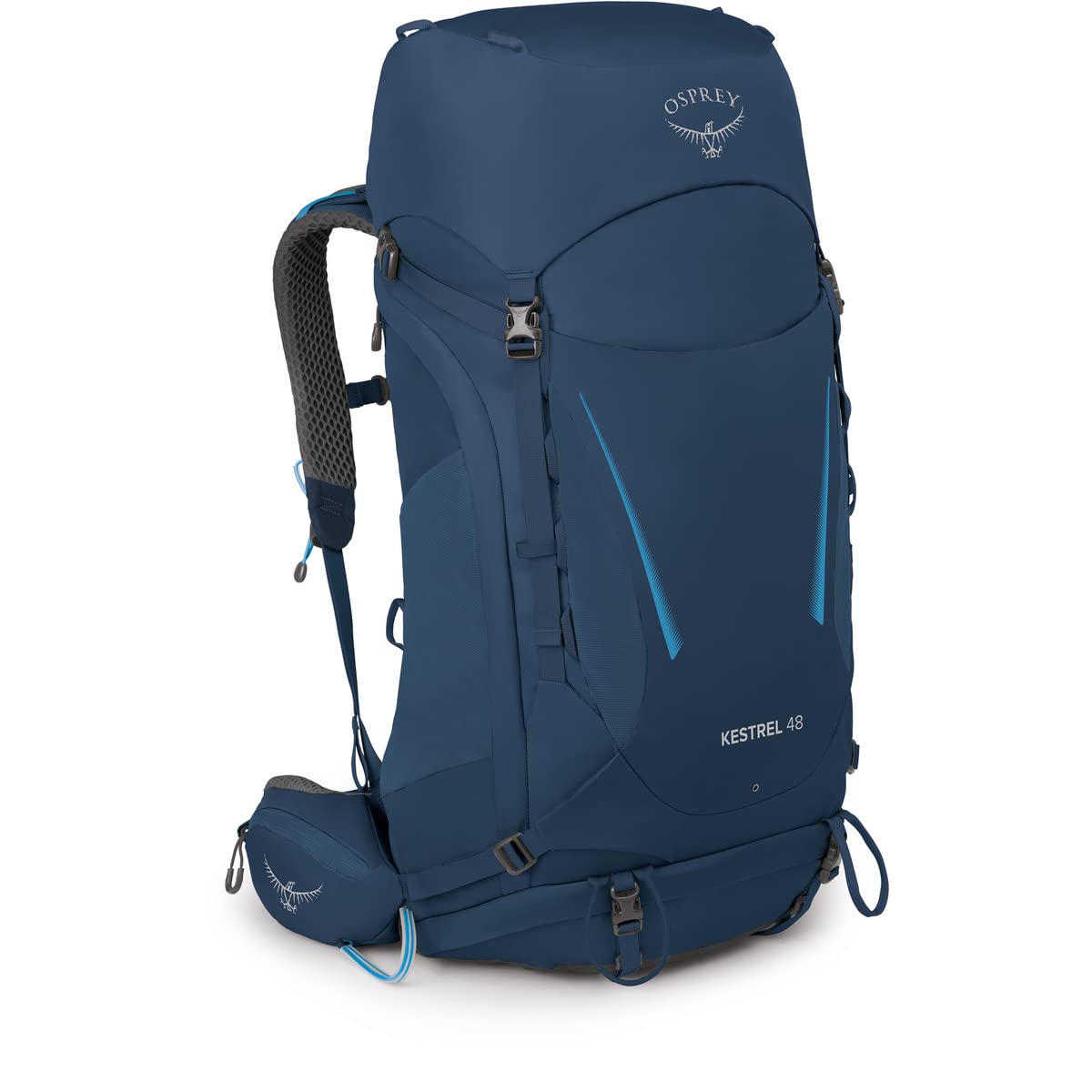
The Kestrel 48L uses Osprey’s injection-molded AirScape backpanel with adjustable torso lengths, creating a stable, close-to-body carry that keeps heavy loads locked in place even on uneven terrain. The included integrated raincover is bright high-visibility green, and the trekking pole attachment system allows for hands-free transition between hiking and scrambling. At 4.62 pounds, it’s not ultralight, but every ounce of weight is in the suspension system that actually supports the load.
The fixed hipbelt wraps securely around the pelvis without slipping, and the side compression straps pull the load tight against the frame to prevent sway. The main compartment offers side access, which reviewers consistently mention as heavily used for grabbing gear without unpacking everything. Daisy chains on the front panel provide external lashing points when you need to carry extra items like a foam pad or tent.
The 48-liter capacity hits a sweet spot for weekend and multi-day trips — large enough for a 3-season kit but compact enough to avoid overpacking. The fabric is tough enough to handle rocky trail abrasion, and the zippers are burly YKK units that won’t jam under load. Buyers with tall, thin builds report an excellent fit, and the formaldehyde wash concern flagged by one reviewer is resolved with a single wash as the manufacturer advises.
Why it’s great
- AirScape panel breathes well while keeping the load stable against your back
- Side access zipper makes gear retrieval quick without unloading
- Integrated raincover and trekking pole attachments are built-in, not afterthoughts
Good to know
- Fixed hipbelt may not suit all torso shapes without trying on first
- Lacks a large external mesh pocket for wet gear storage
2. Osprey Rook 65L

The Rook 65L steps up the capacity game with Osprey’s AirSpeed suspension — a tensioned mesh backpanel that creates a gap between your back and the pack, dramatically reducing sweat buildup in warm conditions. The LightWire frame transfers load directly to the hipbelt, and reviewers consistently report carrying 30–35 pounds without shoulder fatigue. The 65-liter capacity is ideal for trips lasting 4 to 7 days, with a zippered sleeping bag compartment and floating divider that keeps your sleep system separate from the rest of your gear.
The adjustable torso length is a real advantage — you can dial in the fit for different body types or swap between users. The angled water bottle pockets on the hipbelt are accessible without removing the pack, and the built-in raincover is integrated into the frame so you never forget it. The removable sleeping bag compartment divider adds flexibility for splitting the main load between clothing and bulky items like a bear canister.
The trade-off is weight: at 3.7 pounds, the Rook is heavier than some competitors, but the ventilation and load transfer justify the extra ounces for trips where you’re carrying significant gear. Reviewers who have put hundreds of miles on the pack report excellent durability, with thick zippers and sturdy fabric holding up through multiple seasons. The only notable absence is a large outer mesh pocket for drying wet items — something to consider for extended wet-weather trips.
Why it’s great
- AirSpeed suspended mesh keeps your back ventilated on hot hikes
- Adjustable torso fits a wide range of body sizes
- Integrated raincover is stowed in its own pocket and always with you
Good to know
- No large outer mesh pocket for stashing wet rain gear
- At 3.7 pounds, it’s a bit heavier than pure ultralight alternatives
3. Peak Design Travel Backpack 45L
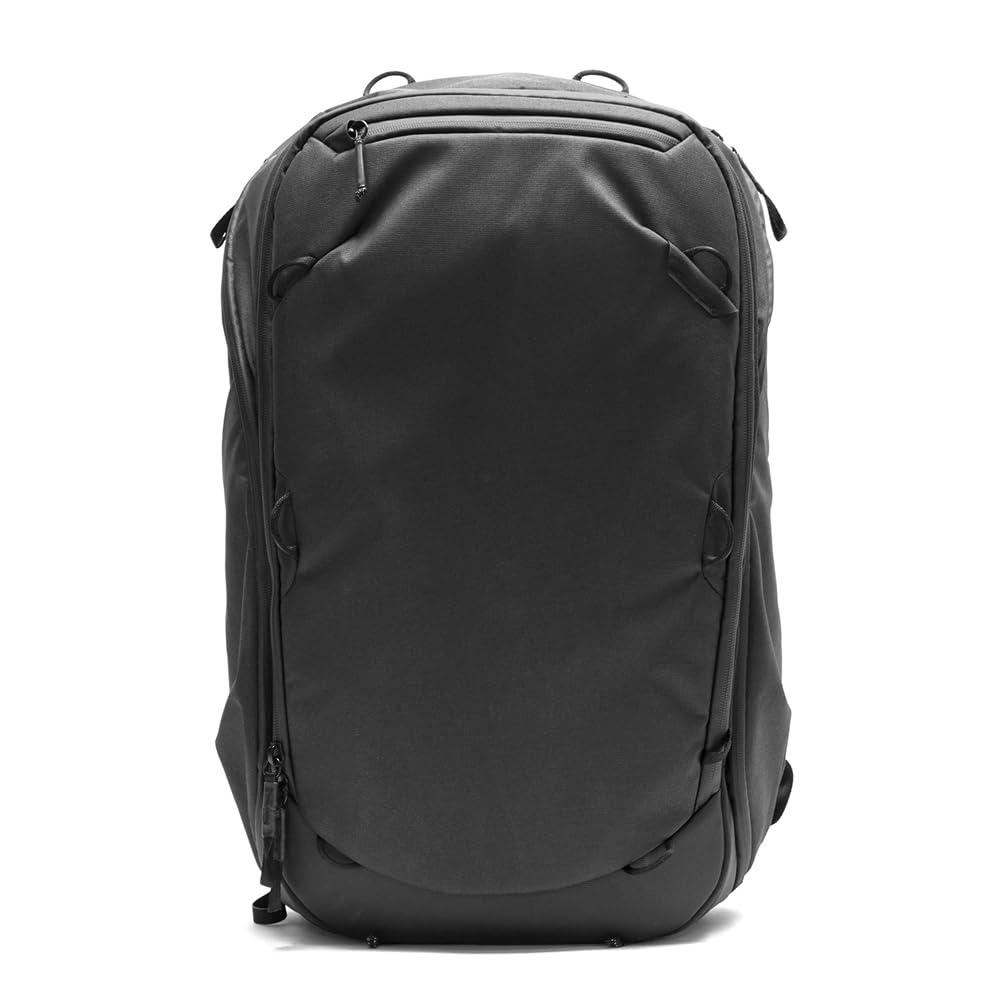
The Peak Design Travel Backpack is engineered for one-bag travel where the load is dense electronics and clothing rather than camping gear. Its expandable 35-to-45-liter design adapts to your trip: compress it for a weekend carry-on or expand it for a longer journey. The 400D recycled nylon canvas shell is weatherproof, and the #10 UltraZip is burly enough to survive baggage carousels and tight overhead bins. Multiple access points — top, side, and rear — make it easy to grab a laptop or passport without unpacking everything.
The tuck-away shoulder straps and hip belt transform the pack from carry mode into a streamlined duffel for checked luggage situations. A luggage pass-through slides over your suitcase handle, and 360-degree handles make it easy to grab from any orientation. The hidden external carry straps allow lashing a jacket or tripod externally without adding bulk inside. Reviewers consistently praise the build quality, precise stitching, and theft-deterrent concealed main zipper.
The limitation is load comfort for larger body frames — several taller users report that the shoulder and waist straps feel short, and the stowable hip belt lacks the padding needed for truly heavy loads above 30 pounds. This pack excels for travel loads in the 20–25 pound range where organization and weather protection matter more than trail suspension. The sternum strap design is also finicky to connect compared to traditional clip systems.
Why it’s great
- Weatherproof 400D recycled nylon shell with ultradurable zippers
- Multiple access points — top, side, and rear — for quick gear retrieval
- Tuck-away straps and luggage pass-through make airport transit seamless
Good to know
- Shoulder and waist straps may feel short for taller or larger users
- Stowable hip belt lacks the heavy padding of dedicated backpacking packs
4. Thule Landmark Backpack 70L
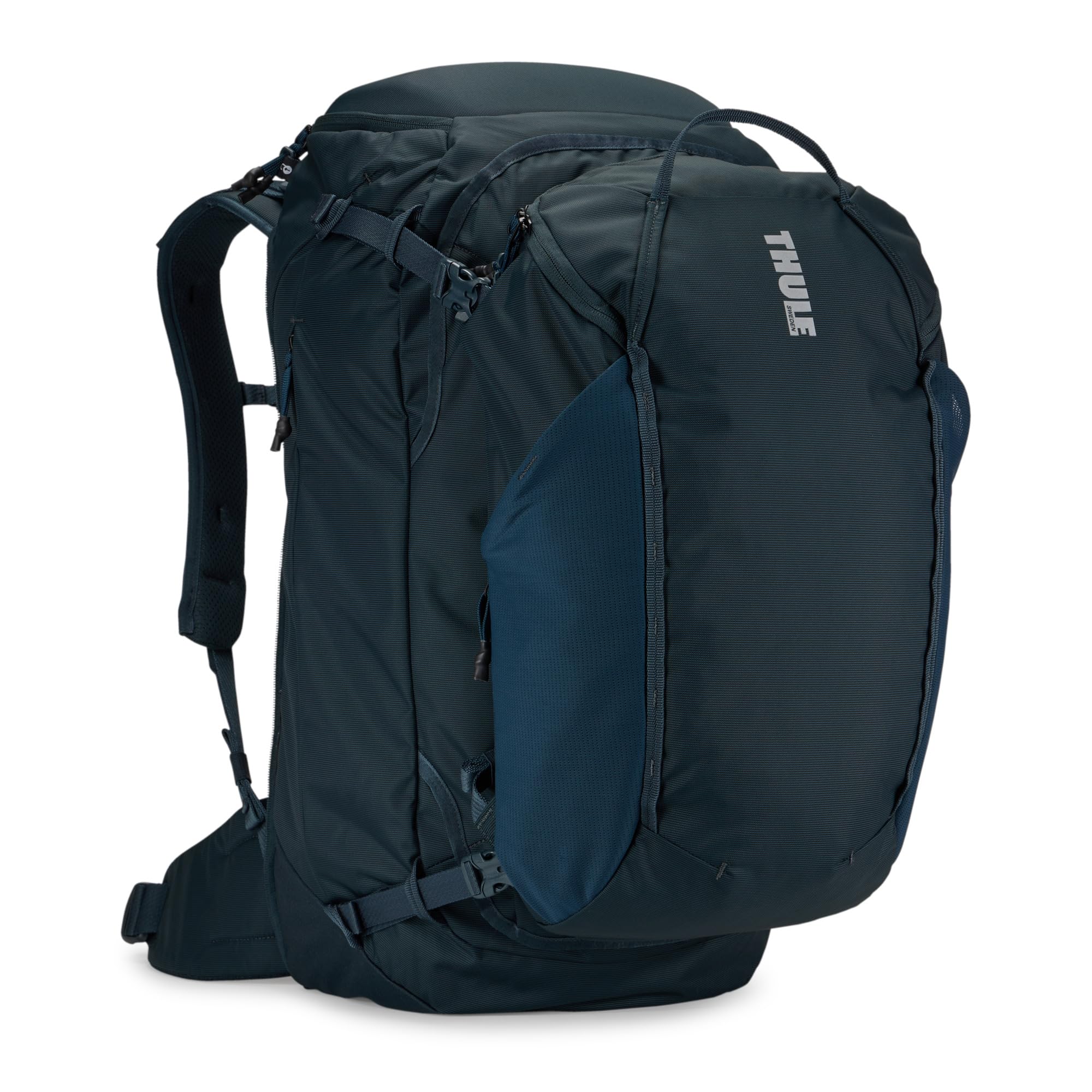
The Thule Landmark is a modular travel system: a 50-liter main pack with a detachable 20-liter daypack, giving you 70 liters of total capacity when combined. The main pack is designed as checked luggage for long-term travel, while the daypack serves as a personal item on flights. The hidden CashStash compartment under the SafeZone provides anti-theft storage for passports and money, and the LoopLocks allow you to secure zipper pulls to the bag with a small lock.
The 20-liter detachable daypack includes storage for a 15-inch laptop and its own covert CashStash pocket, so you can leave the main bag at your accommodation and carry valuables securely. The overall system has proven durable over years of use — one reviewer reported six years of reliability across 27 countries. The capacity is generous enough for two weeks of travel without sacrificing organization, and the combination fits as a carry-on and personal item on most airlines.
There are trade-offs for this modular approach. The daypack material is less weather-resistant than the main bag, and the side water bottle holders and top handle showed wear first in long-term reviews. The torso length of 19.5 inches may be too long for shorter users, causing the waist belt to sit on the belly rather than the hips. For pure load-bearing on the trail rather than airport travel, the suspension system is adequate but not as refined as dedicated backpacking packs from Osprey.
Why it’s great
- Modular 50+20L design gives flexibility for long-term travel
- CashStash and LoopLocks provide real anti-theft functionality
- Proven durability across years of use in dozens of countries
Good to know
- Daypack material wears faster and is not fully waterproof
- Torso length may be too long for shorter users, causing poor belt fit
5. Carhartt 35L Nylon Workday Backpack

The Carhartt 35L Workday Backpack is built specifically for the job site: 700D canvas nylon with Rain Defender DWR coating keeps tools and electronics dry in wet conditions, while the Duravax abrasion-resistant base protects the bag when set on concrete or gravel. The main compartment includes a padded sleeve for up to a 15-inch laptop, a file folder sleeve, and a zippered phone pocket. A separate zippered base compartment keeps dirty items — boots, muddy tools, sweaty gym clothes — isolated from the rest of the load.
The padded adjustable shoulder straps and sternum strap provide enough support for daily loads of 20–30 pounds, though the pack lacks a load-bearing hip belt for heavier carries. The wide-mouth main compartment opening makes it easy to see and access items, and the back panel trolley sleeve slides over luggage handles for travel. Reviewers consistently praise the rugged material, smooth zippers, and the practical layout that eliminates the need to carry multiple bags for work and workout gear.
Limitations include the mesh water bottle holder, which a few reviewers noted wears down over time, and the absence of a true load-transfer system for loads above 30 pounds. The 35-liter capacity is ideal for daily commuting and job site use but will feel tight for extended travel. If your heavy carry needs are primarily urban and work-oriented rather than trail-based, this pack’s durability and organization features make it a strong choice.
Why it’s great
- 700D canvas nylon with DWR coating stands up to job site conditions
- Separate base compartment isolates dirty gear from clean items
- Wide-mouth opening gives full visibility into the main compartment
Good to know
- No load-bearing hip belt limits comfortable carry to around 30 pounds
- Side mesh water bottle holder may show wear with frequent use
6. Carhartt 28L Dual-Compartment Backpack

The Carhartt 28L Dual-Compartment Backpack delivers extreme fabric durability with its 1200-denier polyester construction — one of the highest denier ratings on this list. The Duravax abrasion-resistant base prevents wear from setting the bag on rough surfaces, and the Rain Defender DWR coating adds water resistance for commutes in wet weather. The dedicated 16-inch laptop sleeve with side zipper access makes it easy to slide your computer out at security or between classes, and the front compartment provides organized storage for pens, chargers, and small accessories.
The padded mesh back panel and contour-fit shoulder straps with fast-dry technology wick away sweat during warm-weather walks. The trolley handle pass-through allows the pack to sit securely on a rolling suitcase, making it effective for campus-to-travel transitions. Reviewers consistently highlight the thick material and stout zipper quality as the pack’s defining strengths, with many noting it easily holds a full tool kit, laptop, and lunch without any fabric strain.
The 28-liter capacity is on the smaller side, so this pack works best for daily loads of 15–25 pounds rather than heavy expedition carries. The shoulder straps, while padded, lack the load-lifter features and hip belt of larger packs, meaning the weight stays on your shoulders. For a high school or college student carrying heavy textbooks and a laptop, or a commuter loading up for the workday, the fabric toughness alone makes this a durable investment over cheaper alternatives that rip within a year.
Why it’s great
- 1200-denier polyester is among the toughest fabrics available in a daypack
- Duravax abrasion-resistant base protects the bag on concrete and gravel
- Side zipper access to laptop sleeve simplifies security checks
Good to know
- 28 liters is best for daily loads, not multi-day expedition gear
- Weight sits on shoulders rather than transferring to hips
7. Eddie Bauer Cargo Tactical Backpack 30L
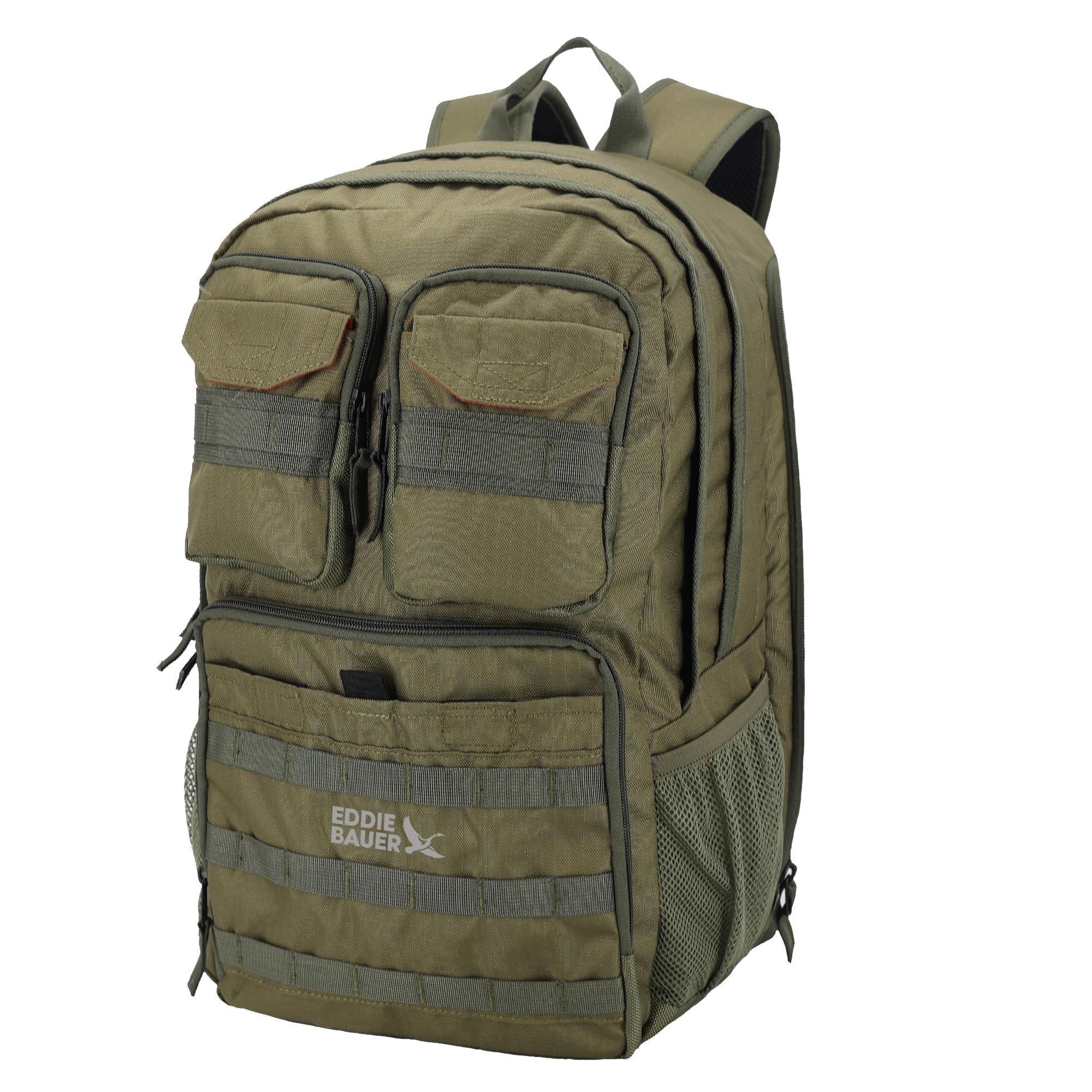
The Eddie Bauer Cargo Tactical Backpack brings molle webbing and modular storage to the heavy-load category at a budget-friendly price point. The 600D ripstop polyester with water-repellent finish handles moderate weather, and the 30-liter capacity is well-suited for day hikes, photography gear, and tactical field use. The hydration bladder sleeve with port and side-access padded laptop compartment (fits up to 15.4 inches) blend outdoor utility with modern carry needs.
The two large compartments and organizer panel with six front pockets provide segmented storage for tools, first aid, and electronics. Dual mesh side pockets hold water bottles, though some reviewers note bottles can fall out when the bag is tossed around. The padded back panel, adjustable shoulder straps, and sternum strap provide decent support for loads up to 25 pounds, and the molle webbing allows attaching additional pouches for expanding capacity without sacrificing organization.
The main concern from long-term users is durability at the strap attachment points — one reviewer reported tearing at the top where the straps secure to the bag after about 8 months of paramedic school use. The shoulder straps are also noted as being small for larger adults. For moderate loads and intermittent heavy carry, the Eddie Bauer offers strong value, but if you plan to load over 25 pounds daily, the Carhartt or Osprey options provide more robust construction at the stress points.
Why it’s great
- Molle webbing allows modular expansion for mission-specific gear
- Hydration bladder sleeve and laptop compartment blend outdoor and tech use
- 30-liter capacity is ideal for day hikes and photography kits
Good to know
- Strap attachment points may tear under heavy daily loads over 25 pounds
- Shoulder straps are small for larger adult frames
FAQ
What is the maximum weight I should carry in a heavy-load backpack?
How does torso length affect load carrying?
Should I choose 600D or 1200D fabric for heavy loads?
What is the difference between a daypack and a backpacking pack for heavy loads?
Final Thoughts: The Verdict
For most users, the backpacks for heavy loads winner is the Osprey Kestrel 48L because its AirScape suspension, integrated raincover, and accessible side zipper provide the best balance of load support and convenience for multi-day hikes and heavy trail carries. If you need maximum ventilation on hot trips, grab the Osprey Rook 65L for its AirSpeed mesh backpanel. And for urban travel with dense electronics, nothing beats the Peak Design Travel 45L for its weatherproof shell, expandable capacity, and theft-deterrent design.