
Our readers keep the lights on and the weekend projects moving. As an Amazon Associate, I earn from qualifying purchases.
The moment the ground freezes hard and the first snow falls, the dream of a private sheet of ice in your own yard flickers back to life. The reality of building that rink — wrestling with liners that tear, uneven surfaces that crack, and setups that demand constant patching — often kills that dream before the first Zamboni-less layer ever freezes. This year, the goal is simple: a durable, level sheet that actually holds water from the first freeze through the final thaw.
I’m Rikta — the co-founder and writer behind FitlyFast. I’ve spent countless hours digging through build logs, comparing mil thickness ratings, and analyzing the real-world tear resistance of backyard rink liners and synthetic ice panels so you don’t have to guess which setup will survive a season of hard hockey and freeze-thaw cycles.
Whether you are framing a traditional outdoor rink with a heavy-duty liner or installing modular synthetic tiles for year-round skating, the right foundation changes everything. This guide breaks down the essential specs, common pitfalls, and top-performing products to help you find the best backyard ice rink for your space and skill level.
How To Choose The Best Backyard Ice Rink
Selecting the right rink setup comes down to understanding your local climate, available space, and whether you want a seasonal frozen sheet or a year-round synthetic surface. The wrong liner thickness or tile material will turn your investment into a frustrating patch job.
Liner Thickness Matters More Than You Think
A 6-mil liner is the absolute minimum for a backyard rink, but a 7-mil or 7.1-mill thick polyethylene sheet dramatically reduces puncture risk from board corners, dog paws, and uneven ground. Thicker liners also withstand freeze-thaw cycles better without embrittlement over a single season. Always add at least 5 extra feet in length and width beyond your frame dimensions to allow for the weight of water pressing against the walls.
Synthetic vs. Frozen: The Real Trade-Off
Traditional frozen rinks deliver the most authentic glide but require sustained sub-freezing temperatures, meticulous flooding, and seasonal tear-down. Synthetic ice tiles offer year-round practice, consistent surface quality, and no water or electricity costs, but they wear down skate blades faster and never replicate the exact friction of real ice. Serious players often combine both: a frozen rink for game-like feel and synthetic tiles for daily stickhandling drills.
UV Resistance and Material Grade
Clear plastic sheeting without UV stabilizers degrades in as little as a few weeks under direct winter sun, becoming brittle and prone to cracking. Look for liners explicitly labeled as UV-resistant or made from virgin LDPE (low-density polyethylene) containing UV additives. Recycled polyethylene typically lacks this protection and will fail mid-season.
Quick Comparison
On smaller screens, swipe sideways to see the full table.
| Model | Category | Best For | Key Spec | Amazon |
|---|---|---|---|---|
| Potent Hockey Synthetic Ice Tiles (64.8 SQF) | Synthetic Tiles | High-volume hockey training | UHMW-PE material, 30 tiles | Amazon |
| Skate Anytime Synthetic Ice (20 tiles) | Synthetic Tiles | Year-round all-surface skating | Injection-molded hockey-grade plastic | Amazon |
| ArcticGlide Synthetic Ice Panels Pro | Synthetic Panels | Professional-grade skating drills | 15mm thickness, honeycomb structure | Amazon |
| DRKSBESTO White 7 Mil Liner | Frozen Liner | Seasonal outdoor rinks needing extra puncture resistance | 7.1 mil LDPE, 25ft x 45ft | Amazon |
| Potent Ice Hockey Home Training Kit | Synthetic Kit | All-in-one home training with rebounder | 10 synthetic tiles + 4 rebounder foams | Amazon |
| kasifei Hockey Synthetic Ice Tiles | Synthetic Tiles | Budget-friendly stickhandling practice | 12 pack, 23.5 SQFT coverage | Amazon |
| Iron Sleek White Plastic Ice Rink Liner | Frozen Liner | Reliable mid-range tarp for first-time builders | 6 mil white LDPE, UV resistant | Amazon |
| Pandahero Knee Hockey Rink Set | Indoor Game Set | Indoor knee hockey for kids | 2 nets, 4 sticks, 6 balls | Amazon |
| Farm Plastic Supply Clear Sheeting | DIY Liner | Budget DIY rink building | 6 mil clear LDPE, 6ft x 100ft | Amazon |
In‑Depth Reviews
1. Potent Hockey Synthetic Ice Tiles (64.8 SQF)

This 30-tile set covers 64.8 square feet, making it one of the largest ready-to-use synthetic rink surfaces in the mid-range. The UHMW-PE material delivers a smooth, low-friction glide that closely mimics real ice, and the interlocking design allows for easy expansion by adding more boxes. Competitive hockey games have proven the durability — reviewers report no edge chipping or surface gouging even after repeated use.
Assembly is straightforward enough for a young player to handle alone, and the tiles fit snugly without gaps that catch skate edges. The 3-4 year lifespan estimate under regular use is conservative; many owners are still skating on these past that mark.
For players who want a dedicated training zone that stays up year-round, this is the most practical balance of coverage area, glide quality, and long-term value. The white surface also helps visibility with pucks, which matters during quick stickhandling drills.
Why it’s great
- Large coverage area (64.8 sq ft) for meaningful skating drills
- UHMW-PE material provides authentic glide with minimal friction
- Expandable modular system for growing the rink over time
Good to know
- Heavier than some competitors, making relocation a two-person job
- Requires a completely level subfloor to avoid uneven seams
2. Skate Anytime Synthetic Ice (20 tiles)

Skate Anytime uses injection-molded panels rather than cut sheet plastic, which means tighter tolerances and a flatter surface that doesn’t warp under temperature changes. The panels are noticeably lighter than solid UHMW tiles, making them the best option for a setup that must be taken down and stored between sessions. The 5-year warranty adds confidence for the investment.
Reviewers consistently highlight that the glide is smoother than cheaper alternatives and that the tile interlock system stays tight even on driveways and garage floors. The panels can support the weight of a passenger vehicle without cracking, which speaks to the structural integrity.
One common upgrade path is starting with the 20-tile kit and expanding to a 10×10 area, which is the minimum for comfortable full-skate drills. The company’s customer service is frequently praised for helping with expansion orders and glide maintenance tips.
Why it’s great
- Lightweight injection-molded panels make setup and storage easy
- No glide solution required — works right out of the box
- 5-year manufacturer warranty provides long-term assurance
Good to know
- 20-panel kit (about 5×5) is small for full skating — plan to expand
- Surface gets dirty quickly when used outdoors between uses
3. ArcticGlide Synthetic Ice Panels Pro

The ArcticGlide Pro panels use a patented honeycomb core design that makes them the lightest synthetic panels available while maintaining a thick 15mm profile. The self-lubricating technology reduces friction without requiring a separate spray or conditioner, which is a meaningful convenience for daily practice. The panels are rated for industrial-grade use with a 6-8 year lifespan under average wear.
The trade-off is panel size — each pack contains just two panels, so building a full rink area requires multiple purchases. This makes the ArcticGlide system better suited as a high-quality training station for edge work and stickhandling than a full skating rectangle.
Figure skaters and hockey players both appreciate the authentic grip that allows confident stops and turns. The UV-protected polymer means these can live on a deck or patio year-round without degrading in the sun.
Why it’s great
- Honeycomb core makes panels ultra-light for easy transport
- Self-lubricating technology creates smooth glide without additives
- Built for 6-8 years of regular use with UV protection
Good to know
- Small pack size means building a full rink requires many purchases
- Panels can bow on uneven floors, impacting seam alignment
4. DRKSBESTO White 7 Mil Liner
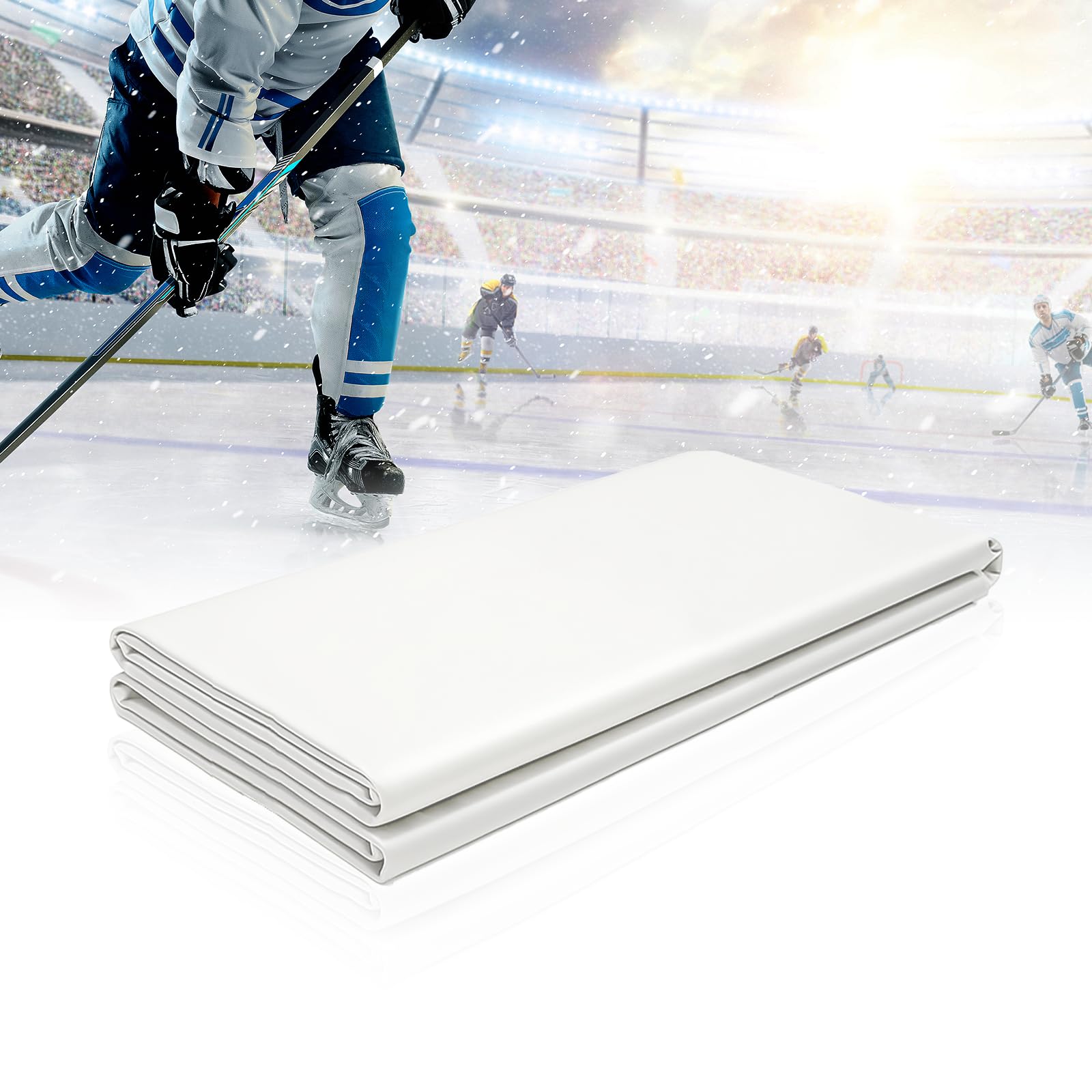
The 7.1-mil thickness is the clear standout here — it provides noticeably better puncture resistance than the industry-standard 6 mil liners without jumping to premium prices. The white reflective surface helps the sun warm the ice during the day, reducing the water volume needed to maintain a solid sheet and slowing overnight melting. Sizing is generous at 25×45 feet, big enough for a regulation-size half-ice game.
Reviewers report that the material is flexible enough to mold around frame corners without stress tearing, and that Flex Tape patches hold well when minor punctures occur during thin ice conditions. The liner has performed well in warmer climates, including a setup in Florida that managed a rare freeze event.
For anyone building a traditional framed rink and wanting the best chance of lasting the full season without a catastrophic leak, this extra mil of material is the smartest mid-range upgrade available.
Why it’s great
- 7.1 mil thickness offers superior tear resistance over standard 6 mil liners
- White surface reflects sunlight to help maintain ice quality
- Large 25×45 ft size accommodates half-ice game play
Good to know
- Still susceptible to punctures when ice is very thin
- Requires careful storage to prevent creases that become weak points
5. Potent Ice Hockey Home Training Kit

This kit bundles 10 synthetic ice tiles with four puck-stopper edgings and four rebounder foams, creating a complete home training station right out of the box. The edgings are a practical addition — they keep pucks from sliding across the garage floor, which eliminates the frustration of chasing down errant shots. The rebounder foams allow for passing and receiving drills that translate directly to on-ice play.
The synthetic tiles themselves are skateable and provide a smooth surface for stickhandling and shooting. Assembly is simple, and the modular design lets you rearrange the layout to fit whatever space is available. The UV-protected material extends the useful life if you set up in a bright window or covered patio.
For families with young hockey players who need daily skill work but lack access to a full rink, this all-in-one kit removes the friction of buying separate components. The 180-day warranty provides a basic safety net against premature wear.
Why it’s great
- Complete training kit includes tiles, edgings, and rebounder foams
- Puck-stopper edgings keep training area contained
- Modular and portable for easy setup in any room
Good to know
- 10 tiles provide a small area suitable for stickhandling, not full skating
- Some users report better puck glide on garage concrete than on the tiles
6. kasifei Hockey Synthetic Ice Tiles
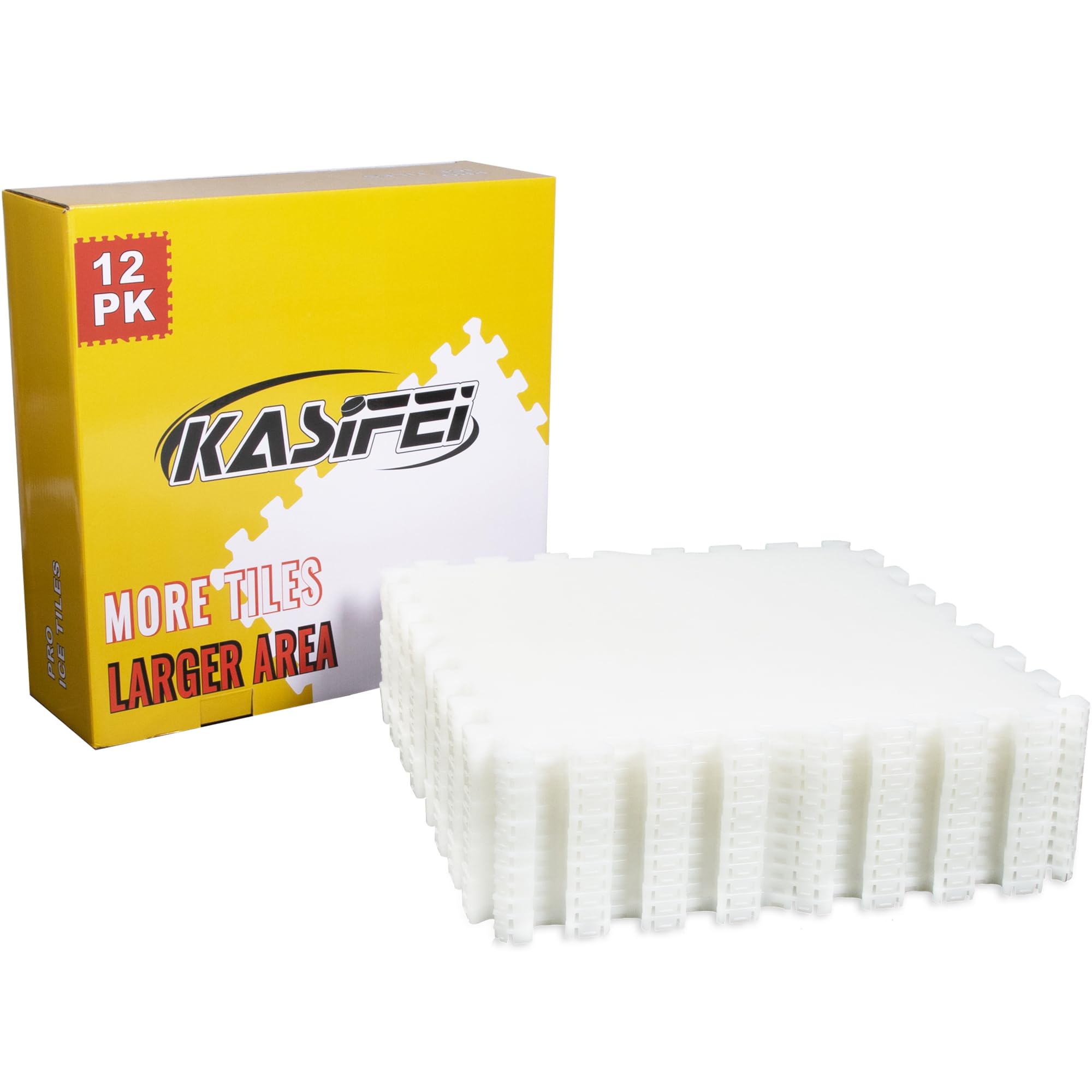
At 12 tiles covering 23.5 square feet, this kasifei set is an entry-level synthetic ice option that prioritizes affordability for basic stickhandling and shooting drills. The interlocking mechanism is designed for quick tool-free assembly, and users report that puck glide is surprisingly good for the price point — better than some alternatives that cost more per tile. The white surface provides good contrast for puck tracking during shooting practice.
One detail worth noting is that the tiles are 0.5 inch thick with a grid reinforcement pattern on the underside. This design works well for puck handling but causes noticeable bowing on uneven floors, which means skating on them is not ideal. Stickhandling and shooting are the intended use case.
For a young player who needs a daily practice surface for stickhandling and doesn’t require a full skate-able rink, this is the most cost-effective way to get started. The expandable system means you can add more tiles later if the training needs grow.
Why it’s great
- Affordable entry point for synthetic hockey training
- Good puck glide for stickhandling and shooting drills
- Quick interlocking assembly without tools
Good to know
- Grid reinforcement underside causes bowing on uneven floors
- Not suitable for skating — optimized for puck handling only
7. Iron Sleek White Plastic Ice Rink Liner

The Iron Sleek liner is a solid 6 mil white polyethylene sheet with UV stabilizers, designed specifically for outdoor rink use. The white color helps reflect light to keep ice hard, and the virgin LDPE construction ensures consistent thickness across the entire roll. It is compatible with standard board-and-bracket rink kits, which simplifies the ordering process for first-time builders.
Reviewer experiences are split between those who got a flawless liner that lasted the whole season and a minority who received defective rolls with multiple holes. The 45-pound weight of the product and the restrictive return policy (restocking fees plus heavy shipping costs) make the risk of a defective unit more painful than with other brands. The single-fold design allows easy splitting into two 3-foot strips if you need custom widths for garden paths or walkway liners.
For experienced rink builders who know how to inspect liners upon arrival and have the patience to patch minor defects, this liner offers capable performance at a competitive price point.
Why it’s great
- Virgin LDPE with UV stabilizers prevents sun damage mid-season
- White reflective surface helps ice stay firm with less water
- Compatible with most standard rink kits
Good to know
- Quality control varies — some rolls arrive with holes or tears
- Return process is costly due to heavy weight and restocking fees
8. Pandahero Knee Hockey Rink Set
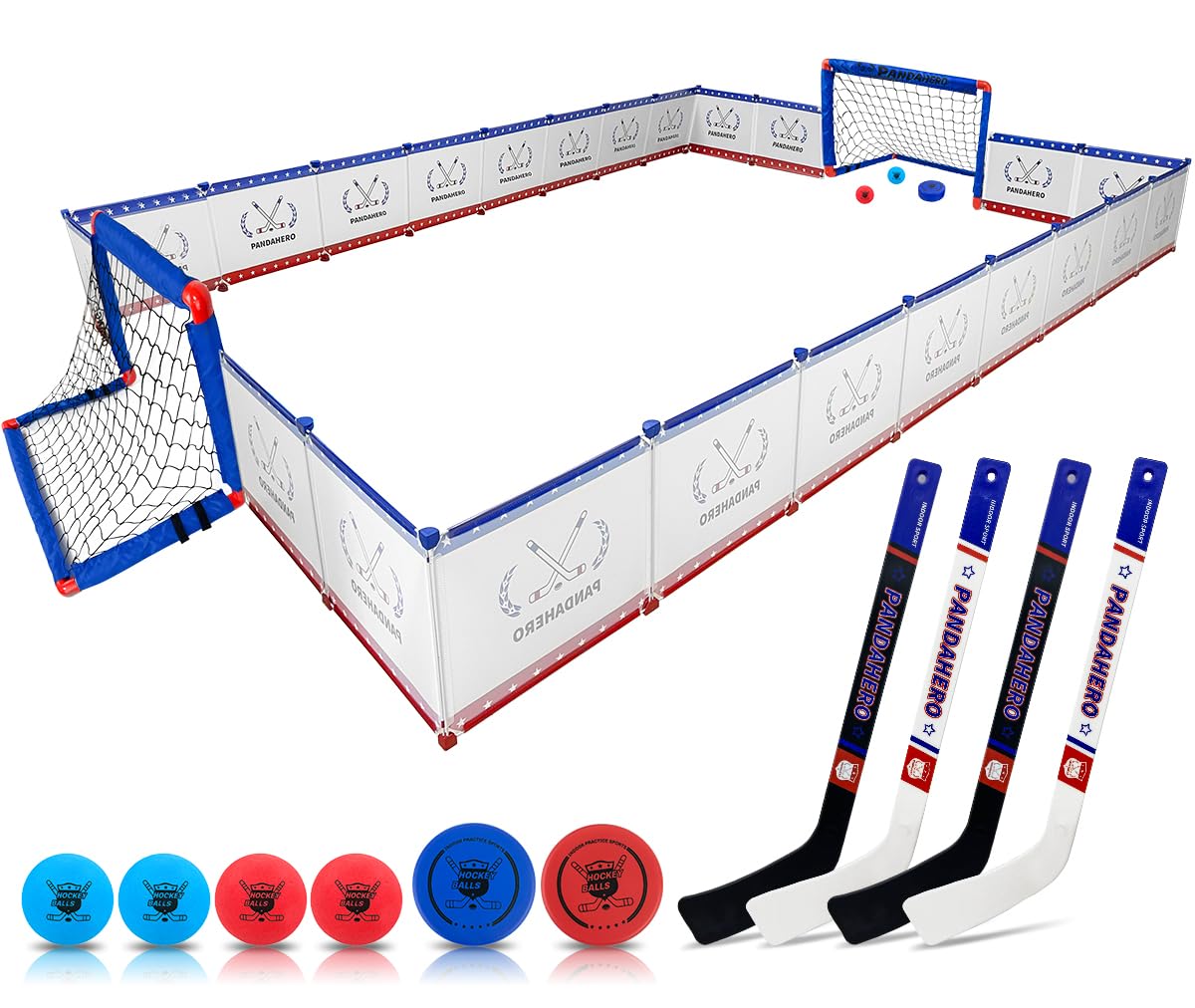
This is not a frozen rink or synthetic tile system — it is a complete indoor knee hockey set designed for carpeted basements, wood floors, and rec rooms. The package includes two hockey nets, four lightweight sticks, and six foam pucks that are designed to prevent damage to walls and floors while still offering a satisfying puck slide. The foam pucks are a thoughtful inclusion; they reduce noise and eliminate the risk of chipped baseboards.
The assembly process is the main drawback — reviewers note that putting the nets and perimeter together is time-consuming, and if you cannot leave the set permanently set up, the effort may discourage regular use. For families with dedicated play spaces, the payoff is a self-contained rink that can handle four players simultaneously.
The hand-eye coordination benefits are real; several reviewers reported improvements in their kids’ on-ice hockey performance after regular knee hockey sessions. The set works best for ages 5 through 12, with the sticks sized appropriately for younger players.
Why it’s great
- Complete set with 2 nets, 4 sticks, and 6 foam pucks
- Foam pucks are safe for indoor use without wall damage
- Improves hand-eye coordination and stickhandling for young players
Good to know
- Assembly is tedious and time-consuming
- Best for spaces where the rink can stay set up permanently
9. Farm Plastic Supply Clear Sheeting (6ft x 100ft)

This clear 6-mil LDPE sheeting is not marketed as a rink liner, but DIY rink builders have long used it as a budget-friendly alternative to specialized white liners. The 6×100 foot roll provides 600 square feet of coverage, which is enough to line a large rink with plenty of overlap for the board walls. The material is surprisingly durable for 6 mil — reviewers describe it as 2-3 times thicker than standard hardware-store tarp material.
The clear plastic has a notable disadvantage compared to white liners: it does not reflect sunlight to maintain ice temperature. This means you will need colder temperatures and more careful water management to keep the ice from melting on sunny days. The single-fold design makes it easy to split the roll lengthwise into two 3×100 foot strips if your rink dimensions require a narrower width.
The 45-pound weight and restrictive return policy (heavy restocking fees) are the biggest risks. But for builders on a tight budget who have a reliable cold snap and are willing to accept a shorter seasonal lifespan, this sheeting can deliver a functional rink at a fraction of the cost.
Why it’s great
- Massive 600 sq ft coverage at a budget-friendly price point
- Thicker than standard hardware-store plastic sheeting
- Single-fold allows easy splitting into narrower strips
Good to know
- Clear material does not reflect sunlight, making ice maintenance harder
- Return process is expensive due to weight and restocking fees
FAQ
How much larger should my liner be than the rink frame?
Can I use a clear construction tarp as an ice rink liner?
Do synthetic ice tiles damage skate blades?
How do I prevent the liner from tearing when building the rink?
What is the minimum temperature for a frozen backyard rink?
Final Thoughts: The Verdict
For most users, the backyard ice rink winner is the Potent Hockey Synthetic Ice Tiles (64.8 SQF) because it delivers the biggest practical training area with authentic glide and expandable modular design. If you prefer a traditional frozen rink with maximum puncture protection, grab the DRKSBESTO White 7 Mil Liner. And for dedicated year-round skill work in a compact space, nothing beats the Potent Ice Hockey Home Training Kit with its rebounder foams and puck stoppers.