
Our readers keep the lights on and the weekend projects moving. As an Amazon Associate, I earn from qualifying purchases.
Specs are compiled from manufacturer listings and verified buyer reviews and can change over time — please confirm the key details on the product page before buying.
Most buyers pick the wrong style of balance board for their goals, then wonder why they never use it. The right one makes you want to use it daily—whether that is a simple disc for your standing desk, a surf-style rocker board for the living room, or a rocker board for rehab.
I’m Rikta — the founder and writer behind FitlyFast. This guide is built by comparing the manufacturers’ published specifications and the patterns across verified customer reviews, so you get each pick’s real strengths and trade-offs instead of marketing spin.
In plain terms, a balance board is a device that forces your body to make constant micro-adjustments, building strength in your core, ankles, and legs. This breakdown of the best balance board options covers seven distinct models so you can match the right tool to your routine, your space, and your budget.
Quick Picks
- GIBBON SlackBoard – GiBoard Balance Board — Best Overall
- Yes4All Balance Board Sports Trainer — Pro Trainer
- ProsourceFit Wooden Balance Board — Compact Champ
- Fitterfirst Professional Rocker Board – 20” — Rehab Specialist
- WOOD CITY Wobble Board — Family Fun
- The Original Indo Board – Bamboo Beach — Advanced Flow
- Gaiam Evolve Balance Board Standing Desk — Desk Mover
How To Choose The Best Balance Board
The first thing to know is that balance boards are not one-size-fits-all. A disc-shaped wobble board works differently from a long rocker board, and a roller-based surf trainer feels nothing like a low-profile slackline board. Pick the style that matches your actual goal.
Match the Motion to Your Goal
A wobble board (a flat disc on a dome) lets you tilt in every direction—great for general core training and standing-desk use. A rocker board pivots only forward and back (or side to side) on a curved base, which is better for walkers and targeted rehab. A roller board uses a cylinder underneath, forcing you to balance in multiple planes at once—this is the closest you get to mimicking surfing or snowboarding.
Weight Capacity and Build
Check the maximum weight recommendation. A board rated for 250 pounds is fine for many people, but if you plan to use it heavily or want it to last through years of daily use, look for a rating of 300 pounds or more. The material matters too—solid wood or high-quality plywood outlasts plastic composites.
Size and Portability
A board that is too big for your space will end up in a closet. Wobble boards around 15 inches in diameter are easy to stash under a couch. Longer rocker and roller boards (around 30 to 42 inches) need floor space but give you a more athletic stance. If you plan to move it between rooms or take it to the office, check the weight—some premium boards weigh over 13 pounds.
Quick Comparison
| Model | Best For | Max Weight | Board Style | Weight | Amazon |
|---|---|---|---|---|---|
| GIBBON SlackBoard | All-around core & desk use | 400 lbs | Slackline rail | 7.5 lbs | Amazon |
| Yes4All Balance Board | Surf & snowboard training | 300 lbs | Roller-based | 3.9 kg | Amazon |
| ProsourceFit Wobble Board | Stability & rehab basics | 300 lbs | Wobble disc | 1.5 kg | Amazon |
| Fitterfirst Rocker Board | Physical therapy & rehab | 350 lbs | Rocker (adjustable tilt) | 7.5 lbs | Amazon |
| WOOD CITY Wobble Board | Family & kids play | 480 lbs | Rocker/wobble (curved) | 4.6 lbs | Amazon |
| Indo Board | Advanced surf-style training | 350 lbs | Roller-based | 13.8 lbs | Amazon |
| Gaiam Evolve Balance Board | Standing desk movement | 250 lbs | Rocker | 6.5 lbs | Amazon |
In‑Depth Reviews
1. GIBBON SlackBoard – GiBoard Balance Board
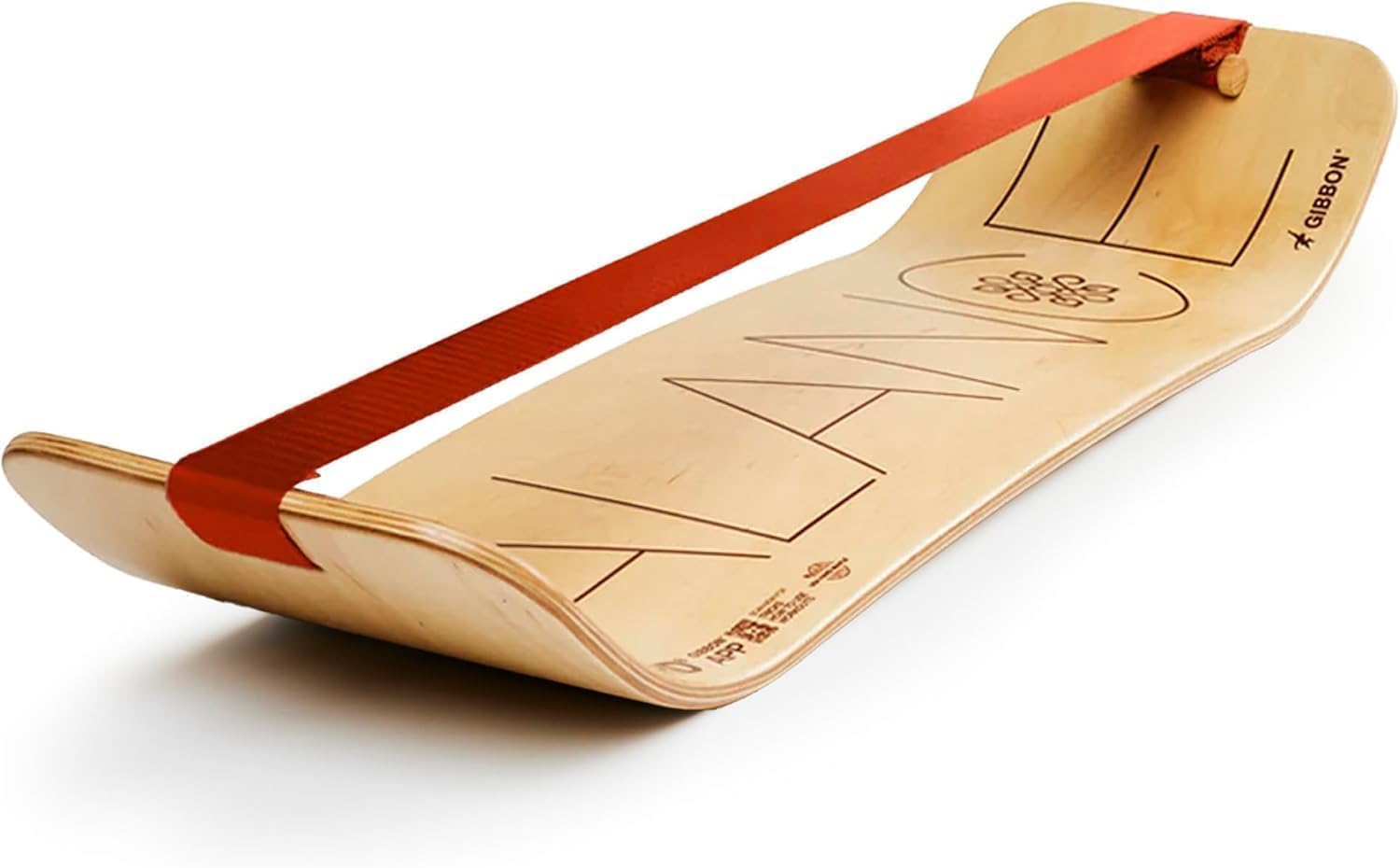
The low-to-the-ground board that works core and focus without the fear factor.
This GIBBON board uses a slackline rail system attached to a wooden deck—no roller, no dome, just two parallel lines that keep you low and stable while forcing constant micro-adjustments. It weighs 7.5 pounds and measures 42 inches long by 11 inches wide, so it is compact enough to stow against a wall. The deck is made from sustainably sourced American maple wood, crafted in North America.
For standing-desk use, it is quieter than a roller board and easier to step onto mid-task. The maximum weight recommendation is 400 pounds—a full 150 pounds higher than the Gaiam Evolve board below, making it a far more durable option for bigger frames or heavy daily use. Buyers report it is “ready right out of box” with two lines included, and the brand provides a free app with workout tracking.
There is a learning curve here. Unlike a fixed wobble disc (a disc that tilts in all directions but stays in one spot), this board demands real balance, especially in the first few sessions. Owners mention it is challenging for beginners but deeply rewarding once you find the rhythm—one owner called it “an ADHD standout” for helping kids channel fidgeting into focus during homework.
Ideal daily driver: If you want one board that works at your desk, in the living room, and for athletic training without taking over your space, this is the most versatile pick in the lineup.
Not for complete beginners: For someone who has never stood on any balance device, starting with a wobble disc or a rocker is easier; this board punishes a shaky stance.
Best for: Anyone who wants a single, durable board for core workouts, desk use, and family fun—especially if you are ready to invest time in a rewarding challenge.
Skip if: You need a non-slip, stable surface for physical therapy or you prefer board-sport simulation with a roller.
2. Yes4All Balance Board Sports Trainer

The surf trainer that grows with you—from first wobble to advanced flow.
This is a classic roller-and-board setup made for surfers, snowboarders, and skaters who want to build muscle memory off the mountain or the water. The board is built from 15-ply pressed wood and holds up to 300 pounds. It comes with two removable stoppers that you can set at 11, 16, or 22 inches apart, which decides how far the board can tilt. Wider settings are easier for beginners; take the stoppers off completely and you are riding free, which is where the real skill-building happens.
Compared to the ProsourceFit wobble board, this is a completely different challenge—it uses a roller cylinder instead of a fixed dome, so you have to control both the board and the rolling cylinder beneath it. That makes it much closer to actual board sports. One reviewer notes they “progressed from 20s to 15min in 3 weeks,” which tells you the learning curve is real but the payoff in balance and core strength is rapid.
At roughly 3.9 kilograms (about 8.6 pounds), it is heavier than the GIBBON slackline board but still easy to move around the house. The PEVA grip on top is comfortable in bare feet. Owners with size 13 feet say their toes hang off the front, so it works best with shoes on for bigger feet.
What works well
- Adjustable stoppers let you control difficulty step by step
- 15-ply wood deck feels solid and quiet on hardwood floors
- Versatile for surf, snowboard, skate, and even standing desk use
Watch out for
- The felt overlap on the roller creates a bump that can break your flow
- Roller-based boards require more floor space and a non-slip surface
Reach for this if: You want to train for surfing or snowboarding at home and like having adjustable difficulty to push yourself as you improve.
Look elsewhere if: You need a stationary board for physical therapy or a compact option for a cramped desk area.
3. ProsourceFit Wooden Balance Board

The light, low-profile disc that delivers big on core stability without taking over your room.
This is the simplest board in the lineup—a 15.75-inch diameter wooden disc on a low plastic dome, giving you 360 degrees of tilt. It weighs about 3.3 pounds (1.5 kilograms), so you can toss it in a bag and bring it anywhere. The maximum weight recommendation is 300 pounds, matching the Yes4All board above. The texture on top keeps your feet from slipping whether you are in shoes or barefoot.
You step on this board and start making wobbling micro-adjustments immediately. There is no roller to chase, no rail to set up. One buyer, who calls themselves “not a small person,” reports that after using it for a year it “barely shows any sign of wear and tear.” That is a strong sign of durability for a board in the budget-friendly tier. It also works well on both hardwood and thin carpet without scratching.
The trade-off? It is not designed for board-sport simulation. You will not get the side-to-side sliding motion of a surf trainer. And on smooth hardwood floors, the plastic base can be extremely slippery—some reviewers recommend using a flat throw rug underneath for stability.
Set-and-forget value: If your goal is general balance, ankle strength, or light rehab without fuss, this is the most practical option at a budget-friendly price point.
Not for surf training: The fixed dome limits tilt directions compared to the roller-based Yes4All or Indo Board, so advanced athletes may outgrow it quickly.
Best for: Beginners, older adults, and anyone wanting a no-fuss core training tool that fits under a couch.
Skip if: You need a board for board-sport practice or your floor is polished hardwood with no rug.
4. Fitterfirst Professional Rocker Board – 20”

The rocker board built for physical therapy, with adjustable angles that let you control the rehab intensity.
Unlike the wobble disc or roller boards, the Fitterfirst moves on a single plane—forward and backward (or side to side if you turn it). That controlled motion is exactly what you need for rehab after an ankle, knee, or leg injury. The board is 20 inches wide, giving you a stable stance. It weighs 7.5 pounds and is made from Baltic birch plywood, a durable hardwood known for its strength and screw-holding ability.
The standout feature here is the three adjustable spheres underneath the rocker base. They let you set the tilt angle to 10, 12, or 15 degrees. Beginners or rehab patients start at the lowest angle and increase as strength returns. The maximum weight recommendation is 350 pounds, solid for a wide range of body types. Reviewers consistently point out that physical therapy offices use this exact model, and one buyer notes it “costs about the same as one PT visit.”
Compared to the WOOD CITY wobble board below, this is a far more serious tool for recovery, not play. It does not wobble in all directions—that is a feature for rehab, because it isolates the muscle groups you need to strengthen. Use it on a yoga mat or rug to stop it from sliding on hard floors.
Strengths
- Adjustable tilt angles (10, 12, 15 degrees) let you progress safely
- Wide 20-inch stance feels stable underfoot
- Baltic birch build is tough and made in Canada
Limitations
- Single-plane movement is not versatile for core or board-sport training
- Higher price point reflects its therapeutic focus
Reach for this if: You are recovering from a knee or ankle injury and want a board that your physical therapist would approve of.
Look elsewhere if: You want a multi-directional core trainer or a fun, playful board for the family.
5. WOOD CITY Wobble Board

The curved wooden plank that doubles as a balance trainer, a slide, a chair, or a bridge.
This board breaks the mold of fitness equipment and enters the territory of open-ended play. It is a 35-inch long, 11.8-inch wide curved rocker board made from natural wood with a eco-friendly lacquer finish. The maximum weight recommendation is a huge 480 pounds, so it is safe for kids, adults, and even multiple children at once. It weighs only 4.6 pounds, making it easy for a toddler to drag around the living room.
Unlike the ProsourceFit wobble disc or the Yes4All roller trainer, this board rocks only in one direction—side to side along the curve. That makes it simpler for kids to learn on, but less effective for 360-degree balance training. One buyer notes it is “sturdy curved board for 220-400 lbs,” and the board has been used as a balance rocker, a toy ramp for cars, a makeshift table, and a lounging chair. It is not designed for board-sport simulation or physical therapy; its strength is versatility in a family setting.
The dimensions are 35 inches long by 11.8 inches wide by 0.66 inches thick. Compare that to the 15.75-inch diameter of the ProsourceFit board—this is a much larger footprint. It takes up floor space. Reviewers warn that little fingers can get pinched under the edges when the board rocks down, so supervision is needed for very young children.
Play-first design: If you want a single piece of equipment that your toddler uses as much as you do, this is the pick—it is a toy first, a fitness tool second.
Not for serious training: The single-plane rocker motion and 0.66-inch thickness mean it cannot replicate surf-style balance or deep rehab work.
Best for: Families with young children who want a durable, imaginative play board that adults can also use for light balance work.
Skip if: You need a compact trainer for an apartment, or you want multi-directional core training.
6. The Original Indo Board – Bamboo Beach
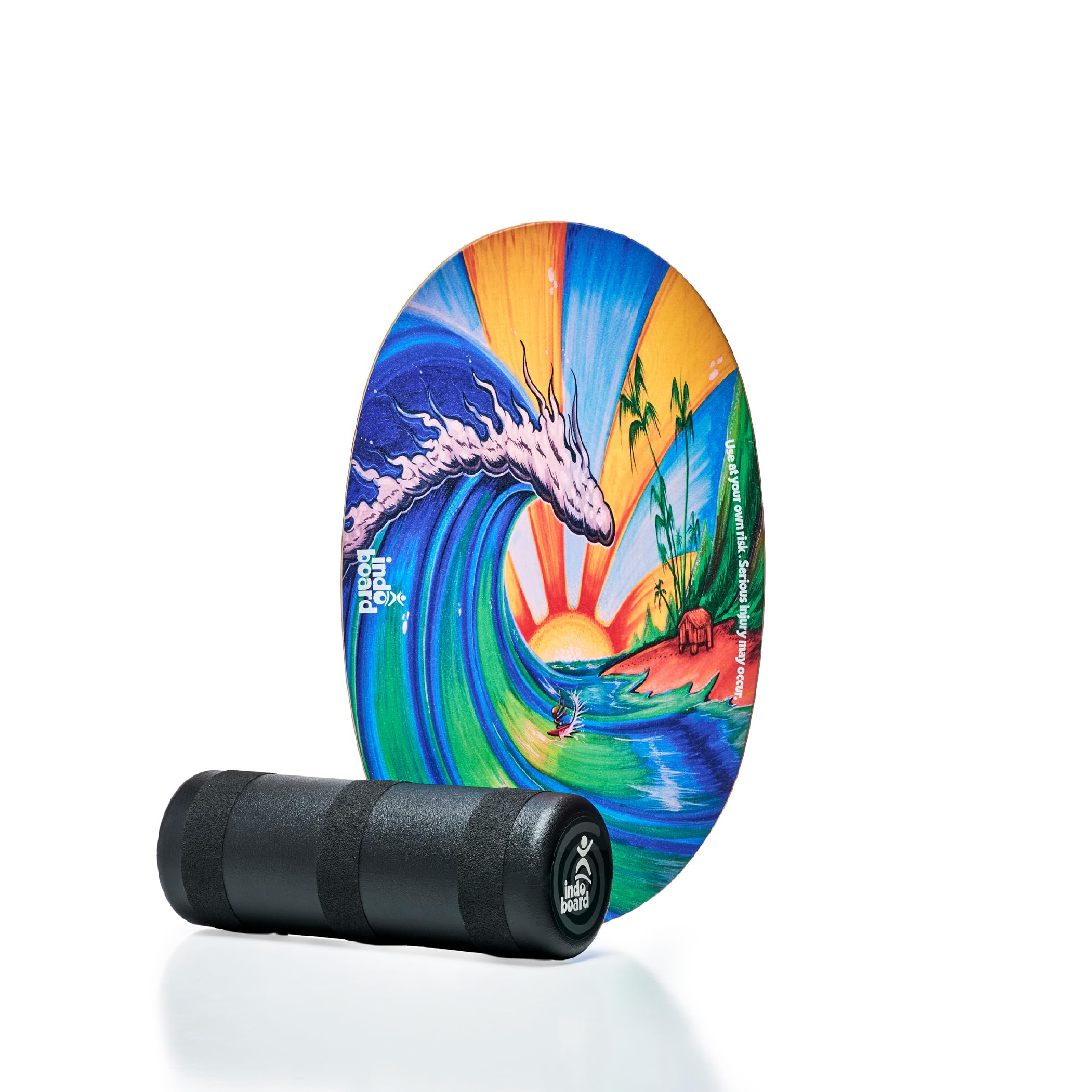
The iconic roller board that has trained Olympic champions and amateur surfers alike for three decades.
The Indo Board is the original roller-based balance trainer. It uses a large plastic roller cylinder and a flat maple wood deck. You step on, and the board rolls freely in any direction—there is no rail or track to guide it, which makes it much harder than the Yes4All board with its adjustable stoppers. The deck is 30 inches long by 18 inches wide, giving you a wide platform. It weighs 13.8 pounds, nearly twice the weight of the GIBBON slackline board, so it is not something you toss in a bag. The maximum weight recommendation is 350 pounds.
One reviewer who grew up on a Bongo Board calls the Indo Board “smooth roll on carpet, sturdy and well made.” They also note the deck has a gritty texture that feels fine in bare feet. The brand includes a DVD with instructions and challenges. The Bamboo Beach graphic is designed by artist Drew Brophy, and the visual design is a clear step above plain wood finishes. But this beauty comes at a premium price point.
The learning curve is steep—multiple reviews call it “advanced” and “challenging.” The roller is large, which puts you higher off the ground than a wobble disc or rocker board, so falls hurt more. One buyer fell off and bought the optional flo-cushion (a halved ball-shaped base) to progress more safely. If you already have decent balance from another sport, this board will refine your skills fast. If you are a complete beginner, prepare for frustration.
What stands out
- 3D balance training in every direction—closest feel to surfing
- Beautiful bamboo artwork; heirloom build quality
- Optional flo-cushion makes the board usable for all skill levels
What holds it back
- Steep learning curve; beginners can get discouraged
- Large roller makes falls more uncomfortable than low-profile boards
Reach for this if: You are a surfer, snowboarder, or athlete wanting a premium, challenging balance tool that has a 30-year track record.
Look elsewhere if: You want a beginner-friendly board for general fitness or a compact option for a small apartment.
7. Gaiam Evolve Balance Board Standing Desk
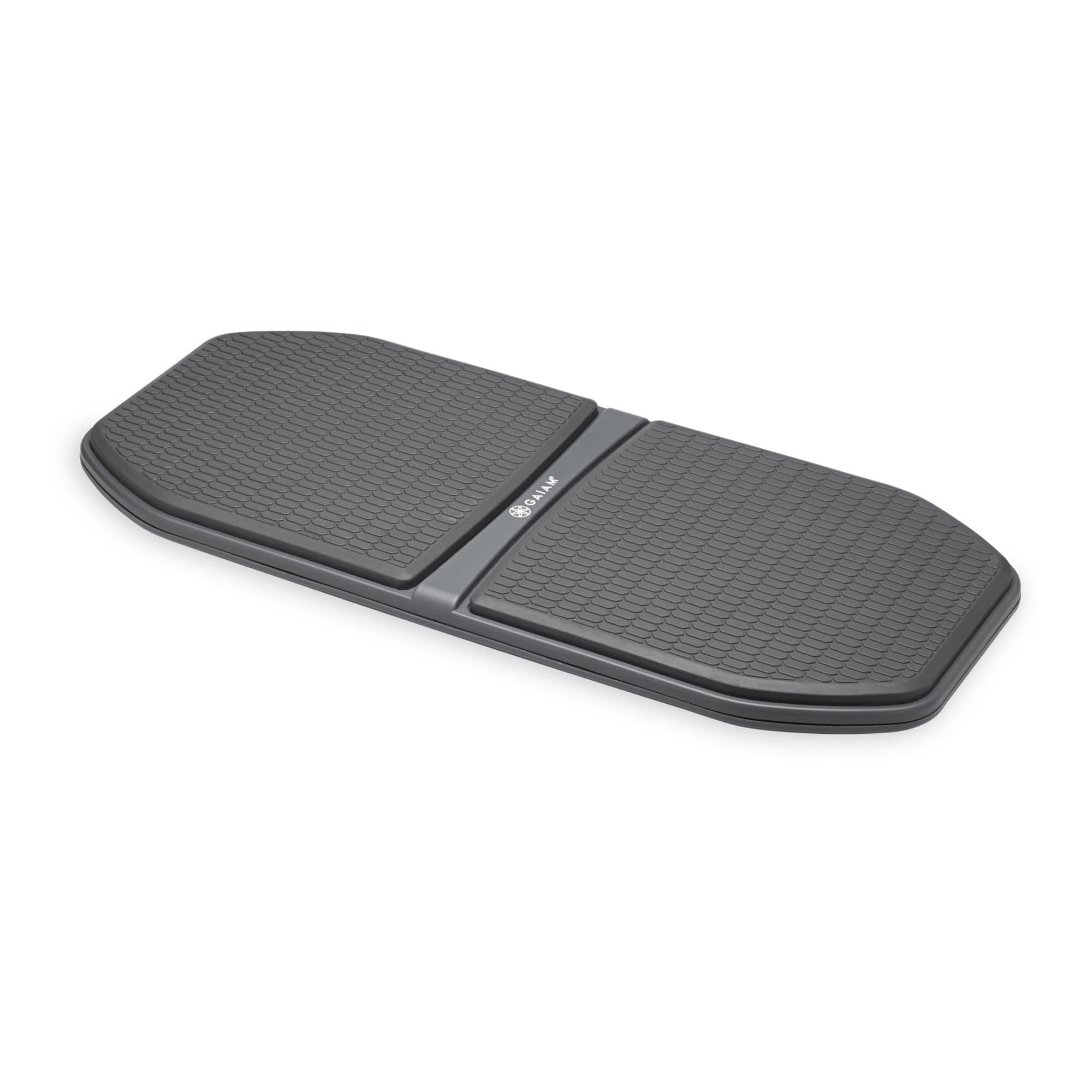
The rocker board purpose-built for standing desks, with a wide platform and subtle wobble for all-day use.
The Gaiam Evolve is specifically shaped for people who stand at a desk all day. It rocks forward and back as well as side to side, which keeps your leg muscles engaged and your lower back from getting stiff. The board measures 27 inches long by 12 inches wide and has a honeycomb non-slip texture on top. It weighs 6.5 pounds, which is 2 pounds heavier than the GIBBON slackline board but still portable. The maximum weight recommendation is 250 pounds, which is lower than every other board in this list—that is the main reason it lands in the budget-friendly tier despite its higher list price.
In terms of build, it uses a PU, PVC, and TPR composite. The rocker base is curved but stable, so you can step on it without feeling like you will tip over. One buyer who uses it for 4-5 hours at a time says the cushion is adequate and the corner grips prevent sliding. Compared to the Yes4All board, this is much easier to ride while typing—you do not need the same active balance because the base is wider and the motion is gentler.
The catch is durability. Several reviewers mention that after less than two months of use, the board develops a “loud creaking noise when moving.” One reviewer who loved the design ended up returning it because of the noise. If you are looking for a board that lasts years, the GIBBON SlackBoard or the ProsourceFit wobble board are likely better long-term investments at a similar or lower effective cost.
Immediate comfort: For standing desk use, this board is the most comfortable to step onto cold—no learning curve, no setup, just subtle movement throughout your workday.
Long-term concern: The creaking issue reported by multiple buyers suggests the pivot mechanism may not hold up as well as the simpler wood-on-dome or wood-on-roller designs.
Best for: Office workers who want a standing desk accessory that reduces leg fatigue and keeps them moving without distracting from work tasks.
Skip if: You want a board for high-intensity balance training, rehab, or board-sport practice, or you need a very durable product for daily hard use.
Understanding the Specs
Maximum Weight Recommendation
This is the heaviest load the board is built to handle safely. A higher number (like 480 pounds on the WOOD CITY board) means a sturdier build that can survive being jumped on by kids or used by larger adults. A board rated at 250 pounds (like the Gaiam Evolve) is fine for many people but leaves less margin if you plan to use it hard.
Board Style and Motion
A wobble disc tilts in all directions using a central dome—best for general core work. A rocker board moves forward and back (or side to side) on a curved base—better for desk use and targeted rehab. A roller board has a free cylinder underneath—closest to surf-style training but hardest to learn. Pick the motion that matches your goal.
Weight and Portability
Lighter boards (under 5 pounds) are easy to tuck under a desk or toss in a bag. Heavier boards (10 pounds or more) are more stable during use but harder to move around. If you plan to carry it to the office or between rooms, stay under 8 pounds.
Surface and Grip
Non-slip textures on the deck keep your feet secure in socks or barefoot. The base of the board matters too—a plastic or smooth wood base can slide on hardwood floors, so many users need a yoga mat or rug underneath for stability. Check reviews for mentions of slipping on your specific floor type.
FAQ
What is the difference between a wobble board and a rocker board?
Can I use a balance board on carpet?
Will a balance board help with standing desk back pain?
How much weight can a balance board hold?
Which balance board is best for physical therapy?
Is a balance board safe for toddlers and kids?
How long does it take to get good on a balance board?
What is the difference between a roller board and a rail board?
Final Thoughts: The Verdict
Across the board, the best balance board is the GIBBON SlackBoard because it is the most versatile—it works for core training, standing desk use, and family fun, with a high 400-pound weight limit and a compact design that stores against a wall. If you want to train for surfing or snowboarding, grab the Yes4All Balance Board for its adjustable stoppers and challenging roller system. And for physical therapy after a knee or ankle injury, the Fitterfirst Professional Rocker Board stands out with its adjustable tilt angles and wide 20-inch stance.
How We Picked
We do not accept paid placement. Every pick is matched to a real buyer and a real use-case; we do not hands-on test units.
Sources & Methodology
Specifications: manufacturer listings and product documentation. Review insights: verified customer reviews, as of July 2026. Pricing: not shown on this page (it changes often); check the current price via the retailer link.
As an Amazon Associate, FitlyFast earns from qualifying purchases. This does not affect which products we feature.