6 Best Bass In Ear Headphones | Deep Bass Without Mud

Our readers keep the lights on and the weekend projects moving. As an Amazon Associate, I earn from qualifying purchases.

Specs are compiled from manufacturer listings and verified buyer reviews and can change over time — please confirm the key details on the product page before buying.

You want that satisfying bass thump in your music, but you do not want it to make the vocals and guitar sound muddy. That is the real challenge with bass in ear headphones. Many cheap sets just push the low end until everything else gets buried. These picks — known as IEMs (in-ear monitors, the wired earbuds that sit deep in your ear canal and block outside noise) — give you controlled, punchy bass while keeping the mids and treble clear.

I’m Rikta — the founder and writer behind FitlyFast. This guide is built by comparing the manufacturers’ published specifications and the patterns across verified customer reviews, so you get each pick’s real strengths and trade-offs instead of marketing spin.

If you want deep, controlled low end without sacrificing detail, here is a clear breakdown of the best bass in ear headphones worth your money right now.
Quick Picks

How To Choose The Best Bass In Ear Headphones

The term “bass in ear headphones” gets thrown around a lot, but real low-end performance depends on a few specific parts of the design. A bass-heavy IEM that sounds good must control the low frequencies tightly so they do not smear into the mids and vocals. Here is what to check before buying.

Driver Type: The Engine Behind the Thump

The driver is the tiny speaker inside each earbud. For deep bass, look for a dedicated dynamic driver, sometimes labeled “DD” in the specs. Dynamic drivers use a diaphragm and magnet to push air, which naturally creates that physical thump you feel in your ears. Balanced armature drivers, or “BAs,” are smaller and better for detail in the mids and highs but usually lack the raw power for deep bass. This is why many of the best picks on this list use a hybrid setup — a dynamic driver for the low end combined with one or more balanced armatures for the upper frequencies.

Passive Noise Isolation: Letting the Bass Shine

IEMs block outside noise by forming a tight seal in your ear canal — this is called passive noise isolation, measured in decibels. A good seal, around 36dB to 37dB of reduction, keeps the rumble of a bus or the hum of an air conditioner from competing with the bass frequencies in your music. Without that seal, the low end will sound thin and weak because the outside noise masks it.

Tuning Switches Versus Flat EQ

Some IEMs have physical switches on the earbud itself that let you increase or decrease the bass and treble without using an app or software. This is a handy quality-of-life feature if you listen to different genres — you can boost the bass for hip-hop or electronic music and reduce it for acoustic or vocal-heavy tracks. Models without switches rely on a fixed sound signature, so you will need to use an equalizer (EQ) in your phone or music app to adjust the sound profile.

Quick Comparison

Model Best For Driver Setup Frequency Range Noise Isolation Amazon
KZ Castor Pro Best Overall Dual 10mm DD Not specified Not specified Amazon
KZ ZS12 PRO 2 Premium Alternative 1DD + 5BA Hybrid 20Hz – 20,000Hz Not specified Amazon
Tipsy M1 Vocals & Bass Single 10mm DD 20Hz – 20,000Hz Up to 36dB Amazon
BASN Bmaster5 Studio Clarity 1DD + 4BA Hybrid Not specified Not specified Amazon
Vibes 202 Value Wired Single Dynamic Driver 8Hz – 23,000Hz Not specified Amazon
BASN Bmaster Pro Isolation Focus Hybrid Triple Drivers Not specified Up to 37dB Amazon

In‑Depth Reviews

Best Overall

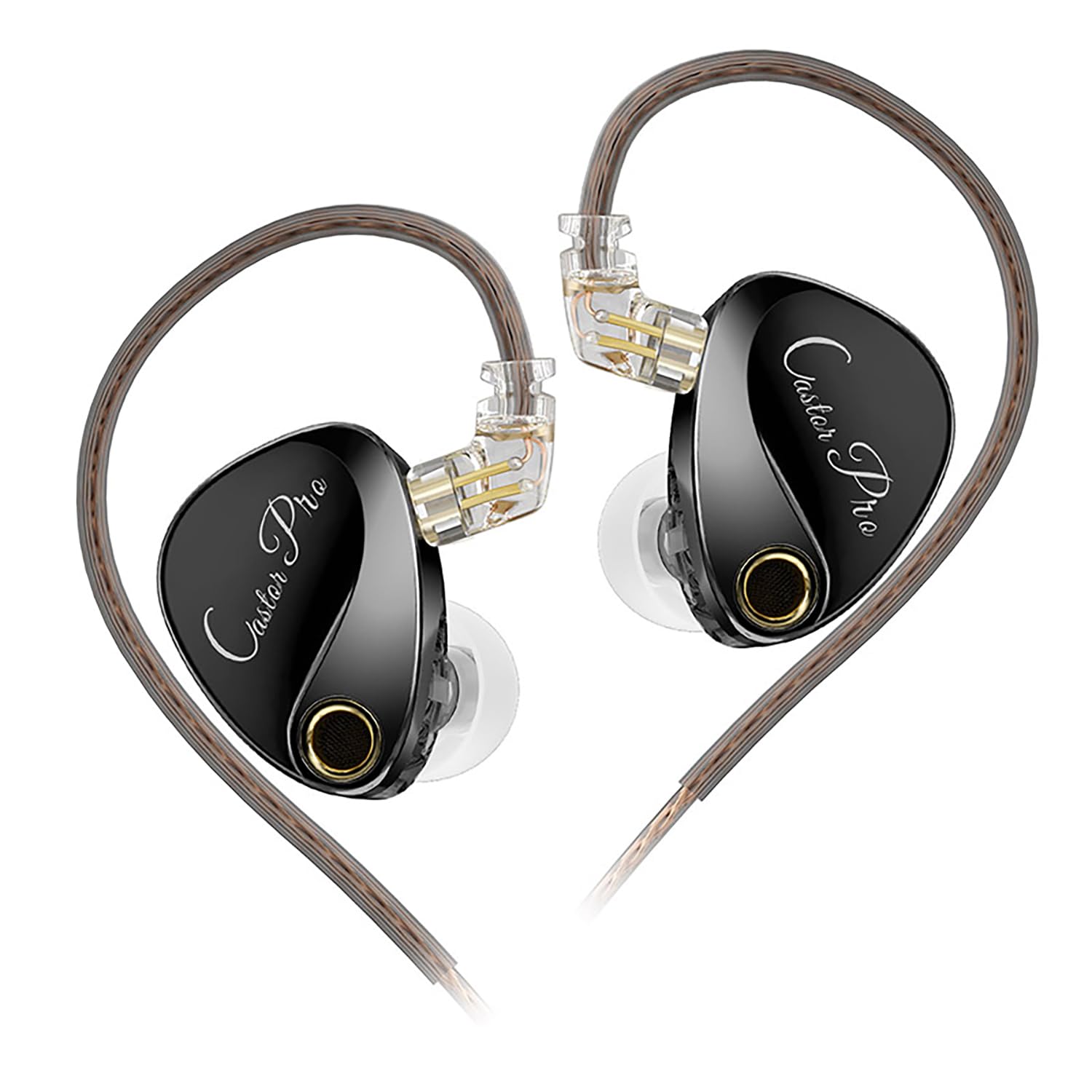
1. KZ Castor Pro Tunable in Ear Monitor

Dual 10mm DDTuning Switches

Four tuning switches that let you shape the bass to match any genre on the fly.

The Castor Pro earns the top spot because its four physical tuning switches let you choose from 16 different sound profiles — you can boost the low end for hip-hop and then tame it for acoustic music without touching an app. It gets its thump from a dual 10mm dynamic driver setup (one 10mm driver for the low frequencies and a separate 10mm driver for the mid-high frequencies). That separation keeps the bass punchy and defined rather than bleeding into the vocals, unlike the KZ ZS12 PRO 2 which lacks tuning switches.

Buyers report “excellent bass without drowning other frequencies” and a “clear soundstage,” which lines up with the dual-driver design. The main catch is the stock ear tips only come in small and large, no medium — you will want to swap those out immediately to get a proper seal and full bass response. One reviewer noted that with proper amplification, these “dwarf AirPods Pro 2” on sound quality, which is impressive at this tier.

Unlike the KZ ZS12 PRO 2 below, the Castor Pro skips the complex hybrid array and keeps things simple with two dynamic drivers, making it easier to drive from a phone without extra gear.

Tuning Power

  • 16 customizable sound profiles via four physical switches
  • Dedicated bass driver keeps low end tight
  • Outperforms premium wireless earbuds on a good source

Build Quirks

  • No medium ear tips included — you need to buy aftermarket foam tips
  • Stock silicone tips reduce bass seal
  • Benefit from a better source for full detail

the balance: Best all-around pick for anyone who wants adjustable bass and clear mids without spending over.

Before buying: Factor in the cost of replacement foam ear tips, which improves the seal and bass response.

Premium Hybrid

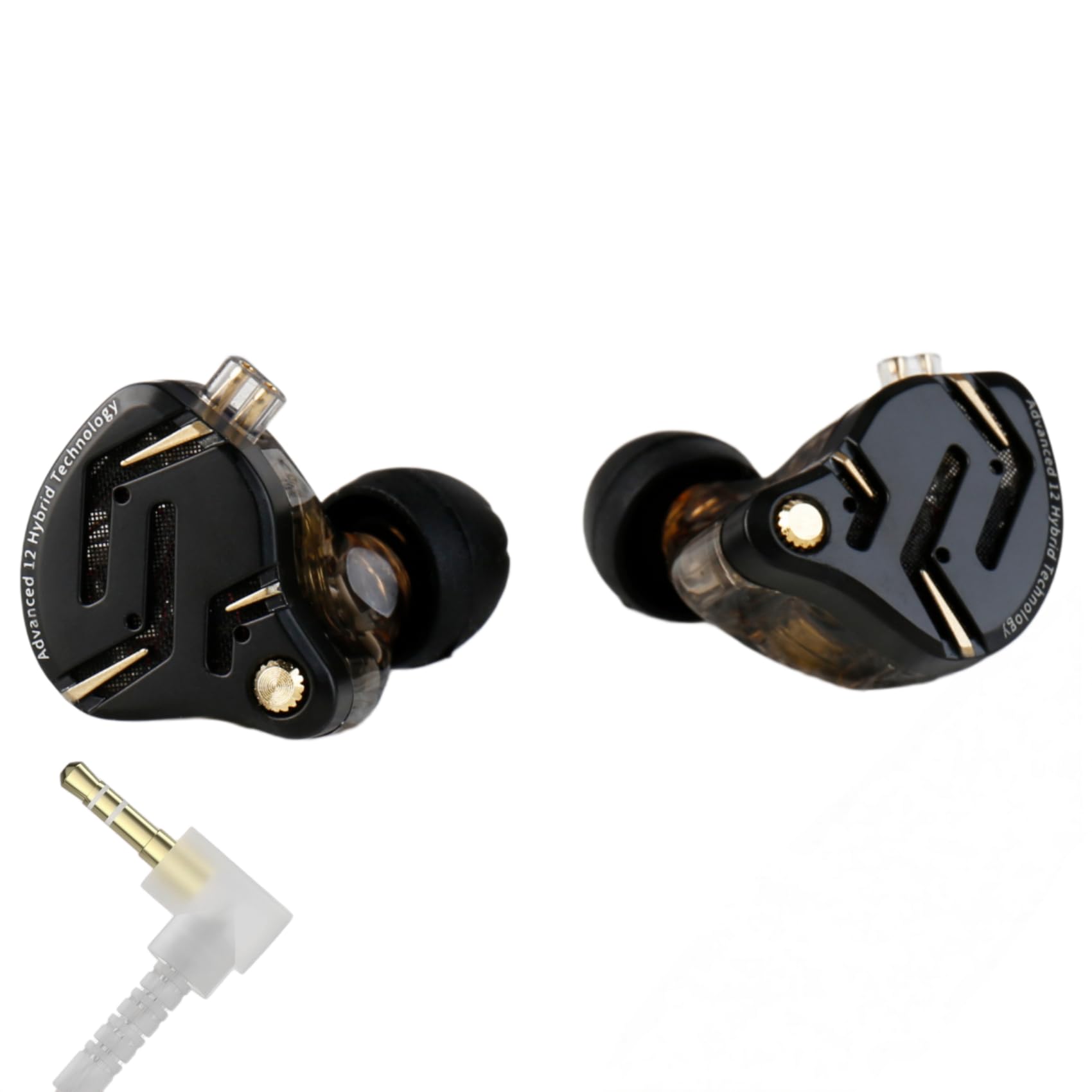
2. KZ ZS12 PRO 2 In Ear Monitor

1DD + 5BA20-20kHz

Six drivers per ear for a layered, 3D soundstage that rivals far pricier IEMs.

If you want the most detailed sound in this guide, the ZS12 PRO 2 packs a 10mm ultra-low frequency dynamic driver for the thump plus five balanced armature drivers (four 31736 ultra-high frequency units and one 30019 mid-high frequency unit). That 1DD + 5BA hybrid configuration is the most complex driver array here, and owners mention “excellent sound quality rivaling IEMs” and praise the “punchy, tight bass, clear mids and treble, and wide 3D soundstage.” It beats the Castor Pro on detail separation thanks to those extra BA drivers.

The built-in electronic crossover board acts as a traffic controller for all those drivers, ensuring the bass driver handles only the low frequencies while the BA drivers take care of everything above — this prevents the muddiness that plagues lesser hybrid IEMs. At 20Hz to 20,000Hz frequency response, it covers the full audible range, and the metal faceplate and resin shell body feel noticeably more premium than the all-plastic builds at a similar price.

Where it falls short versus the Castor Pro: no tuning switches, so you will need software EQ to adjust the sound. One buyer mentioned the cables tangle “extremely quickly,” a minor frustration for a portable IEM.

Detail Machine

  • Six-driver hybrid array separates bass from treble cleanly
  • Electronic crossover prevents frequency bleeding
  • Sturdy metal faceplate build

Gotchas

  • Cables tangle extremely easily — plan for storage
  • No onboard tuning switches
  • Requires EQ for flatter response from the start

Reach for this if: You want the most detailed, layered sound under and are fine adjusting EQ yourself.

Look elsewhere if: On-the-fly tuning is a must or you hate untangling cables.

Artistic Sound

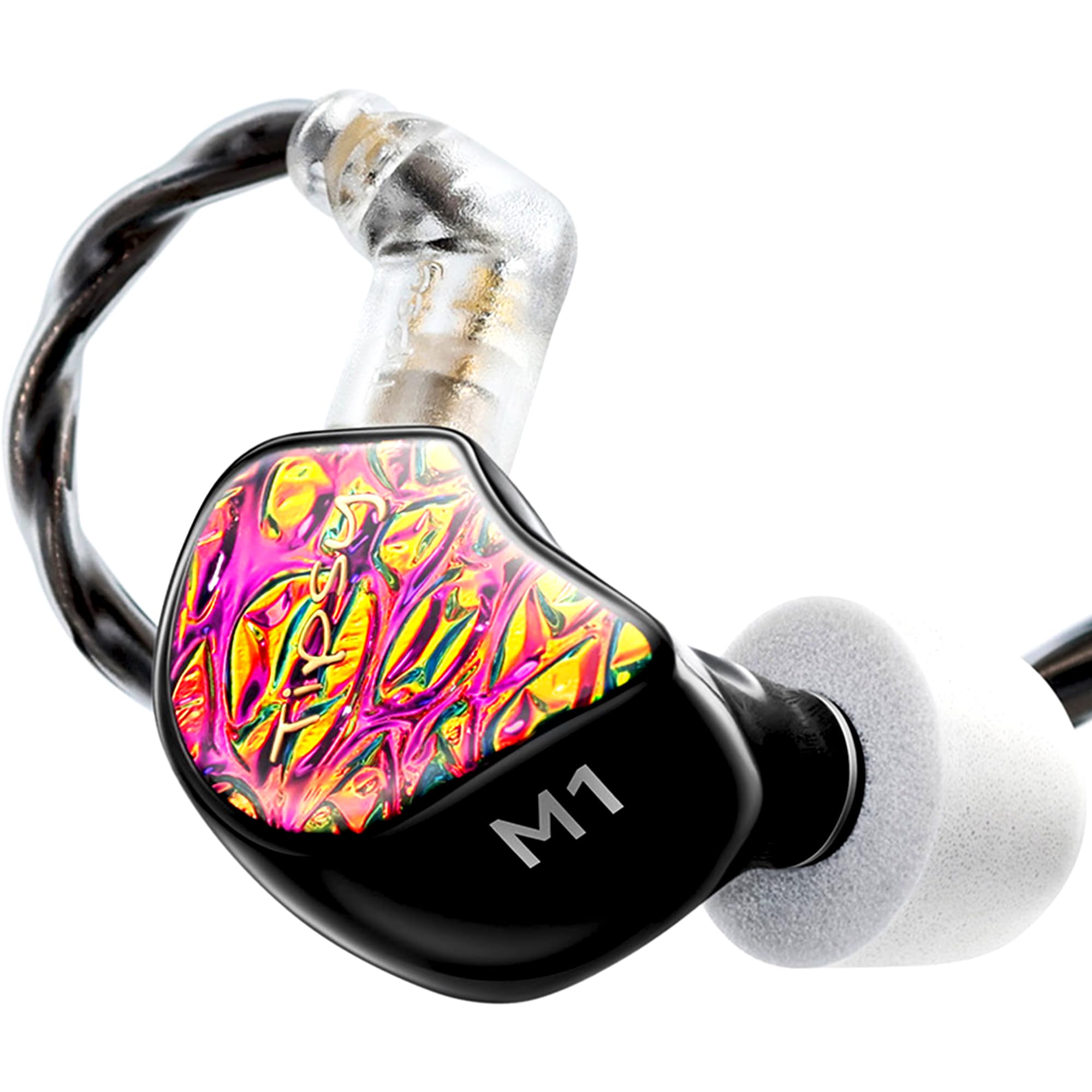
3. Tipsy M1 IEM

Bamboo Fiber36dB Isolation

A single dynamic driver with a bamboo fiber diaphragm for warm, natural bass and forward vocals.

The Tipsy M1 takes a different approach — instead of stacking multiple drivers, it uses a single 10mm dynamic driver with a bamboo fiber diaphragm, which is unusual at this price. The result is a warm, lively sound signature that puts the bass and vocals front and center without harsh treble. Tipsy calls this the “less is more” philosophy, and it works: the signature is smooth and non-fatiguing for long listening sessions, with “punchy, controlled low end and full-bodied lower mids that bring voices forward,” according to the manufacturer.

Passive noise isolation reaches up to 36dB, which is strong enough to block office chatter or commute noise. The BASN Bmaster Pro is listed at up to 37dB, so both are very effective. The resin shells are hand-polished and each faceplate is inspired by Van Gogh’s paintings, so the design is genuinely unique. The included 6.35mm adapter makes it studio-ready from the start. The real-world trade-off is the cable length — at roughly a couple feet, it feels short if your source is across a desk. Customers note you can buy a longer cable from Tipsy separately.

Compared to the Castor Pro and the ZS12 PRO 2, the M1 is less aggressive with its bass boost and focuses on a more balanced, warm tone. It suits listeners who want the vocals to shine as much as the low end.

Warm Character

  • Bamboo fiber diaphragm gives natural, warm bass
  • 36dB noise isolation blocks outside sound effectively
  • Unique hand-painted resin shell design

Space Concerns

  • Stock cable is short — need an extender or longer cable
  • Single driver limitation means less detail separation than hybrids
  • No tuning switches

The right fit for: Listeners who prioritize vocal clarity and smooth, warm bass without ear fatigue.

skip it if: You want maximum sub-bass impact or need a longer stock cable.

Stage Ready

4. BASN Bmaster5 In Ear Monitors

1DD + 4BAAluminum Case

Five drivers and an aluminum case built to survive tough stage use without losing clarity.

The Bmaster5 earns its spot for musicians: it uses a 10mm liquid silicone diaphragm driver for the bass along with four balanced armature drivers for the mids and highs, making it a five-driver hybrid setup. The liquid silicone diaphragm material is less common than standard polymer and tends to produce a more controlled, less “boomy” bass — buyers describe the sound as “incredibly beautiful reproduction” and note it never causes “listener’s fatigue.” That precise bass is better for stage monitoring than the more aggressive thump of the Castor Pro. The package includes two cables (one for pure audio and one with an inline microphone), plus 12 pairs of ear tips including memory foam and silicone.

The carrying case is an “exquisite aluminum case,” which is a step up from the cloth or plastic pouches common at this price. The cable clip and included 1/4 adapter make it practical for both portable use and studio gear. The main durability issue reported by one buyer after a year of use: the decorative faceplate cap on the earbud shell can fall off, requiring glue to reattach. The bass is more of a tight, precise low-end than a room-shaking rumble — suitable for monitoring on stage where you need to hear the kick drum cleanly.

Compared to the earlier BASN Bmaster Pro, the Bmaster5 adds two more balanced armature drivers for a wider soundstage and better high-frequency extension.

Built Tough

  • Liquid silicone driver for precise, non-fatiguing bass
  • Two cables (audio and mic) included
  • Aluminum case protects the IEMs in transit

Build Flaw

  • Faceplate caps can detach and require gluing
  • Higher price without tuning switches
  • Bass is precise rather than heavy — not for bassheads

Who it serves: Musicians, drummers, and stage performers who need reliable, clear monitoring with a sturdy carrying case.

Who might pass: Casual listeners wanting maximum sub-bass thump at a lower price.

Budget Champ

5. Vibes 202 Wired Earbuds

8-23kHzMMCX Cable

A detachable MMCX cable and a 1-Tesla driver that deliver surprising clarity for under.

On a tight budget, the Vibes 202 gives you a 1-Tesla dynamic driver (a measure of magnetic strength) that helps produce deeper bass and faster transient response. Its frequency range stretches from 8Hz to 23,000Hz, which means it can reproduce sub-bass frequencies that fall below the typical 20Hz human hearing threshold (you feel these more than hear them). The cable is a silver-plated, Litz-braided MMCX (a standard detachable connector type) to 3.5mm cord, which is detachable and tangle-resistant. Six pairs of ear tips in two colors and three sizes help you dial in the fit.

Buyers consistently note “deep bass, loud aggressive sound” and “excellent value wired earbuds.” One owner reported the fit is comfortable enough to wear under a motorcycle helmet. The catch is the bass boost is very noticeable — around 50Hz — and the high frequencies are slightly rolled off, creating a “dark” sound signature. That works great for hip-hop and EDM but less so for acoustic or classical music where you want more treble shimmer. The 63-inch cable is generous in length.

Unlike the KZ Castor Pro which has tuning switches, the Vibes 202 is a fixed-tuning set, so its bass-forward character is what you get.

Value Pick

  • Sub-bass extends down to 8Hz for physical rumble
  • Detachable silver-plated MMCX cable for easy replacement
  • Comfortable fit for extended wear and active use

Sound Caveat

  • Noticeable bass boost around 50Hz — not neutral
  • Highs are slightly rolled off (dark sound signature)
  • No tuning switches

Grab these for: Bass-forward listening on a tight budget where you want a detachable cable for longevity.

Pass if: You need a neutral, balanced sound or prefer controlling bass levels yourself.

Isolation Pro

6. BASN Bmaster Pro Triple Driver IEM

37dB IsolationHybrid Triples

Up to 37dB of passive noise isolation for focused listening anywhere.

The Bmaster Pro uses a hybrid setup with a single balanced armature driver and two 10mm dynamic drivers. That 1BA + 2DD configuration is designed to give you the bass slam of a dynamic driver for the low end while the balanced armature handles the mids with clarity. The standout spec here is the 37dB noise isolation, enough to block a loud office or commute noise so you hear only the bass. The Tipsy M1 is listed at up to 36dB, making the Bmaster Pro a strong choice for noisy environments. The package is generous: 12 pairs of ear tips, two cables (one with a microphone), a 1/4 adapter, and a T-shirt clip.

Reviewers point out it has “excellent bass IEM with strong sub-bass” and that it “outperforms Shure SE215 and Sony MDR-V6,” which are established benchmarks in this space. The sound signature is V-shaped — meaning the bass and treble are more emphasized than the mids, giving a lively but not neutral sound. The cables are straight rather than pre-shaped to go around your ear, so you will need to use the included memory wire to mold them. The product is backed by a 12-month replacement guarantee directly from BASN.

Compared to the BASN Bmaster5, the Bmaster Pro offers slightly less detail separation (three drivers versus five) but matches or beats it on sub-bass punch and isolation.

Isolation King

  • 37dB noise isolation — best in this guide for blocking outside sound
  • Strong sub-bass with V-shaped tuning for energetic sound
  • 12-month replacement guarantee

Comfort Notes

  • Straight cable requires memory wire shaping for over-ear fit
  • Mids are slightly recessed compared to bass and treble
  • Long wear comfort lags behind KZ models for some buyers

Ideal for: Commuters, gym users, or anyone who needs maximum isolation to hear the bass in noisy environments.

Consider the alternative: If you want more midrange clarity and a balanced sound, the Tipsy M1 above might suit you better.

Understanding the Specs

Dynamic Driver vs Balanced Armature

Think of the dynamic driver as a tiny traditional speaker — a diaphragm moves air to create sound. This is what gives you that physical thump in your chest during a bass drop. A balanced armature, on the other hand, uses a tiny magnetic arm that pivots between two magnets. It is more efficient for reproducing detail and high frequencies but lacks the brute air-moving power for deep bass. Most bass-focused IEMs use at least one dynamic driver for the low end and add balanced armatures for the highs (a “hybrid” design).

Noise Isolation vs Noise Cancellation

Noise isolation is purely physical — the ear tip creates a seal in your ear canal that blocks incoming sound waves. It does not use batteries or electronics. Noise cancellation, found in wireless earbuds, uses microphones and speakers to generate an anti-noise wave that cancels the outside sound. IEMs rely on passive isolation, which is why a good fit with the right ear tip size is critical to hearing the bass. Specs like “up to 36dB” or “up to 37dB” tell you how much outside sound is blocked.

FAQ

What is the difference between a dynamic driver and a balanced armature driver for bass?
A dynamic driver uses a large diaphragm and magnet to push air, producing powerful, physical bass that you can feel. A balanced armature driver uses a small magnetic armature and is better for detail and high frequencies, but it cannot produce the same deep, punchy low end. For bass-focused IEMs, you want at least one dynamic driver in the design.
Will these bass in ear headphones work with my phone?
Yes, all of these are wired IEMs with a standard 3.5mm connector. If your phone does not have a 3.5mm headphone jack, you will need a USB-C to 3.5mm adapter or a DAC dongle (a small digital-to-analog converter) to connect them. Most of these IEMs are efficient enough to run from a standard phone output.
Can I use these IEMs for gaming to hear footsteps?
Yes, many of these models are suitable for gaming because IEMs naturally provide good soundstage and imaging — the ability to tell where a sound is coming from. The KZ ZS12 PRO 2 is specifically mentioned as game-ready by the manufacturer, and the Tipsy M1 has a review noting excellent positional audio for FPS and MOBA games.
How do I get the best bass seal from an IEM?
The seal depends entirely on the ear tip fit. Try different sizes — the goal is a snug, airtight fit. Memory foam ear tips generally create a better seal than silicone because they expand to fill the ear canal. Most of the picks on this list come with multiple tip sizes; if yours do not fit well, aftermarket foam tips are cheap and improve bass response noticeably.
What does “hybrid driver” mean in IEMs?
A hybrid driver IEM uses a mix of driver types — typically at least one dynamic driver for the low frequencies plus one or more balanced armature drivers for the mids and highs. The goal is to get the bass slam of a dynamic driver with the clarity and detail of a balanced armature. The KZ ZS12 PRO 2 (1DD + 5BA) and BASN Bmaster5 (1DD + 4BA) are both hybrid designs.
How long do these wired IEMs last compared to wireless earbuds?
Wired IEMs last significantly longer on average because they have no battery that degrades over time. The cable is the most likely part to fail, and all the picks here use detachable cables (MMCX or 2-pin), so you can replace the cable for a few dollars without replacing the earbuds. With care, a good IEM can last several years.
What is the difference between MMCX and 2-pin connectors?
MMCX (Micro-Miniature Coaxial) is a round, push-to-connect plug that swivels 360 degrees. 2-pin connectors use two small pins that plug into the earbud body and do not swivel. Both are standard detachable cable types. The KZ Castor Pro and the Tipsy M1 use 2-pin connectors, while the Vibes 202 and the BASN Bmaster Pro use MMCX connectors.
Can I use these IEMs for live stage monitoring?
Yes, several of these are specifically designed for stage use. The BASN Bmaster5 has a liquid silicone diaphragm for clear monitoring and comes with an aluminum case for transport. The BASN Bmaster Pro includes a foam tip seal to block out loud stage noise. The Tipsy M1 is also noted as being trusted by musicians for reliable monitoring.
Do these bass IEMs come with a microphone for calls?
Most of the standard models come without a microphone. However, the BASN Bmaster5 includes a second cable with an inline microphone for phone calls. The BASN Bmaster Pro also includes a “HD mic woven cable.” The other picks on this list (KZ Castor Pro, KZ ZS12 PRO 2, Tipsy M1, Vibes 202) are reviewed in the no-mic configuration — the cables do not have a mic module.
What is a “dark” sound signature in IEMs?
A “dark” sound signature means the high frequencies (treble) are reduced or rolled off compared to the bass and mids. This makes the sound warm and smooth, without harshness or sibilance (that sharp “s” sound). It is comfortable for long listening but can make music sound less detailed and airy. The Vibes 202 is an example of a darker-tuned IEM according to reviewers.

Final Thoughts: The Verdict

For most people, the bass in ear headphones winner is the KZ Castor Pro because its four tuning switches let you go from clean vocals to chest-thumping bass on the fly without spending more. If you want more layered detail from a hybrid driver setup, grab the KZ ZS12 PRO 2. And for the warmest, most fatigue-free sound with forward vocals, the standout is the Tipsy M1.

How We Picked

We do not accept paid placement. Every pick is matched to a real buyer and a real use-case; we do not hands-on test units.

Sources & Methodology

Specifications: manufacturer listings and product documentation. Review insights: verified customer reviews, as of July 2026. Pricing: not shown on this page (it changes often); check the current price via the retailer link.

As an Amazon Associate, FitlyFast earns from qualifying purchases. This does not affect which products we feature.

Please use a real email you check. If it's fake or mistyped, your message won't reach us and we can't reply — wrong addresses are rejected automatically.