
Our readers keep the lights on and the weekend projects moving. As an Amazon Associate, I earn from qualifying purchases.
Choosing the wrong blade for your portable or stationary band saw turns every cut into a battle with wandering kerfs, stripped teeth, and premature breaks that halt your progress. The right band saw blade for metal cuts through stainless tubing, rebar, and structural steel like a hot knife through butter, leaving a clean edge and lasting through dozens of jobs before needing a swap. This guide breaks down the tooth geometry, bi-metal construction, and thickness specs that separate a frustrating day in the shop from one where the saw does exactly what you ask.
I’m Rikta — the co-founder and writer behind FitlyFast. After analyzing hundreds of customer reports and manufacturer claims on portable and stationary blades, I’ve identified the exact specs that predict real-world performance in metal-cutting scenarios.
Whether you are trimming EMT conduit on a jobsite or slicing stainless steel bar stock in a home workshop, the right selection starts with understanding TPI and tooth set. This is the definitive guide to finding the band saw blade for metal that matches your specific material and saw type.
How To Choose The Best Band Saw Blade For Metal
Metal-cutting band saw blades are consumables that directly control your cut speed, surface finish, and blade life. Choosing incorrectly leads to excessive vibration, premature tooth breakage, or a blade that resists feeding through the workpiece. Three factors dominate the decision: tooth geometry, blade material, and physical dimensions.
Tooth Pitch and TPI Selection
Teeth per inch (TPI) dictates how the blade engages the material. A general rule is to have at least three teeth in contact with the workpiece at all times. For thin wall tubing and sheet metal under 3/16 inch, 14 to 18 TPI blades prevent the teeth from grabbing and stripping. For solid bar stock and structural shapes up to several inches thick, 10 to 14 TPI provides faster chip clearance and less heat buildup. Variable pitch blades combine coarse and fine tooth spacing to reduce harmonic vibration on interrupted cuts.
Material Construction: Bi-Metal vs. Carbon Steel
Bi-metal blades weld a high-speed steel (M42 or M2) cutting edge to a flexible alloy steel backer. This construction resists heat softening and abrasion from stainless steel, rebar, and alloy steels while allowing the blade to flex around small diameter wheels on portable saws. Carbon steel blades are less expensive but dull rapidly in ferrous metals and are best reserved for non-ferrous materials like aluminum and brass. For general metal cutting, bi-metal is the baseline recommendation.
Tooth Set and Rake Angle
Tooth set refers to the alternating side bend that creates a kerf wider than the blade body, preventing binding. Wavy set blades have a continuous wave pattern ideal for thin materials and tubing because they reduce tooth strippage. Regular set blades have alternating left-right teeth and work well on solids and structural shapes. Positive rake angles (tooth face leaning forward) cut aggressively but generate more heat; they suit powerful saws with coolant systems. Standard and zero rake angles provide longer edge life in portable saws without coolant.
Quick Comparison
On smaller screens, swipe sideways to see the full table.
| Model | Category | Best For | Key Spec | Amazon |
|---|---|---|---|---|
| Lenox 29232CLB72360 | Horizontal Bandsaw | Stationary saws cutting thick solids | 93″ x 0.75″ x 0.035″, 18 TPI | Amazon |
| Makita B-40559 | Portable Compact | Cordless saws on stainless tubing | 32-7/8″ x 1/2″ x 0.020″, 18 TPI | Amazon |
| Starrett BM1014 | Portable Variable | Multi-material portable cutting | 44-7/8″ x 1/2″ x 0.020″, 10-14 TPI | Amazon |
| Milwaukee 48-39-0631 | Portable Compact | Thick metal and stainless on compact saws | 30-9/16″ x 1/2″ x 0.020″, 12/14 TPI | Amazon |
| Lenox 8010738PW145 | Portable Standard | General portable metal cutting | 44-7/8″ x 1/2″ x 0.020″, 14 TPI | Amazon |
| Bosch CBS1418 | Portable Standard | High-volume conduit and pipe cutting | 28-7/8″ x 1/2″ x 0.020″, 14-18 TPI | Amazon |
| Morse 1216 | Portable Compact | Thin material and light gauge tubing | 35-3/8″ x 1/2″ x 0.020″, 12/16 TPI | Amazon |
In‑Depth Reviews
1. Lenox 29232CLB72360 Classic Tuff Tooth
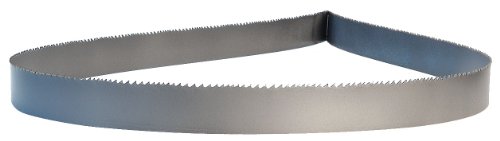
The Lenox Classic Tuff Tooth is the definitive blade for stationary horizontal band saws that need to chew through carbon steel, alloy steel, and stainless bar stock day after day. Its 0.035-inch thickness and 3/4-inch width provide the beam strength to resist deflection under heavy feed pressure, while the M42 high-speed steel tooth edge tolerates heat buildup that would soften standard bi-metal blades. The wavy tooth set is engineered specifically to reduce stripping when the workpiece includes a mix of thin wall sections and solid cores, such as rectangular tubing and structural shapes.
Users consistently report that this blade transforms inexpensive Chinese-made horizontal saws into reliable cutting tools after proper tensioning and guide roller alignment. On stainless steel pipe and square tubing, the edge retention holds up for months of regular use without visible dulling. The 18 TPI pitch keeps at least four teeth in contact with materials up to 1/8-inch thick, producing a smooth finish on thin workpieces while still clearing chips fast enough to avoid glazing on longer cuts through solids up to several inches thick.
The primary trade-off is that this blade is dimensionally specific to full-size horizontal bandsaws with a 93-inch band length. It is not compatible with compact portable bandsaws. For shop-based fabrication where coolant systems are available, running this blade with a slow hydraulic feed rate and cutting compound dramatically extends its already impressive service life. Experienced welders and metal fabricators consider the Lenox Tuff Tooth the benchmark for horizontal saw performance.
Why it’s great
- M42 edge resists heat and wear in stainless and alloy steels
- Wavy tooth set prevents stripping on thin and tubular workpieces
- Heavy 0.035-inch backer resists deflection under load
Good to know
- Only fits 93-inch horizontal band saws, not portables
- Best performance requires a saw with coolant capability
2. Makita B-40559 Compact Portable Band Saw Blade
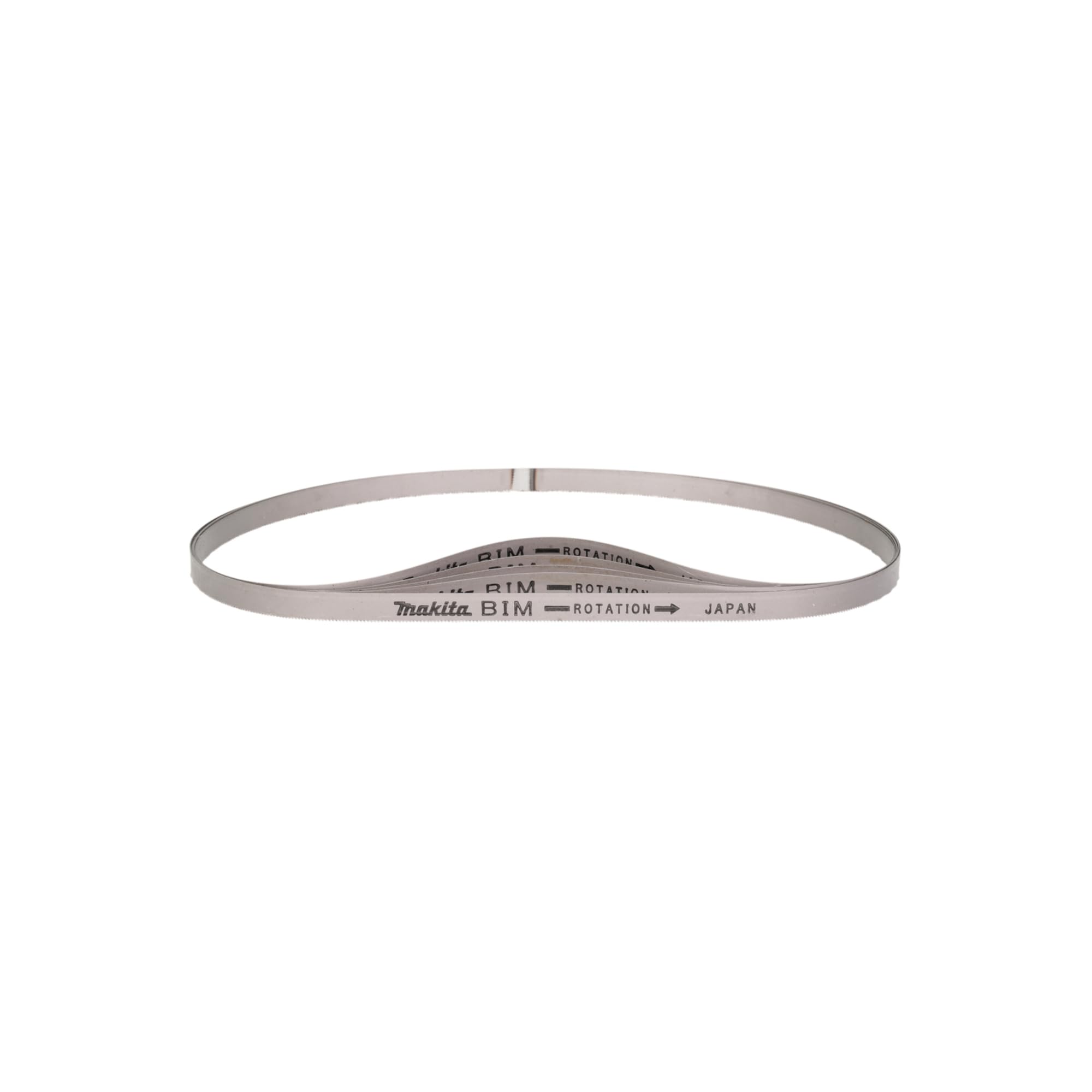
The Makita B-40559 brings industrial-grade bi-metal construction to the compact portable band saw format, fitting saws like the Makita XBP04 and Dewalt DCS374 with a 32-7/8-inch band length. The 18 TPI wavy tooth set is optimized for thin-walled stainless tubing, sheet metal, and conduit where maintaining at least three teeth in the cut prevents the grabbing and tooth breakage common with coarser pitches. The bi-metal body uses an improved welding process at the joint, historically the weakest point on portable blades, to resist snap failures during tight-radius cuts around pipes and strut channels.
Users running this blade on cordless saws note that the three-pack provides excellent longevity, with individual blades lasting through extensive use on stainless steel before needing replacement. The wavy set produces clean, burr-free cuts on 1/8-inch stainless pipe and square tubing without the chatter that regular tooth configurations can generate when cutting curves or following scribed lines. At 0.020-inch thickness, the blade is thin enough to track smoothly over the small-diameter wheels of compact saws while maintaining sufficient rigidity for straight cuts through 2-inch schedule 40 pipe.
The premium price reflects the quality of the M42 cutting edge and the consistency of the weld joint, making this a better choice for professional electricians and plumbers who cut stainless or galvanized pipe daily than for hobbyists cutting occasional mild steel. Some users note that the 18 TPI pitch can be too fine for cutting solid bar stock thicker than 1/2 inch, where chip clearance becomes tight and cutting speed drops. For heavy solids, a 14 TPI blade would feed faster. For pipe, tube, and sheet metal, this blade is near perfect.
Why it’s great
- M42 edge holds up in stainless and galvanized materials
- Wavy tooth set eliminates chatter on thin wall tubing
- Strong weld joint resists breakage in tight cuts
Good to know
- 18 TPI is slow in solid bar stock over 1/2-inch thick
- Premium tier cost per blade may exceed budget for light use
3. Starrett Univerz BM1014 Bi-Metal Portaband Blade

The Starrett BM1014 is the variable-pitch solution for portable bandsaw users who frequently switch between thin tubing and thicker solid stock without wanting to change blades between materials. The 10-14 variable TPI transitions between a coarser tooth spacing for chip clearance on solids and a finer spacing for smooth cuts on thin wall sections, all within a single blade. The bi-metal construction uses Starrett’s proprietary bonding process to fuse the high-speed steel tooth edge to the flexible alloy backer, reducing the risk of the teeth fracturing on impact with hardened scale or interrupted cuts in structural steel.
Users cutting 1/8-inch stainless steel with this blade report that it retains its edge longer than standard 14 TPI fixed-pitch blades from other brands, with some getting a full year of weekly use before the edge starts to degrade. The variable pitch also dampens the harmonic vibration that causes rough surface finishes on long cuts through angle iron and channel, delivering a noticeably smoother kerf. The 44-7/8-inch length fits most full-size portable bandsaws from Milwaukee, Dewalt, and Makita, making it a versatile replacement for the stock blade on those machines.
The single-blade per-pack format means a higher upfront cost per blade compared to multi-pack options from Lenox or Morse. For shops that cut a wide range of material thicknesses in a single day, the time saved by not swapping blades justifies the price. However, if your work is exclusively thin wall tubing or exclusively thick bar stock, a fixed-pitch blade designed specifically for that thickness will cut faster. The variable pitch excels in versatility, not specialization.
Why it’s great
- Variable 10-14 TPI handles thin and thick metals without swapping
- Harmonic dampening produces smoother surface finish on structural shapes
- Starrett bi-metal bonding reduces tooth fracture risk
Good to know
- Single blade only, higher per-blade cost than multi-packs
- May not cut as fast as a dedicated fine or coarse pitch blade
4. Milwaukee 48-39-0631 Compact Extreme Thick Metal Blade

The Milwaukee 48-39-0631 is purpose-built for the compact portable bandsaw segment, specifically the Milwaukee M12 and M18 Fuel compact saws, with a 30-9/16-inch band length. The 12/14 TPI variable pitch is optimized for thick metal up to several inches, including stainless steel, rebar, and heavy-walled pipe, where the coarser side of the pitch range clears chips aggressively while the finer side controls the finish. Milwaukee claims 3X life in stainless steel compared to standard bi-metal blades, and user reports confirm that the blade holds its edge far longer on rebar and stainless than the OEM blades supplied with most saws.
The optimized tooth geometry includes a unique rake angle that increases cutting speed in thin metals by 2X while maintaining the tooth strength needed for thick sections. Users cutting EMT conduit, unistrut, and rebar note that the blade slices through like a hot knife through butter, with noticeably less bogging on the initial cut engagement compared to standard 14 TPI blades. The 0.020-inch thickness ensures proper tracking on the small wheels of compact saws without excessive vibration.
The three-pack provides good value for the performance level, but the blade is dimensionally specific to compact portable saws with a 30-9/16-inch band length. It will not fit full-size portable saws with a 44-7/8-inch band or horizontal saws. Some users have successfully used this blade on Ridgid and Dewalt compact saws, but verify your saw’s band length before purchasing. For electricians and contractors who cut thick rebar and stainless daily on compact cordless saws, this is a top-tier upgrade.
Why it’s great
- Optimized for thick metal and stainless in compact saws
- Variable 12/14 TPI balances chip clearance and finish
- Significantly outlasts OEM blades on rebar and alloy steel
Good to know
- Fits only compact saws with 30-9/16-inch band length
- Not ideal for thin sheet metal or tubing under 1/8 inch
5. Lenox 8010738PW145 Portable Band Saw Blade

The Lenox 8010738PW145 is a five-pack of 44-7/8-inch bi-metal blades at 14 TPI, offering the lowest per-blade cost among reputable brands for full-size portable bandsaws. The Tuff Tooth design reinforces the tooth back, reducing the strippage that occurs when the blade snags on sharp edges inside cut tubing or when the saw is twisted during a cut. The bi-metal construction uses high-speed steel teeth bonded to a flexible backer, providing a strong, long-lasting cutting edge that resists the heat generated during continuous cuts through mild steel and alloy materials.
Users cutting a mix of all metal types, from thin conduit to 4-inch pressure-treated lumber (though the blade is designed for metal, it handles occasional wood cuts), report that the blades cut smoothly and run straight without wandering. The 14 TPI pitch is a good general-purpose compromise, keeping three teeth in contact with materials up to 1/4-inch thick while still feeding reasonably fast on solid stock up to 1 inch. The five-pack format makes this an excellent choice for shops that go through blades regularly and want to keep a stock on hand without paying premium per-blade prices.
The 14 TPI fixed pitch is not optimized for very thin sheet metal below 1/16-inch, where an 18 TPI blade would reduce the risk of tooth grabbing. Additionally, on thick stainless bar stock over 1 inch, the blade may dull faster than a coarser 10-14 variable pitch or a heavy-duty 10 TPI blade. For general metal fabrication, light structural work, and maintenance cutting, the Lenox five-pack offers a strong balance of cost and durability that makes it a go-to for everyday portable saw use.
Why it’s great
- Five-pack provides excellent per-blade value
- Tuff Tooth design resists stripping on tubing edges
- 14 TPI is a good general-purpose all-metal pitch
Good to know
- Fixed 14 TPI is not ideal for very thin sheet metal
- Will dull faster on thick stainless than coarser pitches
6. Bosch CBS1418 General-Purpose Portable Band Saw Blade

The Bosch CBS1418 is a three-pack of bi-metal blades at a variable 14-18 TPI, designed to fit Bosch and many competitive portable bandsaws with a 28-7/8-inch band length. The variable pitch helps reduce vibration and noise when cutting pipe and conduit, while the advanced bonding technology between the backer and the M42 cutting edge improves joint strength compared to older Bosch blade generations. The optimized tooth geometry is engineered to cut steel, iron, aluminum, and other non-ferrous metals with a clean edge and fast feed rate.
Electricians cutting hundreds of conduit runs per month report that these blades outperform Hilti and other premium brand options in terms of longevity and resistance to breakage. The 14-18 TPI variable pitch ensures that at least three teeth are always in contact with standard EMT and rigid conduit walls, preventing the grab-and-snap failure pattern common with coarser fixed-pitch blades. The blades maintain sharpness over months of daily use, with some users reporting that the blade eventually breaks from heat stress and tool twist before the cutting edge dulls.
The 28-7/8-inch length is specific to compact portable saws and will not fit the standard 44-7/8-inch full-size portables. Some users have noted that newer production runs appear slightly less brittle than earlier versions, but the blade is still susceptible to stress cracks if the saw is twisted aggressively during a cut. Keeping the blade tensioned correctly and avoiding side loading will maximize life. For high-volume conduit cutting on compact corded or cordless saws, the Bosch CBS1418 delivers outstanding lifespan and cut quality.
Why it’s great
- Exceptional longevity on conduit and pipe for electricians
- Variable 14-18 TPI reduces vibration and tooth grabbing
- Advanced bonding improves weld joint durability
Good to know
- Fits only 28-7/8-inch compact saws
- Prone to stress cracks if saw is twisted during cuts
7. Morse 1216 Bimetal Compact Portable Band Saw Blade

The Morse 1216 is a three-pack of bi-metal blades at a variable 12/16 TPI, designed specifically for compact portable bandsaws with a 35-3/8-inch band length, such as the Milwaukee compact battery-powered saw. The 12/16 TPI variable pitch is tuned for cutting thin wall materials 3/16-inch or less, where the finer 16 TPI segment keeps multiple teeth engaged with the material to prevent grabbing, while the coarser 12 TPI segment aids chip evacuation when the blade transitions through thicker sections. The larger tooth spacing and unique rake angle are designed to increase cutting speed in thin materials compared to a standard fixed 14 TPI blade.
Users running these blades on Milwaukee M12 compact saws report that they cut through schedule 80 pipe and EMT with noticeably less resistance than the stock Milwaukee OEM blades, and the increased weld contact area reduces the incidence of blade separations at the joint. The blades are made in the USA and have a slightly more rigid feel than some competitors, which some users believe contributes to longer life on straight cuts. The three-pack price point makes these an affordable entry into bi-metal performance for compact saw owners.
The Morse 1216 is best suited for thin wall materials under 3/16-inch. Cutting solid bar stock or heavy wall pipe above 1/4-inch will push the blade beyond its optimal design envelope, leading to slower feed rates and increased heat buildup. Users with a shop saw or full-size portable saw looking to cut thick solids should consider a coarser TPI blade. For light fabrication, HVAC work, and electrical trim-out where thin metal is the norm, this three-pack delivers excellent value and performance.
Why it’s great
- Optimized for thin wall materials under 3/16-inch
- 12/16 variable TPI prevents grabbing on EMT and thin tubing
- Strong weld joint and USA manufacturing quality
Good to know
- Not designed for solid bar stock or thick wall pipe
- Slower feed on materials over 1/4-inch thick
FAQ
What TPI should I use for cutting 1/2-inch stainless steel round bar?
Can I use a wood-cutting bandsaw blade on metal?
How do I know if a blade fits my portable bandsaw?
Final Thoughts: The Verdict
For most users, the band saw blade for metal winner is the Lenox 29232CLB72360 because it combines a heavy 0.035-inch backer, wavy tooth set, and M42 edge into a blade that transforms any stationary horizontal saw into a reliable production tool for solids and tubing alike. If you want a premium portable blade optimized for stainless tubing and thin metals, grab the Makita B-40559. And for the best value in a multi-pack for full-size portables, nothing beats the Lenox 8010738PW145 five-pack.