
Our readers keep the lights on and the weekend projects moving. As an Amazon Associate, I earn from qualifying purchases.
The wrong bandage doesn’t just fail to protect a skin tear — it makes things worse by ripping fragile tissue on removal, turning a minor wound into a painful, slow-to-heal injury. Standard adhesive bandages are designed for tough young skin, not the thin, papery epidermis of aging skin or skin compromised by medication. A proper bandage for this job must seal without sticking to the wound bed and release without tearing newly formed epithelial cells.
I’m Rikta — the co-founder and writer behind FitlyFast. For this guide I analyzed over 600 customer reviews and cross-referenced technical datasheets on silicone adhesive strength, fluid handling capacity, and wear time limits to separate the truly gentle dressings from the ones that merely claim to be.
Whether you’re caring for an elderly parent, managing your own fragile skin, or stocking a home health kit, finding the right bandage for skin tears means prioritizing silicone adhesion over acrylic and absorbency over simple coverage.
How To Choose The Best Bandage For Skin Tears
Skin tears are fundamentally different from scrapes or cuts. The epidermis separates from the dermis, often creating a flap of thin skin. A standard bandage can attach to that flap and rip it clean off during removal. Here’s what actually matters when selecting a dressing for this specific wound type.
Silicone vs Acrylic Adhesive
Acrylic adhesive is the sticky stuff on most supermarket bandages. It bonds aggressively to the outer layer of skin, which is exactly the layer you cannot afford to damage. Silicone adhesive, by contrast, forms a gentle seal that adheres to dry skin but does not stick to the moist wound bed. When removed, silicone releases without stripping epidermal cells. Any bandage marketed for skin tears must use silicone — if it doesn’t say silicone, it is not suitable.
Bordered vs Borderless Dressings
A bordered foam dressing has adhesive on the entire outer perimeter, not just on a thin strip. This provides a full 360-degree seal that keeps contaminants out and exudate in. Borderless dressings require medical tape to secure the edges, which introduces another adhesive interface that can damage fragile skin. For skin tears on the forearm, shin, or back of the hand — common locations — a bordered dressing stays put without additional tape.
Absorbency and Fluid Lock
Skin tears produce exudate as they heal. A dressing that absorbs that fluid and locks it away inside a foam core prevents the wound bed from becoming soggy, a condition called maceration that delays healing. Look for foam dressings with a superabsorbent layer or a silicone contact layer that wicks moisture into the pad. The dressing should be able to handle moderate drainage and remain intact for multiple days.
Waterproof Barrier
A waterproof outer layer allows the patient to shower without removing the dressing. Frequent dressing changes on fragile skin increase trauma. A waterproof backing that passes moisture vapor out (breathable) but keeps liquid water and bacteria in protects the wound environment. Not all products that claim waterproof actually hold up in a shower — customer reviews are a reliable reality check on this claim.
Quick Comparison
On smaller screens, swipe sideways to see the full table.
| Model | Category | Best For | Key Spec | Amazon |
|---|---|---|---|---|
| Medline Optifoam Gentle EX | Foam Dressing | Chronic wounds, high exudate | 5-layer core, 7-day wear | Amazon |
| Mepilex Border Flex 4×4 | Foam Dressing | Hospital-level protection | 7-day wear, showerproof | Amazon |
| NeuHeils Silicone Foam 6×6 | Foam Dressing | Large wounds, pressure ulcers | 4.1″ absorbent pad | Amazon |
| Allevyn Gentle Border Lite | Foam Dressing | Sensitive skin, low drainage | 3×3 inch, gentle silicone | Amazon |
| Yojo Silicone Foam 4×4 | Foam Dressing | Value pack, multiple wounds | 20-pack, 2.4″ pad | Amazon |
| Hysimedy Silicone Bandages | Fabric Bandage | Daily minor skin tears | 40-count, 1.1″ pad | Amazon |
| G+ GUIGABUL Silicone Bandages | Fabric Bandage | Budget-friendly, mixed sizes | 55-count, assorted sizes | Amazon |
In‑Depth Reviews
1. Medline Optifoam Gentle EX Bordered Foam Adhesive Dressing 3×3

Medline’s Optifoam Gentle EX is engineered with five distinct layers including a superabsorbent core that converts wound fluid into a stable gel and locks it away, preventing maceration of the surrounding skin. The silicone adhesive border is both gentle enough for a 95-year-old patient and tenacious enough to withstand daily showers for nearly two months, based on verified user reports.
This dressing features an adjustable moisture vapor transmission rate (MVTR) that breathes more when exudate is high and less when the wound dries, maintaining optimal humidity for granulation. The 3×3 inch size covers most skin tears on the forearm or shin, and the low-profile foam conforms to body contours without bunching. Healthcare professionals specifically recommend this for partial and full-thickness wounds with moderate drainage.
At the premium end of the market, each dressing delivers hospital-grade performance that justifies the investment for chronic or recurring wounds. Users report that the adhesive remains intact through multiple showers and only releases when intentionally peeled. The clear numbered instructions inside the box make application straightforward even for first-time caregivers.
Why it’s great
- Five-layer core locks exudate as gel, preventing skin maceration
- Adjustable MVTR adapts breathability to wound moisture level
- Adhesive stays secure through showers for up to 7 days
Good to know
- Premium tier pricing per dressing
- 3×3 size may be small for very large skin tears
2. Mepilex Border Flex 4×4 Hospital Grade Dressing

Mepilex is the brand most commonly issued by hospitals for post-surgical and skin tear care, and the Border Flex version brings that same proven silicone foam technology to the home market. The 4×4 inch dressing uses a Safetac silicone adhesive layer that seals around the wound without sticking to the wound bed, allowing pain-free removal that does not disturb new tissue growth.
This dressing is showerproof and designed to stay in place for up to seven days, significantly reducing the number of dressing changes required during the healing window. Users with adhesive allergies specifically report that Mepilex causes no reaction, unlike acrylic-based alternatives that trigger contact dermatitis. The foam core absorbs moderate exudate and maintains a moist healing environment without leaking.
Multiple verified reviews from amputees and post-surgical patients confirm that this dressing prevents skin breakdown from prosthetic friction and stays securely in place even on high-movement areas. The single drawback reported is that while the dressing is shower-resistant, it is not fully waterproof for extended submersion — users with heavy drainage or long showers may need a supplementary waterproof layer.
Why it’s great
- Safetac silicone layer prevents wound bed adhesion and trauma on removal
- Up to 7-day wear time reduces disturbance to healing tissue
- Hypoallergenic formulation works for patients with adhesive allergies
Good to know
- Not fully waterproof for prolonged shower exposure
- Individually wrapped, higher per-unit cost than bulk bandages
3. NeuHeils Silicone Adhesive Foam Dressing 6×6

The NeuHeils 6×6 inch foam dressing is designed for larger wounds, including bed sores, leg ulcers, and extensive skin tears that smaller dressings cannot fully cover. The silicone contact layer minimizes trauma during changes while the absorbent pad measures 4.1 inches across, providing ample fluid-handling capacity for moderate to heavy drainage.
This dressing is breathable and waterproof, with an outer film that keeps bacteria and liquid out while allowing moisture vapor to escape. Wound clinic nurses specifically recommend this product for diabetic ulcers and pressure injuries, and multiple users confirm it stays in place during sleep and daily activities. A key advantage is that the dressing can be repositioned immediately after application if the initial placement is off.
The 10-pack box is designed for chronic wound management where dressings are changed every 3 to 7 days. Some users note that the shape is more square than the rounded image on the box, requiring scissors to shape for heel or elbow application. For flat body surfaces like the lower leg or sacrum, however, the fit is excellent and the seal is reliable.
Why it’s great
- Large 6×6 size covers extensive skin tears and ulcers
- 4.1 inch absorbent pad handles moderate to heavy drainage
- Repositionable silicone border for precise placement
Good to know
- Square shape may need trimming for heels or elbows
- Premium pricing per dressing, 10-count box
4. Allevyn Gentle Border Lite Foam Dressing 3×3

Smith & Nephew’s Allevyn Gentle Border Lite is a slim-profile foam dressing that uses a silicone adhesive border formulated specifically for fragile and sensitive skin. The “Lite” designation means it is thinner than standard Allevyn dressings, making it more conformable for low-profile use under clothing. Users consistently report that it causes zero skin irritation, unlike Tegaderm or Nexcare acrylic dressings which create red, inflamed borders on sensitive patients.
This dressing absorbs exudate into the foam core while the silicone contact layer prevents adherence to the wound bed. The 3×3 inch size is appropriate for smaller skin tears on the hand, forearm, or shin. Each dressing is sterile and individually packaged. Multiple reviewers mention that even after wearing the dressing for 12 to 24 hours on the chest or leg, removal is completely painless and leaves no sticky residue.
The main trade-off is wear time on high-movement areas like the chest — some users report the dressing begins to peel after 12 to 24 hours due to constant motion, requiring more frequent changes than the 7-day dressings. For low-motion areas on elderly patients, it stays secure for multiple days. This is a mid-range option that balances hospital quality with a more accessible price per box.
Why it’s great
- Zero skin irritation reported even on patients allergic to acrylic adhesives
- Low-profile foam fits discreetly under clothing
- Painless removal leaves no sticky residue
Good to know
- May peel within 24 hours on high-movement areas
- 3×3 size limits use to smaller skin tears
5. Yojo Silicone Foam Dressing 4×4 20-Pack

Yojo’s 20-pack of 4×4 inch silicone foam dressings delivers the best per-dressing value in this category without sacrificing the key features needed for skin tear care. Each dressing uses a silicone adhesive that rests gently on thin skin, a latex-free construction, and a waterproof outer layer that protects wounds during showers. The absorbent pad measures 2.4 x 2.4 inches, appropriate for small to medium skin tears with low to moderate drainage.
Wound care nurses specifically endorse this dressing for its high absorbency on draining wounds and its ability to restick if repositioning is needed shortly after application. Individual sterile packaging keeps each dressing clean and makes it easy to grab the right size from a home health kit. Users with diabetic foot wounds and bedsores report that the foam provides cushioning that redistributes pressure away from the wound.
Quality control has been flagged by a small number of users — one batch had less adhesive than previous batches, and one report of foreign material in the box raises a concern. The overwhelming majority of reviews are positive, and the price per dressing is significantly lower than premium brands. For caregivers managing multiple wounds or frequent changes, this pack offers practical economy.
Why it’s great
- 20 dressings per box, lowest per-unit cost in this guide
- Breathable yet waterproof barrier for shower protection
- Foam padding cushions and redistributes pressure on bony areas
Good to know
- Some batch inconsistency in adhesive strength reported
- One report of foreign material discovered in sealed packaging
6. Hysimedy Silicone Bandages for Sensitive Fragile Skin 40-Count

Hysimedy’s silicone bandages are a fabric-based alternative to foam dressings, designed for elderly and pediatric users who need gentle adhesion for minor skin tears, cuts, and scrapes. The 1.63 x 4 inch size with a 1.1 x 2.05 inch pad is ideal for linear tears on the forearm or the back of the hand. The silicone adhesive surrounds the pad on all four sides, sealing the wound completely while allowing the entire bandage to be lifted and repositioned during inspection.
The outer layer combines non-woven fabric with a PU film that allows oxygen and moisture vapor passage while remaining water-resistant. Users with fragile skin in their 70s and 80s specifically report that these bandages peel away without leaving purple marks or raw patches, a common issue with standard adhesive bandages. The 40-count box is cost-effective for households that need frequent dressing changes for ongoing skin fragility issues.
The absorbent pad is smaller than a foam dressing, making these bandages appropriate for minor skin tears with minimal drainage rather than full-thickness wounds. Some users note the individually wrapped pouches generate plastic waste, but the sterile packaging ensures each bandage remains clean until use. For daily maintenance of fragile skin on an active senior, this is a reliable and comfortable option.
Why it’s great
- Repositionable silicone adhesive allows wound inspection without new dressing
- 40-count box provides good supply for frequent changes
- Breathable fabric with PU film for water resistance
Good to know
- Smaller pad limits use to minor wounds with low drainage
- Individually wrapped in plastic, generates more waste
7. G+ GUIGABUL Silicone Bandages 55-Count
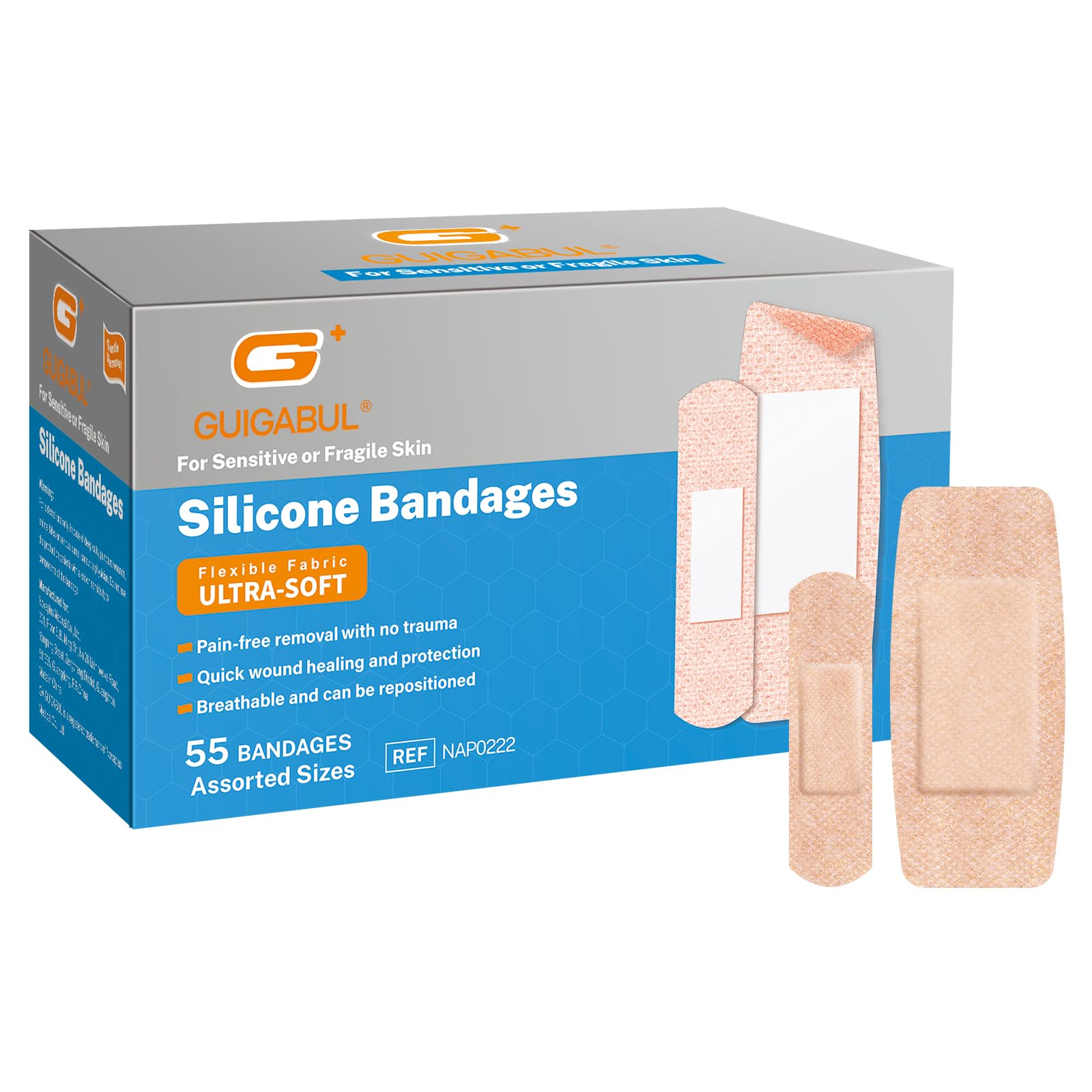
The G+ GUIGABUL silicone bandage set provides 55 bandages split between 40 medium-sized strips (0.75 x 3 inches) and 15 extra-large strips (1.63 x 4 inches), making it a versatile first aid kit addition for households caring for elderly or pediatric family members. The silicone adhesive is designed for thin and fragile skin, and users consistently report that removal is painless and does not tear the outer layer of skin like acrylic bandages do.
The medium size is waterproof on the surface due to a PU film layer, while the extra-large size is labeled as water-resistant only — an important distinction for shower use. The 4-sided sealed pad prevents the wound from contacting the adhesive and helps keep dirt and germs out. Multiple reviews from senior citizens confirm that these bandages stay on through daily activity and remove easily even after extended wear.
Some users found that the extra-large bandages are not fully waterproof during prolonged showering, and a small number experienced adhesion issues with the larger size. The medium strips perform more reliably for waterproof use. Given the generous count and the inclusion of two sizes, this is the most practical entry-level option for sampling silicone bandages without committing to a premium foam dressing price point.
Why it’s great
- 55-count with two sizes covers both minor and larger skin tears
- Painless removal confirmed by elderly users with fragile skin
- 4-sided seal prevents wound contact with adhesive
Good to know
- Extra-large size is water-resistant only, not fully waterproof
- Some adhesion inconsistency reported on larger size
FAQ
Can I use a regular Band-Aid on a skin tear?
How often should I change a skin tear dressing?
What size bandage do I need for a skin tear on my forearm?
Are silicone bandages waterproof enough for showering?
Do skin tear bandages expire?
Final Thoughts: The Verdict
For most users, the bandage for skin tears winner is the Mepilex Border Flex 4×4 because it combines hospital-proven Safetac silicone with up to 7-day wear time in a showerproof design trusted by healthcare professionals globally. If you need a large dressing for extensive wounds or pressure areas, grab the NeuHeils Silicone Foam 6×6. And for the best value when managing multiple skin tears on a budget, nothing beats the Yojo Silicone Foam 4×4 20-Pack.