
Our readers keep the lights on and the weekend projects moving. As an Amazon Associate, I earn from qualifying purchases.
A flimsy blade can turn an hour of breaking down a pork shoulder into a frustrating wrestling match. You need a knife that slips cleanly between muscle and bone, not one that tortures the meat into shredded bits.
I’m Rikta — the co-founder and writer behind FitlyFast. My research hours are spent comparing blade geometries, handle ergonomics, and steel chemistry to find which boning knives actually deliver the precision and edge retention needed for real butchery work.
Whether you are processing game, trimming brisket, or breaking down birds, the right knife makes the difference between ragged strips and clean cuts. This guide compares seven top-tier models to help you find the best boning knife for your kitchen.
How To Choose The Best Boning Knife
A boning knife must balance a flexible, narrow blade with a secure, fatigue-resistant handle. The wrong choice can feel like trying to draw a straight line with a wet noodle — or fighting a stiff pry bar when you need a delicate curve.
Blade Flexibility: Stiff vs Flexible
A stiff blade is your friend for heavy beef and pork work where you need to lever the knife against bone without bending. A flexible blade excels at poultry and fish, where the blade must slide around rib cages and spine curves without gouging the meat. Multi-purpose cooks should look for a medium-flex blade that handles both.
Steel Composition and Hardness
High-carbon German steel (X50 Cr Mo V15) offers a forgiving mid-range hardness that sharpens easily on a steel rod. Japanese super steels like VG-10 and VG-MAX hold a laser edge longer but are more brittle and demand ceramic stones or diamond hones to maintain. For most home cooks, a 57–59 HRC blade is the sweet spot between edge retention and ease of maintenance.
Handle Grip and Ergonomics
Wet hands are a given when handling raw protein. Santoprene and thermoplastic rubber handles provide non-slip traction even when slick with fat. Smooth polypropylene handles may look premium but require a firm dry grip. A full tang with three rivets adds weight balance and prevents the handle from twisting under pressure.
Quick Comparison
On smaller screens, swipe sideways to see the full table.
| Model | Category | Best For | Key Spec | Amazon |
|---|---|---|---|---|
| Victorinox Fibrox 6″ Flexible | Mid-Range | All-purpose home butchery | 6″ Stainless Steel, Straight Edge, 0.19 lb | Amazon |
| HENCKELS Forged Premio 5.5″ | Mid-Range | Trimming fat and sinew | 5.5″ Forged German Steel, Full Tang | Amazon |
| Mercer Culinary Genesis 6″ | Mid-Range | Arthritic-handle comfort | 6″ Forged High Carbon Steel, Santoprene Grip | Amazon |
| KYOKU Shogun 7″ VG-10 | Premium | Heavy processing tasks | 7″ VG-10 Damascus Core, HRC 58-60 | Amazon |
| WÜSTHOF Classic 5″ | Premium | Detail work and small joints | 5″ Forged High Carbon Stainless, Germany | Amazon |
| Shun Classic 6″ | Premium | Precision fish filleting | 6″ VG-MAX Core, Damascus Clad, 16° Edge | Amazon |
| ZWILLING Professional S 5.5″ | Premium | Professional brisket trim | 5.5″ SIGMAFORGE, HRC 57, 15° Per Side | Amazon |
In-Depth Reviews
1. Victorinox Fibrox 6 Inch Flexible Boning Knife
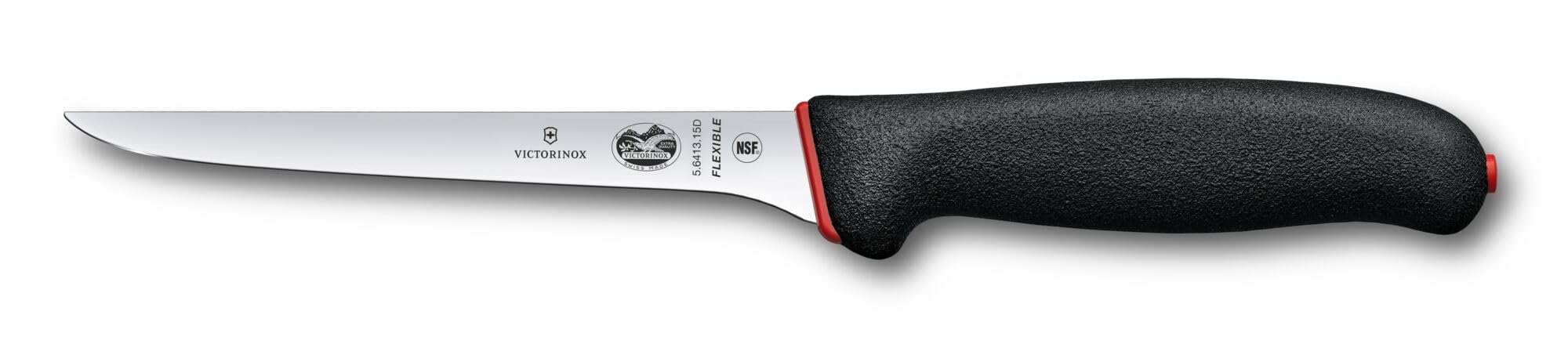
The Victorinox Fibrox is the workhorse of the category. Its straight-edge 6-inch blade offers moderate flexibility — enough to navigate a chicken rib cage, yet stiff enough to separate a pork loin from the bone. The thermoplastic rubber handle is widely praised for its non-slip grip, even when coated in fat and blood during a long processing session.
Customer reviews consistently highlight the razor-sharp out-of-box edge and the blade’s ability to hold that sharpness longer than comparably priced stamped knives. One user processed older birds without complaint, and a professional chef’s parent noted how it retires other knives in the drawer. The lightweight 0.19-pound build reduces wrist fatigue during extended trimming.
The blade is stamped rather than forged, which keeps the cost accessible, but it still delivers reliable performance for both home cooks and occasional game processors. It sharpens nicely on a steel rod and requires no special honing equipment. For most people, this is the knife that simply works, every time.
Why it’s great
- Lightweight and agile for long sessions
- Non-slip handle performs reliably when wet
- Holds edge longer than many stamped alternatives
Good to know
- Not a stiff blade for heavy bone leverage
- Plastic handle feels less premium than wood or G10
2. HENCKELS Forged Premio 5.5-inch Boning Knife

HENCKELS delivers a forged full-tang boning knife at a mid-range price point that undercuts many competitors. The 5.5-inch blade is a slim, flexible profile that one reviewer used to trim filet mignon, noting it stayed sharp throughout the entire process. The triple-rivet handle curves to fit the palm and provides solid balance for precise cuts.
The German stainless steel arrived sharp with some minor burrs that a honing rod removed in seconds. Users with larger hands find the handle shape natural and secure. One detailed review compared it favorably to pricier Japanese AUS-10 and VG-10 knives, praising this Henckels for being easier to sharpen and less brittle during daily use.
It is made in China with unspecified German steel, which some purists may question, but the real-world performance reviews are overwhelmingly positive. The satin finish gives it a functional working-tool look, and the dishwasher-safe claim offers convenience, though hand washing is recommended to preserve the edge long-term.
Why it’s great
- Forged construction with full tang for balance
- Sharp out of the box and easy to hone
- Comfortable handle for large hands
Good to know
- Made in China, not Germany
- Initial burrs may need quick de-burring
3. Mercer Culinary Genesis 6-Inch Flexible Boning Knife

The Mercer Genesis series is a favorite among culinary schools for its ergonomic Santoprene handle. This 6-inch flexible boning knife is precision-forged from high-carbon German steel (X50 Cr Mo V15) and taper-ground to maintain a lasting edge. Several users specifically mention that the cushioned grip makes it ideal for arthritic hands, reducing fatigue during long prep sessions.
Reviewers successfully used it to break down deer hindquarters and butterfly pork loin with ease. The flexible blade is noted as excellent for poultry, yet the weight distribution feels substantial enough for light beef work. One buyer called it the best boning knife money can buy, praising the combination of sharpness, balance, and handle texture.
Unlike the Victorinox, this knife is not dishwasher safe and requires hand washing. The forged construction gives it a weightier feel (though exact weight isn’t listed, it is heavier than the stamped Fibrox), which some users prefer for stability. It comes with a limited lifetime warranty, adding confidence for long-term ownership.
Why it’s great
- Exceptionally comfortable Santoprene handle for arthritis
- Precision-forged with long-lasting sharp edge
- Versatile flexibility suits poultry and game
Good to know
- Not dishwasher safe — hand wash only
- Heavier than stamped alternatives
4. KYOKU Shogun Series 7″ VG-10 Boning Knife
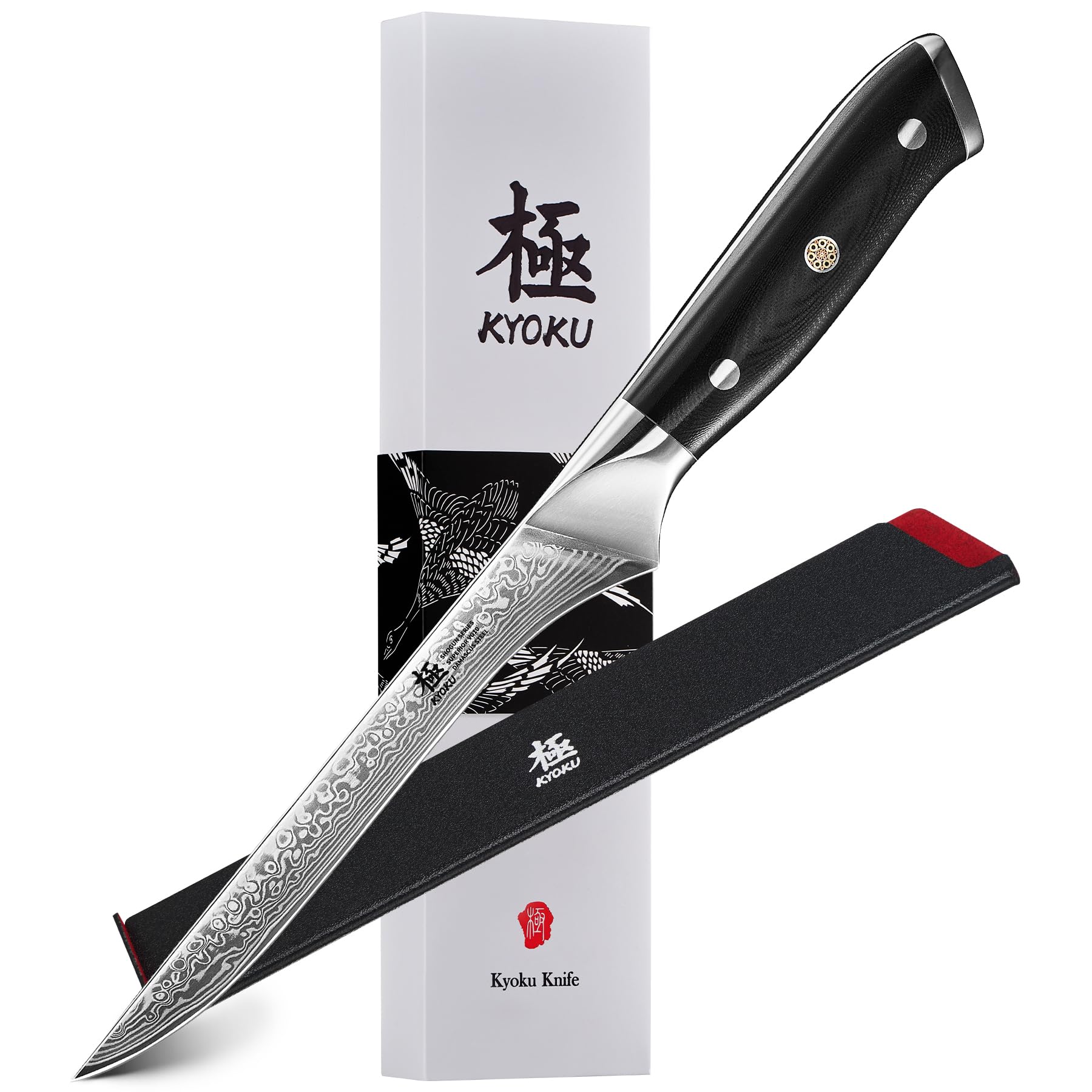
The KYOKU Shogun brings Japanese VG-10 super steel to the boning knife category with a 7-inch Damascus-clad blade hardened to HRC 58-60. This is a premium option for hunters and processors who need a blade that can handle heavy volumes. One reviewer processed two 300-pound hogs with only a single mid-way sharpening, testifying to the edge retention of the VG-10 core.
The G10 handle is impervious to heat, moisture, and cold, offering a textured grip that works well even with arthritic hands. The full-tang construction and 16.6-ounce weight give it a substantial feel that inspires confidence during heavy breaking-down work. The included sheath and case add practical protection for storage and transport.
A common note from buyers is that the blade is very sharp out of the box, with some preferring a shorter length for everyday poultry work. One reviewer found the knife slightly too long for his needs and noted it is made in China rather than Japan, despite the Japanese steel branding. Still, for the VG-10 core and complete package, it delivers serious value for heavy-duty use.
Why it’s great
- VG-10 core holds edge through heavy processing
- G10 handle withstands moisture and temperature extremes
- Comes with sheath and protective case
Good to know
- 7-inch length may be too long for small poultry
- Made in China, not Japan
5. WÜSTHOF Classic 5″ Boning Knife
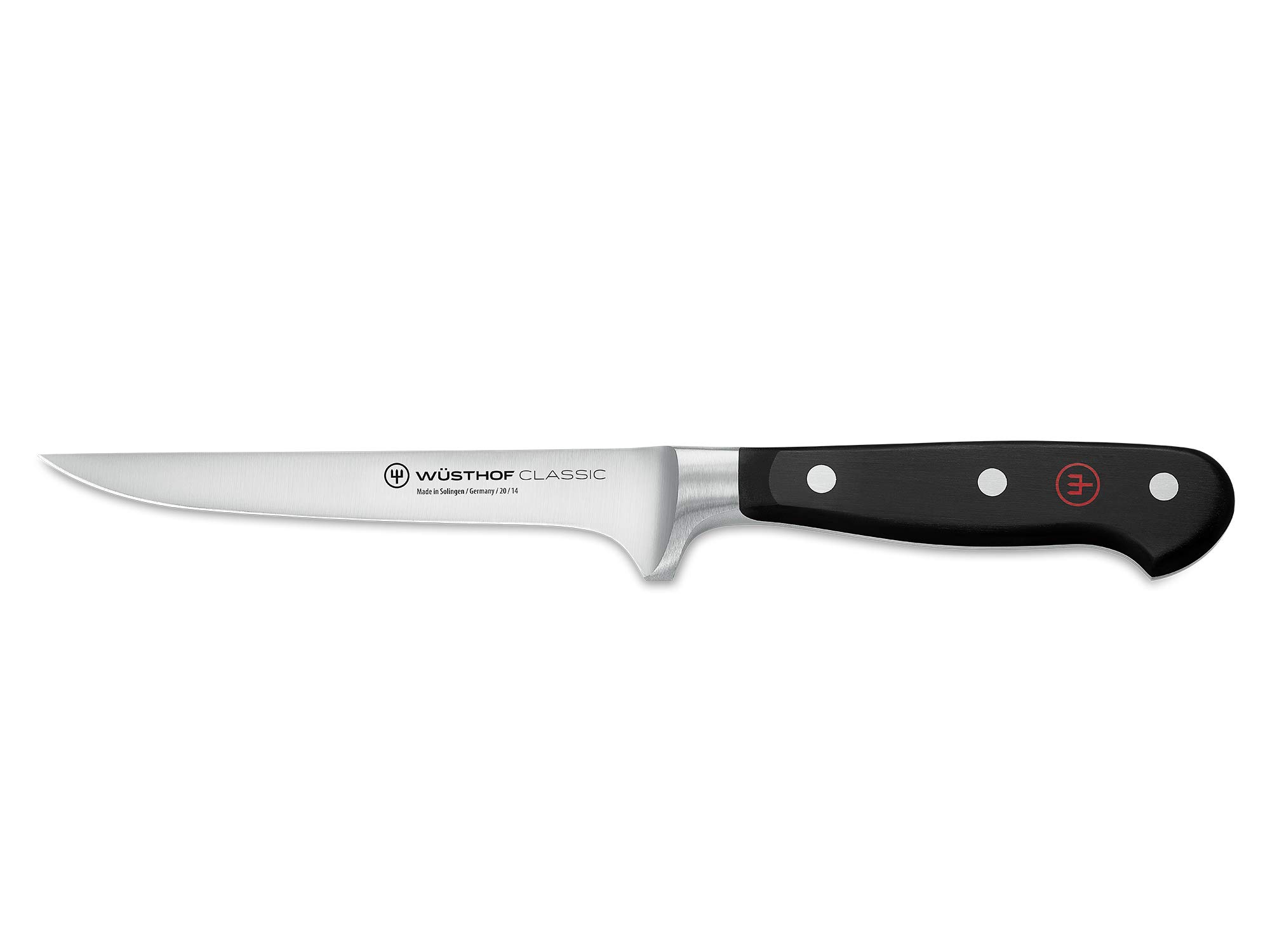
The WÜSTHOF Classic is a Solingen-made icon in the knife world, and this 5-inch boning knife exemplifies German precision. The shorter blade is purpose-built for detail work — trimming silver skin, separating small joints, and cutting rotisserie chicken bones apart. The forged full-tang construction gives it a balanced heft that feels solid without being cumbersome.
Users consistently describe it as extremely sharp out of the box, with one commenting that the smooth grip and sufficient heft make it worth the premium investment. It is ideally suited for those who work on smaller cuts or need a nimble blade for intricate butchery. One buyer specifically purchased it for cutting up rotisserie chickens and found it perfectly sized for the task.
The high-carbon stainless steel requires hand washing — the dishwasher will degrade both the edge and the handle over time. Some may find the 5-inch length limiting for large primals, but for precise boning of single portions, it excels. It carries the classic WÜSTHOF aesthetic that collectors and professionals appreciate.
Why it’s great
- Compact 5-inch blade ideal for detail work
- Forged in Solingen, Germany with full tang
- Balanced heft without being heavy
Good to know
- Too short for large primals and heavy game
- Hand wash only to maintain longevity
6. Shun Classic 6″ Boning & Fillet Knife

The Shun Classic delivers a 16-degree edge from a VG-MAX steel core clad in 68 layers of Damascus stainless steel. This is a knife that takes precision seriously — it glides through fish skin and meat fiber with minimal resistance. The D-shaped Pakkawood handle is shaped to fit both left and right hands, providing a warm, secure grip that feels completely different from synthetic handles.
Home cooks who purchased the 6-inch version alongside other Shun knives praise its immediate out-of-box sharpness and how it stays sharp with regular steeling. One reviewer uses it daily and finds the thin blade ideal for skinning fat off meat and working on smaller fish. The curved edge is designed specifically for the rocking motion used in filleting, making it a specialized tool rather than a general-purpose blade.
The investment here is significant, but the handcrafted Japanese construction and VG-MAX edge retention justify the cost for serious cooks. It requires meticulous care — hand washing, drying, and storing in the included sheath or a knife block. The blade is more brittle than German steel, so it should not be used on bones or frozen product.
Why it’s great
- Ultra-sharp 16-degree edge for precise cuts
- VG-MAX core holds edge longer than standard steel
- Beautiful Pakkawood handle with ergonomic D-shape
Good to know
- Too brittle for bone contact or frozen meat
- High maintenance — hand wash and dry immediately
7. ZWILLING Professional S 5.5″ Boning Knife

The ZWILLING Professional S is an America’s Test Kitchen favorite, and for good reason. This 5.5-inch flexible boning knife is forged from a single piece of steel using the SIGMAFORGE process, then ice-hardened with the FRIODUR treatment for superior resilience. The HRC 57 hardness strikes a practical balance — sharp enough for precision work, yet soft enough to be touched up quickly on a steel rod.
Reviewers consistently call out its maneuverability around chicken rib cages and brisket trimming. One user describes it as a knife for a lifetime of pleasant use, noting that regular steeling dramatically reduces the need for sharpening. The ergonomic polymer handle is perfectly bonded to the full tang, and the 15-degree edge angle per side delivers clean cuts without fragile brittleness.
It is also dishwasher safe — a rare feature in premium knives. That said, most knife enthusiasts will still hand wash to protect the edge over time. Made in Germany at a company-owned factory, this knife represents a fusion of traditional forging and modern materials science. It is the best choice for anyone who wants a durable, precision boning knife that tolerates a bit of abuse.
Why it’s great
- FRIODUR ice-hardened blade stays sharp longer
- Dishwasher safe for easy cleaning
- America’s Test Kitchen recommended pick
Good to know
- Polymer handle feels less natural than wood
- Premium price reflects German factory production
FAQ
What blade length is best for a boning knife?
Can I use a boning knife on frozen meat?
How often should I sharpen a boning knife?
What is the difference between a boning knife and a fillet knife?
Is a curved or straight boning knife better?
Final Thoughts: The Verdict
For most users, the best boning knife winner is the Victorinox Fibrox 6″ because it combines professional sharpness, a secure grip, and a price that undercuts premium forged knives while still delivering consistent results. If you want the extra balance and durability of a forged full-tang design, grab the HENCKELS Forged Premio. And for the serious processor who needs edge retention through hundred-pound sessions, nothing beats the KYOKU Shogun VG-10 backed by its protective sheath and case.