
Our readers keep the lights on and the weekend projects moving. As an Amazon Associate, I earn from qualifying purchases.
A 4K television is a long-term investment in your home entertainment, but navigating the sea of panels, processors, and marketing jargon can feel overwhelming. The real challenge is separating genuine picture quality from specs that look good on a box but fall flat in your living room, especially when you’re trying to maximize every dollar spent.
I’m Rikta — the co-founder and writer behind FitlyFast. My approach to this guide involved sifting through countless verified customer reports and technical spec sheets to identify the models that deliver a truly superior viewing experience without demanding a premium price tag.
This analysis focuses on the models that balance real-world performance with smart spending, leading you to the best bang for your buck 4k tv for your specific needs and room setup.
How To Choose The Best Bang For Your Buck 4K TV
Finding a strong value in the 4K TV market means prioritizing the features that directly impact your viewing experience while ignoring those that inflate cost without benefit. You are balancing panel technology, processing power, and smart platform stability.
Panel Technology: LED, QLED, and Mini-LED
The backlighting method defines contrast and color volume. Standard LED offers acceptable brightness for well-lit rooms. QLED uses a quantum dot layer to boost color volume and vibrancy significantly. Mini-LED takes this further by using thousands of tiny LEDs for precise local dimming, resulting in deeper blacks and higher peak brightness that approaches OLED performance without the burn-in risk.
Processing Power and Upscaling
A TV’s processor is its brain. A powerful chip can intelligently upscale your 1080p cable TV and streaming content to near-4K clarity, reduce noise in dark scenes, and manage motion smoothing. A weak processor leads to a sluggish smart interface and poor image handling. Look for dedicated AI processors from Sony or the IQ series from Hisense and TCL at this price tier.
Refresh Rate and Gaming Features
A standard 60Hz panel is fine for movies and casual viewing. For sports and console gaming, a 120Hz panel provides noticeably smoother motion. If you prioritize gaming, ensure Variable Refresh Rate (VRR) and Auto Low Latency Mode (ALLM) are supported to minimize screen tearing and input lag. Native 120Hz panels are superior to enhanced 60Hz panels.
Smart Platform Stability
The operating system dictates your daily interaction. A good platform like Roku or Google TV offers app availability and voice control. A bad one causes lag, freezing, and ad clutter. Roku is praised for its simplicity and speed. Google TV is feature-rich but can be resource-heavy on entry-level hardware. Fire TV offers deep Alexa integration but can feel ad-supported. Prioritize a responsive OS over extra features.
Quick Comparison
On smaller screens, swipe sideways to see the full table.
| Model | Category | Best For | Key Spec | Amazon |
|---|---|---|---|---|
| Hisense 55U6SF Pro | Mini-LED QLED | Contrast & Gaming | Native 144Hz, Hi-QLED | Amazon |
| TCL 55T7 Series | QLED | High-Refresh Gaming | 120Hz-144Hz VRR | Amazon |
| Roku Plus Series 55″ | Mini-LED QLED | User Experience | Roku OS, AI Picture | Amazon |
| Sony BRAVIA 3 43″ | LED | PS5 & Processing | XR Processor, 120Hz | Amazon |
| Samsung QLED Q8F 43″ | QLED | Bright Room Viewing | 100% Color Volume | Amazon |
| Sony BRAVIA 2 43″ | LED | PS5 & Reliability | 4K Processor X1 | Amazon |
| VIZIO M55Q6-J01 55″ | QLED | Dolby Vision HDR | Full Array Backlight | Amazon |
| Samsung Mini LED M70H 43″ | Mini-LED | Mini-LED on a Budget | Mini-LED Backlight | Amazon |
| Hisense A7 43″ | LED | Entry-Level 4K | 4K AI Upscaler | Amazon |
| TCL 75S551F 75″ | LED | Maximum Screen Size | 75-Inch, Fire TV | Amazon |
In‑Depth Reviews
1. Hisense 55″ U6 Pro Series Mini-LED ULED 4K TV
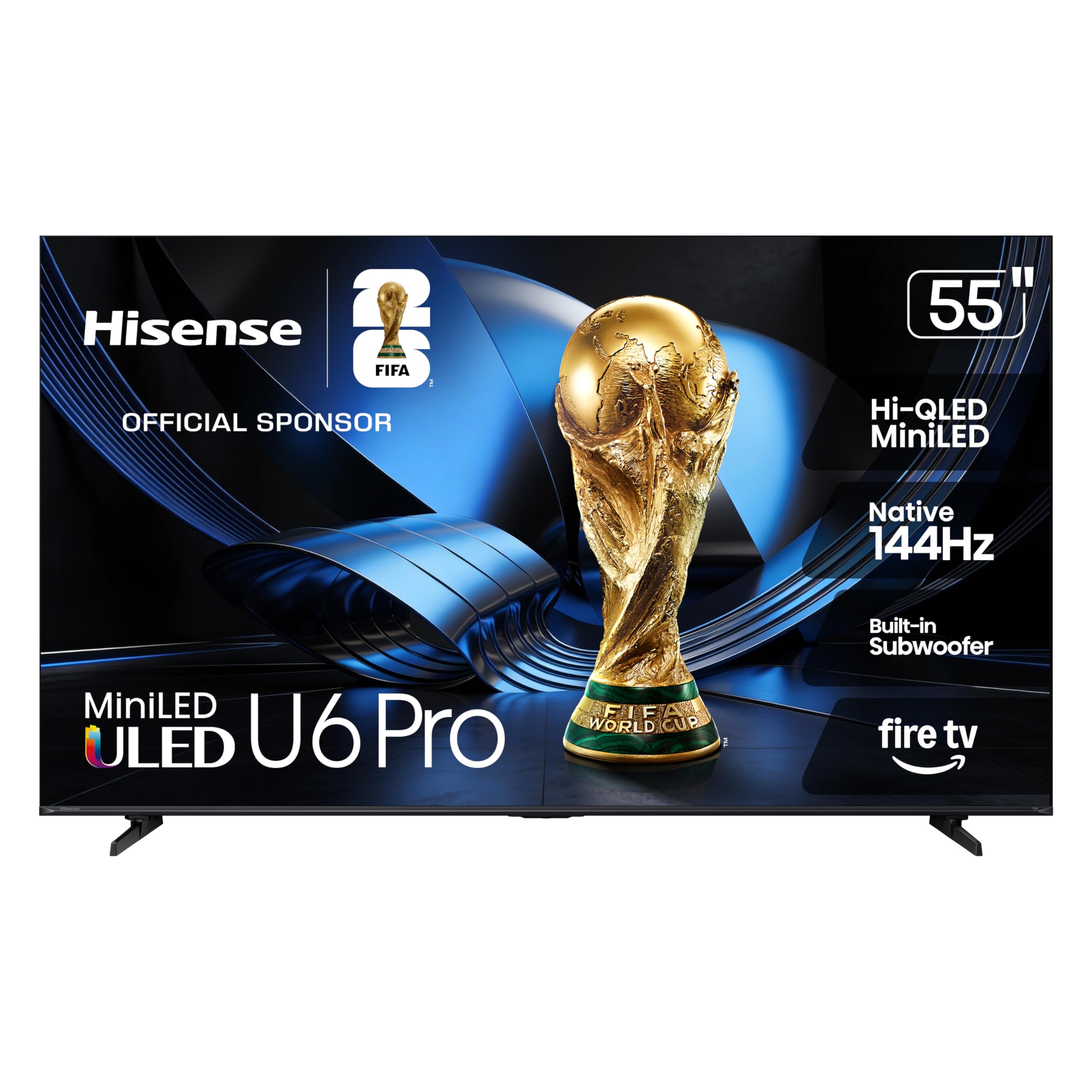
The Hisense U6 Pro is a standout value proposition that punches well above its price point. Its Hi-QLED Mini-LED panel delivers a contrast ratio of 600,000:1 and peak brightness around 1100 nits, producing inky blacks and luminous highlights that rival much more expensive TVs. The Pantone Validated color accuracy ensures skin tones and landscapes look natural right out of the box.
Gamers will appreciate the native 144Hz refresh rate panel, which provides buttery-smooth motion for competitive play on PC and next-gen consoles. Support for VRR, ALLM, and a robust Game Mode ensures low latency and tear-free visuals. The built-in subwoofer adds impactful bass without needing an external soundbar, which is rare at this price.
The Fire TV smart platform offers quick access to apps and Alexa voice control, though its interface can feel slightly ad-heavy compared to Roku. The anti-glare coating is a significant advantage for living rooms with large windows, effectively eliminating distracting reflections during daytime viewing. This TV is a serious contender for the best balance of performance and cost.
Why it’s great
- Exceptional contrast ratio for deep blacks
- Native 144Hz panel for elite gaming smoothness
- Effective anti-glare screen coating
- Built-in subwoofer for rich audio
Good to know
- Fire TV OS includes advertisements on the home screen
- Upscaling of very low-bitrate content could be better
- The included remote feels a bit cheap
2. TCL 55-Inch Class T7 Series 4K QLED Google TV

The TCL T7 Series is engineered for gaming and fast-action content, featuring a native 120Hz panel that can reach up to 144Hz VRR. This makes it a perfect match for Xbox Series X, PS5, and high-frame-rate PC gaming, providing fluid motion without the judder found on standard 60Hz TVs. The Quantum Dot (QLED) technology delivers over a billion colors, covering nearly the entire DCI-P3 color space.
HDR performance is strong with support for Dolby Vision, HDR10+, and HLG formats, ensuring compatibility with the widest range of content. The TCL AIPQ Pro Processor intelligently optimizes color, contrast, and clarity, providing a crisp image even with lower-resolution sources. The Google TV interface is responsive and organizes streaming services intuitively.
One consideration is that the TV can show some glare in brightly lit rooms, though it’s not a dealbreaker for most setups. The built-in speakers are adequate for casual viewing, but a soundbar will be needed for a truly cinematic audio experience. For its combination of a high-refresh-rate panel and QLED color at a compelling price, this is a top-tier option for gamers.
Why it’s great
- Native 120Hz panel with 144Hz VRR support
- Vibrant QLED color volume
- Full support for Dolby Vision and HDR10+
- Smooth and fast Google TV interface
Good to know
- Screen is somewhat reflective in bright rooms
- Requires internet setup before first use
- Built-in speakers are only average
3. Roku 55-Inch Plus Series Mini-LED 4K QLED TV
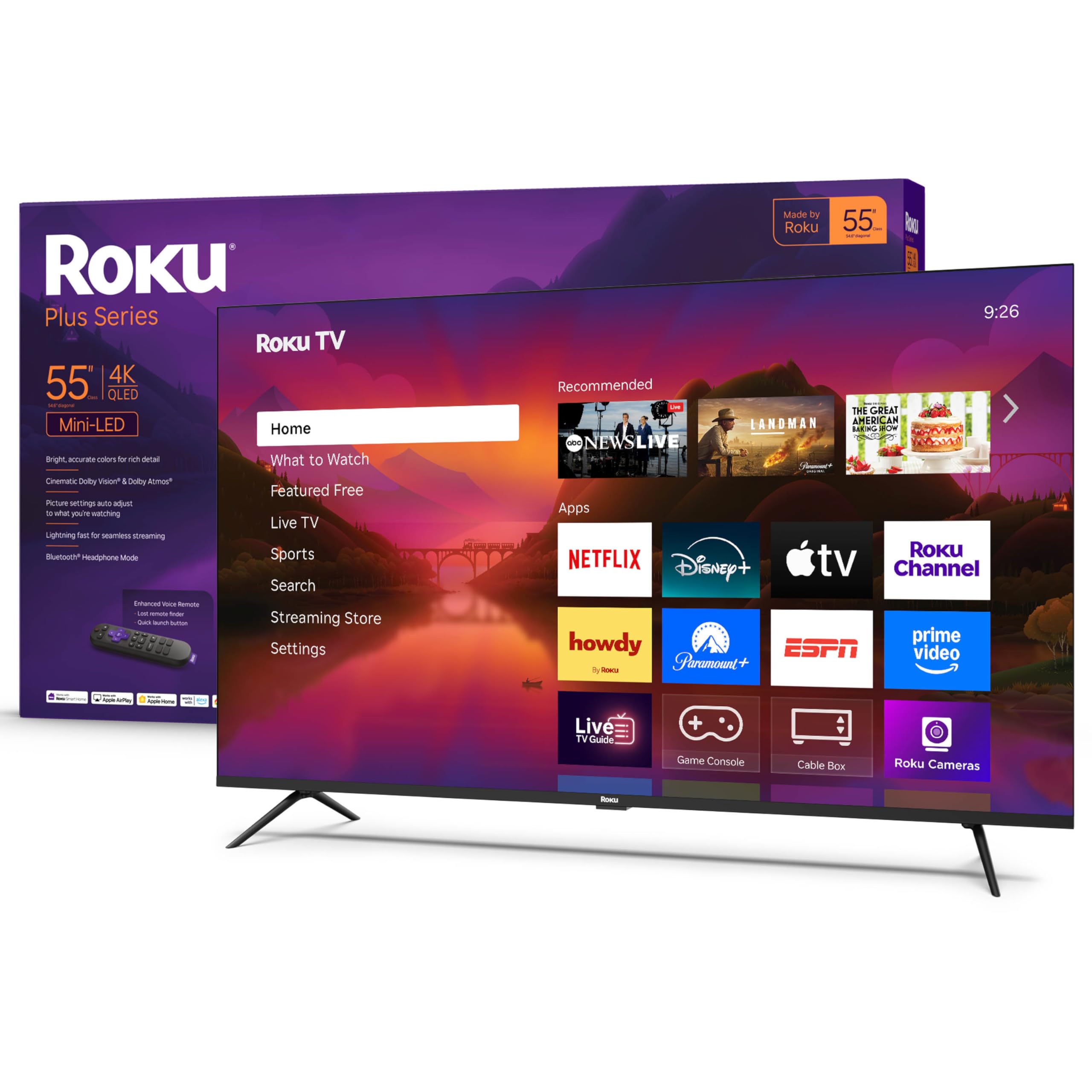
The Roku Plus Series stands out for its exceptional user experience. The Roku OS is widely considered the gold standard for simplicity, speed, and minimal clutter. It boots quickly, apps launch instantly, and the home screen is free from algorithmic bloat. This focus on software efficiency makes the TV feel fast and responsive years down the line.
Under the hood, the TV features a 4K QLED panel with Mini-LED backlighting. This combination produces vibrant colors and excellent contrast with deeper black levels than a standard LED TV. The Roku Smart Picture Max feature uses AI to automatically optimize the picture for your room’s lighting and the content being watched, ensuring a great image without manual tweaking.
Audio is a surprising strength, with a built-in subwoofer that provides punchy, room-filling sound. The Enhanced Voice Remote includes a lost remote finder, personal shortcut buttons, and easy voice search. While the Roku platform lacks some niche apps found on Google TV, its core navigation is the most user-friendly and reliable, making this a fantastic choice for families.
Why it’s great
- Best-in-class Roku smart platform
- Vibrant QLED with Mini-LED backlighting
- Surprisingly good built-in audio with subwoofer
- AI-powered auto picture optimization
Good to know
- Settings menu feels basic compared to competitors
- Lacks a USB port for media playback
- Not as feature-rich for high-end gaming
4. Sony BRAVIA 3 II 43-Inch 4K HDR LED TV
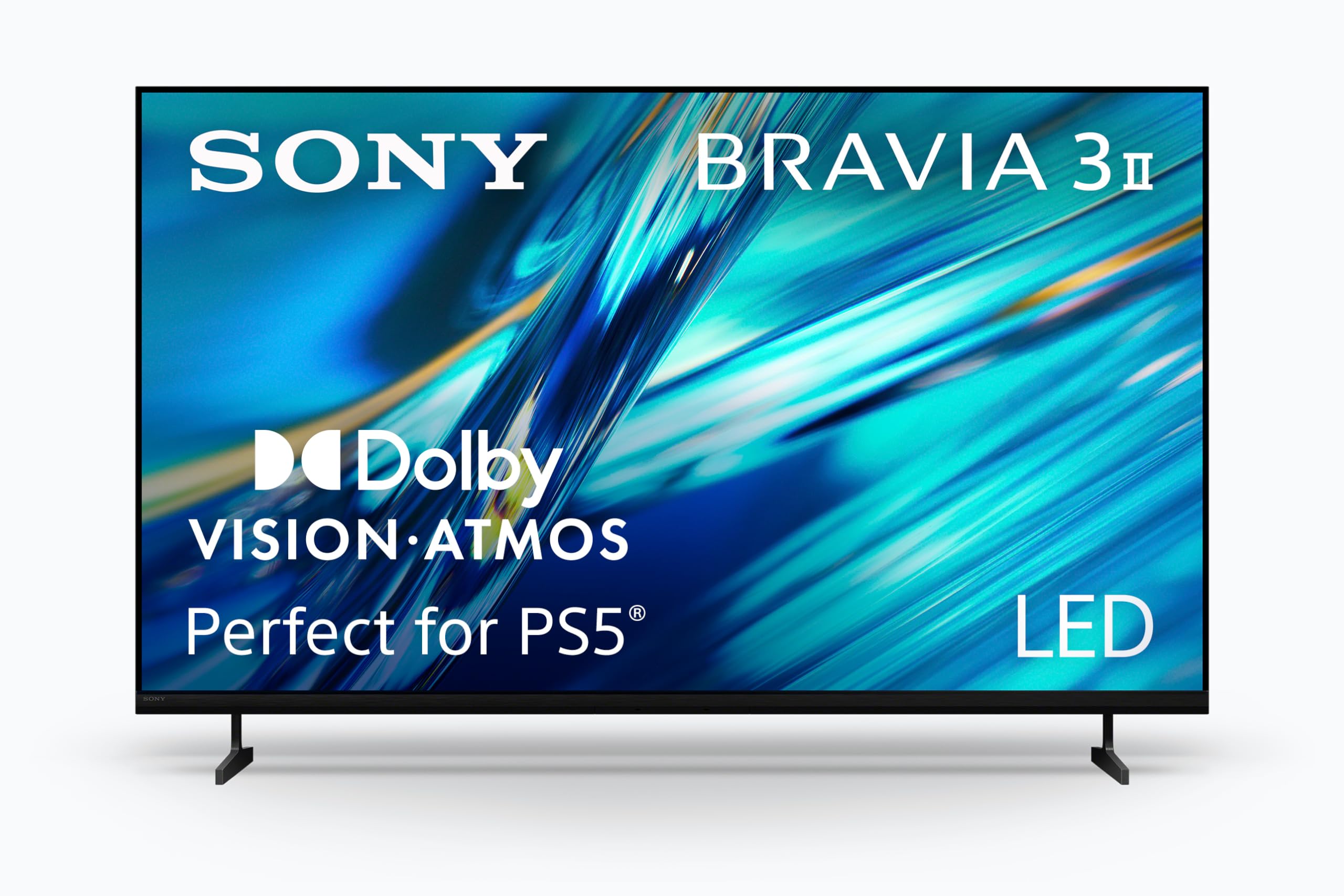
The Sony BRAVIA 3 is engineered for those who prioritize processing power. Its XR Processor uses AI scene recognition to analyze and optimize color, contrast, and clarity in real-time. This results in lifelike, natural images with superb depth and texture, especially for skin tones and complex scenes. The XR Clear Image feature excels at reducing noise from lower-quality streams.
For PlayStation 5 owners, this TV is a seamless match. Exclusive features like Auto HDR Tone Mapping and Auto Genre Picture Mode automatically optimize the TV’s settings when a PS5 is detected, ensuring the best possible picture without manual configuration. The 120Hz panel with HDMI 2.1 inputs, VRR, and ALLM makes it fully ready for high-performance gaming.
The Google TV platform is enhanced with Gemini integration for natural voice search and discovery. The X-Balanced Speakers deliver clear, full-range sound with less distortion than standard TV speakers. While peak brightness doesn’t match Mini-LED competitors, its superior processing means you see more detail and less noise in every scene, justifying its premium position.
Why it’s great
- Best-in-class XR AI processing for natural images
- Perfect integration with PS5 features
- HDMI 2.1 with 4K/120, VRR, and ALLM
- Clear and powerful X-Balanced Speakers
Good to know
- Peak brightness lower than Mini-LED rivals
- Google TV can stutter on some live apps
- Premium price for a standard LED panel
5. Samsung 43-Inch Class QLED Q8F 4K Smart TV

The Samsung Q8F is a powerhouse for brightly lit rooms. Its Quantum Dot technology delivers 100% Color Volume, meaning the billion-plus colors remain vibrant and accurate even at the highest brightness levels. This makes it ideal for living rooms with large windows where other TVs might wash out. The AirSlim design also sits incredibly flush against the wall.
Motion handling is elite thanks to the 4K 144Hz support via VRR, making sports and fast-paced content look fluid and tear-free. The Samsung Vision AI enhances picture and sound based on the content type, while the built-in Alexa provides hands-free control. Samsung TV Plus offers over 2,700 free channels, providing instant content without a subscription.
The Tizen smart platform is responsive and feature-rich, though the remote’s overly sensitive touchpad can lead to accidental inputs. Most users find the on-screen keyboard and menu navigation intuitive after a short adjustment period. For sheer brightness and color pop in a sun-drenched room, this QLED TV is unmatched at its price point.
Why it’s great
- Excellent brightness for well-lit rooms
- 100% Color Volume stays vibrant at any light level
- Sleek, low-profile design
- Smooth 4K 144Hz motion handling
Good to know
- Remote is overly sensitive to accidental touches
- Limited native dimming zones
- Tizen OS can feel less intuitive than Roku
6. Sony BRAVIA 2 II 43-Inch 4K LED Smart TV
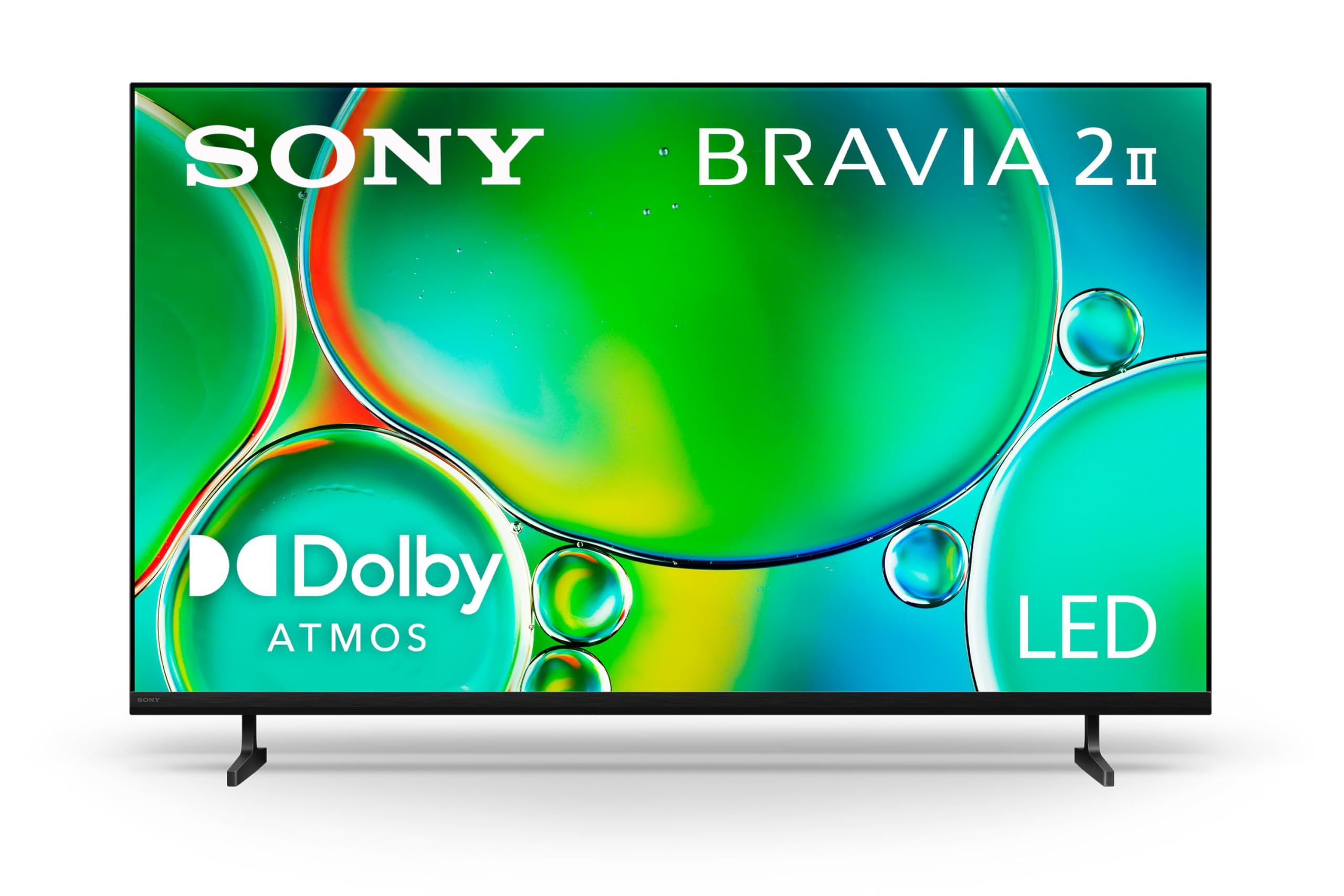
The Sony BRAVIA 2 is a testament to reliable, proven engineering. It is powered by the 4K Processor X1, which is not the latest AI-driven chip but still delivers a clean, sharp, and natural-looking picture. Its strength lies in smooth upscaling of cable and streaming content, making 1080p sources look remarkably close to 4K without introducing artifacts.
Sony’s exclusive PlayStation 5 features are present, including Auto HDR Tone Mapping and Auto Genre Picture Mode. This provides a plug-and-play experience for PS5 users at a lower entry point than the BRAVIA 3. Motionflow XR keeps sports and action movies clear, while the Google TV interface is responsive and integrates well with a Google-centric home.
The panel is a standard 60Hz, so it lacks the ultra-smooth motion for 120Hz gaming. However, for the vast majority of users watching movies and shows, the processing power ensures a consistently pleasing image. If you value brand reliability and excellent picture processing over bleeding-edge gaming features, this is a solid choice.
Why it’s great
- Trusted Sony X1 processing for natural detail
- Excellent upscaling of non-4K content
- Auto PS5 HDR and picture mode support
- Responsive Google TV with AirPlay 2
Good to know
- Standard 60Hz panel, not for high-refresh gaming
- Peak brightness is average
- Some units may face software glitches
7. VIZIO 55-Inch M-Series 4K QLED HDR TV

The VIZIO M-Series is a solid mid-range choice that focuses on core picture quality fundamentals. Its Quantum Color QLED panel produces over a billion hues of vibrant color, and the Full Array backlight ensures superior light uniformity across the screen. This results in a bright, even picture with minimal flashlighting or clouding, which is a common issue in cheaper edge-lit designs.
It supports Dolby Vision Bright Mode, which tunes color and black detail for an impactful HDR experience. The IQ Active Processor provides decent 4K upscaling, making older content look respectable. For PC and console gaming, VRR with AMD FreeSync helps reduce screen tearing, and the low input lag ensures responsive gameplay.
Customer reports suggest that long-term reliability can be a concern with some units failing after a few years of heavy use. The VIZIO SmartCast operating system is functional but not as smooth or feature-rich as Google TV or Roku. If you find a good deal on this model and prioritize vibrant QLED color and Dolby Vision at a 55-inch size, it remains a competitive option.
Why it’s great
- Vibrant QLED color and good brightness
- Full Array backlight for even screen uniformity
- Supports Dolby Vision Bright Mode
- FreeSync VRR for smoother gaming
Good to know
- Long-term reliability can be inconsistent
- SmartCast OS is slower than top-tier platforms
- Gamma issues at low brightness can crush shadows
8. Samsung 43-Inch Mini LED M70H Series TV
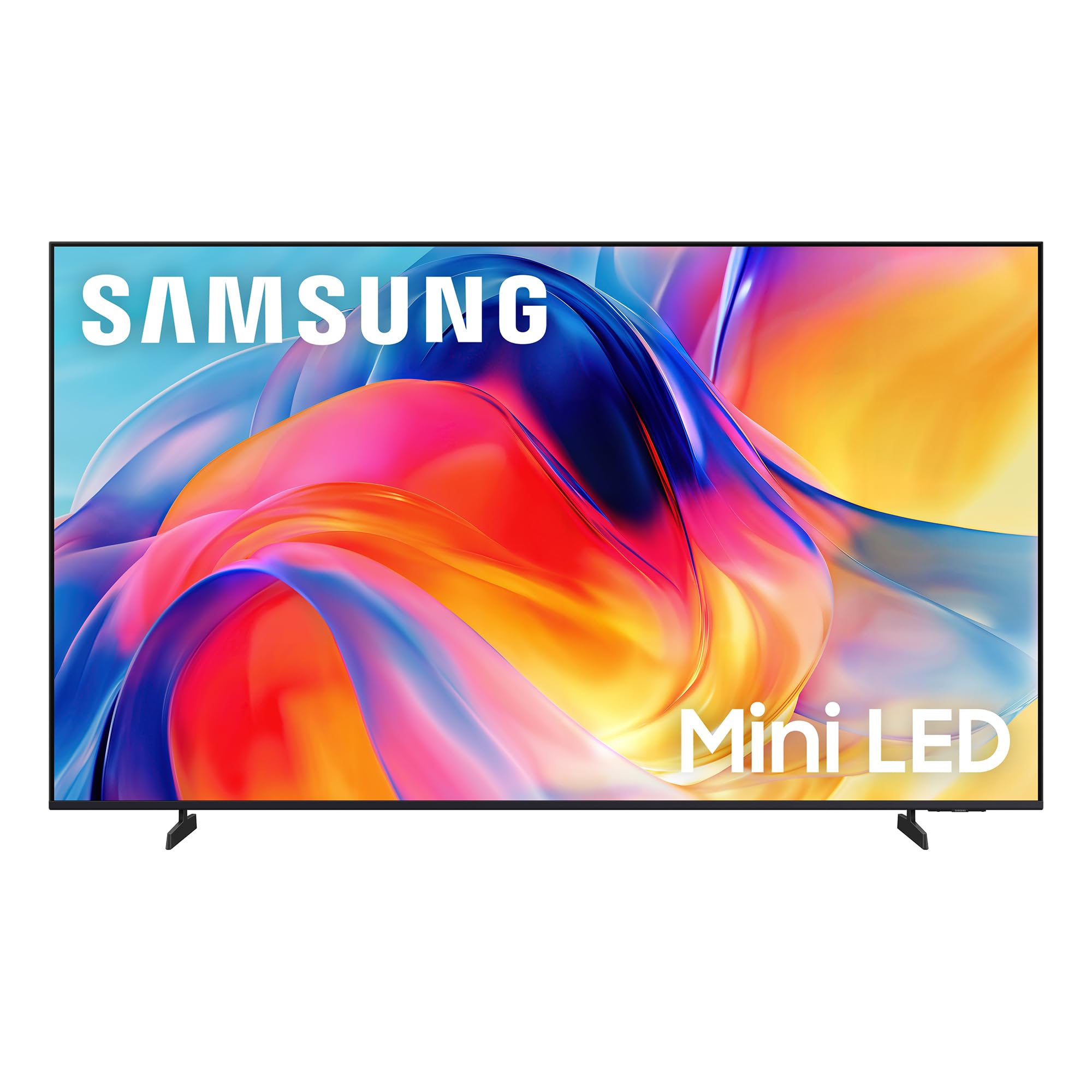
The Samsung M70H is an entry point into Mini-LED technology, offering improved contrast and brightness over standard LED models. The Mini-LED backlighting produces deeper blacks and brighter highlights for HDR content, making scenes with dramatic lighting pop significantly more. Pure Spectrum Color technology helps deliver one billion true-to-life colors.
The Supreme Mini LED Dimming works to create a more detailed image, though it does not use as many dimming zones as higher-end Mini-LED sets. Motion Xcelerator + DLG 120Hz helps improve motion clarity for fast-paced sports, and the Gaming Hub consolidates your game library into one menu. The SolarCell remote is a nice touch, charging via ambient light.
One significant downside is the remote’s lack of an input button, requiring users to dig through the home screen or use the SolarCell remote’s software to switch inputs. The interface can also be slow to remember the last used HDMI input, defaulting to the TV’s apps. For the price, the Mini-LED picture quality is impressive, but the software experience requires patience.
Why it’s great
- Mini-LED backlight for deeper contrast
- Good peak brightness for HDR highlights
- SolarCell remote with built-in battery
- Motion Xcelerator for sports clarity
Good to know
- Remote lacks a dedicated input button
- Interface has input switching issues
- SmartThings setup can be confusing
9. Hisense A7 Series 43-Inch 4K UHD Google TV
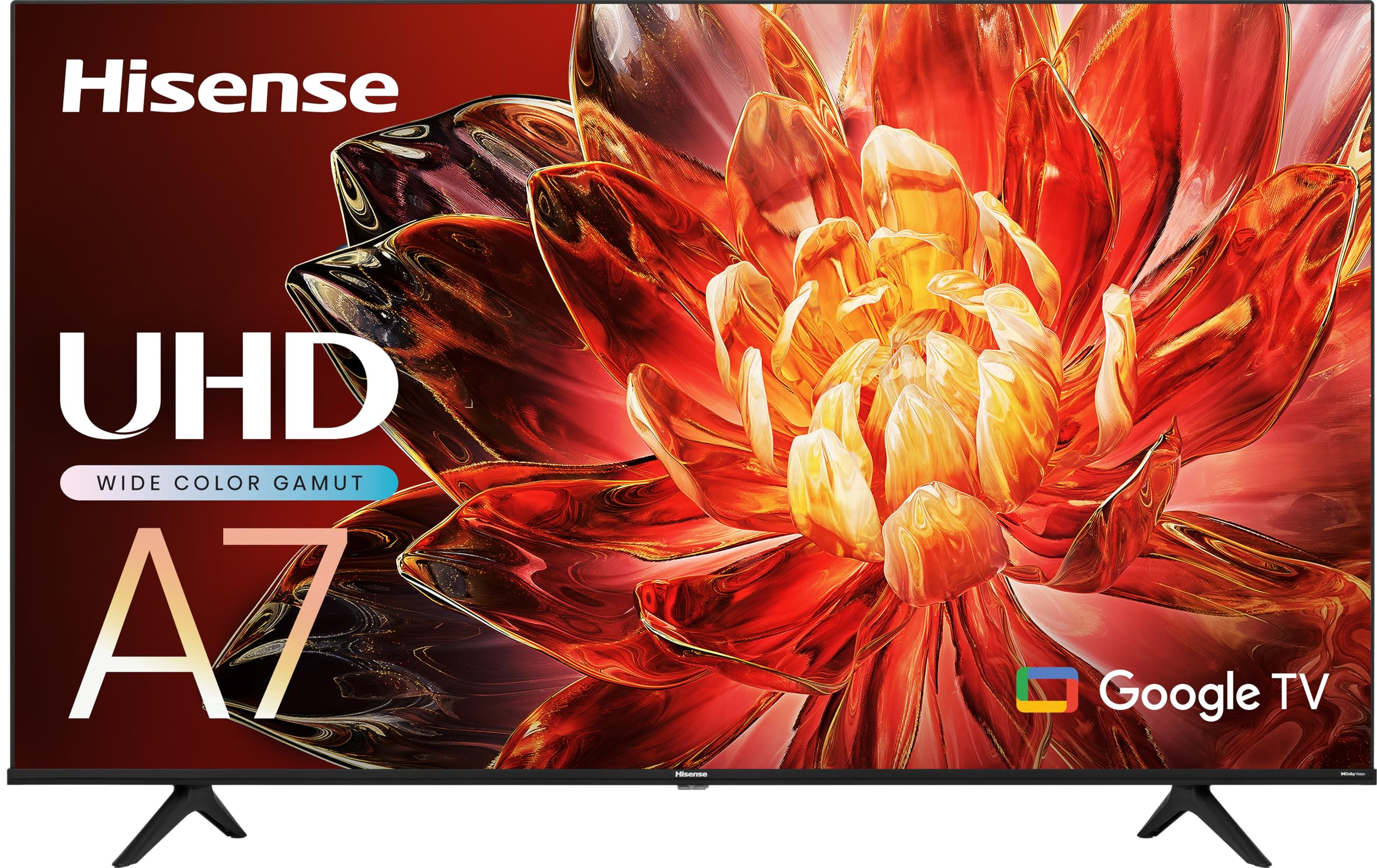
The Hisense A7 series is a budget-friendly workhorse that excels at making existing content look better. Its 4K AI Upscaler is surprisingly adept at taking 1080p and even 720p content and improving its clarity, sharpness, and color saturation to near-4K levels. This makes it a fantastic choice for viewers who still watch a lot of cable TV or stream older series.
The Wide Color Gamut panel uses special phosphor technology to deliver richer, more saturated colors than a standard LED TV. DTS Virtual:X is a notable audio feature that simulates a surround sound field from the built-in speakers, creating a more immersive experience for movies and games. The Google TV interface is feature-rich and integrates seamlessly with Google accounts.
A common criticism is that the operating system can feel slow and laggy over time. Some users report the OS becomes unresponsive, causing frustration. The built-in audio, while having good virtual processing, can sound thin at higher volumes. If you primarily watch lower-resolution content and want a TV that cleans it up well, this is a strong candidate, but be prepared for potential OS slowdown.
Why it’s great
- Effective 4K AI upscaling for lower-res content
- Wide Color Gamut for saturated colors
- DTS Virtual:X for simulated surround sound
- Feature-packed Google TV platform
Good to know
- Google TV can be slow and laggy over time
- Audio quality is underwhelming without a soundbar
- Budget build quality and finish
10. TCL 75-Inch S5 UHD 4K LED Smart TV

The TCL S5 is a statement piece focused on delivering maximum screen real estate for the investment. At 75 inches, this TV creates a genuinely cinematic presence in a large living room, making it the centerpiece for movie nights and sports events. The 4K resolution, combined with Dolby Vision HDR support, ensures the large screen is filled with a bright and colorful picture.
Gaming performance is respectable with Game Accelerator 120, offering up to 120Hz VRR for smoother gameplay on consoles. The Fire TV platform puts Amazon’s ecosystem front and center, with deep Alexa integration and easy access to Prime Video and Twitch. The Motion Rate 240 with MEMC frame insertion helps keep fast-moving scenes clear and free of judder.
The main trade-offs for this size are in panel contrast and black levels, which are typical for a standard edge-lit LED. The Fire TV OS is also known for a cluttered home screen full of ads. Some users report the interface can become slow after several months of use. If you prioritize sheer size and presence over absolute picture quality, the TCL S5 is unmatched.
Why it’s great
- Massive 75-inch screen for an immersive experience
- Dolby Vision and HDR10+ support
- Up to 120Hz VRR for console gaming
- Alexa built-in for hands-free control
Good to know
- Standard LED panel with limited contrast
- Fire TV platform can feel slow and ad-heavy
- Requires a powerful soundbar for good audio
FAQ
Is QLED noticeably better than standard LED for a living room?
Does a 120Hz panel matter if I only watch movies and TV shows?
Will a budget TV still look good with my current HD cable box?
How important is the smart TV platform for long-term use?
Final Thoughts: The Verdict
For most users, the best bang for your buck 4k tv winner is the Hisense U6 Pro because its combination of Mini-LED contrast, a native 144Hz panel, and built-in subwoofer delivers a premium experience at a mid-range price point. If you want a truly lag-free gaming experience and QLED brightness, grab the TCL T7 Series. And for the best user interface and software experience, nothing beats the Roku Plus Series.