
Our readers keep the lights on and the weekend projects moving. As an Amazon Associate, I earn from qualifying purchases.
The difference between a successful multi-day trek and a frustrating one often comes down to one thing: whether your phone, GPS device, or headlamp stays alive when you need them most. A battery charger for backpacking needs to balance raw capacity with manageable weight, survive rain and drops, and recharge your devices fast enough to keep moving without extended camp delays.
I’m Rikta — the co-founder and writer behind FitlyFast. I’ve spent years analyzing small electronics categories, and the backpacking power bank market is uniquely tricky because the specs that matter most (energy density per gram, real-world charge cycles, and ingress protection) rarely appear on the front of the box.
Whether you are a weekend thru-hiker or a gear-obsessed peak bagger, finding the right battery charger for backpacking means ignoring marketing hype and focusing on the three numbers that define backcountry performance: weight in ounces, waterproof rating, and usable wattage per charge cycle.
How To Choose The Best Battery Charger For Backpacking
Backpacking power banks look similar on a shelf but differ drastically on the trail. The wrong choice adds dead weight or leaves you without power on day three. Here are the three filters that separate trail-worthy units from gear closet clutter.
Weight vs Capacity — The Energy Density Ratio
A 20,000mAh bank that weighs nearly a pound might work for car camping but punish you over 15 miles. Divide the capacity by the weight in grams to get a quick energy-density check. Ultra-light options like the Nitecore NB Plus (roughly 10,000mAh at 5.47 oz) offer a far better ratio than bulkier models. For most backpackers, 10,000mAh (enough for two full phone charges) at under 7 oz is the sweet spot.
Durability and Weather Sealing
A power bank sitting at the bottom of your pack will get jostled, possibly wet, and certainly dusty. Look for an IP67 or IPX7 rating — both mean the unit can survive submersion in a meter of water for up to 30 minutes. Shockproof rating (like MIL-STD-810G) matters more for climbers and scramblers than for trail hikers, but a hard shell with silicone cushioning significantly extends the life of any backcountry battery.
Port Configuration and Charging Speed
Built-in cables reduce the number of loose items you can lose on the trail. USB-C Power Delivery (PD) at 20W to 30W ensures your phone gains enough charge during a lunch break rather than requiring a full camp session. Two-way fast charging means the power bank itself recharges quickly when you reach town, letting you spend less time tethered to a wall outlet.
Quick Comparison
On smaller screens, swipe sideways to see the full table.
| Model | Category | Best For | Key Spec | Amazon |
|---|---|---|---|---|
| Nitecore NB Plus | Ultralight | Weight-obsessed thru-hikers | 5.47 oz, 10,000mAh | Amazon |
| ELECOM NESTOUT | Rugged | Harsh weather and rough terrain | IP67, MIL-STD-810G drop test | Amazon |
| Anker Zolo 10K | Fast Charge | Quick phone top-ups on short breaks | 30W PD output, built-in USB-C cable | Amazon |
| VRURC Slim 20K | All-in-One | Group trips with multiple device types | 4 built-in cables, 19mm thin | Amazon |
| Aonidi 10K with Plug | Convenient | Travelers who hate carrying separate cables | Built-in AC wall plug + cables | Amazon |
| LanLuk 40.8K | High Capacity | Extended base camps without resupply | 40,800mAh, 3 built-in cables | Amazon |
| MaiVoz 56.8K | Multi-Day | Long car camping or group power needs | 56,800mAh, 22.5W PD | Amazon |
In‑Depth Reviews
1. Nitecore NB Plus
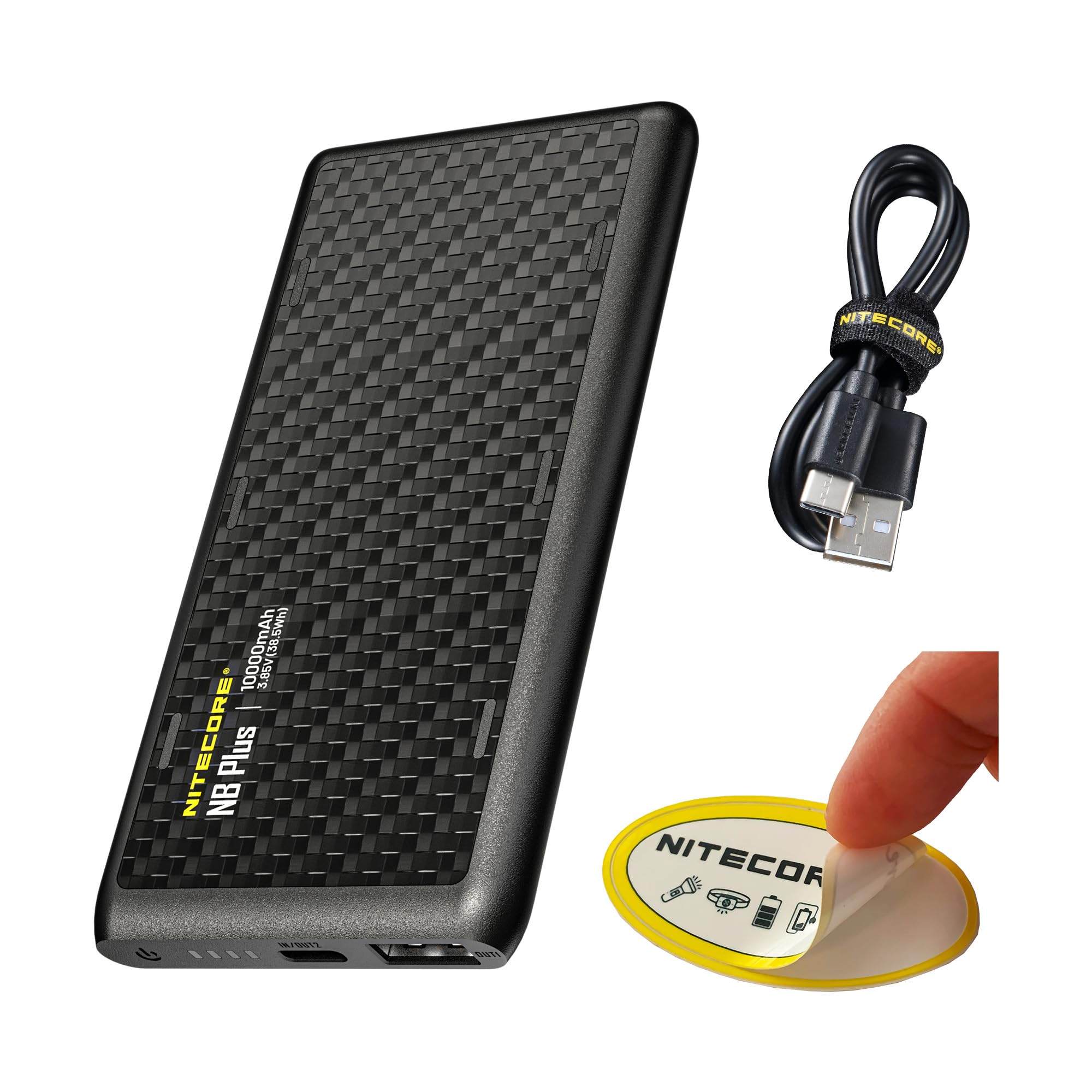
The Nitecore NB Plus is the lightest power bank in this roundup at just 5.47 oz, yet it still packs a genuine 10,000mAh capacity. Its IPX7 waterproof rating means it can survive a rainstorm at the bottom of a stuff sack or an accidental drop in a stream. The rounded-corner design reduces pack abrasion, and the low-profile 0.46-inch thickness slides easily into a hip-belt pocket.
Charging output tops out at 5V/3A via USB-C Power Delivery — not the fastest in the group, but perfectly adequate for topping off a phone during a lunch break. The dual USB-A and USB-C ports let you charge two devices simultaneously, though you will not get full speed on both at once. For bikepackers and ultra-light hikers, the weight savings more than justify the modest charge rate.
Travel-readiness is another strong point: the NB Plus is airline-approved, and the pass-through charging function allows you to charge both the bank and your phone from a single wall outlet when you reach a hostel or resupply point. The included USB-C cord is short but functional, and the Nitecore build quality (familiar to anyone who uses their flashlights) feels premium in hand.
Why it’s great
- Remarkably light at 5.47 oz — easy to forget in your pack
- IPX7 waterproof rating handles wet trail conditions
- Pass-through charging reduces tether time in town
Good to know
- Charging speed is limited to 5V/3A — slower than 30W rivals
- Capacity is 10,000mAh, so heavier users may need two units
2. ELECOM NESTOUT 10000mAh

The ELECOM NESTOUT is built differently from every other bank here: its retro fuel-bottle shape houses a lithium-ion core wrapped in a silicone cushion that absorbs shock, and the hard shell has passed the MIL-STD-810G drop test. The IP67 rating means it is fully dust-tight and can handle submersion up to a meter for 30 minutes, making it the obvious choice for river crossings and desert sand.
Fast charging comes via a USB-C PD port at 20W, which is enough to bring an iPhone 16 Pro from empty to about 60 percent in 30 minutes. The bottom tripod mount (standard 1/4-20 thread) is a unique bonus for attaching the bank to a mini tripod or the NESTOUT modular lantern and LED panel accessories — a clever ecosystem for car campers and base-camp setups.
The trade-off for all this ruggedness is weight and capacity: the NESTOUT holds only 10,000mAh, and at roughly 200 grams plus the chunky shell, it feels substantial in hand. It is not the bank for ultralight gram-counters, but for anyone who expects their gear to be kicked, dropped, and soaked, the NESTOUT is the most durable option in this class.
Why it’s great
- MIL-STD-810G drop test and IP67 waterproof/dustproof
- Modular accessory system with lantern and LED panel
- Built-in tripod mount adds versatility for camp setups
Good to know
- Heavier and bulkier than ultralight alternatives
- 20W PD is adequate but not the fastest charging speed
3. Anker Zolo 10K 30W
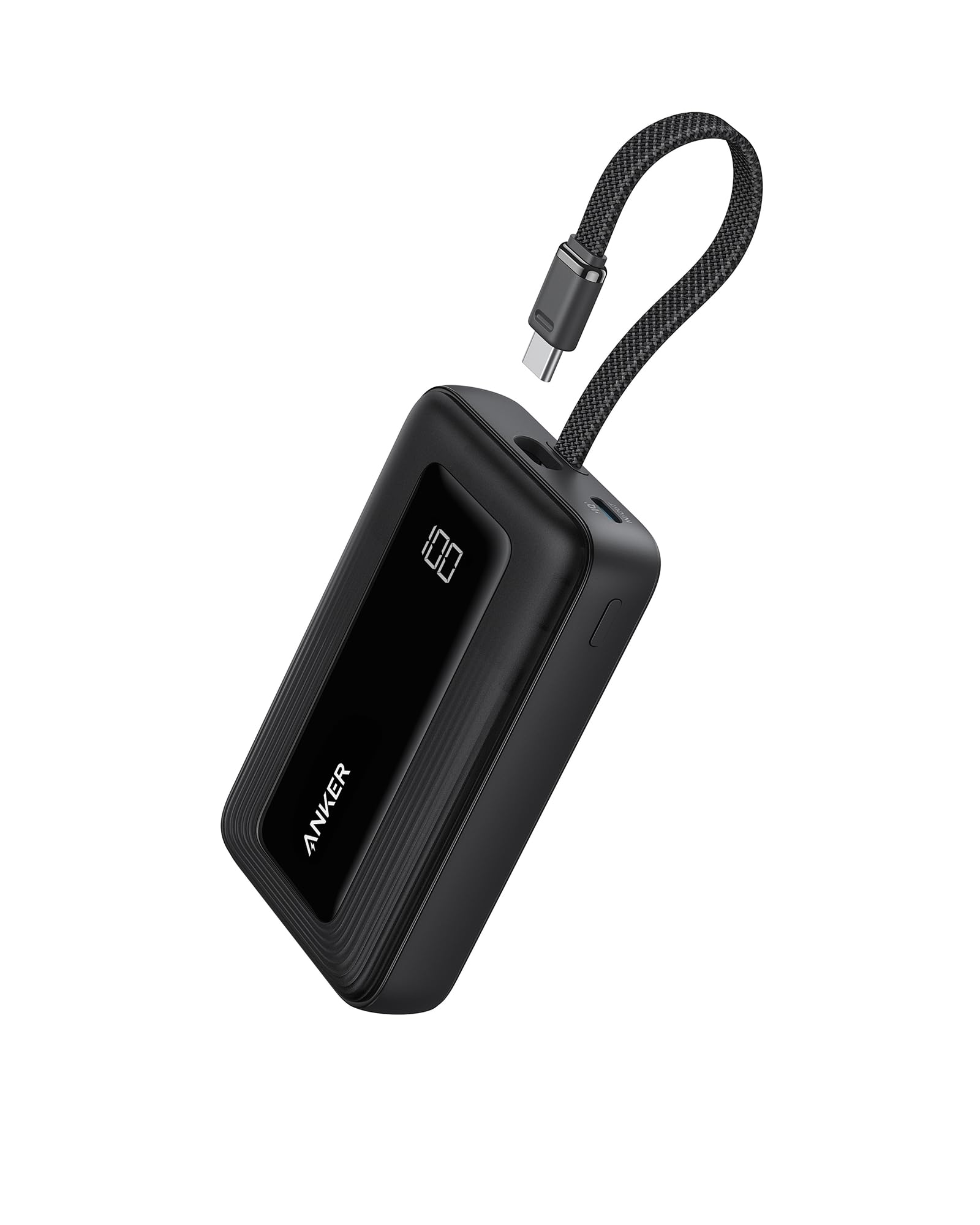
Anker is the most recognized name in portable power, and the Zolo 10K justifies that reputation with a 30W USB-C output that charges an iPhone 16 Pro Max to 50 percent in just 27 minutes. That speed matters on the trail when your only charging window is the 20 minutes you stop for lunch and a map check. The built-in 5.4-inch USB-C cable is tested for 10,000 bends and completely eliminates the need to pack a separate cord.
At 10,000mAh capacity and roughly 7.5 oz, the Zolo sits in the middle of the weight spectrum — heavier than the Nitecore but lighter than the bulkier high-capacity banks. Two-way fast charging (30W out, 20W in) means the bank itself refills quickly when you plug it into a wall outlet at a resupply point. The LED percentage display gives you precise read on remaining power, so you never guess whether you have enough juice for the next day.
The built-in cable is short enough to keep things tidy but may feel restrictive if you want to charge a device sitting on the ground while the bank stays in your pack’s top lid. It is not waterproof or shock-rated, so it works best for fair-weather backpackers and trail runners who carry their pack in a dry bag. For the combination of charge speed and brand reliability, the Anker Zolo is hard to beat.
Why it’s great
- 30W PD output — fastest charge speed in this roundup
- Built-in braided USB-C cable eliminates loose cords
- Bi-directional fast charging reduces downtime in town
Good to know
- No waterproof rating — needs dry bag protection in rain
- Short built-in cable limits charging position flexibility
4. VRURC Slim 20000mAh
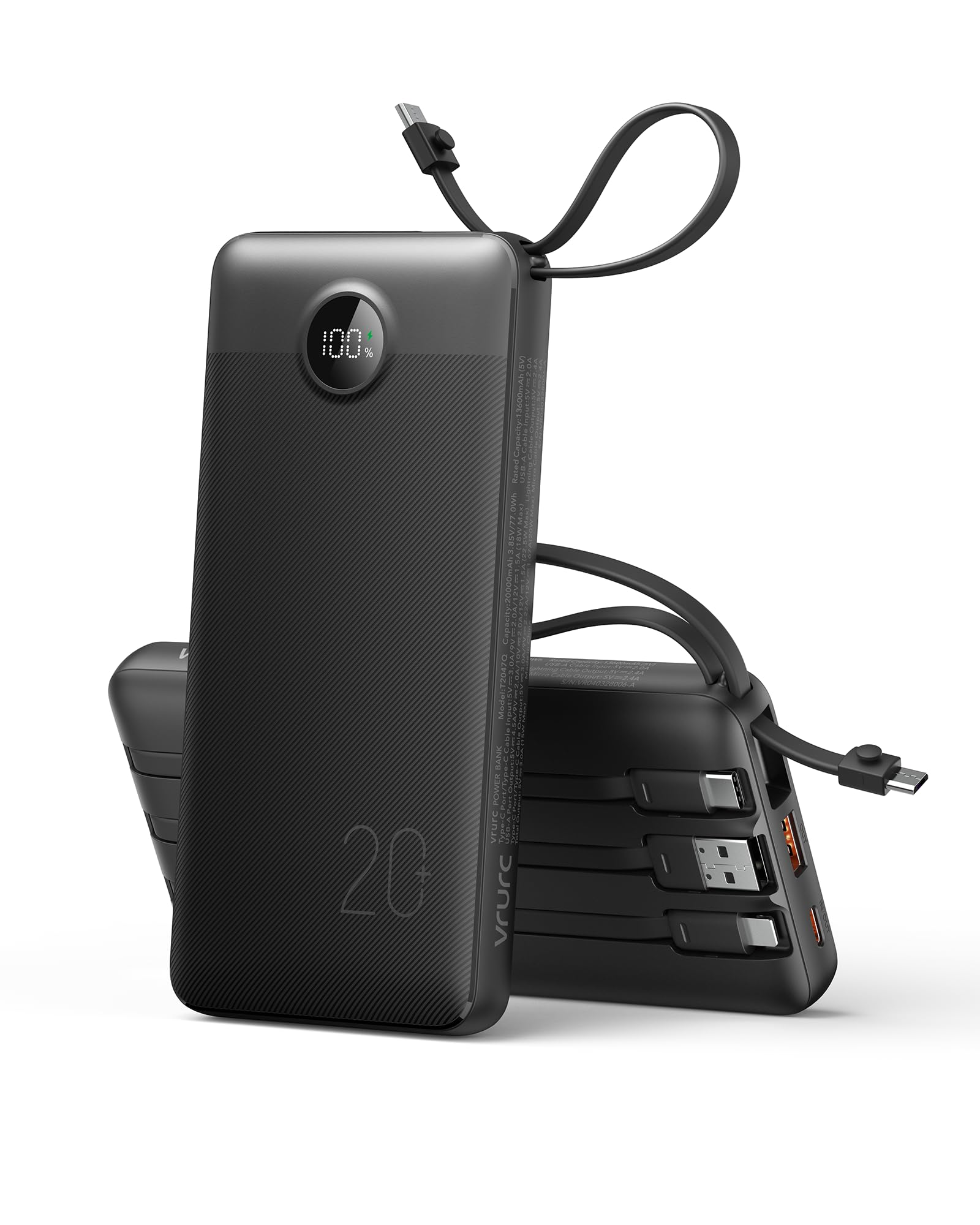
The VRURC Slim packs 20,000mAh into a 19mm profile that is noticeably thinner than most high-capacity power banks — 33 percent slimmer than the old generation, according to the manufacturer. That extra capacity means you can charge an iPhone roughly four full times or keep a GPS unit and phone running for a long weekend without needing to find a wall socket. The four built-in cables (USB-C, Lightning, Micro USB, and USB-A) cover every device a backpacker might carry.
Charging speed reaches 22.5W PD, which is not quite as fast as the Anker Zolo but still enough to get an iPhone 17 from flat to around 50 percent in 30 minutes. The dual premium cell design reportedly delivers the full 20,000mAh without the capacity inflation that plagues cheaper banks. An integrated strap made from the Micro USB cable lets you clip the bank to your backpack shoulder strap for easy access on the move.
The main drawback for backpackers is weight: at 345 grams (about 12.2 oz), the VRURC is not an ultralight option. It is also not weather-sealed, so you will want to store it inside a dry bag during wet trips. For group outings or base-camp charging where weight is less critical, the combination of high capacity and all-in-one cable convenience makes the VRURC a practical choice.
Why it’s great
- 20,000mAh capacity covers multiday trips without resupply
- Four built-in cables mean no loose cords to lose
- 19mm thin profile packs easier than other 20K banks
Good to know
- Weighs 12.2 oz — too heavy for ultralight backpacking
- No waterproof or dustproof IP rating
5. Aonidi 10000mAh with AC Plug
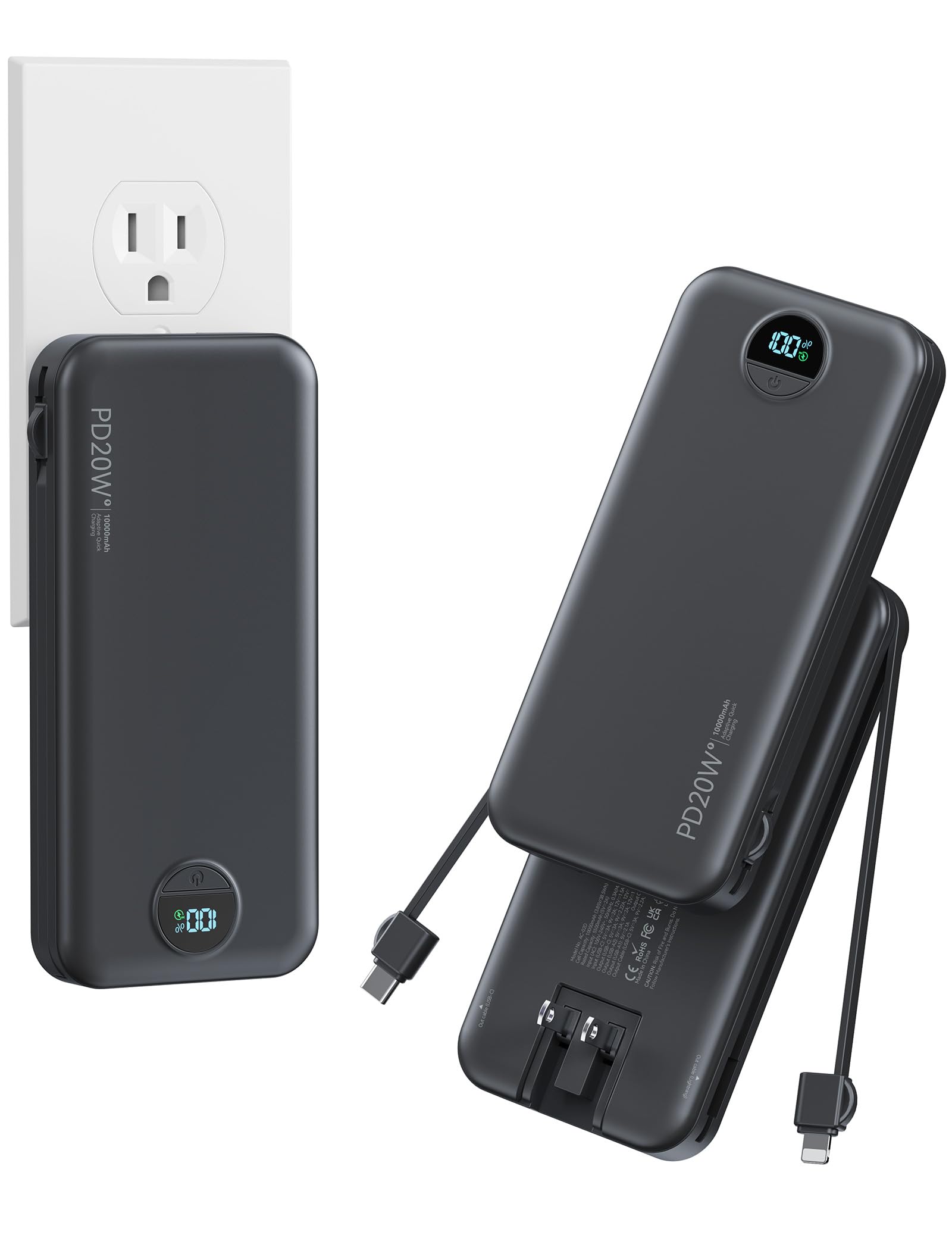
The Aonidi 10K stands out for one feature that no other bank in this list offers: a built-in AC wall plug that folds directly into the unit. You never need to pack a separate charging brick or USB cable to recharge the bank itself — just flip out the prongs and plug it into any wall outlet. That convenience is a genuine time-saver when you are rotating through a hostel or a friend’s house between trail sections.
Beyond the clever wall plug, the Aonidi includes built-in Lightning and USB-C cables plus a USB-A port, allowing simultaneous charging of up to five devices. The 20W PD output charges your phone at a reasonable clip, and the LED display shows remaining battery percentage in clear digits. At 7.68 oz and 10,000mAh, it lands in the mid-weight range — not the lightest, but still packable for a weekend trip.
The catch is build quality: while the wall plug is convenient, the plastic housing and sliding mechanism do not feel as premium as the Anker or Nitecore options. Several users note the unit is physically larger than expected, and the protruding plug when stored adds slight bulk. For car campers, travel backpackers, or anyone who values not carrying a separate charger, the trade-offs are worth it.
Why it’s great
- Built-in AC wall plug — never pack a separate charger again
- Built-in cables for iPhone and USB-C cover all common devices
- Clear LED display helps you monitor remaining power
Good to know
- Plastic build feels less durable than premium alternatives
- Larger physical footprint than other 10,000mAh banks
6. LanLuk 40800mAh
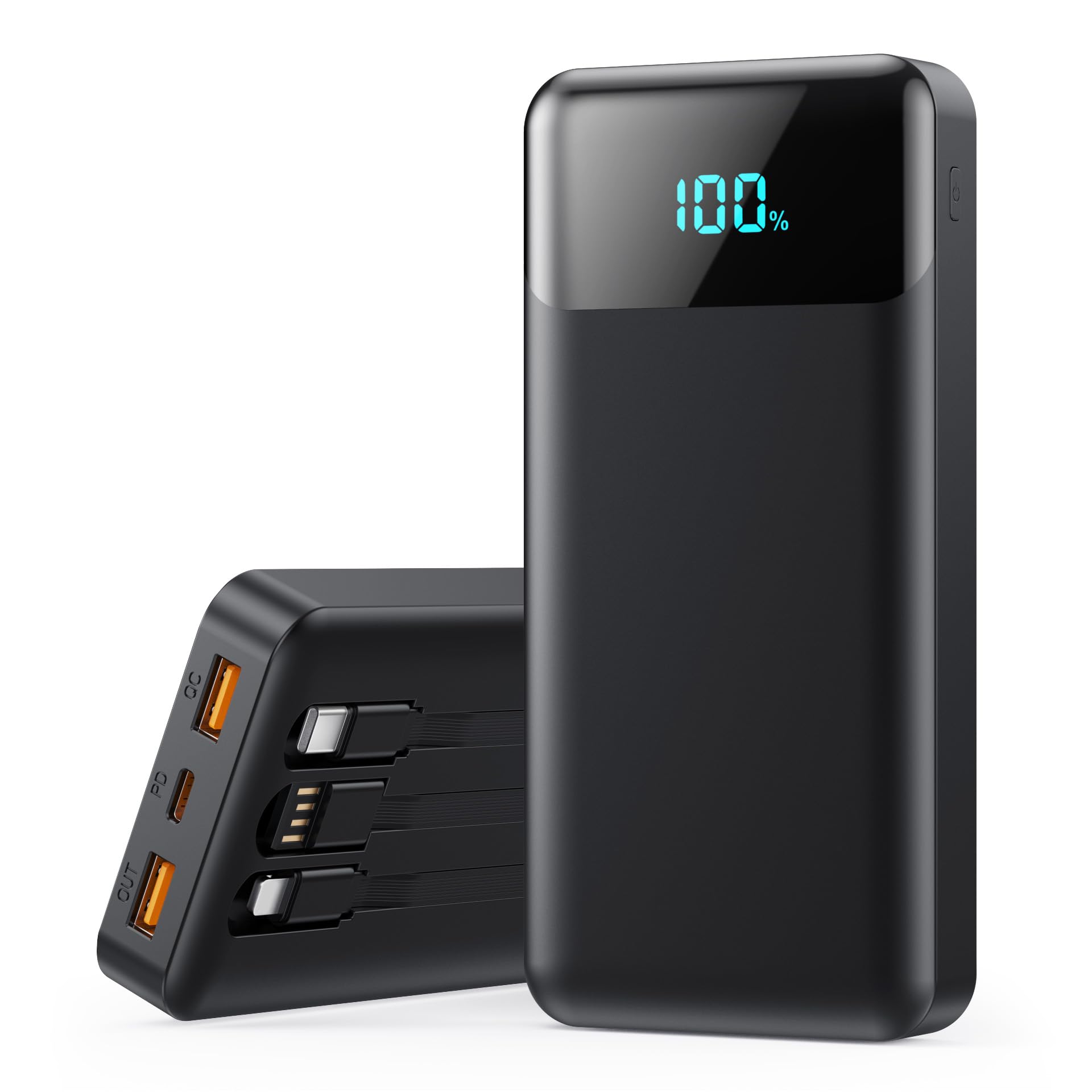
The LanLuk 40,800mAh is not for backpackers counting ounces — it is a base-camp powerhouse that can charge an iPhone 16 up to eight times or keep a tablet, GPS, and headlamp running for a full week. The 25W PD fast charging delivers roughly four times the speed of older 5W chargers, and the three built-in cables (two USB-C, one Lightning) plus two extra ports allow simultaneous charging of five devices. The bright LED display makes it easy to glance at remaining power from across a tent.
Durability is a mixed story: the cables are tested for 30,000 bends, and the lithium-polymer cells are rated for over 2,000 charge cycles. However, the unit weighs about 14.5 oz (410g) and is physically substantial, which limits its use to car camping, long-term base camps, or group trips where weight is shared. An important warning — at this capacity, the LanLuk cannot be carried on an airplane due to FAA restrictions on batteries over 27,000mAh.
The three-year warranty adds peace of mind for an investment that will see heavy use. If your backpacking style involves a single camp for several days (think canoe trips, desert base camps, or overland vehicle support), the LanLuk gives you more power per dollar than nearly any other option. For true backpacking where you carry everything on your back, the weight penalty is simply too steep.
Why it’s great
- 40,800mAh capacity powers devices for a week at base camp
- Three built-in cables eliminate loose cord management
- 25W PD delivers fast charging for modern phones
Good to know
- Too heavy and large for backpacking — best for car/base camp
- Not allowed on airplanes due to battery capacity limit
7. MaiVoz 56800mAh
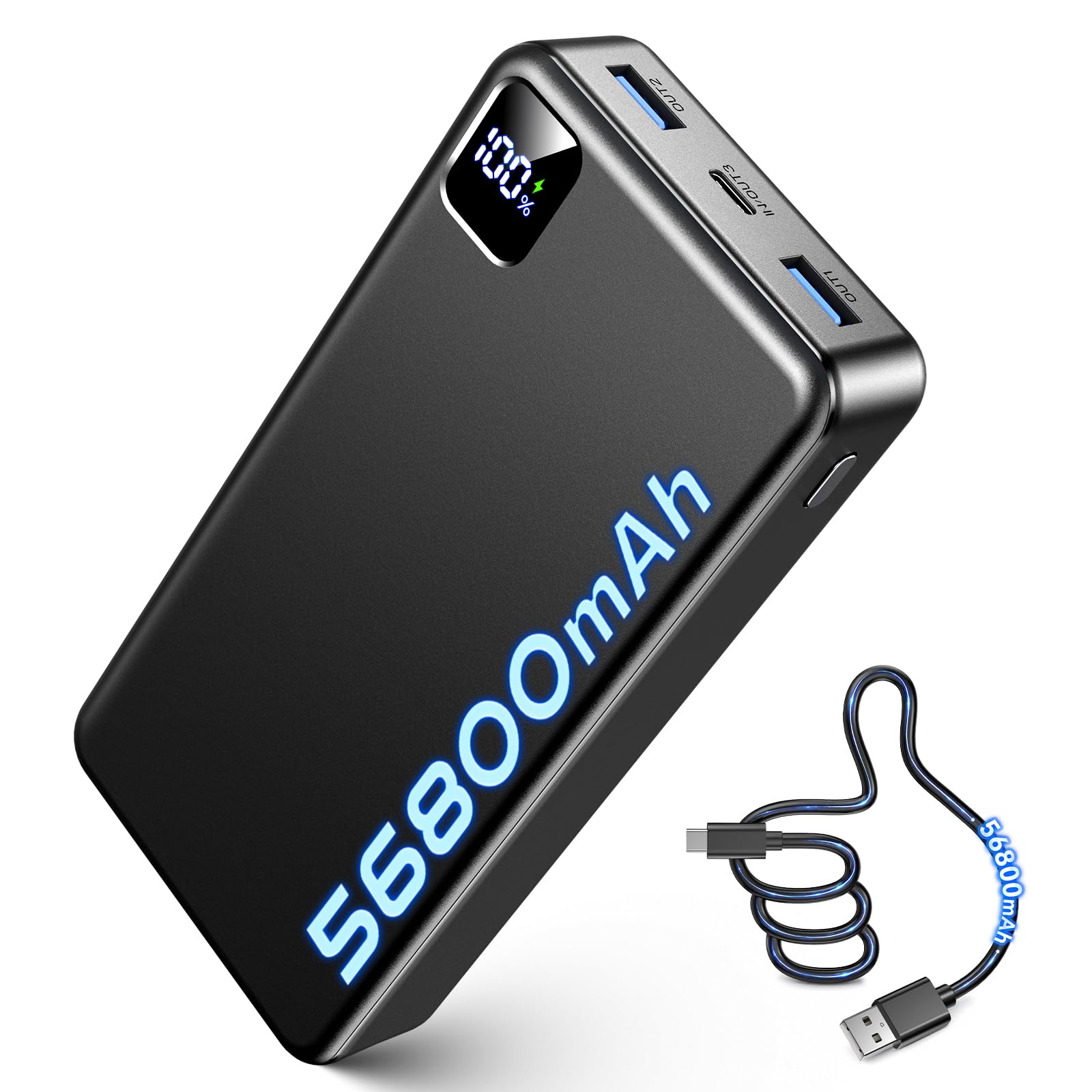
The MaiVoz 56,800mAh is the largest capacity unit in this roundup by a wide margin — enough power to charge an iPhone 17 more than ten times from empty. That makes it an obvious choice for extended vehicle-based trips, overland expeditions, or group camping where multiple people need to keep their phones, tablets, and earbuds alive. The 22.5W PD output delivers decent speed, with users noting roughly 60 percent charge for an iPhone 17 in 40 minutes.
Three output ports (two USB-A and one two-way USB-C) let you charge three devices simultaneously, and the LED percentage display removes guesswork. The bank also includes multi-layer safety protection against overvoltage, overheating, and short circuits. At roughly 16 oz (459 grams), the MaiVoz is heavy — you will feel it in a backpack, which limits its use to situations where weight is not the primary constraint.
The three-year MaiVoz Care warranty is a standout for the budget tier, offering hassle-free replacement for quality issues. As with the LanLuk, this bank cannot be taken on flights. Some users report the USB-C charging speed feels slower than the rated 22.5W PD, though the bank makes up for it with sheer endurance — it can power a small LED display all night and drop only a few percent.
Why it’s great
- 56,800mAh capacity — charges a phone 10+ times
- Three-year replacement warranty adds long-term value
- Multi-layer safety protection for worry-free use
Good to know
- Too heavy and large for backpacking — vehicle use only
- Not airline-approved and slower than expected PD speed
FAQ
How much capacity do I need for a multiday backpacking trip?
Can I take a 40,000mAh power bank on a plane?
What does USB-C Power Delivery mean for trail charging?
Is a waterproof power bank necessary for backpacking?
Final Thoughts: The Verdict
For most backpackers, the best battery charger for backpacking is the Anker Zolo 10K because it combines fast 30W charging, a durable built-in cable, and a reliable brand name at a weight that works for most trips. If you prioritize ultralight packing above all else, grab the Nitecore NB Plus for its industry-leading 5.47 oz weight and IPX7 weather protection. And for harsh conditions where your gear will take a beating, nothing beats the ELECOM NESTOUT with its MIL-STD-810G drop rating and waterproof IP67 shell.