
Our readers keep the lights on and the weekend projects moving. As an Amazon Associate, I earn from qualifying purchases.
Specs are compiled from manufacturer listings and verified buyer reviews and can change over time — please confirm the key details on the product page before buying.
Finding the right bedding for your hens is a balancing act between keeping the coop clean, making your hens comfortable, and cutting down on your daily chores. Some materials trap moisture and smell, while others are too dusty for a bird’s sensitive lungs — but the right pick can mean cleaner eggs and fewer headaches for you.
I’m Rikta — the founder and writer behind FitlyFast. This guide is built by comparing the manufacturers’ published specifications and the patterns across verified customer reviews, so you get each pick’s real strengths and trade-offs instead of marketing spin.
if you need top-tier odor control or something you can toss in the compost bin, this roundup of the best bedding for hens breaks down the specs and real-world experience to help you match the right material to your flock and your routine.
Quick Picks
- Eaton Pet and Pasture Hemp Bedding — Best Overall
- Small Pet Select Hemp HURD Bedding — Premium Pick
- Trendiees Aspen Chicken Nesting Pads — Pro Grade
- Small Pet Select Chicken Nesting Pads (12-Pack) — Best Value
- OVESD 3X-Thick Reusable Chicken Nesting Pads — 6-Month Reusable
- Standlee Chopped Straw — Bulk & Rescue
- Natural Wheat Straw (1 lb) — Entry Level
How To Choose The Best Bedding For Hens
Choose bedding based on moisture absorbency, cleaning frequency, and your hens’ respiratory sensitivities.
Absorbency and Odor Control
The bedding’s main job is to soak up droppings and keep the air fresh. Hemp products are known for holding several times their weight in liquid, which keeps the coop dry for a longer stretch. Straw, on the other hand, is decent but needs changing more often if you have a large flock.
Dust Levels and Respiratory Health
Hens’ delicate respiratory systems make low-dust materials like hemp hurd or aspen excelsior safer than pine shavings or dusty straw. Excess fine dust in bedding can cause wheezing or eye irritation in a closed coop, per reviews.
Ease of Cleaning vs. Longevity
Reusable pads can last months if rinsed weekly, ideal for smaller coops. Loose hemp or straw suits the deep litter method, where you turn it over and only clean out the soiled spots.
Quick Comparison
| Model | Best For | Material Type | Weight | Dimensions | Amazon |
|---|---|---|---|---|---|
| Small Pet Select Hemp HURD | Ultimate odor control | Hemp Hurd | 18 lb | 26″ x 9″ x 17″ | Amazon |
| Eaton Hemp Bedding | Deep litter method | Hemp Flake | 6.26 lb | 28L bag | Amazon |
| Trendiees Aspen Pads | Professional grade | Aspen excelsior | 5.8 lb | 13″ x 13″ x 2.5″ | Amazon |
| Small Pet Select Aspen Pads | Soft, long-lasting comfort | Aspen | 12-pack | 13″ x 13″ | Amazon |
| OVESD Coco Coir Pads | Reusable 6-month pads | Coconut fiber | 3.31 lb | 12″ x 12″ x 3″ | Amazon |
| Standlee Chopped Straw | Large volume / rescue | Wheat or Barley Straw | 23.8 lb | 4″ pieces | Amazon |
| Natural Wheat Straw | Small-space / craft use | Wheat Straw | 1 lb | 14.06″ x 13.62″ x 3.11″ | Amazon |
In‑Depth Reviews
1. Eaton Pet and Pasture Hemp Bedding

The 6.26-pound hemp flake that kills coop odor for months on end.
This loose hemp bedding is built for the deep litter method (a system where you turn and fluff the bedding instead of fully replacing it often), which buyers report keeps your coop smell-free for six months with no bugs. The brand says it is made without pesticides or herbicides, meaning you get a clean, pure environment for your flock.
At 6.26 pounds, it is over six times heavier than the 1-pound Natural Wheat Straw bag, giving you a much larger volume for the money. Reviewers mention it is low-dust and highly absorbent, staying dry far longer than wood shavings or straw. The flip side is that the bag is not huge — some buyers wish it was bigger — and shipping can be slower since it is not sold locally.
Compared to the Small Pet Select Hemp HURD below, this Eaton bag is significantly lighter (6.26 lb vs 18 lb), but the Eaton flake is also easier to sift daily if you prefer a quicker tidying routine.
Why it stands out
- Deep litter method eliminates odor for 6 months per buyer reports
- Low dust, good for respiratory health
- 100% naturally grown hemp; no pesticides
Room for improvement
- Bag feels small; less cost-effective than pine shavings
- Shipping can be slow for repeat orders
Best for: Any hen owner wanting a low-odor, low-dust loose bedding that you can manage with weekly flips.
Watch out: Not ideal if you need a huge volume for a large coop on a tight budget — bag size is limited compared to premium 18-lb options.
2. Small Pet Select Hemp HURD Bedding

The 18-pound hemp hurd that soaks up 400% of its weight in moisture.
This ultra-premium bedding is made from the inner core of the hemp stalk (called hurd — it is softer and woodier than whole-stalk hemp), and the manufacturer claims it absorbs up to 400% of its weight in moisture. That means you spend less time cleaning and more time enjoying clean, dry hens. Reviewers confirm it keeps the smell down and the chickens clean.
The 18-pound bag is more than double the Eaton pick above (6.26 lb vs 18 lb), so it is a better fit for larger coops or multiple flocks. Buyers mention the packaging is exceptionally sturdy and cute, but some note the price has risen recently. One reviewer who uses it as a cat litter base reports absolutely no odor and no scooping for a single cat.
If you have hens with respiratory sensitivities, the low-dust material is a real plus, and the soft texture makes it comfortable for your birds to rest on.
Why it is worth the premium
- Absorbs 400% of its weight — less frequent changes
- Low dust; great for sensitive lungs
- Large 18-lb bag; great value per pound
What may hold you back
- Price is higher than some other options
- Recent price increase noted by repeat buyers
Reach for this if: You keep a bigger flock or want the lowest-maintenance, highest-absorbency loose bedding on the market.
Consider the cost first: The upfront price is steep, and it has gotten more expensive, so check your budget if you have many nesting boxes to fill.
3. Trendiees Aspen Chicken Nesting Pads
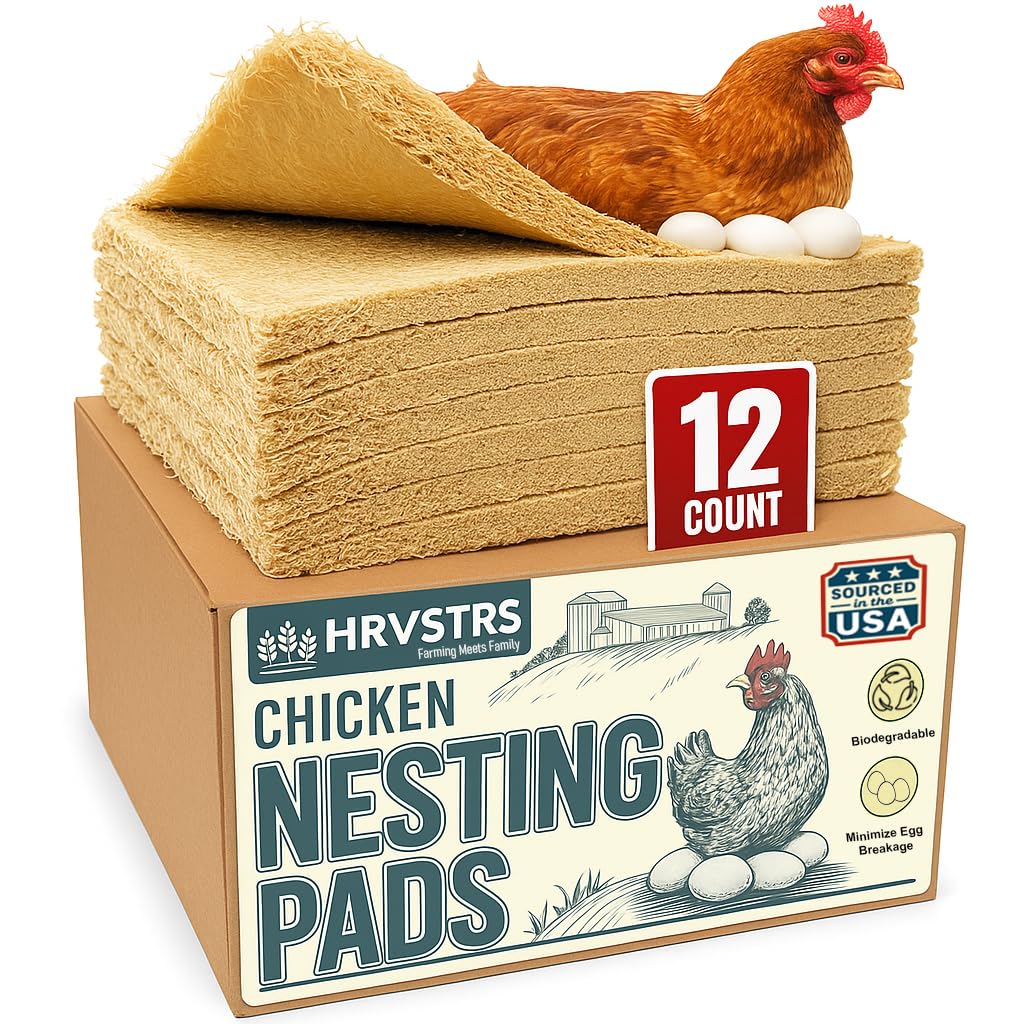
The pro-farmer pad that cuts cleanup to 30 seconds per box.
These 13-inch x 13-inch pads use aspen excelsior (a dense, springy wood fiber that cushions eggs and lets droppings fall through), so your eggs stay clean and fewer get cracked. The integrated paper backing keeps the pad intact, so you simply lift it out and toss a new one in. Owners mention the soft fibers vacuum easily and cause no skin issues for hens.
Compared to the OVESD coco coir pads below, this Trendiees pack weighs 5.8 pounds for the whole set, while the OVESD set is 3.31 pounds — the aspen version is noticeably denser. One reviewer noted the pads stick to the packing paper, but they laid them in the box paper-side-down with no problem. Buyers also appreciate that the material is dust-free and safe for respiratory health.
This is a great middle ground if you want the convenience of a pad without committing to the reusable washable style of the OVESD pads.
Why it works
- 30-second cleanup: lift out and replace
- Moisture-wicking fibers keep eggs clean
- 100% dust-free natural aspen
A minor catch
- Pads can stick to packing paper initially
- Not reusable — single-use disposable design
Ideal for: Backyard flock owners who value speed and cleanliness — swap pads in seconds and move on.
Skip if: You are trying to minimize waste and want a fully compostable, reusable pad you can wash and reuse for half a year.
4. Small Pet Select Chicken Nesting Pads (12-Pack)

The thick biodegradable aspen pad that hens love to scratch without destroying.
These nesting pads are made from sustainable aspen fibers bonded to a paper backing, offering a soft, cushiony surface that customers note (even Rhode Island Reds and Barred Rocks, known for their strong scratching) do not tear apart. One reviewer mentions the pads last months unless a broken egg mess forces a change. The 13-inch x 13-inch size fits most standard nesting boxes.
Unlike the loose hemp options above, these pads give you a contained, lift-out system — just shake the droppings out and replace when needed. The fibers are straw-like, so you can fluff and stretch them to fill the box. Reviewers point out they are compostable and biodegradable, making them an eco-friendly choice. Hens rarely poop in the nests, so some pads stay clean for months.
Compared to the Trendiees aspen pads, both are aspen-based, but this Small Pet Select pack gives you seven pads rather than 12 — though at a lower price point, the per-pad cost is competitive.
What buyers love
- Soft, thick, and durable against scratching
- Biodegradable and compostable
- Easy daily shake-out; long lifespan
What to know
- 12-pack delivers good value, but per-pad cost could be better
- Some users trim them to fit slanted boxes
Perfect for: Anyone who wants a soft, contained pad that lasts months with simple shake-outs and full compostability at the end.
A heads-up: If your nesting boxes are non-standard or slanted, you may need to tear or trim the pads to fit — they run a bit large.
5. OVESD 3X-Thick Reusable Chicken Nesting Pads
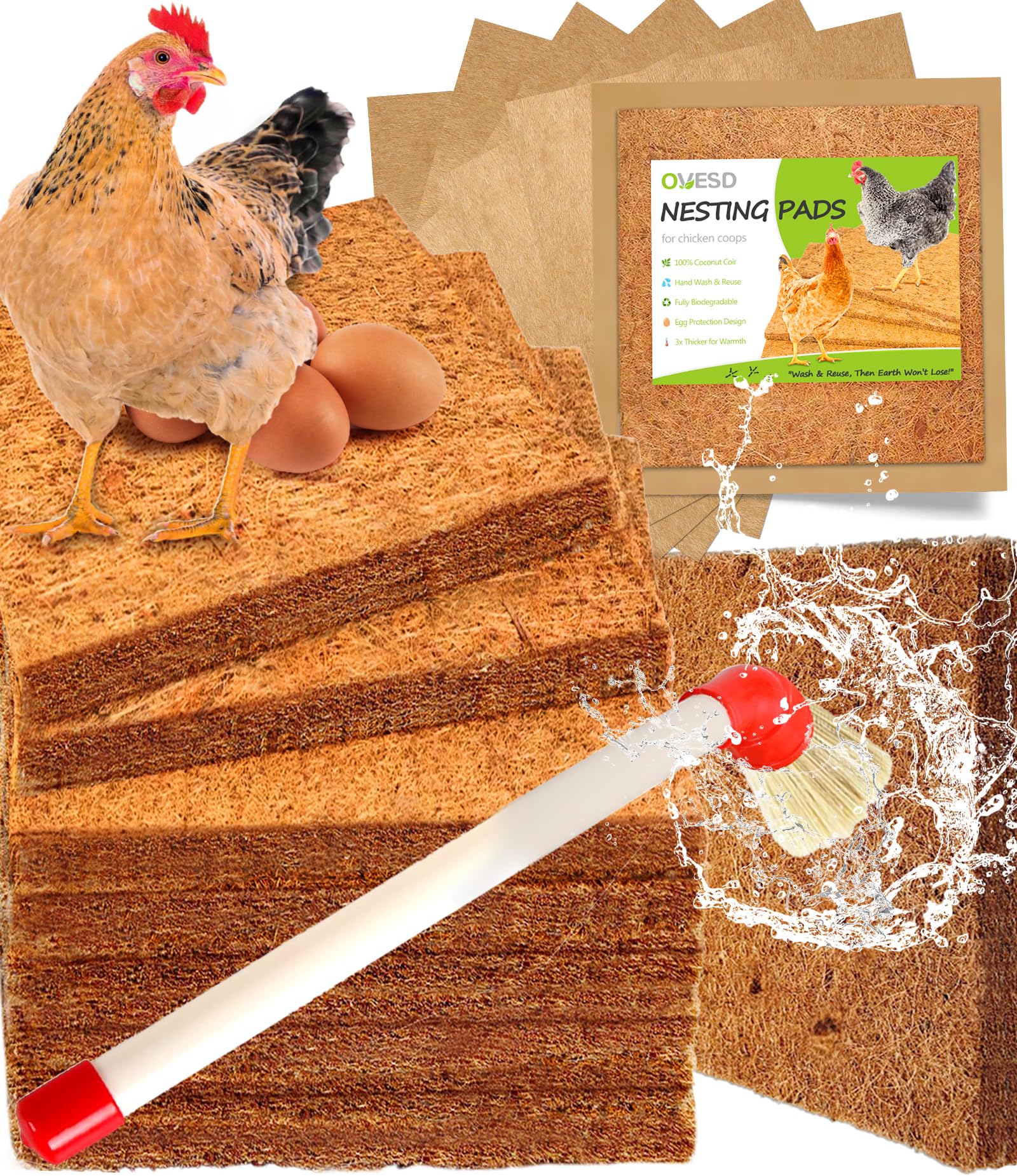
The washable 12-inch coco coir pad that flips weekly and lasts over six months.
Made from 95% coconut fiber and 5% natural rubber, these pads are designed for durability. Simply rinse them with water, let them dry, and flip them once a week — the brand claims they can stay in service for more than six months. Shoppers say that hens cannot tear them up quickly, and the 7-pack includes a cleaning brush to remove up to 90% of manure and feathers.
One buyer mentioned a significant increase in egg laying by day 2. However, there is a notable split in feedback: one owner reported the material is very coarse and has a sticky, gummy feel, calling it cruel for nesting hens. Another praised the pads for softening up over time. The pads are 12 inches square, which some users found a half-inch to three-quarters of an inch too big for standard boxes, requiring a trim.
Compared to the Small Pet Select aspen pads above, the OVESD pads are heavier (3.31 lb vs the 12-pack weight of the aspen pads) and designed for reuse rather than single-use composting.
The big wins
- Reusable for 6+ months — great long-term value
- Increases egg laying per some buyer reports
- Easy to clean with hose and included brush
The real trade-offs
- Some hens find the material too coarse and uncomfortable
- Oversized for many standard boxes; needs trimming with a bread knife
Grab this if: You are committed to a reusable system that cuts waste and saves money over time, and your hens are not picky about surface texture.
A big caution: Not every hen will tolerate the coarse feel — watch your flock’s behavior and be ready to switch if they avoid the nest box.
6. Standlee Chopped Straw

The 23.8-pound bale of chopped straw built for volume and value.
If you need to cover a lot of ground — a large coop, a cat rescue, or multiple outdoor shelters — this is the most sheer volume you can get. The straw is chopped into roughly 4-inch pieces, so you only discard the soiled parts. It is heat-treated to kill seeds, so you do not end up with weeds sprouting in your run.
Buyers report the quality is far better than garden-center straw: clean, dry, and compressed. However, some long-time users say recent bags seem less compressed than before, providing fewer bedding changes (3-4 changes now vs 6-7 previously). At 23.8 pounds, it is dramatically heavier than the 1-pound Natural Wheat Straw bag — a huge volume advantage for a comparable per-unit cost.
Unlike the aspen pads above, this is loose straw, so cleanup takes more effort than a simple lift-out pad, but it is fantastic for ferals or deep-bedding setups where you want warmth and insulation.
The benefits
- Massive 23.8-lb bag — best raw volume here
- Heat-treated to kill seeds; no weed risk
- Clean, soft, and dry. Great for outdoor shelters
The drawbacks
- Recent bag compression varies; fewer changes than before
- Loose straw is messier to handle and replace than pads
Best for: Large coops, shelters, or rescues needing a cost-effective, high-volume loose bedding that is clean and weed-free.
Consider alternatives if: You have a small flock and value quick, no-mess cleaning — disposable pads or loose hemp will save you time.
7. Natural Wheat Straw (1 lb)

The 1-pound vacuum-sealed straw bale that doubles as craft decor.
This is a very small bag — the size of a 17-inch laptop, as one reviewer put it — so it is best for a single small nest box or for seasonal craft projects (a buyer used it for a Christmas nativity scene). It is 100% natural and soil-safe, with no chemicals or weed seeds. The vacuum packaging keeps it clean and odor-free.
Buyers warn it may blow away in windy areas (a concern in Florida), and many feel it is overpriced for the amount you get. One reviewer used it to keep neighborhood cats warm in cold dips by stuffing it around a wood pile. Compared with the Standlee Chopped Straw, this 1-pound bag is 22.8 pounds lighter, so you get far less bulk for your money.
This is really a specialty item — fine for a small brooder or a single hen’s nest box, but not a serious contender for a full coop setup if you have more than one or two birds.
What it does well
- Clean, dry, and chemical-free
- Versatile: crafts, small pet bedding, decor
- Vacuum sealed for freshness
Where it falls short
- Very small quantity; expensive for the volume
- Not wind-resistant; can blow away easily
Best as: A one-off for a single nest box, a craft project, or a tiny brooder — not a daily hen bedding supply.
Avoid for: Any real coop with multiple hens; you would burn through the bag in a single cleaning and spend too much to restock.
Understanding the Specs
Absorbency Rating
This tells you how much moisture the bedding can hold before it feels wet. Hemp hurd can absorb up to 400% of its own weight, meaning it stays dry far longer. Straw is less absorbent, so you will change it more often. If you hate frequent cleaning, go with hemp or thick aspen excelsior.
Dust Level
Hens have fragile lungs. A low-dust or dust-free bedding (such as aspen excelsior or hemp flake) cuts down on wheezing, sneezing, and eye irritation. Pine shavings are dustier; straw sits in the middle. Always choose bedding labeled “low dust” if you have a closed coop with limited ventilation.
FAQ
What is the best bedding for hens in a deep litter system?
Is hemp bedding better than straw for chicken coops?
Can reusable nesting pads really last six months?
How much bedding do I need for standard nesting boxes?
Does bedding affect egg production?
What is the difference between aspen pads and hemp pads?
Can I compost used hen bedding?
Is wheat straw safe for baby chicks or brooder use?
Final Thoughts: The Verdict
If you want one dependable pick, the bedding for hens winner is the Eaton Pet and Pasture Hemp Bedding because it combines low dust, excellent odor control, and the deep litter method’s convenience at a mid-range price. If you want the highest absorbency and a huge bag for a large flock, grab the Small Pet Select Hemp HURD (18 lb). And for a quick, contained, lift-out system with minimal daily mess, the Trendiees Aspen Pads give you a pro-grade 30-second cleanup.
How We Picked
We do not accept paid placement. Every pick is matched to a real buyer and a real use-case; we do not hands-on test units.
Sources & Methodology
Specifications: manufacturer listings and product documentation. Review insights: verified customer reviews, as of July 2026. Pricing: not shown on this page (it changes often); check the current price via the retailer link.
As an Amazon Associate, FitlyFast earns from qualifying purchases. This does not affect which products we feature.