
Our readers keep the lights on and the weekend projects moving. As an Amazon Associate, I earn from qualifying purchases.
Stepping into birdwatching, wildlife spotting, or attending your first outdoor sports event with cheap, blurry binoculars kills the experience. You need a pair that resolves distant detail without emptying your wallet — optics that focus smoothly, gather enough light in low conditions, and survive a drop or two. Finding that balance between magnification, lens quality, and build is the entire challenge for a first-time buyer.
I’m Rikta — the co-founder and writer behind FitlyFast. I’ve analyzed dozens of optical configurations, prism materials, and coating grades to separate genuinely useful beginner glass from marketing fluff.
This guide cuts through the specifications to help you choose the right pair, ultimately steering you toward best beginner binoculars that actually deliver bright, sharp images without the premium price tag.
How To Choose The Best Beginner Binoculars
New buyers often fixate on the highest magnification number, but that single spec doesn’t guarantee a usable view. A good beginner binocular balances magnification with objective lens size, prism quality, lens coatings, and overall weight. Understanding these four pillars will steer you away from frustrating purchases.
Magnification and Objective Lens Size (The 10×42 Sweet Spot)
The first number is magnification (how many times closer an object appears), and the second is the objective lens diameter in millimeters (how much light it collects). For beginners, a 10×42 configuration is widely considered the goldilocks zone — 10x magnification gives great reach without turning every heartbeat into a shake, and the 42mm objective gathers enough light for dawn and dusk viewing. An 8×42 or 8×32 also works well if you prioritize a wider field of view and steadier image, especially for tracking moving birds or animals.
Prism Type: BAK-4 vs. BK-7
The prism is the glass block inside that flips the image the right way up. BAK-4 (barium crown glass) produces a perfectly round exit pupil and brighter image, especially in low light, because it scatters less light. BK-7 (borosilicate glass) is cheaper and often found in budget binoculars — it can still be sharp in bright daylight, but you’ll see dark crescent edges (shadowing) in dim conditions. For any serious outdoor use at dawn or dusk, insist on BAK-4 prisms.
Lens Coatings: Fully Multi-Coated (FMC) is Non-Negotiable
Every air-to-glass surface reflects some light, reducing brightness and contrast. Coatings reduce this reflection. “Fully multi-coated” means every lens surface has multiple anti-reflective layers, maximizing light transmission (often above 99%) and delivering crisp, color-true images. “Coated” or “multi-coated” optics skip some surfaces — this cuts light transmission noticeably in overcast or twilight conditions and is the number one reason budget binoculars look dim and hazy.
Eye Relief and Adjustable Eyecups for Glasses Wearers
If you wear eyeglasses, eye relief (the distance from the eyepiece lens to your eye) must be at least 15–17mm to see the full field of view without vignetting. Twist-up eyecups let you adjust the distance so you can use binoculars with or without glasses comfortably. Beginners who forego this spec often end up with a frustrating tunnel-like view.
Quick Comparison
On smaller screens, swipe sideways to see the full table.
| Model | Category | Best For | Key Spec | Amazon |
|---|---|---|---|---|
| Vortex Triumph HD 10×42 | Premium Roof Prism | Best Overall – All-round outdoor use | Fully Multi-Coated HD Optics | Amazon |
| Nocs Provisions 10×25 | Premium Compact | Lightweight carry / hiking | IPX7 waterproof, 11.85 oz | Amazon |
| Tanaview 10×50 | Premium Porro / Low Light | Low light / night sky viewing | 50mm objective, 18mm eye relief | Amazon |
| Rodcirant 18×50 + Tripod Kit | Mid-Range Kit | High magnification / stable viewing | FMC + phase-coated BAK-4 prisms | Amazon |
| Bushnell Explorer 10×42 | Mid-Range Roof Prism | Beginner all-rounder / travel | IPX7 waterproof, 17.5mm eye relief | Amazon |
| MIXIO 12×42 | Budget Value | Everyday value / sports events | BAK-4 prisms, 305ft FOV | Amazon |
| deesoo 20×52 | Budget High Power | Long-distance stationary viewing | 20x magnification, 52mm lens | Amazon |
In‑Depth Reviews
1. Vortex Triumph HD 10×42

The Vortex Triumph HD combines the trusted Vortex VIP lifetime warranty with genuinely impressive optics for its price tier. The HD optical system and fully multi-coated lenses deliver exceptional resolution and color fidelity — edge-to-edge sharpness that rivals binoculars costing twice as much. The 10×42 configuration is the textbook sweet spot for beginners: wide enough field of view (341 feet at 1000 yards) to track fast-moving birds or athletes, yet powerful enough for detailed mid-range observation.
The nitrogen-purged, O-ring sealed construction makes it both waterproof and fogproof — a critical feature for anyone using binoculars in humid mornings or light rain. The polycarbonate chassis wrapped in full rubber armor provides a confident grip even with wet hands and has survived drops from significant heights according to user reports. Twist-up eyecups offer 17mm of eye relief, making them comfortable for eyeglass wearers to see the full field without blackouts.
At just under 1.5 pounds, the Triumph HD is light enough for all-day hikes yet sturdy enough for field work. The included GlassPak harness case is a bonus that most budget binoculars skip — it keeps the binos secure and accessible on your chest rather than swinging from your neck. For a beginner who wants one pair that does everything well and is backed by an unconditional lifetime guarantee, this is the clear starting point.
Why it’s great
- HD optical system delivers sharp, bright images with minimal chromatic aberration
- Unlimited, unconditional lifetime warranty — fully transferable
- Rugged build: waterproof, fogproof, and shockproof
Good to know
- 1.5 pounds is comfortable but not the lightest option for ultralight packing
- 10x magnification requires a steady hold — tripod recommended for long sessions
2. Nocs Provisions Standard Issue 10×25

The Nocs Provisions Standard Issue is a premium compact built for the hiker, backpacker, or traveler who refuses to leave binoculars behind due to bulk. With a 10×25 configuration and weight of just 11.85 ounces, it slides into a jacket pocket or daypack easily. The fully multi-coated optics and Swiss-designed BAK-4 prism deliver a remarkably crisp, bright image for such a small objective lens — 2.5mm exit pupil is adequate for daytime use in good light.
What sets this binocular apart in the compact category is its IPX7 waterproof rating (submersible to 3 feet for 30 minutes) and nitrogen-purged fogproofing — rare for a unit this small. The multi-stop twist-up eyecup mechanism offers three positions, accommodating eyeglass wearers and bare eyes equally well. The patented Rugged Wave Grip texture on the rubber housing provides a secure hold in wet conditions without adding weight or bulk.
The integrated smartphone-photography capability is a thoughtful touch for beginners who want to document their view. The “No-Matter-What” lifetime warranty adds confidence, though the 10mm eye relief is shorter than full-size options, so glasses wearers should test the fit. For the beginner whose primary criterion is portability without sacrificing optical quality, this is the top recommendation.
Why it’s great
- Extremely lightweight and pocketable at under 12 ounces
- IPX7 waterproof and fogproof with a lifetime warranty
- Ergonomic grip design keeps hold secure in wet conditions
Good to know
- 10mm eye relief may be tight for some eyeglass wearers
- 25mm objective limits low-light performance vs. 42mm models
3. Tanaview 10×50 Compact
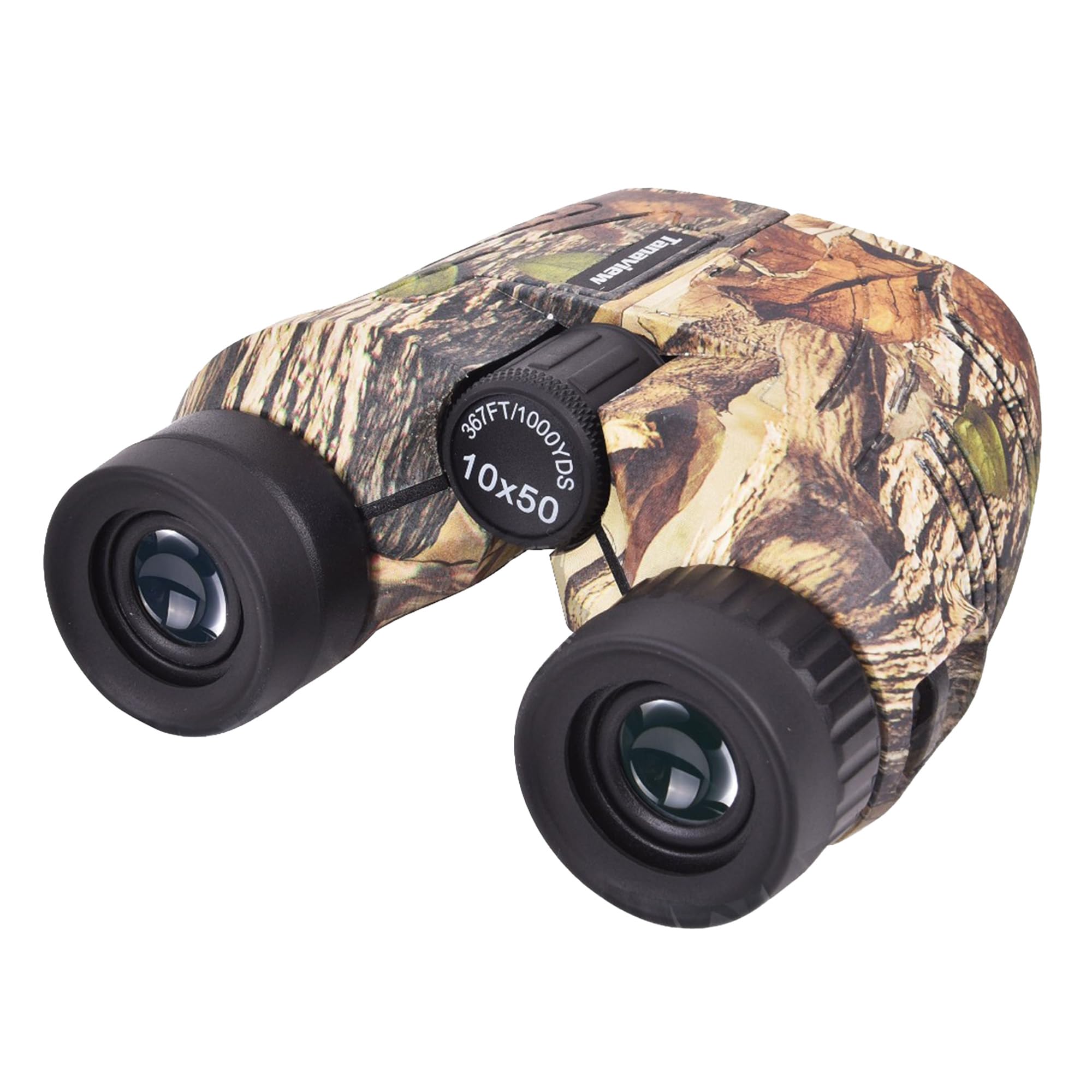
The Tanaview 10×50 is built for the beginner who plans to glass at dawn, dusk, or under the night sky. The 50mm objective lenses paired with 10x magnification produce a 5mm exit pupil — the largest in this lineup — which fills the eye with light, providing bright, clear images even in fading twilight. The FMC multilayer broadband green film on the objectives and blue film on the eyepieces effectively suppresses glare and ghosting.
The body is surprisingly compact for a 50mm binocular, measuring 4.4 inches long and weighing well under two pounds. Rubber armor provides shock resistance and a non-slip grip. Eye relief is generous at 18mm, and the twist-up eyecups allow glasses wearers to access the full 7.5-degree field of view without vignetting. The center focus wheel operates smoothly with a single finger.
While the Porro prism design (the traditional angled shape) offers excellent depth perception and light transmission, it does make the unit slightly wider than roof prism designs. The included travel case is functional but basic. For the beginner focused on low-light performance or celestial viewing — or anyone who prioritizes maximum light gathering over absolute compactness — this 10×50 configuration delivers big value.
Why it’s great
- 50mm objective provides excellent low-light and night-sky performance
- Fully multi-coated FMC optics for bright, glare-free images
- 18mm eye relief accommodates glasses comfortably
Good to know
- Porro prism design is wider than compact roof prism types
- Not fully waterproof — rated water resistant, not IPX7
4. Rodcirant 18×50 + Phone Adapter Kit
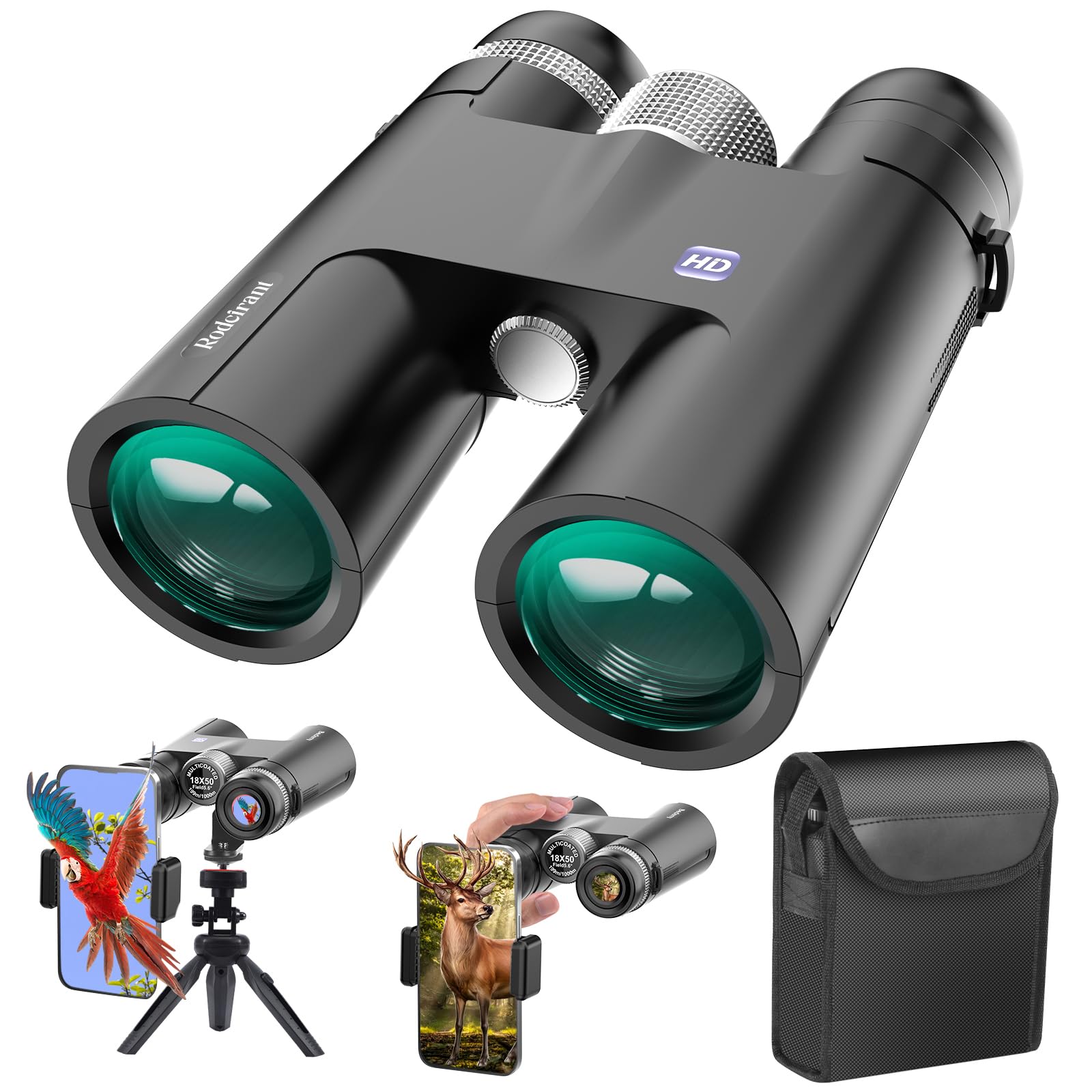
The Rodcirant 18×50 pulls double duty as a high-magnification viewing tool and an entry-level digiscoping kit, thanks to the included phone adapter and compact tripod. The 18x magnification and 50mm objective offer a 399-foot field of view at 1000 yards — enough torque to read distant signage or examine wildlife details from afar. The BAK-4 prism and fully multi-coated, phase-coated lens system are a step above typical budget optics, delivering 99.9% light transmission.
IPX7 waterproofing and fogproofing mean it survives rain, river spray, and humid marsh environments without internal fogging. The 19mm large eyepieces prevent the distracting “black ring” effect that plagues cheaper units with small exit pupils. Despite the large objective lenses, the polycarbonate body keeps weight at just 1.1 pounds — lighter than most 42mm units — making it feasible for field carry.
The phone adapter rotates 360 degrees and clamps securely for digiscoping, a feature beginners interested in sharing sightings will appreciate. The included tripod is basic but functional for stationary use. The main trade-off is that 18x magnification amplifies hand shake considerably — you will almost always need the tripod for a steady image. For the beginner who wants a high-power, weatherproof kit for digiscoping and static observation, this provides exceptional bundled value.
Why it’s great
- Includes phone adapter and tripod — ready for digiscoping out of the box
- IPX7 waterproof with BAK-4 FMC phase-coated optics for clear, bright images
- Only 1.1 pounds despite 50mm objectives
Good to know
- 18x magnification is very shaky without a tripod for steady viewing
- Neck strap and carrying case are basic quality
5. Bushnell Explorer 10×42

The Bushnell Explorer 10×42 brings the brand recognition and optical heritage of a major sporting optics manufacturer into the beginner-friendly zone. This roof prism design features a fully multi-coated, all-glass optical system with BAK-4 prisms, which together deliver solid contrast and light transmission for a unit in its tier. The IPX7 waterproof certification is backed by Bushnell’s standard submerge-test protocol — 1 meter for 30 minutes — offering real confidence for wet-weather use.
The aluminum chassis wrapped in a non-slip soft-touch rubber provides both drop protection and a sure grip, even with one hand. Eye relief measures 17.5mm, comfortably above the 15mm threshold for glasses wearers, and the twist-up eyecups lock into position. The 6.8-degree field of view (357 feet at 1000 yards) is generous for tracking moving subjects in the field or at sporting events.
The Explorer is noticeably lighter and more compact than many budget Porro prism models, making it a good fit for day hikes and travel where pack space is limited. The included carrying case and dual lens covers are functional. While the optics are not as refined as premium HD-level glass, they are entirely satisfactory for a beginner’s first serious binocular — especially for someone who values a trusted brand name and robust warranty support.
Why it’s great
- Bushnell brand quality with IPX7 waterproof and fogproof construction
- Aluminum body with rubber armor for lightweight durability
- 17.5mm eye relief accommodates most eyeglass wearers
Good to know
- Lens caps are not tethered and can be easily misplaced
- Optical clarity is good but trails premium HD models
6. MIXIO 12×42 UHD
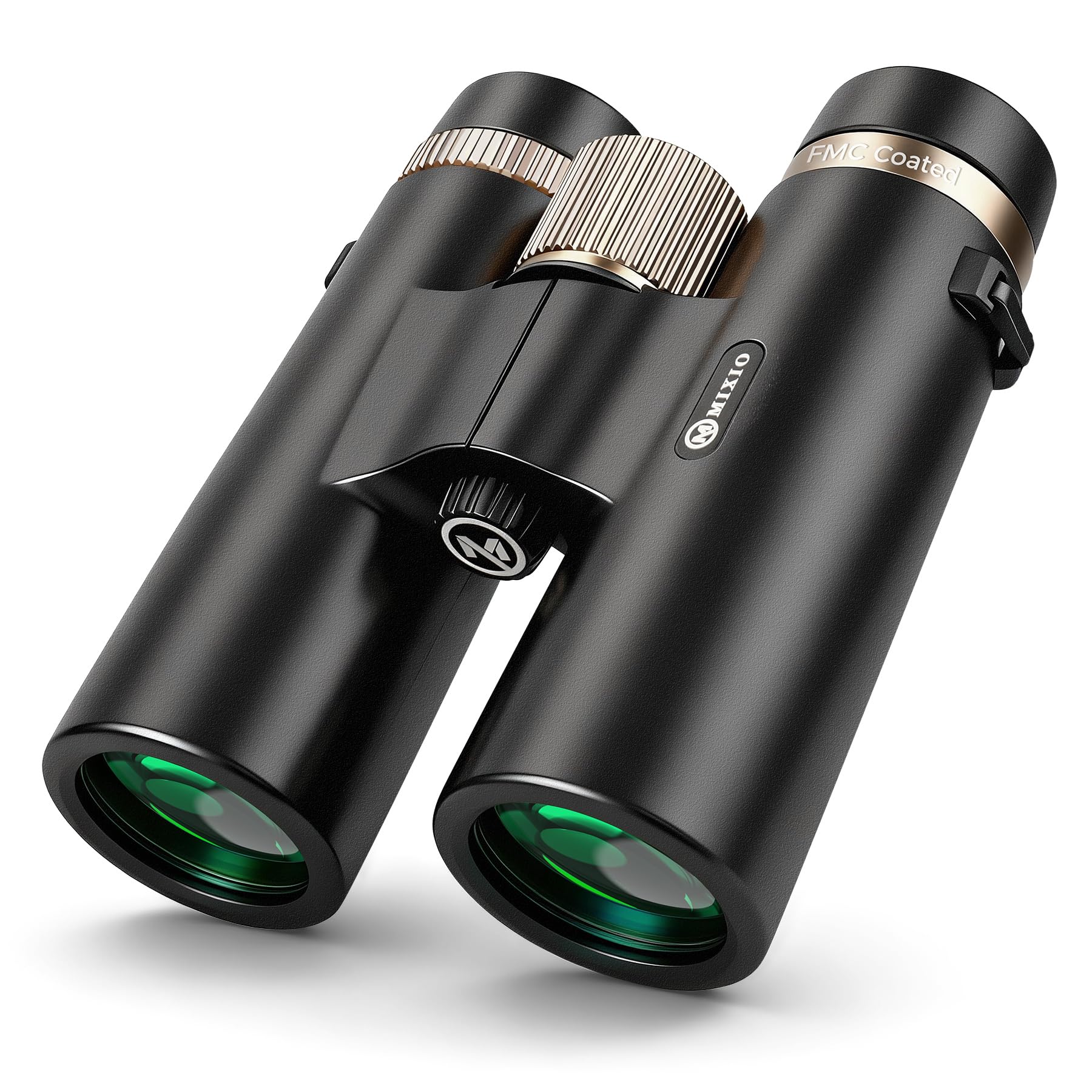
The MIXIO 12×42 punches well above its weight class by pairing 12x magnification with BAK-4 prisms and fully multi-coated anti-reflective lenses. The result is a bright, distortion-free image that users consistently describe as surprising for the price. The 305-foot field of view at 1000 yards is generous enough for scanning treelines and hillsides without feeling tunneled.
The rubber-armored body is built with a military-grade shock-resistant construction and an O-ring sealed waterproof design that resists saltwater corrosion. The 20mm eyepieces are generously sized to prevent the “black blob” effect that occurs when your eye drifts off-center. Adjustable twist-up eyecups offer two positions — one for glasses and one for bare eyes — and the ±5 diopter adjustment covers most vision differences quickly.
At 1.5 pounds, it sits in the middle of the weight range — not the lightest but not burdensome. The non-slip texture on the central focus wheel works reliably with gloves or wet hands. The primary trade-off is that 12x magnification demands a steadier hold than 8x or 10x; beginners prone to hand shake should consider a tripod adapter. For the budget-conscious beginner who wants BAK-4 clarity without going over budget, this is the strongest value in the lineup.
Why it’s great
- 12x magnification with BAK-4 prisms and FMC lenses for clear, bright images
- Military-grade shockproof and waterproof construction
- 20mm large eyepieces eliminate dark-edge vignetting
Good to know
- 12x power amplifies hand shake more than 10x models
- Premium UHD claim is marketing — optics are good but not true UHD spec
7. deesoo 20×52 High Powered

The deesoo 20×52 is the highest-magnification option in this guide, built for the beginner who needs to see far — think scanning lakes for waterfowl, observing mountain ridges, or watching distant wildlife without moving closer. The 20x magnification combined with 52mm objective lenses and a 26mm large eyepiece aims to minimize the eye-fatigue that often plagues high-power budget binoculars.
The aspherical lens design with fully multi-coated (FMC) optics and BAK-4 prisms delivers better-than-expected brightness for a 20x configuration. The rubber-armored, non-slip grip provides secure handling in damp or cold conditions, and the body is splash-resistant though not fully waterproof. The center focus wheel is sensitive and non-slip, allowing quick adjustments, and the ±5 diopter adjustment range is generous for users with significant vision differences between eyes.
Two critical trade-offs define this binocular: weight and stability. At 2.18 pounds, it is the heaviest in the guide, and the 20x magnification amplifies even small hand movements into distracting jitter. A tripod is essentially essential for comfortable, steady viewing. The neck strap is also reported to slip, requiring attention. For the stationary landscape observer or birder working from a blind, the deesoo provides impressive reach on a budget.
Why it’s great
- 20x magnification provides exceptional range for distant observation
- BAK-4 prisms and FMC lenses deliver clear images at this power
- 26mm large eyepieces reduce black-ring effect
Good to know
- 2.18 pounds and 20x power require a tripod for any practical use
- Neck strap quality is weak — replace or reinforce
- Not fully waterproof; avoid heavy rain exposure
FAQ
Is 10x or 12x magnification better for a beginner?
What does BAK-4 prism do that BK-7 does not?
How important are fully multi-coated lenses for beginners?
Can I use 20x binoculars without a tripod?
Final Thoughts: The Verdict
For most users, the best beginner binoculars winner is the Vortex Triumph HD 10×42 because it combines genuine HD optical performance with a rock-solid build and an unconditional lifetime warranty at a price that doesn’t punish newcomers. If you want pocketable carry without sacrificing clarity, grab the Nocs Provisions 10×25. And for maximum value with BAK-4 glass at a friendly price, nothing beats the MIXIO 12×42.