
Our readers keep the lights on and the weekend projects moving. As an Amazon Associate, I earn from qualifying purchases.
Starting astronomy can feel like a puzzle of conflicting specs—aperture size vs. magnification, mount stability vs. portability—and the excitement of seeing Saturn’s rings often fades after fighting a wobbly tripod for an hour. The right beginner telescope removes that friction, letting you spend your first clear night actually observing instead of troubleshooting.
I’m Rikta — the co-founder and writer behind FitlyFast. I’ve spent months analyzing aperture ratios, mount designs, and accessory bundles across dozens of entry-level models to identify which scopes deliver genuine value without the frustration that often kills the hobby.
This guide cuts through the marketing hype to focus on real-world usability, helping you confidently choose the best beginner telescope that matches your curiosity and backyard conditions without wasting money on specs that don’t matter.
How To Choose The Best Beginner Telescope
Aperture—the diameter of the main lens or mirror—determines how much light your telescope collects. More light means brighter, sharper images of faint deep-sky objects like nebulae and galaxies. Magnification is secondary; you can change it with different eyepieces, but you cannot add aperture. For a beginner scope, aim for an aperture of at least 70mm, with 80mm or 90mm offering a noticeably richer view of the moon’s craters and the rings of Saturn.
Mount Stability Defines Your Experience
A high-quality optical tube is useless on a shaky mount. The Altazimuth mount (simplest to use) is standard for beginners, but its stability hinges on tripod build quality. Look for aluminum or stainless steel legs rather than thin plastic. Models with slow-motion control knobs allow fine tuning of your aim without jarring the image, a feature that changes the experience from frustrating to genuinely enjoyable.
Accessories That Actually Matter
Bundled extras often look impressive but can be low-quality. A universal smartphone adapter is genuinely useful for capturing and sharing what you see. A moon filter reduces glare during lunar observation, making details pop. A 3X Barlow lens doubles or triples your eyepiece options. However, cheap plastic eyepieces degrade image clarity—read reviews on whether the included optics are worth using or if you should budget for an upgrade later.
Quick Comparison
On smaller screens, swipe sideways to see the full table.
| Model | Category | Best For | Key Spec | Amazon |
|---|---|---|---|---|
| MEEZAA 90800 | Premium | Deep sky detail | 90mm aperture / 800mm FL | Amazon |
| Koolpte 90mm | Premium | Smooth tracking | 90mm aperture / 700mm FL | Amazon |
| HUGERSTAR 80600 | Mid-Range | Clear lunar views | 80mm aperture / 600mm FL | Amazon |
| Celestron Travel Scope 70 | Mid-Range | Travel & portability | 70mm aperture / 400mm FL | Amazon |
| Hawkko 80500 | Mid-Range | Family & kids use | 80mm aperture / 500mm FL | Amazon |
| Gskyer 70mm | Mid-Range | Entry-level value | 70mm aperture / 400mm FL | Amazon |
| Dianfan 80mm | Budget | Kids & customization | 80mm aperture / 500mm FL | Amazon |
In‑Depth Reviews
1. MEEZAA Telescope 90800

The MEEZAA stands out with its 90mm aperture and 800mm focal length (f/8.88), delivering the highest light-gathering ability in this roundup. The stainless steel tripod provides a stable platform that resists vibration even at the highest 240X magnification with the 3X Barlow. Its f/8.88 focal ratio also reduces chromatic aberration, meaning stars and planets appear with cleaner color fringing than faster scopes.
The included Kellner eyepieces (10mm and 25mm) are a step above the plastic Huygens optics found on cheaper models, though serious beginners may still swap them for Plossls. Assembly takes about 10 minutes with the paper manual, and all accessories pack neatly into the carry bag. The phone adapter works reliably for sharing moon shots and Jupiter’s moons.
Several customer reviews note that the MEEZAA delivers sharp moon crater detail and resolves Saturn’s rings without the blur common at this price tier. The Altazimuth mount is smooth with no backlash, though manual tracking remains necessary. For a beginner wanting the clearest possible views without jumping to a computerized mount, this is the most capable package.
Why it’s great
- 90mm aperture captures more light for brighter deep-sky views
- Stainless steel tripod eliminates image-shaking wobble
- Minimal chromatic aberration thanks to f/8.88 focal ratio
Good to know
- Kellner eyepieces are decent but many upgrade to Plossls later
- Altazimuth mount requires manual tracking, no motor drive
2. Koolpte 90mm Telescope
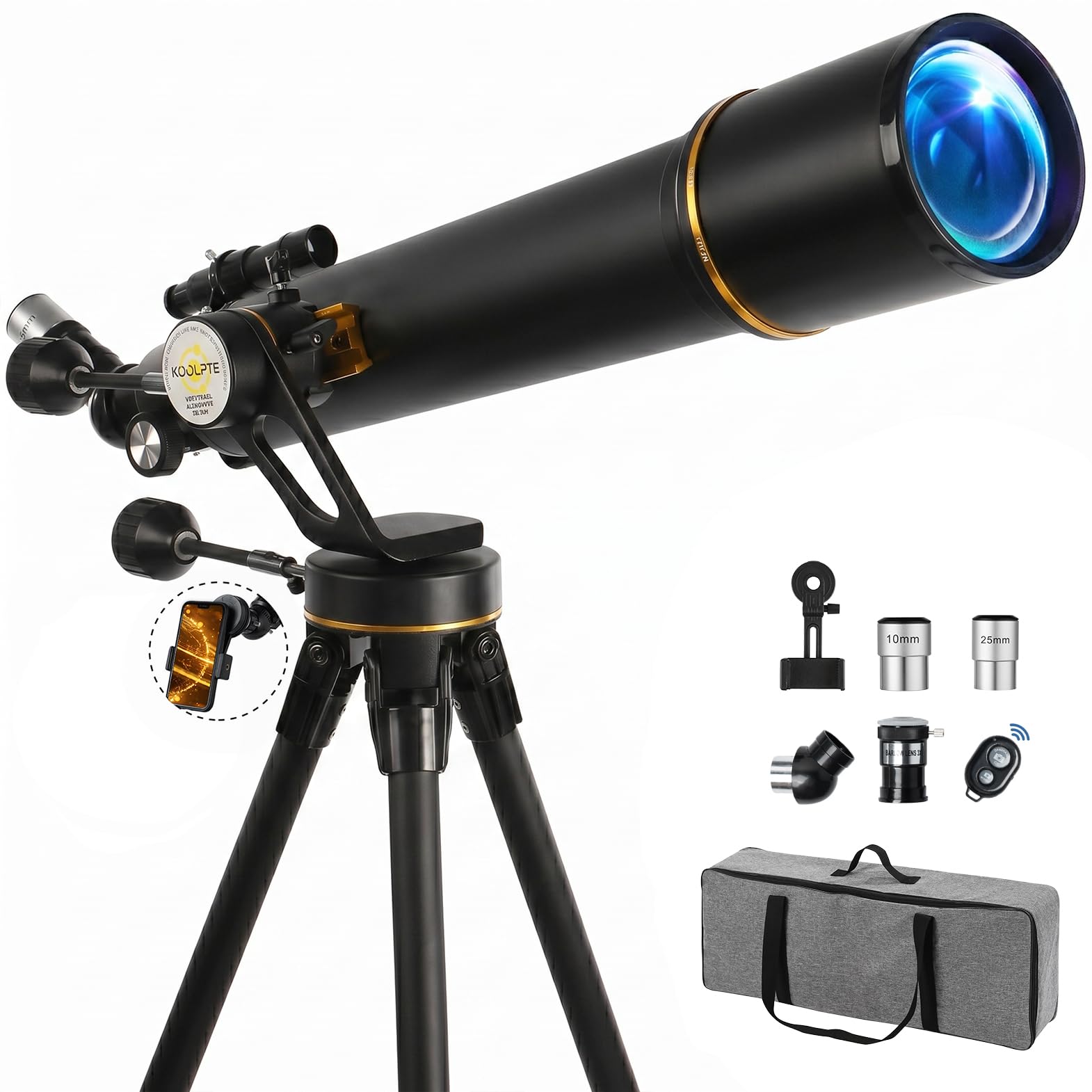
The Koolpte 90mm features a 700mm focal length and fully multi-coated optics that achieve 99% light transmission, but its defining advantage is the Vertisteel AZ slow-motion mount. Unlike the jerky knob adjustments on cheaper models, this mount allows precise, smooth aiming without overshooting—a game-changer when tracking planets across the sky. The included wireless remote and phone adapter let you capture images hands-free.
The 28X-210X magnification range covers lunar detail, Jupiter’s bands, and Saturn’s rings. The 90mm aperture gathers enough light to resolve the Orion Nebula as a hazy patch with hints of structure under dark skies. Setup is tool-free and takes about 10 minutes, though some tall users (6 feet and up) find the tripod’s maximum height requires stooping when viewing targets near zenith.
Customer reviews consistently praise the image clarity and mount stability, but a small number report loose internal parts after shipping. The carry bag is sturdy enough for backyard storage and car travel. For a beginner prioritizing smooth tracking over maximum aperture, the Koolpte delivers a noticeably premium feel.
Why it’s great
- Vertisteel slow-motion mount allows precise planetary tracking
- Fully multi-coated optics with 99% light transmission
- Includes wireless remote for shake-free phone astrophotography
Good to know
- Tripod height may require bending for users over 6 feet
- Occasional reports of loose internal parts in transit
3. HUGERSTAR 80600 Telescope
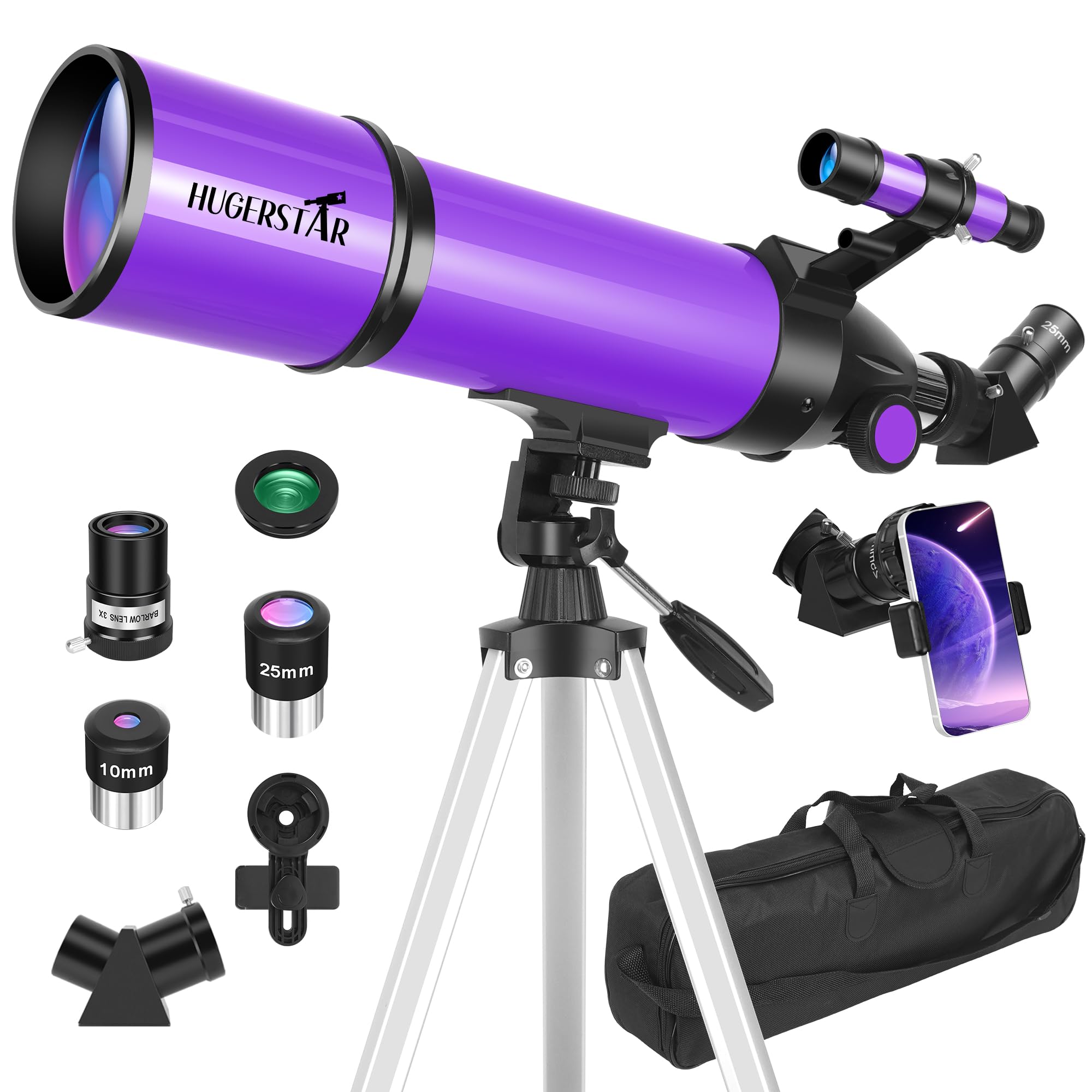
The HUGERSTAR 80600 strikes a strong balance with its 80mm aperture and 600mm focal length, providing 60% more light gathering than 70mm scopes. The fully multi-coated lenses enhance contrast on lunar features, and the included moon filter reduces the blinding glare of a full moon to reveal subtle crater floor details. The 24X-180X magnification range is flexible enough for both wide star fields and close planetary inspection.
The aluminum tripod adjusts from 21.2 to 44 inches, accommodating both seated and standing viewing positions. The Altazimuth mount feels solid for the price tier, though the slow-motion controls are smoother than budget scopes but not as refined as premium models. The finderscope is a straight-through design that works well for beginners once aligned during daytime practice.
Customer feedback highlights the easy 10-minute assembly and the carrying bag’s utility for camping trips. Some users note the instructions could be more detailed for first-time astronomers. For someone who wants a clear, dedicated lunar viewing scope with room to explore bright planets, the HUGERSTAR delivers strong performance per dollar.
Why it’s great
- 80mm aperture provides bright contrasty views of the moon
- Moon filter improves crater detail on bright lunar nights
- Tool-free assembly in about 10 minutes
Good to know
- Straight-through finder requires daytime alignment for beginners
- Instructions could be clearer for absolute first-timers
4. Celestron Travel Scope 70
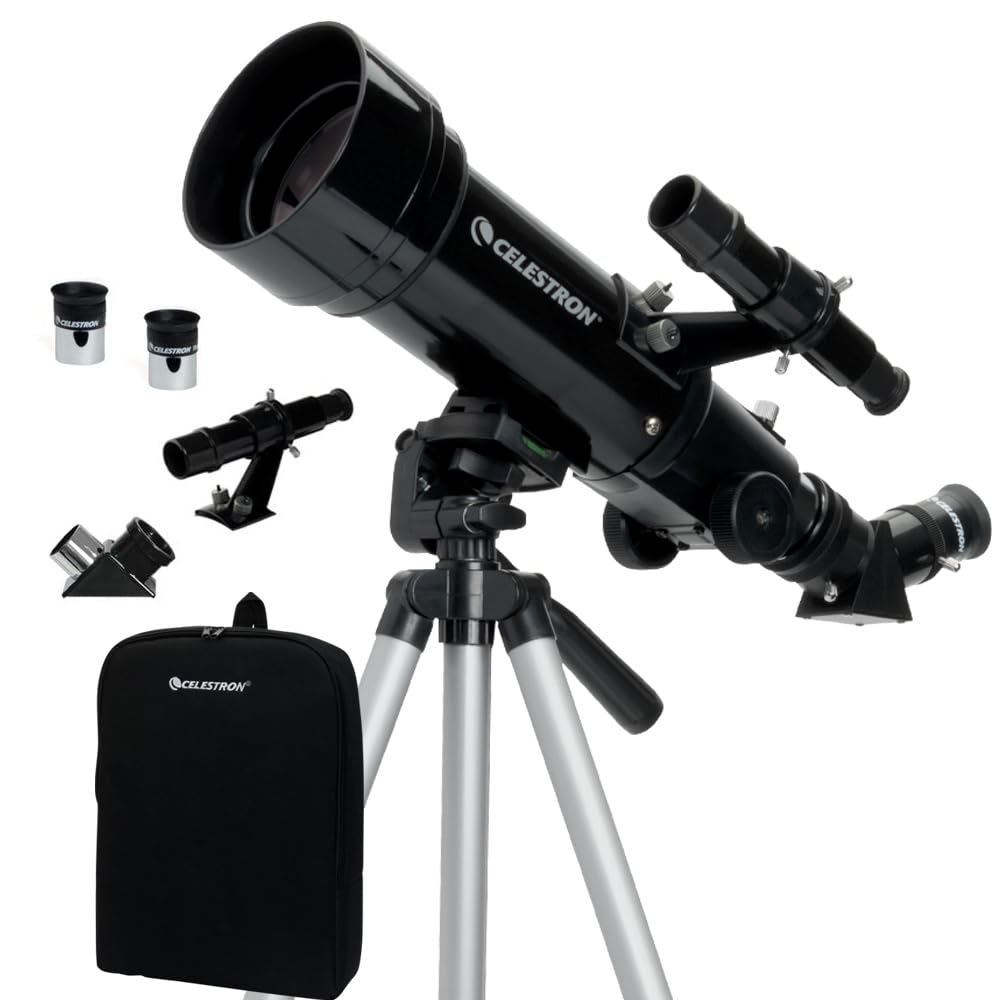
The Celestron Travel Scope 70 is built for portability with a lightweight 400mm focal length and a dedicated padded backpack that holds the optical tube, tripod, and accessories. The fully coated glass lenses produce acceptable images of the moon’s craters and Jupiter’s moons, and the 20mm and 10mm eyepieces cover basic magnifications. The 45-degree erect image diagonal is a nice touch for daytime terrestrial viewing.
The trade-off for portability is tripod stability—the legs are thin and can wobble at full extension, especially in light wind. Many experienced users recommend placing the scope on a sturdy table or weighing down the tripod with a bag. The 5×24 finderscope is functional but many reviewers replace it with a red dot finder for easier night use. The included Starry Night software is a useful digital guide for identifying objects.
Customer reviews consistently praise its value for travel and quick grab-and-go sessions. The 70mm aperture shows lunar detail clearly, but faint nebulae and galaxies remain out of reach. For a backpackable scope that can transition between backyard astronomy and daytime nature observation, the Celestron is a proven choice from a reputable brand.
Why it’s great
- Lightweight backpack design for easy travel and storage
- 45-degree erect diagonal for daytime terrestrial viewing
- Backed by Celestron’s 2-year US warranty and support
Good to know
- Tripod wobbles at full extension; best used on a table
- 70mm aperture limits deep-sky potential
5. Hawkko 80500 Telescope
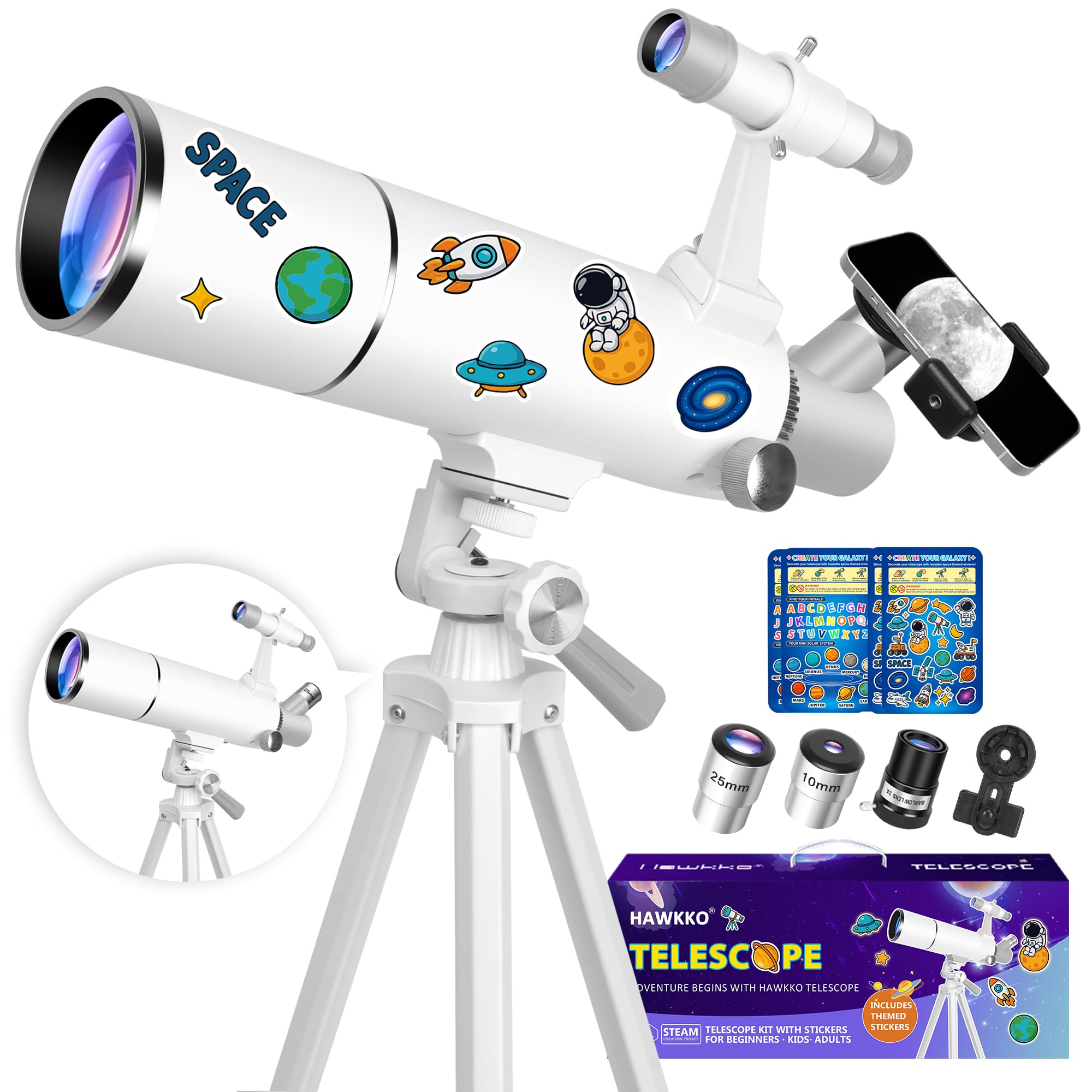
The Hawkko 80500 uses an 80mm aperture and 500mm focal length to gather 60% more light than 70mm scopes, providing bright lunar and planetary views. The 20X-150X magnification range is controlled with 10mm and 25mm Kellner eyepieces plus a 3X Barlow, giving beginners flexibility without overwhelming complexity. The included space-themed stickers let kids personalize the tube, making it feel like their own instrument.
The aluminum tripod is lightweight and adjustable for both children and adults, with a simple Altazimuth mount that sets up in minutes without tools. The straight-through finderscope helps locate targets but requires careful alignment during daylight. The included smartphone adapter works for capturing moon shots, though higher magnification images may show vibration from the lightweight tripod.
Customer reviews are overwhelmingly positive, especially for families. A few experienced users note image blurriness at higher magnifications, typical of this entry-level price point. The Hawkko excels as a first telescope that prioritizes engagement and ease of use, making it a strong option for parents introducing children to astronomy.
Why it’s great
- 80mm aperture offers noticeably brighter views than 70mm models
- Space-themed stickers encourage kid engagement
- Quick tool-free assembly for first-time users
Good to know
- Image quality degrades at 150X on shaky tripod
- Straight-through finder can be confusing for absolute beginners
6. Gskyer 70mm Telescope

The Gskyer 70mm features a 400mm focal length (f/5.7) and fully coated optics that produce acceptable images of the moon and bright planets. The 3X Barlow lens triples the standard eyepieces, offering 21X to 105X magnification. The wireless camera remote is a thoughtful addition that lets you trigger phone photos without touching the scope, reducing vibration blur at higher magnifications.
The aluminum tripod is adjustable but the Altazimuth mount lacks slow-motion controls, making it harder to track objects as they drift across the field of view. The 70mm aperture is genuinely entry-level—it shows the moon’s craters and Jupiter’s bands under moderate dark skies, but most galaxies and nebulae remain faint smudges. The finderscope is a reflex design, which simplifies target acquisition compared to straight-through finders.
Customer reviews highlight its ease of setup and reliable build for the price, with many noting it sparked a lasting interest in astronomy. Light pollution significantly limits performance, so darker viewing locations are recommended. For the lowest-cost entry into the hobby with some thoughtful extras, the Gskyer is a solid starting point.
Why it’s great
- Wireless remote prevents shake during phone astrophotography
- Reflex finderscope easier for beginners than straight-through types
- Quick assembly and lightweight design for easy setup
Good to know
- No slow-motion controls make tracking objects challenging
- 70mm aperture struggles under light-polluted skies
7. Dianfan 80mm Telescope
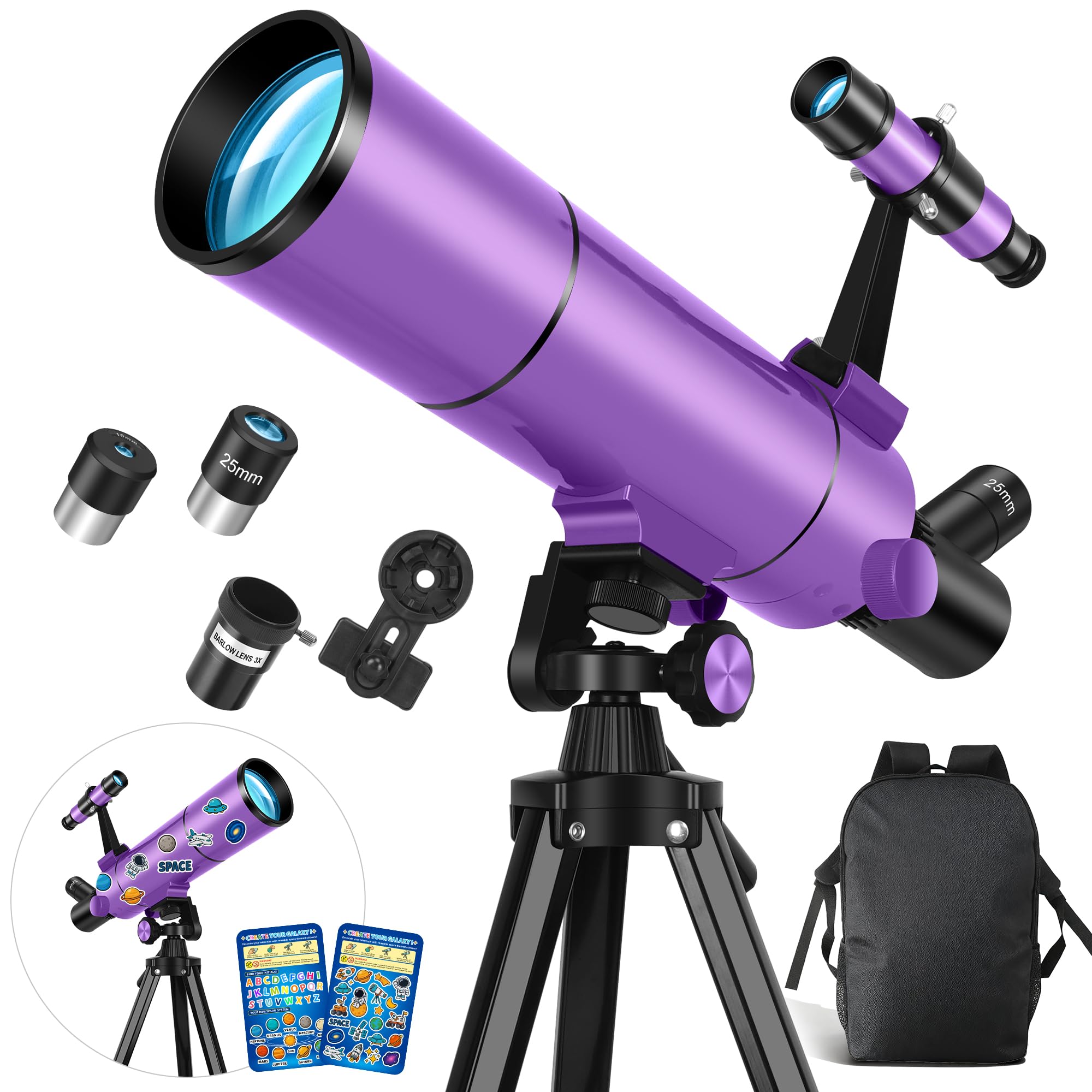
The Dianfan 80mm packs a 500mm focal length and fully multi-coated optics into a compact design aimed squarely at families. The 20X-150X magnification range with 10mm and 25mm Kellner eyepieces and a 3X Barlow provides enough versatility to explore the moon and bright planets. The purple tube and reusable astronomy-themed stickers appeal to children, turning the telescope into a personalized exploration tool.
The water-resistant backpack holds the scope, tripod, and accessories securely for camping trips or backyard storage. Assembly takes about 15 minutes and is straightforward even for first-timers. The straight-through finderscope works fine after daytime alignment, and the phone adapter helps kids capture and share their observations. The lightweight aluminum tripod is adequate for the scope but some vibration at high magnification is expected.
Customer reviews consistently note the exceptional clarity once properly focused, with several parents reporting their children spent hours exploring the moon. The 80mm aperture gathers enough light for satisfying views. For a fun, engaging first telescope designed to keep young astronomers interested, the Dianfan delivers solid optical performance in a child-friendly package.
Why it’s great
- 80mm aperture delivers clear moon and planetary views
- Reusable stickers and purple design appeal to kids
- Backpack included for easy portability and storage
Good to know
- Lightweight tripod introduces vibration at high magnification
- Some practice needed to achieve sharp focus the first time
FAQ
Is 70mm aperture enough for a complete beginner to see Saturn’s rings?
Should I prioritize magnification or aperture when choosing a first scope?
Can I use a beginner telescope for daytime terrestrial viewing?
Final Thoughts: The Verdict
For most users, the best beginner telescope winner is the MEEZAA 90800 because its 90mm aperture and stainless steel tripod deliver the clearest views and most stable platform in this price range, making every observation session genuinely enjoyable. If you want a travel-friendly scope with proven brand support, grab the Celestron Travel Scope 70. And for a family-oriented introduction that makes kids feel ownership, nothing beats the Hawkko 80500.