
Our readers keep the lights on and the weekend projects moving. As an Amazon Associate, I earn from qualifying purchases.
Wrens are agile, curious, and relentlessly energetic, but their small size means they get bullied off feeders by starlings, grackles, and squirrels within minutes. The wrong feeder design—open trays or wide perches—turns your yard into a buffet for larger birds while wrens watch from the bushes, waiting for scraps.
I’m Rikta — the co-founder and writer behind FitlyFast. Analyzing bird feeder specs like mesh spacing, weight-activated cages, and roof-adjustment mechanisms to find designs that genuinely serve small-bodied birds has consumed dozens of hours of research for this guide.
After combing through hundreds of customer reports, technical specifications, and real-world feeding photos, the best bird feeder for wrens combines tight caging or adjustable roofs with durable, weatherproof materials that resist rust and squirrel damage year-round.
How to choose the best bird feeder for wrens
Wrens have specific feeding needs that differ from cardinals, finches, or blue jays. Their small bodies and skittish nature mean the feeder must physically exclude larger competitors while offering easy access to mealworms, suet, or small seeds. Here are the four factors that matter most.
Cage spacing and mesh size
The single most important spec for wrens is the spacing between bars or mesh openings. Wrens can slip through gaps of 1.5 inches or less, while starlings, grackles, and squirrels cannot. A caged feeder with tight mesh is the most reliable way to give wrens exclusive dining rights. If the mesh is too wide—anything over 1.75 inches—larger birds will push through or reach in, defeating the purpose.
Adjustable roof height
Some feeders feature a sliding or locking roof that lets you control the gap between the top and the feeding bowl. Lowering the roof to about three inches above the bowl allows wrens and bluebirds to enter while blocking starlings and jays. This mechanical adjustment is simple but dramatically changes which birds can access the food. Feeders without adjustable roofs depend entirely on cage design for exclusion.
Material durability and weather resistance
Wren feeders sit outdoors year-round, exposed to rain, snow, and direct sun. Powder-coated steel resists rust far better than painted metal, while recycled plastic composites won’t warp or rot like cedar. Avoid feeders with thin gauge wire or plastic components that become brittle after one season. A feeder that rusts or cracks after six months creates gaps large birds can exploit.
Food type compatibility
Wrens are insectivores at heart—they prefer live or dried mealworms over seed blends. A feeder with a removable glass bowl, mesh tray, or deep dish works best for mealworms. If you want to offer suet, look for a feeder with a dedicated suet cage or a wide tray that holds suet pellets. Seed-only feeders will attract wrens less reliably than those designed for mealworms or insect blends.
Quick comparison
On smaller screens, swipe sideways to see the full table.
| Model | Category | Best for | Key spec | Amazon |
|---|---|---|---|---|
| Gbekery Caged Bluebird Feeder | Caged mesh | Mealworm-only feeding | 1.5-inch mesh spacing | Amazon |
| Kingsyard Platform Feeder (Green) | Caged platform | Excluding grackles and doves | 1.5-inch mesh, 5-lb capacity | Amazon |
| GAINSEN Weight-Activated Feeder | Tube with cage | Squirrel exclusion | Weight-sensing spring | Amazon |
| Wildlife Sciences Mealworm Feeder | Mesh bowl | Adjustable roof for wrens | Stainless steel mesh | Amazon |
| Kingsyard Dual-Use Mesh Feeder | Mesh tube | Multi-seed feeding | 360-degree mesh, 3-lb capacity | Amazon |
| SEWANTA Caged Tube Feeder | Caged tube | Small bird exclusivity | 22-oz tube, 4 ports | Amazon |
| iBorn Platform Tray Feeder | Open tray | Budget-friendly tray feeding | 10.6-inch tray, WPC material | Amazon |
In-depth reviews
1. Gbekery Caged Bluebird Feeder for Mealworms
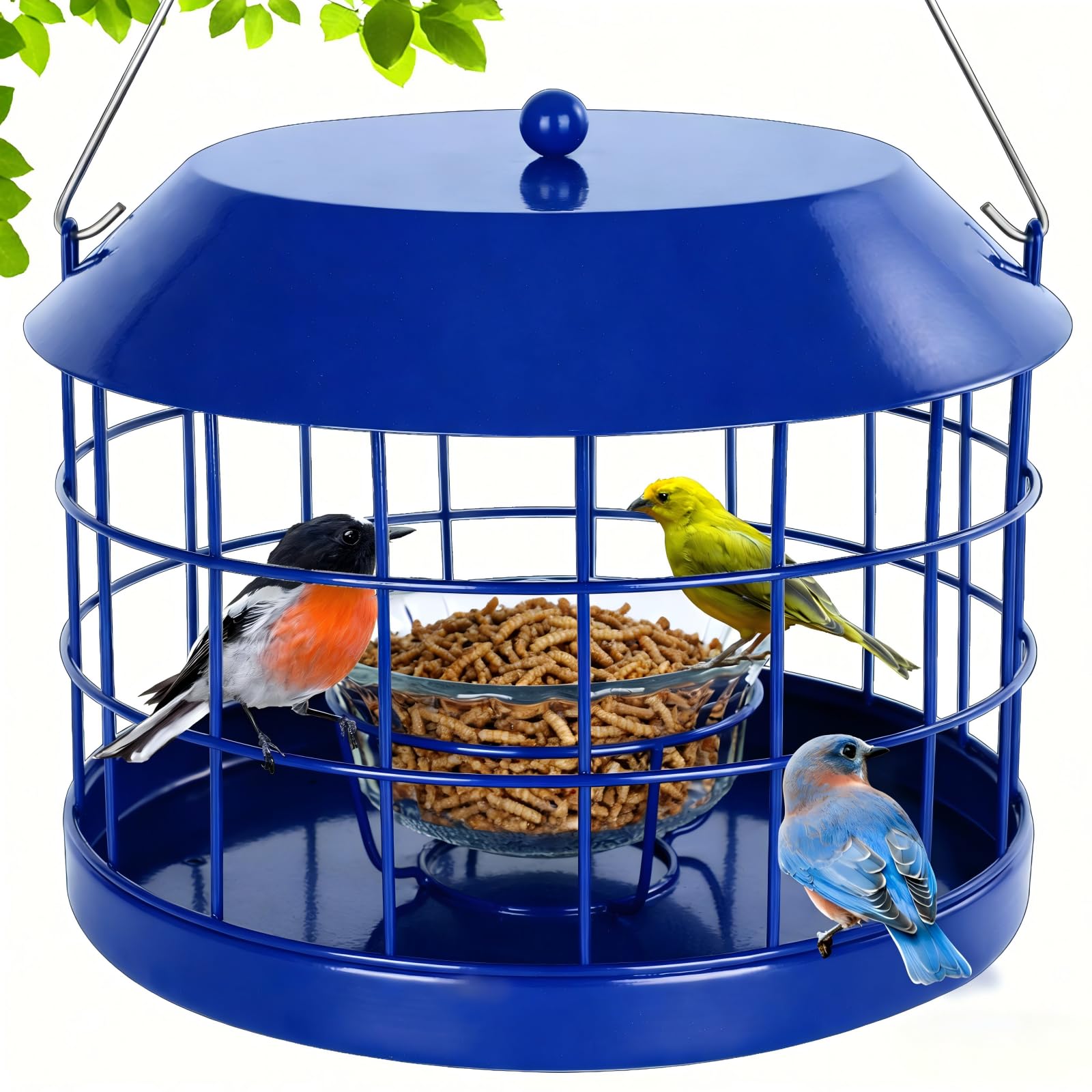
The Gbekery feeder uses 1.5-inch mesh spacing designed exclusively for small birds—wrens, bluebirds, goldfinches, and song sparrows. The caged design is paired with a removable glass bowl that holds mealworms, suet pellets, or even water, giving you flexibility in what you offer. The metal construction and anti-rust coating hold up well through rain and snow without degradation.
Customer reports confirm that bluebirds and wrens adapt to the feeder within a few days, while larger birds like jays and crows are consistently excluded. A few users noted that starlings can reach into the cage if the bowl is positioned too close to the bars, but this is manageable by keeping the bowl centered. Squirrels eventually lose interest after repeated failed attempts to access the mealworms.
The detachable hook and removable roof make refilling and cleaning straightforward. The glass bowl adds a touch of refinement compared to plastic alternatives and won’t stain or absorb odors over time. For wren keepers who want a dedicated mealworm station that requires minimal babysitting, this is a well-executed solution.
Why it’s great
- 1.5-inch mesh excludes most large birds and squirrels reliably
- Removable glass bowl is easy to clean and won’t hold smells
- Rust-resistant metal holds up to year-round outdoor use
Good to know
- Starlings may reach food if bowl is not centered inside cage
- Only one small bird can feed at a time due to interior space
2. Kingsyard Squirrel Proof Platform Feeder (Green)
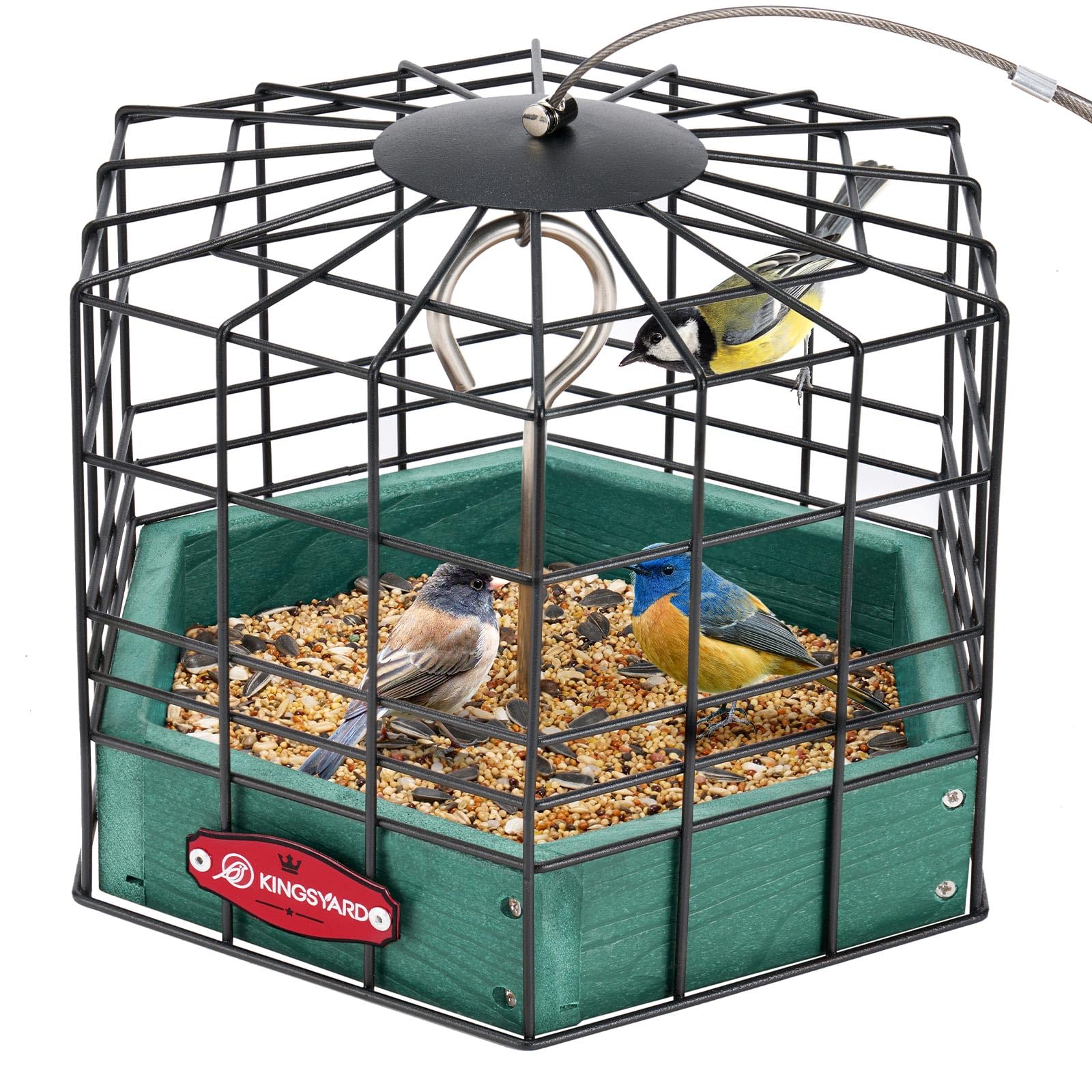
The Kingsyard platform feeder uses the same 1.5-inch mesh spacing as the Gbekery but in a wider, tray-based design that holds up to five pounds of seed. The fly-through openings allow wrens to enter from any side, and the recycled plastic base with metal mesh tray provides ventilation to keep seeds dry. This is a good choice if you want to offer mixed seed blends rather than mealworms exclusively.
Users consistently report that the cage excludes doves, grackles, starlings, and cowbirds, giving finches, chickadees, and wrens a stress-free feeding environment. Some cardinals can squeeze through the openings after some practice, but they are not the primary audience. A few customers added a rain cover on top to prevent larger birds from perching there and intimidating smaller ones.
The recycled plastic construction is heavy-duty and won’t warp or crack like wood. The metal mesh tray is removable for cleaning, which matters for preventing seed mold and disease transmission. If you prefer a platform-style feeder that prioritizes small birds over tray-feeding convenience, this model delivers consistent results.
Why it’s great
- Five-pound capacity reduces refill frequency for busy yards
- Recycled plastic won’t rot, warp, or require sealing
- Mesh base promotes ventilation and keeps seed dry
Good to know
- Cardinals may not fit through the cage openings
- Some users add a rain cover to block large birds on top
3. GAINSEN Weight-Activated Squirrel-Proof Feeder
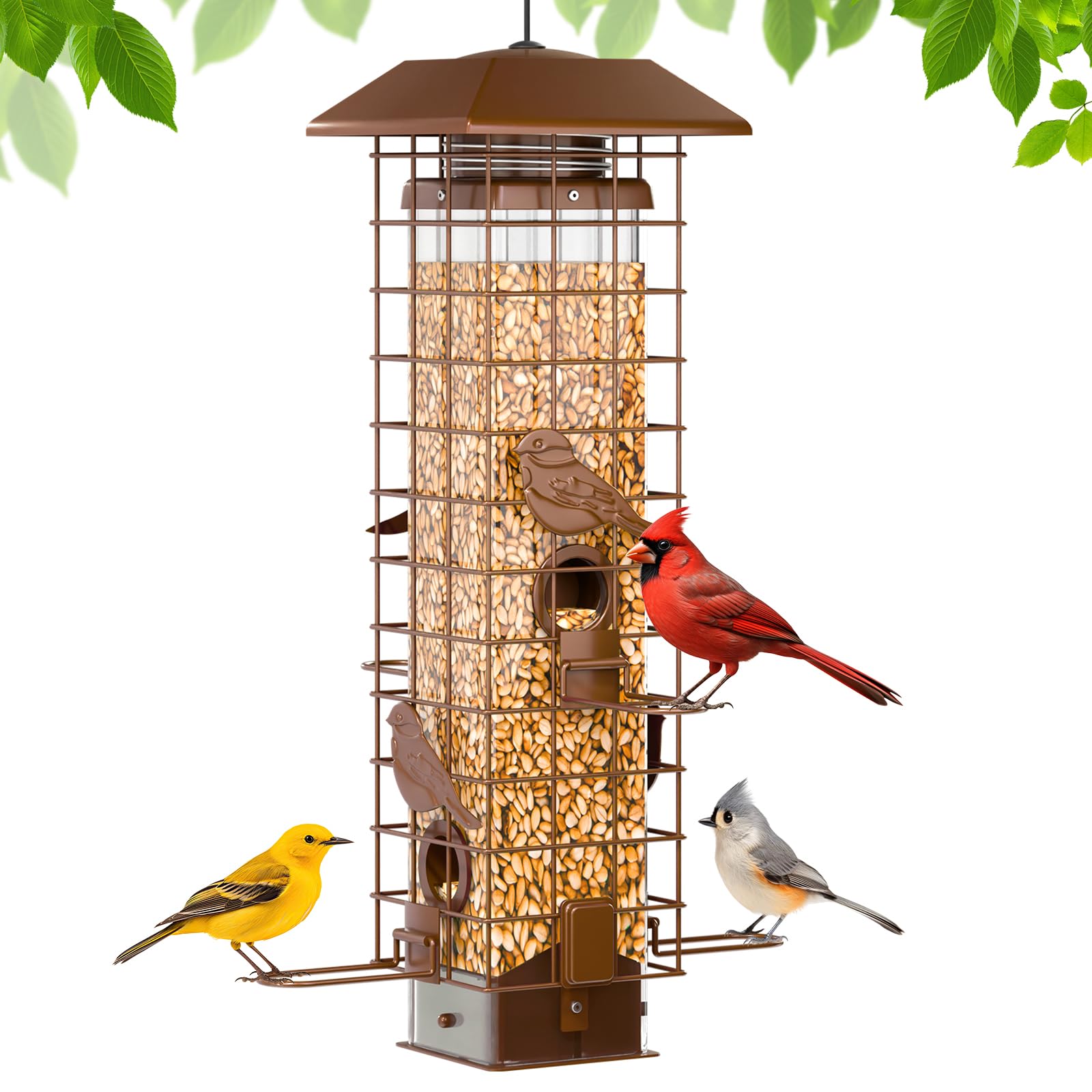
The GAINSEN feeder takes a different approach: instead of a static cage, it uses a weight-sensing spring that drops the outer protective cage when a squirrel climbs on, blocking access to the feeding ports. This mechanical deterrent is effective against gray squirrels, fox squirrels, and even raccoons, while small birds like wrens and finches are light enough to feed without triggering the mechanism.
The tube design holds up to three pounds of seed and features four large metal feeding ports. The removable base is an upgrade over older models that required tools for disassembly—now you can pop it off for thorough cleaning. The top seal prevents rainwater from entering, and the powder-coated metal shell resists rust even in humid climates.
Customer feedback praises the feeder’s durability and ease of refilling. The bronze color blends well with garden settings, and users report that squirrels stop trying after a few failed attempts. If your primary concern is squirrel theft rather than competition from large birds, this weight-activated design offers a proven solution that works day and night.
Why it’s great
- Weight-sensing cage blocks squirrels without harming them
- Removable base makes deep cleaning easy without tools
- Rainproof top and rust-resistant metal for all-season use
Good to know
- Tube design limits space—only one or two birds at a time
- Not designed for mealworms; best suited for seed blends
4. Wildlife Sciences Mealworms Bird Feeder

The Wildlife Sciences feeder is built around a simple but effective concept: a powder-coated mesh bowl with a stainless steel roof that slides up and down to adjust the gap between the roof and the bowl rim. Lowering the roof to about three inches creates a tight opening that allows wrens and bluebirds to enter while blocking larger birds like starlings and jays. This manual adjustment gives you direct control over which birds can access the mealworms.
The mesh bowl is made from heavy-gauge security-grade screen that resists rust and bending. The built-in hanger lets you suspend it from a tree branch or shepherd’s hook. Customers who use this specifically for wrens confirm that the adjustable roof is the key feature—it transforms the feeder from a general mealworm dish into a selective small-bird station.
One common issue is that the roof can slip down over time if the locking clips are not cinched tightly. Some users apply a dab of hot glue to the rod to hold the roof in place, which fixes the problem permanently. The bowl is on the smaller side, holding about a cup of mealworms, so frequent refills are necessary if you have a busy yard.
Why it’s great
- Adjustable roof lets you fine-tune access for wrens only
- Stainless steel mesh won’t rust or corrode outdoors
- Simple design is easy to set up and relocate
Good to know
- Roof may slip without tightening clips or adding glue
- Small bowl capacity requires frequent mealworm refills
5. Kingsyard Dual-Use Metal Mesh Bird Feeder
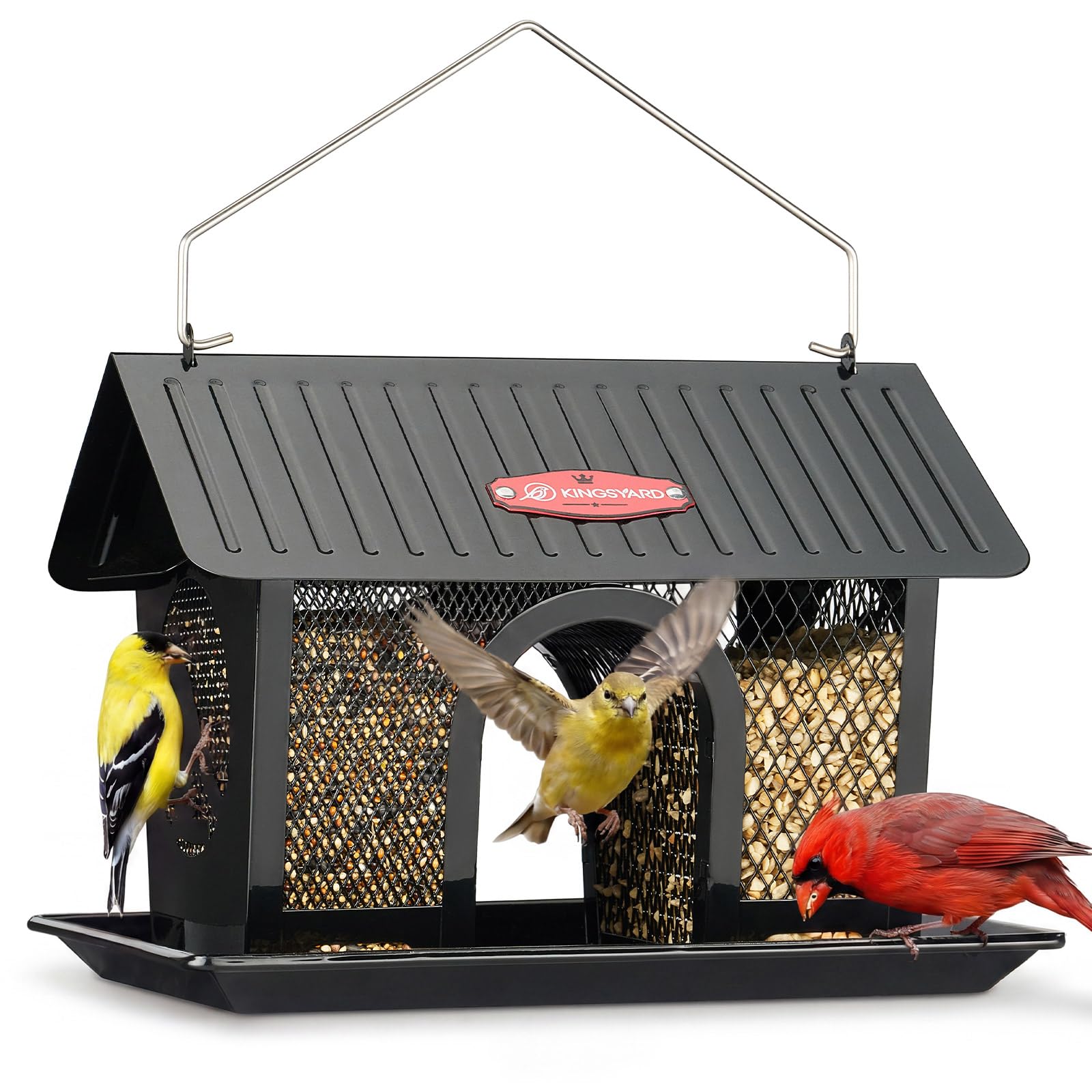
The Kingsyard dual-use feeder features a fine mesh tube for thistle and small seeds alongside wider openings for sunflower mixes, all enclosed in a rust-resistant powder-coated metal body. The 360-degree feeding design lets wrens cling to the mesh from any angle, which matches their natural feeding behavior as agile climbers. The wide tray at the bottom catches spillage and provides a perch for birds that prefer stable footing.
This feeder is best suited for yards where you want to attract a variety of small birds without worrying about squirrel damage. The all-metal construction resists chewing and weather better than plastic or wood alternatives. The removable top and wide opening make refilling and cleaning simple—no tools required.
Users report that birds adapt quickly and empty this feeder faster than others in the yard, which speaks to its accessibility and popularity with finches, chickadees, and wrens. The only downside is that the open tray at the bottom can attract larger birds and squirrels if not paired with a caged design. If you need exclusive wren access, this is a good secondary feeder alongside a caged primary option.
Why it’s great
- 360-degree mesh allows wrens to feed from any position
- All-metal construction is chew-proof and rust-resistant
- Dual compartments accommodate different seed types
Good to know
- Open tray design can attract squirrels and larger birds
- Best used as a supplementary feeder with a caged option
6. SEWANTA Squirrel Resistant Bird Feeder

The SEWANTA feeder uses a steel cage with bar spacing designed to let small birds slip through while blocking squirrels. The inner tube holds up to 22 ounces of seed and features four feeding ports at multiple levels, giving wrens and finches access from all angles. The transparent tube lets you see the seed level at a glance, so you know when it’s time to refill.
The cage is made from solid steel with a green rustproof plastic coating, which provides decent weather protection. The top screws on tightly to keep rainwater out and prevent squirrels from prying it open. The hanging wire loop is sturdy enough for outdoor use, though some users recommend replacing it with a heavier gauge wire for long-term durability.
Customer feedback is mixed on how well it excludes blackbirds—some report that blackbirds can cling to the cage and reach the ports, while others say the cage effectively stops pigeons and doves. For wrens specifically, the cage spacing is sufficient to keep them safe from most larger competitors, but persistent blackbirds may still be an issue. It’s a solid mid-range option for yards where squirrel pressure is moderate.
Why it’s great
- Cage design blocks squirrels and most large birds effectively
- Transparent tube shows fill level at a glance
- Multi-level ports allow several birds to feed at once
Good to know
- Blackbirds may cling to cage and reach feeding ports
- Cage openings could be smaller for better exclusion
7. iBorn Platform Bird Feeder Tray
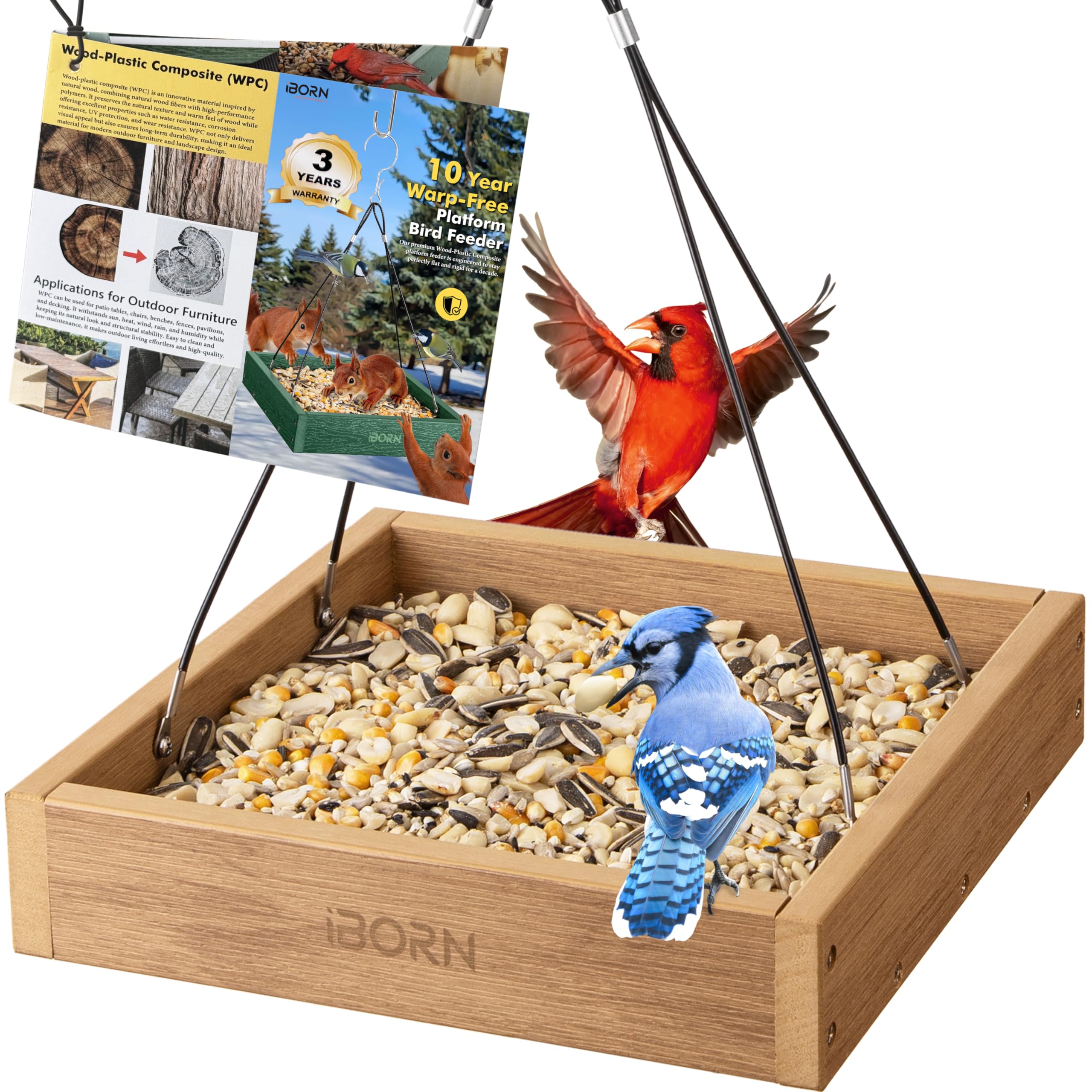
The iBorn platform feeder takes a simple open-tray approach, made from a wood-plastic composite that mimics the look of cedar without the maintenance. The 10.6-inch square tray holds up to three pounds of seed and features a fine mesh bottom that filters out seed dust and debris. This is a budget-friendly entry point for anyone who wants to attract wrens without investing in a caged or adjustable design.
The WPC material is weatherproof and won’t rot, warp, or fade for five years according to the manufacturer. The tray is deep enough to reduce spillage, and the mesh bottom helps keep seed dry by allowing air circulation. The hanging mount is simple but effective, though some users note the hanger is not heavy-duty and may need replacement over time.
The obvious limitation is that an open tray offers no protection from squirrels, starlings, or grackles. Wrens will visit this feeder, but they will compete directly with larger birds for access. It works best as a supplementary feeder in a yard where you already have a caged primary feeder for wrens. If you need an affordable tray feeder for general bird activity, this is a solid choice, but it is not a wren-exclusive solution.
Why it’s great
- Wood-plastic composite won’t rot, warp, or require sealing
- Mesh bottom filters debris and improves seed ventilation
- Deep tray design reduces spillage compared to shallow dishes
Good to know
- Open tray offers no protection from squirrels or large birds
- Hanger is not heavy-duty and may need upgrading over time
FAQ
What mesh size is best for a wren feeder?
Do wrens prefer mealworms or seeds?
How do I keep starlings out of my wren feeder?
Can wrens use tube feeders or only tray feeders?
Final thoughts: The verdict
For most users, the bird feeder for wrens winner is the Gbekery Caged Bluebird Feeder because its 1.5-inch mesh spacing reliably excludes large birds and squirrels while the removable glass bowl makes mealworm feeding simple. If you want an adjustable roof that gives you manual control over bird access, grab the Wildlife Sciences Mealworms Feeder. And for a weight-activated solution that stops squirrels cold without harming them, nothing beats the GAINSEN Weight-Activated Feeder.