
Our readers keep the lights on and the weekend projects moving. As an Amazon Associate, I earn from qualifying purchases.
Waking up with your ring and pinky fingers numb, tingling, or curled into a claw is the unmistakable signature of cubital tunnel syndrome, where the ulnar nerve gets compressed behind the elbow joint during sleep. The core fix is mechanical: prevent your elbow from bending past 90 degrees for 6-to-8 consecutive hours, which is nearly impossible without a dedicated brace that holds a therapeutic angle without cutting circulation.
I’m Rikta — the co-founder and writer behind FitlyFast. I’ve analyzed dozens of braces for this specific ulnar-nerve compression pattern, parsing the trade-offs between adjustable-angle hinges, plastic immobilizers, and compression sleeves to identify which designs actually keep the nerve unloaded through a full night’s sleep.
Whether you’re recovering from surgery or simply trying to avoid it, the right immobilizer makes the difference between waking rested or waking with numb digits. This guide breaks down the best mechanics, materials, and sizing for your brace for cubital tunnel syndrome.
How To Choose The Best Brace For Cubital Tunnel Syndrome
Not every elbow wrap is designed to treat ulnar nerve entrapment. Many generic supports provide warmth or mild compression, but they do nothing to prevent the elbow from bending past 90 degrees during sleep — which is exactly what irritates the nerve. You need a brace that locks the elbow at a safe angle, fits securely overnight, and avoids pressure points over the cubital tunnel itself.
Degree of immobilization
Cubital tunnel braces fall into two functional groups: adjustable-angle braces with a metal or plastic hinge that can be set between 90 and 180 degrees, and fixed-angle splints molded at a single therapeutic angle (commonly 122 degrees). Adjustable models are more versatile for day and night use, while fixed splints are simpler and often more comfortable for pure sleep wear. If your nerve irritation is positional, a fixed splint is usually sufficient; if you need modified angles for work or recovery, an adjustable hinge is worth the upgrade.
Pressure distribution over the cubital tunnel
A brace that presses directly on the bony groove behind the elbow — the cubital tunnel — will worsen symptoms. Look for designs with an open-back or scalloped cutout at the elbow that protects this area from compression. Sleeve-style braces without a rigid frame should have a gel or foam pad that wraps around, not over, the nerve. The best immobilizers balance stability with targeted relief, not blanket pressure.
Material breathability and skin comfort
Ulnar nerve braces are worn for long hours, often through the night. Foam-lined polyester and cotton blends wick moisture better than neoprene, which traps heat and can cause sweat rashes. Look for soft, machine-washable fabrics with smooth interior seams. Velcro hook-and-loop closures should not touch bare skin when fastened. If you sleep on your side, avoid braces with rigid plastic shells that dig into the ribs or opposite arm.
Quick Comparison
On smaller screens, swipe sideways to see the full table.
| Model | Category | Best For | Key Spec | Amazon |
|---|---|---|---|---|
| Sylong 4-Angle Adjustable (L/XL) | Adjustable | Day & Night Versatility | 4 lockable angles: 120°, 135°, 150°, 180° | Amazon |
| BraceAbility Cubital Tunnel Splint (L/XL) | Fixed Splint | Night-Only Immobilization | Fixed 122° elbow angle | Amazon |
| Sylong 4-Angle Black (L/XL) | Adjustable | Post-Surgery & Sleep | 4 lockable angles: 120°, 135°, 150°, 180° | Amazon |
| IMAK Brownmed RSI Elbow PM | Fixed Splint | Comfort & Breathability | Soft cotton lining, plastic internal splint | Amazon |
| Sylong 3-Plate Splint (S/M) | Fixed Splint | Budget-Friendly Sleep | 3 integrated support plates | Amazon |
| Sylong Bendable Aluminum (L) | Adjustable | Custom Angle Fitting | Bendable aluminum plate, 90° to 180° | Amazon |
| Bauerfeind EpiTrain | Compression | Mild Pain & Inflammation | Breathable knit with stabilizing pads | Amazon |
In‑Depth Reviews
1. Sylong 4-Angle Adjustable Elbow Brace (L/XL)
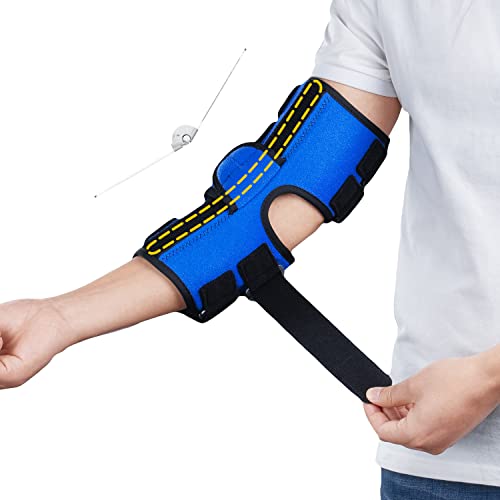
The Sylong adjustable brace stands out because of its patented four-angle locking mechanism — 120°, 135°, 150°, and 180° — which uses a screw-in pin rather than a flimsy bendable strip. This means the angle stays locked through the night even if you toss and turn, unlike aluminum braces that gradually shift out of shape. The L/XL size accommodates upper arm circumferences from 13.6 to 16 inches.
Users consistently report that this brace helped them avoid surgery, with many stating it provided immediate relief from morning numbness. The four hook-and-loop straps let you dial in compression independently on the upper arm, elbow, and forearm, which prevents the brace from migrating during sleep. The breathable foam lining and polyester outer layer are comfortable enough for all-day wear, and the metal bracket is removable for washing.
The standout complaint is build quality inconsistency — some units arrive with loose threads or straps that fray quickly. A few users recommend reinforcing the stitching with nylon thread if you plan to use it nightly for months. The bright blue color is also a minor cosmetic complaint for those who prefer discretion under clothing.
Why it’s great
- Patented screw-lock holds exactly 120°, 135°, 150°, or 180° without drifting
- Four independent straps prevent slippage and allow customized compression
- Works for both daytime activity and nighttime sleep with angle adjustment
Good to know
- Strap stitching may fray after extended nightly use
- Self-application requires some practice to align the hinge correctly
2. BraceAbility Cubital Tunnel Syndrome Elbow Brace (L/XL)
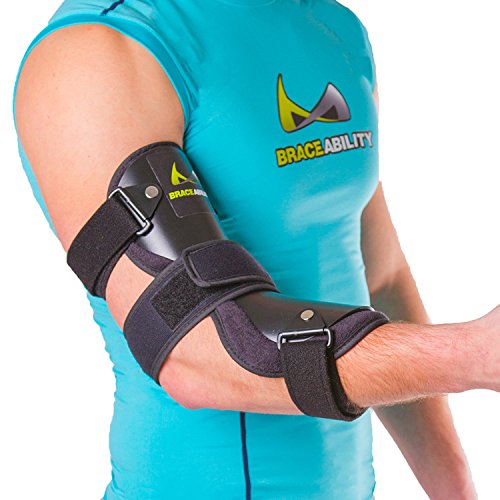
BraceAbility’s approach is simpler but equally effective: a rigid plastic shell that holds the elbow at a fixed 122-degree angle, the therapeutic sweet spot that prevents both excessive bending and hyperextension. This is a dedicated night splint, not a multi-purpose brace, and its plush foam liner makes it one of the more comfortable rigid options for side sleepers.
The L/XL size is designed for taller males and extra tall females, and users with larger frames report it fits securely without the brace rotating around the arm. The three Velcro straps are wide and well-padded, and the high-density plastic shell provides impact protection if you bump your elbow during sleep. Several users noted that their morning numbness resolved within a few days of consistent overnight wear.
However, the fixed 122-degree angle means you cannot adjust it for daytime wear or for a more gradual progression. Smaller-framed individuals, particularly women, find the smallest size still too large at the wrist strap. Some users also report that the rigid plastic digs into the ribs when sleeping on the affected side, requiring a pillow buffer.
Why it’s great
- Plush foam liner is noticeably more comfortable than bare plastic splints
- Fixed 122° angle is clinically appropriate for nocturnal ulnar nerve unloading
- High-density shell protects elbow from accidental impact during sleep
Good to know
- Fixed angle cannot be adjusted for daytime or progressive therapy
- Sizing runs large; small-framed users may struggle with a secure fit
3. Sylong 4-Angle Adjustable Elbow Brace Black (L/XL)

This is functionally the same 4-angle locking brace as the blue Sylong above but in a black colorway with a slightly different sizing chart (L/XL: 14.1–16 inches). The 120°, 135°, 150°, and 180° screw-lock system is identical, and the same soft foam inner lining and removable metal bracket make it a strong option for both day and night wear.
Users praise its sturdiness and ease of adjustment, noting that it feels more durable than bendable aluminum braces. Several reviewers used it post-surgery for tricep repair with doctor approval, confirming the hinge is robust enough for serious immobilization. The non-slip rubber interior strips help keep the brace from sliding down the arm, a common problem with tube-style splints.
A minority of users developed a small blister from the rubber anti-slip strips after extended wear, suggesting that those with sensitive skin should wear a thin long-sleeve shirt underneath. The Velcro straps have held up well in long-term use, but one reviewer reported the hook material losing grip after nine weeks of nightly use.
Why it’s great
- Rubber anti-slip strips prevent migration better than fabric-only designs
- Screw-lock hinge is robust enough for post-surgery immobilization
- Black color is more discreet under clothing than bright blue alternatives
Good to know
- Anti-slip rubber can irritate skin after prolonged wear
- Velcro may lose grip after 8+ weeks of nightly use
4. IMAK Brownmed RSI Elbow PM

The Brownmed IMAK uses a soft cotton lining with a flexible plastic internal splint, creating a very different feel from the metal-frame braces above. The plastic splint is broader and more rounded than narrow metal bars, which means it distributes pressure over a larger area and digs in less when you sleep on your side.
Users consistently describe it as comfortable enough to wear every night, with many reporting that it eliminated their cubital tunnel pain overnight. The design is shorter than most braces — extending only a few inches above and below the elbow — which makes it less bulky when sleeping. The fabric interior is smooth, and the Velcro closures do not touch bare skin when properly positioned.
The main functional trade-off is that the plastic splint has some flex, so it does not provide the absolute rigid immobilization of a metal-hinge brace. Some users find it slips down the arm overnight, especially if worn with a slippery T-shirt. Wearing it over a long-sleeve shirt helps stabilize the position. The sizing is also limited to a single medium, which may be too large for petite individuals.
Why it’s great
- Soft cotton lining is significantly more comfortable against skin than foam or neoprene
- Rounded plastic splint distributes pressure and minimizes digging
- Shorter profile is less intrusive for side sleepers
Good to know
- Plastic splint flexes slightly, offering less rigid immobilization than metal braces
- Slippage is common with bare skin; best worn over a long-sleeve shirt
5. Sylong 3-Plate Elbow Splint (S/M)

This is the entry-level Sylong model, and it focuses on pure sleep immobilization without any adjustable-angle complexity. The three built-in support plates — one on each side of the elbow and one over the top — create a channel that prevents the elbow from bending, similar to a padded splint. The included shoulder strap loops around the opposite shoulder to prevent the brace from sliding off, a clever solution for restless sleepers.
Users with tennis elbow and cubital tunnel syndrome report that wearing this to bed eliminated their morning pain, and several specifically noted it helped them avoid surgery when combined with anti-inflammatory medication. The S/M size fits upper arm circumferences of 9–13 inches, which covers most women and smaller men. The foam padding and polyamide bubble fabric interior are skin-friendly and breathable for all-night wear.
The main drawback is that the three-plate design is less comfortable than a single-hinge brace because the plates create stiff points that can dig into the arm if you sleep in a contorted position. Some users found it intolerably uncomfortable, with one describing it as a “Frankenstein” sleeping experience. The 3D shape also makes it more noticeable under a blanket.
Why it’s great
- Shoulder strap prevents the brace from slipping off during active sleep
- Three support plates provide multi-directional immobilization
- Very affordable entry point for testing if splinting works for you
Good to know
- Support plates create stiff pressure points that some find uncomfortable
- Not adjustable — the angle is fixed by the plate configuration
6. Sylong Bendable Aluminum Elbow Splint (L)

This brace uses a bendable aluminum strip inside a foam-and-fabric sleeve, which allows you to manually mold the angle from 90 to 180 degrees. Unlike the screw-lock models above, this one does not have discrete click-stop positions — you simply bend the metal to your desired angle and it stays there. The open-back elbow cutout is a thoughtful design element that prevents direct pressure over the cubital tunnel itself.
Users with large arms appreciate that the L size (13.5–16 inches) fits generously, and the four Velcro straps allow fine-grained compression adjustment. Multiple reviewers described it as comfortable enough for both daytime and nighttime wear, with several reporting that it significantly improved their finger numbness within days. The black fabric and low-profile aluminum bar make it more discreet under clothing than bulky plastic splints.
The downside is that aluminum bends incrementally over time, especially if you sleep on your side and apply force to the bar. A few users reported that the brace allowed their arm to hyperextend (straighten too much) because the bar bent backward. The center elbow cutout is also slightly loose on some arm shapes, which can allow unwanted movement. Re-bending the bar every few days can become tedious.
Why it’s great
- Open-back elbow cutout protects the ulnar nerve from direct compression
- Bendable aluminum allows any angle between 90° and 180°
- Four straps provide customizable compression across the full arm
Good to know
- Aluminum bar can slowly bend out of shape with nightly use
- Center cutout may be too loose for some arm shapes, allowing movement
7. Bauerfeind EpiTrain Elbow Support
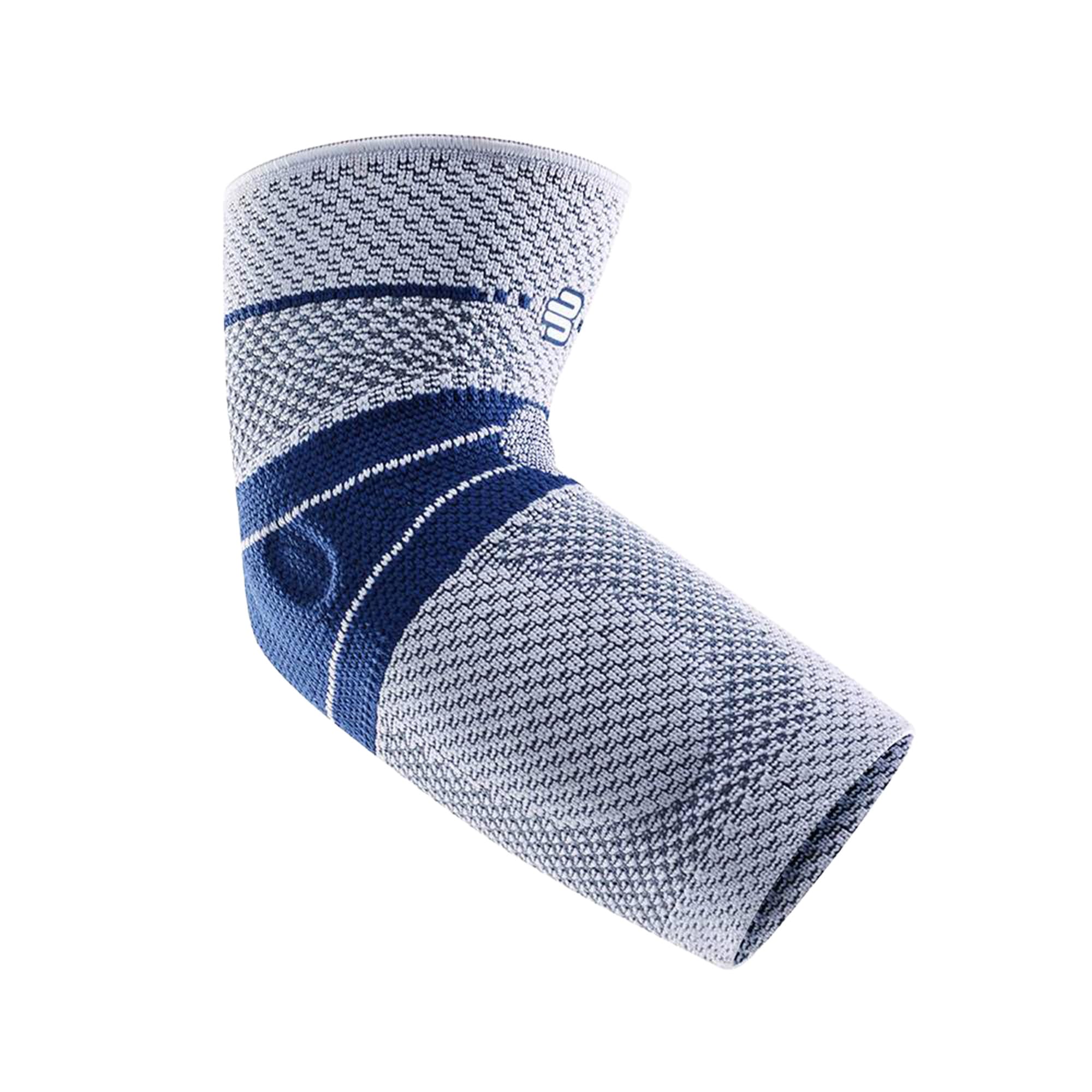
The Bauerfeind EpiTrain is not an immobilizing splint — it is a medical-grade compression sleeve with integrated stabilizing pads designed for tendonitis, epicondylitis, and general elbow pain. It uses a special breathable knit fabric that adapts to movement without cutting in or slipping, and the built-in pads create a massage effect on the soft tissue during motion, which can reduce swelling and improve muscle activation around the elbow.
If your cubital tunnel symptoms are mild and triggered by activities like lifting or repetitive motion, this brace can provide meaningful relief through targeted compression and proprioceptive feedback. Users with ulnar nerve irritation during heavy lifting reported that the EpiTrain eliminated pain on one side and nearly eliminated it on the other. The German manufacturing quality is evident in the precise stitching, the lack of loose threads, and the fabric’s durability through repeated washing.
However, this is simply not the right tool for moderate to severe nocturnal cubital tunnel syndrome. Because it does not prevent elbow bending, it cannot unload the ulnar nerve during sleep. It also requires careful sizing — you measure 4.75 inches down from the elbow tip — and the pull-on design can be difficult for those with reduced hand strength. The investment is significant for a product that addresses a narrower range of symptoms.
Why it’s great
- Breathable knit fabric is comfortable for all-day wear, even during exercise
- Stabilizing pads provide a massage effect that reduces inflammation during movement
- Made in Germany with high-quality, durable materials
Good to know
- Does not immobilize the elbow — ineffective for nocturnal nerve unloading
- Pull-on design is difficult to don for those with limited grip strength
FAQ
Should I wear a cubital tunnel brace during the day or only at night?
What angle should my elbow brace be set to for cubital tunnel syndrome?
Can a compression sleeve replace an immobilizing brace for cubital tunnel syndrome?
How tight should a cubital tunnel brace be?
Final Thoughts: The Verdict
For most users, the brace for cubital tunnel syndrome winner is the Sylong 4-Angle Adjustable Elbow Brace because its patented screw-lock system holds a precise therapeutic angle through the night without drifting, and the four adjustable straps prevent migration better than any other model in this lineup. If you want a dedicated night splint with proven comfort, grab the BraceAbility Cubital Tunnel Splint. And for mild pain or inflammation during activity rather than nocturnal nerve compression, nothing beats the Bauerfeind EpiTrain.