
Our readers keep the lights on and the weekend projects moving. As an Amazon Associate, I earn from qualifying purchases.
Blueberries demand acidic soil with a pH between 4.5 and 5.5, and using standard garden dirt is the fastest way to stunt growth and produce sour, sparse fruit. The wrong pH locks away essential nutrients, turning deep green leaves pale yellow and stopping berry formation entirely. A targeted soil solution solves this problem before you even plant.
I’m Rikta — the co-founder and writer behind FitlyFast. I’ve spent countless hours cross-referencing soil chemistry, organic certifications, and customer yield reports so you know exactly which bag delivers active pH correction and the right nutrient profile for vigorous blueberry bushes.
Whether you are planting in-ground or in containers, choosing the right growing medium from the start is non-negotiable. This guide breaks down the best blueberry soil by acidity level, organic integrity, and specific use case to match your garden’s unique needs.
How To Choose The Best Blueberry Soil
Selecting the right medium for your blueberries goes beyond grabbing any bag with an acid label. You have to consider the starting pH, the nutrient analysis (N-P-K ratio), the source of acidity, and whether the product amends your existing soil or acts as a standalone potting mix. Below are the three most important factors to evaluate before you buy.
pH Level and Acidifying Power
Blueberries are acidophiles—they require a soil pH of 4.5 to 5.5. Products rely on elemental sulfur, peat moss, or organic acids to drop the pH. Elemental sulfur takes weeks to break down but provides lasting acidity, while peat offers a fast, natural pH drop suitable for container mixes. Look for a guaranteed sulfur percentage, especially in granular fertilizers, to confirm the mix will maintain acidity across the growing season.
Organic Certification and Ingredient Purity
Many gardeners prefer inputs free from synthetic chemicals and GMO-laden additives. Certifications like OMRI (Organic Materials Review Institute), Non-GMO Project Verified, and CCOF provide third-party verification that ingredients meet organic production standards. Products labeled as “natural” without these seals may still contain synthetic fillers or toxic byproducts. For food-grade berries, verified organic sourcing matters.
Nutrient Profile and Bioavailable Additives
A balanced N-P-K ratio such as 4-3-4 or 17-6-6 supports leaf growth, root development, and flower production without overloading the plant. Mycorrhizal fungi and humic acids improve nutrient and water uptake, which is especially helpful in the low-nutrient, acidic environment blueberries prefer. Slow-release formulas feed over months, while water-soluble powders deliver immediate correction for nutrient deficiencies.
Quick Comparison
On smaller screens, swipe sideways to see the full table.
| Model | Category | Best For | Key Spec | Amazon |
|---|---|---|---|---|
| Specialty Blueberry Potting Mix | Potting Mix | Container-grown blueberries | 18-6-8 slow-release feed (12 months) | Amazon |
| Espoma Organic Holly-Tone 36 lb | Granular Fertilizer | Large landscape & long-term feeding | 5% sulfur for pH acidification | Amazon |
| Jack’s Classic 17-6-6 Acid Special | Water-Soluble Powder | Quick nutrient correction & foliar feed | 17-6-6 analysis with iron & sulfur | Amazon |
| Espoma Berry Tone 4-3-4 | Granular Fertilizer | Established berry patches | 4-3-4 analysis with Bio-tone microbes | Amazon |
| FoxFarm Happy Frog Acid Loving | Powder Fertilizer | Pot & container acid-loving plants | Contains mycorrhizal fungi & soil microbes | Amazon |
| Dr. Earth Acid Lovers 4 lb | Granular Fertilizer | Non-GMO verified organic feeding | Non-GMO Project Verified & OMRI listed | Amazon |
| Coast of Maine Acid-Loving Planting Soil | Ready-to-Use Soil | In-ground planting & soil amendment | Low pH with composted manure & peat moss | Amazon |
In‑Depth Reviews
1. Specialty Blueberry Potting Mix by Perfect Plants
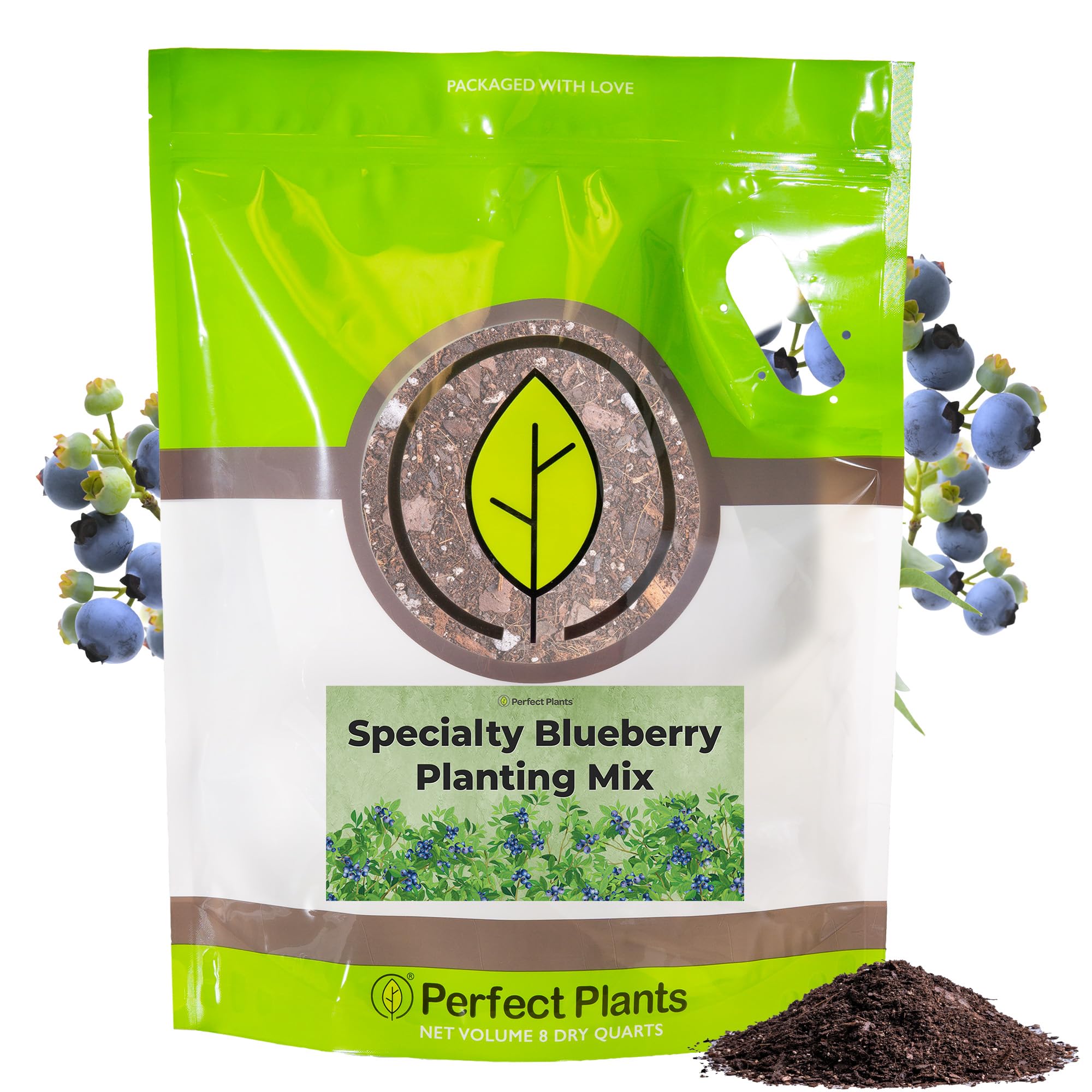
This is the single most complete solution for container blueberry growers available right now. The blend uses peat moss to naturally acidify the soil, removing the guesswork of adding sulfur or acidifiers separately. Composted pine bark and granite sand create the sharp drainage blueberries require to avoid root rot while retaining enough moisture for consistent growth.
The 18-6-8 slow-release fertilizer included in the mix feeds plants for up to twelve months, eliminating the need for frequent reapplications during the growing season. Each bag comes in a heavy-duty resealable pouch that keeps the remaining mix fresh between uses, a convenience rarely seen in the soil category.
Some buyers have reported pH inconsistencies, so confirming the starting acidity with a meter is wise, but the vast majority of users saw immediate greening and bud formation within days. For anyone growing blueberries in pots on a patio or balcony, this mix removes the largest barrier to success.
Why it’s great
- Peat-based acidity requires no extra pH adjusters
- Slow-release feed supports growth for up to 12 months
- Resealable bag prevents waste between uses
Good to know
- A small number of bags tested as alkaline instead of acidic on pH meters
- Unit count is smaller (8qt) than bulk soil options
2. Espoma Organic Holly-Tone 36 lb

When you have an entire landscape of acid lovers—blueberries, azaleas, rhododendrons, and hollies—the 36-pound bag of Holly-Tone delivers season-long feeding at the lowest cost per application in this roundup. Each granule contains 5 percent elemental sulfur, which lowers soil pH steadily as it breaks down, and the 4-3-4 analysis supports strong root systems without pushing excessive leafy growth.
Espoma has been producing this formula since 1929, and the Bio-tone microbial blend adds beneficial bacteria that help roots access locked-up nutrients in acidic conditions. The product is registered as an Organic Input Material, meaning it meets the standards for certified organic production without synthetic additives.
Apply it twice per year—early spring and late spring for berries—and water it in thoroughly. The slow-release nature means you feed the soil biology, not just the plant, which builds long-term fertility. Only grab this if you have substantial garden space; the bag is heavy and covers hundreds of square feet.
Why it’s great
- Massive 36-pound bag reduces per-feeding cost drastically
- Elemental sulfur actively lowers pH over time
- Bio-tone microbes improve nutrient access in acidic soil
Good to know
- Heavy bag may be difficult to maneuver for some gardeners
- Too concentrated for small container plantings without dilution
3. Jack’s Classic 17-6-6 Acid Special

For gardeners who need fast results on a budget, Jack’s Classic Acid Special is the most concentrated water-soluble option in this lineup. The 17-6-6 ratio delivers a heavy dose of nitrogen that greens up yellowing blueberry leaves in days, and the elevated iron and sulfur content corrects chlorosis caused by high soil pH. One 1.5-pound bag makes up to 40 gallons of liquid feed.
Unlike granular fertilizers that require soil microbes to break them down, this powder dissolves completely and becomes immediately available to roots. It also works as a foliar spray for direct leaf absorption, giving you two application paths depending on your plant’s urgency. The included measuring spoon eliminates guesswork, making it beginner-friendly.
The high nitrogen content means you should not use it as a continuous feed for mature bushes in the fruiting stage without switching to a lower-N formula later. Reserve this for early-season growth spurts or when you see nutrient deficiency symptoms appear.
Why it’s great
- Immediate nutrient availability through root or foliar feeding
- High iron and sulfur content corrects yellowing quickly
- Lowest cost per gallon among liquid fertilizers tested
Good to know
- High nitrogen (17-6-6) not ideal for late-season fruiting
- Requires mixing each use—no slow-release convenience
4. Espoma Berry Tone 4-3-4
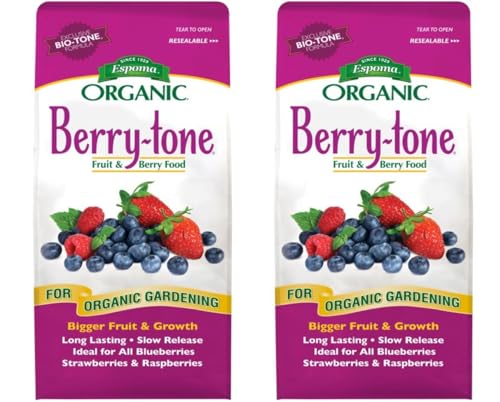
Berry Tone is formulated specifically for the entire berry family—blueberries, strawberries, raspberries, and blackberries—rather than general acid-loving ornamentals. The balanced 4-3-4 analysis with 5 percent sulfur is gentle enough to apply twice per season without burning roots, making it a safer choice for beginners who worry about over-fertilizing.
Espoma’s proprietary Bio-tone enriches the granules with beneficial microbes that colonize the root zone and enhance nutrient cycling in the low-pH environment. The granules are ready to use straight from the bag, with no mixing required. Apply early and late spring for established plants, or mix into the planting hole for new bushes.
Some users found that one four-pound bag went further than expected, especially when following the recommended tablespoon-per-plant rate for containers. If you have an existing berry patch that simply needs a seasonal pH correction and mild feeding, Berry Tone hits the sweet spot without overcomplicating the routine.
Why it’s great
- Species-specific formula for all berry types
- Gentle 4-3-4 analysis reduces burn risk
- Ready-to-use granules require no mixing
Good to know
- Lower nutrient density requires two applications per season
- Not ideal as a standalone soil—use as a fertilizer amendment
5. FoxFarm Happy Frog Acid Loving Plants Fertilizer

FoxFarm built a loyal following in the premium garden world, and their Happy Frog acid-loving formula justifies the reputation. The powdered blend includes mycorrhizal fungi and soil microbes that form symbiotic relationships with blueberry roots, dramatically increasing the plant’s ability to absorb water and phosphorus in acidic conditions.
The 1/16 cup per gallon mixing rate is low, but the results show quickly. Gardenia and strawberry container growers reported visible bud formation within ten days. The OMRI listing confirms organic compliance, and the slow-release nature of the powder prevents the nutrient spikes that stress acid-loving plants.
One downside is the relatively small coverage area per bag compared to bulk granular options—it works best for dedicated container plantings or smaller berry patches. If you already use FoxFarm’s soil mixes, this fertilizer is designed to complement that system perfectly.
Why it’s great
- Mycorrhizal fungi and soil microbes boost nutrient uptake
- Visible leaf and bud improvement within 10 days
- OMRI listed for organic garden use
Good to know
- Powder form requires measuring and mixing each use
- Coverage is limited compared to bulk granular options
6. Dr. Earth Acid Lovers 4 lb

Dr. Earth Acid Lovers holds the distinction of being the only Non-GMO Project Verified fertilizer in the United States, a meaningful credential for growers who prioritize ingredient transparency. The formula is handcrafted from human and feed-grade ingredients, with zero synthetic chemicals or GMO chicken manure—safe enough to use around pets and children.
The 0.3-0.4-3 analysis looks low compared to synthetic competitors, but the real power lies in the multi-minerals, humic acids, and trace elements that condition the soil microbiome. This product feeds the biology that keeps pH stable long-term rather than dumping synthetic salts that wash away in three weeks.
Customers consistently report dramatic turnarounds on rhododendrons and azaleas that had not bloomed for years. The 4-pound bag is ideal for testing on a few bushes before committing to a larger investment. For those who want the highest level of organic purity available, this is the standard.
Why it’s great
- Only Non-GMO Project Verified fertilizer in the U.S.
- Human and feed-grade ingredients are pet and child safe
- Humic acids and trace minerals build long-term soil health
Good to know
- Low N-P-K ratio (0.3-0.4-3) requires consistent reapplication
- Granules break down slower than liquid alternatives
7. Coast of Maine Organic & Natural Planting Soil for Acid Loving Plants

Coast of Maine delivers the most generous volume in this roundup at 20 quarts, making it the most economical choice for filling garden beds or topping up large containers. The blend combines sphagnum peat moss, composted manure, and aged bark to create a lightweight, free-draining structure that blueberries need while holding enough moisture to reduce watering frequency.
OMRI listed for organic use, this soil is ready to use straight from the bag—no mixing with existing dirt required. The low pH formulation is ideal not just for blueberries but also for strawberries, ferns, camellias, and dogwoods. Users regularly note the absence of strong manure odor, which is a common complaint with compost-heavy soils.
The trade-off is that this is a soil, not a concentrated fertilizer, so you will need to supplement with an acid-specific fertilizer during the growing season. For gardeners establishing a new bed of acid lovers on a tight budget, this bag provides the best cubic inches per dollar spent.
Why it’s great
- Largest volume (20 qt) at the lowest per-quart cost
- Ready to use with no mixing or additional soil needed
- OMRI listed and free of strong manure odor
Good to know
- Requires supplemental acid fertilizer for sustained growth
- Heavier wet weight compared to peat-only mixes
FAQ
Can I use regular potting soil for blueberries?
How often should I apply acid fertilizer to my blueberry bushes?
Final Thoughts: The Verdict
For most users, the blueberry soil winner is the Specialty Blueberry Potting Mix by Perfect Plants because it combines natural peat-based acidity, a year-long slow-release fertilizer, and a resealable bag in one easy solution. If you need bulk coverage for a large landscape with multiple acid lovers, grab the Espoma Organic Holly-Tone 36 lb. And for those dealing with nutrient deficiencies who need fast correction, nothing beats the Jack’s Classic 17-6-6 Acid Special.