
Our readers keep the lights on and the weekend projects moving. As an Amazon Associate, I earn from qualifying purchases.
Standard hearing aids block your ear canal, creating a plugged-up, muffled sensation that makes your own voice sound alien. Bone conduction technology bypasses that entirely, sending sound vibrations directly through your skull to your inner ear. The result is a natural, open-ear listening experience that reconnects you with the world around you without the isolation of traditional in-ear devices.
I’m Rikta — the co-founder and writer behind FitlyFast. I’ve spent years analyzing the hardware specifications and user experiences across the hearing assistance market, particularly focused on how non-traditional designs like bone conduction change daily comfort and compliance for users who struggle with standard aids.
These devices rest on the bone behind your ear, leaving your ear canal completely clear for better hygiene and situational awareness. Below, you’ll find the best bone conduction hearing aid models to guide your choice.
How To Choose The Best Bone Conduction Hearing Aid
Buying a bone conduction hearing aid involves understanding how your hearing loss profile matches the device’s capabilities. These devices are not one-size-fits-all; they vary in amplification power, connectivity, and comfort depending on build materials and weight.
Amplification vs. Bluetooth Mode
Some models function strictly as sound amplifiers for ambient conversation, while others double as wireless Bluetooth headsets for phone calls and streaming audio. Determine whether you need a dedicated hearing amplifier or a hybrid device that also replaces your everyday headphones.
Battery Life and Charge Method
Bone conduction amplifiers typically offer six to ten hours of continuous use. Look for magnetic or USB-C charging convenience, and consider models with a quick-charge feature — a five-minute charge delivering up to two hours of use can make a real difference during a busy day.
Weight and Frame Feel
Since these devices sit on the bone behind your ear, weight distribution matters. Devices under 30 grams generally offer better all-day comfort. A lightweight titanium or flexible wrap-around frame prevents pressure points and keeps the transducer aligned correctly against your mastoid bone.
Quick Comparison
On smaller screens, swipe sideways to see the full table.
| Model | Category | Best For | Key Spec | Amazon |
|---|---|---|---|---|
| SHOKZ OpenRun Pro | Mid-Range | Active use & calls | 10h battery, 9th gen driver | Amazon |
| SHOKZ OpenComm2 | Mid-Range | Crystal-clear calls | 16h talk time, noise-canceling mic | Amazon |
| HUHD Bone Conduction Aid | Premium | Natural open-ear hearing | Open-ear, pre-programmed | Amazon |
| Aurimi Personal Amplifier | Premium | Ultra-light daily wear | 25g, 10h battery, IPX5 | Amazon |
| Blue Deer BD-NEWF2H | Premium | Seniors & dual-mode | 5-level memory volume, dual mode | Amazon |
| WLV-TECH eEAR-BC-HPH-001 | Mid-Range | Military-grade durability | IP67, BT 5.3, 8h battery | Amazon |
| QuietlyBold CORE Amplifier | Mid-Range | Entry-level conversation boost | 90dB sensitivity, standalone | Amazon |
| JMTINA GM-951 | Budget | Budget-friendly discreet aid | 36h case, 3 modes, FDA registered | Amazon |
| ELEHEAR-Beyond Pro | Premium | App-controlled audiophile sound | VocClear 2.0, 20h runtime | Amazon |
In‑Depth Reviews
1. SHOKZ OpenComm2 C120

The OpenComm2 uses SHOKZ’s 7th generation bone conduction driver paired with PremiumPitch 2.0 audio and a DSP-boosted noise-canceling microphone. This setup makes it a top performer for phone calls in noisy environments — the boom mic isolates your voice while the open-ear design keeps you aware of surroundings.
Weighing only 35 grams with an IP55 water-resistant finish, it holds up to sweat and light rain during daily commutes. The 16-hour talk time and 5-minute quick charge (giving 2 hours of talk time) are standout figures for a bone conduction headset. Bluetooth multipoint lets you switch between laptop and phone seamlessly.
Some users with smaller head sizes report the wraparound frame feels loose, leading to pressure on the ears after extended wear. The microphone is excellent for calls but picks up background noise for the listener if you’re in a very loud space. The EQ is limited to music and talk presets in the app.
Why it’s great
- Best-in-class noise-canceling microphone for calls
- 16-hour talk time with rapid USB-C charging
- Multipoint Bluetooth connects two devices
Good to know
- Frame may feel loose on smaller heads
- No EQ customization for music
- Microphone picks up background noise for listener
2. SHOKZ OpenRun Pro

The OpenRun Pro features SHOKZ’s 9th generation bone conduction transducer with TurboPitch technology, delivering noticeably stronger bass response than earlier models. The titanium wraparound frame stays locked on your head during running, cycling, and gym sessions without slipping.
Battery life hits a reliable 10 hours, and the 5-minute quick charge provides 1.5 hours of playback — a lifesaver when you forget to charge overnight. The open-ear design means you hear traffic, approaching runners, or a conversation at the water fountain without pausing your music.
The bass vibration becomes a tickling sensation on the cheekbones at higher volumes, which some users find distracting. Audio playback is mono through the bone conduction driver, so soundstage is limited. The proprietary magnetic charger is not USB-C, meaning an extra cable to carry.
Why it’s great
- Strong bass for a bone conduction driver
- Secure titanium frame stays put during intense activity
- Fast charge gives 1.5 hours in 5 minutes
Good to know
- Bass vibration tickles at higher volume
- Proprietary magnetic charger, not USB-C
- Not designed as a dedicated hearing aid
3. HUHD Bone Conduction Aid
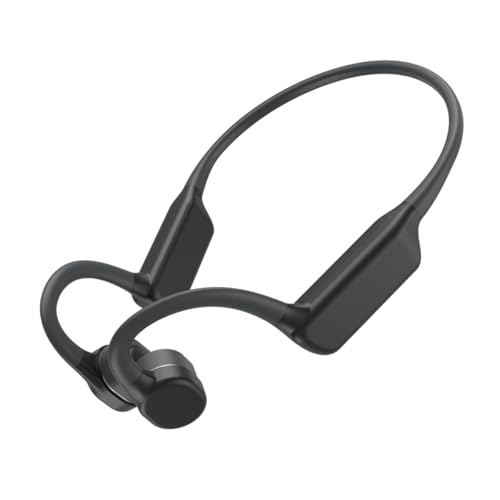
This HUHD device is a dedicated hearing amplifier, not a Bluetooth headphone. It uses bone conduction to send vibrations directly to the inner ear, completely bypassing the ear canal. The open-ear design eliminates the plugged-up feeling and reduces moisture buildup that can lead to infections.
The device arrives pre-programmed for typical environments, so there is no fitting appointment required. Users simply turn it on and adjust volume. Directional microphones focus on speech in front of you while suppressing background noise, making conversations clearer in crowded settings.
Reviewers with mild hearing loss report excellent results, but those with significant hearing loss note the amplification ceiling is somewhat low — it may not be powerful enough for severe cases. The magnetic charger is easy to use, but the device does not offer multi-band EQ adjustments.
Why it’s great
- No ear canal blockage — reduces infection risk
- Pre-programmed for immediate use out of the box
- Directional mic focuses on conversation
Good to know
- Amplification ceiling may be too low for severe loss
- No Bluetooth or streaming capabilities
- Volume adjustment is limited to a few settings
4. Blue Deer BD-NEWF2H
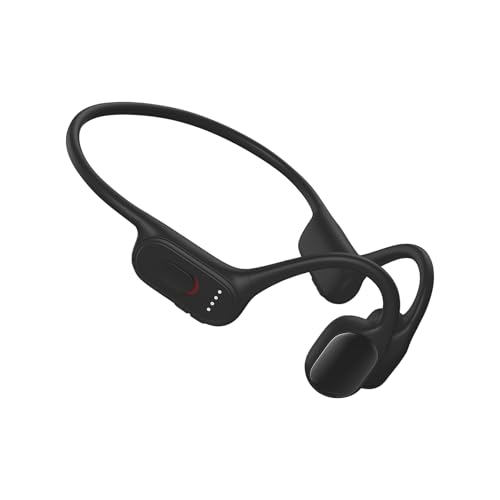
The Blue Deer BD-NEWF2H combines a hearing amplifier with Bluetooth 5.3 streaming. A simple slide switch powers it on, and dedicated volume buttons let you adjust levels in 5 steps that the device remembers between uses. Double-clicking the ‘M’ button toggles between amplifier and Bluetooth modes.
Weighing just over an ounce, it feels featherlight. The IPX5 rating protects against sweat and rain. Battery life reaches 8 hours in amplifier mode and 6 hours in Bluetooth mode, with a one-hour quick charge returning full power. The open-ear design allows natural ambient awareness.
Some users report intermittent feedback squeal in the right earpiece, which lasts several seconds before clearing. The mode switching and volume steps can feel limiting for users who want fine-grained control. The English voice prompts are clear but cannot be disabled.
Why it’s great
- Dual hearing aid and Bluetooth headset functionality
- Featherlight design for all-day wear
- 5-level memory volume is senior-friendly
Good to know
- Intermittent feedback squeal in right earpiece reported
- Amplifier mode and Bluetooth mode must be toggled manually
- 5 volume steps may not suit all hearing profiles
5. Aurimi Z18 Personal Amplifier
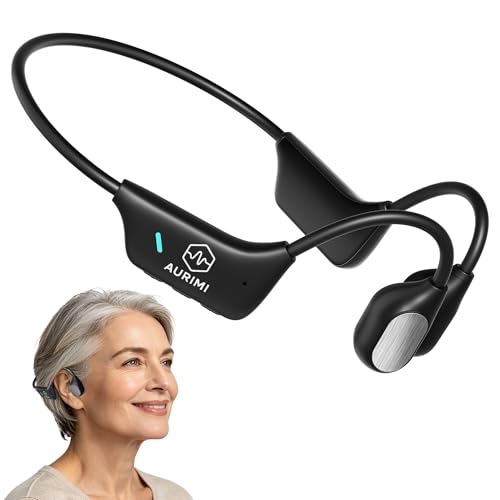
The Aurimi Z18 is a dedicated personal sound amplifier with no Bluetooth, weighing just 25 grams — among the lightest in this category. It focuses purely on amplifying ambient conversation through bone conduction, making it ideal for users who want a simple, distraction-free hearing boost.
With up to 10 hours of battery life and IPX5 water resistance, it supports all-day wear through daily activities like walking, errands, or watching TV. The open-ear design means you never sacrifice situational awareness. The device has a single-button control for volume adjustment.
Users report the audio can sound tinny with no bass presence, which is typical for bone conduction but more noticeable here due to the minimalist driver. The fit presses against the cheekbone and tragus, which some find uncomfortable after hours of wear. No instruction manual is included in some packages.
Why it’s great
- Extremely lightweight at 25g
- 10-hour battery covers a full day
- Simple no-Bluetooth operation
Good to know
- Audio sounds tinny with minimal bass
- Fit may be uncomfortable for small faces
- No included user manual in some shipments
6. ELEHEAR-Beyond Pro
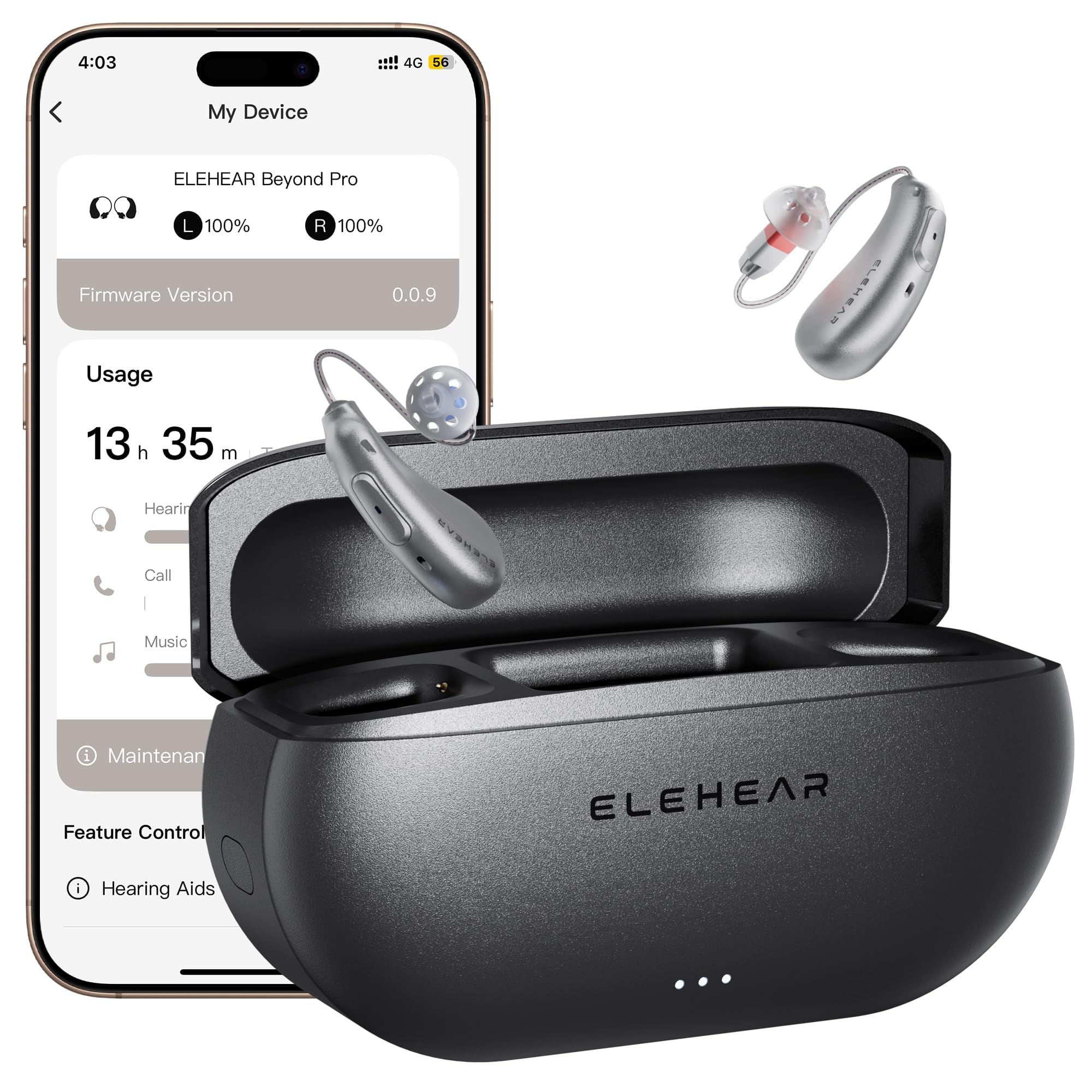
The ELEHEAR-Beyond Pro is a traditional Receiver-in-Canal (RIC) hearing aid, not a bone conduction device. It uses VocClear 2.0 algorithm to deliver speech clarity with ultra-low latency. The companion app provides 20 immersive soundscapes and real-time AI translation across 11 languages.
Battery life reaches 20 hours on a single charge, and the charging case provides four additional full charges. A 15-minute fast charge gives 6 hours of use. The RIC form factor is extremely discreet and sits inside the ear canal, making it suitable for users who want an invisible profile.
Being a traditional RIC aid, it does not use bone conduction — it amplifies sound through the ear canal. Some users report intermittent feedback after a few months of use. The app-based setup requires a smartphone, which may be challenging for less tech-savvy seniors.
Why it’s great
- Premium sound processing with 20-hour battery
- App-controlled soundscapes and AI translation
- Discreet RIC design with fast charging
Good to know
- Not a bone conduction device — traditional in-ear design
- May require smartphone for full functionality
- Reliability concerns reported after extended use
7. WLV-TECH eEAR-BC-HPH-001
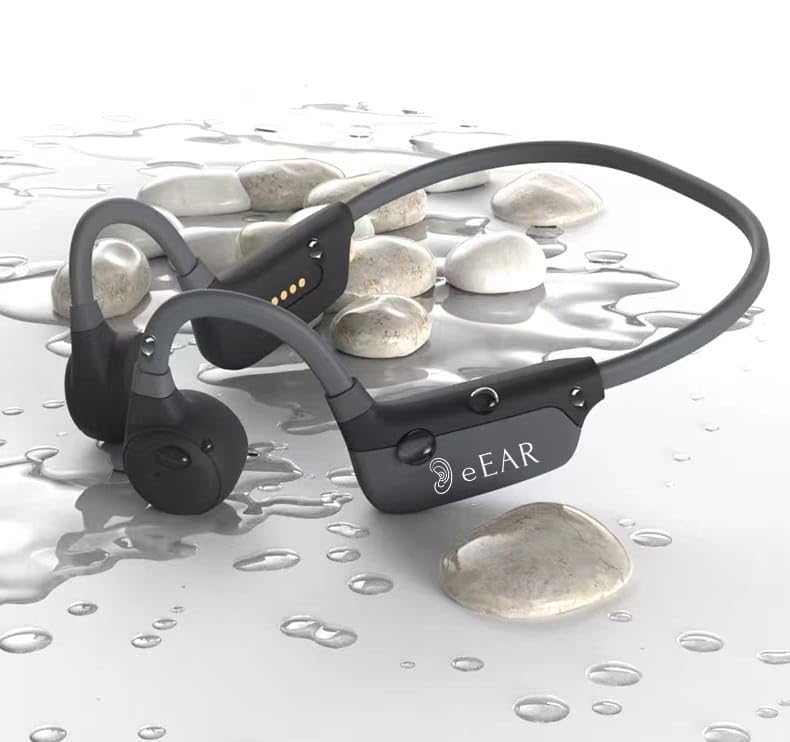
The eEAR-BC-HPH-001 is built with an IP67 dust and waterproof rating, meaning it can survive submersion up to 1 meter for 30 minutes. It features Bluetooth 5.3 for stable wireless streaming and works as a headset for music and calls in addition to its hearing amplifier mode.
The device includes three ear tip sizes for a customized fit. Battery life is rated at 8 hours. The amplifier mode is best for indoor settings like TV and phone calls, but lacks active noise filtering — outdoor and car use can introduce static from ambient sounds.
As a hearing aid for severe loss, the amplification power is limited. The headband is non-adjustable, which makes it difficult to position the bone conduction transducer optimally against the mastoid bone. Some users report the product works better as a Bluetooth headset than as a dedicated hearing aid.
Why it’s great
- IP67 waterproof for extreme durability
- Bluetooth 5.3 for stable streaming
- Includes three ear tip sizes for fit customization
Good to know
- Non-adjustable headband limits transducer placement
- Amplifier mode lacks noise filtering for outdoor use
- May not provide sufficient amplification for severe hearing loss
8. QuietlyBold CORE Amplifier
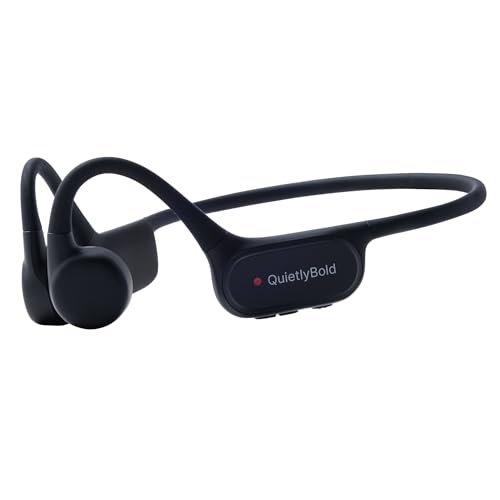
The QuietlyBold CORE is a behind-the-ear bone conduction amplifier designed for users who are just beginning to notice hearing changes. It has no Bluetooth, no app, and no complex setup — just a single-button control for volume. The device is entirely standalone, requiring no phone pairing.
With a 90dB sensitivity rating and up to 8 hours of use from a 50-minute charge, it handles everyday conversation support well. The lightweight design stays behind the ear without slipping. Users find it effective for reducing how often they ask others to repeat themselves in quiet settings.
The device has limited filtering capability — in loud environments like trade shows, amplified ambient noise can overwhelm speech. Some users report a high-pitched ringing in custom mode. The volume levels barely differ across settings, making fine-tuning difficult for those with specific hearing needs.
Why it’s great
- Simple standalone operation — no phone required
- Quick 50-minute charge for 8 hours of use
- Discreet behind-the-ear design
Good to know
- Limited noise filtering in loud environments
- Volume adjustments are not fine-grained
- Some units produce whistling at all volume levels
9. JMTINA GM-951
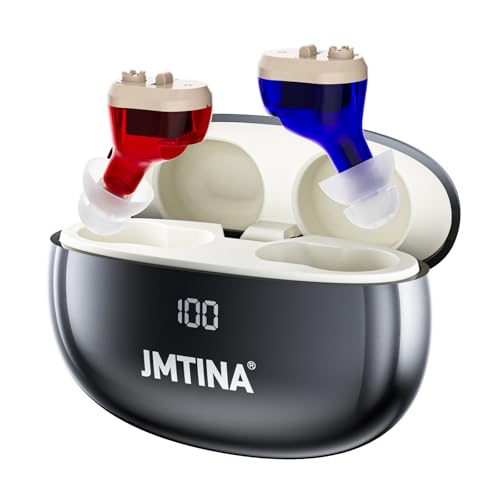
The JMTINA GM-951 is an FDA-registered hearing amplifier that uses a traditional in-ear design, not bone conduction. It offers three customizable modes to adapt to different listening environments. The included charging case extends total use to 36 hours, making it a practical option for daily outings.
The invisible amplifier design fits discreetly inside the ear canal. The device is lightweight at 3.2 ounces and comes in gunmetal gray. Noise-canceling technology helps reduce background interference for clearer conversations in moderate-noise settings.
It is not a bone conduction device — sound travels through the ear canal, which may cause the plugged-up feeling some users want to avoid. The three modes are not clearly documented, and some users report difficulty distinguishing between them. Battery life on a single charge is shorter than the case suggests.
Why it’s great
- FDA registered for safety and reliability
- 36-hour total battery with charging case
- Three listening modes for different environments
Good to know
- Traditional in-ear design — not bone conduction
- Modes are not clearly documented
- Single-charge battery life is limited
FAQ
Does bone conduction work for severe hearing loss?
Can I wear a bone conduction hearing aid with earplugs?
How do I clean a bone conduction hearing aid?
Why does my bone conduction aid make a tickling sensation?
Are bone conduction hearing aids covered by insurance?
Final Thoughts: The Verdict
For most users, the best bone conduction hearing aid winner is the SHOKZ OpenComm2 because it combines a premium noise-canceling microphone, 16-hour talk time, and multipoint Bluetooth in a lightweight open-ear package. If you want pure conversation amplification without any phone connectivity, grab the HUHD Bone Conduction Aid. And for an ultra-light daily companion with long battery life, nothing beats the Aurimi Z18.