
Our readers keep the lights on and the weekend projects moving. As an Amazon Associate, I earn from qualifying purchases.
Spending ten hours on concrete, kneeling on a cold floor pan, or stepping in a puddle of solvent isn’t optional — it’s just Tuesday for a mechanic. The wrong boot turns every shift into a battle against fatigue, wet socks, and crushed toes. A proper pair needs oil-resistant soles that grip a greasy shop floor, a protective toe that passes ASTM compression standards, and enough support to keep your arches from collapsing before lunch.
I’m Rikta — the co-founder and writer behind FitlyFast. My deep market research on mechanic work boots focuses on real-world durability metrics like sole oil-resistance, outsole abrasion rates, and the trade-offs between steel, composite, and carbon-fiber toe caps in automotive environments.
After analyzing thousands of verified reviews from mechanics, diesel techs, and industrial plant workers, I’ve separated the boots that hold up from those that fail fast. Use this breakdown of the best boots for a mechanic to find a pair that actually handles your workflow without killing your feet.
How To Choose The Best Boots For A Mechanic
The right mechanic boot has to survive three punishing things: continuous standing, chemical exposure, and impact hazards. Buying on looks or price alone leads to a fast, expensive replacement cycle. Focus on these three criteria instead.
Safety Toe Type and ASTM Rating
Every mechanic boot must carry an ASTM F2413-18 rating for impact and compression. Steel toes offer the most protection but conduct cold and set off metal detectors. Composite toes pass electrical hazard (EH) testing and stay warmer in winter, but they are bulkier. Carbon-fiber toes combine slim profiles with high strength. For shop work, a composite or carbon-fiber toe is usually more practical than steel.
Sole Oil and Slip Resistance
Automotive shops are slick with oil, coolant, and grease. Look for outsoles marked as oil-resistant and slip-resistant (often SR or MARK II rated). Wedge soles offer maximum floor contact and stability on flat concrete, while lugged soles provide grip on uneven surfaces. A boot that fails on oil resistance will have you skating across the bay floor in a month.
Break-In Period and Insole Support
Mechanics log more steps per shift than most warehouse workers. A boot that takes two weeks to break in causes real pain in the short term. Many boots come with thin OEM insoles that require upgrading to a supportive aftermarket pair. Factor the cost and time of break-in into your decision — a boot that fits well from day one saves you a week of sore feet.
Quick Comparison
On smaller screens, swipe sideways to see the full table.
| Model | Category | Best For | Key Spec | Amazon |
|---|---|---|---|---|
| Timberland PRO Endurance | Steel Toe | All-day concrete standing | Steel toe, puncture-resistant plate | Amazon |
| Thorogood 1957 Series | Moc Toe | Welding and fabrication work | Full-grain leather, wedge outsole | Amazon |
| Timberland PRO Boondock | Composite Toe | Heavy-duty and cold-weather shops | Composite toe, waterproof membrane | Amazon |
| Ariat Turbo Waterproof | Carbon Toe | Long shifts with high mileage | Carbon-fiber toe, waterproof leather | Amazon |
| Danner Bull Run Chelsea | Soft Toe | Light-duty and shop-to-street use | Oiled full-grain leather, wedge outsole | Amazon |
| Georgia Giant Pull-On | Steel Toe | Extended 14+ hour days | Steel toe, pull-on shaft design | Amazon |
| CAT Invader Mid Vent | Composite Toe | Budget-friendly waterproof option | Composite toe, slip-resistant sole | Amazon |
| Skechers Arch Fit Tarver | Composite Toe | Lightweight comfort with arch support | Composite toe, Arch Fit insole | Amazon |
| KEEN Utility Kenton Mid | Comp Toe | Zero break-in and wide toe box | Comp toe, oil-resistant sole | Amazon |
In‑Depth Reviews
1. Timberland PRO Endurance 8 Inch Steel Toe

The Timberland PRO Endurance is the gold standard for mechanics who stand on concrete for back-to-back 12-hour shifts. Its steel toe provides heavy-duty impact protection, and the puncture-resistant plate adds a second layer of defense against debris on the shop floor. Reviewers consistently report comfort that rivals boots costing twice as much, with one noting that this boot ended a 20-year search for the perfect work boot during 65-hour work weeks.
The waterproof membrane keeps feet dry in wet conditions, and the outsole delivers strong traction on snow, ice, and slick surfaces. The 8-inch shaft gives solid ankle support for mechanics crawling under cars or climbing over equipment. Speed laces make for quick adjustments, and the build quality stands up to continuous daily abuse.
It is heavier than the carbon-fiber alternatives, but the trade-off in protection and stability is worth it for mechanics who prioritize durability over a lightweight feel. The steel toe runs snug for some buyers, so sizing up half a width can make a difference. Overall, this is the most recommended boot in the category for serious workloads.
Why it’s great
- Superior comfort for 12+ hour standing shifts
- Excellent waterproofing and traction on slick surfaces
- Puncture plate and steel toe add serious protection
Good to know
- Heavier than composite or carbon-fiber toe boots
- Steel toe can feel restrictive for very wide feet
2. Thorogood 1957 Series 8″ Waterproof Moc Toe

The Thorogood 1957 Series feels like a custom-built boot for mechanics who weld, fabricate, and work in hot environments. The waterproof full-grain leather upper breathes well enough to stay cool in summer while remaining warm in winter. The wedge outsole provides maximum surface contact on smooth concrete, and the electrical hazard rating adds safety around live wires in automotive electrical work.
Multiple buyers report wearing this boot for years without failure, with some on their sixth pair. The break-in period is shorter than most premium work boots — just under a week — and the footbed reduces the foot soreness that comes from standing all day. The moc toe design also gives a classic look that transitions decently from the shop to casual wear.
The lacing system is a common complaint, with some users wishing for a zipper side for faster on-off. Sizing can be inconsistent across batches, so trying on in person or buying from a flexible return retailer is advisable. Pay attention to the seller as some Amazon third parties have shipped defective units.
Why it’s great
- High-quality full-grain leather with breathable waterproofing
- Wedge outsole offers stable grip on flat shop floors
- Short break-in period with lasting foot support
Good to know
- Lacing system is less convenient for quick changes
- Inconsistent sizing between batches
3. Timberland PRO Boondock 6″ Composite Toe

The Timberland PRO Boondock is the boot mechanics choose when they need serious cold-weather protection and industrial-grade waterproofing. The composite toe passes ASTM F2413-18 for impact and compression without the cold conductivity of steel, and the outsole resists oil, fuel, and de-icing fluid — common spills in a busy shop. One heavy-duty mechanic reported wearing the same pair for four years straight, easily outlasting brands like Carhartt that failed in six months.
The anti-fatigue insole provides good shock absorption for 10-hour days, and the roomy toe box accommodates mechanics with wider feet who find other safety toes too narrow. Reviewers praise the waterproofing, noting that hosing off the boot after a shift leaves their feet completely dry. It is also warm enough to wear in below-freezing conditions, making it a strong choice for unheated shops or winter work.
On the downside, the boot is bulky and visually large — one buyer described it as “clownish” from the outside — but functional once on. The stock laces and insoles are poor quality; Kevlar laces and aftermarket insoles are common upgrades. Some users with small ankles find the high-volume fit too loose vertically, requiring an extra insole to take up space.
Why it’s great
- Exceptional durability extending 3-4 years in heavy use
- Excellent waterproofing and cold-weather performance
- Roomy toe box works well for wide feet
Good to know
- Bulkier and heavier than most composite toe boots
- Stock laces and insoles need immediate replacement
4. Ariat Turbo 6″ Waterproof Carbon Toe

The Ariat Turbo has earned itself a loyal following among mechanics who value lightweight comfort above all. The carbon-fiber toe is noticeably slimmer and lighter than composite or steel, which reduces the fatigue that comes from swinging heavy boots all day. Buyers consistently say these are the most comfortable safety-toe boots they have ever owned, with several on their fourth or fifth pair over the past decade.
The waterproof construction keeps feet dry in wet environments, and the tread holds up well on concrete and industrial plant floors. Reviewers working 50-60 hour weeks in plants with paint and solvent exposure say the boots stay solid for 8-12 months before the uppers wear out — a reasonable lifespan given the comfort level. The ankle padding is generous and helps prevent chafing during long days.
The primary downside is the sole performance on ice and snow; this is a warm-weather boot for indoor shop use. Some users report needing to size down half a width from sneaker size. The OEM insole is thin, and many buyers find that upgrading to a supportive aftermarket insole like PowerStep Pinnacle Plus improves the fit significantly.
Why it’s great
- Ultra-lightweight carbon-fiber toe for all-day wear
- Excellent ankle padding and overall comfort
- Proven reliability over multiple years and pairs
Good to know
- Poor grip on ice and snow; indoor use preferred
- Stock insole is thin and should be upgraded
5. Danner Bull Run Chelsea Work Boots

The Danner Bull Run Chelsea is the boot for mechanics who do light-duty shop work or split time between the bay and the front office. Its oiled full-grain leather upper is scuff-resistant and ages well, and the wedge outsole provides stable footing on flat surfaces. The Chelsea pull-on style is convenient for quick on-off, eliminating the time wasted lacing and unlacing traditional boots throughout the day.
Reviewers note that the boot fits true to size and that the EE wide toe box accommodates wide feet comfortably. The three-density cushion footbed provides adequate support for mixed desk-and-shop days, though it doesn’t match the heavy-duty shock absorption of the Timberland PRO Endurance. The boot is made in the USA, which is a plus for buyers prioritizing domestic manufacturing.
This boot lacks a safety toe entirely, so it is not suitable for heavy shop work where ASTM-rated impact protection is required. Some users desire a more polished finish for dressier work environments. The leather requires occasional conditioning to maintain its water resistance, and the break-in period is longer than the KOEN or Skechers options.
Why it’s great
- Convenient Chelsea pull-on design for quick changes
- Scuff-resistant oiled leather with a wide toe box
- Made in the USA with good build quality
Good to know
- No safety toe; not for heavy shop work
- Break-in period is longer than some alternatives
6. Georgia Giant Pull-On Steel Toe Work Boots

The Georgia Giant Pull-On is a classic work boot that mechanics have trusted for years — multiple buyers are on their fourth pair. The steel toe provides heavy-duty protection, and the pull-on shaft fits snugly around the calf, keeping debris out during long shifts beneath vehicles. Reviewers working 14-16 hour HVAC and construction days report that the boot withstands abuse from oil, mud, and sharp edges without the toe puncturing.
Leather quality holds up well against sheet metal cuts and everyday shop abuse. The break-in period is relatively short for a steel-toe pull-on, and the boot remains comfortable for double shifts once broken in. The durable construction means the boot can last 1.5 years or more under heavy daily use, making it a smart investment for mechanics who prefer a classic lace-free design.
Color and toe-type confusion exists: the “Soggy Brown” option is a soft toe, not steel toe, while the “Barracuda” is the steel-toe version. The stock insoles are insufficient for arch support, and aftermarket insoles are almost mandatory for all-day comfort. Some buyers have reported quality control variability between pairs, so inspecting upon arrival is recommended.
Why it’s great
- Proven durability lasting 1.5 years in heavy daily use
- Snug shaft fit prevents debris entry
- Short break-in for a steel-toe pull-on boot
Good to know
- Color/size confusion between soft toe and steel toe variants
- Stock insoles require upgrading for arch support
7. CAT Invader Mid Vent Composite Toe
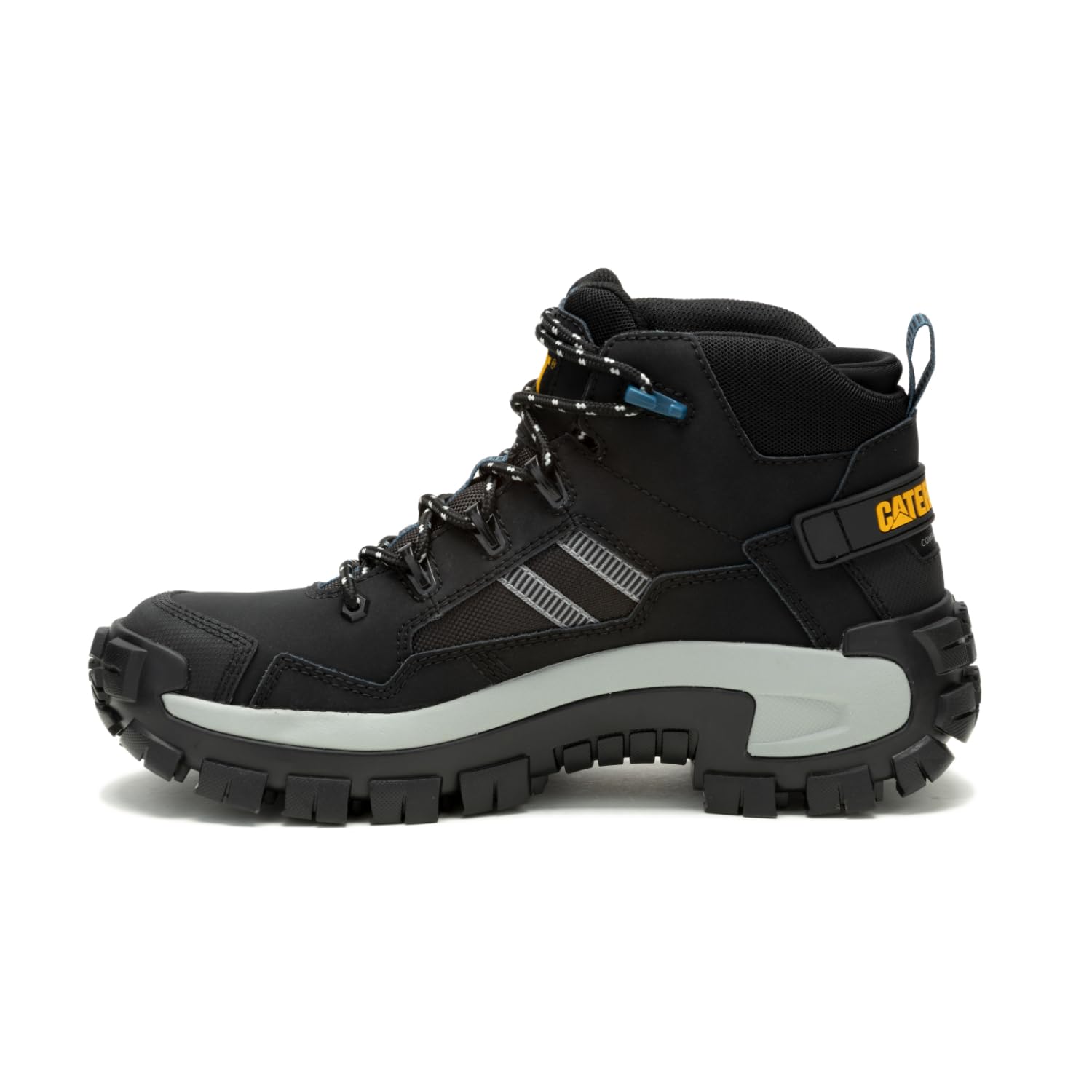
The CAT Invader Mid Vent gives mechanics a waterproof, composite-toe work boot without breaking the budget. It carries the ASTM F2413-18 rating for impact, compression, and electrical hazard protection, and the non-metallic hardware and ceramic-reinforced toe add a layer of safety in live-wire environments. The slip-resistant sole handles oil and wet concrete well, making it a functional choice for general automotive work.
Reviewers appreciate the waterproofing, with one calling it a reliable go-to for wet conditions. The strobel construction keeps the boot lightweight and flexible, which helps reduce fatigue compared to heavier steel-toe designs. The boot looks clean and professional for a budget-friendly option, and the wide sizing accommodates mechanics with broader feet.
The comfort level is the main trade-off. The inside of the boot is less padded than mid-range competitors, and multiple users report heel pain after extended standing. An aftermarket insole is strongly recommended. The stiff ankle collar can rub the ankle bone during the break-in period, and some buyers needed two or three days of wear before the boots loosened up.
Why it’s great
- Waterproof and ASTM-rated at an accessible price point
- Lightweight composite toe with EH protection
- Non-metallic hardware is shop-floor friendly
Good to know
- Poor comfort for prolonged standing without extra insoles
- Ankle collar can rub before the break-in period ends
8. Skechers Arch Fit Tarver Composite Toe
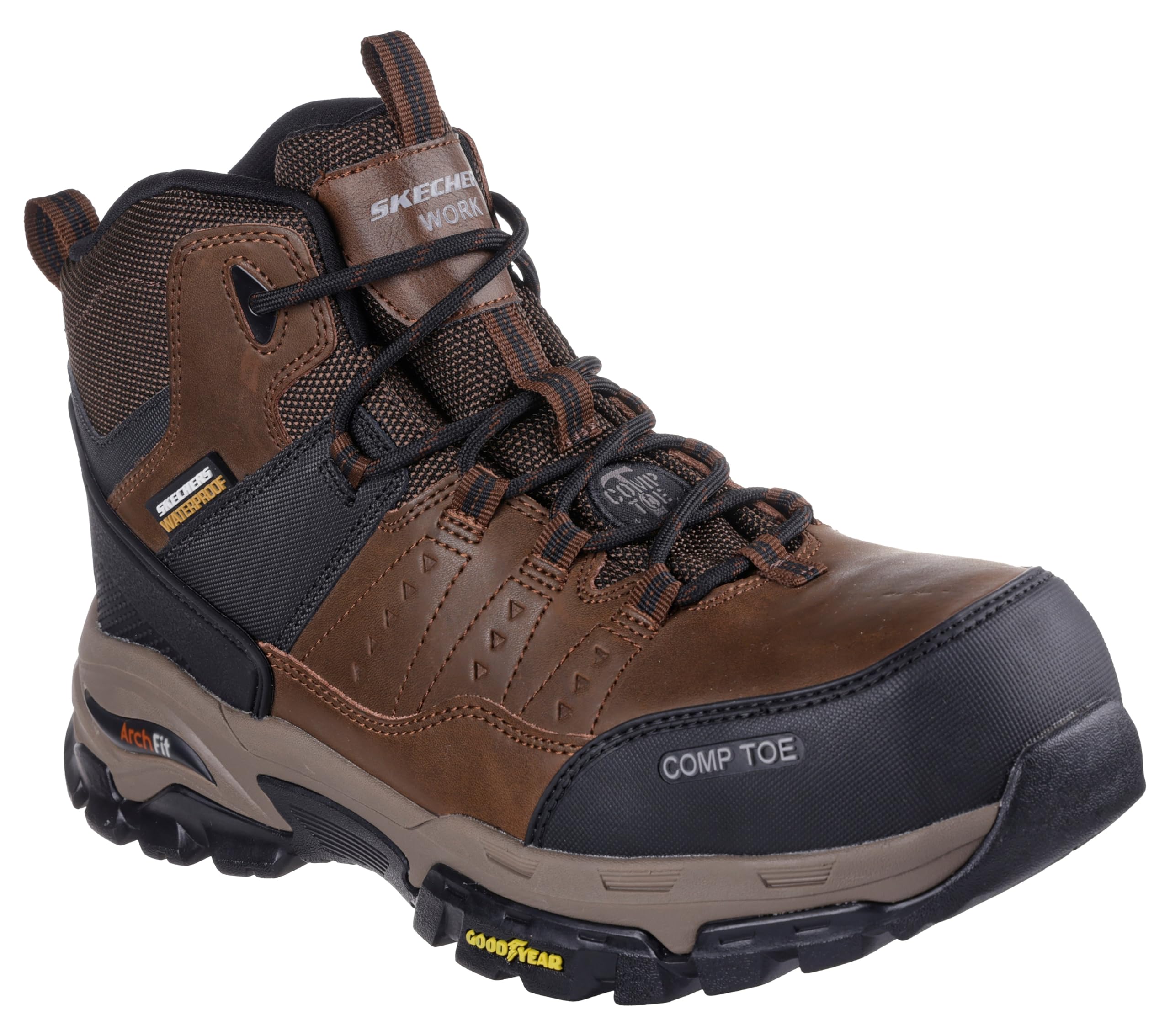
The Skechers Arch Fit Tarver redefines what a lightweight work boot can feel like. The composite toe meets safety standards while the Arch Fit insole provides built-in support that rivals aftermarket orthotics. Mechanics commonly report that these are the most comfortable work boots they have ever worn, with several noting that the boot feels like a sneaker — critical for standing and walking across concrete all shift.
The boot runs true to width, with wide sizes that don’t pinch the toes. Owners appreciate the low weight, which makes a measurable difference by the end of a 12-hour day. For mechanics on a budget who need immediate comfort, the Tarver delivers out of the box with minimal break-in.
The main drawback is long-term durability. Some users have reported the stitching separating around the toe after 1.5 months of daily use in a diesel mechanic environment. The boots are also not waterproof, so they are not ideal for wet conditions. The build quality is acceptable for the price but doesn’t match the longevity of premium options like the Timberland PRO Endurance or Thorogood series.
Why it’s great
- Exceptional comfort and arch support straight out of the box
- Very lightweight with a sneaker-like feel
- Affordable entry point for composite toe protection
Good to know
- Durability concerns with stitching after a few months
- Not waterproof; avoid wet shop conditions
9. KEEN Utility Kenton Mid Comp Toe

The KEEN Utility Kenton Mid is the boot that keeps mechanics coming back for their third or fourth pair. Its defining feature is the generous toe box that prevents toe cramping during extended periods of kneeling or crouching — a common pain point for mechanics. The oil-resistant outsole grips oily concrete tenaciously, resisting fluid damage and tread wear longer than many boots in its class.
Buyers consistently describe the boot as lightweight and comfortable on day one, with no painful break-in period. The comp toe rating provides essential impact protection without the weight penalty of steel. The stylish look is a bonus — several users have bought a non-safety version for everyday wear. For mechanics who work in automotive shops and prioritize immediate comfort and a roomy toe box, the Kenton is tough to beat at this level.
The boot is not waterproof. Water seeps in quickly at the sole edge, making it unsuitable for wet environments or puddle-heavy shops. Some mechanics with very wide feet find that even the spacious toe box is insufficient, and the boot runs slightly warm in hot weather. Durability is about two years per pair, which is typical for mid-range work boots.
Why it’s great
- Excellent oil resistance on slick shop concrete
- Roomy toe box prevents toe cramping all day
- Comfortable with zero break-in, right out of the box
Good to know
- Not waterproof; water seeps in at the sole edge
- Runs warm; less suitable for hot summers
FAQ
What is the best safety toe for a mechanic standing on concrete all day?
How often should a mechanic replace their work boots?
Can I use steel-toe boots if my shop has metal detectors?
Final Thoughts: The Verdict
For most mechanics, the best boots for a mechanic winner is the Timberland PRO Endurance because it combines heavy-duty steel toe protection, puncture resistance, and proven comfort for standing on concrete all day. If you want the lightest possible boot with great arch support, grab the Skechers Arch Fit Tarver. And for maximum durability in wet, cold conditions, nothing beats the Timberland PRO Boondock.