
Our readers keep the lights on and the weekend projects moving. As an Amazon Associate, I earn from qualifying purchases.
You’re not walking on pavement. You’re standing on a branch 40 feet up, balancing a saw, and every pound of boot weight matters. Most work boots will get you killed — literally — because they lack the narrow profile to fit into a crotch, the chainsaw protection to stop a kickback, or the lug pattern that grips wet bark instead of sliding off. Arborist boots are a different animal than logger boots, construction boots, or hiking boots. They demand a specific blend of climbing sensitivity, ankle support, puncture resistance, and waterproofing that standard safety footwear simply cannot deliver.
I’m Rikta — the co-founder and writer behind FitlyFast. I’ve spent hundreds of hours cross-referencing safety certifications, sole compounds, climbing-zone tread patterns, and real arborist testimonies from job sites across North America and Europe to build this guide.
If you climb trees for a living, your boots are your second most important tool after your saw — and the wrong pair can mean a slip, a cut, or a day of foot pain you simply don’t have time for. This guide breaks down the boots for arborists that balance climbing performance with real-world durability and certified safety.
How To Choose The Best Boots For Arborists
Choosing an arborist boot is not the same as buying a standard work boot. You are optimizing for three conflicting demands: climbing sensitivity (soft, narrow sole), impact protection (steel toe and chainsaw-resistant materials), and all-day comfort on both ground and tree. Here are the four specs that separate a climber’s boot from a construction boot.
Chainsaw Protection Rating (Class 1 vs. None)
If you run a chainsaw at height, you need boots that can stop a chain running at full throttle for a fraction of a second. Look for ASTM F2413-18 or European Class 2 cut protection with para-aramid lining. Boots without this rating — even rugged steel toes — will not stop a saw from entering your foot. The HAIX Protector Prime and the SAFETOE Class 1 Cow Leather boots are the only options in this list that carry explicit chainsaw cut resistance.
Climbing Zone Sole vs. Standard Lug Outsole
A standard logger heel with aggressive lugs works great on loose dirt but slips off a wet branch crotch. Arborist-specific boots like the Arbpro EVO 2 feature a “climbing zone” — a smooth, high-grip rubber tip on the toe that lets you lock into narrow crotches without slipping. If you spend most of your day on the ground, a standard Vibram lug sole is fine. If you climb daily, the climbing zone is worth the premium.
Waterproof Membrane and Breathability
Arborists work in rain, dew, and sweat-inducing physical exertion. Gore-Tex is the gold standard for waterproofing that still breathes. Event membranes (used in the EVO 2) offer similar breathability with slightly less bulk. Avoid pure rubber or PVC-lined boots — they trap moisture and cause trench foot during long climbs. The Georgia Logger with Gore-Tex and the HAIX Prime with Gore-Tex are the top picks for wet-climate arborists.
Weight and Ankle Support Height
Every extra ounce on your foot multiplies fatigue during a 10-hour climb. Dedicated climbing boots like the Arbpro EVO 2 come in around 3.5 pounds and offer a slim profile to fit through tight branch work. Logger-style boots like the Carolina 8″ Logger or the Timberland PRO Evergreen weigh more but provide superior ankle support for uneven ground and heavy saw carrying. If you do mixed ground/climb work, a mid-weight logger around 4 to 4.5 pounds is your best compromise.
Quick Comparison
On smaller screens, swipe sideways to see the full table.
| Model | Category | Best For | Key Spec | Amazon |
|---|---|---|---|---|
| Arbpro EVO 2 | Premium Climbing | Dedicated tree climbing, crotch work | Climbing zone Vibram sole, Event membrane, Perwanger leather | Amazon |
| HAIX Protector Prime | Premium Safety | Chainsaw-heavy work, maximum protection | Class 2 cut protection, Gore-Tex, steel toe | Amazon |
| Carolina 8″ Logger | Mid-Range Logger | Mixed ground/climb, wide-foot arborists | Triple-rib steel shank, memory foam footbed, extra-wide fit | Amazon |
| Irish Setter Two Harbors | Mid-Range Logger | All-day stand-up work, oil rig/rough terrain | Steel safety toe, anti-slip, waterproof, 11″ height | Amazon |
| Georgia Boot GORE-TEX Logger | Mid-Range Logger | Cold-weather climbing, waterproof performance | 400g Thinsulate, Gore-Tex, Vibram Tacoma outsole | Amazon |
| Timberland PRO Evergreen | Mid-Range Logger | Durable daily ground worker, snow/wet conditions | Composite toe, EH rated, WP insulated logger | Amazon |
| SAFETOE Cow Leather Chainsaw Boots | Budget Chainsaw | Entry-level arborist, limited climbing | Class 1 steel toe, Kevlar puncture plate, chainsaw grade | Amazon |
| Georgia Boot Lace-to-Toe | Budget Logger | Ground tree work, budget-conscious buyer | Goodyear welt, Vibram lug outsole, steel toe, waterproof | Amazon |
| Husqvarna Classic PPE Kit | Safety Kit | New arborist, chainsaw chaps + helmet bundle | 5-layer chainsaw chaps, ASTM forest helmet, 24dB NRR | Amazon |
In‑Depth Reviews
1. Arbpro EVO 2 Climbing Boots
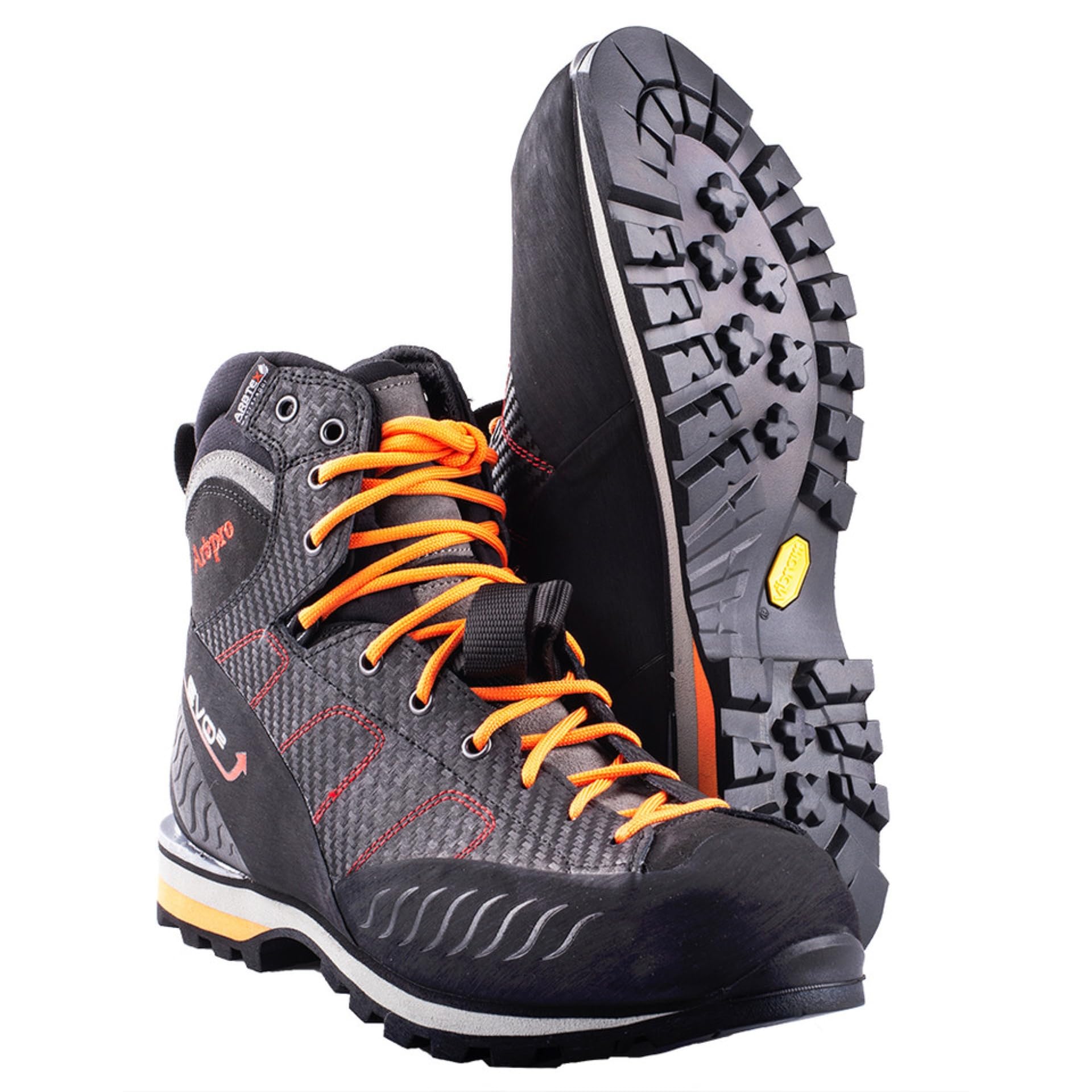
The Arbpro EVO 2 is the only boot in this list that is designed from the ground up by climbers for climbers. The most defining feature is the Vibram sole with a dedicated “climbing zone” tip — a smooth, high-friction rubber patch on the toe that lets you lock into narrow branch crotches without slipping. The slim profile is noticeably narrower than logger boots, which means you can fit into tighter forks without your boot hanging up. The Event membrane provides waterproofing that breathes as well as Gore-Tex without the same bulk, keeping your feet dry during sweat-heavy ascents.
The 25mm higher ankle pad is a new upgrade from the original EVO, and arborists who climb daily report that it significantly reduces lateral roll when you’re perched on a single spike. The lacing system uses no metal hooks — a deliberate choice to prevent rope damage when you’re pulling up your gear line. European sizing runs slightly smaller than standard US sizing, so order half a size up; many long-time users say that sizing up eliminated heel slip and made the boots wearable for 12-hour shifts.
These boots are not designed for heavy ground work — the sole is intentionally softer for grip on bark, meaning they will wear faster on concrete or asphalt. Arborists who climb 5+ days a week report getting 6-12 months out of a pair, with resoling possible through cobblers. If you split your time evenly between climbing and ground cleanup, you may want a more durable logger sole for the bulk of your week, but if you live in the tree, these are the best in class.
Why it’s great
- Climbing zone sole provides unmatched crotch grip
- Event membrane breathes well during sweaty ascents
- No metal hooks prevents rope damage
Good to know
- European sizing runs small — order half size up
- Soft sole wears quickly on hard ground surfaces
2. HAIX Protector Prime 9″ Boot

The HAIX Protector Prime is the undisputed safety champion in this list. It carries European Class 2 chainsaw cut protection — that means it can stop a chain running at high speed for a meaningful fraction of a second — plus a non-metallic puncture plate that protects your foot from stepping on a buried spike or broken branch. The steel toe meets ASTM F2413-18 for impact and compression, and the electrical hazard rating gives you protection on live wires during storm cleanup. This is the only boot here that arborists consistently describe as “if you use a chainsaw at height, you wear these.”
The 2-zone lacing system lets you tighten the lower boot independently from the upper cuff, which is crucial for getting a locked-in heel fit without crushing your instep during a climb. The Secura Liner prevents the lining from shifting and wrinkling inside the boot — a common failure point in lesser work boots where the liner bunches up around the toes after a few months. The Gore-Tex membrane and HAIX Climate System keep feet dry and temperature-balanced, and the footbed is machine washable and quick-drying.
The trade-off is bulk and stiffness. Several arborists note that the boots feel like “ski boots” when walking — they are significantly stiffer than logger boots, which provides incredible protection but reduces ground feel during climbing. The laces are narrow and can hurt your hands during repeated tightening. Sizing runs large: most buyers need to drop a full size from their normal US size, and wide-footed climbers should order a wide width. Despite the premium cost, these boots are the single safest choice for chainsaw-heavy arborist work.
Why it’s great
- European Class 2 chainsaw cut protection certified
- 2-zone lacing locks heel without crushing instep
- Gore-Tex + Climate System for all-weather use
Good to know
- Very stiff sole — minimal ground feel while climbing
- Runs large; order a full size down from normal US size
3. Carolina 8″ Logger Boots

The Carolina 8″ Logger is a classic American logger boot that hits the sweet spot between durability, comfort, and price. The triple-rib steel shank provides serious arch support that reduces foot fatigue during long days carrying climbing gear and a saw. The steel toe is ASTM-rated for impact and compression, and the slip-resistant rubber lug outsole with a tapered logger heel gives you stable footing on uneven ground, loose bark, and muddy landing zones. The removable kiltie adds an extra layer of protection against sawdust and debris entering the boot.
The memory foam footbed sets these apart from stiffer loggers like the Georgia or Timberland options. Arborists who wear them for 10+ hour mixed days report that the cushioning holds up well and reduces heel pain. The boot is available in extra-wide widths, which is crucial for climbers who need room for thick merino wool socks. The leather is thick, full-grain material that breaks in over two to three weeks rather than instantly, but once broken in, the fit molds to your foot securely.
The outsole is stiffer than the Arbpro EVO 2, which means less climbing sensitivity but better durability on concrete and gravel. If you do mostly ground work with occasional climbing, these are your best mid-range choice. Some users note that the sole can feel stiff for the first week of ladder rung work, but after break-in, the flex improves significantly. The sizing runs true to length but narrow in the forefoot — if you have wide feet, skip the standard width and go straight to wide.
Why it’s great
- Memory foam footbed reduces foot fatigue on long days
- Triple-rib steel shank for serious arch support
- Available in extra-wide widths for thick work socks
Good to know
- Requires 2-3 weeks break-in period
- Sole is stiff for climbing — better for mixed ground work
4. Irish Setter Two Harbors 11″ Boots

The Irish Setter Two Harbors is an 11-inch work boot that arborists consistently describe as “comfortable from the moment you put them on — no break-in required.” This is a rare claim in the work boot world, and it holds up across hundreds of reviews. The steel safety toe meets ASTM standards, and the anti-slip outsole is specifically designed to resist melting on hot surfaces — a detail that matters for arborists who work near asphalt or on oil rig sites. The waterproofing holds up for 12-15 months of daily outdoor use before any moisture seeps through.
At 11 inches tall, these boots provide significantly more ankle and calf coverage than standard 8-inch loggers. This extra height is advantageous when you’re wading through wet underbrush, standing in mud, or need additional support for carrying heavy loads up a ladder. The fit is generous and works well for wide-footed climbers — several users report that they are the only boots that fit their wide feet without pinching. The boots also keep feet warm in sub-zero conditions, making them a strong choice for cold-climate arborists.
The main drawback for climbing-specific work is the lack of a climbing zone sole. The outsole is a standard anti-slip lug pattern that works well on ground, gravel, and ladder rungs, but it lacks the specialized toe grip for locking into tree crotches. If you are primarily a climber, the Arbpro EVO 2 or the HAIX Prime will serve you better. If you do 70% ground work and 30% climbing, the Irish Setter is arguably the most comfortable all-day option in this list.
Why it’s great
- No break-in required — comfortable from first wear
- 11-inch height offers superior ankle and calf coverage
- Excellent for wide feet and cold-weather work
Good to know
- Standard lug sole lacks climbing zone for crotch work
- Heavier than dedicated climbing boots due to height
5. Georgia Boot GORE-TEX 400G Logger

The Georgia Boot GORE-TEX 400G Insulated Logger is a heavy-duty cold-weather arborist boot built for climbers who work in northern climates. The 400 grams of Thinsulate Ultra insulation is enough to keep your feet warm in below-freezing temperatures without being so thick that you lose toe sensitivity for climbing. The Gore-Tex membrane is the best waterproofing system in the industry — it keeps water out while allowing moisture vapor to escape, which is critical when you’re sweating during a climb and then standing still in cold air at the top of the tree.
The Vibram Tacoma outsole is a one-piece rubber cleated design that provides excellent traction on loose bark, mud, and snow. It’s heavier than a standard Vibram lug sole, but the trade-off is durability: arborists report getting 2-3 years of daily use out of a single pair, with some users buying their 40th+ pair over decades. The Goodyear welt construction means these boots can be resoled by a cobbler rather than thrown away when the sole wears out — a major cost saving over time.
The break-in period is longer than other options. Several users describe these as “more durable but less comfortable” compared to non-insulated loggers. The boots are heavy — the steel toe, 400g insulation, and full-grain leather add up to a noticeable weight on your feet during a full climbing day. If you only need insulation for three months of the year, consider the uninsulated version from Georgia Boot instead. But if you work through winter, this is the warmest, most durable option in the list.
Why it’s great
- 400g Thinsulate keeps feet warm below freezing
- Goodyear welt construction allows resoling
- Gore-Tex membrane provides reliable waterproofing
Good to know
- Significantly heavier than uninsulated boots
- Longer break-in period required
6. Timberland PRO Evergreen Comp Toe Logger
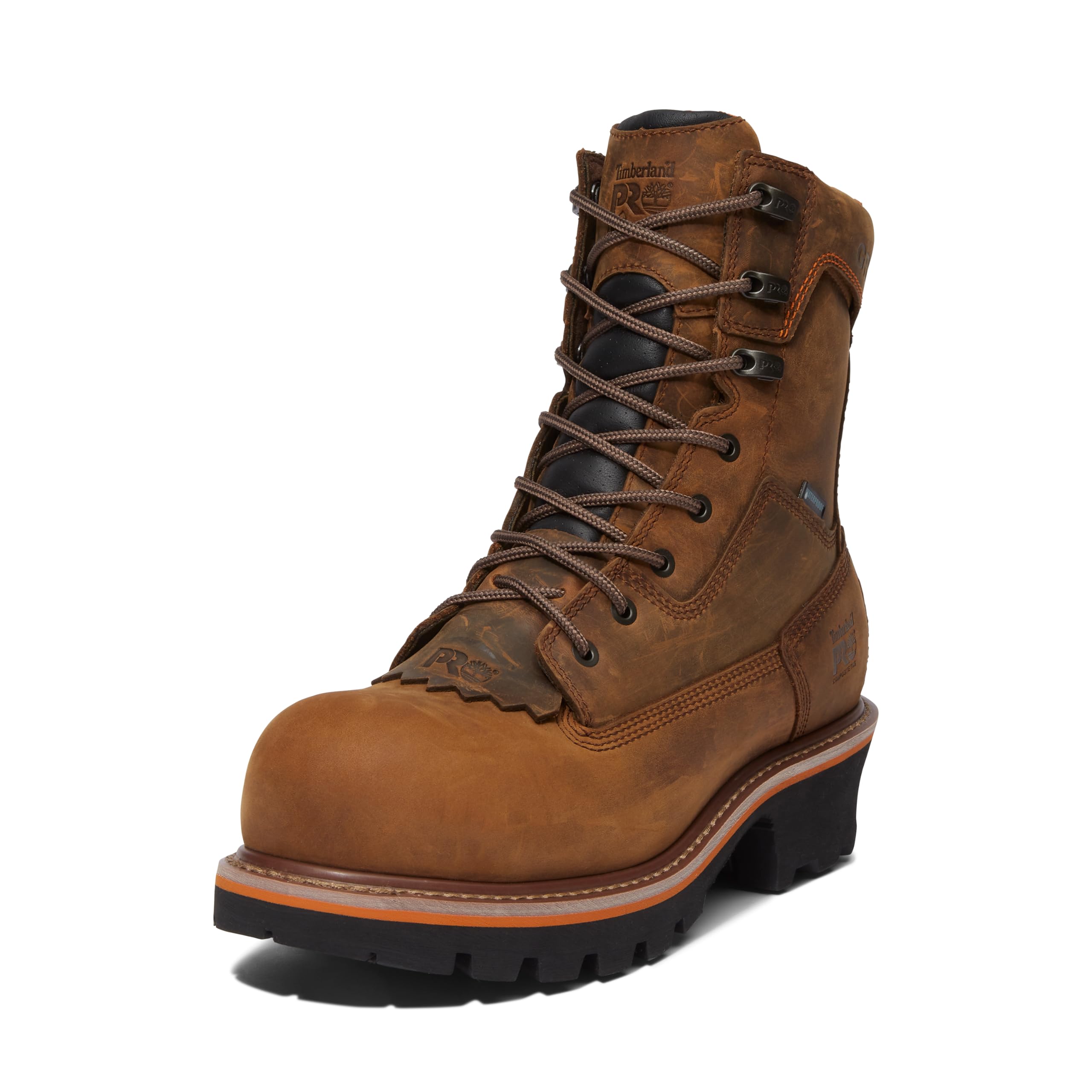
The Timberland PRO Evergreen is a composite-toe logger boot that construction workers and arborists consistently call “the longest lasting boots I have ever worn.” The composite toe is lighter than steel and does not conduct cold, making it a better option for winter climbing where steel toes can become ice-cold heat sinks. The electrical hazard rating provides secondary protection for storm cleanup near downed power lines. The waterproofing and insulation make it suitable for snow, slush, and wet grass.
What sets the Evergreen apart from other loggers in this list is the out-of-box comfort. Several users report minimal break-in time compared to the Georgia Boot logger or the Carolina logger. The boot fits true to size with slightly generous room in the toe box, which allows for thick socks without cramping. The outsole provides good traction on loose soil and gravel, and the tapered logger heel helps you dig in on slopes. The boot holds up well to kicking shovels and digging — a common complaint from arborists who do ground support work.
The main limitation for arborist use is the lack of chainsaw cut protection. The Evergreen is a rugged work boot, but it is not rated to stop a chainsaw chain. If you are only doing ground work and light trimming, this is not a concern. If you are running a saw at height, you need dedicated chainsaw-rated boots like the HAIX Prime or the SAFETOE option. The boot also runs slightly big — if you are between sizes, order down rather than up.
Why it’s great
- Composite toe is lighter and non-conductive in cold
- Minimal break-in period required
- Durable enough for kicking shovels and digging
Good to know
- No chainsaw cut protection rating
- Slightly big sizing — order down if between sizes
7. SAFETOE Cow Leather Chainsaw Boots

The SAFETOE Class 1 Cow Leather Chainsaw Boots are the most affordable option in this list that still carries a chainsaw protection claim and a Kevlar puncture-resistant midsole. The steel toe meets ASTM F2413 standards for impact and compression, and the Kevlar plate runs through the full length of the footbed to stop nails, spikes, and sharp branches from penetrating the sole. The upper is made from top-layer nubuck cow leather that breaks in faster than full-grain leather options like the Georgia or Carolina boots.
The 4LR (Four Layer Rebound) technology in the midsole provides decent energy return for a boot at this level, helping reduce foot fatigue during ground work. The memory foam insole adds immediate comfort out of the box, though it does compress over time. The PU/rubber outsole is oil-resistant and slip-resistant, suitable for wet grass, mud, and concrete. The boot includes a side zipper for easy on/off — a convenience feature that climbers appreciate when they need to take boots off between jobs without unlacing completely.
The biggest concern with these boots is sizing inconsistency. Multiple users report that the boots run significantly small — a men’s size 10W fits more like a women’s 10, which is roughly a full size and a half smaller than standard US men’s sizing. If you order these, go up at least one full size and consider wide width. The build quality is not at the same level as the HAIX or Arbpro boots — users report eyelets breaking and stitching wearing within 6-8 months of daily use. These are a viable budget entry point for chainsaw protection, but they are not a long-term investment.
Why it’s great
- Kevlar puncture plate for foot protection
- Side zipper allows quick on/off between jobs
- Most affordable option with chainsaw protection
Good to know
- Sizing runs small — order at least one full size up
- Build quality is lower; eyelets may break within months
8. Georgia Boot Lace-to-Toe Steel Toe
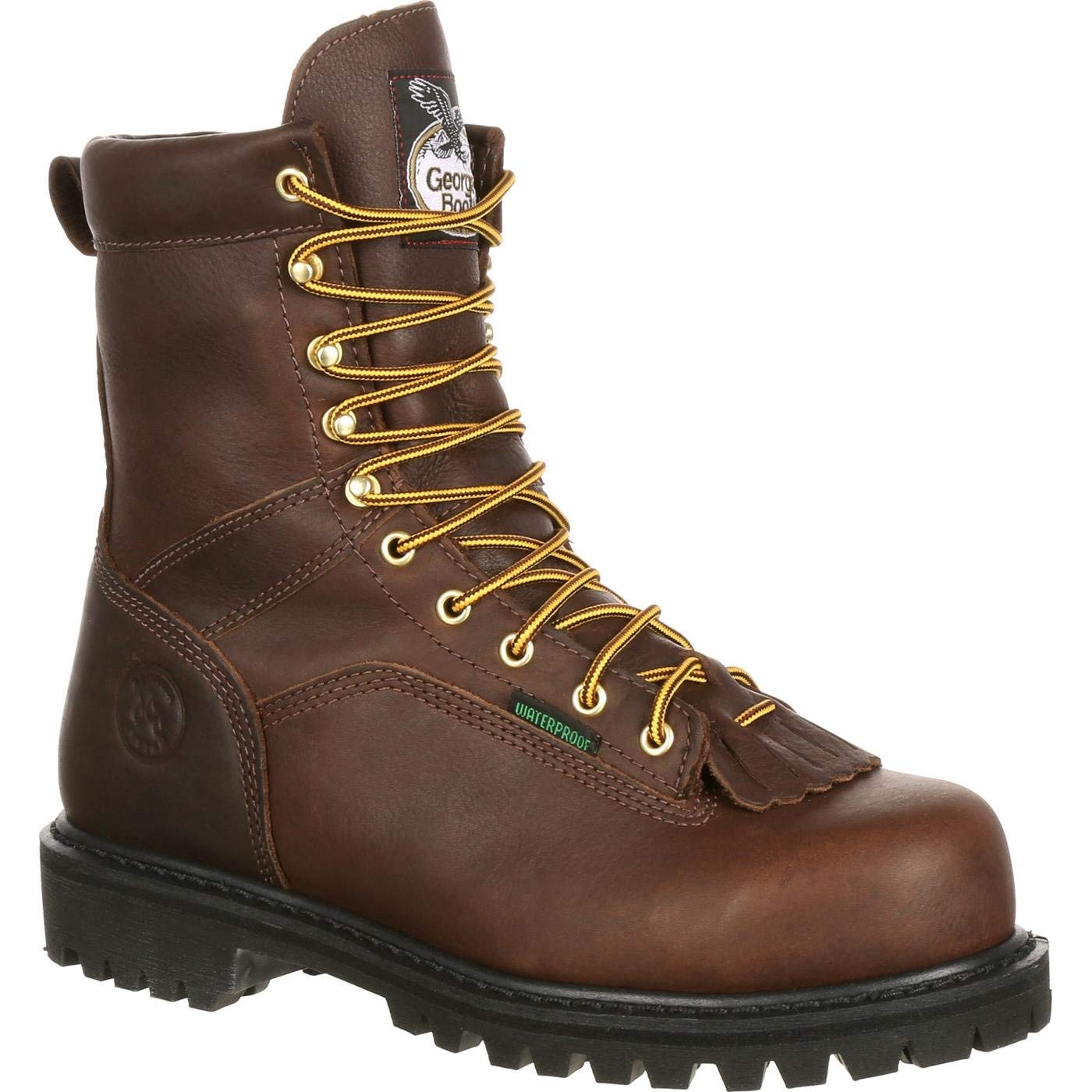
The Georgia Boot Lace-to-Toe Work Boot is a classic American work boot that has been on job sites since 1937. The lace-to-toe design allows for micro-adjustment of the fit across the entire forefoot, which is helpful for arborists who need a snug fit for climbing but occasional room for thick socks on cold days. The steel toe meets ASTM standards for impact and compression, and the electrical hazard resistance adds a layer of safety for storm cleanup. The Georgia Waterproof System is a proprietary membrane that keeps feet dry in wet grass and light rain.
The Goodyear welt construction is a major durability feature at this price point. It means the sole can be replaced by a cobbler when it wears out, extending the life of the boot significantly. The Vibram lug outsole is oil-resistant and provides solid traction on loose soil, gravel, and ladder rungs. The steel shank provides arch support that helps reduce foot fatigue during long ground shifts. The premium leather uppers break in relatively quickly for a boot in this tier — users report comfort within a week of daily wear.
The main limitation for arborist-specific use is the lack of chainsaw protection. These are a rugged work boot, but they are not designed to stop a chainsaw chain. They also run warm — several users describe them as a “sweatbox” even during light work, so they are not ideal for hot summer climbing. The lace hooks are small, which makes speed-lacing difficult but does not affect durability. If you need a budget-friendly boot for ground tree work and occasional low climbing, these are a solid value. If you climb daily or run a saw at height, invest in a chainsaw-rated option.
Why it’s great
- Goodyear welt allows resoling for extended life
- Lace-to-toe design gives precise forefoot adjustment
- Vibram lug outsole provides reliable ground traction
Good to know
- No chainsaw cut protection — not for saw work at height
- Runs warm/hot — can be uncomfortable in summer
9. Husqvarna Classic PPE Power Kit

The Husqvarna Classic PPE Power Kit is not a boot — it is a full safety bundle that every new arborist should own before stepping onto a job site. The kit includes a pair of Husqvarna classic chainsaw chaps with a 5-layer cut-resistant design that meets ASTM F1897, a functional forest helmet with HDPE shell, face shield, ear muffs, and sun peak, and a pair of classic work gloves.
The helmet is the standout component in this kit. It is certified to ANSI Z133.1 and OSHA Regulation 1910-26, with a 24dB NRR rating for the hearing protectors. The face shield and ear muffs swing out of the way when not in use, and the ratchet adjustment allows for a secure fit over various head sizes. The chaps are a wrap-around apron style with a 32-inch inseam, suitable for most adult heights. The hi-vis orange color makes you easy to spot in busy work zones or dense foliage.
The gloves are the weakest part of the kit — they are thin utility gloves, not chainsaw-specific gloves. Several users note that you could buy the helmet and chaps separately for roughly the same price and get better gloves. For the price point, this is a solid entry-level bundle for a new arborist or chainsaw user, but experienced climbers will likely want to upgrade the gloves and add dedicated chainsaw boots to their gear. Consider this a complementary kit to pair with any of the boot options above — not a replacement for boot safety.
Why it’s great
- All-in-one safety starter kit for new arborists
- Helmet meets ANSI/OSHA forestry standards
- 5-layer chaps provide leg protection from chainsaw
Good to know
- Gloves are thin utility gloves, not chainsaw grade
- No savings vs. buying helmet and chaps separately
FAQ
Can I use standard logger boots for tree climbing?
Do I need chainsaw protection in my boots if I only do ground work?
How often should I replace my arborist boots?
Final Thoughts: The Verdict
For most arborists, the boots for arborists winner is the Arbpro EVO 2 because it combines a climbing zone sole, an Event waterproof membrane, and a slim profile that fits into tight crotches — all designed specifically for tree work. If you prioritize chainsaw safety above all else, grab the HAIX Protector Prime with its European Class 2 cut protection and Gore-Tex lining. And for mixed ground and climbing work on a budget, the Carolina 8″ Logger offers the best balance of durability, comfort, and price in the logger category.