
Our readers keep the lights on and the weekend projects moving. As an Amazon Associate, I earn from qualifying purchases.
Switching your baby from the breast to a bottle can feel like a high-stakes negotiation with a very tiny, stubborn partner. The wrong bottle can lead to nipple confusion, a frustrated baby, and a routine that feels anything but smooth. The goal is to find a bottle that mimics the natural flow and feel of breastfeeding, not one that fights against it.
I’m Rikta — the co-founder and writer behind FitlyFast. I’ve spent months analyzing nipple shapes, vent systems, and material safety reports to understand exactly what makes a bottle succeed or fail during the breastfeeding transition.
This guide breaks down the top bottles engineered to ease that transition, focusing on latch, flow rate, and anti-colic features. Here is my researched breakdown of the very best bottles to transition from breastfeeding, ranked by how well they preserve your baby’s natural feeding rhythm.
How To Choose The Best Bottles To Transition From Breastfeeding
Not all bottles are created equal when your baby is used to the warmth and effort of a real breast. Three factors separate a seamless transition from a feeding battle: the nipple’s latch feel, the milk flow rate, and the bottle’s ability to minimize air intake. Ignore these, and you risk nipple confusion, colic, or a baby who simply refuses the bottle.
Nipple Shape and Material: The Closer to Real, The Better
A breastfed baby uses a deep latch and a wave-like tongue motion that standard bottle nipples don’t usually support. Look for wide, breast-shaped nipples made of ultra-soft silicone that flexes with baby’s mouth. A “triangle test” — where the nipple base pinches into a triangle shape — indicates the nipple compresses naturally, mimicking the breast’s elasticity. Nipples that are too firm or too narrow can cause latch rejection.
Flow Rate: Slow and Steady Wins the Transition
Newborn and young breastfed babies need a slow, controlled flow that forces them to work for the milk, just like at the breast. A slow flow (often labeled Level 1 or Size S/SS) prevents gagging, milk overflow, and the preference for an effortless bottle over the breast. Many bottles offer variable flow rates as baby grows, so starting with the slowest possible nipple is the safest strategy for preserving the breastfeeding bond.
Anti-Colic Vent System
Air swallowing is a primary cause of gas and fussiness in bottle-fed babies. Internal vent systems (like Dr. Brown’s) create a vacuum-free feeding environment that reduces air bubbles in the milk. Others use dual-vent or side-vent nipple designs. The trade-off is usually between cleaning complexity and colic reduction — simpler vent systems are easier to clean but may be less effective. For transitioning babies particularly sensitive to gas, a proven anti-colic system is worth the extra parts.
Quick Comparison
On smaller screens, swipe sideways to see the full table.
| Model | Category | Best For | Key Spec | Amazon |
|---|---|---|---|---|
| Philips Avent Natural | Plastic | Baby-Led Flow Control | Natural Response Nipple (Flow 2) | Amazon |
| Pigeon PPSU | PPSU | Research-Based Latch | SS Nipple (0m+) wide neck | Amazon |
| Dr. Brown’s Options+ Glass | Glass | Vacuum-Free Anti-Colic | Borosilicate Glass + Internal Vent | Amazon |
| Lansinoh Anti-Colic | Plastic | Clinically Proven Colic Reduction | NaturalWave Nipple Air Ventilation | Amazon |
| Gulicola Natural Glass | Glass | Ultra-Slow Flow for Newborns | Borosilicate Glass + Slow Flow Nipple | Amazon |
| Nanobebe Breastmilk Bottle | Plastic | Fast Warming & Nutrient Retention | Breast-Shaped Design + Triple Vent | Amazon |
| Evenflo Feeding Classic Glass | Glass | Budget-Friendly Glass Option | 3-Piece Design Standard Neck | Amazon |
In‑Depth Reviews
1. Philips Avent Natural Baby Bottles (Flow 2)

The Philips Avent Natural is a masterclass in baby-led feeding. Its signature Natural Response nipple is designed with a unique tip that only releases milk when your baby actively drinks, mimicking the pause-and-suckle rhythm of breastfeeding. This means when your baby pauses to breathe or swallow, the flow stops — no milk dripping into their throat, no choking, no mess. It’s the single best feature for preventing a bottle preference that derails your breastfeeding journey.
The wide, breast-shaped nipple is soft and flexible, encouraging the deep latch that breastfed babies need. The bottle has an internal anti-colic valve that vents air away from the milk, reducing gas without adding complex parts. Parents consistently report zero leakage, which is a stark contrast to other brands. It comes in a 4oz size with Slow Flow nipples (Flow 2), ideal for newborns and transitioning infants.
Compared to the Dr. Brown’s system, the Avent is significantly simpler — only three pieces to clean with no internal straw to scrub. While the flow control is brilliant, some breastfed babies may need a slight adjustment period if they are used to a faster flow from pumped milk. But for a seamless, no-leak, baby-controlled transition, this is the gold standard.
Why it’s great
- Natural Response nipple controls flow by baby’s sucking rhythm, preventing overflow.
- Three-piece design is incredibly easy to clean and reassemble.
- Anti-colic valve is effective and integrated into the nipple, not an extra part.
Good to know
- Some babies may take a day or two to adjust to the unique response mechanism.
- The nipple is not compatible with some standard neck breast pumps.
2. Pigeon PPSU Nursing Baby Bottle
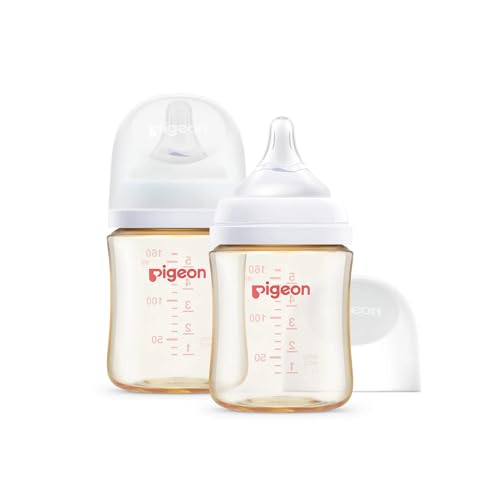
The Pigeon PPSU bottle is designed around the three natural sucking movements a baby makes at the breast. The nipple features a “latch-on line” that guides the baby’s mouth into the correct position for effective adsorption. This level of ergonomic design, based on research in Japan, makes it a standout for babies who struggle with latch. The SS (super slow) nipple is incredibly slow, which is perfect for preventing nipple confusion and encouraging the baby to work for the milk.
The bottle itself is made from PPSU, a high-performance plastic that is lightweight, shatterproof, and heat-resistant. It’s also BPA-free and dishwasher-safe, offering the durability of plastic without the chemical concerns. The streamlined wide neck is easy to clean by hand and comfortable for even small hands to hold. Many lactation consultants recommend Pigeon as the preferred alternative to glass for its safety and practical durability.
Where the Pigeon truly excels is in its slow-flow nipple system — babies who use it often don’t need to be burped as frequently, a clear sign of reduced air intake. The main trade-off is the price point, which sits at the higher end of the spectrum. But for parents looking for a bottle that is both scientifically designed and practically tough, the Pigeon is a top-tier investment in a smooth transition.
Why it’s great
- Nipple design is based on research of baby’s natural sucking movements, reducing confusion.
- PPSU material is unbreakable, lightweight, and heat-resistant for easy sterilization.
- SS nipple offers a very slow flow rate ideal for newborns and transitioning babies.
Good to know
- Higher price point compared to standard plastic or glass bottles.
- Some parents find the nipple sizes need to be upgraded as baby grows.
3. Dr. Brown’s Options+ Narrow Glass Baby Bottles
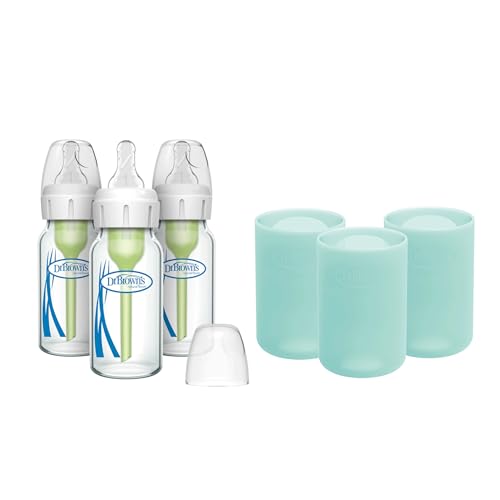
Dr. Brown’s is practically synonymous with anti-colic feeding. The Options+ Narrow Glass bottle uses an internal vent system that creates a vacuum-free feeding environment. This design is clinically proven to reduce colic, spit-up, burping, and gas. For a breastfed baby, this vacuum-free feeding is the closest thing to breastfeeding, where there’s no air in the milk. The borosilicate glass is thermal-shock resistant, meaning it can handle temperature changes without cracking.
The breast-like nipple shape encourages a proper latch, and the consistent flow rate allows babies to feed at their own pace. The glass body is durable, easy to clean, and free from the microplastic concerns associated with plastic bottles. The included mint silicone sleeve provides a comfortable grip and an extra layer of protection against drops. Parents report that the glass heats up quickly and retains temperature well during feeding.
The primary downside is the cleaning complexity. The internal vent system consists of a small straw and a green vent insert that require a tiny brush to clean thoroughly. If you skip cleaning these parts, the vent can get clogged and lose effectiveness. For parents willing to invest the extra few minutes per bottle cleaning, Dr. Brown’s delivers exceptional colic relief and a very natural feeding experience.
Why it’s great
- Internal vent system drastically reduces air intake, helping with colic and gas.
- Borosilicate glass is durable, heat-resistant, and free from chemicals.
- Silicone sleeve protects the glass and provides a secure grip.
Good to know
- Five-piece design requires extra cleaning time and a small brush.
- If not assembled correctly, the vent system may leak.
4. Lansinoh Anti-Colic Baby Bottles
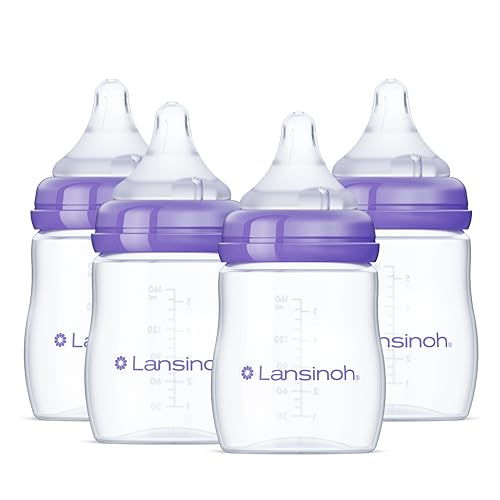
Lansinoh is a trusted name in breastfeeding accessories, and their Anti-Colic bottle line continues that reputation. The NaturalWave Nipple Air Ventilation System is clinically proven to reduce colic. The nipple itself is ultra-soft with a wide, gentle slope that molds to the baby’s mouth, encouraging a secure latch. The flexible tip stretches with baby’s sucking motion, delivering milk at a comfortable, baby-led pace.
This bottle is designed for seamless breast-to-bottle switching. Many parents report that babies who rejected other brands accepted the Lansinoh immediately. The 3-piece construction (excluding cap) is a breeze to clean — no internal straws or tiny vents to scrub. It’s freezer- and dishwasher-safe, adding to its convenience. The set includes four 5oz bottles with slow flow nipples (Size S), making it a strong value for the mid-range price tier.
Compared to the Dr. Brown’s, the Lansinoh offers a simpler cleaning experience without sacrificing anti-colic effectiveness. Some parents note that the flow can be slightly faster than the Dr. Brown’s Level 1, so it may not be the absolute slowest flow for the tiniest newborns. But for 1-3 month olds transitioning from breastfeeding, this bottle offers an excellent balance of simplicity, clinical proof, and baby acceptance.
Why it’s great
- Clinically proven anti-colic system reduces gas and fussiness.
- Ultra-soft nipple is easily accepted by breastfed babies.
- Three-piece design is easy to clean and assemble quickly.
Good to know
- Flow may be slightly faster than some competitors’ Level 1 nipples.
- Some parents find the bottle shape a bit wider than standard bottle warmers.
5. Gulicola Natural Glass Baby Bottle
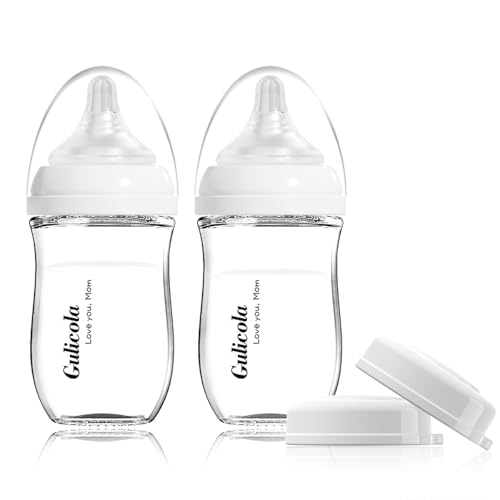
The Gulicola Natural Glass bottle is designed with the breastfed baby in mind. The ultra-soft silicone nipple passes the “triangle test,” meaning it compresses naturally during feeding, closely mimicking the flexibility and feel of a breast. The slow flow rate is exceptionally slow, which is perfect for newborns and babies who are easily overwhelmed by faster flows. This feature alone makes it a strong contender for reducing the risk of bottle preference.
The bottle is made from premium borosilicate glass, which is free from BPA, BPS, and phthalates. It’s heat-resistant and can be safely sterilized in a bottle warmer, microwave, or boiling water. The wide neck design makes it easy to clean, and the set comes with storage caps, adding to its utility. Parents report that their breastfed babies latched onto the Gulicola nipple with minimal fuss, and the slow flow helped mimic the effort of nursing.
The main critique is the vent system, which some reviewers found less effective than Dr. Brown’s dedicated internal vent. Air bubbles can accumulate in the nipple during feeding, and a small inner ledge can trap milk, preventing the baby from finishing the last ounce. For babies not particularly sensitive to gas, these are minor trade-offs for a bottle that otherwise nails the latch and flow experience for breastfeeding transition.
Why it’s great
- Nipple passes the triangle test for natural breast-like compression.
- Exceptionally slow flow minimizes choking and prevents bottle preference.
- Borosilicate glass is durable, heat-resistant, and easy to sterilize.
Good to know
- Vent system can allow air bubble buildup and some milk pooling.
- The bottle is slightly heavier than plastic alternatives.
6. Nanobebe Breastmilk Bottle

The Nanobebe bottle stands out with its unique breast-shaped design that isn’t just aesthetic — it serves a functional purpose. The wide, concave shape allows milk to warm up to 2x faster than standard bottles, which helps preserve sensitive breastmilk nutrients that can be damaged by prolonged heating. The design also encourages a natural, familiar grip for the baby, making the transition feel more organic.
The nipple features an advanced triple-vented anti-colic system that minimizes air intake, supporting calmer feeding. Parents report that babies who were picky about bottles often took to the Nanobebe immediately. The system is also all-in-one: you can pump, store, warm, and feed from the same bottle, reducing the number of transfers and potential nutrient loss. The materials are BPA-, phthalate-, and lead-free for peace of mind.
The bottle’s unique shape can be a challenge with standard bottle warmers and storage racks. It also has more parts than a simple bottle, requiring a bit more assembly. For parents who pump and prioritize nutrient preservation, the Nanobebe’s fast-warming capability is a standout feature. It’s a solid choice for babies who need a gentle, familiar-feeling bottle with minimal fussing.
Why it’s great
- Breast-shaped design warms milk faster, preserving nutrients.
- Triple-vented nipple reduces colic and gas effectively.
- Compatible with pumping, storing, and feeding from one bottle.
Good to know
- Unique shape may not fit standard bottle warmers or storage racks.
- More assembly parts than standard bottles.
7. Evenflo Feeding Classic Glass Twist Bottles
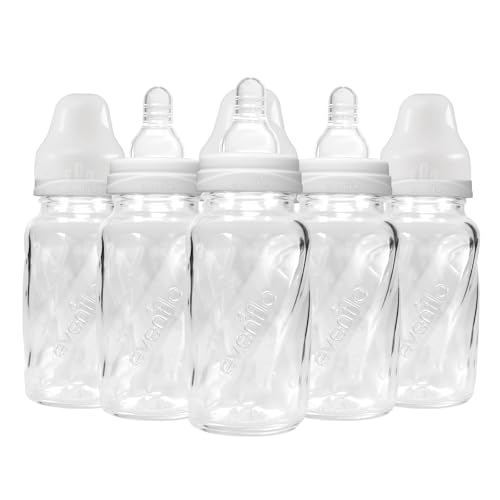
The Evenflo Classic Glass bottle is a no-nonsense, budget-friendly option that doesn’t compromise on safety. Made from tempered glass, these bottles are recyclable, sustainable, and free from BPA, polycarbonates, PVC, and phthalates. The classic ergonomic twist shape is easy to hold for both parent and baby, and the 3-piece design (bottle, nipple, and ring) makes cleaning a breeze — no tiny vents or straws to lose or scrub.
These bottles fit most standard neck breast pumps, allowing you to pump directly into the bottle for convenience. The flow is on the slower side, which is good for breastfeeding transition; however, some parents note that the flow can be a bit too slow for older babies, recommending the purchase of faster-flow nipples. The glass has held up well against drops from table height onto hard floors, according to multiple reports, which speaks to its durability.
The main trade-off is the lack of a sophisticated anti-colic system. There is no internal vent, so babies may swallow more air compared to a Dr. Brown’s or Lansinoh bottle. The nipples are also standard flow, which might not be the slowest option for a newborn. For parents on a strict budget who want a glass bottle without the fuss of complex parts, the Evenflo Classic is a reliable, pure-feeding solution.
Why it’s great
- Tempered glass is highly durable and environmentally friendly.
- Extremely simple 3-piece design is quick to clean and assemble.
- Fits most standard neck breast pumps for direct pumping convenience.
Good to know
- Flow may be too slow for older or hungrier babies without nipple upgrade.
- No dedicated anti-colic vent system; babies may swallow more air.
FAQ
How do I prevent nipple confusion when switching to a bottle?
Should I buy glass or plastic bottles for transitioning from breastfeeding?
My baby rejects the bottle. How do I know if the flow is too fast or too slow?
Final Thoughts: The Verdict
For most users, the bottles to transition from breastfeeding winner is the Philips Avent Natural because its Natural Response nipple gives the baby complete control over the flow, mimicking breastfeeding most closely while being incredibly easy to clean. If you want a research-backed nipple design that guides a perfect latch, grab the Pigeon PPSU. And for severe colic reduction with the proven internal vent system, nothing beats the Dr. Brown’s Options+ Glass.