
Our readers keep the lights on and the weekend projects moving. As an Amazon Associate, I earn from qualifying purchases.
The sharp, grabbing pain at the outer elbow makes every backhand, every hammer swing, every golf swing, and even a simple handshake feel like a mistake. Lateral epicondylitis, commonly called tennis elbow, isn’t just a sports injury—it’s a tendon overload that turns daily movements into a gamble. A well-designed counterforce brace can offload that tendon strain by changing the mechanical lever arm, letting you move without the sharp feedback.
I’m Rikta — the co-founder and writer behind FitlyFast. I’ve spent hundreds of hours analyzing user reviews, clinical research on counterforce bracing, and the material science behind compression bands to build this guide around what actually provides measurable pain reduction for lateral epicondylitis.
After analyzing dozens of straps, pads, and wraps, I’ve narrowed the field to the seven most effective options. This is your definitive resource to find the best brace for lateral epicondylitis.
How To Choose The Best Brace For Lateral Epicondylitis
Not every strap works the same way. The wrong one can slip, irritate the skin, or fail to apply pressure at the right spot. Focus on the mechanics that matter for this specific condition.
Pad Design: Gel vs. Foam vs. Rigid Pressure Points
The pad is the contact point that delivers the counterforce. A gel pad conforms to the forearm contour and absorbs vibration well. A rigid plastic or metal-backed button delivers a sharper, more localized pressure but can be uncomfortable against the bone. A five-nub or ripple pad, common in German-engineered braces, distributes pressure across multiple trigger points for a diffused relief. The best pick depends on whether your pain is sharp and pinpoint or diffuse across the extensor tendon area.
Compression Material: Neoprene vs. Breathable Fabric
Neoprene provides consistent compression and heat retention, which promotes blood flow and tendon flexibility during activity. The downside is sweat buildup and potential skin irritation during longer wear. Hypoallergenic, moisture-wicking fabrics are better for all-day or desk-bound use, especially if you have sensitive skin or latex allergies. Breathability matters if you plan to wear the strap under long sleeves or during hot weather sports.
Adjustability and Strap Closure
A strap that loosens mid-activity loses its therapeutic effect. Traditional hook-and-loop closures offer fine tension control but can wear out over repeated washes. A Boa dial system provides micro-adjustments and a secure hold that doesn’t slip, but it adds bulk. The closure must allow one-handed adjustment because you will be tightening it on your own arm. Also check for double-ring designs that let you tighten incrementally without losing grip.
Width and Anchor Point
The strap should sit roughly one to two inches below the elbow crease, directly over the extensor muscle mass. A strap that is too narrow can dig into the muscle and restrict blood flow; one that is too wide may slide past the tendon belly and provide no mechanical advantage. Look for a width of about 1.5 to 2.5 inches, which is the sweet spot for counterforce bracing in adult forearms.
Quick Comparison
On smaller screens, swipe sideways to see the full table.
| Model | Category | Best For | Key Spec | Amazon |
|---|---|---|---|---|
| Med Spec EpiGel | Dual Gel Pad | Position-customized tendon compression | Two independent gel pads | Amazon |
| Bauerfeind Sports Elbow Strap | Boa Closure Strap | High-sport rotator cuff safety | Five-point pad + Boa system | Amazon |
| BioSkin Elbow Band | Hypoallergenic | Sensitive skin and sweat management | Silicone compression pad | Amazon |
| SquareHit VictoryBand | Precision Pressure | Low-profile tennis and typing use | Slim elastic band, 9g weight | Amazon |
| MUELLER Sports Medicine Strap | Neoprene Classic | Heat retention and budget-friendly entry | Neoprene blend, 0.18 lbs | Amazon |
| BraceAbility Epicondylitis Brace | Universal Fit | Smaller arms and one-handed adjustment | D-ring closure, fits up to 15″ | Amazon |
| McDavid Tennis Elbow Support | Neoprene Sleeve | Full coverage for heavy lifting | Neoprene sleeve, 50g weight | Amazon |
In‑Depth Reviews
1. Med Spec EpiGel Tennis Elbow Brace
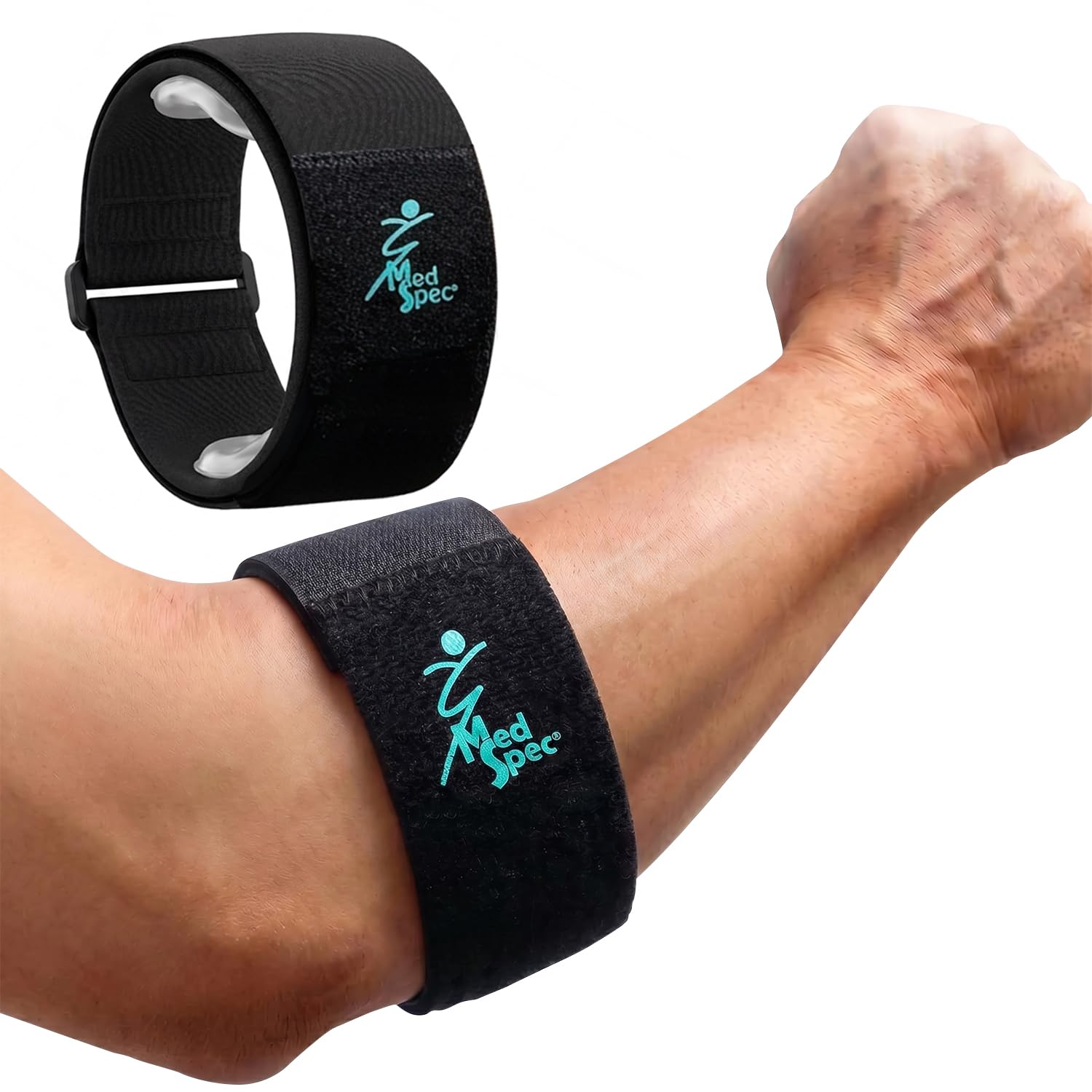
The EpiGel’s key innovation is its two independently adjustable gel pads. Unlike a single foam button, these tacky gel cushions let you dial in the exact spot where the extensor tendon is most inflamed. You can slide them apart or together depending on where the pain radiates, which is critical for lateral epicondylitis because the tender point varies between individuals. The pads also absorb vibration during a ball strike or impact, reducing the shock that travels up the arm.
The low-profile design means it slips under a long-sleeve golf shirt or a work uniform without creating a visible bulge. The closure is a standard hook-and-loop strap, but the real advantage is the ability to fine-tune pad placement before tightening. This is a support tool, not a cure — pair it with proper fit, rest, and activity modification, and expect gradual improvement rather than an overnight fix.
Some users with very sensitive skin reported a mild rash after a full day of wear, easily solved by placing a thin cotton layer between the gel and the skin. The strap holds tension well through a full round of golf or a pickleball session, though you may need to re-tighten once during a multi-hour session as the pads settle into the muscle.
Why it’s great
- Two movable gel pads offer pinpoint compression that adapts to your unique tendon location
- Gel absorbs shock better than foam or rigid plastic, reducing vibration during racquet sports
- Users report rapid pain relief within days, not weeks
Good to know
- The gel pads can cause mild skin irritation in some users after extended wear
- Not machine-washable; requires hand washing to maintain gel integrity
2. Bauerfeind Adjustable Sports Elbow Strap

Bauerfeind takes a unique approach with a five-nub, ripple-shaped pad instead of a single pressure point. The five pads distribute load across the extensor muscle belly and its insertion points, reducing trigger points while still offloading the common extensor tendon. The Boa closure dial twists to micro-adjust tension in quarter-turn increments, which means you can dial in the exact compression level without the guessing game of velcro.
The strap material is a flat, contoured polyester blend that breathes better than neoprene and won’t absorb sweat. This is a strap built for dynamic sports—tennis serves, golf swings, and overhead presses—where the arm changes shape under load. The Boa system holds tension even under sweaty conditions because there’s no velcro to clog with lint or debris. Users note that the strap feels sturdy and well-engineered, typical of German medical device manufacturing.
The one-size-fits-all claim is slightly optimistic for very small women, who report that even at the smallest setting the strap feels loose on a slender forearm. The five-nub pad can feel thick against bony arms, and the strap has been reported to loosen slightly during a long session if the dial isn’t fully locked. The price is the highest on this list, but the engineering justifies the investment for serious athletes.
Why it’s great
- The Boa dial system provides precise, repeatable tension without velcro wear-out
- Five-point pressure pad reduces trigger points and distributes load across the tendon area
- Breathable polymer blend stays cool during sweaty sports
Good to know
- The one-size design may not fit small or very slender forearms securely
- Premium price reflects the engineering; not a budget-friendly entry point
3. BioSkin Hypoallergenic Elbow Band
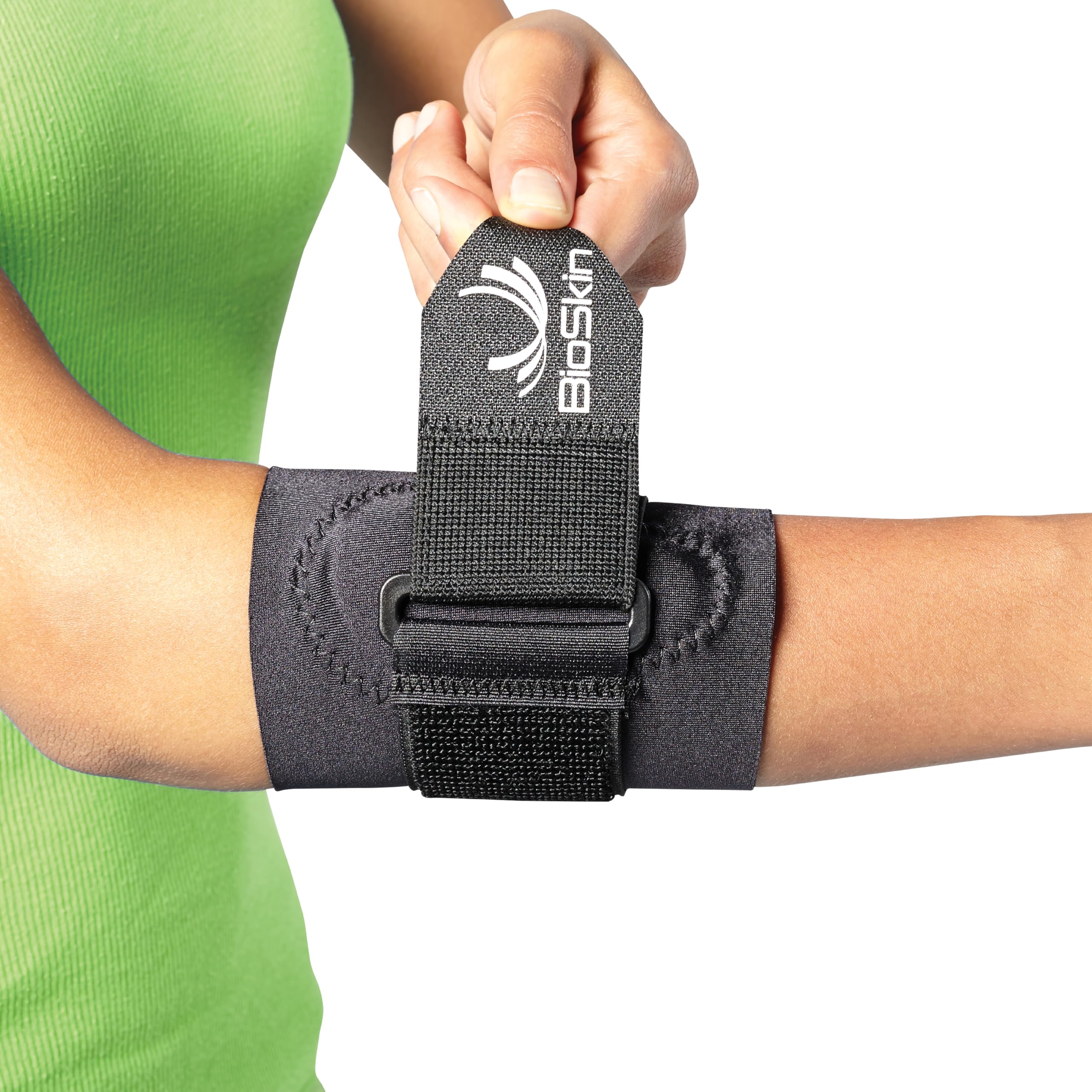
BioSkin addresses the two biggest complaints with standard neoprene straps: skin irritation and sweat buildup. The material is a thin, breathable, latex-free knit that wicks moisture away from the skin. The compression pad is a silicone insert rather than a rigid plastic or foam piece, which provides a cushioned, non-slip contact point that stays put even when the arm is moving through a full range of motion.
The band is wider than the typical strap, which spreads the compressive force across a larger muscle area rather than digging into a narrow band. This is especially useful for lateral epicondylitis patients who also have some brachioradialis involvement—the wider band captures more muscle belly. The cinch strap on top adds an extra layer of targeted pressure right at the tendon insertion, so you get both broad compression and a focal point.
A few users noted that the sizing runs small, so measure your forearm circumference carefully and consider going up one size. The price is high for a band that is essentially a high-performance knit with a silicone pad, but for people with eczema, sensitive skin, or latex allergies, the hypoallergenic construction is a non-negotiable benefit.
Why it’s great
- Hypoallergenic, latex-free, and neoprene-free for sensitive skin
- Wide knit band distributes pressure and wicks sweat effectively
- Silicone pad stays anchored without slipping during dynamic movement
Good to know
- Sizing chart is critical; the band runs small and may require a size up
- Higher price point relative to simpler neoprene straps
4. SquareHit Tennis VictoryBand Elbow Support Strap

The VictoryBand is almost impossible to feel when worn—it weighs only nine grams. The design is a slim elastic band with a small built-in pressure button that sits directly over the extensor tendon. Its primary mechanism is vibration dampening: the band changes the resonant frequency of the tendon during impact, which reduces the microtrauma that drives lateral epicondylitis in racquet sports.
This is not a strap for heavy lifting or full-arm support. It excels specifically in scenarios where repetitive impact is the problem: tennis groundstrokes, pickleball dinks, golf chipping, and even prolonged typing. Users consistently report that it prevents the familiar twinge from developing during a match. The slim profile means it fits under a watch or a long-sleeve shirt without bulk, making it a viable everyday preventative tool.
One trade-off is that the elastic strap is shorter than typical velcro straps, which can make it tricky to get the exact tension right on the first try. Some users found the pressure button less effective for golfers elbow (medial epicondylitis) because the button placement is optimized for the lateral side. It is also a single-size design, so very large or very small forearms may not get a snug fit.
Why it’s great
- Extremely lightweight and slim, disappears under clothing
- Vibration-dampening design is ideal for racquet sports and typing
- Excellent as a preventative tool to stop pain before it starts
Good to know
- Elastic strap is short, making initial tension adjustment finicky
- Designed primarily for lateral epicondylitis; less effective for the medial side
5. MUELLER Sports Medicine Tennis Elbow Support Strap
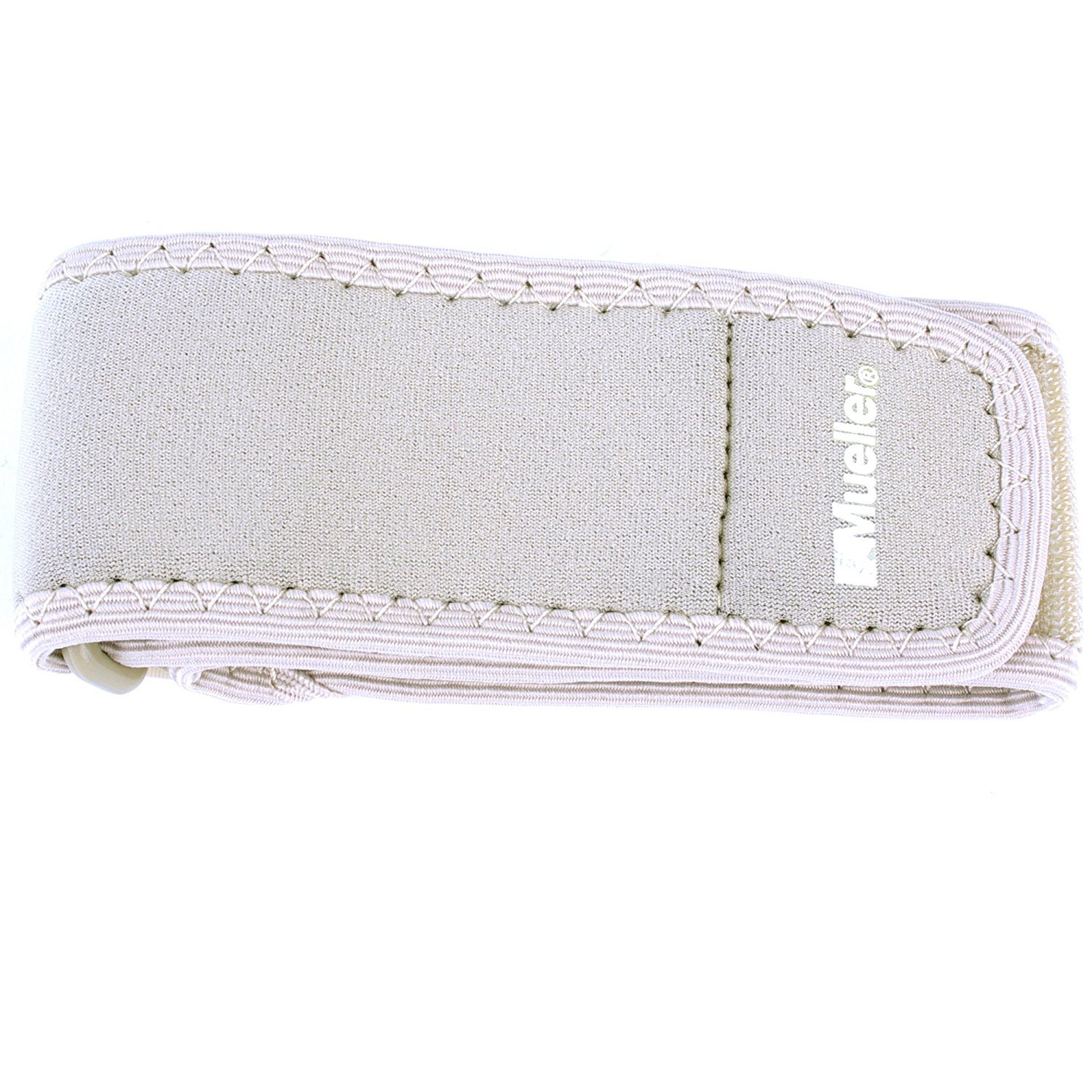
The Mueller strap is the classic counterforce brace that has been on the market for decades. It uses a neoprene blend that retains body heat, which promotes blood flow and tendon flexibility. The neoprene provides a consistent, comfortable compression that is less intense than a gel or rigid pad, making it a gentle entry point for someone new to bracing.
Users report that the flat design does not snag on clothing or equipment, which is a practical advantage during bowling, pickleball, and factory line work. The hook-and-loop closure is straightforward and stays put for most activities, though the velcro can lose grip over time with repeated washing. At this price point, it is the most accessible option on the list, and many users find it provides enough relief to continue their sport or job without interruption.
The lack of a dedicated pressure pad means the compression is diffuse rather than targeted. For someone with a very specific, sharp pain point, this strap may not provide enough focal pressure. The one-size design is generous (7 to 14 inches), but users at the extreme ends of that range may find the fit suboptimal.
Why it’s great
- Neoprene heat retention aids blood flow and tendon flexibility
- Flat, non-snagging design works well during bowling and manufacturing work
- Budget-friendly price makes it an easy trial for first-time users
Good to know
- No targeted pressure pad; compression is diffuse over the whole strap width
- Velcro can lose adhesion over time with repeated machine washing
6. BraceAbility Epicondylitis Brace

The BraceAbility brace uses a double-ring design for incremental tightening, which is helpful for people who struggle with fine motor control in their hands—a common issue when tennis elbow affects the dominant arm. The embedded compression tube sits inside the band and is designed to apply pressure to the tendon without a bulky external pad. The slim profile makes it one of the more discreet options for wearing under a work shirt.
Reviewers with smaller forearms specifically praise this brace because the strap adjusts down to fit slender arms better than many one-size designs. The metal piece inside the strap allows you to position the pressure point precisely onto the tendon, which is an advantage over foam-only options that shift around. It works well for both medial and lateral epicondylitis because the compression tube can be rotated to the affected side.
Some users found the hard circular pad uncomfortable against the bone, describing it as feeling like a piece of wood strapped to the arm. The nylon and hook-and-loop material is rough against bare skin and may not survive many wash cycles without fraying. For everyday light use it works well, but heavy-duty athletes may wear it out quickly.
Why it’s great
- Double-ring design allows easy one-handed incremental tightening
- Fits smaller forearms better than most universal straps
- Internally adjustable pressure tube can target both lateral and medial sides
Good to know
- Hard circular pad can feel uncomfortable against the forearm bone
- Rough nylon material may cause skin irritation and fray with washing
7. McDavid Tennis Elbow Support
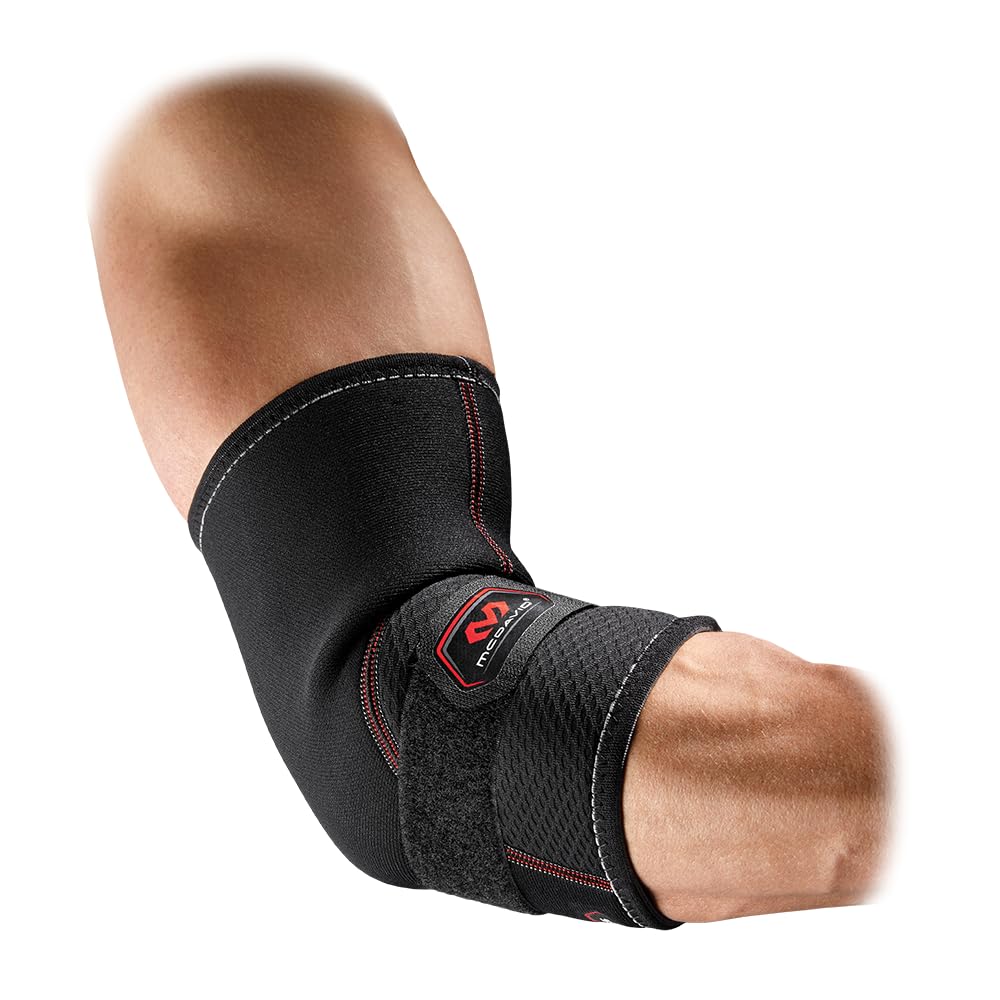
The McDavid support is a contoured neoprene sleeve rather than a thin strap, which means it covers the entire elbow joint in addition to the forearm. This is useful when the lateral epicondylitis is accompanied by general joint stiffness or when you want added warmth and proprioceptive feedback. The sleeve design also stays in place better during exercises like bench press or pull-ups, where a narrow strap can slide off.
The contoured shape fits the elbow’s natural anatomy, and the adjustable velcro strap on the outside lets you add targeted tension over the extensor tendon. It is heavier and warmer than the strap-only options, which can be a benefit for cold-weather sports or an issue in hot environments. Bodybuilders and powerlifters specifically reported that this support helped them continue heavy pressing movements without aggravating the tendon.
The restriction of movement is the main trade-off. The sleeve limits full elbow flexion and extension, making it less suitable for pull-ups, curls, or any movement that requires a full range of motion. The sizing runs tight, and users with muscular arms may need to go up a size to avoid cutting off circulation at the joint crease.
Why it’s great
- Full-coverage sleeve provides warmth and proprioception for the entire elbow joint
- Stays anchored during heavy lifting and pressing movements
- Contoured shape fits the elbow anatomy better than flat straps
Good to know
- Restricts full elbow flexion and extension; not ideal for curls or pull-ups
- Sizing runs small; muscular arms need to size up
FAQ
What is the difference between a counterforce strap and an elbow sleeve for lateral epicondylitis?
How tight should I wear a tennis elbow strap?
Can I wear a lateral epicondylitis brace while sleeping?
How do I know if my brace is positioned correctly?
Final Thoughts: The Verdict
For most users, the brace for lateral epicondylitis winner is the Med Spec EpiGel because its dual adjustable gel pads allow you to customize the exact compression point, and tacky gel provides superior vibration absorption compared to foam or rigid buttons. If you want precision micro-adjustments for high-level sports, grab the Bauerfeind Sports Elbow Strap. And for sensitive skin that cannot tolerate neoprene or latex, nothing beats the BioSkin Hypoallergenic Elbow Band.