
Our readers keep the lights on and the weekend projects moving. As an Amazon Associate, I earn from qualifying purchases.
Breaking compacted, rocky soil without destroying its structure or your lower back is the singular challenge that defines serious gardening. A shovel strains your spine and inverts soil layers, while a gas tiller shreds earthworms and creates a hardpan layer just below the tines. The right tool uses your body weight to penetrate clay, then leverages the tines to lift and fracture the ground horizontally — preserving biology and saving your joints.
I’m Rikta — the co-founder and writer behind FitlyFast. My deep market research focuses on analyzing the tensile strength of steel alloys, tine geometry, and handle ergonomics that separate a one-season tool from a generational heirloom in the garden tool category.
After evaluating seven distinct models for tine count, steel gauge, fully welded vs. bolted construction, and handle comfort, this guide delivers the smartest recommendations for your specific soil type and budget when searching for a broadfork garden tool.
How To Choose The Best Broadfork Garden Tool
Broadforks look simple — a row of tines with two handles — but the material science and design philosophy vary dramatically. Your choice depends on soil type, garden size, and physical strength. The wrong fork is either too flimsy to penetrate hard ground or too heavy to use for more than ten minutes.
Tine Count and Steel Gauge
Standard broadforks carry 5 to 12 tines. Fewer tines (4–5) concentrate force into a smaller footprint, piercing hardpan clay more easily with less resistance. Higher tine counts (9–12) cover more width in a single pass but require more downward force. The steel gauge — measured in fractions of an inch — is the real durability marker. Thinner tines bend under repeated twisting motion in rocky soil; 10-gauge steel or thicker alloy steel is the baseline for heavy clay.
Handle Attachment: Bolted vs. Fully Welded
Most mid-range forks attach handles with bolts that can loosen over time or shear under stress. Premium models use a fully welded steel frame where handles are integrated into the same structure as the tines. Welded frames eliminate wobble and handle separation risk but make storage more rigid. Bolted designs allow disassembly for compact storage and are easier to transport, but a loose bolt is a failure point that needs periodic tightening.
Handle Material and Ergonomics
Fiberglass handles dampen vibration better than steel and resist splintering better than untreated wood. Wood handles, especially beech or oak, absorb shock naturally but require oiling to prevent cracking in dry climates. T-handles and D-grips offer different wrist angles; T-handles provide neutral wrist positioning for tall users pushing down, while D-grips give a more secure wrap for lifting motions. The total handle length should clear your standing height so you don’t stoop — 47 to 56 inches is the usual effective range.
Quick Comparison
On smaller screens, swipe sideways to see the full table.
| Model | Category | Best For | Key Spec | Amazon |
|---|---|---|---|---|
| Meadow Creature BF-12 | Premium | Heavy clay, lifetime durability | 12 tines, fully welded alloy steel | Amazon |
| Bully Tools 5-Tine | Premium | Compacted soil, back pain relief | 10-gauge US steel, 56″ fiberglass handles | Amazon |
| HUNKENR Pitchfork Spade Set | Premium | Heirloom build, combo kit value | 420 stainless steel, beech T-handle | Amazon |
| Walensee 9-Tine | Mid-Range | Breaking clay clods, wide coverage | 9 tines, 165 lb handle strength | Amazon |
| TABOR TOOLS J59A | Mid-Range | Budget durability for rocky soil | Alloy steel, diamond point tines | Amazon |
| Garden Pitch Fork 4-Tine | Budget | Light raised beds, root harvesting | Stainless steel, 43.9″ D-grip wood | Amazon |
| VEVOR 5-Tine Broadfork | Budget | Entry-level trial, compact storage | Forged steel head, 54″ fiberglass | Amazon |
In‑Depth Reviews
1. Meadow Creature All Steel Broadfork BF-12

The Meadow Creature BF-12 represents the ceiling of broadfork engineering — a fully welded alloy steel frame with zero bolts to shear, zero handles to loosen, and zero plastic to crack. Its 12 tines distribute force across a wide footprint, making it ideal for breaking large beds of heavy clay without creating isolated deep puncture marks. The all-steel construction means the handle is the fork; you can apply your full body weight without worrying about a fiberglass handle snapping at the collar.
Real-world reports describe this fork ripping out oak roots and fracturing solid clay to a depth of nine inches in a fraction of the time an electric tiller would take. The fully welded design eliminates the wobble inherently present in bolted models, creating a rigid connection that transfers every pound of pressure directly into the soil. Users with pre-existing tendonitis or back issues consistently report that this tool changes how they approach garden prep because the standing-and-rocking motion replaces repetitive bending and lifting.
The trade-off is weight and storage — at 15 pounds, this is not a tool you transport casually. It requires dedicated shed space and a strong user to maneuver for extended sessions. But for anyone with compacted soil who wants one fork that will outlast their gardening career, the BF-12 delivers a lifetime warranty backed by American manufacturing.
Why it’s great
- Fully welded alloy steel frame — no bolts to shear or handles to loosen
- 12 tines cover wide beds quickly, fracturing clay to 9-inch depth
- Lifetime warranty and 100% US-made construction
Good to know
- Heavy at 15 pounds — less portable than bolted alternatives
- Non-collapsible design requires larger storage space
2. Bully Tools 5-Tine Broadfork

The Bully Tools broadfork targets the specific pain point of gardeners with bad backs. Its 5-tine design concentrates your weight into a narrow row, punching through compacted clay and root-filled soil with a simple rocking motion that requires no heavy lifting. The 10-gauge steel head is reinforced with a wood core inside the fiberglass handles, adding cross-sectional strength that prevents the handles from splitting under torque when you pry against buried rocks.
Fiberglass wrapped in a polyester veil is chosen specifically to resist splintering — a common failure mode in wooden handles that dry out and crack. The rubber overmolded grips reduce hand fatigue during extended use, which matters when you’re working a 1500-square-foot garden bed without a gas tiller. Users note that the fork’s rhythm — step, wiggle, pull back — becomes meditative once you find your stride, and the soil aeration is far superior to a rototiller because it doesn’t create a layered hardpan.
The bolted handle attachment is the primary consideration. Overtightening the bolts can shear them, while under-tightening leaves a slight play in the handles. Periodic maintenance and careful assembly extend the life of the connection, but this is not a set-it-and-forget build. For gardeners who need ergonomic relief and value over absolute indestructibility, this is the most thoughtfully engineered mid-range option available.
Why it’s great
- Body-weight rocking motion protects lower back from strain
- 10-gauge US steel head with wood-reinforced fiberglass handles
- Rubber grips reduce vibration and hand fatigue over long sessions
Good to know
- Handle bolts can loosen or shear if overtightened; periodic checks needed
- Handle has slight play even when properly installed
3. HUNKENR Pitchfork Spade Set
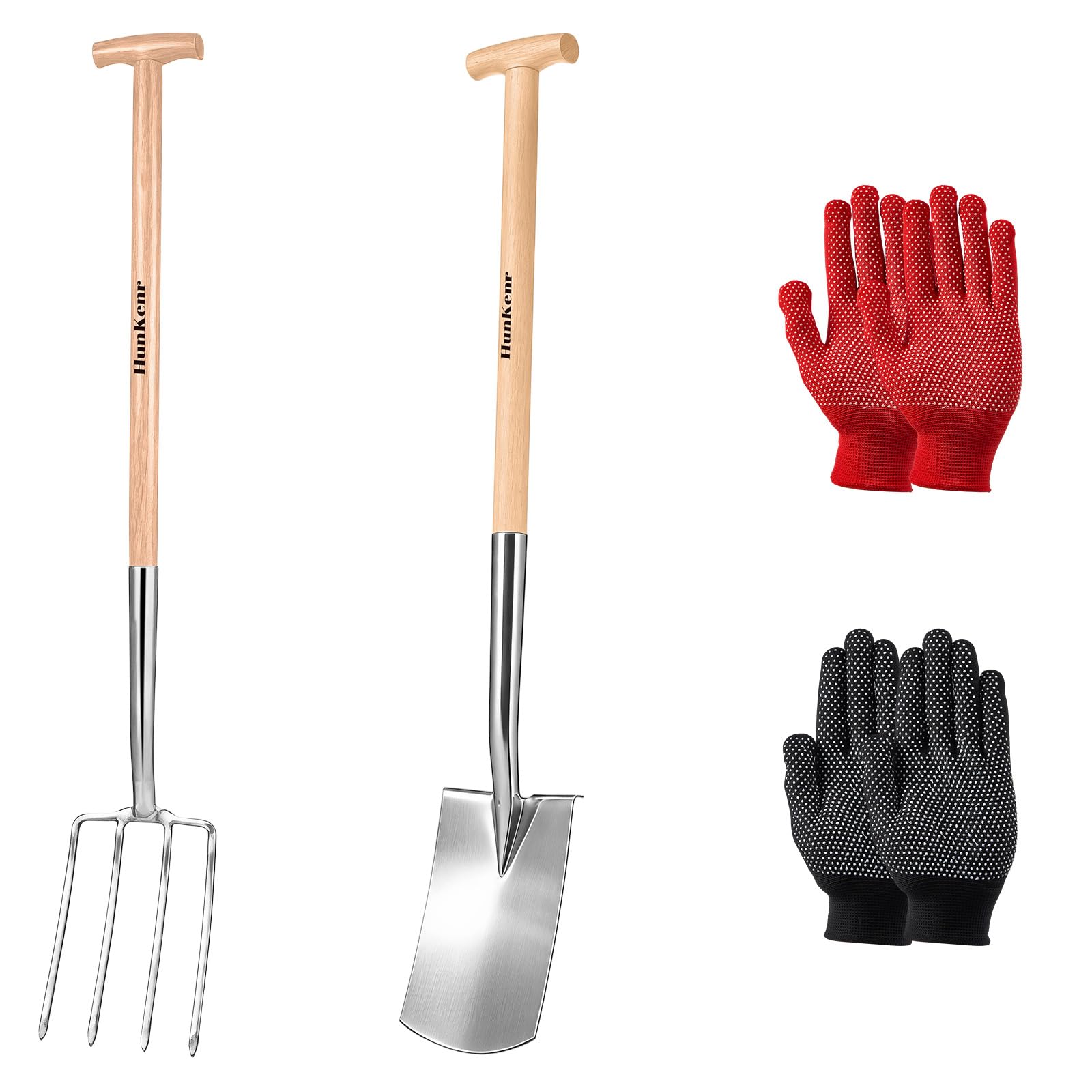
This is a two-tool kit that bundles a 4-tine digging fork with a matching spade, both constructed from 420/2cr13 stainless steel — a grade chosen for its ability to resist bending under 245 pounds of downward force without snapping. The fork tines are polished to reduce soil adhesion, meaning wet clay doesn’t cake onto the steel and double the weight of every lift. The 47-inch beech wood handles are shaped with a T-grip that keeps the wrist in neutral alignment, reducing stress on the carpal tunnel during repetitive digging motions.
Real-world testing on frozen clay surface showed zero flex in the steel, confirming that the thickness and heat treatment are adequate for serious abuse. The beech wood is hand-rubbed but completely unfinished — you will need to apply linseed oil or a similar sealant to prevent the handles from drying and cracking, especially in arid climates. The included gloves are a low-quality addition; most users discard them and appreciate that the tools themselves are the real value.
The short handle length may be a limitation for very tall users — at 47 inches, anyone over six feet will need to bend slightly during use. But for average-height gardeners who want a matching fork-and-spade set with heirloom-quality stainless steel construction, this kit delivers exceptional material quality for the investment. The fork and spade together represent a complete manual cultivation system.
Why it’s great
- Kit includes both a digging fork and spade in premium stainless steel
- Polished finish reduces clay adhesion for cleaner work
- Ergonomic T-grip handle reduces wrist strain
Good to know
- Beech handles are unfinished and require oiling to prevent cracking
- Short handle length may cause stooping for users over 6 feet tall
4. Walensee Broadfork 9-Tine
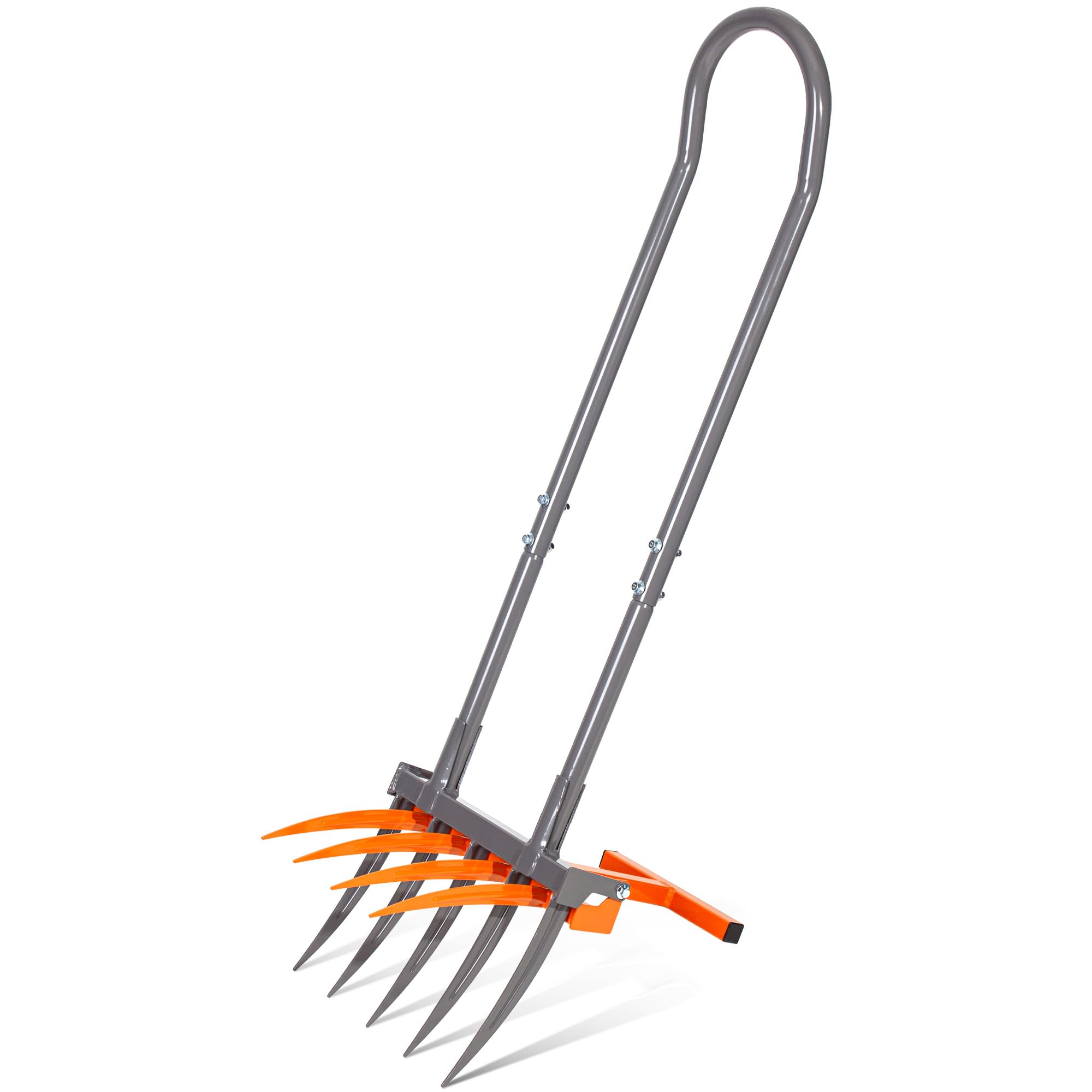
Walensee takes an unconventional approach by mounting nine hardened tines on an all-steel frame with an integrated secondary row of orange blades designed to break clay clods into finer particles during the same pass. This dual-action design addresses a specific complaint about wide broadforks — the soil lifted between tines often remains in large chunks that require a second pass with a rake. The 9.5-inch foot platform accommodates all shoe sizes comfortably, making full-body weight transfer easy even for users with wide work boots.
The handle is rated to withstand 165 pounds of pressure without deformation, which is sufficient for the recommended tine depth of 5.9 inches in compacted soil. Users report that the fork performs exceptionally on Georgia and Tennessee red clay where single-row forks struggle, because the secondary blade grate crumbles the lifted soil before it falls back. The learning curve is real — first-time users often try to pry with the handles instead of using a straight up-and-down rocking motion — but once the rhythm is found, the fork dramatically reduces bed preparation time.
The 16-pound weight is noticeable. This is not a tool for petite users or those with limited upper-body strength; the steel frame adds durability but demands physical input. The fork should be cleaned after each use to prevent clay from drying on the tines, which would add unnecessary resistance on the next session. For gardeners with heavy clay who want to combine breaking and clod-smashing in one tool, this is a unique solution.
Why it’s great
- Secondary blade row breaks clay clods immediately during use
- Wide 9.5-inch foot platform fits all shoe sizes comfortably
- All-steel frame rated for 165 lbs of downward pressure
Good to know
- Heavy at 16 pounds; requires significant physical strength to operate
- Tines require cleaning after each use to prevent clay buildup
5. TABOR TOOLS Digging Fork J59A

TABOR TOOLS has earned a reputation for making digging forks that survive conditions that destroy lesser tools — rocky soil, buried limestone, and years of outdoor storage. The J59A uses diamond-point tines forged from alloy steel with a black oxide finish that provides corrosion resistance without adding thickness. The 40-inch length is on the shorter side for a spading fork, but the narrow tine profile concentrates force efficiently, making it effective for deep weeding, sod removal, and root crop harvesting in tight spaces.
Customer reports spanning several years confirm that this fork has withstood prying against limestone and daily exposure to the elements without significant bending. One user noted a slight tine bend after intentionally using the fork as a lever against buried rock, but the tool remained functional — a testament to the steel’s ductility and temper. The weight is light enough for a 5-foot-4-inch, 120-pound user to handle comfortably, which expands the range of gardeners who can use it for extended sessions.
The primary limit is handle length. At 40 inches, tall users — anyone over 6 feet — will find themselves bending significantly at the waist. This is a tool designed for shorter gardeners or for tasks where you prefer to work close to the ground. The lack of a rubber grip on the steel handle may also cause discomfort during prolonged use in cold weather. For its price point, the J59A offers the best balance of toughness and weight for rocky, unforgiving soil.
Why it’s great
- Diamond-point alloy steel tines resist bending against rocks and limestone
- Light enough for smaller users to handle for extended periods
- Black oxide finish adds corrosion protection for outdoor storage
Good to know
- Short 40-inch handle forces tall users to stoop during operation
- No rubber grip on handle; can become uncomfortable in cold weather
6. Garden Pitch Fork 4-Tine Stainless Steel
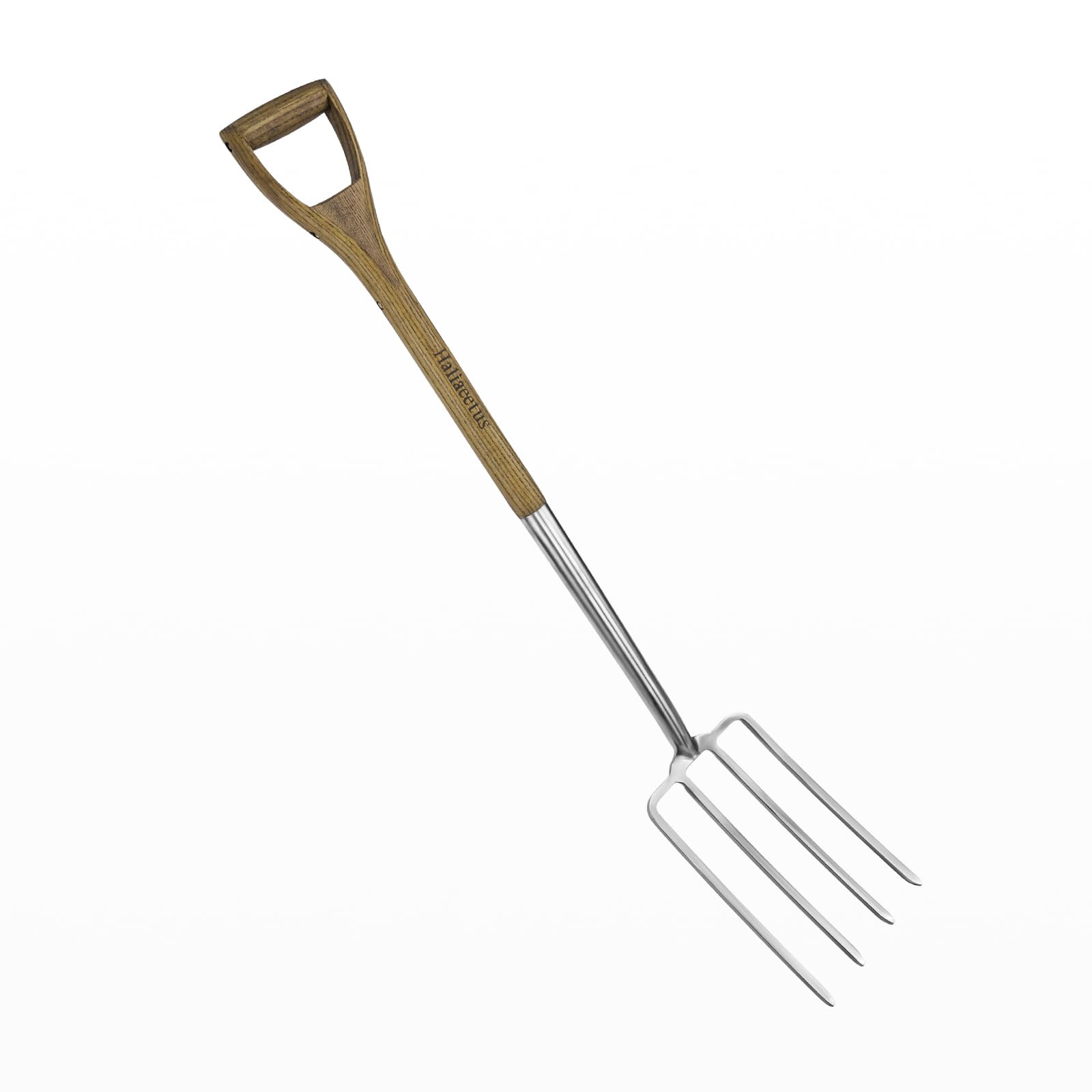
This 4-tine stainless steel fork is built specifically for lighter duties — turning compost, harvesting root vegetables like potatoes and garlic, and weeding in already-softened raised beds. The 43.9-inch total length with a D-grip wooden handle provides decent leverage for shallow digging, and the stainless steel resists corrosion from constant contact with moist compost. The tines are polished sharp enough to slide into soil without crushing bulbs, making it a favorite for gardeners who prize careful root crop extraction over brute force.
Customer feedback consistently mentions its effectiveness in heavy clay when used as a lever — poke the tines in and push the handle forward to crack the clay without lifting. The lifetime warranty from the manufacturer adds confidence, though the lightweight steel construction (under 6 pounds) means this fork is not designed for prying against buried rocks or repeated penetration into hardpan. The wood handle, while comfortable and naturally shock-absorbent, will require periodic sealing to prevent drying and splintering in dry climates.
The primary limitation is the 4-tine pattern — narrow coverage means you cover less ground per pass than a 5- or 9-tine broadfork. This is ideal for precision work in established beds but inefficient for breaking large new plots. The D-grip can also cause wrist strain during prolonged lifting motions; a T-handle would be more ergonomic for repetitive heavy work. As a specialized bed-maintenance tool, it excels.
Why it’s great
- Polished stainless steel tines glide through soil without crushing roots
- Lightweight at 6 pounds; easy to maneuver for harvest and weeding
- Lifetime warranty provides peace of mind on build quality
Good to know
- Wood handle requires oiling to prevent drying and cracking
- D-grip can cause wrist fatigue during extended heavy lifting
7. VEVOR 5-Tine Broadfork
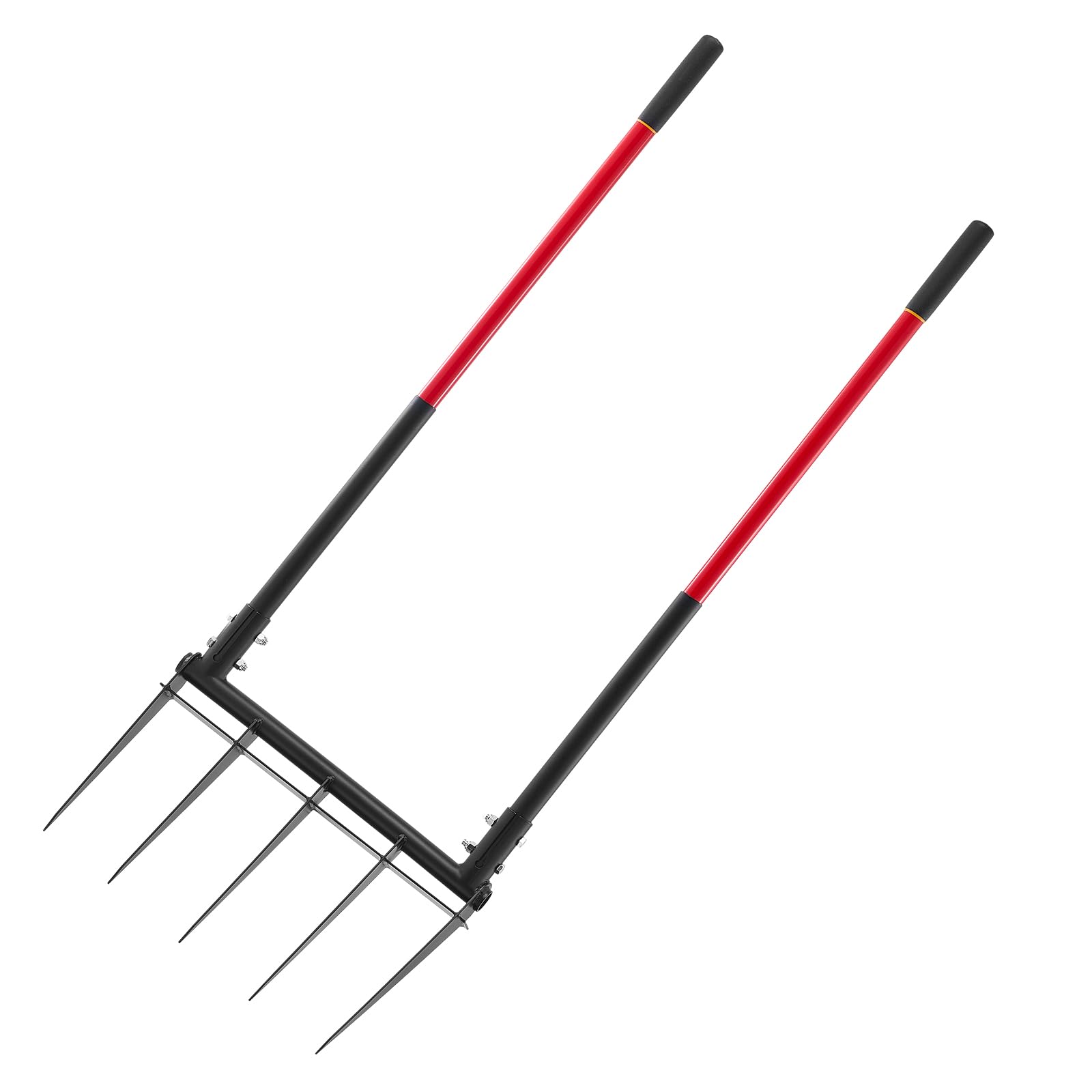
VEVOR’s broadfork is the gateway option for gardeners who want to test the no-till method without committing to a premium purchase. Its forged steel head with a fiberglass handle assembly mimics the geometry of higher-end forks at a fraction of the cost. The 54-inch length provides adequate leverage for average-height users, and the 5-tine pattern focuses your weight effectively for initial soil penetration in clay and compacted loam. Assembly is straightforward — bolts connect the head to the handles with a reinforced collar designed to prevent wobble.
Real-world reports confirm that this fork can turn over hundreds of square feet of solid clay without structural failure, as long as you avoid aggressive prying against buried rocks. The detachable design is a genuine convenience — the handles separate from the head for compact storage in a toolbox or wall shelf, solving the space problem that prevents many gardeners from owning a dedicated broadfork. Users consistently recommend mounting the bolts with nuts facing outward to avoid snagging clothing or shins during use.
The steel at this price point is thinner than premium models; repeated heavy prying against limestone or thick roots will eventually cause deformation. The fiberglass handles are strong but can crack if used as a lever against immovable objects. This is not a lifetime tool, but it’s a perfectly functional entry point. For gardeners on a tight budget or those unsure if broadfork cultivation suits their style, the VEVOR provides a low-risk way to discover the benefits of manual aeration.
Why it’s great
- Detachable handles allow compact storage in small sheds or garages
- 54-inch length provides adequate leverage for average-height gardeners
- Forged steel head handles solid clay without immediate failure
Good to know
- Thinner steel may bend under aggressive prying against rocks or roots
- Bolted connection requires periodic tightening to maintain rigidity
FAQ
How deep does a broadfork typically aerate soil in one pass?
Can a broadfork replace a gas-powered rototiller entirely?
What kind of maintenance does a steel broadfork require between seasons?
Final Thoughts: The Verdict
For most users, the broadfork garden tool winner is the Meadow Creature BF-12 because its fully welded alloy steel construction eliminates every mechanical failure point — no bolts, no plastic, no compromises for heavy clay and root-filled soil. If you want a lighter, more ergonomic option with excellent value, grab the Bully Tools 5-Tine for its back-saving rocking motion and fiberglass comfort. And for gardeners on a tight budget who need a compact, storable entry point, nothing beats the VEVOR 5-Tine Broadfork for discovering the no-till method without a major investment.